
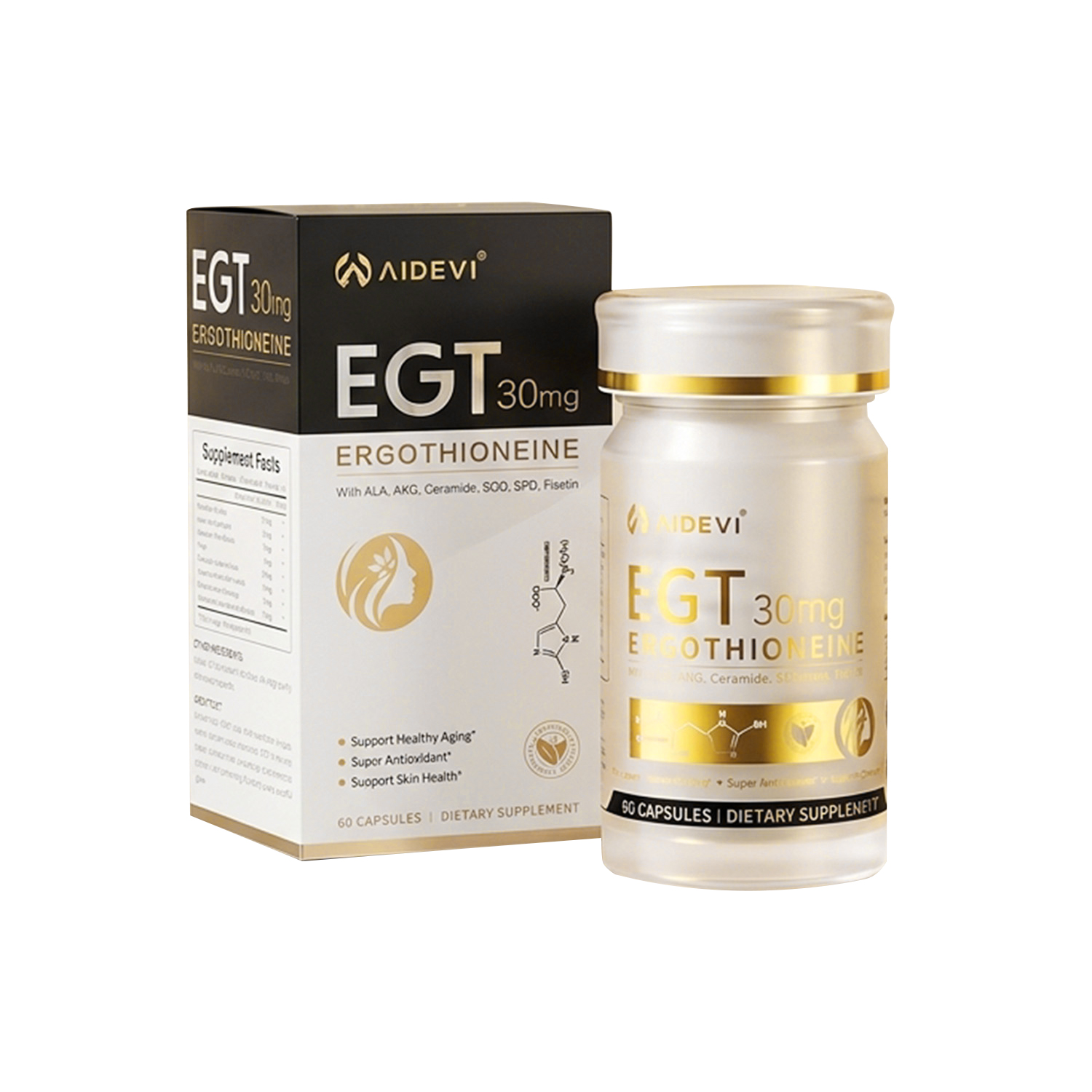


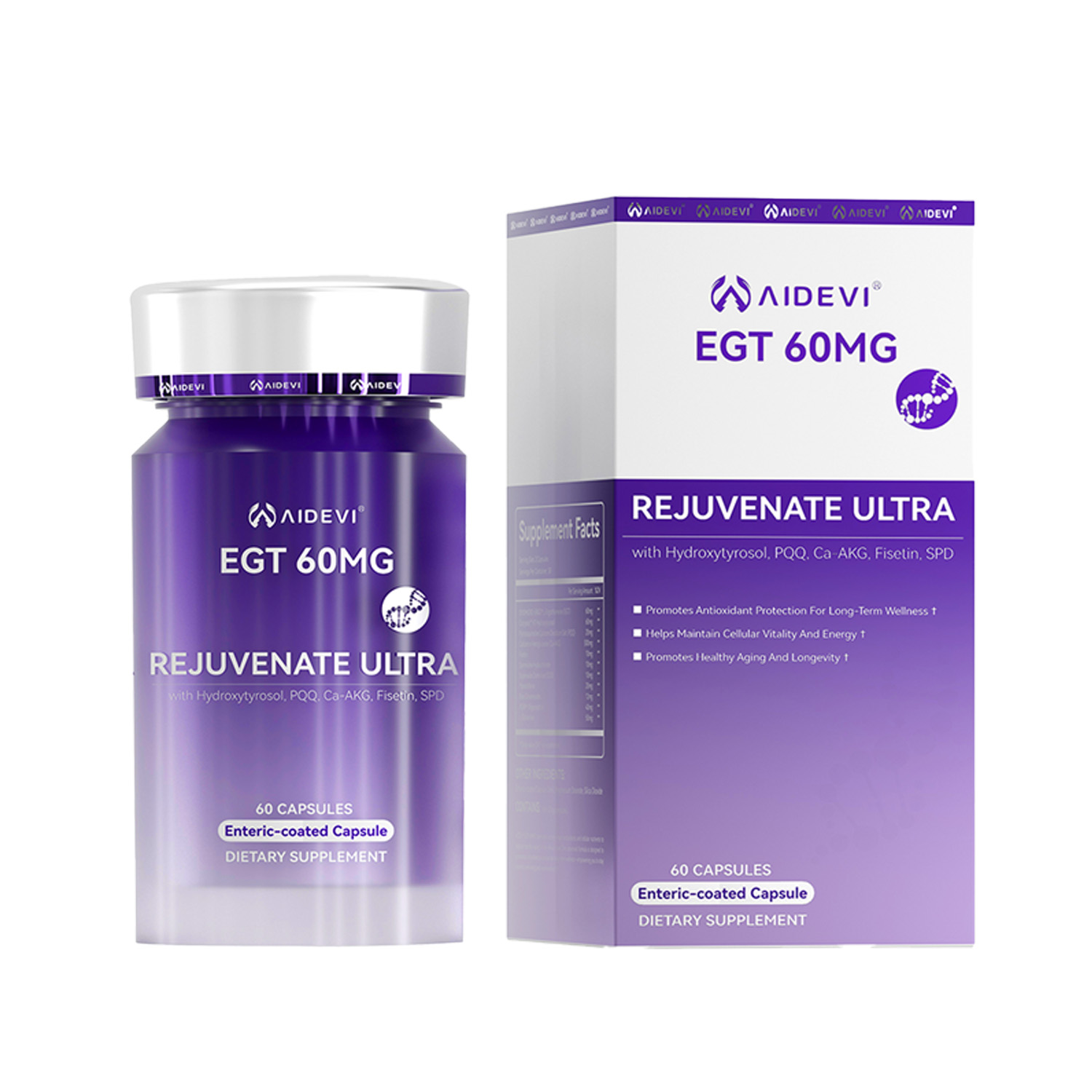

AIDEVI Raw Material Science
What Is L-Ergothioneine? EGT Benefits, Food Sources, Quality Standards, and Supplement Science
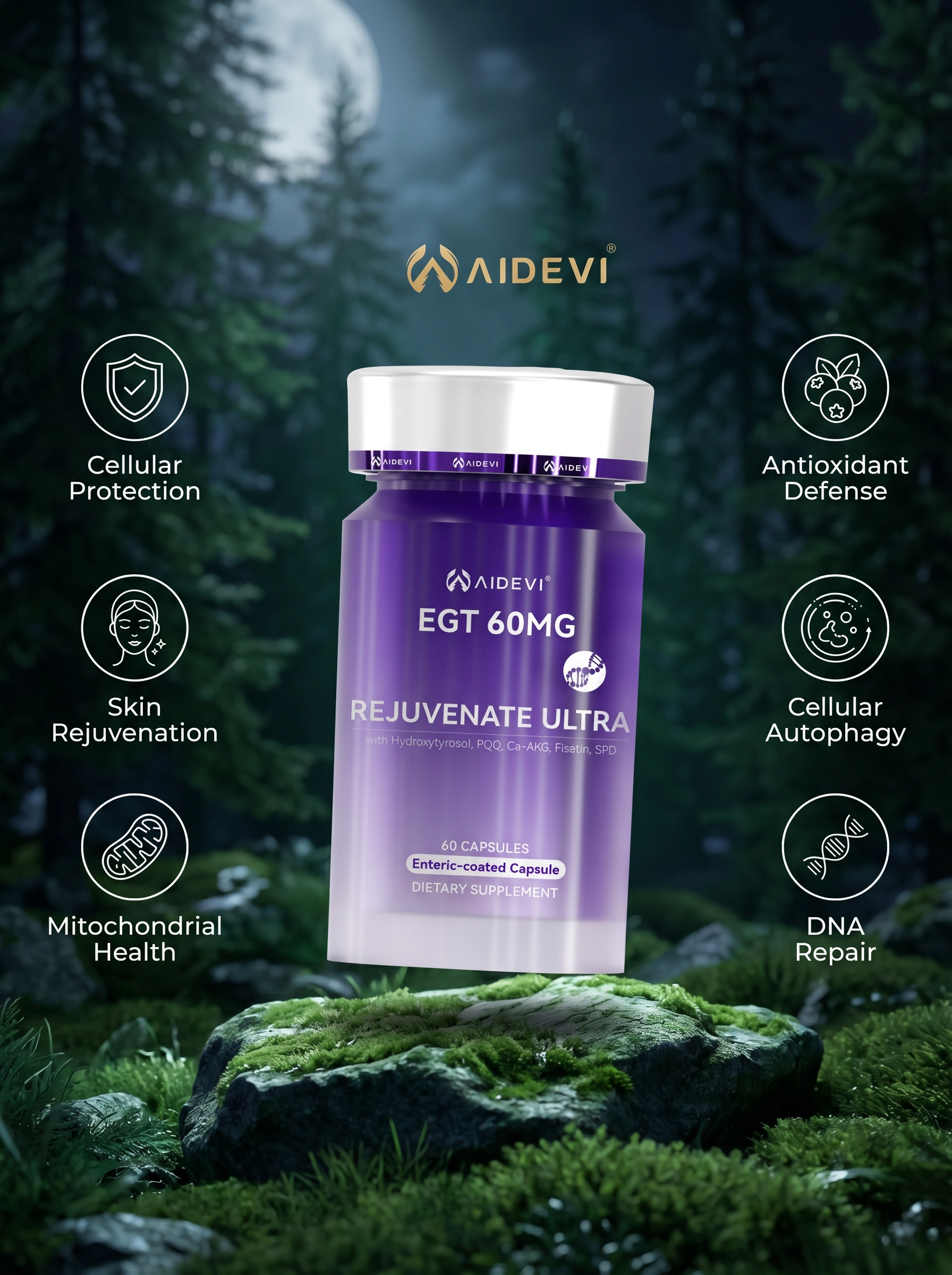
L-Ergothioneine, often called EGT, is a naturally occurring amino acid derivative found in mushrooms and certain foods. It is studied for antioxidant-resilience biology, cellular stress response, and a transporter called OCTN1 that helps explain why EGT is different from many common antioxidant ingredients.
This guide explains EGT in practical consumer language: what it is, why it matters in healthy-aging research, how it relates to oxidative stress, how to compare EGT with mushroom extracts, and what quality signals to look for before trusting an EGT raw material or formula.
- EGT is a food-derived compound most closely associated with mushrooms, but food levels vary widely.
- Its scientific interest centers on antioxidant-resilience research and OCTN1 transporter biology.
- EGT is not the same thing as a broad mushroom extract; a purified EGT ingredient should have identity and assay documentation.
- A reliable EGT formula should make the ingredient form, amount, quality testing, and evidence boundaries easy to understand.
Content
- What is L-Ergothioneine?
- Why does EGT matter in healthy-aging and antioxidant research?
- Can you get EGT from food?
- How do you judge EGT ingredient quality?
- How should EGT fit into a formula?
- Who may be interested in EGT?
- What can EGT not promise?
- What should you check before buying an EGT formula?
- Frequently Asked Questions
What Is L-Ergothioneine?
L-Ergothioneine is a sulfur-containing amino acid derivative that humans obtain mainly from diet. It is not an energy stimulant, hormone, vitamin, or drug. It is better understood as a specialized nutrient-like compound that appears in antioxidant and cellular-resilience research because of its chemistry and its relationship with transporter biology [1].
For consumers, the simplest way to understand EGT is this: it is a naturally occurring compound found in certain foods, especially mushrooms, that researchers study for how it may help cells manage normal oxidative demands. That does not mean EGT creates instant visible results or replaces healthy habits. It means EGT belongs in the science conversation around antioxidant support, healthy aging, and long-term cellular wellness.
EGT is also different from broad antioxidant marketing. Many ingredients are called antioxidants because they can interact with reactive molecules in a laboratory test. EGT is more specific. Research attention is partly driven by OCTN1, also known as SLC22A4, a transporter associated with EGT uptake and tissue distribution [2]. This transporter connection is one reason EGT is often discussed as more than a generic antioxidant.
| Consumer Question | Plain-English Answer |
|---|---|
| Is EGT natural? | Yes, EGT occurs naturally in foods such as mushrooms, although supplement ingredients may be produced through controlled manufacturing routes. |
| Is EGT the same as mushroom extract? | No. Mushroom extract is a broad material. L-Ergothioneine is a specific compound that should be identified and measured. |
| Is EGT a quick anti-aging fix? | No. EGT should be presented as a studied antioxidant-resilience ingredient, not as a guaranteed transformation. |
Why Does EGT Matter in Healthy-Aging and Antioxidant Research?
Healthy aging is not one pathway. It involves sleep, nutrition, movement, metabolic health, skin barrier care, stress management, and many cellular processes that operate quietly over time. One recurring theme in healthy-aging research is oxidative stress: the normal biological pressure created when reactive molecules exceed the body's capacity to manage them.
EGT is studied because its sulfur-based structure and redox behavior are relevant to oxidative-stress biology [1]. In consumer language, this makes EGT an ingredient for antioxidant resilience. The word "resilience" matters. It avoids the false idea that one antioxidant can block the effects of time, lifestyle, or environmental exposure. Instead, it places EGT where it belongs: as one possible support within a wider wellness system.
The transporter story adds another layer. OCTN1 is associated with EGT movement into cells and tissues, which helps explain why scientists continue to investigate EGT distribution rather than treating it like a simple label claim [2]. For AIDEVI, that distinction is important: EGT is best explained through its studied mechanism, evidence level, and consumer-relevant limits, not through exaggerated anti-aging promises.
How to read the science responsibly
Ingredient research can explain why EGT is interesting, but it does not automatically prove that every finished supplement produces the same experience for every user. Strong consumer education separates three things: the compound's biological role, the quality of the raw material, and the evidence for a finished formula.
Can You Get EGT From Food?
Yes. Mushrooms are the most recognized dietary source of EGT, with levels varying by species, cultivation, maturity, and preparation. Research has described mushrooms as notable dietary sources of ergothioneine and other antioxidant compounds [3]. Oyster, shiitake, maitake, porcini, and similar mushrooms are often discussed in this context.
The practical issue is consistency. Many people do not eat mushrooms daily, and even people who do may not get a predictable amount of EGT. Food is still valuable, but food intake is variable. A standardized ingredient allows a formula developer to work with a defined input, which is why EGT appears in supplement research and product development.
This does not mean supplements are automatically better than food. A better framing is: food provides a natural nutritional context; standardized EGT provides measurement and formula control. Consumers should be skeptical of any page that uses food-source science to imply guaranteed supplement outcomes without showing ingredient amount, form, testing, and evidence boundaries.
| Source | Strength | Limitation |
|---|---|---|
| Mushrooms and foods | Natural food matrix and broader nutritional value. | EGT amount varies and is rarely measured in daily meals. |
| Purified EGT ingredient | Defined input, clear assay target, easier batch control. | Requires quality documentation and responsible formulation. |
| Broad mushroom extract | May contain many naturally occurring compounds. | Not equivalent to a measured L-Ergothioneine ingredient unless EGT is tested and stated. |
How Do You Judge EGT Ingredient Quality?
A reliable EGT page should make quality easier to understand, not harder. The first quality question is identity: is the material actually L-Ergothioneine? The second is assay: how much active EGT is present? The third is safety and cleanliness: what testing supports heavy metal, microbial, residual solvent, and impurity controls?
This is where consumers can separate real transparency from premium-sounding language. Words like "advanced," "pure," "scientific," or "clinical grade" do not mean much by themselves. Useful information is specific. It names the ingredient form, provides an amount per serving, explains the manufacturing or sourcing route where relevant, and keeps testing claims connected to actual quality questions.
AIDEVI's broader quality philosophy is strongest when it helps consumers understand what a test can and cannot prove. A Certificate of Analysis can support identity, purity, and contaminant review. It does not prove that a product will create a specific personal result. The same evidence discipline appears across AIDEVI's education on how to evaluate supplement benefits and why well-designed evidence matters.
| Quality Signal | What It Means | Why Consumers Should Care |
|---|---|---|
| Identity testing | Confirms the material is L-Ergothioneine. | Avoids confusion with broad mushroom powder or undefined blends. |
| Assay or potency | Measures the active EGT content. | Shows whether the batch matches the intended specification. |
| Contaminant review | Checks relevant heavy metals, microbial limits, residual solvents, or other impurities. | Supports product-quality confidence beyond the front label. |
| Stability context | Reviews how the ingredient behaves under storage and formulation conditions. | Helps protect consistency from production through consumer use. |
How Should EGT Fit Into a Formula?
EGT is most useful when its role in the formula is clear. In a cellular wellness formula, it may sit beside NAD+ pathway ingredients, mitochondrial-support nutrients, or polyphenols. In a beauty-from-within concept, it may support the antioxidant-resilience side of skin wellness. In a healthy-aging routine, it may help round out a formula that also addresses energy, nutrition, recovery, and daily consistency.
The goal is not to collect as many antioxidants as possible. A crowded formula can look impressive while making the purpose harder to understand. A thoughtful formula should answer four questions: What is the main wellness goal? What does each ingredient contribute? Is the amount meaningful and transparent? Does the evidence support the language being used?
This is where AIDEVI can build trust without forcing a sales pitch. A science page should help consumers become better readers of supplement labels. Readers who want a broader view can continue through the AIDEVI antioxidant supplement guide, the practical guide to choosing a daily antioxidant supplement, or AIDEVI's R&D and manufacturing overview.
Who May Be Interested in EGT?
EGT may interest consumers who want a more precise way to think about antioxidant support. This includes people comparing healthy-aging ingredients, readers who already know about NAD+, PQQ, polyphenols, or mitochondrial wellness, and consumers who want to understand why an ingredient appears in a cellular-resilience or beauty-from-within formula.
EGT may also be relevant for shoppers who care about ingredient traceability. If you want to know whether a formula uses a defined compound or a broad botanical material, EGT is a good example of why naming, assay, and quality documentation matter. The decision is less about chasing the newest antioxidant and more about choosing ingredients that have a clear role, clear testing, and realistic communication.
| User Type | Why EGT May Be Relevant |
|---|---|
| Healthy-aging learners | EGT connects antioxidant-resilience research with cellular wellness language. |
| Label-conscious shoppers | EGT highlights why ingredient identity, assay, and source documentation matter. |
| Beauty-from-within consumers | EGT can be discussed as part of antioxidant support for overall skin-wellness routines, without promising visible results. |
What Can EGT Not Promise?
EGT cannot promise age reversal, instant skin changes, protection from health conditions, or the same outcome for every person. Transporter biology should not be turned into a guarantee. OCTN1 helps explain why EGT is scientifically interesting; it does not prove that every finished product will create a specific personal result.
EGT also cannot replace the foundations of healthy aging. Sleep, protein intake, colorful plant foods, sun protection, regular movement, hydration, and appropriate medical care still matter. Supplements are most useful when they are chosen to support a coherent routine, not when they are expected to compensate for every missing habit.
What Should You Check Before Buying an EGT Formula?
Before choosing an EGT formula, use a simple decision checklist. The product should identify L-Ergothioneine clearly, state the amount per serving, explain whether the formula is single-ingredient or multi-ingredient, and provide enough quality context to show that the brand understands the difference between raw-material science and finished-product claims.
- Ingredient name: Look for L-Ergothioneine, ergothioneine, or EGT clearly stated.
- Amount per serving: Avoid vague labels that do not disclose the actual EGT amount.
- Testing logic: Identity, assay, contaminant review, and stability are more meaningful than broad purity language.
- Formula purpose: A clear formula explanation shows why EGT is included and what other ingredients contribute.
- Claim discipline: Be cautious when a page promises dramatic anti-aging, skin, or medical outcomes.
AIDEVI Research Credibility Standard
AIDEVI's raw-material education is built around visible research and clear boundaries. That means naming the ingredient, explaining the biological rationale, showing what quality testing is relevant, avoiding guaranteed personal outcomes, and connecting the ingredient to formula logic only where the science supports it.
For brand context, readers can review AIDEVI's brand background and certificate information. Product-specific claims should still be checked on the relevant product page and label before purchase.
Common EGT Misconceptions
The first misconception is that EGT is simply "the strongest antioxidant." That phrase may sound powerful, but it does not help a consumer make a better decision. Antioxidant value depends on biological context, ingredient quality, dose, stability, and the overall formula. A more useful statement is that EGT has a distinctive antioxidant-resilience profile and a transporter-related research story.
The second misconception is that mushroom extract and purified EGT are interchangeable. They are not. A mushroom extract may be valuable for other reasons, but it should not be treated as a measured EGT ingredient unless the EGT content is tested and disclosed. Consumers should look for exact ingredient naming rather than relying on vague natural-source language.
The third misconception is that a single ingredient can carry the entire healthy-aging conversation. EGT can be a sophisticated ingredient, but healthy aging remains a system: nutrition, sleep, sun protection, movement, stress regulation, and appropriate medical care still matter. A responsible supplement page should support better decisions, not encourage unrealistic expectations.
Conclusion
L-Ergothioneine is worth understanding because it sits at the intersection of food-based nutrition, antioxidant-resilience research, and modern supplement formulation. Its value is not that it sounds exotic. Its value is that it has a specific identity, a distinctive transporter story, and a practical role in formulas designed around cellular wellness and healthy aging.
For consumers, the best EGT page is not the one with the loudest promise. It is the one that helps you answer better questions: Is this truly L-Ergothioneine? Is the amount stated? Is quality testing explained? Is the formula logic clear? Are the claims limited to what the evidence can support? That is the standard AIDEVI brings to raw-material education.
Frequently Asked Questions
What is EGT in simple terms?
EGT is a naturally occurring compound found in mushrooms and certain foods. It is studied for antioxidant-resilience biology and its relationship with the OCTN1 transporter.
Is L-Ergothioneine the same as ergothioneine?
In supplement and nutrition discussions, L-Ergothioneine is commonly referred to as ergothioneine or EGT. A label should still identify the ingredient clearly.
Is EGT found naturally in food?
Yes. Mushrooms are among the most recognized food sources, although EGT levels can vary by mushroom type, growing conditions, maturity, and preparation.
What makes EGT different from common antioxidants?
EGT is associated with OCTN1 transporter biology, which gives it a more specific research profile than broad antioxidant language alone.
Can EGT support healthy aging?
EGT is studied in antioxidant and cellular-resilience research, which are relevant to healthy-aging discussions. It should not be presented as a guaranteed anti-aging outcome.
How do I compare EGT supplements?
Look for clear ingredient naming, amount per serving, identity testing, assay or potency information, contaminant review, manufacturing context, and realistic claim language.
Is EGT the same as mushroom powder?
No. Mushroom powder may contain many compounds. A purified or standardized L-Ergothioneine ingredient should identify and measure EGT specifically.
Who should ask a healthcare professional before using EGT?
Anyone pregnant, nursing, taking medication, managing a medical condition, under medical supervision, or unsure about supplement interactions should consult a qualified professional before starting any new supplement. Safety assessments can help frame ingredient use, but they do not replace personal medical guidance [4].
References
- [1] Fu et al. Ergothioneine as a Natural Antioxidant Against Oxidative Stress-Related Diseases. Frontiers in Pharmacology, 2022.
- [2] The biology of ergothioneine, an antioxidant nutraceutical.
- [3] Mushrooms: A rich source of the antioxidants ergothioneine and glutathione.
- [4] EFSA safety assessment of synthetic L-ergothioneine as a novel food.
Individual results may vary. Consult a healthcare professional before starting any new supplement, especially if pregnant, nursing, taking medication, managing a medical condition, or following a restricted diet. The research and development information on this page is educational and should not be interpreted as medical advice or guaranteed product outcomes. These statements have not been evaluated by the Food and Drug Administration. This product is not intended to diagnose, treat, cure, or prevent any disease.
