



AIDEVI Buyer Guide
Are Creatine Gummies Effective? Label, Testing & Buyer Tips
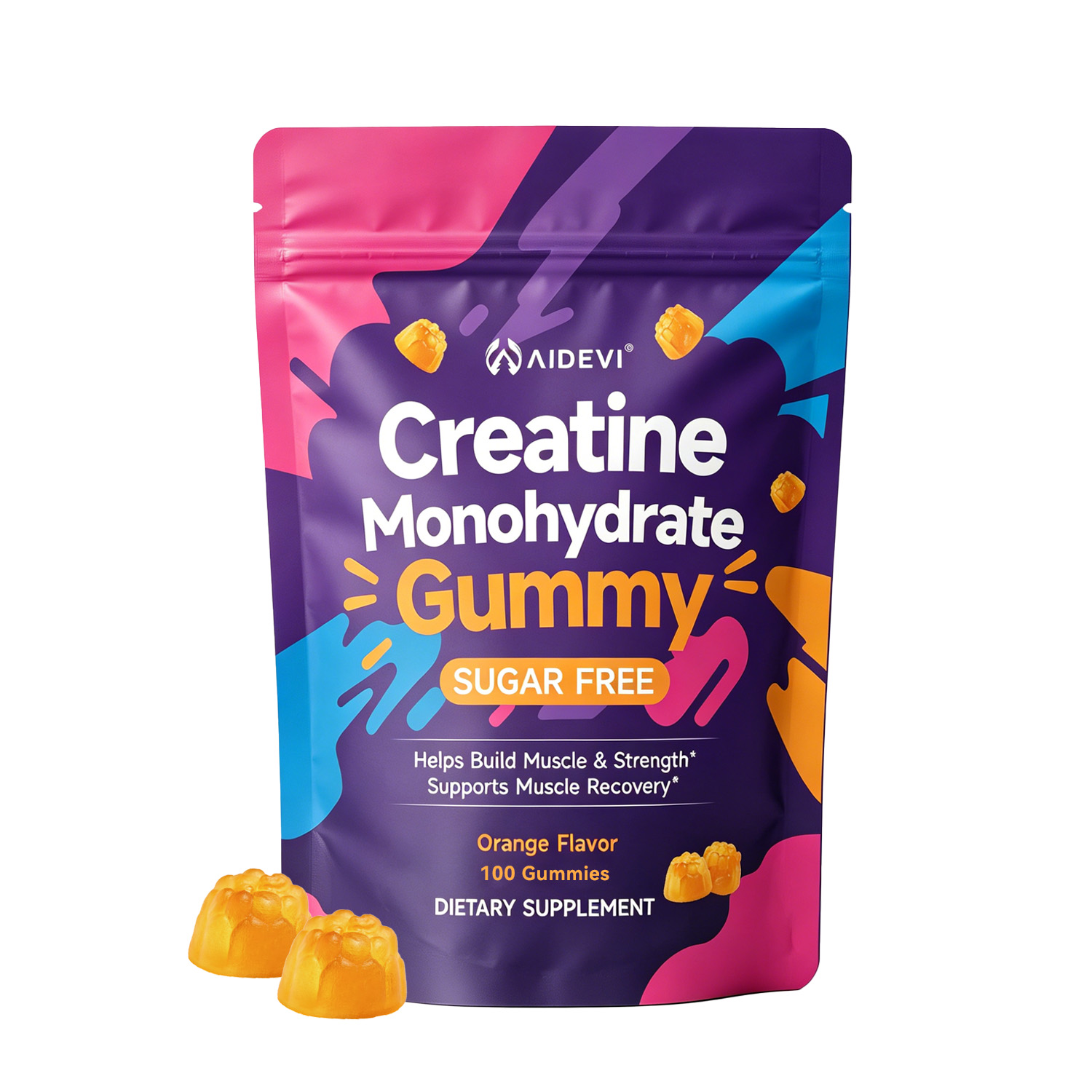
Creatine gummies can work if they deliver real creatine, disclose a meaningful complete serving, remain stable through manufacturing and storage, and are used consistently with training. The gummy format itself is not the proof. Before buying, check the creatine form, the amount per full serving, the number of gummies required, servings per bottle, third-party testing, storage instructions, and whether the product is easier for you to take daily than powder.

- Creatine gummies are a delivery format, not a separate type of creatine evidence.
- Effectiveness depends on verified creatine content, serving size, consistency, and training context.
- A convenient gummy may be worthwhile if it helps you use creatine regularly and the label is transparent.
- Be cautious with unclear serving sizes, missing testing, unrealistic claims, or labels that hide the real amount.
Content
Do creatine gummies actually work?
Creatine gummies can be effective when they contain the stated amount of creatine and the user takes them consistently. The science behind creatine is not based on gummies specifically; it is based largely on creatine monohydrate and its role in increasing muscle creatine stores, supporting the phosphocreatine system, and helping regenerate ATP during repeated high-intensity exercise [1]. A gummy can only participate in that evidence if it reliably delivers creatine.
That distinction matters because many people are not asking whether creatine works. They are asking whether a convenient chewy format can deliver enough creatine to be worth buying. The honest answer is conditional. A well-made, clearly labeled, verified gummy may help someone who dislikes powder or forgets capsules. A poorly made gummy with little creatine, unclear serving instructions, or exaggerated promises may be little more than candy with supplement language.
Independent testing reported by WIRED in 2025 raised concerns that several popular creatine gummy products contained little to no creatine compared with their labels [4]. That does not prove every creatine gummy is ineffective, but it does prove shoppers should not rely on reviews, flavor, or front-label claims alone. AIDEVI's article on how to evaluate supplement benefits is useful here: the ingredient evidence and the finished product evidence are related, but they are not the same thing.
What should the label make clear?
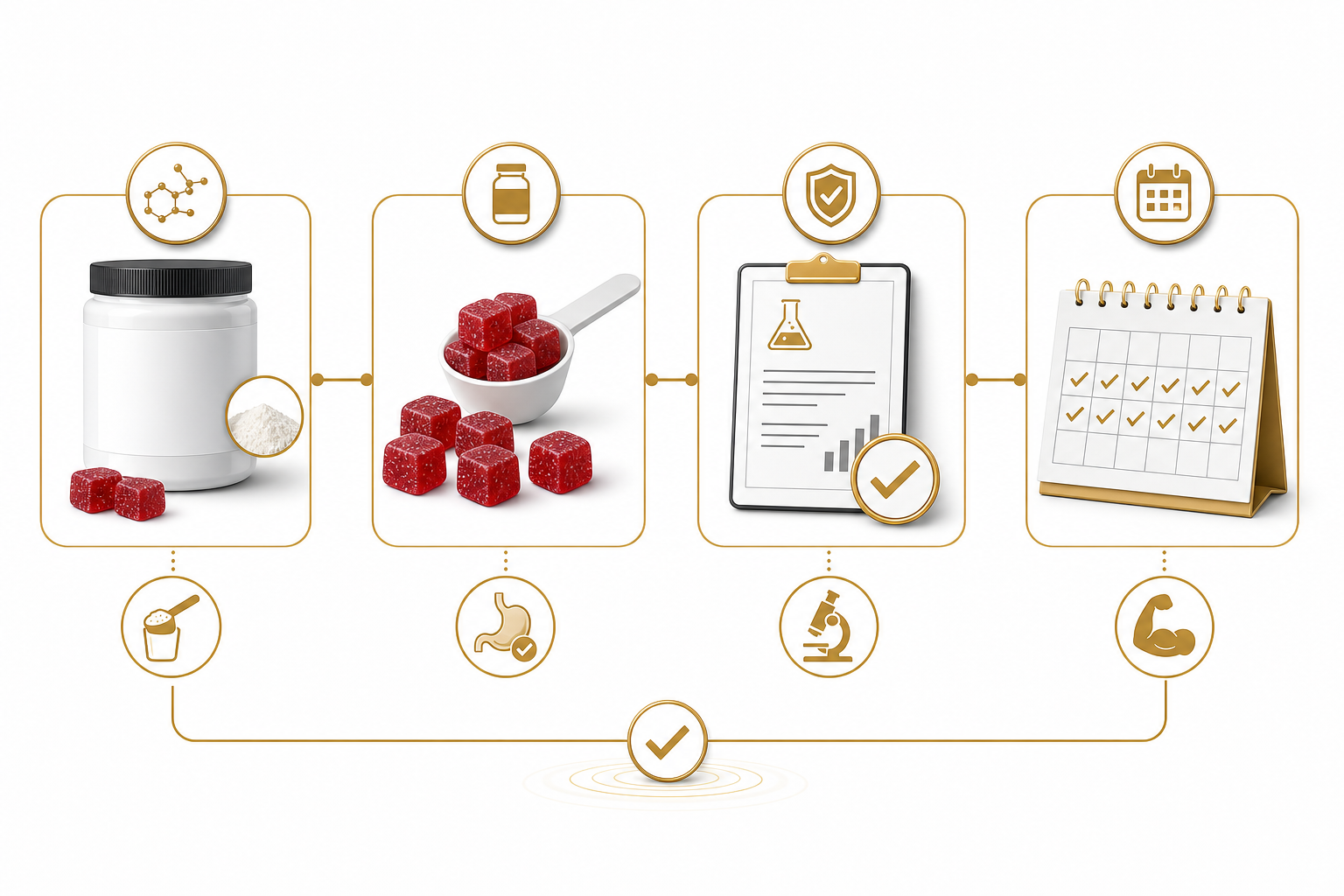
A useful creatine gummy label should make four things easy to find: creatine form, creatine amount per complete serving, gummies required per serving, and servings per container. The complete serving is the key detail. If the label says a serving is multiple gummies, the creatine amount applies to that full serving, not necessarily to one gummy.
Creatine monohydrate is the reference form with the largest body of evidence. Other forms may appear on labels, but a different form name should not be treated as automatic superiority. The buyer's first job is to verify what form is used and how much the complete serving provides. AIDEVI's existing guide to reading supplement evidence, why well-designed studies matter, is a good way to separate ingredient research from vague marketing language.
| Label Item | Why It Matters | Buyer Question |
|---|---|---|
| Creatine form | Connects the product to the evidence base | Is creatine monohydrate or another form clearly named? |
| Complete serving | Prevents confusing per-gummy and per-serving amounts | How many gummies make one labeled serving? |
| Creatine amount | Shows whether the serving is meaningful for your plan | Is the amount stated in grams or milligrams per complete serving? |
| Other ingredients | Affects sugar, sweeteners, tolerance, allergens, and overlap | Are active add-ons disclosed individually? |
The label should also show directions, warnings, storage, manufacturer or distributor information, and other ingredients. Dietary supplement labels are expected to provide serving information and dietary ingredients in a Supplement Facts panel, but a compliant-looking panel is not the same as independent confirmation that the finished product contains the stated amount [3].
Why does testing matter for gummies?
Testing matters because gummies are more complex to manufacture than a dry scoop of powder. The active ingredient has to be evenly distributed through a chewy matrix, survive processing, and remain stable through storage. Heat, moisture, acidity, and time can matter. A gummy may look and taste consistent while the active creatine amount is not what the buyer expects.
The most useful testing is batch-relevant and product-specific. A generic claim such as “lab tested” is weaker than a certificate or report that identifies the product, batch or lot, test date, method, and result for creatine content and relevant contaminants. A third-party certification from a credible program can add confidence, but shoppers should still read what the certification covers. Testing for heavy metals, for example, is not the same as verifying creatine potency.
This is where creatine gummies require more buyer discipline than the average social-media review suggests. Flavor, texture, and star ratings tell you whether people enjoyed the product. They do not prove potency. For users who care about training outcomes, a product needs to support a real routine. AIDEVI's discussion of muscle recovery and performance gives helpful context: results depend on the full training system, and the supplement has to deliver what it says before the system can be evaluated.
A simple trial can also protect your budget. Before buying multiple bottles, use one bottle long enough to judge adherence, tolerance, and label confidence. Track whether you actually take the full serving, whether the taste encourages or discourages daily use, whether the bottle lasts as long as expected, and whether the storage instructions are realistic for your climate or travel habits. If the product is convenient but the serving economics or quality evidence remain unclear, convenience alone may not justify repeating the purchase.
Are creatine gummies worth it compared with powder?
Creatine powder is often the simpler value benchmark because it can be easier to compare by grams of creatine per container. Gummies usually cost more per gram, but they may be worth it for a person who consistently forgets powder, dislikes mixing drinks, travels often, or wants a pre-portioned option. The value question is not only “Which is cheapest?” It is “Which format delivers a clear serving that I will actually use?”
To compare fairly, calculate total labeled creatine in the bottle by multiplying creatine per serving by servings per container. Then divide the price by that total. Also calculate the cost per day using the labeled directions. A bottle with many gummies can still be a short supply if a serving requires multiple gummies. A low price can become less attractive if the amount is unclear or unverified.
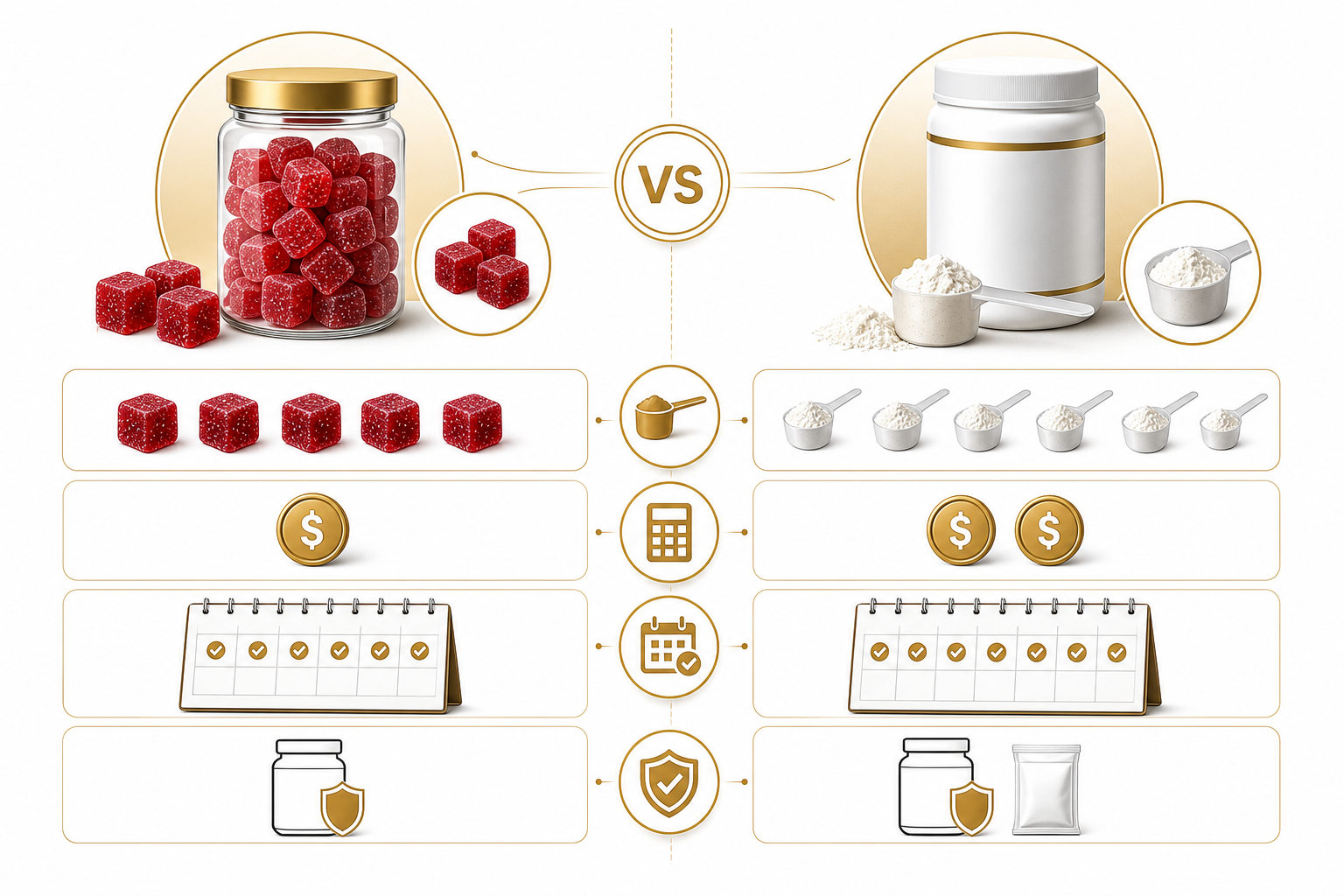
| Buyer Priority | Gummies May Fit If... | Powder May Fit If... |
|---|---|---|
| Consistency | You prefer a ready-to-take format | You already mix shakes or drinks daily |
| Cost per gram | Convenience is worth a premium after verification | Lowest cost per creatine gram is the priority |
| Label simplicity | The complete serving and test information are clear | You want a basic single-ingredient format |
| Travel | Portability improves adherence | You can pack powder safely and measure consistently |
Whatever format you choose, judge results with realistic tracking. Creatine is most relevant to repeated high-intensity training and adaptation, not instant visible muscle. AIDEVI's guide for performance and recovery routines is a reminder that supplement decisions should sit inside training, nutrition, and recovery habits rather than floating alone.
What red flags should buyers avoid?
The biggest red flag is a label that makes the real amount hard to understand. Be careful when the front label uses large numbers but the Supplement Facts panel does not clearly connect those numbers to one complete serving. Also be careful with proprietary blends that hide individual active ingredient amounts. Creatine does not need mystery language to be credible.
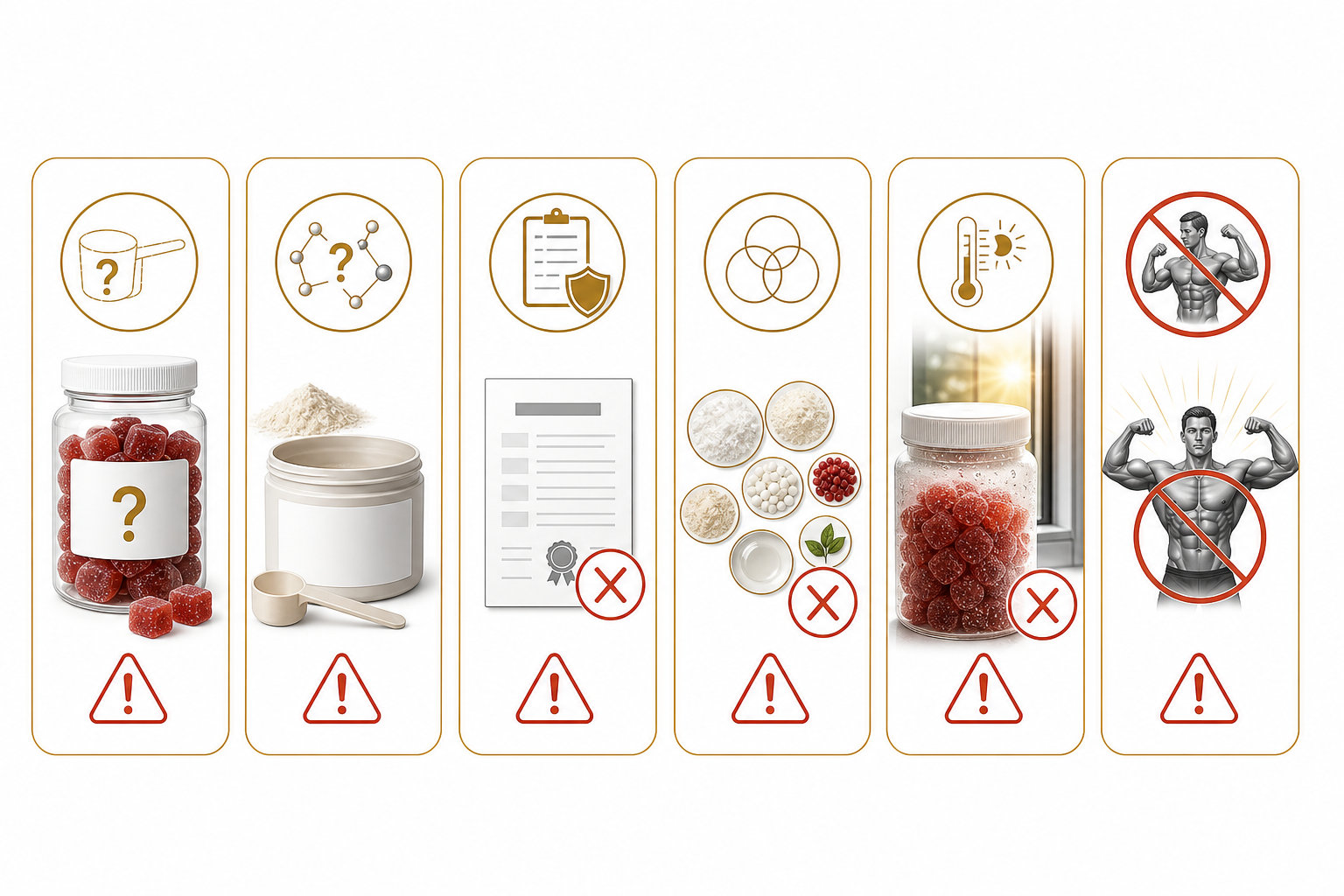
- Unclear serving size. You should know exactly how many gummies make one serving.
- No creatine form. The label should identify the form instead of relying on vague “muscle fuel” language.
- No meaningful testing information. Look for product-specific verification, not only generic quality badges.
- Overloaded formulas. Extra ingredients can make the label harder to evaluate and may overlap with other products.
- Heat or storage neglect. Gummies may be more sensitive to storage conditions than dry powder.
- Unrealistic promises. Avoid products that imply guaranteed transformation without training, nutrition, and consistency.
A trustworthy creatine gummy should make you calmer, not more confused. You should be able to explain what you are taking, why it fits your routine, how much creatine the complete serving provides, and what information supports the label. If you cannot answer those questions, wait before buying. AIDEVI's brand and wellness perspective emphasizes the kind of transparent, science-aware thinking that helps shoppers avoid hype.
Finally, use safety context. People who are pregnant or nursing, under 18, taking medication, managing a medical condition, following a medically restricted diet, or concerned about kidney health should consult a qualified healthcare professional before starting creatine or any new supplement. A format that tastes easy should still be treated as a supplement.
Convenience works only when the product delivers
Creatine gummies can work, but not because they are gummies. They work only if they provide real creatine in a clear complete serving and help you stay consistent with a training-support routine. Convenience is valuable when it improves adherence; it is not valuable if the product is underdosed, unstable, or vague.
Before you buy, read the Supplement Facts panel, calculate the effective daily cost, check testing information, review storage guidance, and be skeptical of dramatic claims. A good creatine gummy should make the decision simpler. If the label makes the decision harder, keep looking.
Frequently Asked Questions
Are creatine gummies effective?
They can be effective if they contain the stated creatine amount, use a clear serving size, and are taken consistently. The format alone does not prove effectiveness.
Are creatine gummies as good as powder?
They may be as useful for some people if the dose and quality are verified, but powder is often easier to compare by cost per gram. Gummies mainly win on convenience.
How many creatine gummies should I take?
Follow the product label and professional guidance that applies to you. Do not assume one gummy equals one serving unless the Supplement Facts panel says so.
What is the biggest creatine gummy red flag?
An unclear serving size is one of the biggest red flags. You should be able to identify the creatine form, amount per complete serving, and servings per bottle quickly.
Do creatine gummies need third-party testing?
Testing is especially helpful because gummies can be harder to manufacture consistently. Look for product-specific and batch-relevant information where available.
Can creatine gummies replace training or protein?
No. Creatine supports a specific energy system involved in high-intensity exercise. It does not replace progressive training, adequate protein, calories, sleep, or recovery habits.
References
- [1] International Society of Sports Nutrition position stand: safety and efficacy of creatine supplementation in exercise, sport, and medicine
- [2] Common questions and misconceptions about creatine supplementation
- [3] FDA: Questions and Answers on Dietary Supplements
- [4] WIRED report on independent creatine gummy testing
Individual results may vary. Consult a healthcare professional before starting any new supplement, especially if pregnant, nursing, taking medication, under 18, following a medically restricted diet, or managing a medical condition.
These statements have not been evaluated by the Food and Drug Administration. This product is not intended to diagnose, treat, cure, or prevent any disease.
