



AIDEVI Buyer Guide
How to Choose the Best Creatine Gummies: 9 Buyer Questions
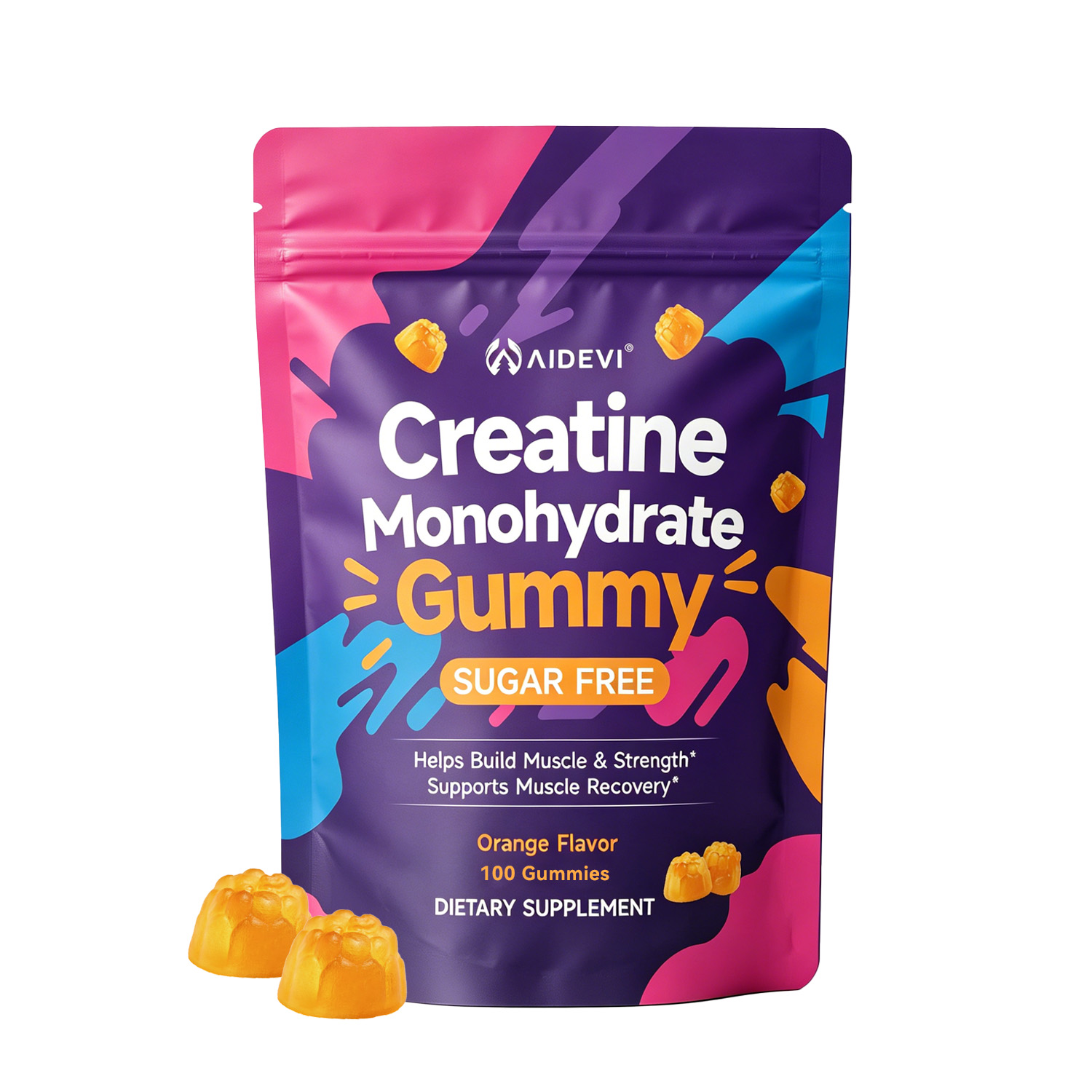
The best creatine gummies are not simply the sweetest, cheapest, or most popular option. A credible gummy should make the creatine form, complete serving size, daily amount, servings per bottle, testing, storage guidance, added ingredients, cost per effective serving, and realistic expectations easy to verify. If a product makes those questions hard to answer, it is not the best choice for a serious fitness routine.

- Judge creatine gummies by dose clarity, quality verification, and routine fit, not flavor alone.
- Creatine monohydrate has the strongest evidence base, but the finished gummy must still deliver what the label says.
- Calculate cost per effective serving before comparing bottles.
- Avoid products that hide serving size, testing, storage guidance, or realistic limits.
Content
What makes creatine gummies “best”?
A good creatine gummy is a trustworthy delivery format for creatine, not a shortcut around the basics. Creatine itself is widely studied for supporting high-intensity exercise capacity and training adaptations when combined with an appropriate program [1]. But that evidence does not automatically transfer to every gummy on a shelf. The finished product still has to contain the stated creatine, disclose the serving clearly, and be used consistently.
That is why “best creatine gummies” should mean best evaluated, not best advertised. A product can taste good and still be hard to verify. It can have strong reviews and still hide the amount per complete serving. It can look premium and still lack batch-relevant testing. Before ranking products, build a framework. AIDEVI's guide on how to evaluate supplement benefits offers the same principle for supplements more broadly: start with the evidence, then check whether the actual product delivers the relevant ingredient in a sensible way.
The best choice also depends on the user. A powder may be cheaper per gram, but a gummy may fit someone who travels, dislikes mixing drinks, or forgets powder. Convenience has value only when the formula is transparent enough to trust. If convenience causes you to ignore dose, testing, or cost, it becomes a weak buying reason.
What 9 questions should you ask before choosing?
Use these nine questions before buying any creatine gummy. They turn a vague “best of” search into a practical checklist that matches real customer needs: dose confidence, quality confidence, daily use, and value.

| Question | Why It Matters |
|---|---|
| 1. What form of creatine is used? | Creatine monohydrate is the reference form with the strongest evidence base. |
| 2. How much creatine is in a complete serving? | The complete serving, not one gummy, determines the labeled daily amount. |
| 3. How many gummies make one serving? | This affects convenience, bottle length, sugar or sweetener intake, and cost. |
| 4. How many servings are in the bottle? | Gummy count and serving count are not always the same thing. |
| 5. Is there product-specific testing? | Testing helps verify potency and quality beyond the front label. |
| 6. Are added ingredients disclosed? | Extra amino acids, electrolytes, sweeteners, or blends can affect fit and tolerance. |
| 7. What are the storage instructions? | Gummies may be more sensitive to heat and moisture than dry powder. |
| 8. What is the cost per effective serving? | Bottle price alone can hide a weak value. |
| 9. Does the product set realistic expectations? | Creatine supports training; it does not replace training, food, or sleep. |
How do you verify dose and serving count?
Start with the Supplement Facts panel. The label should tell you the serving size and the amount of creatine in that serving. If the product says one serving is multiple gummies, then the creatine amount belongs to the full set of gummies. This is the most common place buyers get misled: they see a large number on the front label but do not connect it to how many gummies are required each day.
Then calculate how long the bottle really lasts. Multiply servings per container by creatine per serving to estimate total labeled creatine in the bottle. This matters because a 60-gummy bottle might be a 60-day supply, a 30-day supply, or less, depending on the serving size. A product is easier to evaluate when this math is obvious rather than hidden in small print.
Finally, connect dose to routine. A gummy that requires too many pieces may be less convenient than it first appears. A smaller serving may still fit some users if it is transparent and aligned with their plan, but the buyer should know what they are choosing. If you are using creatine to support resistance training, AIDEVI's practical recovery discussion in muscle recovery and performance is a reminder that supplement use should be evaluated alongside training, nutrition, and recovery habits.
How do you judge testing and quality?
Creatine gummies create a specific quality question: does the finished gummy contain the creatine amount shown on the label? This is not only a theoretical concern. Independent reporting in 2025 raised questions about some creatine gummy products containing little or no creatine compared with label expectations [4]. That does not mean all gummies fail; it means shoppers should ask for better evidence.
The strongest quality signals are specific. Look for a test document or certification that identifies the product, batch or lot, test date, and result. A vague “lab tested” badge is weaker. Also distinguish between potency testing and contaminant testing. Both can matter, but they answer different questions. Potency testing asks whether the active ingredient is present as stated. Contaminant testing asks whether unwanted substances are below relevant limits.
FDA explains that dietary supplements are regulated differently from drugs, and manufacturers are responsible for ensuring their products are properly labeled and safe before marketing [3]. That is why the shopper's quality checklist matters. A label can look official without answering every buyer question. AIDEVI's article on why well-designed studies matter helps frame the broader issue: evidence quality and product specificity both matter.
How do you compare value and routine fit?
Value is more than price per bottle. Compare cost per complete serving, cost per labeled gram of creatine, and the likelihood that you will use the product consistently. Powder often wins on raw cost. Gummies may win when convenience improves adherence. The key is to make the tradeoff visible rather than emotional.

| Comparison Point | What to Do |
|---|---|
| Cost per serving | Divide bottle price by labeled servings, not by gummy count. |
| Cost per creatine gram | Use creatine amount per serving and servings per bottle to compare formats. |
| Adherence value | Ask whether the format makes you more likely to take it daily. |
| Diet fit | Review sugars, sweeteners, allergens, and dietary preferences. |
Routine fit also includes expectations. Creatine does not create instant visible muscle. The strongest first-month signals may be consistency, training logs, body-weight context, and tolerance. If your goal is body recomposition, use AIDEVI's guide on whether to gain muscle or lose fat first before blaming any product for normal scale changes.
A simple scoring method can make the decision less emotional. Give the product one point for each question it answers clearly. If it scores high on flavor but low on serving clarity, testing, storage, and cost, it is not a strong fitness buy. If it scores well on dose, verification, and routine fit but costs more than powder, you can decide whether the convenience premium is worth paying. This keeps the decision tied to evidence and behavior rather than influencer excitement.
What should you check on the shelf or product page?
When comparing several creatine gummies in a store or online, slow down at the label. Do not start with flavor rankings. First scan for the Supplement Facts panel, serving size, creatine form, and creatine amount. Then look for testing or quality information. Then check storage instructions and manufacturer details. Only after that should you compare flavor, texture, subscription discounts, or promotional claims.

Watch for red flags: oversized claims, no complete serving clarity, no creatine form, proprietary blends that obscure amounts, missing storage guidance, or promises that imply results without training. A strong product should not need mystery. It should help you answer the nine questions quickly. For shoppers who want a broader quality mindset, the AIDEVI About page gives context for a brand approach centered on science-aware wellness and ingredient transparency.
There are also times when the best decision is not to buy gummies at all. If you already use powder consistently, the convenience upgrade may not matter. If the product requires a large number of gummies to reach the labeled serving, the routine may become less convenient than expected. If you are sensitive to sweeteners, acids, or sticky textures, a gummy format may create tolerance issues. And if the brand cannot answer basic quality questions, waiting is wiser than gambling on a bottle because the category is trending.
Conclusion
The best creatine gummies are the ones that make a serious buyer's questions easy to answer. They clearly disclose creatine form, complete serving size, amount, servings per bottle, testing, storage, added ingredients, cost, and realistic use case. If those basics are missing, the product is not a strong choice no matter how good the flavor or marketing looks.
Use the nine-question framework before you buy. It protects you from hype, helps compare gummies against powder fairly, and keeps the focus where it belongs: a transparent product that fits a consistent training-support routine.
Frequently Asked Questions
What are the best creatine gummies?
The best creatine gummies are transparent about creatine form, full serving size, amount per serving, servings per bottle, testing, storage, and realistic expectations. Avoid judging by flavor or popularity alone.
Are creatine gummies better than powder?
Not automatically. Powder often wins on cost per gram, while gummies may win on convenience. The better format is the one that provides a clear serving and supports consistent use.
What should I look for in creatine gummies?
Look for creatine form, amount per complete serving, gummies per serving, servings per container, added ingredients, storage instructions, manufacturer information, and product-specific testing where available.
Do creatine gummies need third-party testing?
Third-party or product-specific testing is especially helpful for gummies because potency and stability can be harder to judge from the label alone. Look for documents that identify the product and relevant batch or lot.
Can I choose creatine gummies just because they are convenient?
Convenience matters if it improves daily consistency, but it should not replace dose and quality checks. A convenient under-verified product is still a weak buy.
Who should ask a healthcare professional first?
People who are pregnant or nursing, under 18, taking medication, managing a medical condition, following a medically restricted diet, or concerned about kidney health should consult a qualified healthcare professional before starting creatine.
References
- [1] International Society of Sports Nutrition position stand: safety and efficacy of creatine supplementation in exercise, sport, and medicine
- [2] Common questions and misconceptions about creatine supplementation
- [3] FDA: Questions and Answers on Dietary Supplements
- [4] WIRED report on independent creatine gummy testing
Individual results may vary. Consult a healthcare professional before starting any new supplement, especially if pregnant, nursing, taking medication, under 18, following a medically restricted diet, or managing a medical condition.
These statements have not been evaluated by the Food and Drug Administration. This product is not intended to diagnose, treat, cure, or prevent any disease.
