









AIDEVI Fitness Guide
Creatine Results Timeline: What to Track in the First 30 Days
Creatine results usually show up first as consistency markers, body-weight context, and small training-performance signals, not as instant visible muscle. In the first 30 days, track whether you take it consistently, how your body weight changes, whether repeated hard sets feel more sustainable, how your digestion responds, and whether your training plan is actually progressing. A realistic timeline prevents you from quitting too early or misreading normal water-weight changes as failure.

- Do not judge creatine only by the mirror during the first month.
- Body weight may change from fluid shifts, food, sodium, glycogen, and training stress.
- The most useful early signals are adherence, training logs, tolerance, and recovery context.
- A 30-day review should compare your routine against your goal, not against dramatic online claims.
Content
How long does creatine take to work?
Creatine does not work like caffeine. Most people should not expect a clear one-serving sensation. Creatine's main role is to help increase muscle creatine and phosphocreatine availability, which supports rapid ATP regeneration during short, intense efforts such as heavy sets, sprints, and repeated explosive work [1]. That means the useful question is not “Did I feel something today?” but “Am I taking it consistently enough to support the training I am doing?”
A 30-day timeline is a practical review window because it is long enough to build a routine and compare several workouts, but short enough to catch problems early. Some people use a loading approach in research settings, while many consumers use a simpler daily routine. Either way, follow the product label and any professional guidance that applies to you. Do not change serving size just because you want faster visible changes.
The strongest early evidence of progress may be boring: you completed most planned servings, your training log stayed consistent, your digestion was comfortable, and you can compare similar workouts. If you are also trying to change body composition, use AIDEVI's guide on whether to gain muscle or lose fat first to set expectations before blaming creatine for every scale movement.
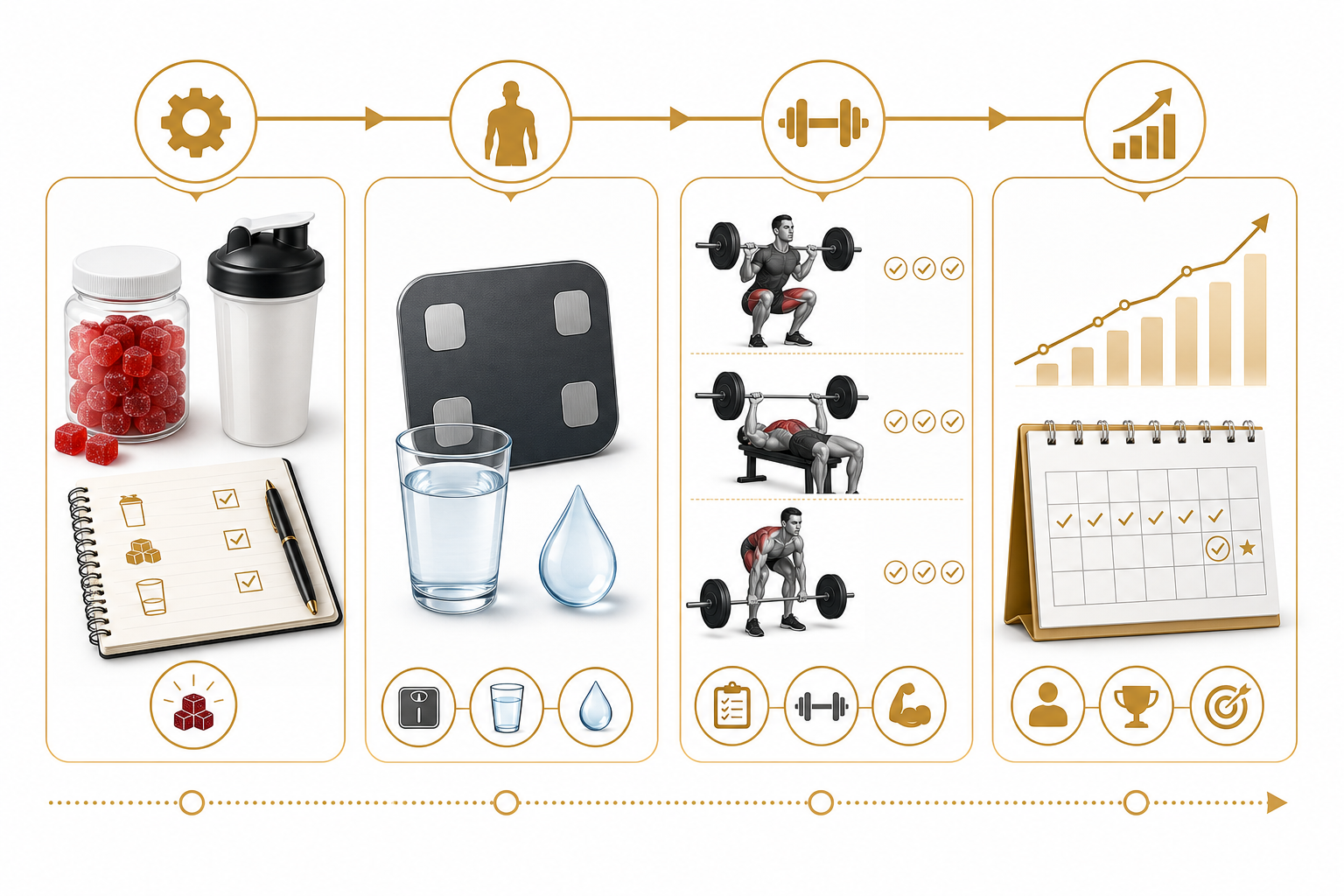
| Timeframe | What to Watch | What Not to Overinterpret |
|---|---|---|
| Days 1-7 | Serving consistency, routine fit, digestion, hydration habits, baseline workouts | No instant visual change, one unusually good or bad workout, daily scale noise |
| Days 8-21 | Repeated-set performance, training volume, rest between sets, tolerance | One exercise PR without context, soreness alone, mirror changes in poor lighting |
| Days 22-30 | Adherence percentage, comparable workouts, body-weight trend, whether the routine is sustainable | Expecting dramatic muscle gain if training and nutrition were inconsistent |
What should you track in week one?
The first week is mostly about setup. Track the exact cue you use, such as breakfast, post-workout, or another daily habit. Record whether you completed the labeled serving, not whether you felt different. A supplement you take four times out of seven is hard to evaluate fairly, especially when creatine depends on consistency more than acute sensation.
Also record baseline body weight, but use a trend rather than one reading. Creatine is often associated with increased water held in muscle, and normal body weight can also shift from carbohydrate intake, sodium, menstrual cycle phase, stress, travel, and training soreness. A small early increase is not automatically fat gain or a problem. Research discussions of creatine often note that water retention concerns are commonly misunderstood [2].
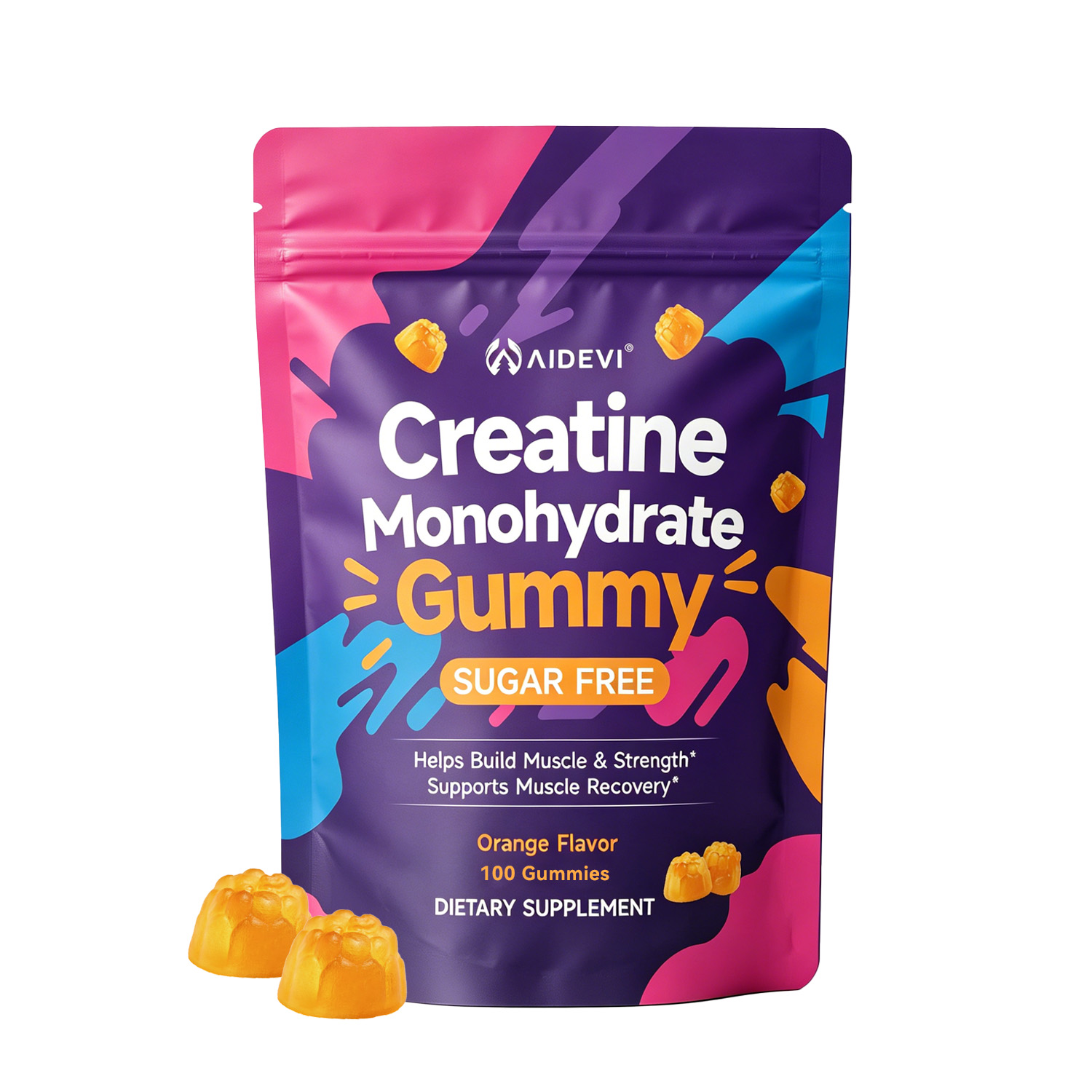
Your week-one log should also include comfort. Note stomach heaviness, bloating, appetite changes, or whether the product format fits your day. If a gummy format helps you remember the routine, that is useful. If any supplement bothers your stomach, separate it from other products, take it with food if the label allows, and consult a healthcare professional if symptoms persist. AIDEVI's article on how to evaluate supplement benefits is a helpful reminder that format, dose clarity, and actual use all matter.
What changes may appear in weeks two and three?
Weeks two and three are when training data becomes more useful. Compare similar workouts rather than random sessions. For example, look at whether you can maintain reps across repeated sets, complete planned volume with cleaner form, recover between sets at the same rest period, or repeat high-intensity intervals with less drop-off. These are more relevant signs than asking whether one workout felt exciting.
Creatine's evidence is strongest when paired with resistance training or other high-intensity exercise. It is not a substitute for progressive overload. If the program does not change, sleep is poor, protein intake is inconsistent, or you skip sessions, creatine has little meaningful context in which to show value. AIDEVI's guide to muscle recovery and performance explains why recovery and adaptation depend on a full system of training, rest, and nutrition.
Do not chase soreness as proof. Less soreness does not always mean better recovery, and more soreness does not prove growth. Soreness can rise simply because you added new exercises or more volume. Track performance, session completion, sleep, and perceived readiness together. That broader view fits how athletes evaluate routines, which is why AIDEVI's overview of performance and recovery habits for active adults is a better comparison point than a single supplement claim.
When you review the training log, look for patterns rather than heroic outliers. A single personal record after extra rest, more food, or a different exercise setup may not tell you much. Three comparable sessions showing steadier reps, better set completion, or less performance drop-off are more useful. Creatine is easiest to evaluate when your log is specific enough to separate real progress from normal day-to-day variation.
How should you review day 30?
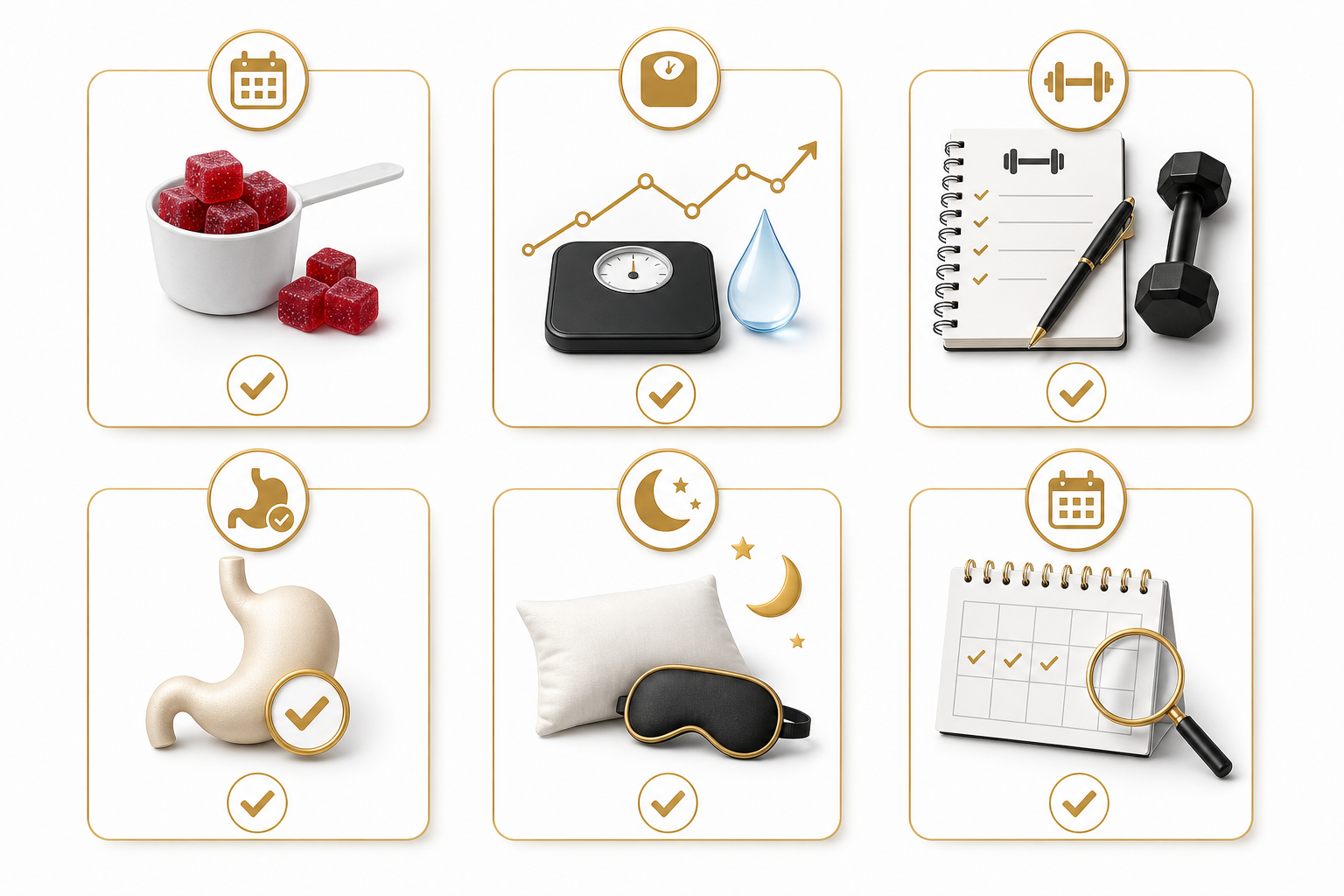
A useful day-30 review is not a dramatic before-and-after photo. It is a short audit. Start with adherence: how many days did you actually take the product as directed? Then review tolerance: did the format fit your routine without digestive issues? Next, compare training: are there specific exercises where repeated sets, total volume, or confidence under load improved? Finally, look at body-weight trend in context.
If your body weight increased slightly but your waist, photos, and training log are stable or improving, that may be a normal creatine-related or nutrition-related shift. If weight increased rapidly while calories were also high and training was inconsistent, creatine should not receive all the blame. If nothing changed but you missed many servings or workouts, the first fix is adherence, not switching products.
| 30-Day Question | Useful Evidence | Possible Next Step |
|---|---|---|
| Was I consistent? | Serving checkmarks across the month | Improve the daily cue before judging results |
| Did training improve? | Comparable lifts, reps, sets, intervals, or session quality | Continue if the routine supports progress |
| Did I tolerate it? | Digestive notes, appetite, timing, other products used together | Adjust timing or ask a professional if issues persist |
| What changed on the scale? | Weekly average, waist, photos, food intake, sodium, training volume | Interpret trend before assuming fat gain |
This review should also include label quality. Did you understand the complete serving size? Did the product disclose the creatine form and amount clearly? Did you accidentally combine it with another product that also contained creatine or stimulants? The best results timeline is impossible to read if the serving itself is unclear. Clear evidence and transparent labels matter, which is why AIDEVI's article on why well-designed studies matter is relevant to everyday supplement decisions.

What mistakes make creatine results hard to judge?
The first mistake is changing too many variables at once. If you start creatine, double training volume, begin a new diet, add a pre-workout, and sleep less, you cannot identify what changed your weight, energy, or performance. Keep the first month simple. Add the routine, track the basics, and avoid turning every small fluctuation into a verdict.
The second mistake is expecting visible muscle without the conditions for muscle gain. Creatine can support training performance, but muscle growth still depends on progressive training, enough protein, appropriate calories, and recovery. If you are dieting aggressively, training irregularly, or eating very little protein, the first month may not look like a transformation even if creatine is doing what it is meant to do.
The third mistake is quitting because of one scale reading. Daily weight is noisy. Use weekly averages, training context, and waist or photo trends if body composition matters. A small gain with better training consistency may be acceptable for a strength phase; the same gain may require different interpretation during a fat-loss phase. Your goal decides how to read the data.
Finally, do not ignore medical context. People who are pregnant or nursing, under 18, taking medication, managing a medical condition, or concerned about kidney health should ask a qualified healthcare professional before starting creatine. Healthy adults have used creatine in research settings, but individual context still matters [1].
Use the first month to measure the routine, not chase a miracle
A realistic creatine results timeline begins with consistency. In the first week, build the habit and watch tolerance. In weeks two and three, compare similar workouts and body-weight trends in context. By day 30, review adherence, training data, comfort, and whether the routine fits your goal. That gives you a more useful answer than a mirror-only judgment.
Creatine is best evaluated as part of a training and nutrition system. If the system is consistent, your 30-day log can reveal whether the supplement is supporting the work. If the system is inconsistent, the most valuable result may be discovering what needs to be fixed before any supplement can be judged fairly.
Frequently Asked Questions
How long does creatine take to show results?
Many people need several weeks of consistent use and comparable training data before results are meaningful. Some changes may appear earlier, but one workout or one scale reading is not enough to judge the routine.
What should I track first?
Start with adherence, body-weight trend, training log, digestive comfort, sleep, and recovery notes. These markers explain more than a single before-and-after photo.
Will creatine make me gain weight?
Some users notice body-weight changes, often related to water, food intake, glycogen, sodium, and training stress. Use weekly averages and goal context before assuming fat gain.
Should I stop if I do not see visible changes in two weeks?
Not necessarily. Review adherence, training consistency, protein intake, sleep, and whether you are comparing similar workouts. Visible changes are often slower than routine and performance signals.
Do I need to take creatine only on workout days?
Many routines use creatine consistently, including rest days, because the goal is to maintain muscle creatine availability. Follow the product label and professional guidance that applies to you.
What if creatine upsets my stomach?
Check the serving size, timing, sweeteners, and other products taken at the same time. Separate products or use with food if label directions allow. If discomfort continues, stop use and ask a healthcare professional.
References
- [1] International Society of Sports Nutrition position stand: safety and efficacy of creatine supplementation in exercise, sport, and medicine
- [2] Common questions and misconceptions about creatine supplementation
- [3] Protein supplementation and resistance training adaptations: systematic review and meta-analysis
- [4] International Society of Sports Nutrition position stand: protein and exercise
Individual results may vary. Consult a healthcare professional before starting any new supplement, especially if pregnant, nursing, taking medication, under 18, following a medically restricted diet, or managing a medical condition.
These statements have not been evaluated by the Food and Drug Administration. This product is not intended to diagnose, treat, cure, or prevent any disease.
