



AIDEVI Antioxidant Wellness Guide
What Is Resveratrol? Foods, Supplements & What It Really Does
Updated August 25, 2026 · What the science suggests about sources, benefits, bioavailability, and safety
Resveratrol is a plant polyphenol found in grape skins, berries, peanuts, and some other plants. It is studied for antioxidant activity, cellular signaling, vascular function, metabolism, brain health, and healthy aging. However, most exciting mechanisms come from laboratory or animal research, while human supplement trials are generally small, short, and mixed. Resveratrol is best understood as an optional wellness ingredient—not a proven treatment or disease-prevention product.
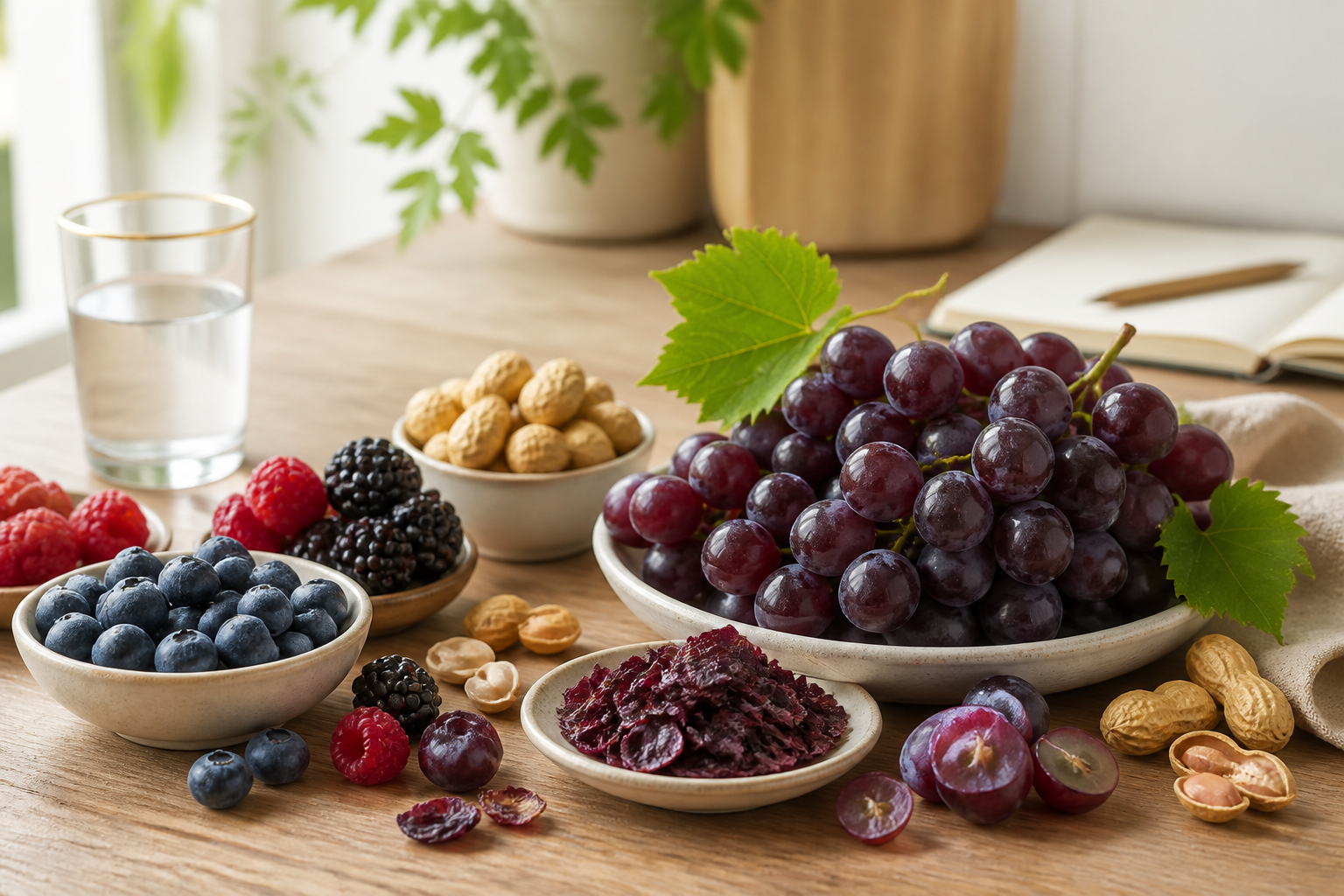
A food-first view of common resveratrol sources. The image does not represent a specific dose or a guaranteed health outcome.
What to know first
Resveratrol has a credible biological rationale as a plant polyphenol involved in antioxidant and cell-signaling research. Human evidence does not yet support using a resveratrol supplement to treat heart disease, diabetes, cancer, cognitive decline, allergies, or skin pigmentation. Food quality, label transparency, medication review, and realistic expectations matter more than a headline dose.
Content
- What is resveratrol and where does it come from?
- How does resveratrol work in the body?
- What health benefits are being studied?
- What do human studies actually show?
- Should you get resveratrol from food or supplements?
- How should you choose a resveratrol supplement?
- What safety and interaction questions matter?
- Frequently asked questions
What is resveratrol and where does it come from?
Resveratrol is a stilbene polyphenol produced by some plants as part of their defense response. In food discussions, it is most often associated with the skins of red and purple grapes, berries, peanuts, and red wine. The compound exists in different chemical forms, with trans-resveratrol commonly studied in supplement research.
The amount in ordinary foods varies with the plant variety, growing conditions, processing, and storage. A glass of red wine is not a standardized resveratrol dose, and alcohol brings its own health considerations. Drinking wine is therefore not a reliable or recommended way to obtain a targeted amount of resveratrol.
Resveratrol gained attention because it can interact with several biological pathways in cells, including pathways related to oxidative stress, inflammation, mitochondrial signaling, and energy sensing. These mechanisms are interesting, but they do not automatically translate into a measurable benefit for every person taking a capsule.
For a broader overview of antioxidant categories and their practical trade-offs, see AIDEVI’s guide to antioxidant supplements. The central lesson is useful here: a supplement’s research reputation does not replace checking its source, formula, dose, and intended use.
How does resveratrol work in the body?
Resveratrol is often described as an antioxidant, but that label is incomplete. In the body, it is rapidly metabolized into several conjugated forms, and its biological activity may involve direct and indirect effects on signaling pathways. Research has examined relationships with sirtuins, AMPK, endothelial nitric oxide signaling, inflammatory mediators, and cellular stress responses.
Its low and variable oral bioavailability is an important part of the story. A supplement may contain a much higher amount than a person would obtain from food, yet the parent compound does not remain in the bloodstream unchanged for long. Formulation, meal timing, metabolism, and individual physiology can all affect exposure.
This is why “antioxidant” should not be read as “it neutralizes every free radical” or “more is better.” Reactive molecules also participate in normal cell signaling and immune defense. The practical goal of a wellness routine is balance, not eliminating all oxidative activity.
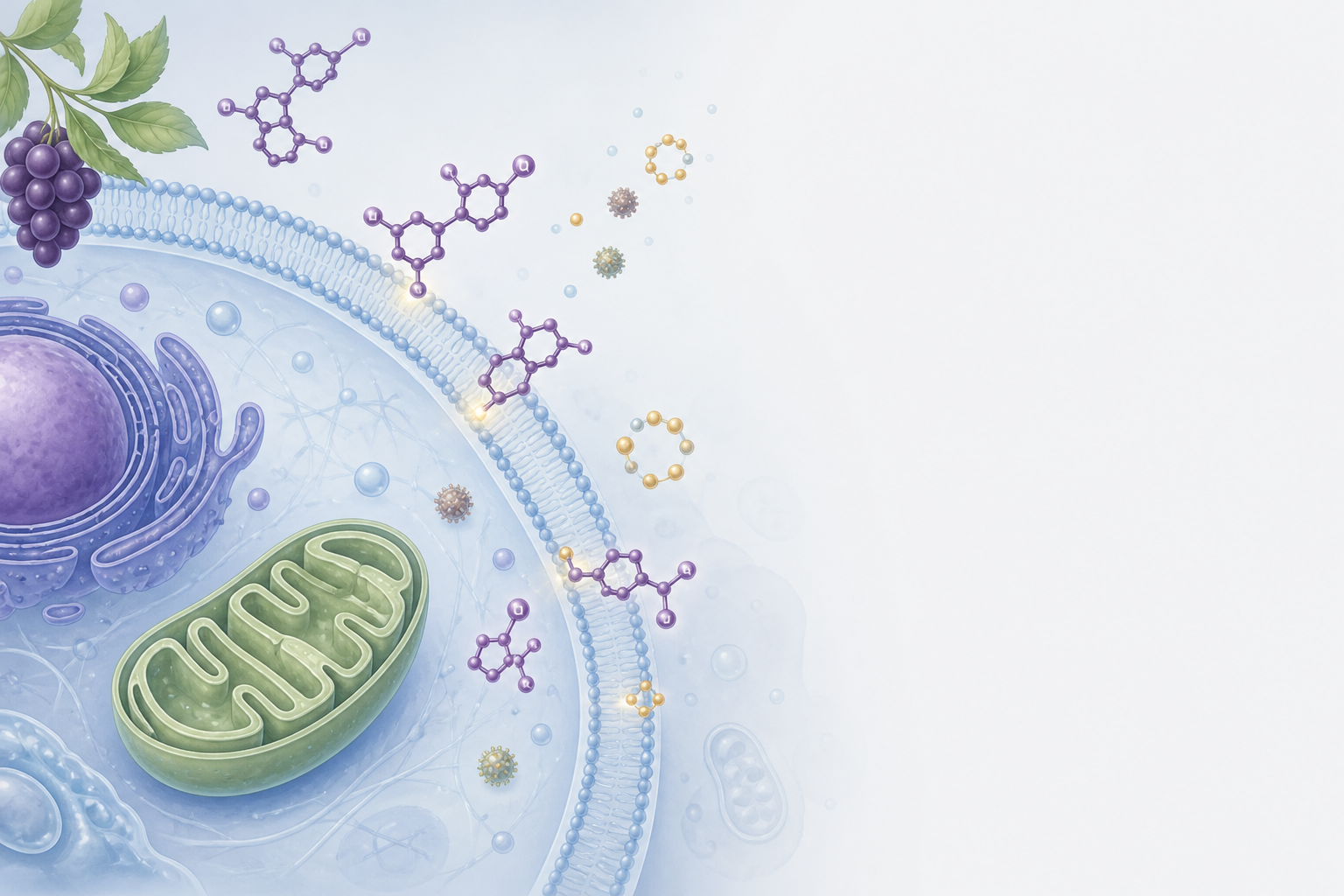
A conceptual illustration of polyphenol, cell, and mitochondrial research. It does not depict a confirmed clinical effect.
What health benefits are being studied?
Resveratrol research covers a wide range of outcomes, which can make the ingredient sound more proven than it is. The table below separates the research question from the claim a reader should actually take away.
| Research area | Why scientists study it | Responsible interpretation |
|---|---|---|
| Cardiometabolic wellness | Potential effects on endothelial signaling, blood pressure, glucose handling, lipids, and inflammation. | Some trials report changes in selected markers, but effects are inconsistent and do not make resveratrol a treatment. |
| Brain and cognitive health | Antioxidant and vascular pathways may be relevant to brain aging and blood flow. | Early research does not establish prevention or treatment of dementia or cognitive disease. |
| Skin and healthy aging | Cell and topical studies examine oxidative stress, inflammation, and environmental exposure. | Oral resveratrol is not a proven skin-whitening or sunscreen replacement. |
| Cancer biology | Laboratory and animal models explore cell-cycle and signaling effects. | No basis exists for using a supplement to prevent or treat cancer. |
These areas are research categories, not a personal benefit list. A study may measure a biomarker without showing that people feel better, live longer, or avoid a disease. The more specific the claim—such as “lowers blood pressure,” “protects memory,” or “prevents cancer”—the more important it is to ask whether the evidence is from a well-designed human trial with a meaningful outcome.
What do human studies actually show?
Human research is more useful than a mechanism alone, but the overall picture remains mixed. A review of human intervention trials found that researchers have studied resveratrol’s bioavailability, cardiovascular markers, glucose metabolism, inflammation, neurological outcomes, and other areas. It also emphasized that dose, food matrix, metabolism, and rapid excretion influence what reaches the body [1].
In metabolic research, an umbrella review of randomized-trial meta-analyses found signals for some blood pressure, lipid, glucose, insulin-resistance, and body-composition outcomes. However, for most outcomes the certainty was low or very low, effects were small, or the number of trials was limited. The authors concluded that the available evidence did not support resveratrol supplementation as a general management strategy for cardiometabolic risk factors [2].
A Cochrane review focused on adults with type 2 diabetes likewise concluded that there were too few small, short-term studies to make confident judgments about benefits and safety [3]. This does not mean resveratrol has no biological activity. It means that activity has not been translated into a dependable treatment recommendation.
How to read the evidence
Mechanism suggests a possibility. A biomarker study shows that something changed in the body. A clinical-outcome trial asks whether the change matters to a person. Resveratrol has many mechanisms and biomarker findings, but fewer consistent, long-term human outcomes.
Should you get resveratrol from food or supplements?
For most people, food is the sensible starting point. Grapes, berries, peanuts, and a varied plant-rich diet provide polyphenols along with fiber, vitamins, minerals, and other compounds. Foods also make it easier to build a broader pattern of nutrition rather than focusing on one isolated molecule.
Supplements are different from foods. They can deliver a more concentrated and consistent labeled amount, but they also create questions about formulation, purity, dose, interactions, and whether the researched form matches the product in your hand. NCBI notes that resveratrol supplements may contain amounts far higher than food sources and that safety during breastfeeding cannot be assured [5].
Red wine should not be used as a supplement strategy. Alcohol can create health risks, and the resveratrol content of wine is not standardized. If you do not drink, there is no health reason to start drinking for resveratrol.
For a broader food-and-supplement comparison, AIDEVI’s daily antioxidant stack guide explains why combining several antioxidant products can create unnecessary ingredient overlap. A smaller, clearer routine is easier to review and maintain.
How should you choose a resveratrol supplement?
Use a “Goal, Label, Context, Review” checklist before buying. This is more useful than choosing the product with the largest number on the front of the bottle.
| Check | Questions to ask | Pause if |
|---|---|---|
| Goal | Am I looking for general antioxidant support, or am I trying to treat a condition? | The product promises to cure, prevent, reverse, or replace medical care. |
| Label | Is the resveratrol form, amount per serving, serving size, and full ingredient list clear? | The label hides the serving amount or relies only on a proprietary blend. |
| Context | Could it overlap with medicines or other antioxidant products? | You use anticoagulant or antiplatelet medication, are pregnant or breastfeeding, or have a complex medical history. |
| Review | Can I track tolerance and reassess whether the routine is useful? | I am adding several new supplements at once and cannot identify what caused a reaction. |
AIDEVI’s vitamin C and resveratrol comparison is useful for readers interested in skin-related positioning, but it also makes an important point: oral resveratrol should not be marketed as a proven whitening treatment. Healthy-looking skin still depends on sun protection, sleep, nutrition, and a suitable topical routine.
If you want to review an AIDEVI product option, see the official AIDEVI Resveratrol product page for its current label and product details. Read the actual package before use, because product information and formulas can change.
For a wider lifestyle context, AIDEVI’s guide to supporting cellular health with daily habits reinforces the right priority: supplements work within a foundation of food, movement, sleep, and stress management.
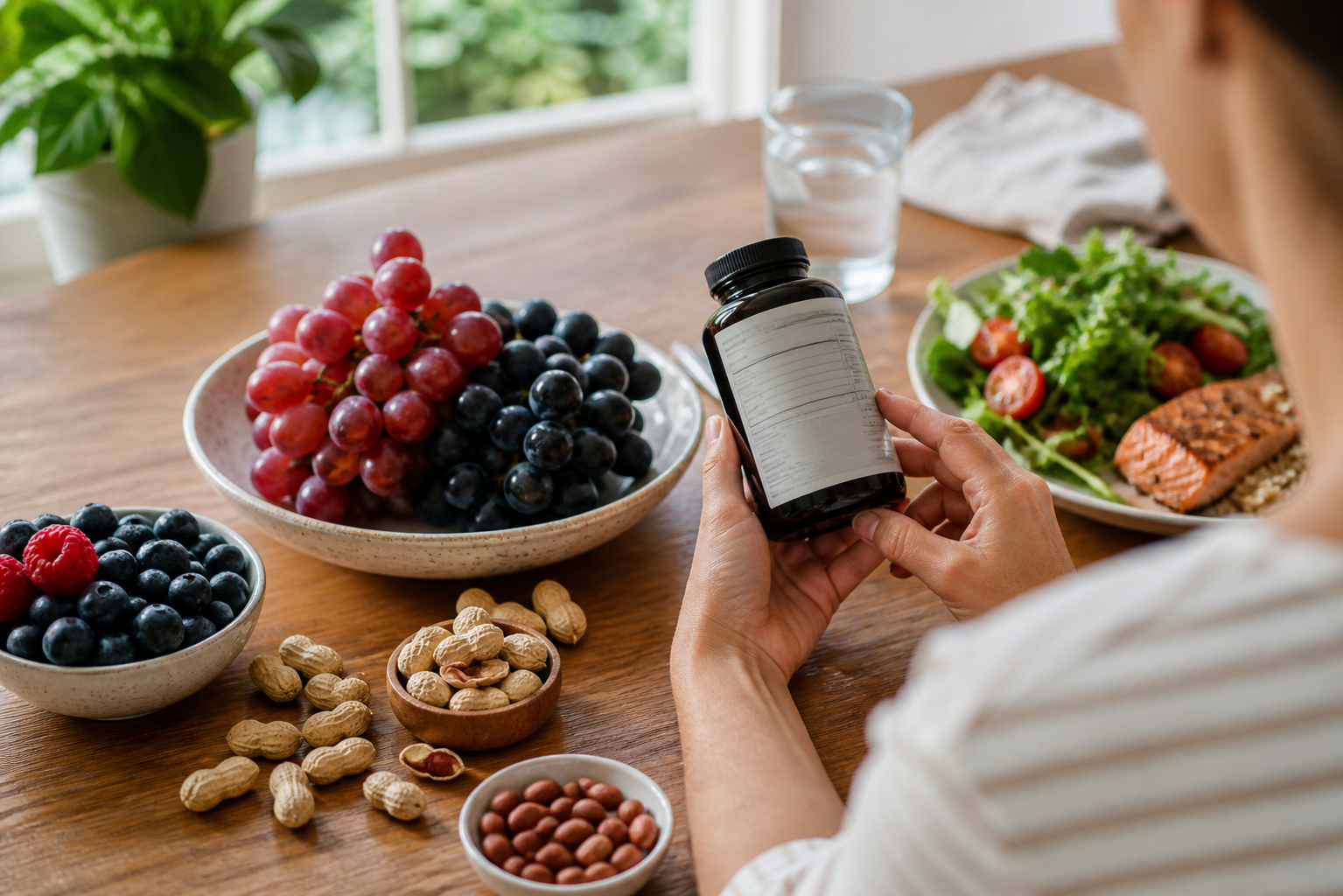
A practical supplement decision starts with food context, label clarity, and a medication review.
What safety and interaction questions matter?
Resveratrol appears to be tolerated by many adults in short-term studies, but “natural” does not mean interaction-free. The dose, formulation, other ingredients, health status, and medication list all matter. Possible minor reactions reported in reference sources include gastrointestinal discomfort, nausea, headache, or fatigue.
The National Center for Complementary and Integrative Health notes that resveratrol may interact with medications, particularly anticoagulant and antiplatelet drugs [4]. Ask a healthcare professional before using it if you take warfarin, aspirin, clopidogrel, other blood-thinning medicines, or several supplements that may affect bleeding.
Also ask before use if you are pregnant or breastfeeding, have a hormone-sensitive condition, have liver or kidney disease, are preparing for surgery, or take medicines with a narrow therapeutic range. NCBI’s LactMed entry specifically notes that there are no adequate data on resveratrol in breast milk or on safety for nursing infants [5].
Do not use a resveratrol supplement to delay evaluation of chest pain, unusual bleeding, severe abdominal symptoms, cognitive changes, or any other concerning symptom. Supplements can support a wellness routine, but they are not a substitute for diagnosis or treatment.
Conclusion
Resveratrol is a plant polyphenol with a credible research story: it interacts with antioxidant, metabolic, vascular, and cellular-signaling pathways. Human studies have explored possible effects on cardiometabolic markers, cognition, inflammation, and other outcomes, but the evidence is not strong enough to call a supplement a treatment for disease, a cancer-prevention tool, or a guaranteed healthy-aging solution.
The most practical approach is food first, clear labels, conservative expectations, and a medication review when appropriate. If you choose a supplement, define a realistic wellness goal, avoid stacking overlapping products, follow the current label, and reassess tolerance. Individual results vary, and a well-built lifestyle still does more of the foundational work.
Frequently Asked Questions
What is resveratrol in simple terms?
Resveratrol is a plant polyphenol found in foods such as grape skins, berries, and peanuts. It is studied for antioxidant and cell-signaling activity, but its supplement benefits are not proven for every health goal.
Is resveratrol better than drinking red wine?
Wine is not a standardized resveratrol source, and alcohol has its own risks. Do not start drinking alcohol to obtain resveratrol. Food or a carefully reviewed supplement is a more direct way to think about the ingredient.
Can resveratrol lower blood pressure or blood sugar?
Some human studies report changes in selected markers, but results are inconsistent and the evidence is not sufficient to use resveratrol as a treatment. Do not change prescribed medication without medical guidance.
Does resveratrol prevent cancer?
No. Cell and animal research may explore cancer-related pathways, but a resveratrol supplement has not been established as a cancer-prevention or cancer-treatment product.
Does resveratrol whiten skin?
There is not strong evidence that oral resveratrol safely or reliably lightens skin. It may be discussed in antioxidant and skin-health research, but it is not a substitute for sunscreen or professional dermatology advice.
Who should avoid or review resveratrol first?
Ask a healthcare professional first if you take anticoagulant or antiplatelet medication, are pregnant or breastfeeding, have a complex medical condition, or are preparing for surgery.
References
- Rodriguez-Mateos, A., et al. Health effects of resveratrol: results from human intervention trials. Nutrients. PMC.
- Zeraattalab-Motlagh, S., et al. The effects of resveratrol supplementation in patients with type 2 diabetes, metabolic syndrome, and nonalcoholic fatty liver disease: an umbrella review of meta-analyses of randomized controlled trials. American Journal of Clinical Nutrition. PubMed.
- Cochrane. Resveratrol for adults with type 2 diabetes mellitus. Cochrane evidence review.
- National Center for Complementary and Integrative Health. Type 2 Diabetes and Dietary Supplements: What the Science Says. NCCIH.
- National Library of Medicine. Resveratrol. Drugs and Lactation Database (LactMed). NCBI Bookshelf.
These statements have not been evaluated by the Food and Drug Administration. This product is not intended to diagnose, treat, cure, or prevent any disease. Individual results may vary. Consult your healthcare professional before starting any new supplement, especially if pregnant, nursing, taking medication, managing a medical condition, or preparing for surgery.
