



AIDEVI Skin Longevity Guide
Supplements vs. Skincare Products: Which Delivers the Best Anti-Aging Benefits?
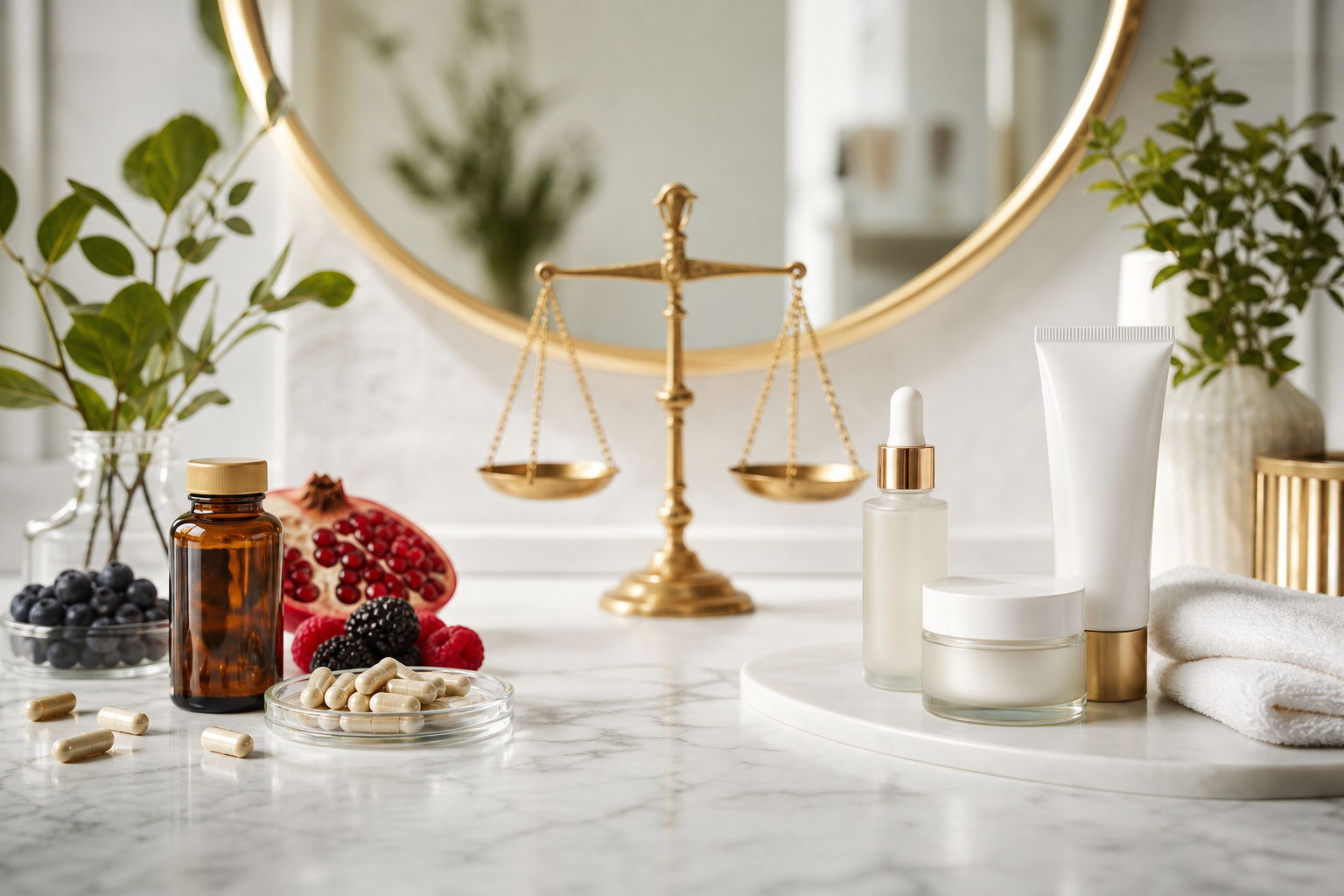
Skincare products usually deliver the most direct visible anti-aging support because they work on the skin surface, especially through sunscreen, moisturizers, and well-chosen topical actives. Supplements can still matter, but they work differently: they support the body's nutrition, antioxidant, collagen, hydration, and cellular wellness systems from the inside. The strongest routine is usually not supplements or skincare. It is a smart combination.
- Choose skincare first if your main concerns are sun exposure, dryness, rough texture, uneven-looking tone, or visible fine lines.
- Choose supplements as support when diet quality, collagen peptides, antioxidants, or cellular-wellness nutrients fit your bigger routine.
- The best anti-aging plan pairs outside-in protection with inside-out nourishment and tracks realistic changes over 8-12 weeks.
Content
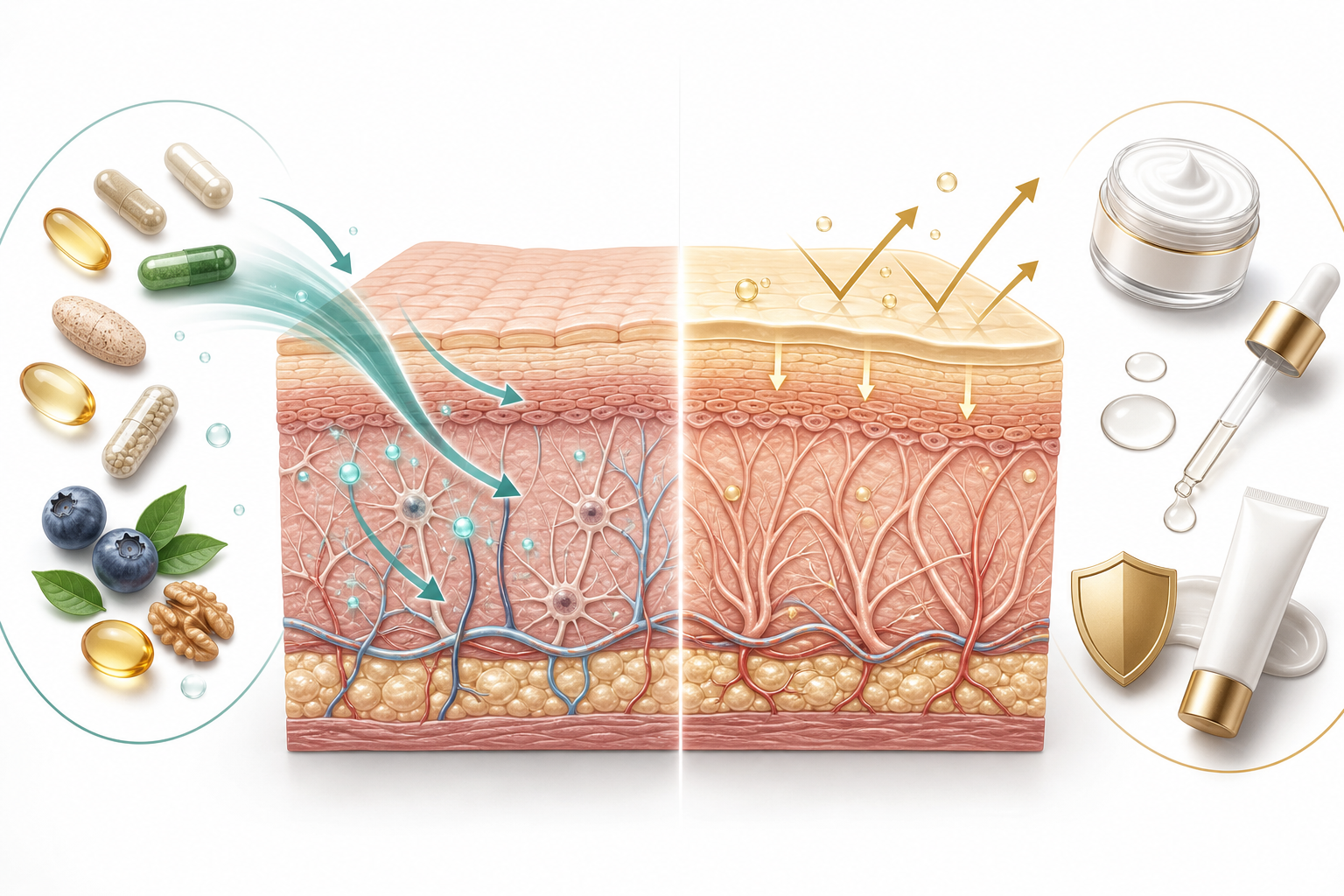
Think of skincare as the daily shield and surface corrector, and supplements as the internal support layer. Sunscreen, moisturizers, and topical actives address what your skin directly faces. Collagen, antioxidants, nmn, resveratrol, CoQ10, and nutrient-rich diets support the body's broader skin wellness environment, but they need consistency and realistic expectations.
Which works better for anti-aging?
If the question is "what creates the clearest visible difference on the skin?", topical skincare often wins. That is because much of visible skin aging is connected with UV exposure, moisture loss, barrier stress, uneven pigment, texture changes, and collagen breakdown in the skin. A dermatologist-style routine built around broad-spectrum sunscreen, moisturization, and carefully introduced retinoid or retinol products has a direct path to visible skin concerns. The American Academy of Dermatology recommends broad-spectrum SPF 30 or higher and notes that regular sun protection helps reduce early signs of aging such as wrinkles and age spots [1].
If the question is "what supports the body's skin foundation over time?", supplements and nutrition become more relevant. Skin is not only a surface. It depends on protein intake, hydration status, micronutrients, antioxidant defenses, sleep, metabolic health, and normal collagen turnover. That is why AIDEVI readers often explore healthy aging and antioxidant properties of NMN supplements alongside skincare topics. The key is to avoid presenting supplements as instant wrinkle fixes. They are better understood as long-term support tools that work best when the daily skincare foundation is already in place.
A useful answer is therefore goal-based. Use skincare when the concern is visible and local: dryness, dullness, rough texture, sun exposure, uneven-looking tone, and fine lines. Use supplements when the concern is systemic and routine-based: dietary gaps, antioxidant intake, collagen peptide support, cellular wellness, and healthy aging habits. Use both when the goal is resilient skin that looks cared for from the outside and supported from the inside.
What can skincare products do best?
Skincare products have one major advantage: they can contact the skin directly. Sunscreen helps manage UV exposure. Moisturizers reduce water loss and can make fine lines look softer by improving surface hydration. Cleansers remove oil, sweat, sunscreen, makeup, and pollution without needing to change the whole body. Topical actives such as retinoids, vitamin C, niacinamide, peptides, exfoliating acids, ceramides, and hyaluronic acid can be selected for specific skin goals.
For anti-aging, sunscreen is the non-negotiable first layer. If someone buys many serums but skips daily UV protection, they are working against their own routine. AAD guidance emphasizes broad-spectrum protection, SPF 30 or higher, and water resistance when choosing sunscreen [1]. This does not mean every person needs a complicated routine. A consistent morning routine of gentle cleanse, antioxidant or hydrating serum if tolerated, moisturizer, and sunscreen can outperform a crowded shelf used inconsistently.
Retinoids are also important in the visible-aging conversation. Reviews of topical retinoids describe their use in photoaged skin and their role in improving the appearance of wrinkles, texture, and hyperpigmentation in appropriate formulas and routines [2]. The practical caution is tolerance. Retinoids can be irritating, especially when introduced too quickly or combined with harsh exfoliation. For sensitive skin, the best anti-aging product is often the one a person can use consistently without damaging the barrier.
This is where skincare differs from supplements. A serum can be targeted to dark spots. A moisturizer can calm dryness tonight. A sunscreen can reduce today's UV load. These are direct, local actions. Readers worried about pigmentation and age spots may also want to review AIDEVI's guide to what causes age spots and how sun habits shape visible tone.
What can supplements do best?
Supplements are best when they support the internal conditions skin depends on. Collagen peptides are one of the most discussed examples. A systematic review and meta-analysis of randomized controlled trials reported that oral collagen supplementation was associated with improvements in skin hydration and elasticity, with more notable effects after consistent use for at least eight weeks [3]. That does not mean every collagen product is equal, or that collagen replaces sunscreen. It means collagen can be a reasonable support category when expectations are realistic.
Nutrition also matters. Research on dietary interventions and skin aging suggests that diet can influence skin parameters, though results vary by nutrient, study design, baseline diet, and duration [4]. A skin-supportive diet usually includes enough protein, colorful plants, omega-3 rich foods, fiber, and micronutrients involved in normal collagen and antioxidant systems. This is why a supplement routine should begin with a diet audit rather than a shopping list.
Antioxidant supplements fit this broader logic. Oxidative stress is one factor involved in skin aging, and nutritional reviews discuss vitamins, polyphenols, CoQ10, and other dietary components in relation to skin homeostasis and aging biology [5]. AIDEVI's guide to choosing a good daily antioxidant supplement is useful here because the decision should be based on ingredient fit, quality, and routine, not fear-based anti-aging claims.
NMN, resveratrol, CoQ10, and collagen should therefore be framed as support categories. NMN is commonly discussed for cellular energy and NAD+ wellness, including in AIDEVI's article on NMN as a component in skincare and anti-aging technology. Resveratrol is usually positioned around polyphenol and antioxidant support, and readers comparing that ingredient can continue with resveratrol health benefits. CoQ10 belongs in the energy and antioxidant conversation; AIDEVI's CoQ10 benefits guide for women gives helpful adjacent context.
How do supplements and skincare compare?
The mistake is comparing supplements and skincare as if they do the same job. They do not. Skincare works closest to the visible problem; supplements work closest to the internal environment. The table below turns that difference into a practical decision.
| Decision Factor | Skincare Products | Supplements |
|---|---|---|
| Best for | UV exposure, dryness, texture, surface hydration, visible tone, and topical active delivery. | Nutrition gaps, collagen peptide support, antioxidant intake, and long-term healthy-aging routines. |
| Speed of visible change | Moisturizers may improve appearance quickly; retinoids and tone-focused actives often need weeks to months. | Usually slower; collagen and nutrition-focused routines are commonly evaluated after 8-12 weeks. |
| Common limitation | Irritation, over-exfoliation, skipped sunscreen, or using too many actives at once. | Overpromising, poor diet foundation, inconsistent use, or expecting a capsule to replace topical care. |
| Best pairing | Sunscreen plus barrier support and one targeted active. | Protein-rich diet plus collagen, antioxidants, NMN, resveratrol, or CoQ10 when appropriate. |
For collagen-specific decisions, AIDEVI's article on multi-collagen peptides and wellness benefits can help readers understand why collagen is usually discussed as gradual structural support rather than overnight cosmetic correction. Readers who want a more general supplement perspective can also compare older skin-focused supplement education such as anti-aging supplements for youthful-looking skin.
How should you combine them?
Use the AIDEVI Shield, Smooth, Nourish, Track framework. It keeps the routine practical and helps readers avoid buying everything at once.
The AIDEVI Shield, Smooth, Nourish, Track Framework
Shield with daily sun protection and barrier-friendly skincare. Smooth with one targeted topical active if your skin tolerates it. Nourish with protein, plants, hydration, and relevant supplements. Track dryness, texture, tone, and routine consistency for at least 8-12 weeks.
This framework makes anti-aging less emotional and more measurable.
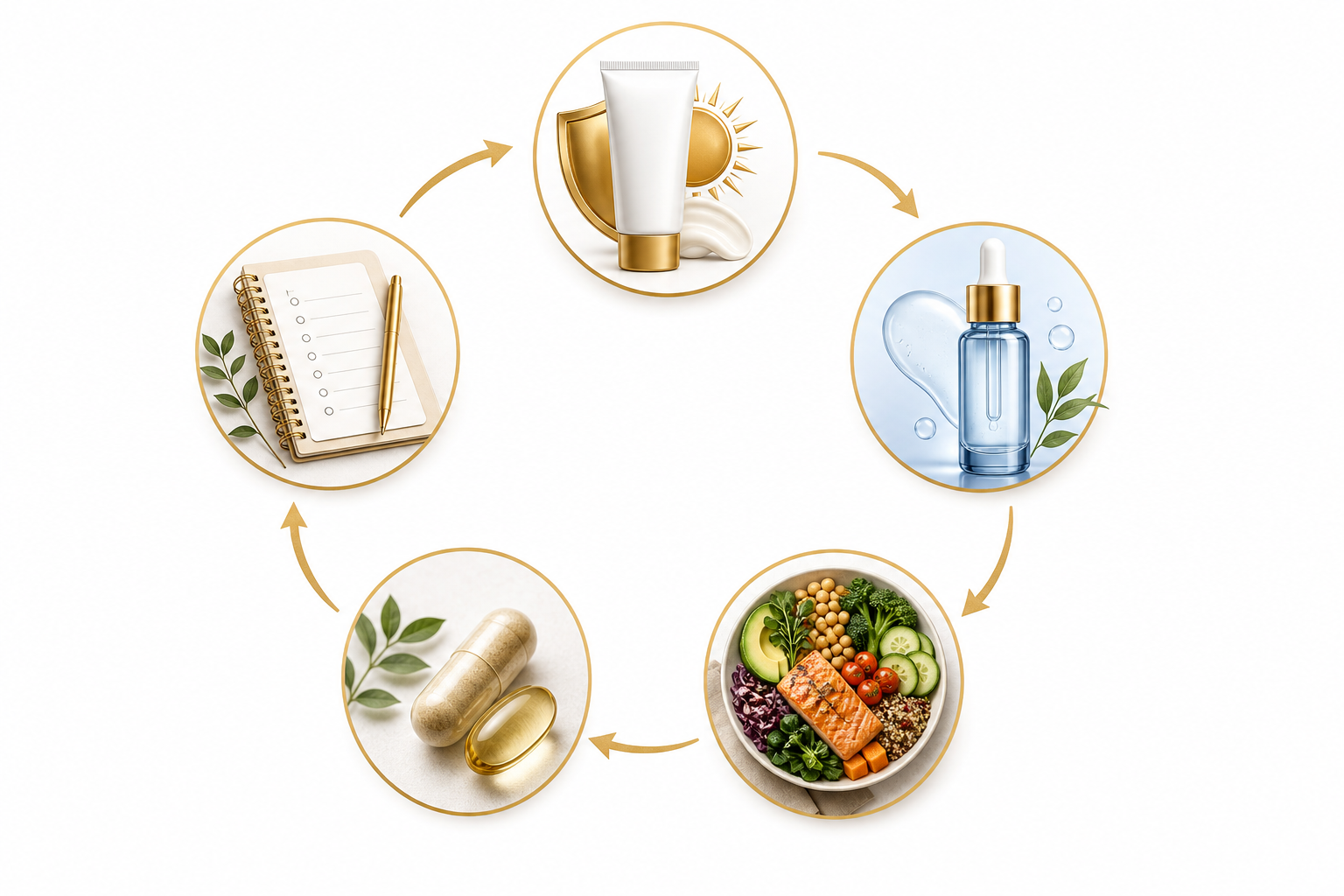
In the morning, keep the routine protective: gentle cleanse if needed, hydrating serum or antioxidant topical if tolerated, moisturizer, and sunscreen. In the evening, keep the routine repair-oriented: gentle cleanse, moisturizer, and one active such as retinol or a dermatologist-recommended retinoid if it fits your skin. If your barrier is irritated, pause the ambition and rebuild comfort first.
For supplements, start with the foundation. Are you eating enough protein? Are you consistently eating colorful plant foods? Is hydration reasonable? Are you sleeping enough for your skin to look rested? Once those basics are in place, consider one targeted supplement category at a time: collagen peptides for hydration and elasticity support, antioxidants for oxidative-stress balance, NMN for cellular wellness positioning, resveratrol for polyphenol support, or CoQ10 for energy and antioxidant context.
Avoid stacking too many products because you will not know what is helping or irritating your skin. A cleaner experiment is easier to evaluate: introduce one topical active or one supplement change, keep the rest stable, and take the same lighting photo every two to four weeks. Track comfort, dryness, breakouts, tone, texture, and glow. If you use medications, are pregnant or nursing, manage a medical condition, or plan a procedure, ask a healthcare professional before adding supplements or strong topical actives.
Conclusion
Skincare products and supplements deliver different kinds of anti-aging support. Skincare is the stronger first choice for visible, local concerns because it directly addresses UV exposure, moisture, texture, and tone. Supplements are valuable when they support the internal systems skin depends on: collagen, antioxidant balance, nutrition, cellular energy, and overall healthy-aging habits.
The most effective routine is rarely a competition. Build the outside-in foundation with sunscreen, moisturizer, and targeted skincare. Build the inside-out foundation with diet, sleep, hydration, movement, and thoughtful supplements. Then track results patiently. Skin aging is gradual, so the best routine is not the most dramatic one. It is the one you can follow consistently and safely.
Frequently Asked Questions
Are supplements better than skincare for wrinkles?
Usually no. For visible wrinkles and photoaging, sunscreen, moisturizers, and appropriate topical actives are more direct. Supplements may support the internal foundation, especially when used consistently with a strong skincare routine.
Can collagen supplements replace moisturizer?
No. Collagen supplements and moisturizers work differently. Collagen supports internal nutrition pathways over time, while moisturizers help the skin surface hold water and feel comfortable right away.
Should I start with sunscreen or an anti-aging supplement?
Start with sunscreen if you do not already use it daily. UV exposure is one of the biggest external drivers of visible skin aging, so sun protection is the foundation before advanced serums or supplements.
How long should I try a supplement before judging results?
Many skin-support supplements need at least 8-12 weeks of consistent use before evaluation. Track hydration, texture, comfort, and routine consistency rather than expecting a dramatic overnight change.
Can I use retinol and anti-aging supplements together?
Often yes, but introduce changes slowly. Retinol may irritate sensitive skin, and supplements may interact with medications or medical conditions. Ask a qualified professional if you are unsure.
References
- [1] American Academy of Dermatology. Sunscreen FAQs and sunscreen selection guidance. AAD.
- [2] Mambwe B, Mellody KT, O'Connor C, Bell M, Watson REB, Langton AK. Cosmetic retinoid use in photoaged skin: a review of the compounds, their use and mechanisms of action. International Journal of Cosmetic Science. 2025. PMC.
- [3] Pu SY, Huang YL, Pu CM, et al. Effects of oral collagen for skin anti-aging: a systematic review and meta-analysis. Nutrients. 2023. PMC.
- [4] Dietary interventions in skin ageing: a systematic review and meta-analysis. PMC.
- [5] Cao C, Xiao Z, Wu Y, Ge C. Diet and skin aging from the perspective of food nutrition. Nutrients. 2020. PMC.
These statements have not been evaluated by the Food and Drug Administration. This content is for educational purposes only and is not intended to diagnose, treat, cure, or prevent any disease. Dietary supplement decisions should be made with appropriate healthcare guidance, especially if pregnant, nursing, taking medication, or managing a medical condition.
