



AIDEVI Travel Wellness Guide
nmn Supplements for Long Drives: Energy Support, Alertness, and Safety Boundaries
NMN supplements may support NAD+ levels and cellular energy metabolism over time, but they should never be used as a rescue strategy for drowsy driving. If you feel sleepy behind the wheel, the safest response is to stop driving, pull over somewhere safe, rest, switch drivers, or delay the trip. NMN belongs in a daily wellness routine, not in a plan that ignores fatigue signals.
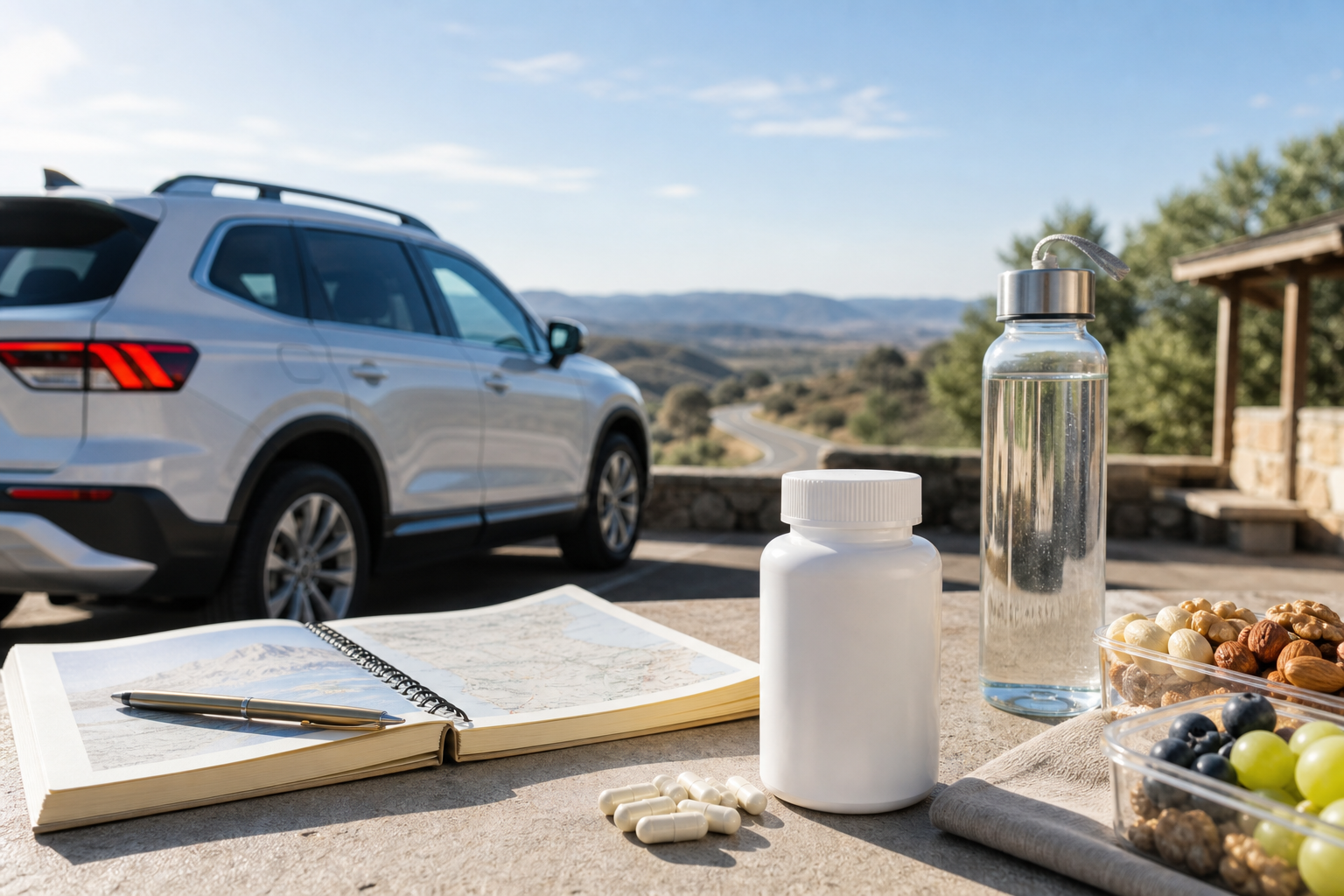
- Drowsy driving is a real safety risk; sleep and safe rest stops matter more than any supplement.
- NMN is best positioned as long-term NAD+ and cellular energy support, not a fast stimulant like caffeine.
- For long trips, use the AIDEVI Rest, Fuel, Support, Stop framework before deciding whether NMN fits your routine.
Content
For long drives, think in two timelines. The immediate safety timeline is sleep, rest stops, caffeine if appropriate, short naps, and driver swaps. The wellness timeline is nutrition, hydration, circadian planning, and supplements such as NMN that may support NAD+ metabolism over repeated use. Mixing those timelines is where risky claims begin.
Can NMN help with energy on long drives?
NMN may be relevant to long-drive wellness because it is a precursor to NAD+, a coenzyme involved in cellular metabolism. That makes it reasonable to discuss NMN in the context of daily energy support, travel routines, jet lag adjustment, and healthy aging. AIDEVI's guide to adjusting jet lag and maintaining energy with NMN during travel is a useful next read for people thinking about trip planning rather than last-minute fatigue fixes.
But the original idea needs an important correction: NMN should not be described as a breakthrough for staying alert while actively driving. It is not a replacement for sleep, not a rescue tool for microsleeps, and not a reason to continue driving when your body is telling you to stop. If a driver is nodding off, drifting lanes, missing exits, forgetting the last few miles, or repeatedly yawning, the decision is no longer a supplement decision. It is a road-safety decision.
A better AIDEVI message is this: NMN can belong in a broader cellular-energy routine for people who travel, work long days, or care about healthy aging, but responsible drivers should build safety plans first. Sleep before the trip. Plan rest stops. Avoid alcohol. Check medications for drowsiness warnings. Bring water and food. Then, if NMN already fits your personal wellness routine, use it according to the product directions and your healthcare professional's guidance.
Why is driving fatigue different from normal tiredness?
Driving fatigue is not just feeling low-energy. NHTSA describes drowsy driving as a dangerous and preventable risk, noting that fatigue can impair cognition and performance and contribute to crashes, workplace accidents, and health consequences [1]. Drowsy-driving crashes often happen late at night, in the early morning, or in the late afternoon, when the body's circadian rhythm naturally dips [1].
The CDC's NIOSH guidance explains why this matters: fatigue can slow reaction time, worsen decision-making, lead to lane drifting, narrow awareness, and cause microsleeps [2]. A microsleep can happen before a driver has time to reason through the situation. That is why the safest intervention is physical separation from the driving task: pull over, stop the car in a safe place, rest, change drivers, or postpone the trip.
Coffee may help temporarily, but even NHTSA cautions that coffee or energy drinks alone are not always enough and may make people think they are more alert than they actually are [1]. For short-term intervention, NHTSA suggests caffeine plus pulling over for a short nap in a safe place when sleepiness starts [1]. This is a very different safety standard from taking any supplement and continuing to drive.
How does NMN connect to NAD+ and cellular energy?
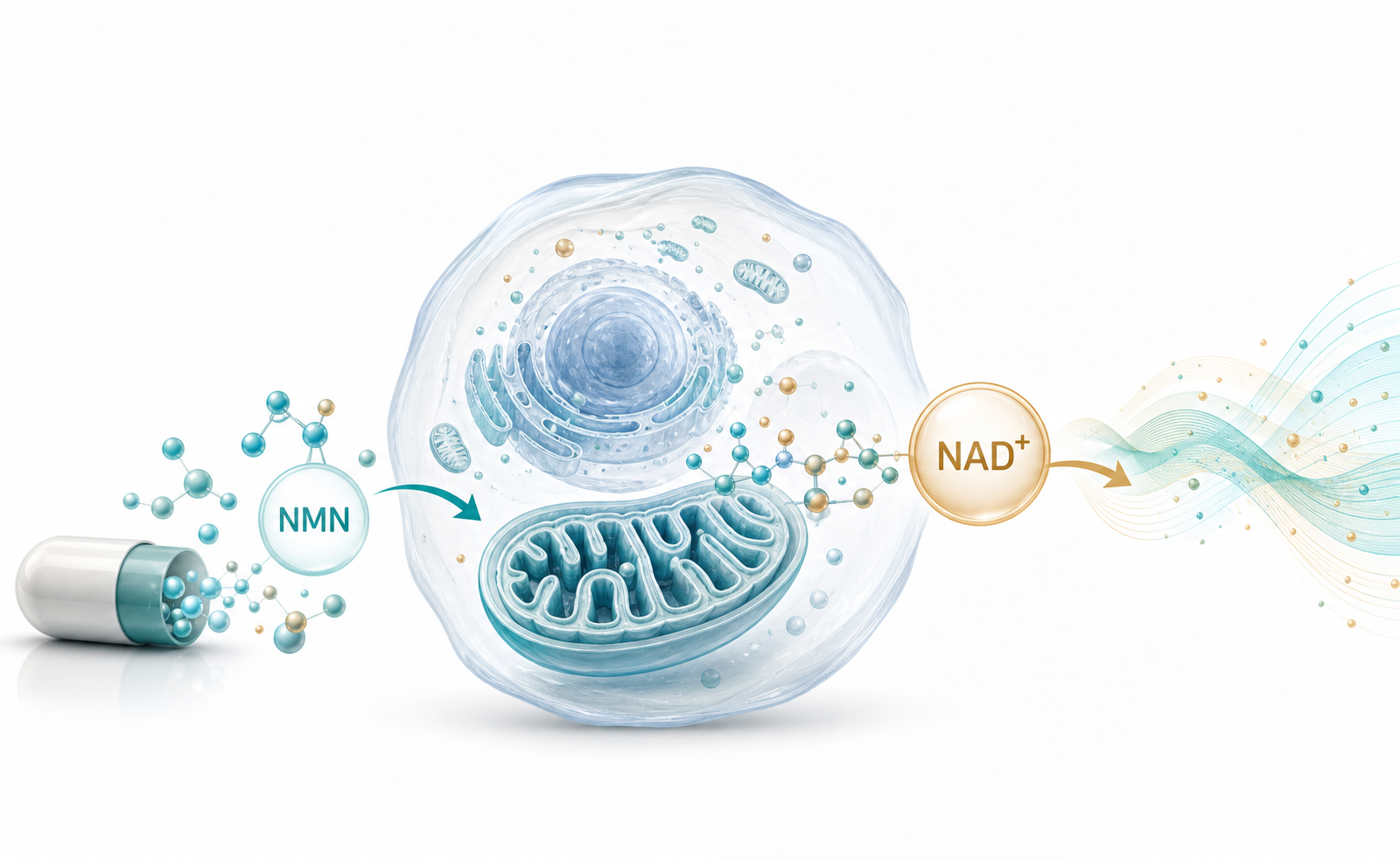
NMN, or nicotinamide mononucleotide, is commonly discussed because the body can use it as a precursor in NAD+ metabolism. NAD+ participates in redox reactions and supports enzymes involved in cellular metabolism. In plain English, NAD+ is part of the cellular energy system, but that does not mean an NMN capsule acts like a steering-wheel alertness switch. AIDEVI's article on what NAD+ is and how it relates to cellular energy gives readers the basic science foundation.
Human trials are still developing, but they are useful for framing the claim correctly. A randomized, double-blind, placebo-controlled trial in healthy subjects found that oral NMN at 250 mg per day for 12 weeks increased whole-blood NAD+ levels and was not associated with obvious adverse effects in that small study [3]. Another randomized dose-dependent trial in healthy middle-aged adults evaluated 300 mg, 600 mg, and 900 mg daily NMN for 60 days and reported increased blood NAD concentrations with safety and tolerability outcomes assessed [4].
That evidence supports a conservative structure/function claim: NMN helps maintain or support NAD+ metabolism and cellular energy pathways. It does not prove that NMN improves driving performance, lowers fatigue-related road risk, or restores alertness during sleep deprivation. For readers who want a deeper mechanism view, AIDEVI's article on cellular energy production and NMN supplementation is the more appropriate scientific pathway.
Timing also matters. If someone takes NMN, it should be part of a routine decided before the trip, not an experiment during a long highway drive. AIDEVI's guide on how to determine NMN supplement timing can help readers think about consistency, tolerance, and daily rhythm without turning NMN into an emergency stimulant.
What should NMN not be used for?
NMN should not be used to justify driving while sleep-deprived. It should not be stored in the car as a substitute for stopping. It should not be combined casually with high-caffeine products, medications, alcohol, or other supplements without thinking through safety. It should not be marketed as a way to avoid fatigue-related road risk. Those statements are stronger than the evidence and weaker than the safety standard drivers need.
It is also important to separate "energy support" from "alertness." Energy support is a wellness concept connected with metabolism, nutrition, sleep, and consistency. Alertness behind the wheel is an immediate safety requirement. When alertness drops, the correct response is behavioral: stop, sleep, switch drivers, or delay. This is especially true during midnight-to-6 a.m. driving, long monotonous highway stretches, after shift work, after alcohol, after poor sleep, or while using medicines that can cause drowsiness.
Readers comparing NAD+ ingredients should also avoid assuming all formats are interchangeable. NMN, NAD+, NR, patches, and related products have different positioning. AIDEVI's comparison of NAD+ vs. NMN differences and benefits can help clarify the category, while the article on why NAD patches are popular for energy and wellness benefits offers adjacent format context. These are wellness decisions, not road-safety interventions.
What is a safer long-drive routine?
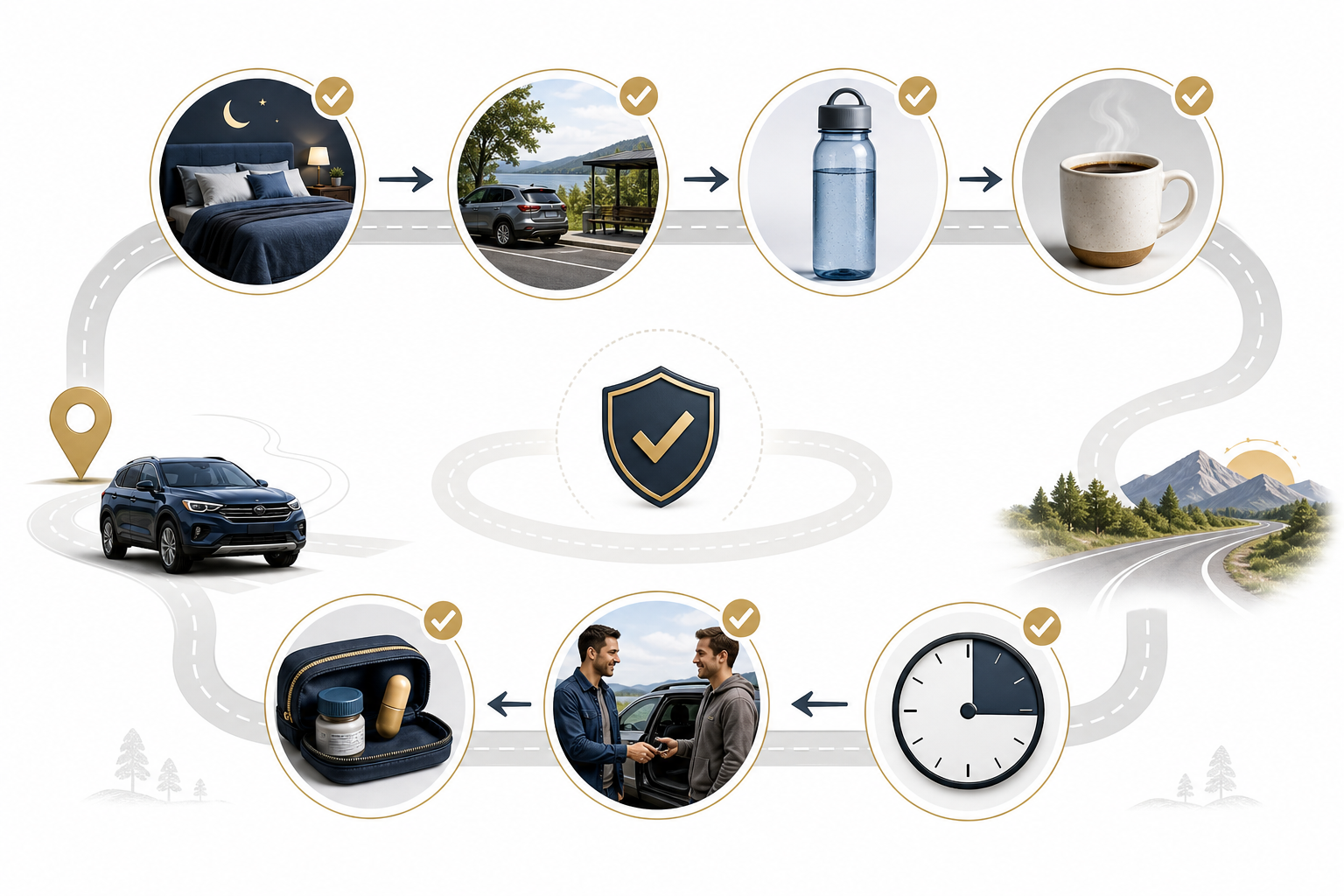
Use the AIDEVI Rest, Fuel, Support, Stop framework. It puts safety steps in the right order and gives NMN a responsible place.
| Step | Best fit | Avoid or pause if |
|---|---|---|
| Rest | Sleep 7-9 hours before travel when possible and avoid peak sleepiness windows. | You are already nodding off or fighting to keep your eyes open. |
| Fuel | Use water, balanced food, and caffeine only if tolerated and appropriate. | You are using caffeine to mask serious sleep loss. |
| Support | Use NMN as part of a daily NAD+ and cellular wellness routine, not as an on-road rescue. | You are starting a new supplement for the first time during a major drive. |
| Stop | Pull over safely, take a short nap, switch drivers, or delay travel when drowsiness appears. | You are trying to "push through" lane drifting, heavy eyelids, or memory gaps. |
For supplement planning, the smartest rule is to test your routine on normal days before depending on it during travel. Know how your body responds. Follow the label. Do not exceed suggested use. If you are pregnant, nursing, taking medication, managing a medical condition, or sensitive to supplements, ask a healthcare professional first. Readers thinking about serving strategy can review AIDEVI's NMN dosage by age guide, but the safest driving decision still comes from how alert you are in the moment.
Sleep quality deserves a special note. Some people ask whether NMN influences sleep, energy rhythm, or jet lag. The evidence is not strong enough to promise sleep benefits, but sleep is central to any long-drive safety plan. AIDEVI's article on whether NMN can improve sleep quality can help readers explore that question without confusing sleep support with safe driving readiness.
Before your next long drive, track four simple signals. First, note how many hours you slept the night before and whether sleep was fragmented. Second, mark the time of day when your attention usually dips, especially after lunch or late at night. Third, record whether caffeine helps you feel steadier or only hides tiredness for a short period. Fourth, review how you respond to NMN on ordinary non-driving days. This keeps the routine personal without turning the highway into a testing ground.
After the trip, review what actually helped. Did scheduled stops keep your mind clearer? Did a driver swap make the hardest section easier? Did hydration and balanced snacks reduce the heavy midday feeling? Did NMN fit comfortably into your normal routine, or did it add uncertainty? This type of tracking is more valuable than a dramatic claim because it separates road-safety behaviors from long-term wellness support.
Conclusion
NMN can be part of a thoughtful travel wellness routine because it supports the NAD+ and cellular energy conversation. It may fit people who already use NMN consistently, care about healthy aging, and want a structured approach to long-trip energy habits. That is a reasonable and compliant position.
The safety boundary is just as important: NMN is not a substitute for sleep, rest stops, driver changes, or responsible trip planning. When driving fatigue appears, stop driving. Use supplements for wellness support, not as permission to ignore drowsiness. The road does not reward bravery; it rewards good decisions made before fatigue takes over.
Frequently Asked Questions
Can I take NMN right before a long drive?
Only if NMN is already part of your normal routine and fits the product directions. Do not start a new supplement right before a major drive, and do not use NMN to continue driving while drowsy.
Is NMN the same as caffeine for alertness?
No. Caffeine is a short-term stimulant. NMN is discussed as NAD+ and cellular energy support. It should not be expected to deliver immediate alertness behind the wheel.
What should I do if I get sleepy while driving?
Pull over in a safe place. Consider a short nap, switch drivers if possible, or delay travel. If caffeine is appropriate for you, pair it with stopping rather than using it to push through serious fatigue.
Can NMN help with jet lag?
NMN is sometimes discussed in travel and energy routines, but jet lag depends on sleep timing, light exposure, meal timing, and schedule adjustment. Keep expectations realistic.
Who should ask a healthcare professional before using NMN?
Ask first if you are pregnant, nursing, taking medication, managing a medical condition, planning surgery, or combining NMN with other supplements or stimulants.
References
- [1] National Highway Traffic Safety Administration. Drowsy Driving. NHTSA.
- [2] CDC NIOSH. Driver Fatigue on the Job. CDC.
- [3] Okabe K, Yaku K, Uchida Y, Fukamizu Y, Sato T, Sakurai T, Tobe K, Nakagawa T. Oral administration of nicotinamide mononucleotide is safe and efficiently increases blood NAD+ levels in healthy subjects. PubMed.
- [4] The efficacy and safety of beta-nicotinamide mononucleotide supplementation in healthy middle-aged adults: a randomized, multicenter, double-blind, placebo-controlled, dose-dependent clinical trial. PubMed.
- [5] Fukamizu Y, Uchida Y, Shigekawa A, Sato T, Kosaka H, Sakurai T. Safety evaluation of beta-nicotinamide mononucleotide oral administration in healthy adult men and women. PubMed.
These statements have not been evaluated by the Food and Drug Administration. This content is for educational purposes only and is not intended to diagnose, treat, cure, or prevent any disease. Dietary supplement decisions should be made with appropriate healthcare guidance, especially if pregnant, nursing, taking medication, or managing a medical condition.
