



AIDEVI Creatine Buyer Guide
Sugar-Free vs Regular Creatine Gummies: What Changes?
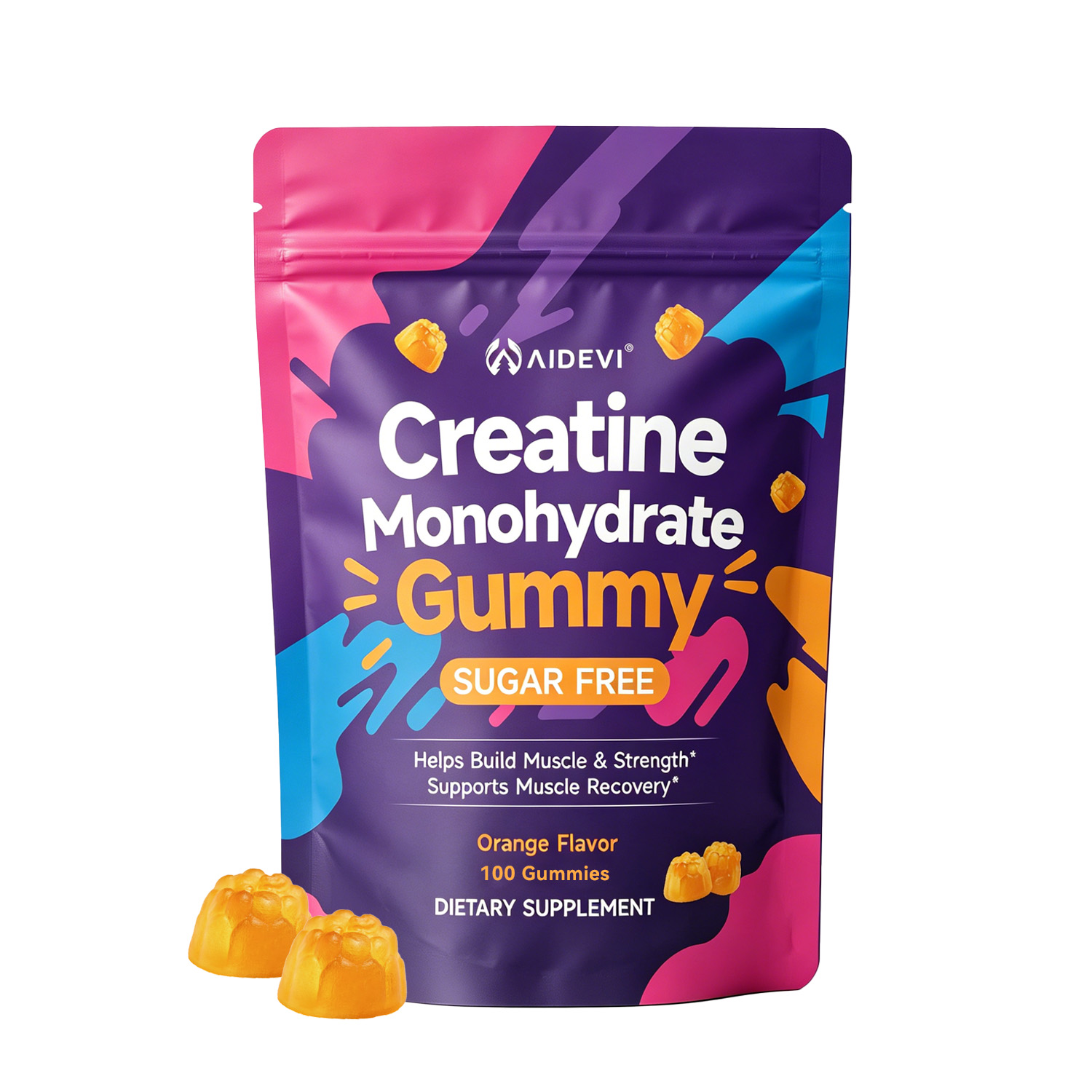
Sugar-free creatine gummies mainly change the sweetener system, not the basic question that matters most: does the product provide a clear creatine serving you can use consistently? Sugar-free formats may reduce added sugar, while regular gummies may taste more familiar and feel easier to tolerate for some people. The better choice depends on label clarity, sweetener tolerance, serving math, digestion, and how the gummy fits your training routine.

- Sugar-free does not automatically mean better; it means the sweetening strategy changed.
- Regular gummies may include added sugar, so serving size and daily context matter.
- Sweeteners and sugar alcohols can be fine for some people and uncomfortable for others.
- Creatine amount, label transparency, and routine consistency remain the main performance questions.
Content
What actually changes in sugar-free creatine gummies?
Sugar-free creatine gummies usually change the carbohydrate and sweetener system. Instead of relying on regular sugar for sweetness, texture, and flavor balance, they may use high-intensity sweeteners, sugar alcohols, fibers, or other ingredients to create a similar gummy experience. That does not automatically change the creatine itself. The creatine amount, form, serving size, and quality testing still need to be checked separately.
This is where buyers often get distracted. A front label that says "sugar-free" can feel healthier or more disciplined, especially for people watching calories, added sugar, or blood sugar habits. But a creatine gummy is still a supplement format, not a magic category. The International Society of Sports Nutrition position stand describes creatine as a well-studied ingredient in exercise and sport contexts [1]. That evidence does not remove the need to compare finished-product labels.
For a deeper way to think about ingredient evidence versus product claims, AIDEVI's guide to the science behind supplement benefits is a useful starting point. The short version: first ask whether creatine is relevant to your training goal, then ask whether this specific gummy product delivers a clear, tolerable, and repeatable serving.
When do regular creatine gummies make sense?
Regular creatine gummies can make sense when the serving is clear, the added sugar fits your overall diet, and the taste helps you stay consistent. For some people, a small amount of sugar in a gummy format is not the biggest nutritional issue in the day. If the product is transparent, tolerable, and easy to repeat, regular gummies may be a practical choice.
The problem appears when taste hides weak serving math. A buyer may enjoy the gummy but fail to notice how many pieces make one serving, how much creatine is actually included, how many servings the container provides, or whether the sugar contribution is meaningful in their own routine. That is why the decision should start with the Supplement Facts panel, not the flavor claim.
If your main goal is muscle growth or strength, remember that gummy sweetness is a secondary issue. Your training plan, food intake, recovery, and consistency organize the outcome. AIDEVI's article on whether to gain muscle or lose fat first can help clarify the bigger goal before you optimize tiny label details.
What should you check on a sugar-free or regular creatine gummy label?
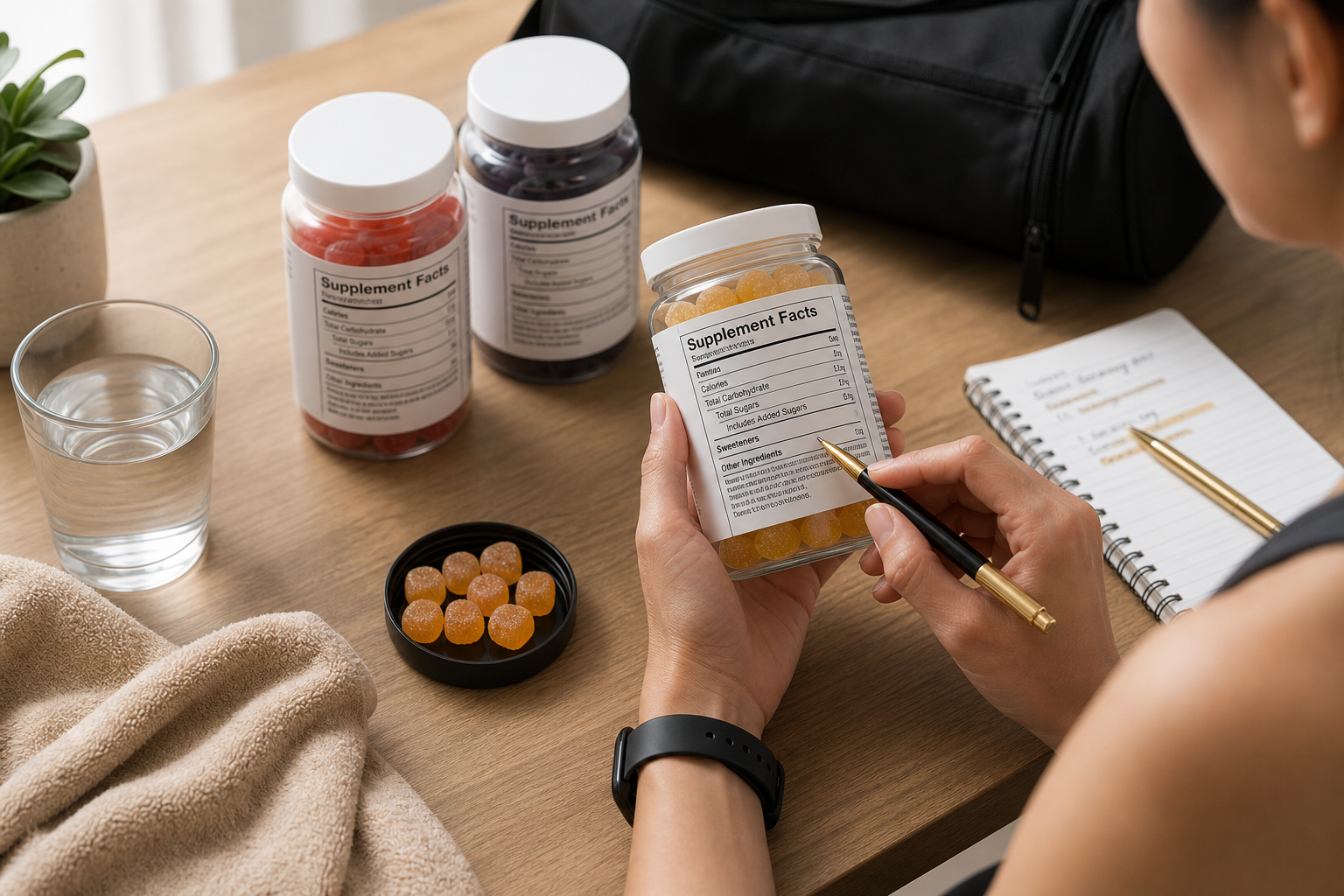
Start with creatine, not sugar. Identify the creatine form, amount per serving, serving size, servings per container, and directions. Then compare sugar, total carbohydrate, sweetener type, added ingredients, and quality signals. FDA consumer information reminds shoppers that dietary supplements are regulated differently from drugs and that label reading matters [3].
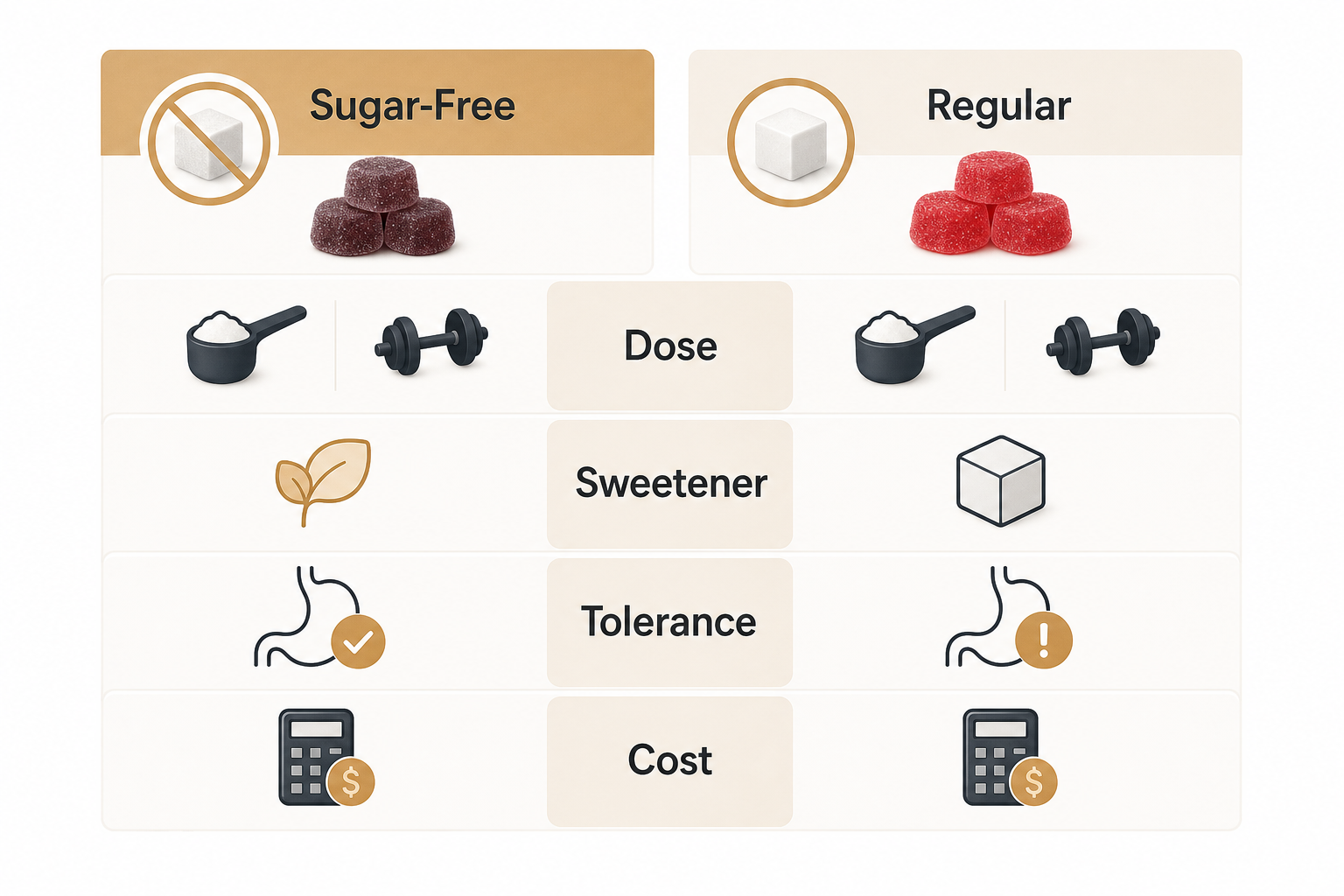
| Label item | Sugar-free question | Regular question |
|---|---|---|
| Creatine serving | Is the creatine amount clear despite the sweetener focus? | Is taste distracting from the creatine amount? |
| Sweetener system | Which sweeteners or sugar alcohols are used? | How much added sugar fits your daily pattern? |
| Tolerance | Do you tolerate the ingredients comfortably? | Does the gummy feel easy to use without cravings or overuse? |
| Cost per serving | Are you paying more for a claim you need? | Is the serving value still practical? |
A clear label should not make you solve a puzzle. If the serving directions, creatine amount, sweetener list, or quality information are vague, pause. AIDEVI's article on why well-designed supplement evidence matters is relevant because the same principle applies to labels: better information should make decisions easier, not more mysterious.
How do sweeteners affect tolerance and digestion?
Sweetener tolerance is personal. Some people feel best with sugar-free products. Others notice bloating, gas, loose stools, or general discomfort when certain sugar alcohols or sweetener blends are used. The point is not to fear sugar-free products. The point is to test them calmly and avoid assuming that "zero sugar" always means easier on the body.
FDA information on high-intensity sweeteners explains that several sweeteners are permitted for use in food, but consumers still vary in preferences and tolerance [4]. For creatine gummies, a simple two-week test is more useful than guessing. Keep the serving label-guided, avoid adding multiple new supplements at once, and note digestion, appetite, training consistency, and whether the product is easy to repeat.
If you already have sensitive digestion, start with extra caution. Review the full ingredient list, use the product according to directions, and avoid taking several gummy supplements together just because each one seems small. If symptoms are persistent, severe, or concerning, stop and speak with a healthcare professional. A supplement should not make your training routine feel like a negotiation with your stomach.
How do you choose between sugar-free and regular creatine gummies for your goal?
Choose sugar-free if reducing added sugar is a real priority for your daily routine and you tolerate the sweetener system well. This may matter for people carefully managing total added sugar, people who prefer a less sweet routine, or shoppers who want convenience without using gummies as a candy-like habit. But the sugar-free claim should come after creatine clarity, not before it.
Choose regular if the sugar amount fits your diet, the product is transparent, and the familiar flavor makes consistency easier. Many fitness decisions fail because the "perfect" option is too annoying to repeat. If a regular gummy helps you follow a label-guided routine and does not crowd out better food choices, it may be practical. AIDEVI's muscle recovery and performance guide reinforces the broader point: supplements work within training, food, and recovery habits.
If you train hard, your bigger question is not whether one gummy is sugar-free. It is whether your routine supports repeated sessions, enough protein, sleep, hydration, and progressive work. AIDEVI's athlete performance and recovery perspective keeps the focus on the system around the supplement rather than one label word.
What red flags should you avoid?
Avoid products that make sugar-free the headline but hide the creatine serving. Avoid regular gummies that taste good but require confusing serving math. Avoid sweetener blends you know you do not tolerate. Avoid claims that imply a gummy format replaces training, recovery, or a real nutrition plan. Reviews of common creatine misconceptions show how easily expectations can outrun careful interpretation [2].
Also avoid making the decision permanent after one day. Try one product at a time, keep surrounding variables steady, and evaluate whether the format actually helps. AIDEVI's data-driven supplement innovation mindset applies here: cleaner inputs lead to better choices. AIDEVI's science-led wellness approach also points back to transparency, not hype.
How should you compare cost and real-world use?
Do not compare sugar-free and regular gummies only by the jar price. Compare cost per label-defined serving, then ask whether that serving gives you the creatine amount you expected. A cheaper bottle can become less practical if the serving size is large, the container runs out quickly, or the creatine amount is unclear. A more expensive sugar-free option can also be unnecessary if you do not specifically need the sugar-free format and tolerate a regular gummy better.
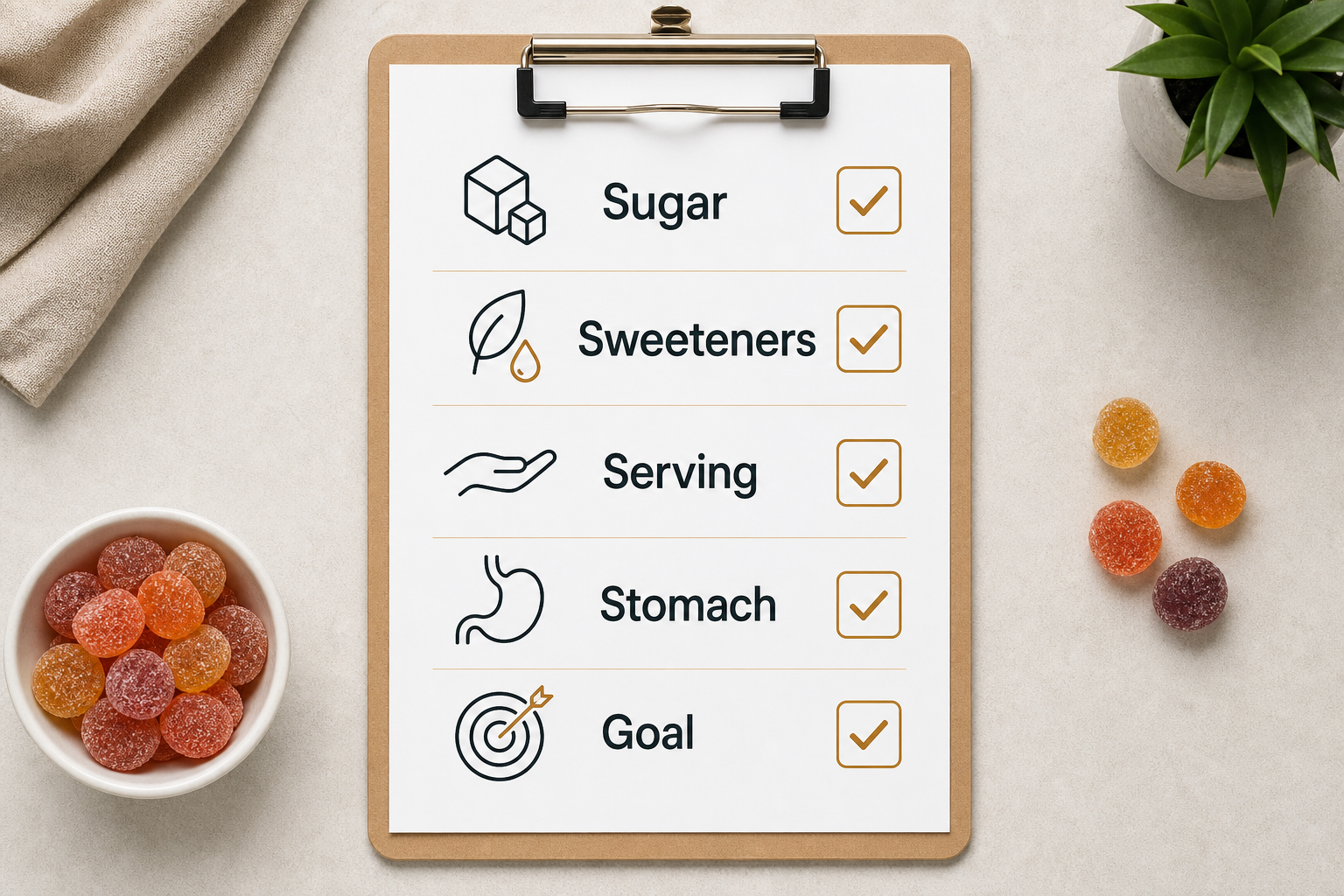
A useful buyer calculation has four steps. First, count servings per container. Second, identify the creatine amount per serving. Third, note sugar, sweeteners, and any ingredients that may affect tolerance. Fourth, decide whether the product fits the time of day you actually use creatine. This keeps the decision grounded in your routine rather than a single front-label claim. It also helps prevent a common mistake: choosing the option that looks cleaner but is too expensive, uncomfortable, or confusing to repeat.
How can you test tolerance over two weeks?
Use a simple two-week comparison if you are unsure. Choose one creatine gummy product, follow the label, and keep other supplements, caffeine, training time, and diet reasonably steady. Track only the signals that matter: whether you remembered the serving, whether digestion felt comfortable, whether the taste made consistency easier or harder, and whether the serving math still looked practical after several days.
If you switch from regular to sugar-free, do not also start a new pre-workout, change protein powder, and begin a harder training block in the same week. Too many changes make your notes useless. If a sugar-free product feels uncomfortable, the issue may be the sweetener system, the serving size, timing, or something else in your day. If a regular product leads to over-snacking or makes you treat creatine like candy, that is useful information too. The best choice is the format you can use calmly and consistently, without making the routine feel fragile.
For many shoppers, the winning product is not the one with the cleanest-sounding front label. It is the one whose facts panel, taste, stomach feel, price, and serving instructions still make sense after the novelty has worn off. That is the practical standard to use.
Conclusion
Sugar-free versus regular creatine gummies is not a winner-take-all debate. Sugar-free options may reduce added sugar, but they can introduce sweetener tolerance questions. Regular gummies may taste familiar, but added sugar and serving math still matter. Start with the creatine amount, label transparency, tolerance, cost per real serving, and whether the format helps you stay consistent. The best choice is the one that fits your body and your training routine without hiding the facts.
Frequently Asked Questions
Are sugar-free creatine gummies better?
They can be better for people who want to reduce added sugar and tolerate the sweetener system well. They are not automatically better if the creatine amount, serving size, or label clarity is weak.
Do regular creatine gummies have too much sugar?
It depends on the product and your daily eating pattern. Read the label, compare the serving size, and decide whether the added sugar fits your routine.
Can sugar-free gummies upset your stomach?
Some people are sensitive to certain sweeteners or sugar alcohols. If you notice discomfort, review the ingredient list, stop if needed, and consider professional advice for persistent symptoms.
Does sugar change how creatine works?
The main question is still the creatine serving and consistent use. Sugar may affect taste, calories, and routine fit, but it should not distract from the creatine amount on the label.
What should beginners choose?
Beginners should choose the clearest label they can tolerate and repeat. Sugar-free or regular can work if the creatine amount, directions, quality signals, and serving math are easy to understand.
References
- [1] International Society of Sports Nutrition position stand: safety and efficacy of creatine supplementation in exercise, sport, and medicine.
- [2] Common questions and misconceptions about creatine supplementation: what does the scientific evidence really show?
- [3] U.S. Food and Drug Administration: Questions and Answers on Dietary Supplements.
- [4] U.S. Food and Drug Administration: Additional Information about High-Intensity Sweeteners Permitted for Use in Food in the United States.
Individual results may vary. Consult a healthcare professional before starting any new supplement, especially if pregnant, nursing, taking medication, or managing a medical condition. These statements have not been evaluated by the Food and Drug Administration. This product is not intended to diagnose, treat, cure, or prevent any disease.
