



AIDEVI Brain Health Guide
What Is the Relationship Between nmn and NAD+? How NMN Relates to Cognitive Function
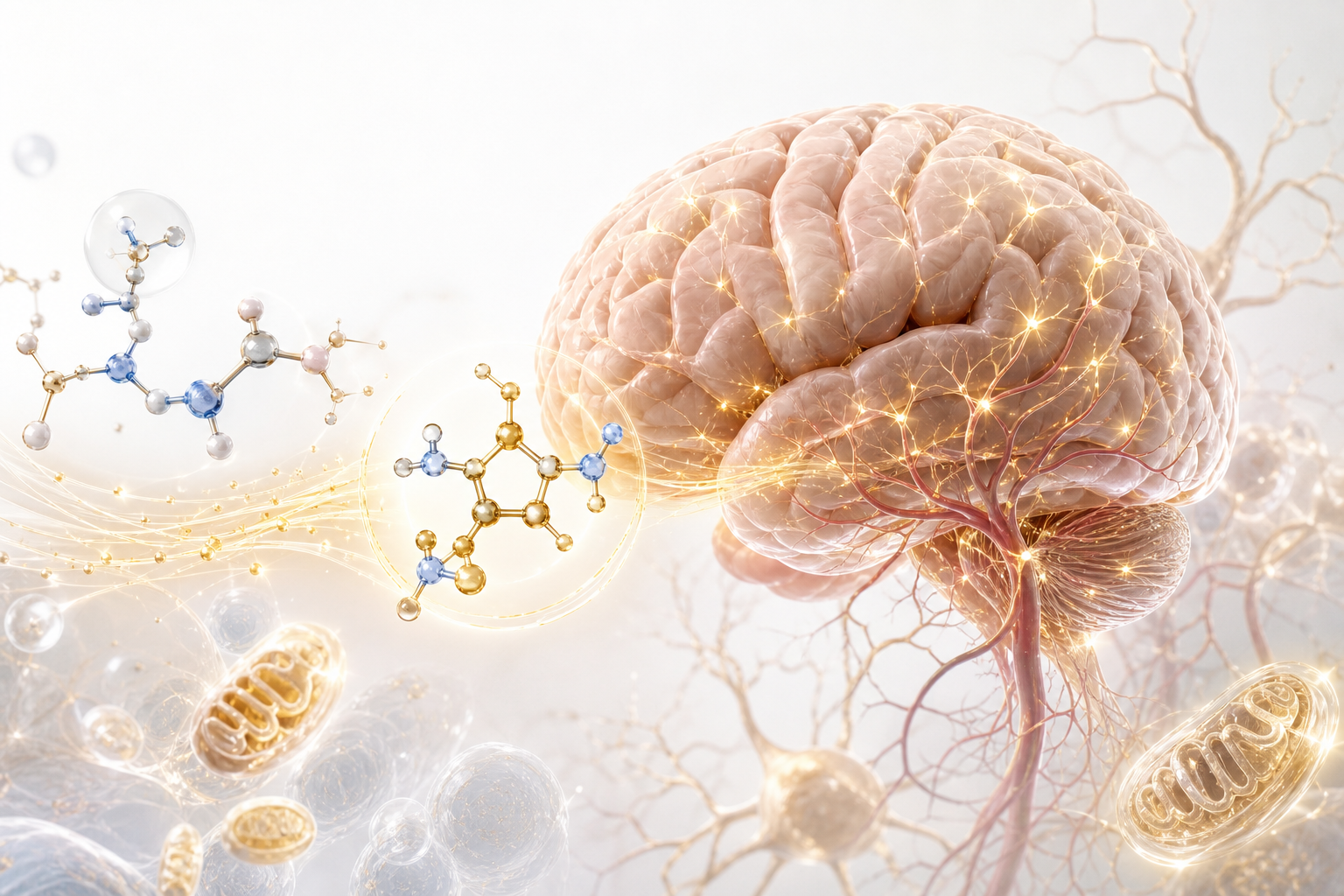
NMN is a precursor the body can use to help make NAD+, a coenzyme involved in cellular energy, mitochondrial function, DNA maintenance, and stress-response signaling. NMN should not be framed as an intelligence enhancer or neurological disease product, but NAD+ biology may support brain-cell and neurovascular health pathways that matter for cognitive wellness.
- NMN is not NAD+ itself. It is an NAD+ precursor that participates in the body's NAD+ salvage pathway.
- NAD+ supports enzymes involved in energy metabolism, mitochondrial homeostasis, DNA maintenance, and sirtuin signaling.
- Brain-health research on NMN is promising mainly in animal and cellular models; human cognitive benefit claims should stay conservative.
Content
Think of NMN as an upstream ingredient and NAD+ as the cellular coenzyme target. NMN may help maintain NAD+ availability, while NAD+ helps power processes that brain cells, blood vessels, and mitochondria rely on. The useful claim is cognitive wellness support, not a promise of memory performance or disease-level outcomes.
What is the relationship between NMN and NAD+?
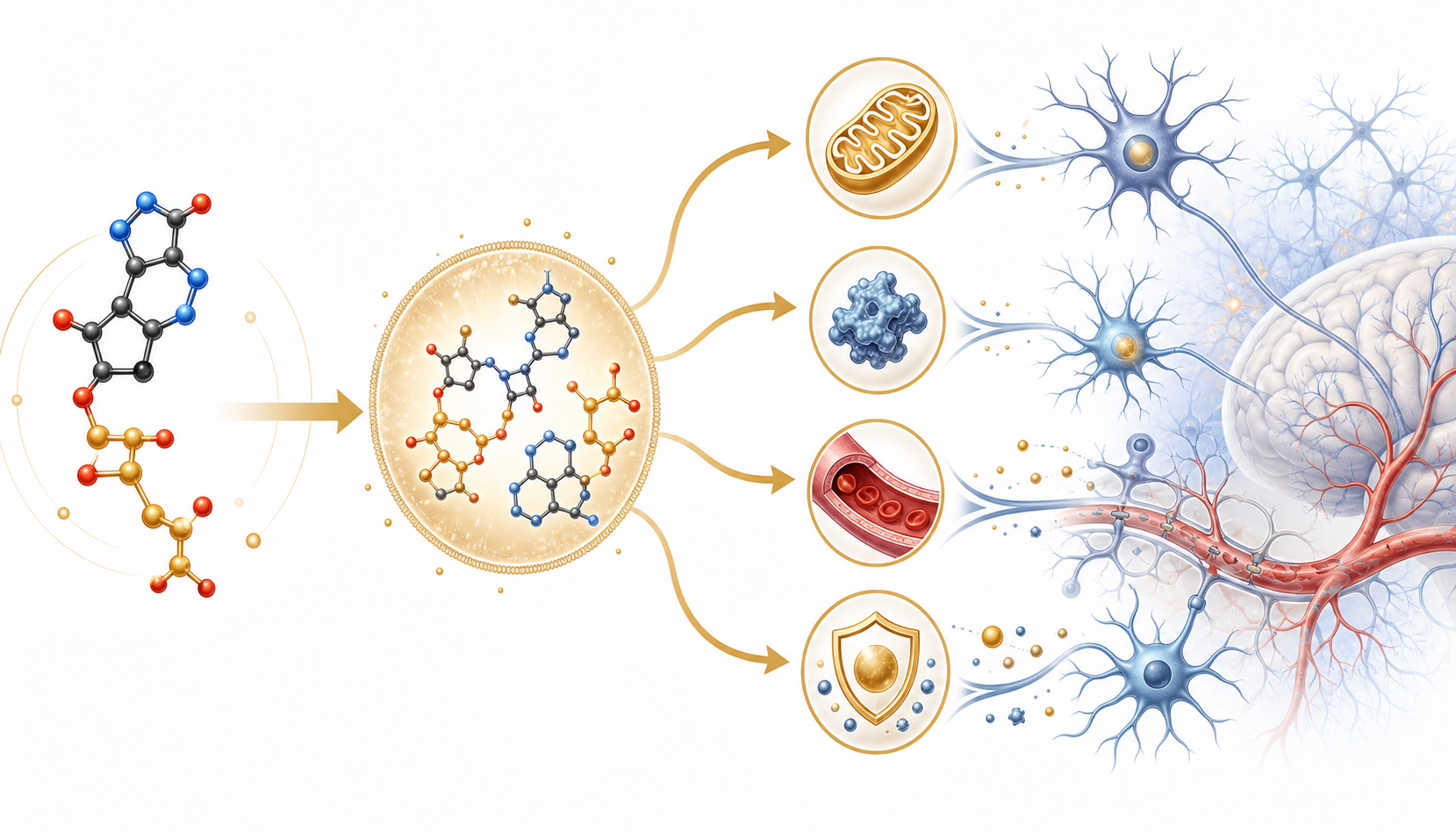
NMN stands for nicotinamide mononucleotide. NAD+ stands for nicotinamide adenine dinucleotide. The relationship is simple: NMN is one of the molecules the body can use to make NAD+. In the NAD+ salvage pathway, nicotinamide is converted into NMN, and NMN can then be converted into NAD+. That is why NMN is often described as an NAD+ precursor.
NAD+ is essential because it participates in redox reactions and serves as a substrate for enzymes such as sirtuins and PARPs. These systems help cells manage energy production, mitochondrial function, DNA maintenance, and stress-response signaling. AIDEVI's guide to what NAD+ is and how it relates to cellular energy gives a broader foundation for readers who want the molecule explained from the ground up.
The original article said NAD+ controls more than a thousand functions and drops by half every 20 years. A more accurate statement is that NAD+ metabolism is involved in many cellular processes, and several studies report age-related NAD+ changes in specific tissues, but the size and consistency of the decline vary by tissue, species, measurement method, and health context [1]. A 2026 human study also found that whole-blood NAD+ did not vary strongly with age across several cohorts, reminding readers that blood NAD+ is not a simple universal aging gauge [2].
This nuance matters for AIDEVI's voice. NMN can be discussed as support for healthy NAD+ metabolism, but not as a shortcut that resets biological age. Readers comparing the two terms can continue with AIDEVI's NAD+ vs NMN differences guide, which separates the precursor, the coenzyme, and the wellness language around each.
A practical analogy is a supply chain. NMN is like one input material. NAD+ is the working coenzyme that cells need in many reactions. The brain is one high-demand destination that depends on steady energy supply, healthy circulation, and stress-response capacity. Increasing attention to NMN comes from this supply-chain logic, not from a single dramatic effect.
How might NAD+ pathways support cognitive wellness?
Cognitive function depends on more than neurons firing quickly. The brain needs adequate blood flow, mitochondrial energy, glucose and oxygen delivery, synaptic communication, inflammation balance, sleep quality, and healthy vascular function. NAD+ intersects with several of these areas because it helps mitochondria convert nutrients into usable energy and supports enzymes that respond to cellular stress.
One important concept is neurovascular coupling. When a brain region becomes active, blood flow should increase to deliver oxygen and nutrients. Aging can weaken this response in animal models. NMN research has explored whether restoring NAD+ availability can support endothelial function, mitochondrial bioenergetics, and blood-flow responses in the aged brain. That does not mean NMN is a cognitive treatment, but it explains why researchers study it for brain aging pathways.
Another concept is mitochondrial resilience. Brain tissue is energy hungry, and mitochondria are central to energy production. When mitochondrial stress increases, neurons and vascular cells may become less efficient. AIDEVI's article on cellular energy production and NMN supplementation is a natural next read for readers who want the energy pathway before the brain pathway.
SIRT1 is another reason NMN appears in brain-aging discussions. SIRT1 is an NAD+-dependent enzyme involved in stress response, mitochondrial regulation, and vascular biology. In preclinical work, the NMN-to-NAD+ pathway is often discussed alongside SIRT1 because raising NAD+ availability may influence sirtuin activity. For consumers, however, the safe translation is modest: NMN is being studied for pathways that support cellular resilience. It is not a direct brain-performance switch.
What does the research actually show?
The strongest cognitive-function language for NMN comes from preclinical research. In aged mice, NMN supplementation was reported to improve cerebromicrovascular endothelial function, neurovascular coupling responses, and performance on cognitive tasks, with findings linked to NAD+ availability, mitochondrial oxidative stress, and bioenergetics [3]. A related transcriptomic study found signatures consistent with SIRT1 activation, mitochondrial protection, anti-inflammatory, and anti-apoptotic effects in the aged mouse neurovascular unit [4].
These studies are scientifically interesting, but they are not the same as proof of cognitive improvement in healthy adults. Animal studies can reveal mechanisms that are difficult to measure in people, yet human brains, lifestyles, disease risks, medications, and baseline NAD+ metabolism vary widely. A review of NAD+ and its precursors for cognitive decline noted that findings are mostly positive but primarily preclinical, and that better-controlled clinical research is needed for definitive answers in humans [5].
This is where the original "superhero" language needs to change. NMN should not be described as reducing dementia risk, repairing brain damage, or making the brain young again. A credible explanation is that NMN may help maintain NAD+ pathways that are relevant to cellular energy and neurovascular support. Readers interested in a broader AIDEVI discussion can explore NMN and brain aging research and AIDEVI's overview of brain health, NMN, and cognitive well-being.
Human evidence is developing, but it is not yet strong enough for specific cognitive outcome claims. Many NMN human studies focus on safety, blood metabolites, physical function, sleep, or metabolic markers rather than validated memory endpoints. That means an AIDEVI article should help readers understand mechanisms without jumping ahead of clinical evidence. The honest message is more credible: NMN is a healthy-aging ingredient with NAD+ pathway relevance, and brain health is one of the research areas worth watching.
What should readers expect from NMN?
A realistic reader expectation is support, not transformation. NMN is best positioned for people interested in healthy aging, cellular vitality, and NAD+ metabolism. It is not a stimulant, nootropic drug, IQ enhancer, Alzheimer's product, or emergency solution for brain fog. Brain fog can come from sleep debt, stress, anemia, thyroid issues, depression, medication effects, long-COVID, blood sugar changes, or other medical causes.
| Question | Responsible answer | Avoid saying |
|---|---|---|
| Does NMN become NAD+? | NMN is an NAD+ precursor used in NAD+ biosynthesis pathways. | NMN and NAD+ are identical. |
| Can NMN improve cognitive function? | It may support NAD+ pathways relevant to brain energy and neurovascular wellness; human cognitive evidence is still limited. | NMN should not be presented as a memory or intelligence shortcut. |
| Who should be cautious? | People with neurological symptoms, pregnancy, nursing, medication use, or medical conditions should ask a clinician. | Everyone can use NMN for brain concerns without guidance. |
Readers asking whether NMN "works" should define the goal first. For cellular energy education, the evidence conversation is different from a memory-performance claim. AIDEVI's comprehensive NMN evidence analysis is useful for that broader question.
A better set of expectations is measurable but conservative. A reader might track daytime energy, sleep regularity, exercise consistency, mental stamina during normal work, and whether lifestyle basics are improving. Those are wellness signals, not diagnostic endpoints. If someone is worried about memory loss, confusion, mood changes, or declining function, the next step is clinical assessment, not simply increasing a supplement stack.
How can NMN fit into a brain-support routine?
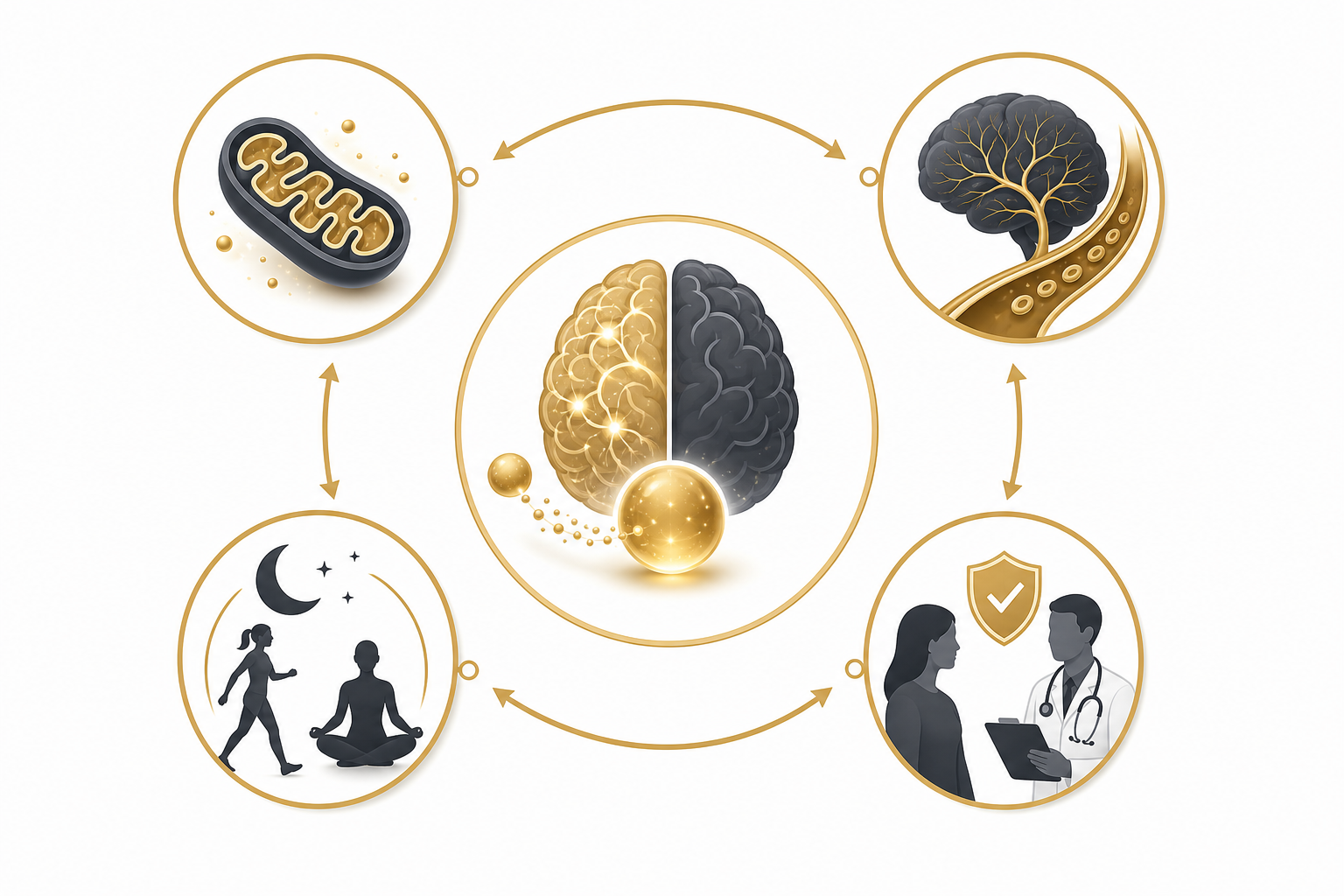
A brain-support routine should start before supplementation. Sleep consistency, aerobic movement, resistance training, hydration, protein intake, fiber-rich meals, omega-3 food sources, social connection, learning, and cardiovascular risk management all matter. NMN may sit on top of this foundation for people who want NAD+ pathway support, but it should not become the foundation itself.
Timing and serving decisions should be practical. Some people prefer morning use because they associate NAD+ support with daytime energy routines, while others simply choose the time they can repeat consistently. AIDEVI's NMN timing guide and NMN dosage by age guide can help readers think through routine fit without overpromising outcomes.
A useful tracking approach is simple. Track sleep quality, morning alertness, exercise consistency, stress load, and whether brain fog is improving or persisting. If cognitive symptoms are new, sudden, progressive, or affecting daily function, do not treat them as a supplement shopping problem. Ask a qualified healthcare professional for evaluation.
The routine should also avoid overlap. Many brain-health shoppers already use caffeine, multivitamins, omega-3, CoQ10, adaptogens, sleep products, or prescription medication. Adding NMN without reviewing the full context can make it harder to know what is helping, what is unnecessary, and what may be inappropriate. A simple supplement audit, repeated every few months, keeps the routine clearer.
Finally, remember that cognition is not only chemistry. Focus, memory, and mental clarity are shaped by light exposure, screen habits, movement breaks, learning challenge, social connection, blood pressure, glucose control, and sleep debt. NMN belongs in the cellular vitality conversation, but the brain performs best when the whole routine supports it.
Conclusion
The relationship between NMN and NAD+ is direct but not magical: NMN is a precursor the body can use to help maintain NAD+ metabolism. NAD+ then supports cellular energy, mitochondrial function, sirtuin signaling, and other pathways that are relevant to brain and neurovascular wellness.
The strongest AIDEVI message is balanced. NMN may support NAD+ pathways connected with cognitive wellness, but it should not be positioned as an IQ booster, dementia product, or brain-performance shortcut. Healthy brain aging is built from sleep, movement, metabolic health, vascular health, nutrient density, lifelong learning, and careful supplement decisions.
Frequently Asked Questions
Is NMN the same as NAD+?
No. NMN is a precursor molecule involved in NAD+ biosynthesis. NAD+ is the coenzyme used by cells in energy metabolism and signaling pathways.
Can NMN improve memory?
Preclinical research suggests NMN may support pathways relevant to brain energy and neurovascular function, but human memory-improvement evidence is not definitive. Avoid certainty-based memory claims.
Does NAD+ decline with age?
Many studies report age-related NAD+ changes in certain tissues, but the pattern is not identical across tissues or measurement methods. Newer human blood data show why the topic needs nuance.
Can NMN help brain fog?
Brain fog has many possible causes. NMN may support cellular energy pathways, but persistent or sudden brain fog should be evaluated by a healthcare professional.
Who should ask a clinician before using NMN?
Ask a clinician first if pregnant, nursing, taking medication, managing a medical condition, experiencing neurological symptoms, or preparing for surgery.
References
- [1] Covarrubias AJ, Perrone R, Grozio A, Verdin E. NAD+ metabolism and its roles in cellular processes during ageing. PMC.
- [2] Trętowicz MM, et al. Human whole-blood NAD+ levels do not vary with age or lifestyle interventions. Nature Metabolism. 2026. PubMed.
- [3] Tarantini S, et al. Nicotinamide mononucleotide supplementation rescues cerebromicrovascular endothelial function and neurovascular coupling responses and improves cognitive function in aged mice. PubMed.
- [4] Tarantini S, et al. NMN supplementation promotes neurovascular rejuvenation in aged mice: transcriptional footprint of SIRT1 activation, mitochondrial protection, anti-inflammatory, and anti-apoptotic effects. PubMed.
- [5] Campbell JM. Review of NAD+ and precursor supplementation across cognitive-decline research contexts. PubMed.
These statements have not been evaluated by the Food and Drug Administration. This content is for educational purposes only and is not intended to diagnose, treat, cure, or prevent any disease. Dietary supplement decisions should be made with appropriate healthcare guidance, especially if pregnant, nursing, taking medication, or managing a medical condition.
