



AIDEVI Heart Wellness Guide
nmn and Cardiovascular Health: A Practical Guide to NAD+ and Heart Wellness Support
NMN may support cardiovascular wellness indirectly by helping maintain NAD+ metabolism, cellular energy pathways, mitochondrial function, and antioxidant resilience. It should not be described as a medical answer for heart disease, heart attack, stroke, or high blood pressure. The strongest heart-health foundation remains lifestyle and clinical monitoring, with NMN considered only as a supportive wellness layer.

- NMN is a precursor in NAD+ metabolism, which is involved in cellular energy, redox balance, and mitochondrial function.
- Most cardiovascular NMN evidence is mechanistic or preclinical, so claims should stay conservative and wellness-focused.
- Use NMN only after the heart-health basics are clear: blood pressure, lipids, blood sugar, sleep, movement, diet, and clinician guidance.
Content
The cleanest answer is this: NMN belongs in the cardiovascular conversation because NAD+ supports cellular metabolism, mitochondrial health, endothelial biology, and redox balance. It does not replace the basics. A responsible NMN article should lead with measurable heart-health habits, then explain where NAD+ support may fit.
Can NMN support cardiovascular wellness?
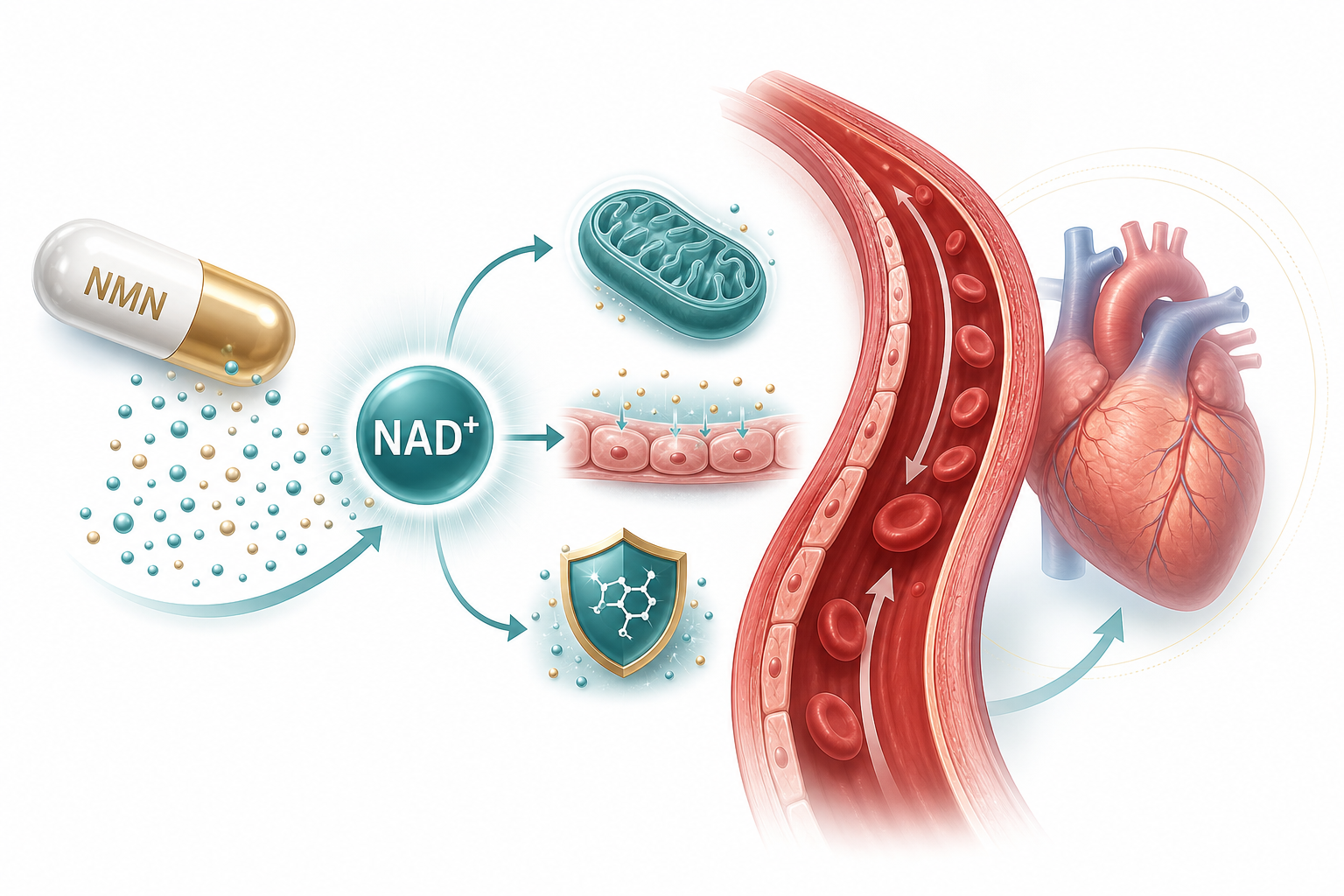
NMN can be discussed as a cardiovascular wellness ingredient because it helps the body make NAD+, a coenzyme involved in energy metabolism and cellular signaling. Heart muscle, blood vessel lining, and vascular smooth muscle all depend on healthy cellular energy and redox balance. That makes NAD+ biology relevant to heart wellness, especially in the context of aging, oxidative stress, and metabolic health. AIDEVI's article on NMN, heart health, and cardiovascular vitality is a natural continuation for readers focused on this topic.
Still, "relevant" does not mean "clinically proven for heart outcomes." The original article implied that NMN may reduce risk of arterial hardening, slow cardiovascular disease progression, and act as a standalone heart-health answer. A safer rewrite is more precise: NMN may support the NAD+ pathways that are being studied in cardiovascular biology, but people with heart disease, hypertension, diabetes, high cholesterol, chest pain, shortness of breath, or medication use should rely on professional medical care, not supplement claims.
For AIDEVI readers, the best frame is layered. The first layer is clinical: know your blood pressure, lipids, glucose, family history, and medication plan. The second layer is lifestyle: movement, diet, sleep, stress, nicotine avoidance, and weight management. The third layer is targeted wellness support: ingredients such as NMN, CoQ10, omega-3s, antioxidants, or resveratrol when they fit the person's broader routine. NMN belongs in the third layer.
Why does NAD+ matter for the heart and blood vessels?
NAD+ is essential for redox reactions and mitochondrial energy metabolism. Reviews of NAD+ and cardiovascular biology describe its roles in cellular energetics, metabolism, mitochondrial function, DNA repair, inflammation, and cell survival pathways [1]. Blood vessels are not passive tubes; the endothelium helps regulate vessel tone, immune signaling, filtration, blood flow, and angiogenesis. When vascular function declines, the surrounding metabolic and inflammatory environment becomes less favorable.
This is why NAD+ is interesting. Lower NAD+ availability has been linked in scientific reviews with oxidative stress, mitochondrial dysfunction, inflammation, and altered vascular function [1]. AIDEVI's foundational guide to what NAD+ is and how it supports cellular energy is useful before readers evaluate any NMN product or format.
In practical language, NAD+ support is not about forcing the heart to work harder. It is about supporting the cellular systems that help tissues manage energy, oxidative stress, and repair demands. That is why the messaging should stay calm: supports cellular energy, helps maintain healthy NAD+ metabolism, supports antioxidant resilience, and helps promote long-term wellness. AIDEVI's article on cellular energy production and NMN supplementation gives the mechanism more room without turning it into a disease claim.
This distinction matters because heart-health shoppers often search from a place of concern. A high-quality article should not push them from concern into overconfidence. If a reader wants to support heart wellness, the article should first point to measurable markers and daily habits. Then it can explain why NAD+ biology is relevant. That order protects the reader and strengthens AIDEVI's credibility.
What does the evidence actually show?
The evidence is promising but not final. A 2024 review on NAD+ metabolism and cardiovascular diseases explains that NAD+ is being studied for vascular function, mitochondrial stress, oxidative stress, inflammation, autophagy, and cardiovascular aging [1]. A separate 2024 review focused on NMN and cardiovascular diseases summarizes preclinical work across heart failure, atherosclerosis, myocardial ischemia/reperfusion injury, vascular aging, and other models [2]. Those reviews support research interest, not consumer-level medical promises.
One frequently cited animal study found that NMN supplementation in old mice improved measures of endothelial function and arterial stiffness while reducing oxidative stress markers in arteries [3]. This is biologically meaningful, but it is still mouse research. It should not be translated into a claim that an NMN capsule will improve a person's arterial stiffness, blood pressure, or heart disease outcome.
Human NMN trials are more useful for safety and NAD+ biology than for cardiovascular outcomes. One randomized trial in healthy subjects reported that oral NMN at 250 mg per day for 12 weeks increased whole-blood NAD+ levels and was not associated with obvious adverse effects in that small study [4]. Another dose-dependent trial in healthy middle-aged adults evaluated several daily NMN doses and reported increased blood NAD concentrations with safety and tolerability assessed over 60 days [5].
The responsible conclusion is therefore narrow: NMN supports NAD+ status in human studies and has cardiovascular-relevant mechanisms in preclinical research. It has not been established as a clinical approach for cardiovascular disease. Readers comparing adjacent ingredients may also explore AIDEVI's guides to CoQ10 benefits for women and heart-energy support and CoQ10 benefits for men and heart health support.
For consumer education, that means the article should separate three levels of evidence. The first level is established cardiovascular health guidance, such as blood pressure management, physical activity, sleep, diet, and smoking avoidance. The second level is NAD+ biology, where the mechanisms are plausible and actively researched. The third level is supplement choice, where individual factors, dose, tolerance, medication use, and product quality matter. NMN sits mostly in levels two and three, while clinical heart care remains level one.
How should readers decide whether NMN fits?
Use the AIDEVI Measure, Move, Nourish, Support framework. It keeps NMN in the right place: after the measurable foundations and before unrealistic expectations.
| Step | Best fit | Avoid or pause if |
|---|---|---|
| Measure | Know blood pressure, lipids, glucose, weight trend, sleep, and medication context. | You are trying to use a supplement instead of checking risk markers. |
| Move | Build consistent aerobic activity and resistance training suited to your health status. | You have chest pain, dizziness, or exertional symptoms without medical evaluation. |
| Nourish | Prioritize whole foods, fiber, protein, healthy fats, and colorful plant nutrients. | You expect NMN to compensate for poor sleep, smoking, inactivity, or a high-risk diet. |
| Support | Consider NMN for NAD+ and cellular wellness support after reviewing label, timing, and safety. | You are pregnant, nursing, taking medication, managing heart disease, or preparing for surgery without clinician input. |
This framework also helps with product comparisons. NAD+, NMN, NR, and patches are often grouped together, but they are not identical formats. AIDEVI's comparison of NAD+ vs. NMN differences and benefits can help readers understand the category before choosing a product path.
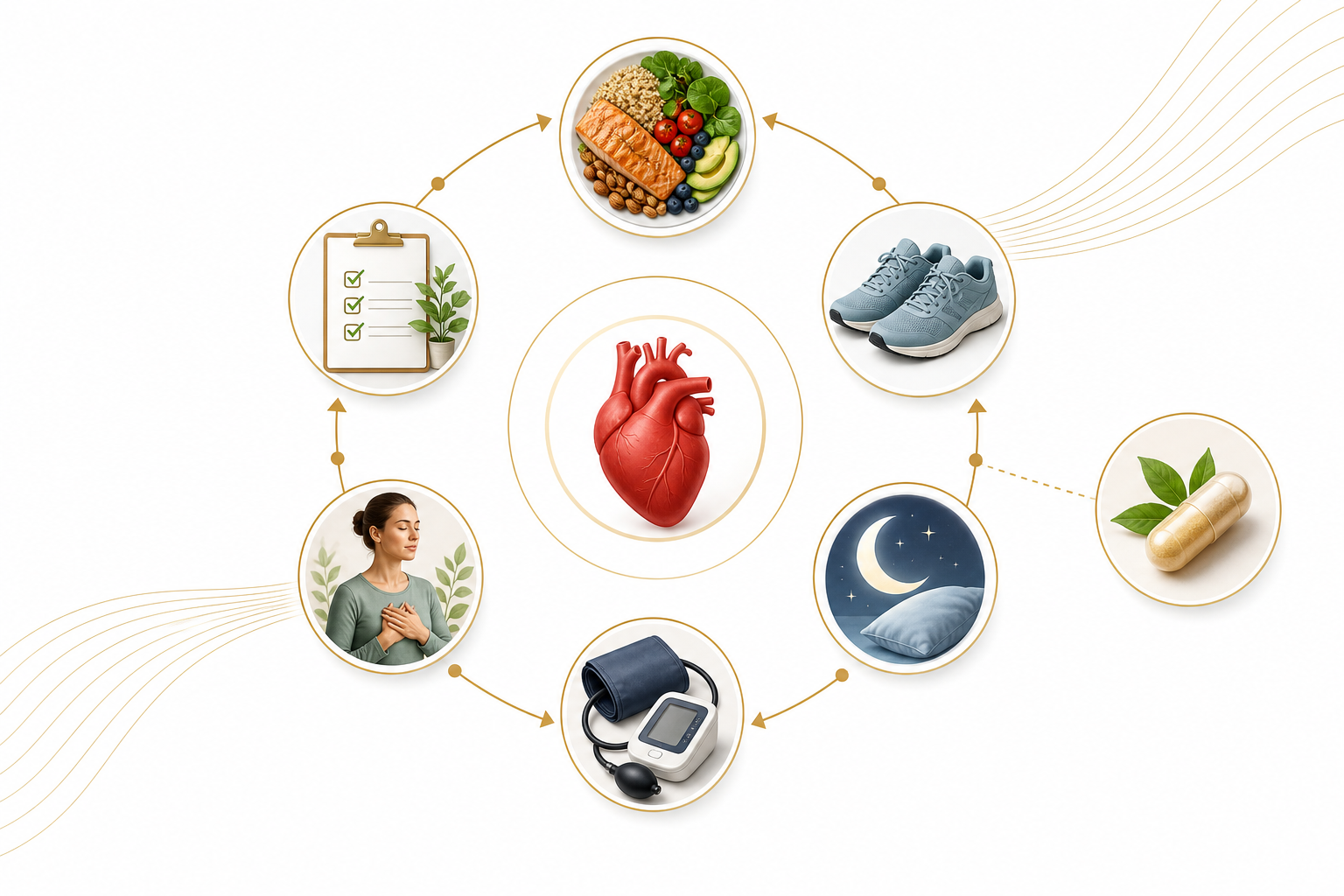
What does a heart-smart routine look like?
Start with the American Heart Association's Life's Essential 8: healthy diet, physical activity, nicotine avoidance, healthy sleep, weight management, blood lipids, blood glucose, and blood pressure [6]. These are not glamorous, but they are the real heart-health levers. Supplements should make the routine easier to support, not distract from what has the strongest public-health foundation.
For NMN, the routine question is simple: does it fit your daily rhythm, budget, label instructions, and health context? Some people prefer morning use because NMN is part of their energy and NAD+ routine. Others need to pay attention to sleep timing and personal tolerance. AIDEVI's NMN dosage by age guide and timing articles can help readers ask better questions, but individual advice should come from a qualified professional when medical risks are present.
Track outcomes that are realistic. Do not look for dramatic heart claims. Instead, track routine consistency, sleep quality, energy stability, exercise recovery, nutrition adherence, and whether your healthcare markers are being monitored appropriately. If you notice chest pain, shortness of breath, palpitations, fainting, swelling, or unusual exercise intolerance, stop framing it as a supplement question and seek medical care.
A useful monthly check-in can be simple. Ask: Did I move most days this month? Did I sleep enough to support recovery? Did I eat enough fiber, protein, and unsaturated fats? Did I monitor blood pressure if I have a reason to? Did I discuss abnormal labs or symptoms with a professional? Did NMN fit smoothly, or did it distract from the habits that matter most? This kind of tracking keeps the supplement in proportion.
Certain readers should be especially cautious. Anyone with diagnosed cardiovascular disease, a history of stroke or heart attack, arrhythmia, uncontrolled blood pressure, diabetes, kidney disease, liver disease, anticoagulant use, multiple prescriptions, pregnancy, nursing, or planned surgery should ask a qualified healthcare professional before adding NMN. This does not mean NMN is automatically unsuitable. It means the decision belongs in a fuller health context.
AIDEVI's broader healthy-aging content can support this layered approach. Readers interested in oxidative stress and aging can continue with healthy aging and antioxidant properties of NMN supplements. The key is to keep the promise aligned with the evidence: NMN may support cellular wellness, while cardiovascular care still depends on measurable habits and professional guidance.
Conclusion
NMN is worth discussing in cardiovascular wellness because NAD+ biology touches cellular energy, mitochondrial function, oxidative stress, endothelial health, and healthy aging. The science is interesting, especially in mechanistic and animal studies, and human NMN trials support the idea that supplementation can raise NAD+ levels under studied conditions.
The most credible AIDEVI message is not that NMN protects the essence of life by itself. It is that NMN may support the cellular-energy layer of a heart-smart lifestyle. Measure what matters, move consistently, nourish the vascular system, use supplements thoughtfully, and involve healthcare professionals when cardiovascular risk or symptoms are present.
Frequently Asked Questions
Is NMN good for heart health?
NMN may support NAD+ metabolism and cellular energy pathways related to cardiovascular wellness. It should not be used as a medical substitute for heart care or clinician guidance.
Can NMN lower blood pressure?
Do not rely on NMN to manage blood pressure. Blood pressure should be monitored and managed with lifestyle and clinician-guided care. Ask a healthcare professional before using supplements if you have hypertension.
How does NAD+ relate to blood vessel wellness?
NAD+ is involved in mitochondrial function, redox balance, inflammation signaling, and endothelial cell biology. These pathways are relevant to vascular wellness, but they do not equal a consumer-level disease claim.
Can I take NMN with heart medication?
Ask your healthcare professional first. Medication use, heart disease history, surgery plans, pregnancy, nursing, and multiple supplement stacks all deserve individualized guidance.
What should come before NMN for cardiovascular wellness?
Start with measurable basics: blood pressure, blood lipids, blood sugar, sleep, diet, movement, nicotine avoidance, stress, and clinician guidance when needed. NMN is a support layer after those foundations.
References
- [1] NAD+ metabolism and therapeutic strategies in cardiovascular diseases. PMC.
- [2] Nicotinamide Mononucleotide: Research Process in Cardiovascular Diseases. PMC.
- [3] de Picciotto NE, Gano LB, Johnson LC, et al. Study of nicotinamide mononucleotide supplementation, vascular function, oxidative stress, and aging in mice. PubMed.
- [4] Okabe K, Yaku K, Uchida Y, et al. Oral administration of nicotinamide mononucleotide is safe and efficiently increases blood NAD+ levels in healthy subjects. PubMed.
- [5] Yi L, Maier AB, Tao R, et al. The efficacy and safety of beta-nicotinamide mononucleotide supplementation in healthy middle-aged adults. PubMed.
- [6] American Heart Association. Life's Essential 8. AHA.
These statements have not been evaluated by the Food and Drug Administration. This content is for educational purposes only and is not intended to diagnose, treat, cure, or prevent any disease. Dietary supplement decisions should be made with appropriate healthcare guidance, especially if pregnant, nursing, taking medication, or managing a medical condition.
