



AIDEVI Wellness Guide
Ergothioneine Side Effects: What Safety Research Says
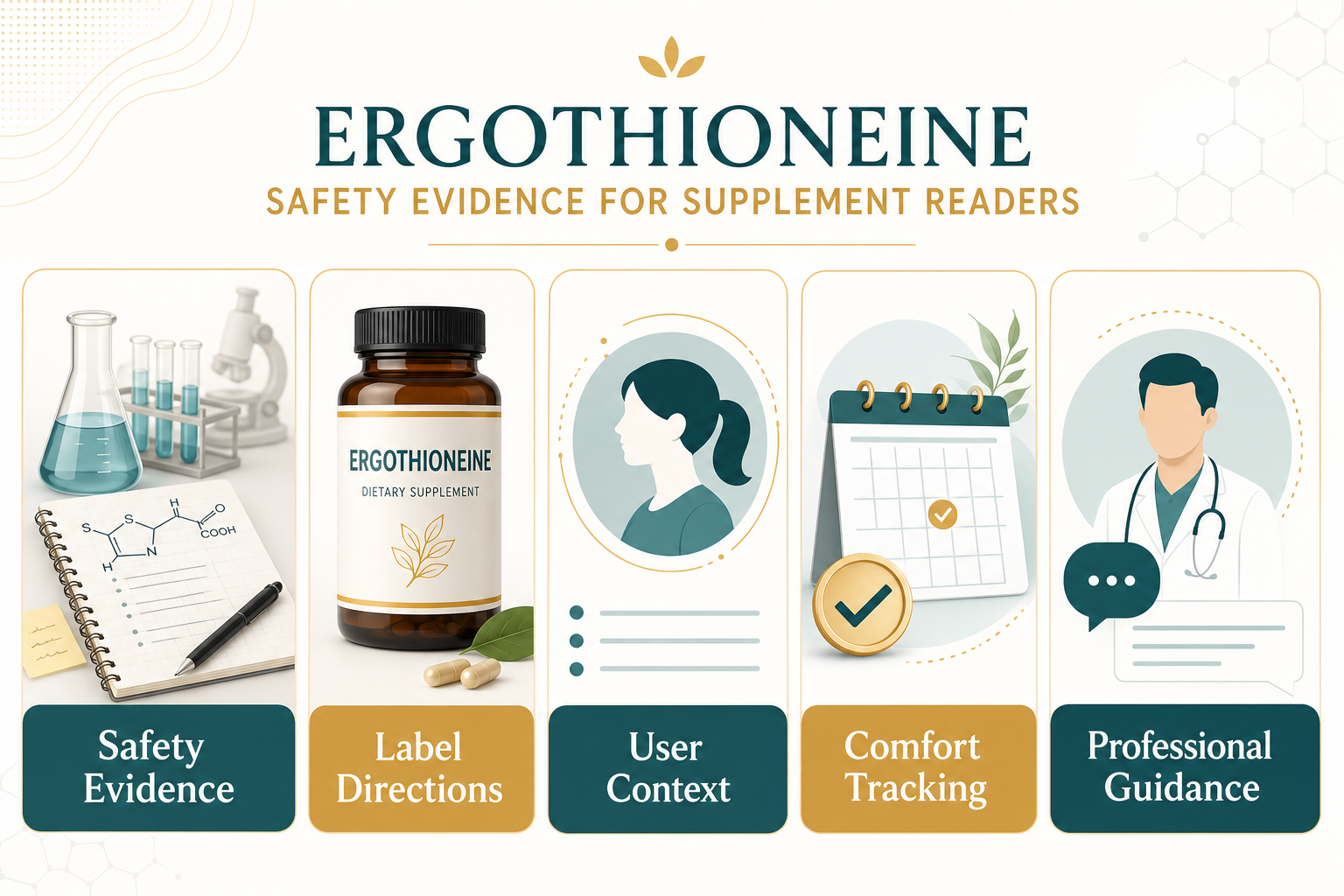
Ergothioneine is usually discussed as a diet-derived antioxidant compound, not as a medication, but “natural” does not make any supplement automatically right for every person. The more practical safety question is whether the EGT serving, formula, label directions, personal health context, and other supplements in your routine make sense together. Current safety evaluations are encouraging, yet consumers should still watch for unusual discomfort, avoid stacking products casually, and ask a healthcare professional when pregnancy, nursing, medication use, or a medical condition is part of the picture.
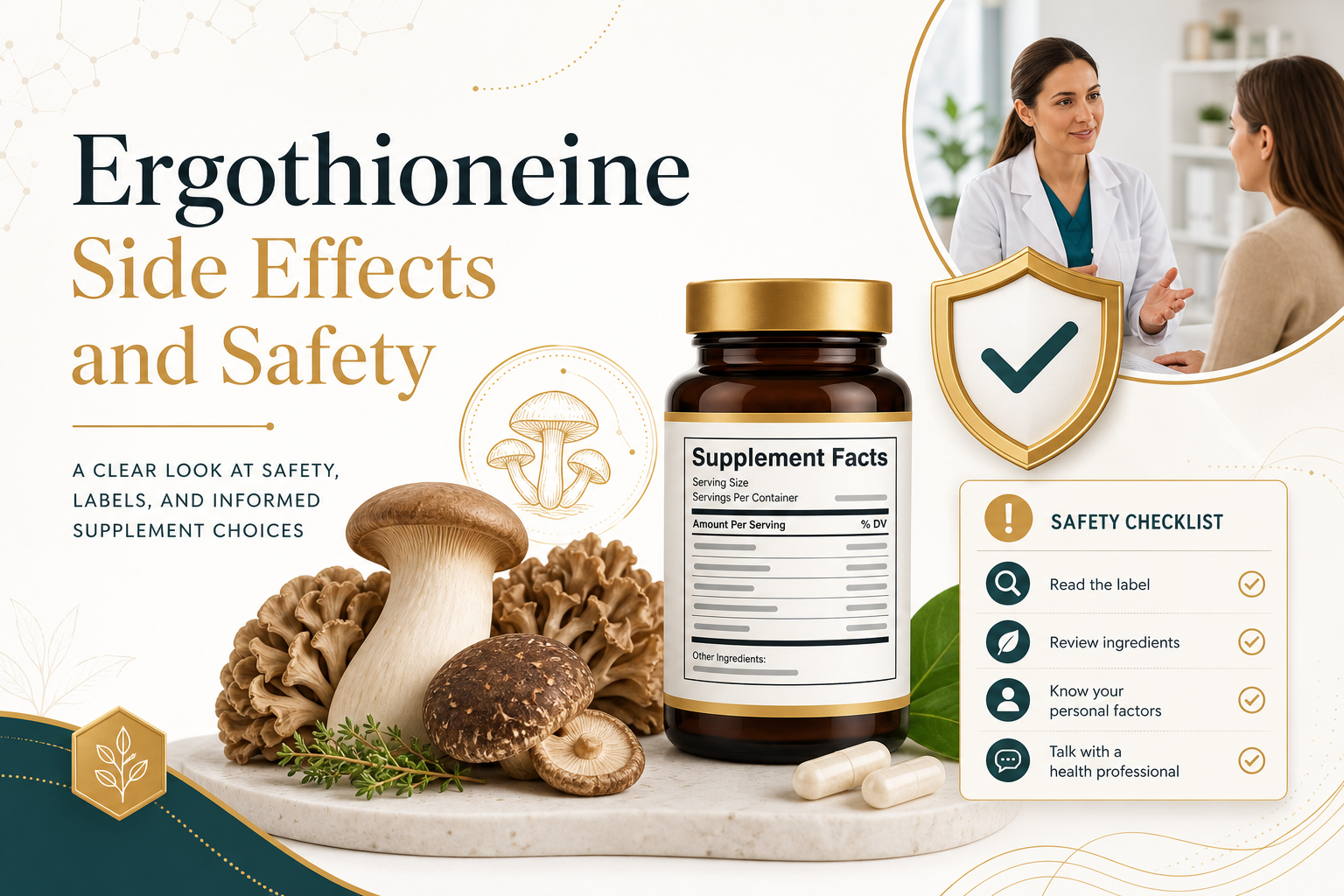
- Ergothioneine safety research exists, including regulatory review, but it does not replace personalized guidance.
- Side effects are not as clearly mapped as drug adverse events, so users should track new symptoms and timing.
- Label directions, serving size, added ingredients, and total supplement stack matter as much as the word “EGT.”
- People who are pregnant, nursing, taking medication, managing medical conditions, or combining many supplements should ask a professional first.
Content
What side effects are reported with ergothioneine?
Ergothioneine side effects are not as well-defined as the adverse-event profiles you might see for prescription drugs. That means there is no useful consumer list that can honestly say “these are the expected EGT side effects for everyone.” In practice, a cautious user should pay attention to new digestive discomfort, headache, skin changes, sleep changes, or any symptom that appears after starting a new supplement, even if the cause is not obvious. The timing, dose, other ingredients, diet changes, and other supplements started around the same time all matter.
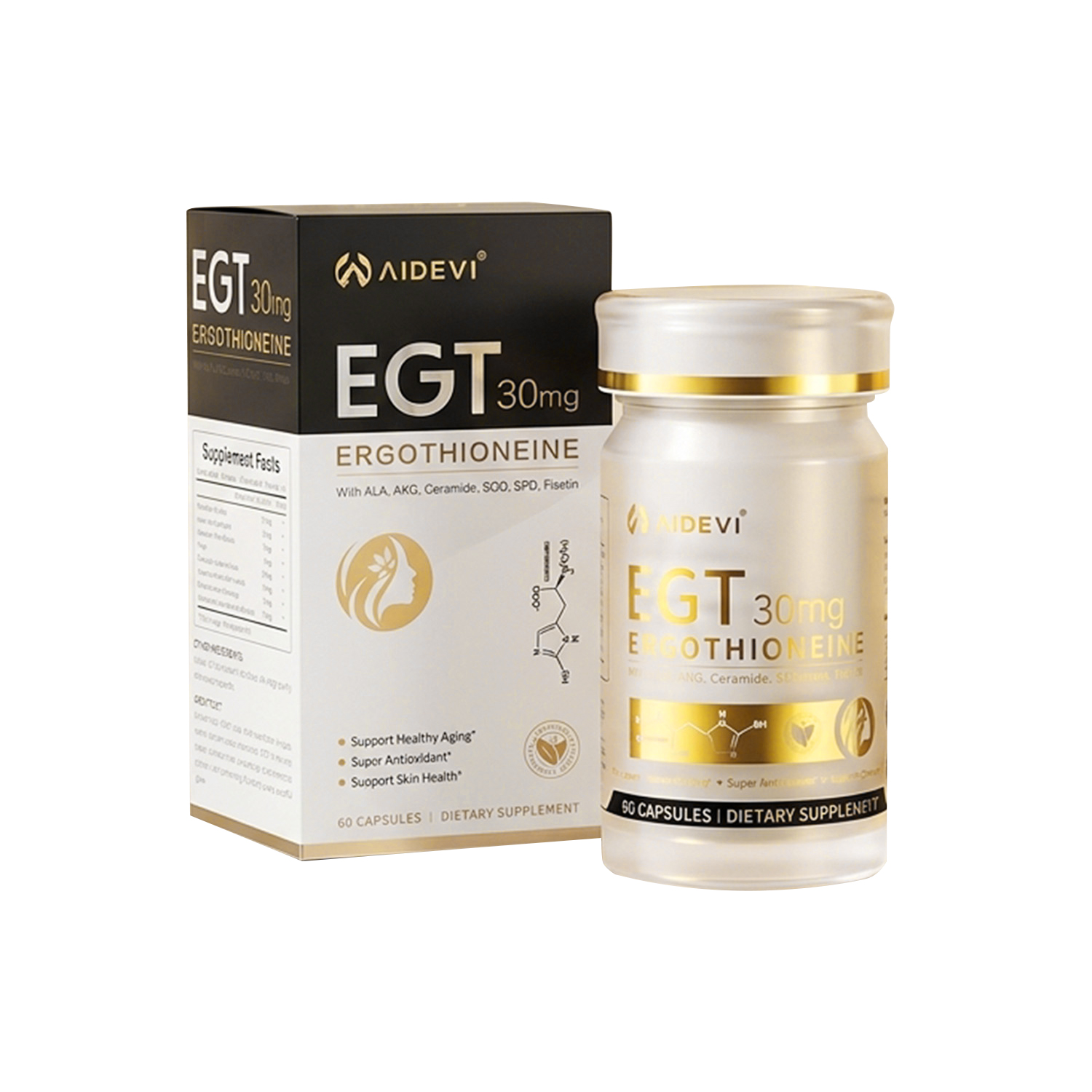
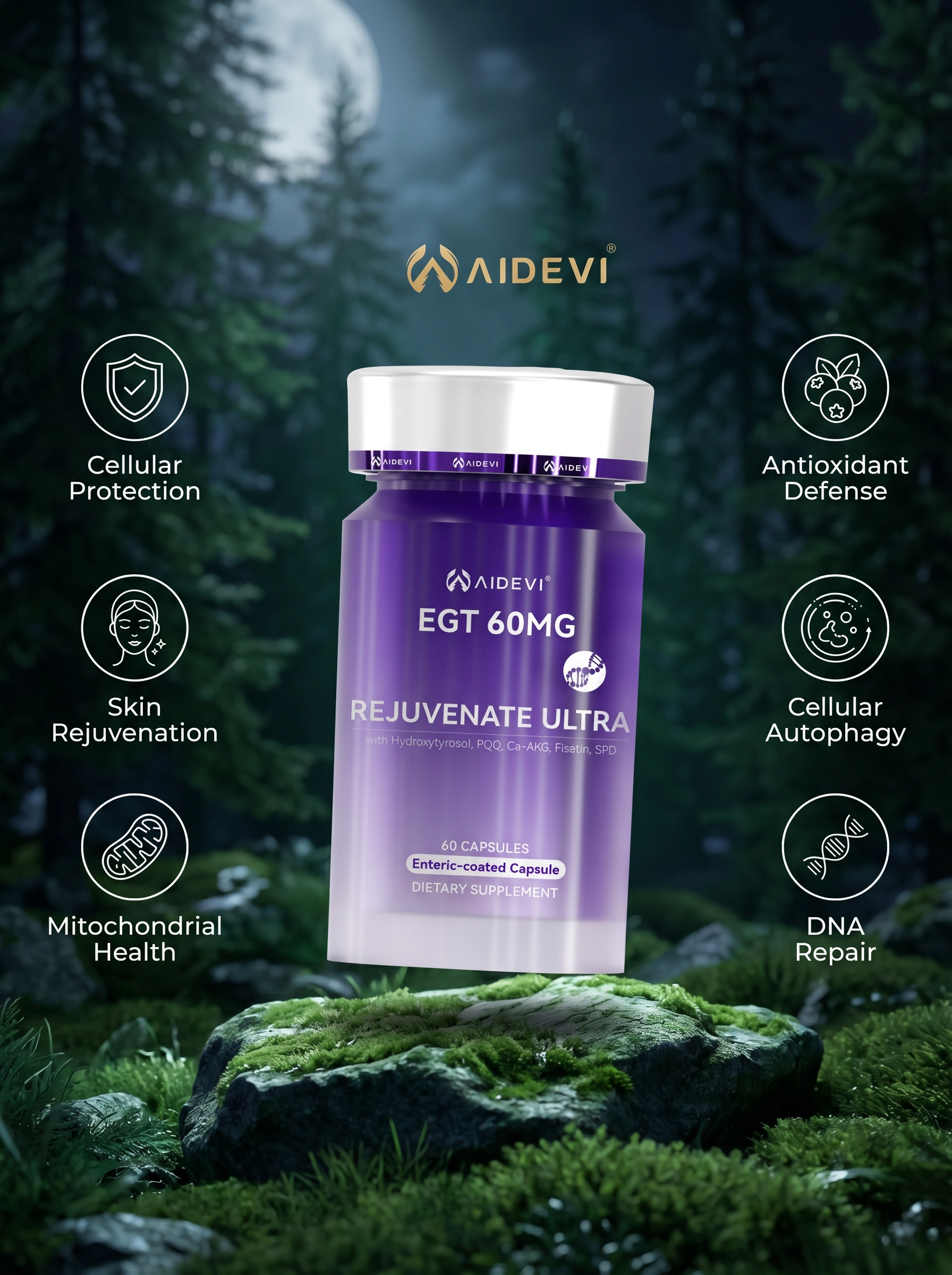
This is also why the product category matters. A single-ingredient EGT capsule is easier to evaluate than a broad anti-aging stack with many active ingredients. If you are comparing formats, start with the Supplement Facts panel and the directions on a product such as the AIDEVI EGT ergothioneine 25 mg capsule page, then compare that information with any other antioxidant product you already use. The same ingredient name can sit inside very different formulas.
A reasonable approach is to treat any new supplement as a change to your routine, not as an isolated object. Write down when you started it, what else changed that week, and whether the symptom improves after pausing. This simple record helps you have a better conversation with a healthcare professional and avoids blaming the wrong product when sleep, caffeine, travel, stress, or a second supplement may be involved.
What does safety research say about EGT?
Research interest in ergothioneine comes from its role as a naturally occurring sulfur-containing amino acid derivative found in foods such as mushrooms and from the way human biology appears to handle it through a specific transporter. Reviews discuss antioxidant activity, tissue distribution, and possible relevance to healthy aging, while also noting that more human outcome research is still needed [1]. That is a useful foundation, but it should not be stretched into a promise that every person will tolerate every EGT product equally.
Regulatory evaluation gives another layer of context. The European Food Safety Authority published an opinion on synthetic L-ergothioneine as a novel food ingredient and assessed proposed uses for certain populations and food categories [2]. For a supplement shopper, the takeaway is not that labels can be ignored. It is that safety should be interpreted through dose, intended population, exposure, manufacturing quality, and how the ingredient is delivered.
AIDEVI's broader educational content describes EGT as part of the antioxidant and healthy-aging conversation. If you want the benefits context before making a safety decision, the overview on ergothioneine supplement and healthy-aging support can help frame why people consider EGT in the first place. For a more antioxidant-focused angle, the article on ergothioneine as an antioxidant compound gives additional background. Read those pages as education, then return to safety with a label-first mindset.
| Safety Factor | What It Means for a User |
|---|---|
| Ingredient identity | Confirm the label actually lists ergothioneine or L-ergothioneine and does not hide the formula behind vague language. |
| Serving directions | Follow the product directions unless a qualified professional gives you different personalized advice. |
| Added ingredients | A reaction may relate to the full formula, excipients, or another active ingredient, not necessarily EGT alone. |
| User context | Age, pregnancy status, medication use, allergies, health conditions, and supplement stacking can change the risk conversation. |
How do product labels change safety?
The label is where safety becomes practical. A front panel may highlight antioxidant support, longevity, or cellular resilience, but the Supplement Facts panel tells you the serving size, ingredient amount, and whether other actives are included. If a formula combines EGT with PQQ, NAD support nutrients, botanical extracts, or other antioxidants, you are evaluating the whole stack. This matters because a multi-ingredient product can make it harder to identify what caused discomfort.
For example, shoppers comparing a dedicated EGT formula with a combined antioxidant product may also read AIDEVI's page for an EGT and PQQ liquid supplement. That type of article can be useful for understanding formula intent, but safety still depends on whether the product matches your current routine. If you already take several mitochondrial, energy, or antioxidant-support products, adding another combined formula deserves more caution than adding nothing else.
A second label issue is consistency. Some people switch between capsule, liquid, powder, and multi-ingredient formats without noticing that the serving directions are not interchangeable. A label may define one serving as one capsule, one dropper, two capsules, or a measured amount of liquid. If you compare products only by front-label wording, you may accidentally compare one serving from one product with a different number of servings from another. That is not a good basis for safety or value decisions.
Also review inactive ingredients if you tend to react to capsules, sweeteners, colors, flavors, or preservatives. A user who feels bloated, itchy, or unusually stimulated after a new product might assume the active ingredient is responsible, but the reaction could relate to another component or to the combination of several routine changes. Clear labels make this troubleshooting easier. Vague labels make it harder.
Label quality also includes what is not said. Be careful with pages that imply guaranteed results, disease treatment, or “risk-free” use. Dietary supplements in the United States are regulated differently from drugs, and FDA consumer guidance reminds shoppers to talk with healthcare professionals and report serious problems when they occur [3]. A trustworthy routine is built on clear labels, realistic expectations, and willingness to stop when something feels off.
Who should be careful before taking EGT?
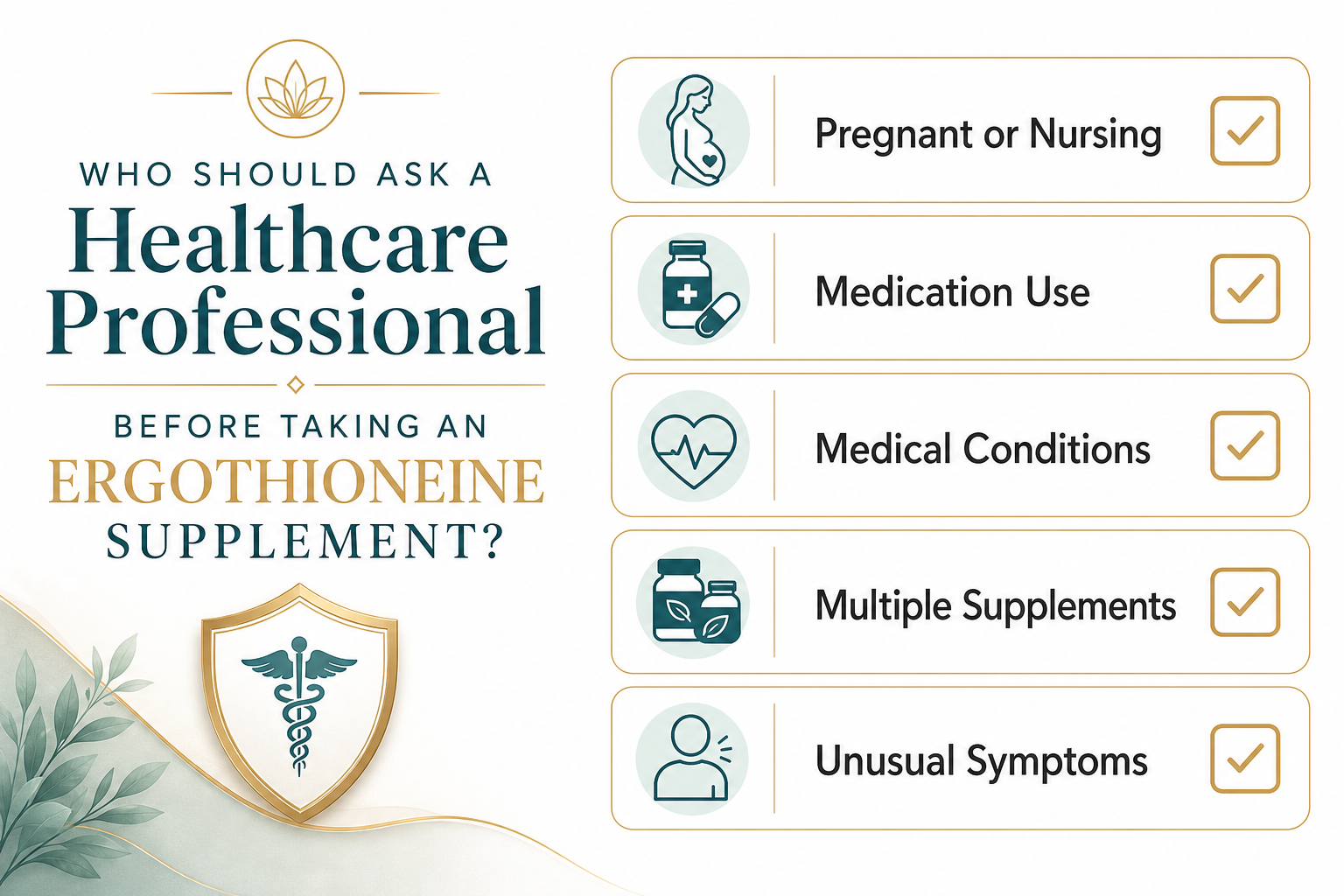
Some people should treat EGT as a professional conversation before purchase rather than a casual add-on. That includes anyone who is pregnant or nursing, taking prescription or over-the-counter medication, preparing for surgery, managing a diagnosed medical condition, or recovering from a significant health event. It also includes people who have had unexplained reactions to supplements before. The point is not that EGT is automatically unsafe for these users. The point is that their risk context is more complex.
People building a broader longevity routine should be especially organized. A page such as women over 40, NMN, and ergothioneine for healthy aging can help readers understand why EGT is often discussed alongside NAD-support nutrients. But combination routines should be planned, not improvised. More products create more variables, more serving directions, and more opportunities to duplicate antioxidant or energy-support ingredients.
Food context matters too. Ergothioneine occurs naturally in certain foods, especially mushrooms, and diet may already provide some exposure. A supplement is a concentrated and structured way to add EGT, so the decision should account for the rest of your wellness routine. If your goal is general antioxidant support rather than a specific EGT-only interest, AIDEVI's daily guide to choosing a good antioxidant supplement may help you compare options without stacking everything at once.
What should you do if EGT feels wrong?
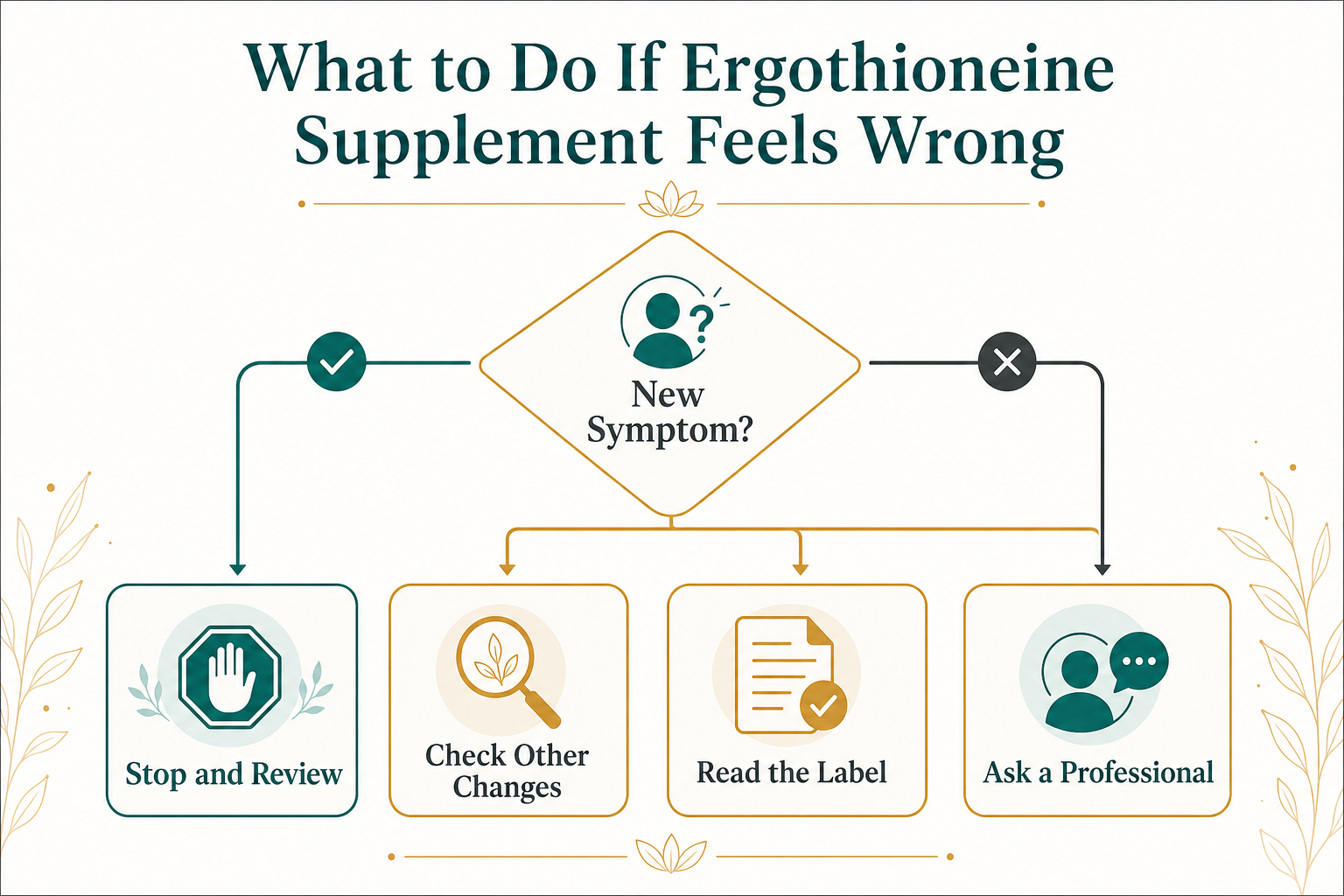
If you notice an unusual symptom after starting an EGT supplement, pause and review rather than pushing through automatically. Check whether you changed anything else: a new medication, a different caffeine pattern, a new workout schedule, alcohol intake, travel, sleep disruption, or another supplement. Read the label again to confirm serving size and other ingredients. If symptoms are severe, persistent, or worrying, contact a healthcare professional promptly. Serious events can also be reported through FDA safety reporting channels [4].
When you restart any supplement after a pause, do so only if it is appropriate for your situation and you are not ignoring a medical concern. Keep the routine simple: one change at a time, clear notes, and no dramatic increases without guidance. For readers still deciding whether EGT is the right antioxidant focus, the article on ergothioneine supplements in a balanced diet gives a more food-and-routine-oriented view that can reduce the temptation to treat supplements as shortcuts.
A symptom journal does not need to be complicated. Record the date, product name, serving taken, time of day, whether it was taken with food, and any other new supplement or medication. Then record what happened and how long it lasted. This does not prove causation, but it gives your clinician or pharmacist a cleaner timeline. It also protects you from repeatedly reintroducing the same product under slightly different circumstances and missing a pattern.
A useful safety mindset is boring in the best way: choose transparent products, follow directions, avoid stacking too many new formulas at once, and take symptoms seriously. Ergothioneine may fit well into many wellness routines, but the responsible answer is still personal. Your current health status, supplement history, and goals decide how much caution is appropriate.
Conclusion
Ergothioneine safety research is promising enough to make EGT a serious topic in antioxidant and healthy-aging discussions, yet it is not a blank check for careless use. The safest consumer approach is to connect the research with the real product label and your real life: serving size, added ingredients, medications, health conditions, pregnancy or nursing status, and other supplements. If you feel unwell after starting EGT, pause, review the full routine, and ask for professional guidance when symptoms or personal risk factors call for it.
Frequently Asked Questions
Is ergothioneine safe to take every day?
Daily use depends on the product, serving directions, your health context, and professional advice. Safety evaluations provide useful background, but they do not create a personal rule for every user. Follow the label and ask a healthcare professional if you are pregnant, nursing, taking medication, or managing a medical condition.
Can ergothioneine interact with medication?
Specific interaction data for EGT is limited, so people using medication should avoid guessing. Bring the product label to a healthcare professional or pharmacist and ask whether the formula, dose, and other ingredients fit your situation.
Are EGT side effects different from antioxidant side effects?
They can be hard to separate because many products combine several antioxidant-support ingredients. If discomfort appears, evaluate the complete formula and any other supplements you started around the same time.
Should I stop EGT if I feel strange after taking it?
Pausing and reviewing is sensible when a new symptom appears. If the symptom is severe, persistent, or concerning, contact a healthcare professional promptly instead of trying to troubleshoot alone.
References
These statements have not been evaluated by the Food and Drug Administration. This product is not intended to diagnose, treat, cure, or prevent any disease. Consult a healthcare professional before starting any new supplement, especially if pregnant, nursing, taking medication, or managing a medical condition.
