



AIDEVI Wellness Guide
Ergothioneine for Skin: Antioxidant Support Guide
Ergothioneine may support a skin-wellness routine because it is a diet-derived antioxidant compound studied for cellular resilience, but it should not be treated as a fast wrinkle fix, whitening shortcut, or sunscreen replacement. The most realistic way to use EGT for skin is as one inside-out layer alongside sun protection, nutrition, sleep, hydration, and consistent topical care.
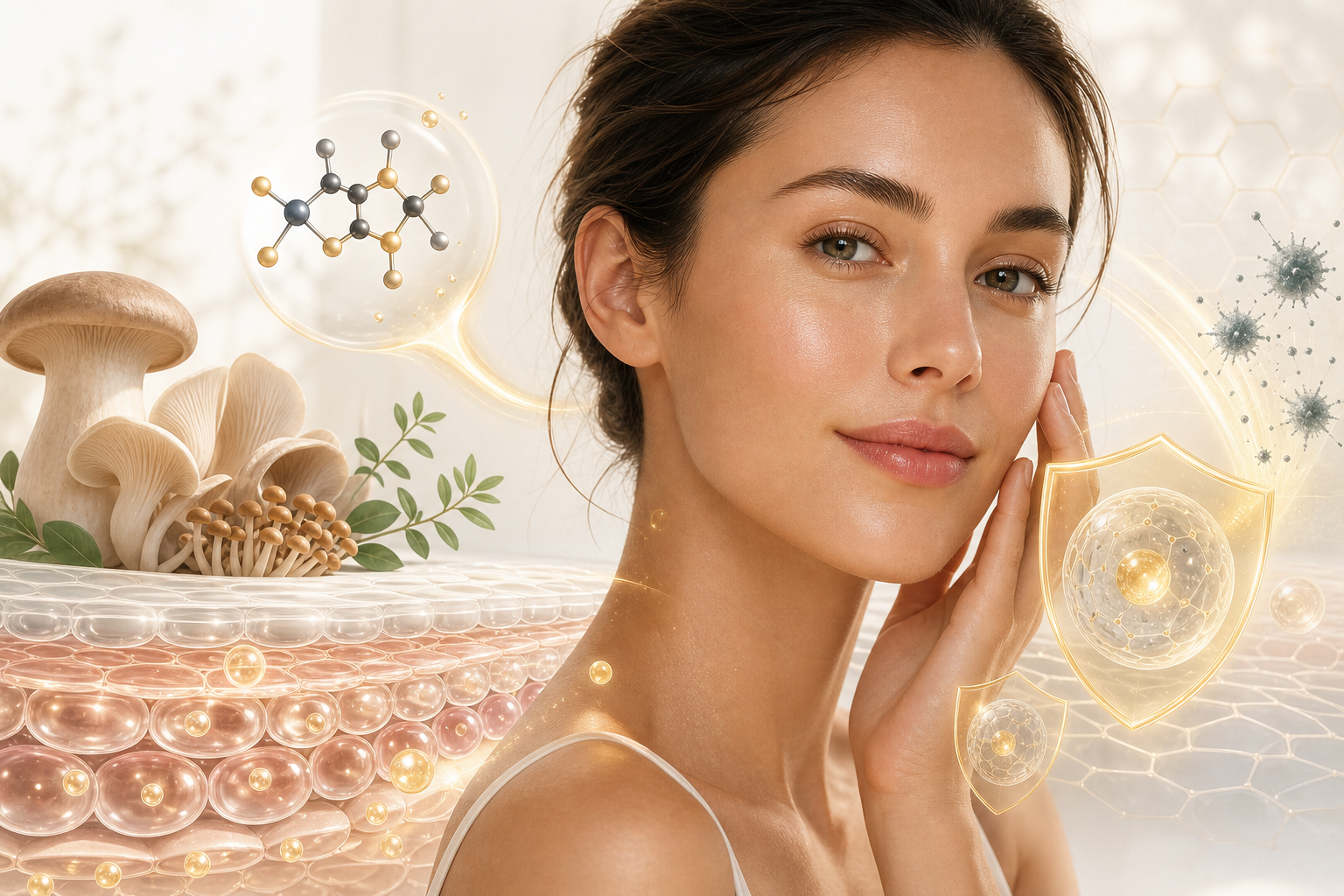
Ergothioneine is best understood as a skin antioxidant support ingredient, not a skin treatment. It may help maintain normal antioxidant defenses under everyday environmental stress, but visible skin also depends on UV protection, topical tolerance, sleep, nutrition, hormones, hydration, and consistency.
- Ergothioneine, or EGT, is found in foods such as mushrooms and is studied for antioxidant behavior and cellular transport.
- Skin interest comes from oxidative-stress biology, environmental exposure, and healthy-aging support, not from proof of instant visible transformation.
- EGT works best as a supporting routine layer, not as a substitute for sunscreen, topical care, sleep, protein, or a colorful diet.
- Choose an EGT supplement by label clarity, serving directions, ingredient overlap, and responsible claims rather than dramatic beauty language.
Content
Why is ergothioneine discussed for skin?
Ergothioneine is a sulfur-containing compound produced by certain fungi and microorganisms. Humans mainly obtain it from food, with mushrooms often highlighted as a dietary source. What makes EGT especially interesting is not only that it is discussed as an antioxidant, but that the body appears to use a specific transporter to help move it into tissues [1]. That biology gives EGT a clear identity in healthy-aging conversations.
Skin enters the conversation because it lives at the front line of daily environmental stress. Sunlight, air pollution, dry air, temperature changes, disrupted sleep, and ordinary metabolism can all affect how skin looks and feels. A skin-support routine therefore needs more than one tactic. EGT may make sense as part of an antioxidant-resilience strategy, but it should be described carefully: it supports normal antioxidant defenses and healthy-looking skin routines; it does not erase wrinkles, reverse photoaging, or treat skin conditions.
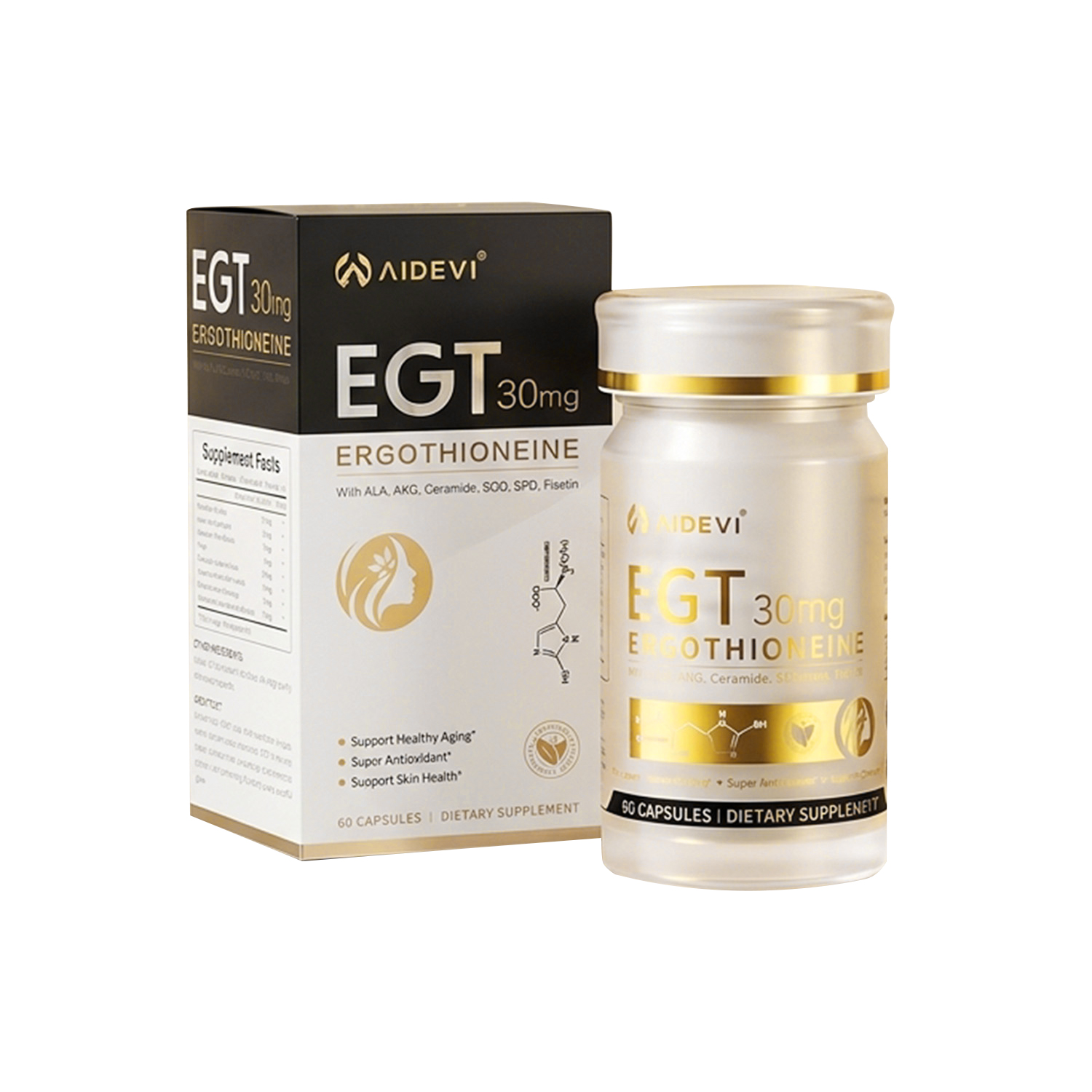
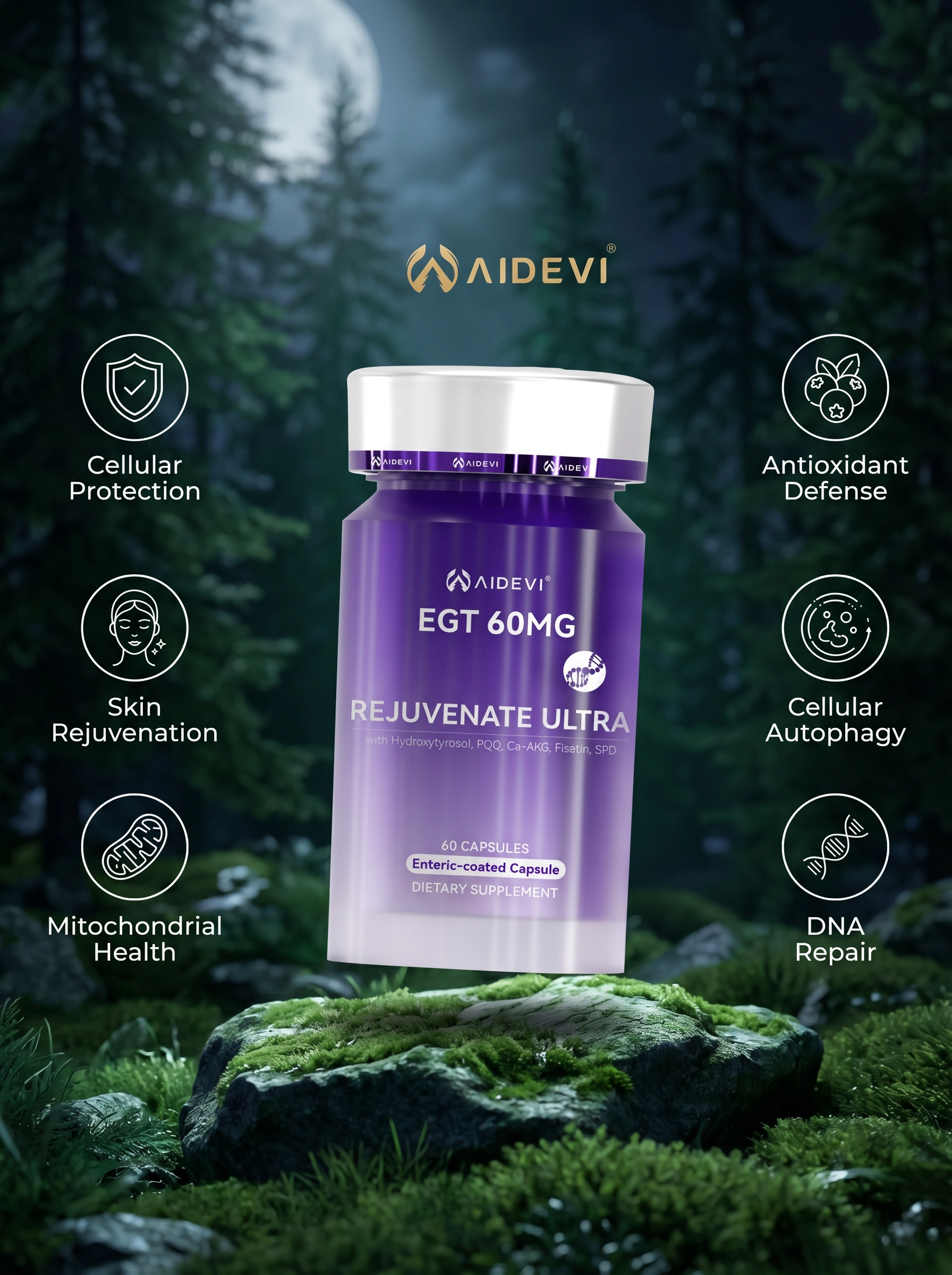
For readers who want the broader ingredient background first, AIDEVI's guide to ergothioneine as an antioxidant compound explains why EGT has become visible in longevity and cellular wellness discussions. Shoppers who want to inspect a finished product can review the AIDEVI EGT ergothioneine capsules and compare the label, serving format, and routine fit.
How does oxidative stress connect to skin aging?
Oxidative stress describes a state where reactive molecules outpace antioxidant defenses. In skin, this topic matters because the skin is exposed to ultraviolet light, visible environmental stressors, and internal metabolic activity. Research on skin aging often discusses oxidative stress alongside collagen organization, barrier function, pigmentation appearance, dryness, and visible texture, but these processes are complex and cannot be reduced to a single nutrient [2].
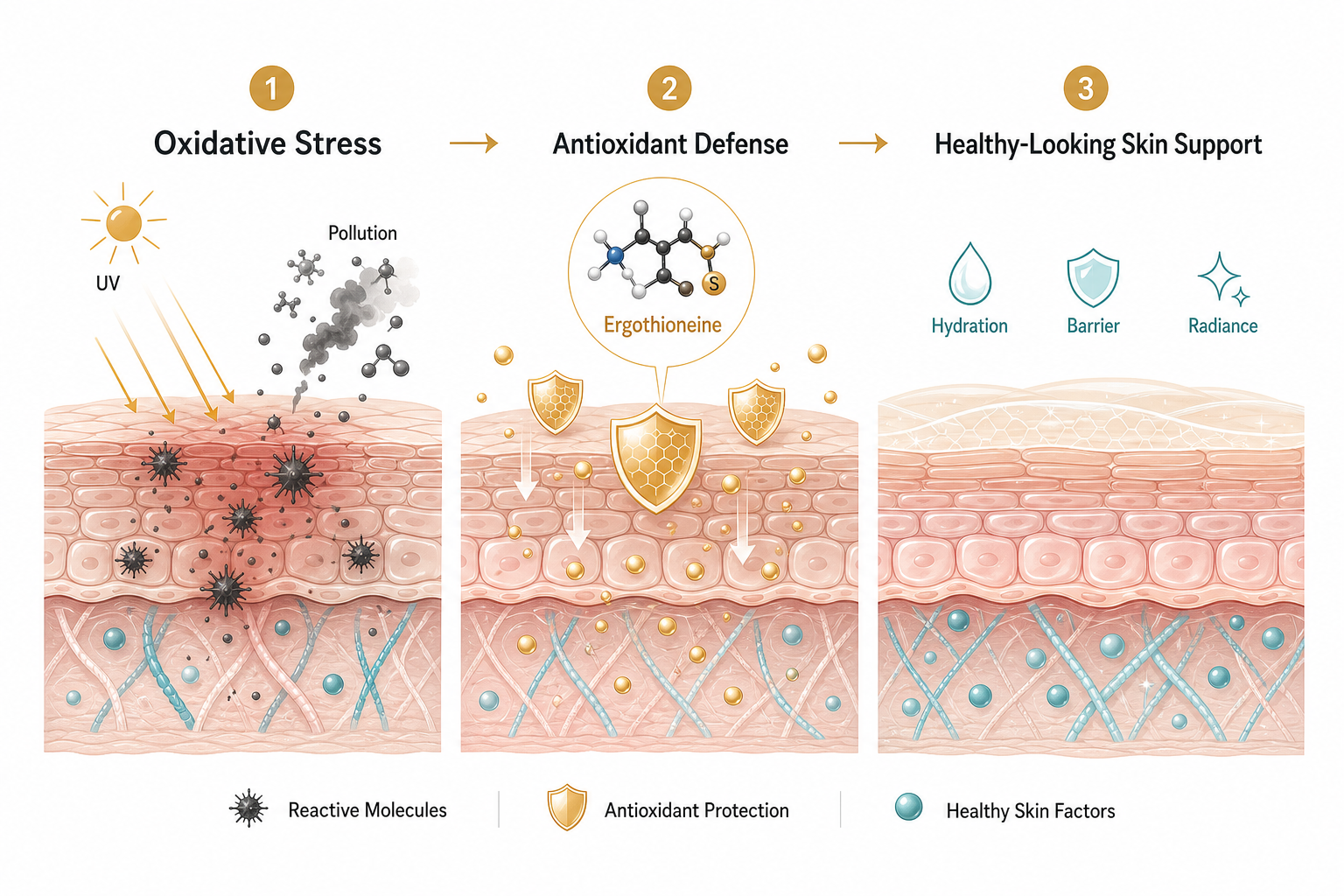
This is why antioxidant supplements need sober expectations. A compound can support antioxidant wellness without becoming a substitute for sunscreen, shade, protective clothing, or a dermatologist's advice. UV exposure is still one of the most important external stressors for visible skin aging, and AIDEVI's article on UV radiation and healthy-looking skin is a useful companion when building a realistic skin strategy.
A helpful way to frame EGT is "support, not rescue." Support means the ingredient may belong in a long-term routine that also includes sun protection, a balanced diet, protein, hydration, and topical products your skin tolerates. Rescue language sounds different. It promises rapid wrinkle removal, dramatic whitening, detoxification, or reversal of damage. That kind of language should make a careful shopper slow down.
| Reader goal | Where EGT may fit | What still matters |
|---|---|---|
| Healthy-looking glow | An inside-out antioxidant support layer. | Sleep, hydration, colorful foods, and skin-barrier friendly topical care. |
| Environmental stress support | A routine option for people interested in cellular antioxidant resilience. | Sunscreen, cleansing after pollution exposure, and minimizing irritation. |
| Healthy aging | A focused antioxidant ingredient within a broader longevity routine. | Protein, movement, stress management, and realistic timelines. |
How can EGT fit into an inside-out skin routine?
A practical EGT routine starts with the boring essentials that skin actually notices over time. Use sunscreen during UV exposure. Keep a topical routine simple enough that you can repeat it. Eat enough protein and colorful plant foods. Sleep consistently. Hydrate. Avoid changing five products at once. Once those basics are in place, EGT can be considered as an optional supplement layer for people who want targeted antioxidant support.
The inside-out idea is strongest when it respects category boundaries. Oral supplements do not replace cleansing, moisturizing, or sun protection. Topical skincare does not replace nutrition, sleep, or stress management. A balanced routine uses each layer for the job it can reasonably do. If you are comparing oral and topical beauty strategies, AIDEVI's guide to supplements versus skincare products helps separate the roles.
If you add EGT, keep the rest of the experiment clean. Do not start EGT, a new collagen powder, a new vitamin C serum, a new brightening drink, and a new retinoid in the same week. You will not know what helped, what irritated your skin, or what made no difference. Introduce one meaningful change, follow label directions, and give your routine enough consistency to evaluate it honestly.
A simple four-to-eight-week review can be more useful than checking the mirror every morning. Keep lighting, skincare steps, sleep notes, and supplement timing as consistent as possible. Track practical signals such as tightness after cleansing, dryness around familiar areas, makeup or sunscreen smoothness, irritation frequency, and whether you actually remember the serving. These notes will not prove a clinical effect, but they help you avoid guessing from one good skin day or one stressful week. Patterns matter.
The AIDEVI Protect, Nourish, Support, Track framework
- Protect: Keep sunscreen, shade, and barrier-friendly topical care in place before judging any supplement.
- Nourish: Support skin from the inside with protein, colorful foods, hydration, and sleep.
- Support: Use EGT only when it fills a clear antioxidant-resilience role without duplicating several other antioxidants.
- Track: Review comfort, dryness, glow, adherence, and irritation patterns over several weeks instead of looking for overnight change.
How does EGT compare with other beauty antioxidants?
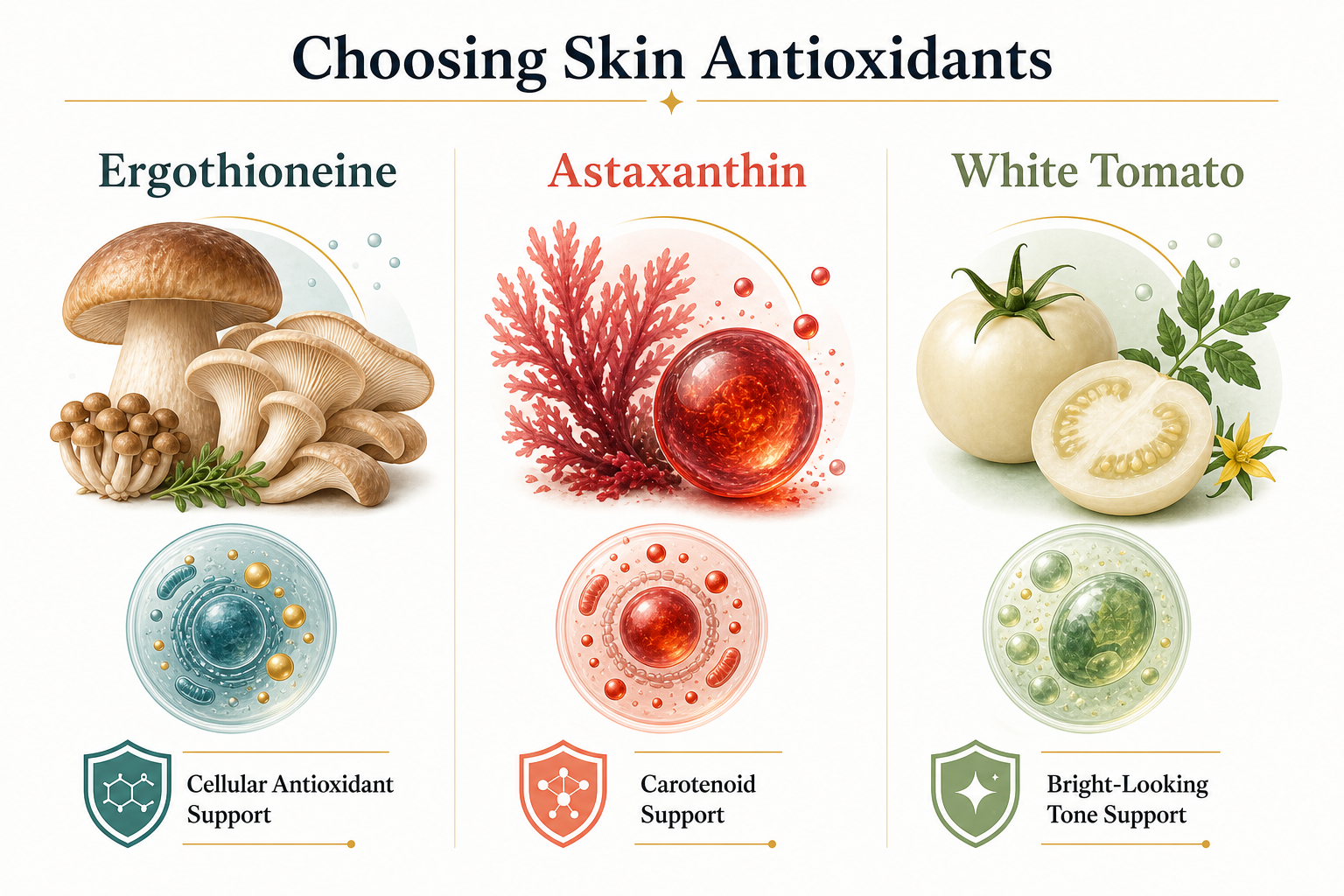
EGT is one antioxidant option, not the only skin-focused ingredient a shopper may consider. Beauty routines often include vitamin C, astaxanthin, grape seed extract, resveratrol, glutathione, collagen, CoQ10, or carotenoid blends such as white tomato. These ingredients are not interchangeable just because they all sound "antioxidant." They differ by source, evidence, positioning, routine fit, and the kinds of claims brands tend to make.
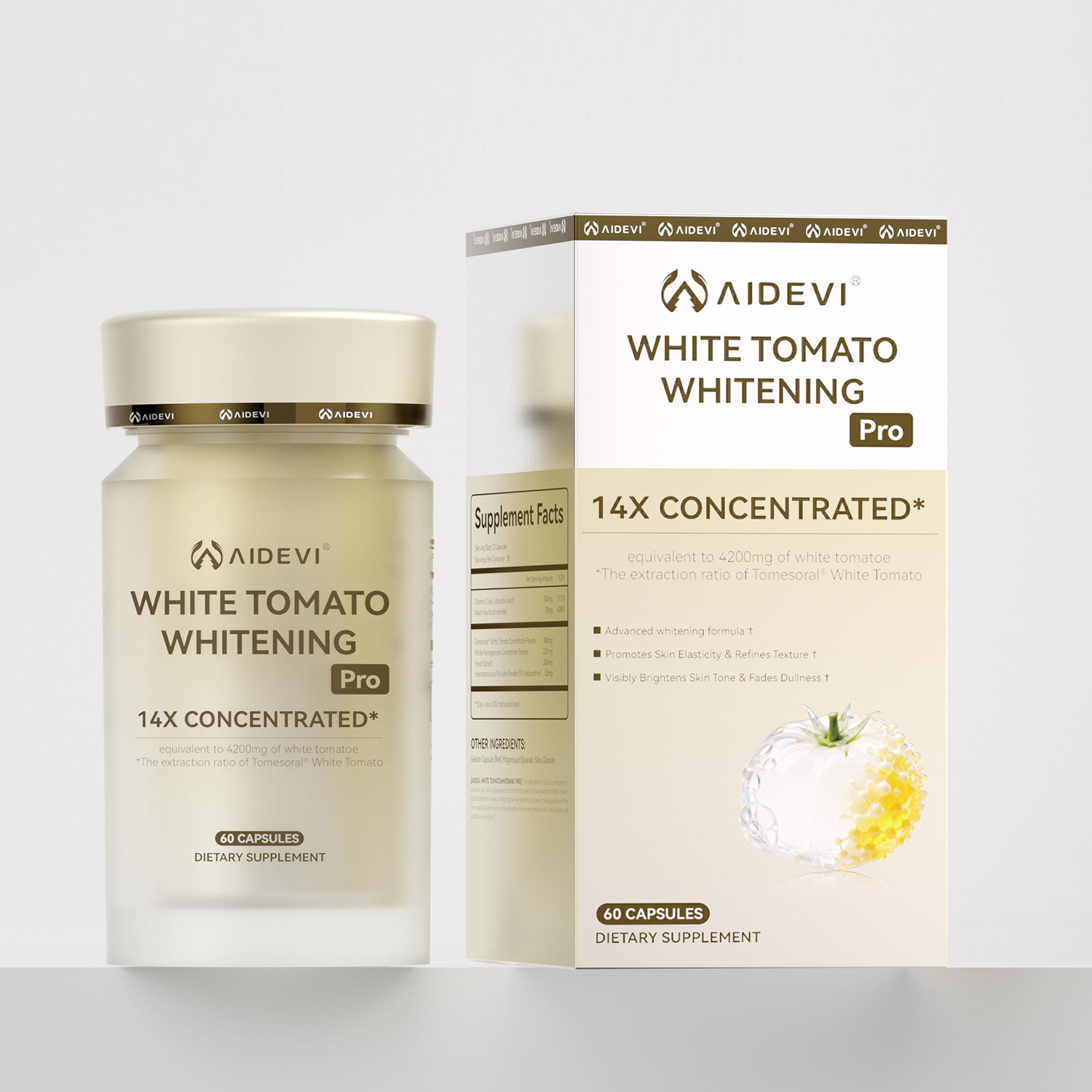
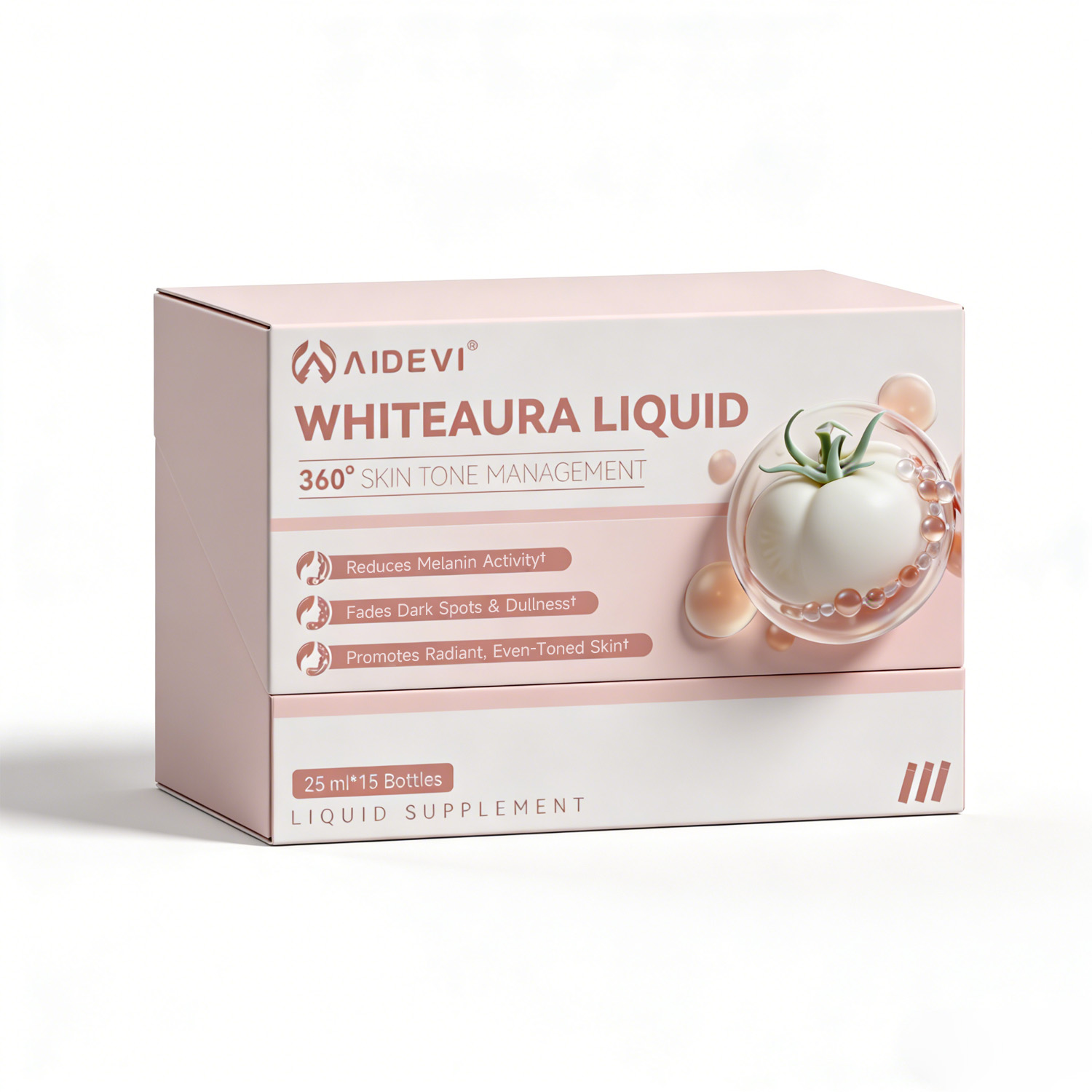
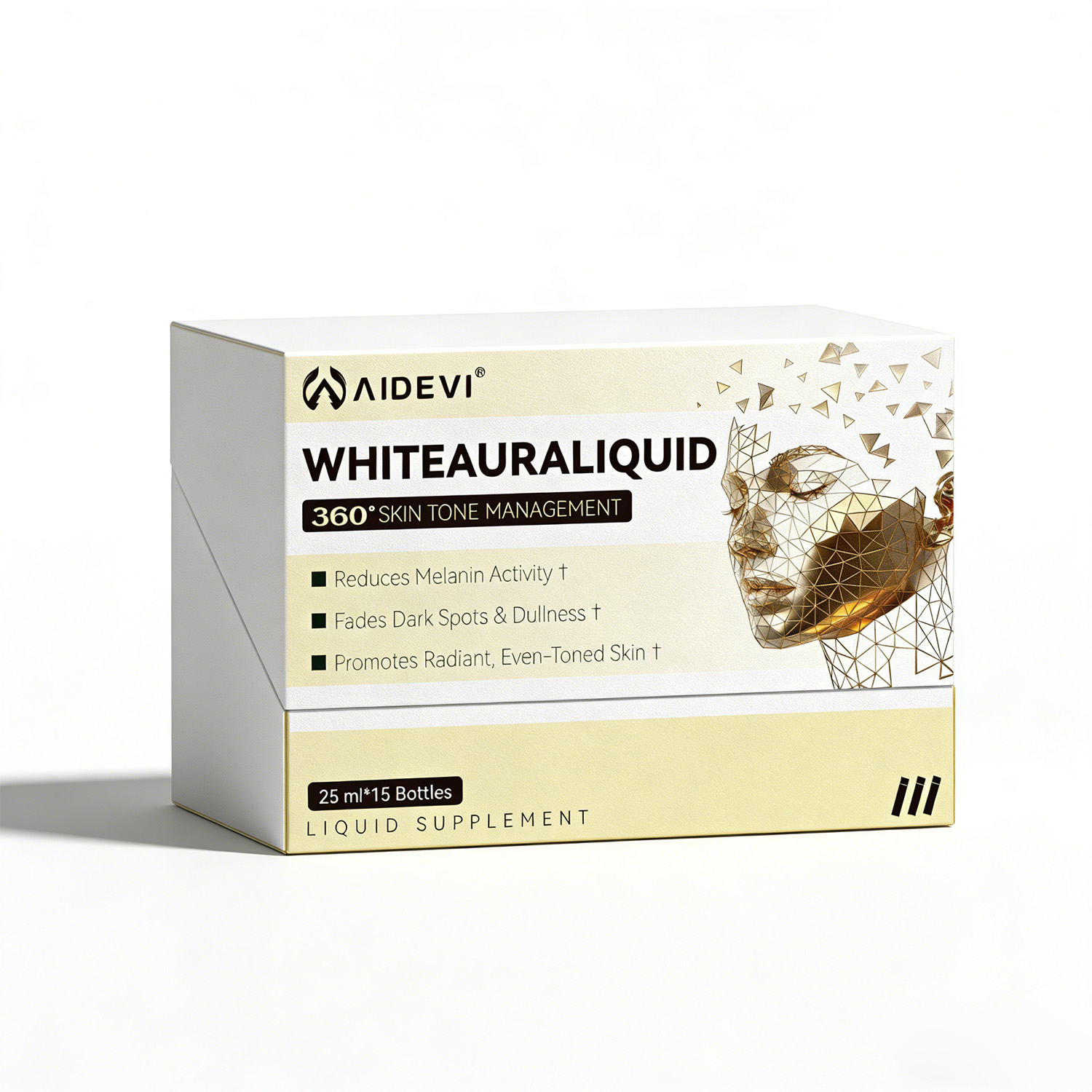
AIDEVI's comparison of ergothioneine and astaxanthin is useful because it pushes the conversation away from a simplistic winner. The same mindset helps with skin formulas. EGT may fit a cellular antioxidant-support routine, while white tomato and related beauty formulas may be positioned more around bright-looking tone. Readers exploring that direction can compare EGT with White Tomato Whitening Pro or the WhiteAura liquid skin brightening supplement.
The smartest comparison question is not "Which antioxidant is strongest?" It is "Which problem am I trying to solve, and does this ingredient fill a clear gap?" Someone focused on healthy aging and cellular resilience may lean toward EGT. Someone focused on bright-looking tone may compare carotenoids, glutathione, or vitamin C formulas. Someone already taking several antioxidant products may need a simpler routine rather than another bottle. AIDEVI's guide to a daily antioxidant supplement routine is helpful for avoiding overlap.
How do you choose an EGT skin supplement?
Start with the Supplement Facts panel. The label should identify ergothioneine clearly, state the amount per serving, explain serving directions, and list other active and inactive ingredients. If the formula also includes PQQ, resveratrol, vitamin C, glutathione, collagen, or carotenoids, ask whether those ingredients support your goal or simply make the label look more impressive. More ingredients can be useful, but they also make a routine harder to interpret.
Quality signals also matter because skin shoppers are often targeted with emotional before-and-after language. Look for transparent labeling, responsible structure/function wording, clear company information, and manufacturing quality cues. Safety evaluations have considered synthetic L-ergothioneine for specified uses, but that does not automatically validate every finished product, dose, combination, or marketing claim for every user [3].
Finally, match the product to a realistic timeline. Skin appearance changes slowly and is influenced by many variables: sun history, hormones, sleep, stress, diet, weather, topical ingredients, and age. A supplement should be judged as part of a stable routine, not as a standalone beauty test. If you are dealing with persistent pigmentation, irritation, acne, rashes, or a diagnosed skin condition, consult a qualified professional rather than relying on a supplement article.
| Best fit | Consider instead | Avoid or pause if |
|---|---|---|
| You want a focused antioxidant-resilience ingredient for healthy-looking aging. | A white tomato or beauty formula if your main goal is bright-looking tone positioning. | You expect EGT to replace sunscreen, topical care, or professional advice. |
| Your current routine is simple enough to evaluate one new supplement layer. | A routine audit if you already take multiple antioxidants, collagen, and beauty drinks. | You are changing several supplements and skincare actives at the same time. |
| The label clearly states ergothioneine, serving directions, and other ingredients. | A more transparent product if claims are dramatic but the facts panel is vague. | You are pregnant, nursing, taking medication, or managing a condition without guidance. |
Which EGT skin claims should make you slow down?
Be careful with claims that promise rapid wrinkle removal, imply that oral antioxidants replace sunscreen, suggest guaranteed whitening, or use medical language around skin conditions. Strong beauty language can be exciting, but supplement claims should still stay within responsible structure/function support. A credible page should help you understand the ingredient, routine fit, safety boundaries, and label details. It should not pressure you with fear or miracle timelines.
Choose EGT for a clear antioxidant-support reason, not because a product promises instant beauty results. Protect your skin from UV exposure, keep your routine stable, review labels for overlap, and judge supplements by fit, consistency, and responsible claims.
Conclusion
Ergothioneine earns attention in skin wellness because antioxidant defense, environmental stress, and healthy-looking aging are closely connected. The most responsible use of EGT is measured: it may support a beauty-from-within routine for people interested in cellular antioxidant resilience, but it does not replace sunscreen, balanced nutrition, topical care, or professional guidance. Treat it as one thoughtful layer in a long-term routine, and judge it by label quality, consistency, and fit with your actual skin goals.
Frequently Asked Questions
Is ergothioneine good for skin?
Ergothioneine is discussed for skin because it is studied for antioxidant and cellular-resilience roles. It may fit a skin-wellness routine, but it should not be described as a guaranteed treatment for wrinkles, pigmentation, acne, or any skin condition.
Can ergothioneine replace sunscreen?
No. Oral antioxidant support does not replace sunscreen, shade, protective clothing, or sun-safe timing. EGT belongs in the support layer of a routine, while sunscreen remains a primary tool during UV exposure.
How long does EGT take to show skin benefits?
There is no universal timeline for visible changes. Skin appearance depends on many factors, including sun history, sleep, hydration, topical routine, nutrition, hormones, stress, and consistency.
Can I take EGT with collagen, vitamin C, or other beauty supplements?
Possibly, but compare labels first. Look for duplicate antioxidants, overlapping claims, and total supplement load. Ask a healthcare professional if you take medication, manage a medical condition, or combine multiple formulas.
Is EGT better than astaxanthin for skin?
They are different antioxidant ingredients with different positioning. EGT is often discussed around cellular antioxidant support, while astaxanthin is a carotenoid. The better choice depends on your goal, existing routine, label quality, and tolerance.
References
Individual results may vary. Consult a healthcare professional before starting any new supplement, especially if pregnant, nursing, taking medication, or managing a medical condition.
These statements have not been evaluated by the Food and Drug Administration. This product is not intended to diagnose, treat, cure, or prevent any disease.
