



AIDEVI Wellness Guide
Ergothioneine Dosage: How Much EGT Is Common?
Ergothioneine supplements are usually discussed in milligram-level servings, but there is no universal “best” EGT dosage for every person. The practical starting point is the product label: amount per serving, serving size, daily-use directions, other ingredients, and quality signals. More is not automatically better, and anyone with pregnancy, medication use, medical conditions, or a complex supplement stack should get professional guidance before changing dosage.
- Common EGT products use clearly labeled milligram servings, but formulas vary by brand and format.
- Read amount per serving and serving size together; one capsule, two capsules, and one bottle serving are different things.
- Safety references help set context, but they do not create a personal dosage rule for every user.
- Long-term use should be simple, consistent, and reviewed if you stack multiple antioxidants or take medication.
Content
What is a common ergothioneine supplement dose?
A common EGT serving is usually presented as a small milligram amount on the Supplement Facts panel. The exact number varies by formula, country, ingredient source, and product positioning. Some products are dedicated ergothioneine capsules, while others combine EGT with ingredients such as PQQ or other antioxidant-support compounds. Because labels differ, the safest answer is not a single number. The useful answer is: read the serving amount and compare it with your goal, routine, and safety context.
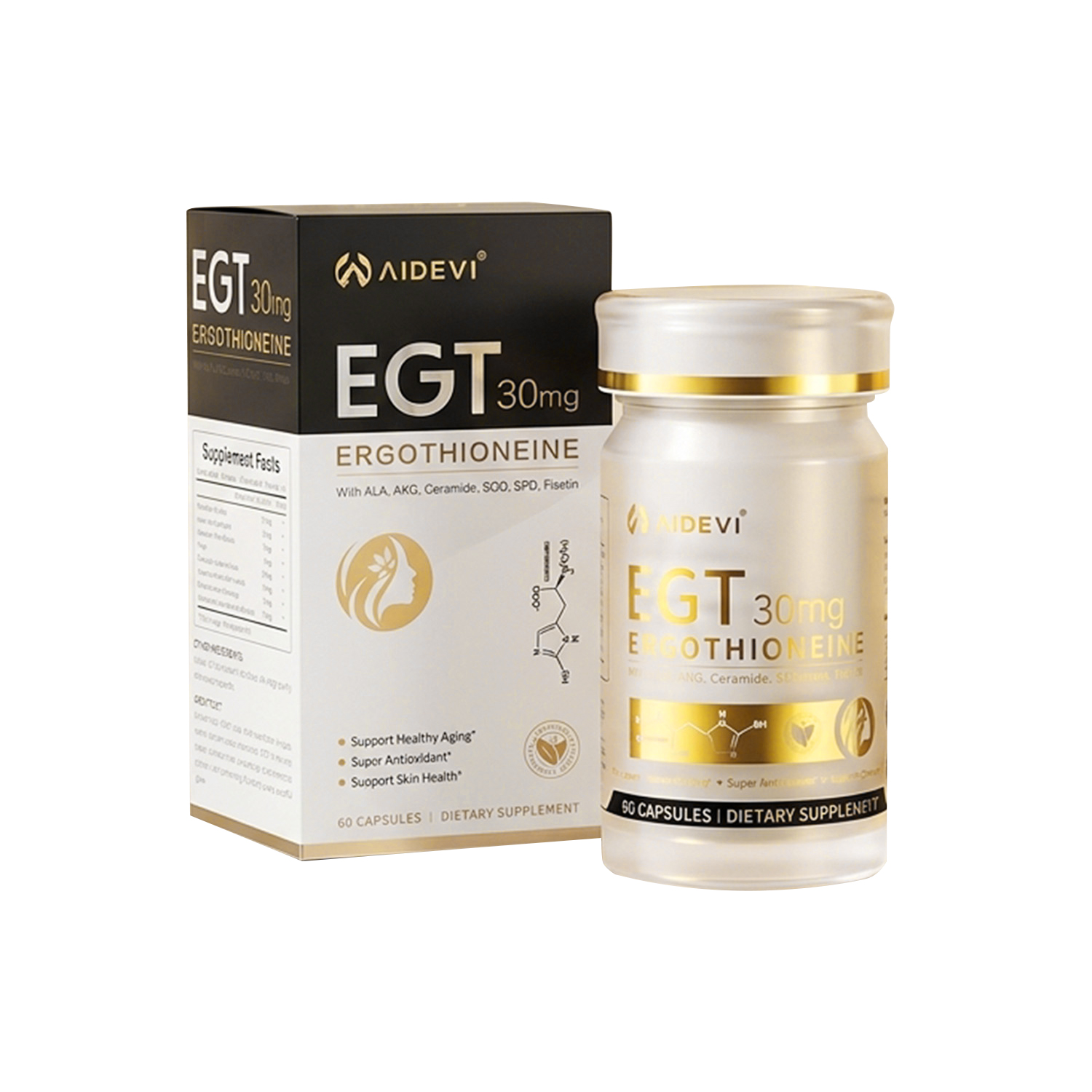
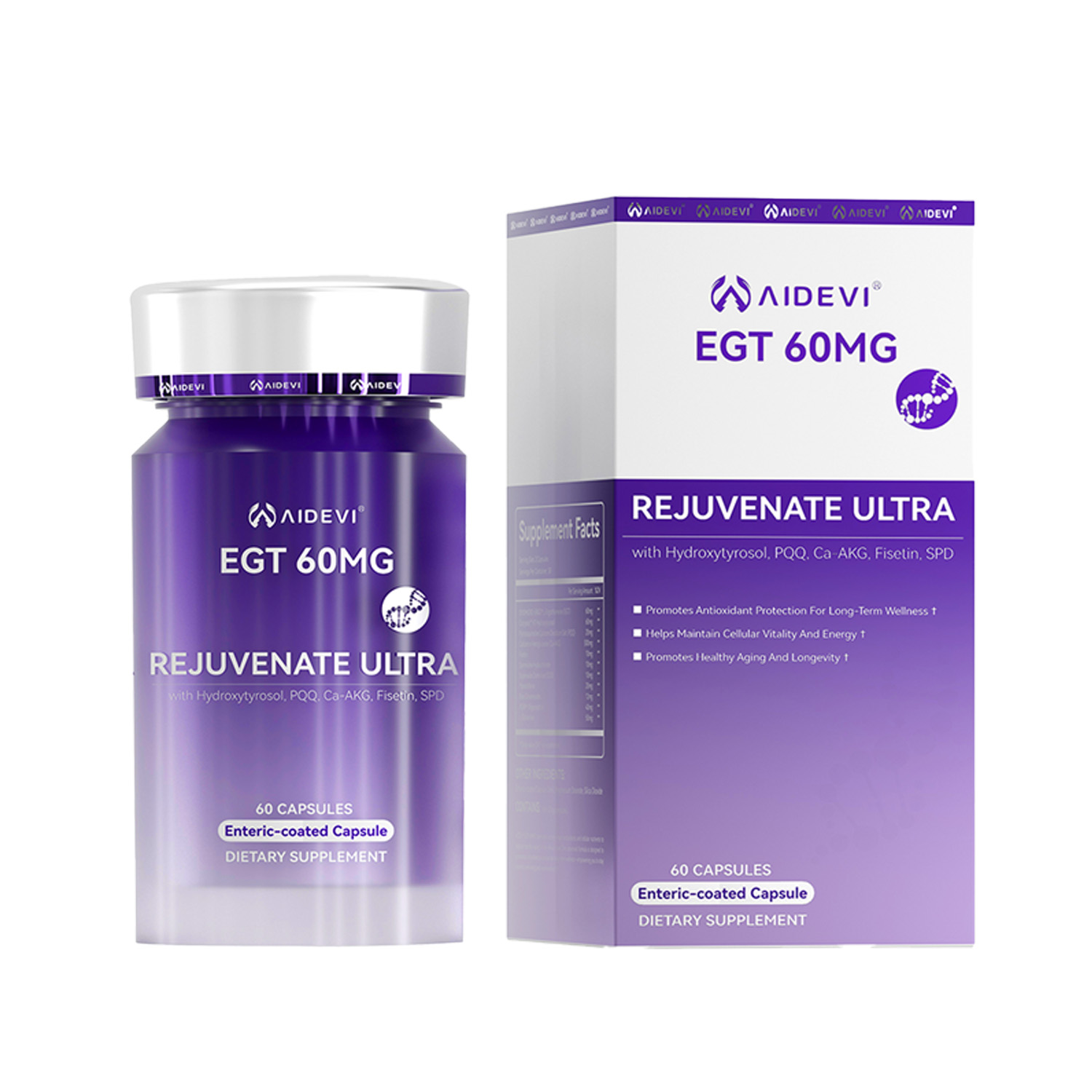
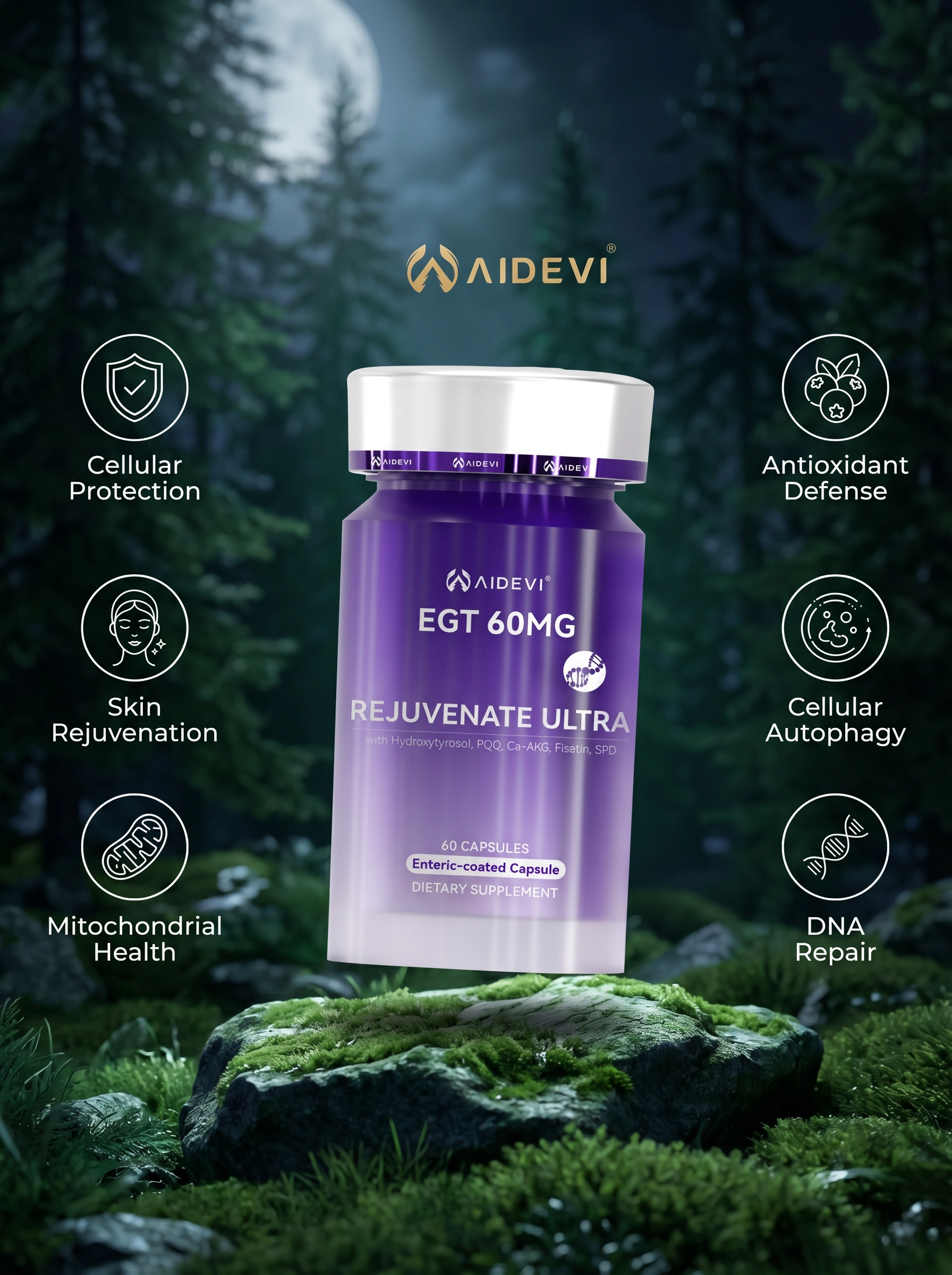
AIDEVI's current sitemap includes several EGT examples with different serving-positioning signals, including the AIDEVI EGT ergothioneine 25 mg capsule page, an EGT 30 mg cellular resilience formula, and an EGT 60 mg rejuvenate formula. These are examples of why a buyer should compare actual labels instead of assuming all EGT products are equivalent.
Ergothioneine has attracted interest because it is a diet-derived compound with unusual biological handling, including transport into tissues through a specific transporter. That biology makes EGT interesting, but it does not mean a higher supplement serving automatically gives a better result. Research reviews discuss EGT's antioxidant properties and potential healthy-aging relevance while also noting that more human outcome research is needed [1].
How do you read an EGT dosage label?
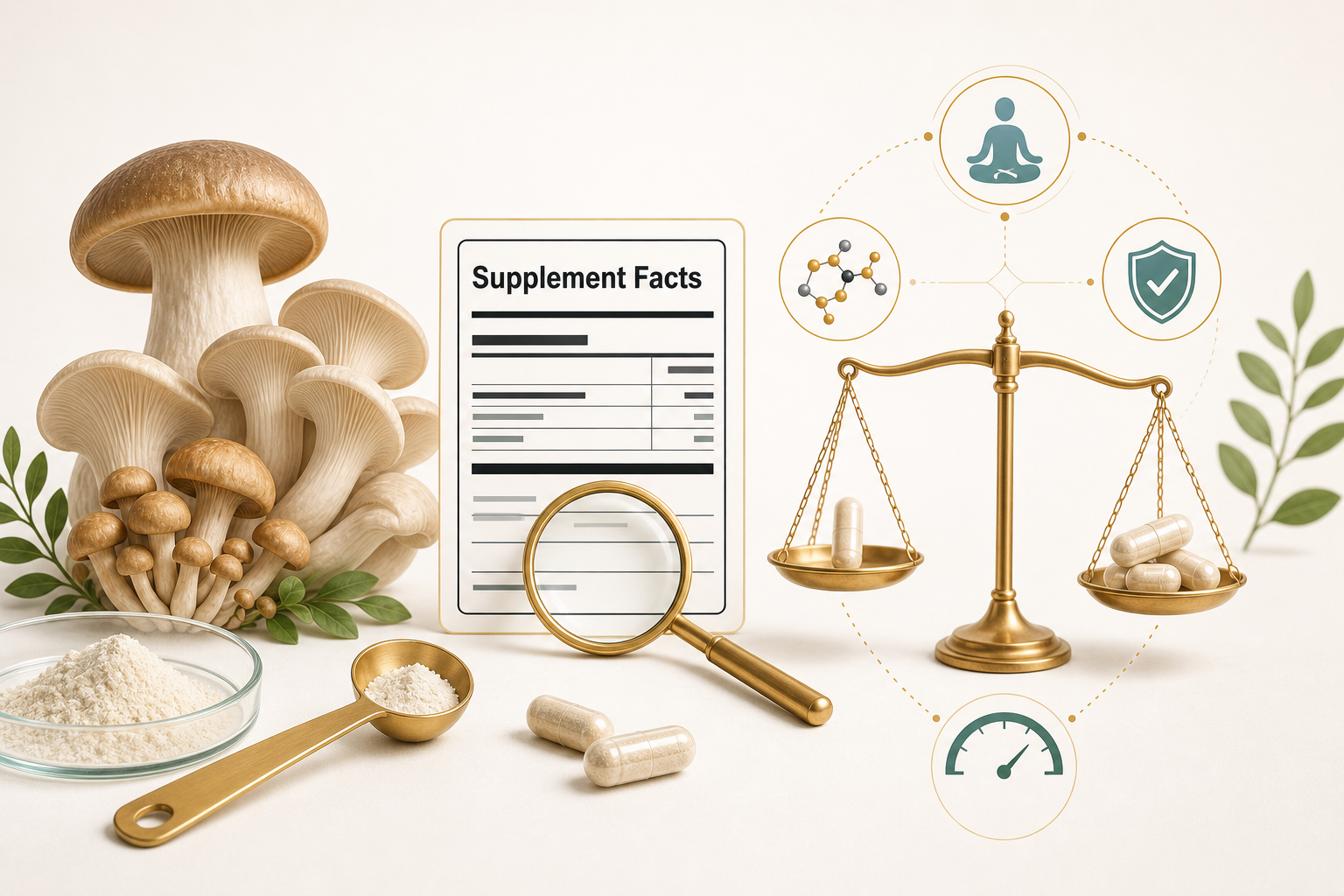
Read the label in order. First, find the serving size. Then find the amount of ergothioneine per serving. Next, check how many servings the package contains and whether the directions suggest daily use, occasional use, or use with food. Many dosage mistakes happen when shoppers focus on a large front-label number and miss that the Supplement Facts panel defines a serving differently.
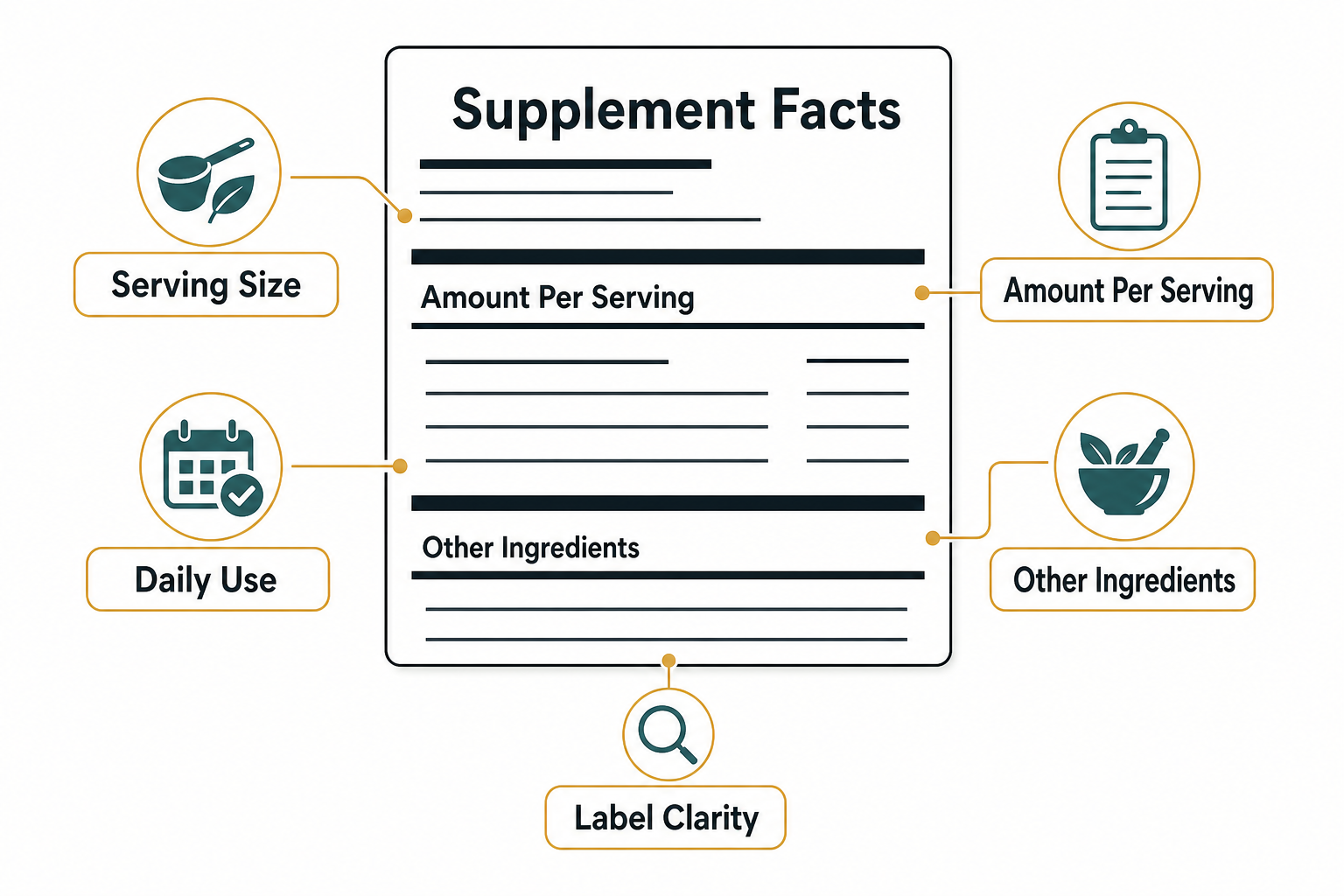
| Label Field | What to Check | Why It Matters |
|---|---|---|
| Serving size | How many capsules, tablets, drops, or liquid servings count as one serving. | Prevents accidentally doubling the intended intake. |
| Amount per serving | The listed EGT amount, not only front-label marketing copy. | Lets you compare products fairly. |
| Other ingredients | PQQ, vitamins, herbs, sweeteners, flavorings, or other antioxidants. | Shows whether you are buying EGT alone or a broader stack. |
| Use directions | Timing, food instructions, daily-use wording, and caution statements. | Keeps the routine aligned with the product's intended use. |
In the United States, dietary supplement labels follow specific nutrition-labeling requirements and must identify serving size and dietary ingredients in an organized way [2]. That does not mean every label is equally helpful. Clearer labels make it easier to compare dosage, format, and ingredient overlap. If you are new to the ingredient, AIDEVI's overview of ergothioneine supplement benefits and healthy-aging context can help you understand what the ingredient is meant to support before you evaluate dosage.
Is a higher EGT dose always better?
No. A higher EGT number is not automatically better. Dosage should be judged by product design, evidence context, personal suitability, and whether the rest of your routine already includes overlapping antioxidants. More can also make it harder to identify what is helping, doing nothing, or causing discomfort. For many wellness shoppers, a consistent and well-labeled routine is more valuable than chasing the largest number on a bottle.
Safety references provide context, but they do not create a universal personal dose. The European Food Safety Authority evaluated synthetic L-ergothioneine for specified food and supplement uses, which is helpful background for safety discussions [3]. Still, a safety opinion is not the same as a personalized dosage recommendation, and it does not cover every possible stack, health condition, medication, or high-intake habit.
This is especially important when EGT is part of a formula. A product such as AIDEVI's EGT and PQQ liquid supplement discussion sits in a broader cellular-wellness context, so the buyer should evaluate the whole formula rather than treating the EGT number as the only decision point. Combination products may be convenient, but they require more label discipline.
How should different users think about dose?
A first-time EGT user usually needs clarity more than intensity. The right early question is not "What is the maximum I can take?" but "Can I understand this product and use it consistently?" A clearly labeled single-ingredient capsule may be easier to evaluate than a complex formula with several antioxidants, herbs, and vitamins. Once a routine is complicated, it becomes much harder to identify what supports comfort, what overlaps, and what is unnecessary.
A user with a mature supplement routine needs a different lens. If you already take a multivitamin, collagen beauty formula, vitamin C, resveratrol, astaxanthin, glutathione, PQQ, or nmn-related products, adding EGT is not just a dosage decision. It is a stack decision. In that situation, compare ingredient roles and total routine complexity before comparing milligrams. The cleanest option may be the one that fills a real gap without creating more overlap.
A user focused on healthy aging should also think in timelines. EGT is usually positioned for long-term antioxidant and cellular-resilience support, not an instant sensation. If you raise the serving because you do not "feel" it quickly, you may be using the wrong feedback signal. Many nutrition routines are quiet by nature. A better signal is whether the product is clear, tolerable, affordable, and aligned with a broader pattern of sleep, movement, food quality, and sun-safe habits.
How should EGT fit into a daily routine?
A practical EGT routine starts with the label and stays consistent. Choose one product, follow its stated serving directions, keep the timing easy to remember, and avoid changing several other supplements at the same time. If you start EGT while also adding a new multivitamin, collagen powder, whitening formula, sleep supplement, and skincare active, you will not know what changed your experience.
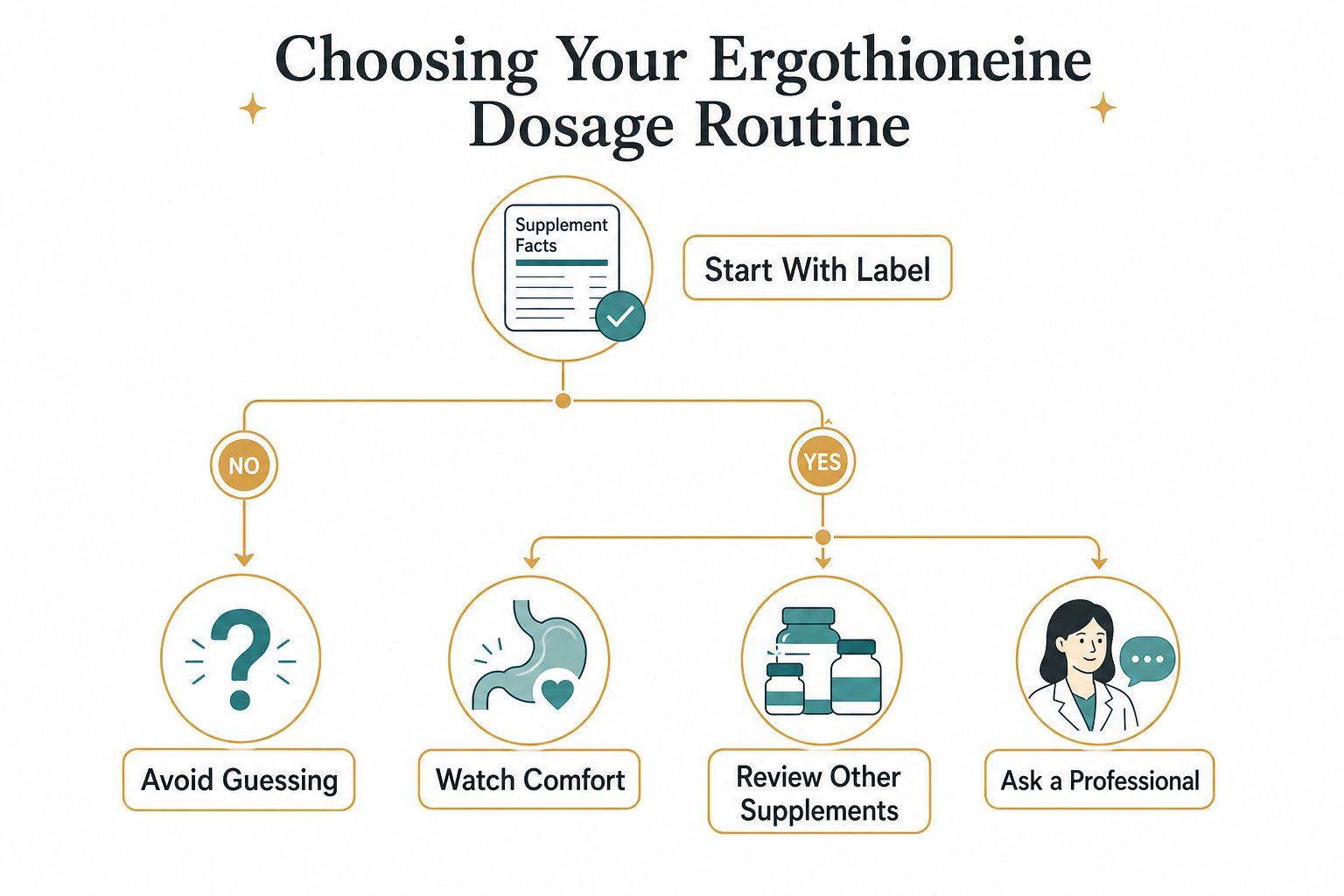
Think about your goal. Some people consider EGT for general antioxidant support. Some connect it with skin radiance or healthy-aging routines. Some are comparing EGT with other antioxidant ingredients. AIDEVI's guide to a daily antioxidant supplement routine is useful here because it pushes the decision back to goals, overlap, and consistency rather than collecting ingredients for their own sake.
Food still matters. Ergothioneine is often associated with mushrooms, and a supplement routine should not crowd out a varied diet. AIDEVI's article on ergothioneine supplements in a balanced diet helps frame EGT as part of a broader lifestyle rather than a standalone shortcut. Supplements work best when the rest of the routine is not working against them.
What should you compare before buying?
Compare four things before choosing an EGT dosage: amount per serving, formula simplicity, daily cost, and quality transparency. Amount per serving tells you what you are actually taking. Formula simplicity tells you whether EGT is the main ingredient or one part of a broader blend. Daily cost tells you whether the routine is realistic over time. Quality transparency tells you whether the brand gives enough information for a careful buyer to trust the label.
Do not compare only the bottle price. A lower-priced bottle may contain fewer servings, a different serving size, or a less focused formula. A higher-priced bottle may include ingredients you do not need. When labels are confusing, write down the true daily serving and the active ingredients in one line. If you cannot explain what the product provides after that exercise, keep comparing. A supplement that is hard to understand before purchase will be even harder to evaluate after purchase.
Also watch for dosage language that quietly shifts from facts to persuasion. "High potency," "maximum strength," and "advanced" are marketing phrases unless the Supplement Facts panel explains what they mean. A responsible EGT dosage article should leave you more capable of reading a label, not more anxious that you are missing the strongest possible option.
Who should be careful with EGT dosage?
Be careful if you are pregnant, nursing, taking medication, managing a medical condition, preparing for surgery, or building a high-dose antioxidant stack. Also be cautious if you are buying EGT for a child, combining multiple beauty formulas, or using several longevity supplements at once. These situations do not mean EGT is automatically inappropriate, but they do mean the decision deserves more than a quick label scan.
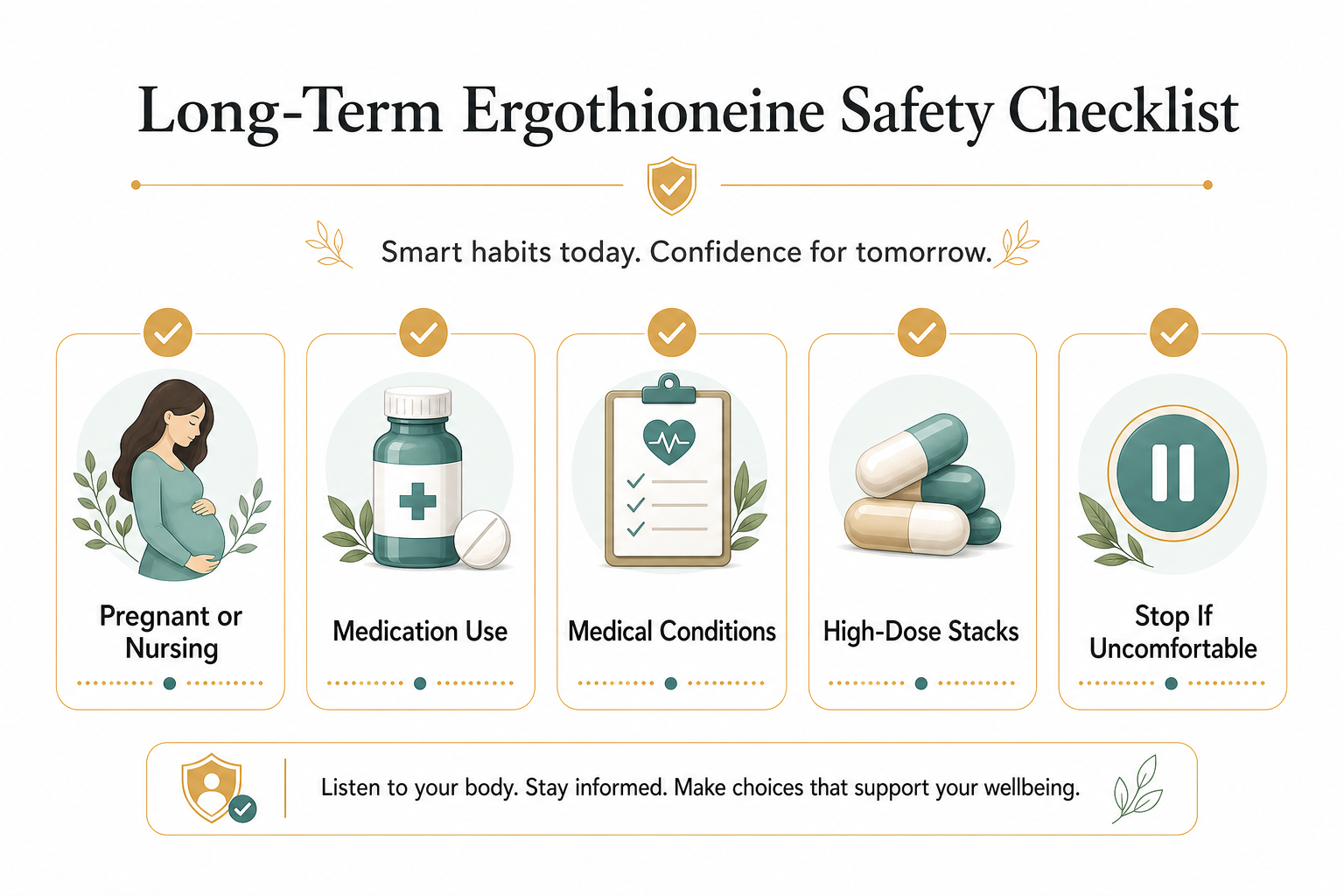
Comfort matters too. If a supplement causes digestive upset, unusual fatigue, headaches, or any symptom that concerns you, stop guessing and reassess. Sometimes the issue is timing, food, other ingredients, or another new supplement rather than EGT itself. A clean routine makes troubleshooting easier. Introduce one change at a time, keep brief notes, and avoid increasing the serving because you do not feel an immediate effect.
Long-term use should be reviewed through the lens of purpose. Are you using EGT because it clearly supports a healthy-aging, skin, or antioxidant goal? Is the product transparent? Does it overlap with formulas you already take? Is the routine affordable and easy enough to sustain? For broader cellular-health habits, AIDEVI's guide to lifestyle changes that support cellular health is a good reminder that supplements are only one layer.
Do not choose EGT by the biggest number alone. Choose by label clarity, serving directions, formula simplicity, personal suitability, and whether the product fits a routine you can follow consistently.
Conclusion
Ergothioneine dosage is best understood through the label, not through a universal rule. Common EGT products present milligram-level servings, but the right routine depends on serving size, format, other ingredients, comfort, health context, and long-term consistency. Start by reading the Supplement Facts panel, avoid assuming more is better, and treat safety references as context rather than personal medical advice. A good EGT routine is clear, steady, and easy to evaluate.
Frequently Asked Questions
What is the best ergothioneine dosage?
There is no universal best dosage for everyone. Follow the product label and consider your goal, other supplements, comfort, health conditions, and professional guidance when needed.
Is more EGT better?
Not automatically. A higher number can increase complexity and overlap without proving better results. Consistency, label quality, and suitability matter more than chasing the largest serving.
Can I take EGT every day?
Many products are positioned for routine use, but you should follow the specific label and ask a healthcare professional if you are pregnant, nursing, taking medication, or managing a medical condition.
Should I take EGT with food?
Follow the product directions. If any supplement feels uncomfortable on an empty stomach, discuss whether taking it with food is appropriate for your situation.
Can I combine EGT with other antioxidants?
Possibly, but compare labels first. Look for overlapping antioxidants, duplicate goals, and total supplement load. More ingredients do not automatically create a better routine.
References
Individual results may vary. Consult a healthcare professional before starting any new supplement, especially if pregnant, nursing, taking medication, or managing a medical condition.
These statements have not been evaluated by the Food and Drug Administration. This product is not intended to diagnose, treat, cure, or prevent any disease.
