






AIDEVI Training Nutrition Guide
Creatine vs Pre-Workout: Which Problem Are You Trying to Solve?
Creatine and pre-workout are not interchangeable because they are usually chosen for different jobs. Creatine is used to support muscle creatine stores over a consistent routine, while a pre-workout formula is commonly chosen for how a person wants to feel in the hours around one training session. Before comparing labels, name the problem: do you want a more reliable long-term training foundation, help with early-session alertness, or a simpler routine with fewer moving parts?

- Creatine is not a stimulant and does not need to feel like an immediate “kick.”
- Many pre-workouts emphasize acute ingredients such as caffeine; formulas vary widely.
- A label, your training time, sleep, and caffeine tolerance matter more than a category name.
- Neither product replaces progressive training, food, recovery, or medical guidance.
Content
What is the real difference between creatine and pre-workout?
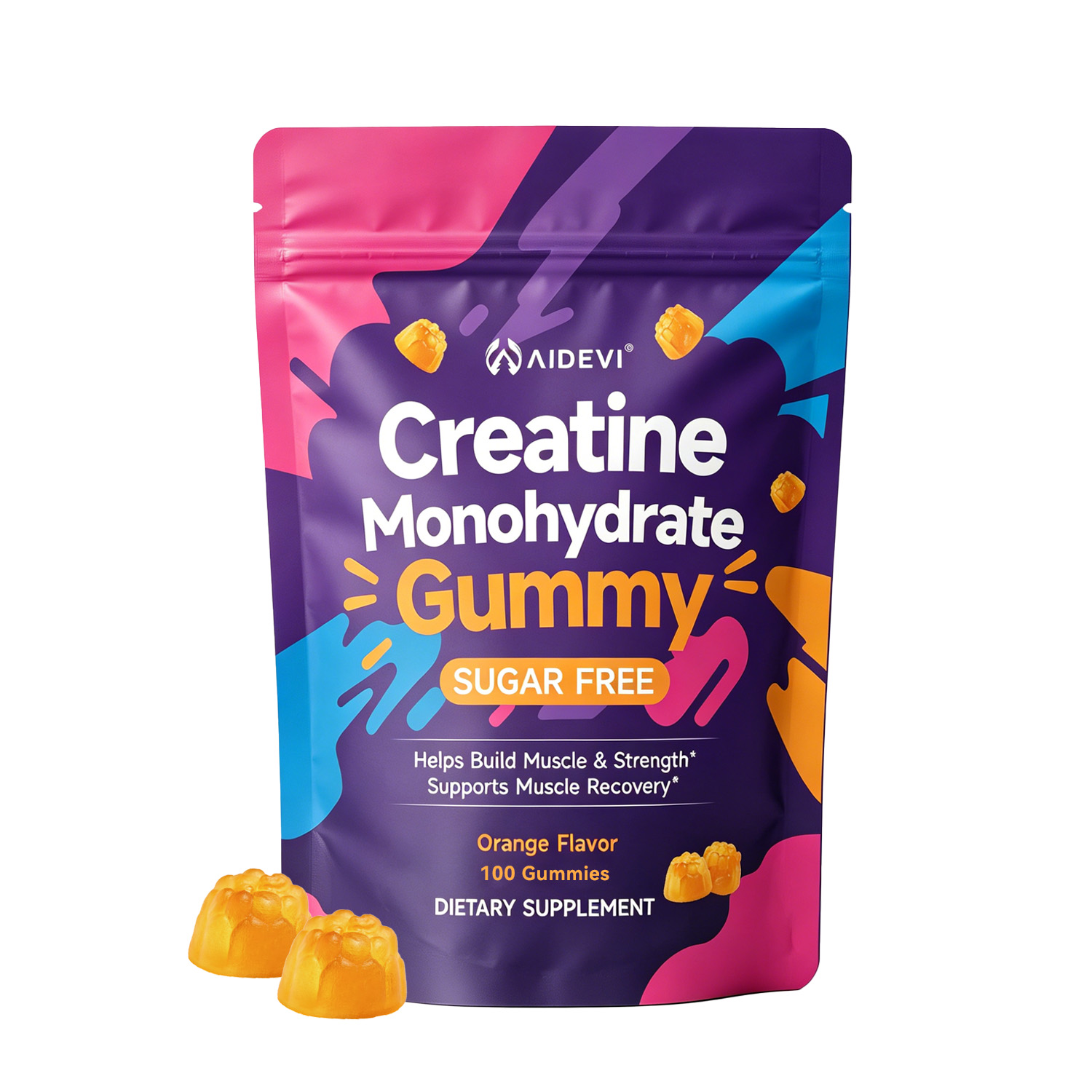
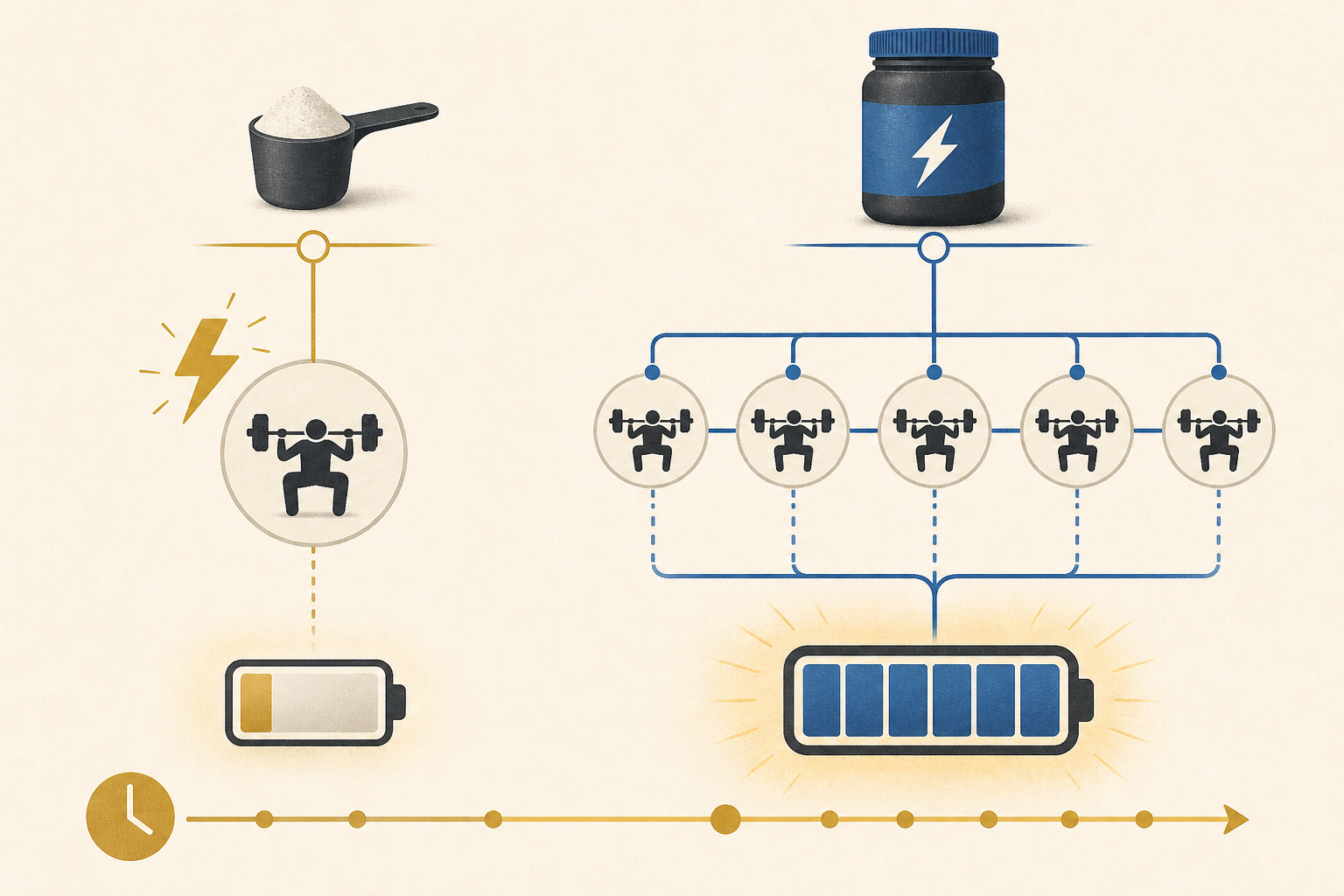
The clearest distinction is time horizon. Creatine supplementation is generally discussed in relation to raising and maintaining intramuscular creatine availability through regular use. That is why it belongs beside repeated training sessions rather than a single dramatic moment before a lift. The International Society of Sports Nutrition position stand describes creatine as extensively studied for exercise and sport applications [1]. A person may notice no obvious sensation on the day they take it, and that is normal.
“Pre-workout,” by contrast, is a product category, not one ingredient. Some formulas emphasize caffeine or other stimulants; others include carbohydrates, electrolytes, amino acids, flavor systems, or ingredients associated with tingling sensations. The effect a person expects is often acute: feeling more awake, motivated, or ready to train. That does not mean every pre-workout will deliver the same experience, and it does not mean an intense sensation equals a better program.
This distinction helps reduce a familiar confusion: a person takes creatine before a workout, does not feel stimulated, and concludes it “did not work.” Creatine is not meant to imitate coffee or a stimulant blend. For a broader foundation on reading supplement evidence, see why well-designed evidence matters for supplement decisions.
Which goal points to creatine, pre-workout, or neither?
Start with a plain-language goal. If your main focus is a consistent strength or muscle-building plan, creatine may be the more directly relevant category to investigate. It supports a long-run approach to repeated high-intensity work, alongside enough food, protein, recovery, and progressive training. AIDEVI's guide on whether to gain muscle or lose fat first is a useful reminder that the primary objective should organize the rest of the routine.
If your immediate obstacle is that you train very early, arrive mentally flat after work, or struggle with the ritual of getting started, a pre-workout category may seem relevant. But pause before assuming a powder is the answer. Sleep debt, an under-fueled day, dehydration, a schedule that clashes with your natural energy pattern, or too much accumulated training fatigue can all show up as “I need more energy.” A stimulant cannot solve every version of that problem.
| Your question | Useful first lens | Avoid assuming |
|---|---|---|
| How can I support repeated strength work? | A consistent creatine routine and program fundamentals. | That an immediate sensation is required. |
| Why do I feel flat at today’s session? | Sleep, food, timing, stress, and caffeine context. | That every low-energy day needs a stimulant. |
| Do I need both products? | Separate the long-term goal from the session-day preference. | That categories must be used together. |
For many people, “neither for now” is a sound answer. Build a stable training time, eat a practical pre-training meal when appropriate, and assess whether the issue remains. The recovery principles in AIDEVI's muscle recovery and performance article are more durable than treating every challenging workout as a formulation problem.
What should you check on a creatine or pre-workout label?
Read the entire label, not just the front-panel promise. With creatine, identify the form, the serving instructions, and whether the product includes additional active ingredients. With pre-workout, list every active component, especially caffeine and other stimulants, rather than treating the product name as an explanation. Compare the serving direction with what else you have consumed that day, including coffee, tea, energy drinks, or other performance products.
Caffeine can improve alertness for some adults, but it also has meaningful individual variation. Late-day use can conflict with sleep, and people vary in sensitivity, medications, health context, and total daily intake. FDA consumer information emphasizes that too much caffeine can contribute to unwanted effects for some people [3]. If you notice jitteriness, racing thoughts, sleep disruption, headaches, nausea, or a pattern of needing more to feel the same effect, that is a cue to step back rather than stack more ingredients.
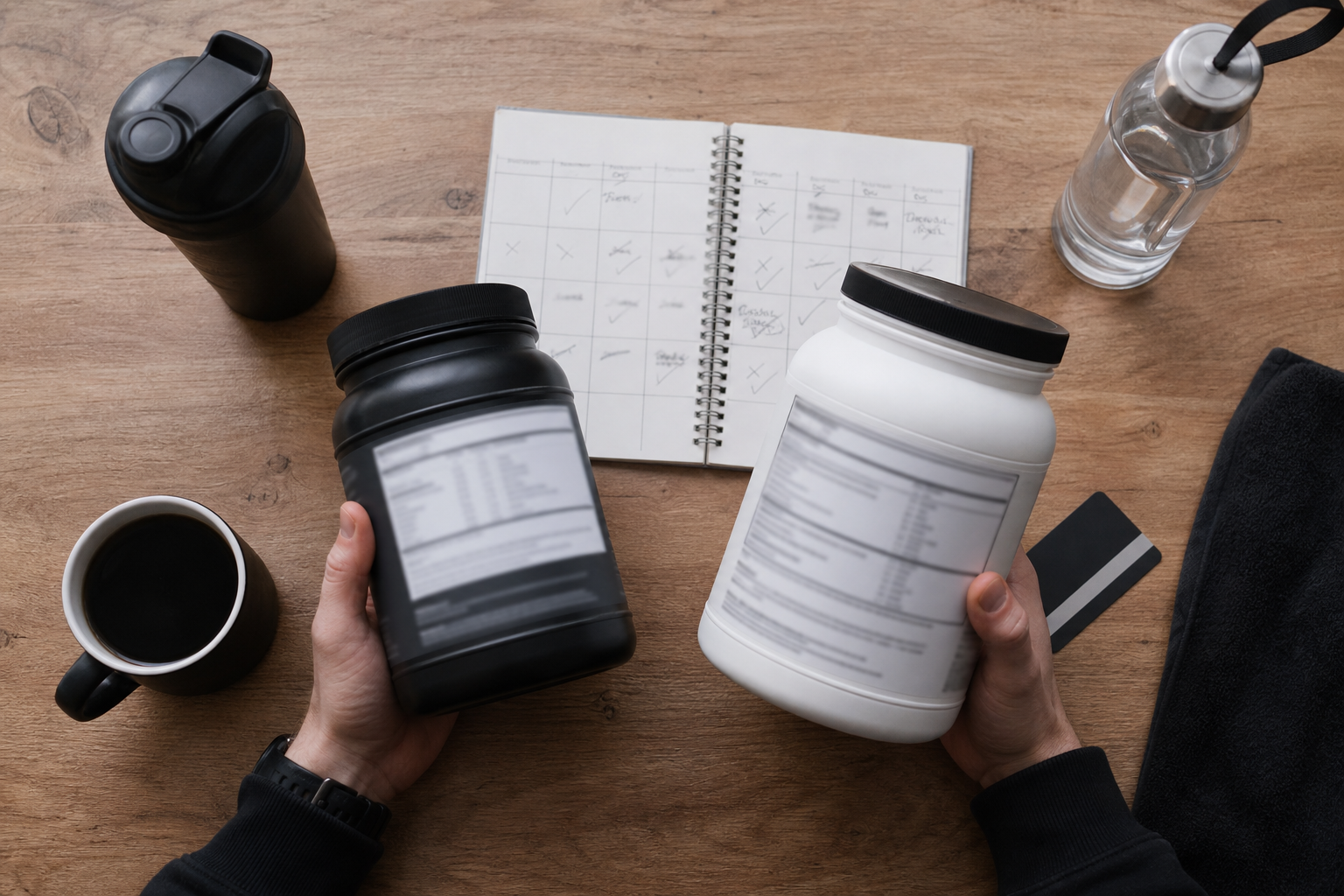
A transparent approach also means matching claims to evidence. There is no need to buy a long ingredient list solely because it looks advanced. AIDEVI's overview of the science behind supplement benefits can help frame the difference between a plausible ingredient role and an outcome any one person is guaranteed to experience.
Can you use creatine and pre-workout together?
Some people use both, but “can” is not the same as “should.” The important check is whether the pre-workout already contains creatine and whether adding a separate product duplicates ingredients or complicates the serving plan. More importantly, ask whether each product answers a real need. A person who is happy with their consistent creatine routine may still choose a caffeine-free training ritual. Another person may prefer plain coffee or no stimulant at all.
Do not create a complex stack on day one. Introduce one new supplement at a time, use it according to its label, and note sleep, digestion, perceived energy, and training context. This keeps normal variation from being mistaken for an ingredient effect. It also makes troubleshooting easier, as explored in AIDEVI's data-driven approach to supplement innovation.
People who are pregnant or nursing, sensitive to caffeine, taking medication, managing a medical condition, or advised to limit stimulant intake should consult an appropriate healthcare professional before using a pre-workout product. That is especially important because product formulas and personal context vary far more than a category label suggests.
What mistakes make this comparison more confusing?
The first mistake is treating every sensation as proof of effectiveness. Tingling, warmth, a faster heartbeat, or a sharp surge of alertness may be noticeable, but noticeable is not the same as necessary, safe for every person, or aligned with your stated goal. Conversely, the absence of a feeling after creatine says little about whether a consistent routine is supporting the kind of training it is intended to complement. Let the question determine the tool, rather than letting the strongest sensation determine the story.
The second mistake is changing the entire system at once. A person may add a new pre-workout, increase coffee, begin creatine, change breakfast, and start a tougher program in the same week. When sleep suffers or digestion changes, there is no clean way to tell what contributed. A lower-noise approach is far more useful: make one decision, hold the surrounding routine reasonably steady, and observe. This is particularly relevant for people who have already experienced digestive discomfort with supplements, where consistency rather than stimulation should frame the troubleshooting process.
The third mistake is borrowing another person's caffeine pattern. A friend who trains at noon may tolerate a product very differently from someone exercising after work, already drinking several coffees, or trying to protect an early bedtime. A formula that feels manageable in one context can interfere with sleep in another. Since sleep helps shape training readiness and recovery, a product that makes one session feel sharper but regularly disrupts the following night deserves a more skeptical evaluation.
How can you test your routine over two ordinary weeks?
Use ordinary training weeks, not a vacation week or a period of unusually hard dieting, to see whether a routine is serving you. Decide first whether you are evaluating creatine consistency, pre-workout tolerance, or a caffeine-free training ritual. Keep the evaluation narrow. For creatine, the meaningful question is often whether you can follow the labeled routine comfortably and consistently. For a pre-workout, the question is whether it meaningfully improves the session without creating a cost in sleep, appetite, anxiety, digestion, or the next day's readiness.
A simple notebook entry is enough: training start time, what you consumed beforehand, perceived readiness, completed session, and sleep that night. Do not search for a perfect score. Look for patterns. Did you arrive reliably? Did you complete the work you planned? Did you need increasingly complicated rituals to start training? Was the change still helpful after the novelty wore off? The goal is not to manufacture a “best stack”; it is to choose habits that leave more attention for training itself.
If you use a product containing caffeine, avoid using the trial as permission to increase serving sizes whenever a workout is difficult. Follow its label and keep all other caffeine sources visible. If you do not use a stimulant, do not assume your workout is therefore inferior. A meal, hydration, music, a walking warm-up, training with a friend, or scheduling the session at a more sustainable time can all be legitimate readiness tools. The AIDEVI brand approach to science-led wellness is most useful here as a principle: choose clear inputs you can understand and evaluate.
How do you build a useful routine without chasing every workout feeling?
Choose the smallest routine that supports your actual goal. For a muscle and strength trainee, that usually starts with a sustainable program, enough recovery, adequate nutrition, and a creatine decision that you can follow consistently if it suits you. For a person considering pre-workout, start by examining the session: When do you train? Did you eat? Is your sleep schedule protected? Are you already getting caffeine elsewhere? The best answer may be an earlier bedtime, a small snack, or a different training slot.
Measure progress in training outcomes and habits, not just the feeling ten minutes after a drink. Track session attendance, completed sets, loads or repetitions where relevant, recovery, and whether your routine is easy to repeat. AIDEVI's athlete performance and recovery perspective reinforces the value of respecting the full system around training rather than searching for one shortcut.

Conclusion
Creatine and pre-workout solve different kinds of questions. Creatine is generally a consistency decision for people pursuing repeated high-intensity training support. Pre-workout is a session-context decision whose ingredients, especially stimulants, deserve careful label reading. Begin with the problem you are actually trying to solve, simplify the routine, and let your training, recovery, and tolerance guide the next step.
Frequently Asked Questions
Is creatine a pre-workout?
Creatine can be taken as part of a pre-training routine, but it is not typically used for an immediate stimulant-like effect. Its role is usually discussed in relation to consistent use over time.
Is pre-workout necessary for muscle gain?
No. Training progression, nutrition, and recovery are the foundation. A pre-workout may be a preference for some people, not a requirement for progress.
Can I take creatine with coffee?
Many people do, but consider the total routine and your own tolerance. Coffee can add caffeine, so it is wise to avoid unintentionally stacking it with a stimulant-heavy pre-workout.
What if a pre-workout makes me feel unwell?
Stop using it and review the label and your total caffeine context. Seek professional advice for severe, persistent, or concerning symptoms, or when you have relevant health or medication considerations.
References
- [1] International Society of Sports Nutrition position stand: safety and efficacy of creatine supplementation in exercise, sport, and medicine.
- [2] Common questions and misconceptions about creatine supplementation: what does the scientific evidence really show?
- [3] U.S. Food and Drug Administration: Caffeine.
Individual results may vary. Consult a healthcare professional before starting any new supplement, especially if pregnant, nursing, taking medication, or managing a medical condition. These statements have not been evaluated by the Food and Drug Administration. This product is not intended to diagnose, treat, cure, or prevent any disease.
