






AIDEVI Fitness Guide
Do You Need a Creatine Loading Phase?
You do not need a creatine loading phase for creatine to work, but loading can help muscle creatine stores rise faster when speed matters. A smaller daily routine can reach the same practical goal more gradually and is often easier for everyday gym users to follow. The best choice depends on your timeline, stomach tolerance, budget, serving format, and whether you can repeat the plan consistently without turning a simple habit into a complicated project.
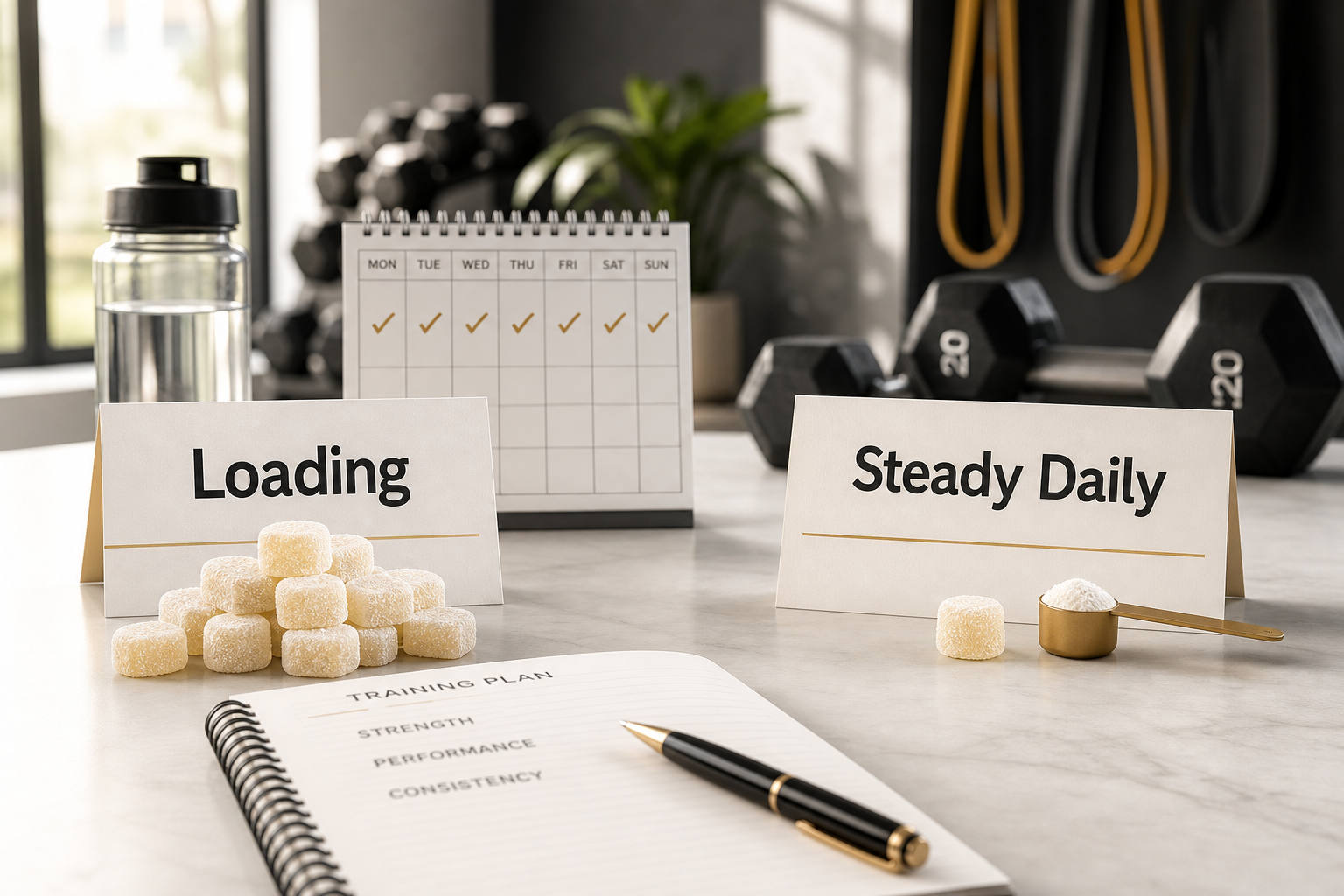
- Loading is optional; it is mainly a speed strategy, not a requirement.
- A steady daily approach is simpler and may be easier for people who dislike multiple servings.
- The biggest failure point is not the protocol; it is inconsistent use, unclear serving size, and unrealistic expectations.
- Choose the plan you can follow alongside training, protein intake, sleep, hydration, and progressive workouts.
Content
What is a creatine loading phase?
A creatine loading phase is a short period of taking creatine more frequently than a typical maintenance routine so muscle creatine stores rise faster. In sports nutrition research, loading is commonly discussed as a way to saturate stores more quickly, followed by a lower ongoing maintenance intake. The important idea is not that loading is magical. It is simply one route to the same destination: raising available creatine stores so the phosphocreatine system can better support short, repeated, high-intensity efforts [1].
For everyday lifters, the phrase can sound more intimidating than it needs to be. Loading does not replace training quality, progressive overload, adequate protein, calories, sleep, or recovery. It also does not mean you should ignore the label, double up casually, or copy a plan from someone with a different body size, sport, or tolerance. AIDEVI's guide to evaluating supplement benefits makes the same broader point: first understand the ingredient's role, then judge whether a product and routine actually fit your need.
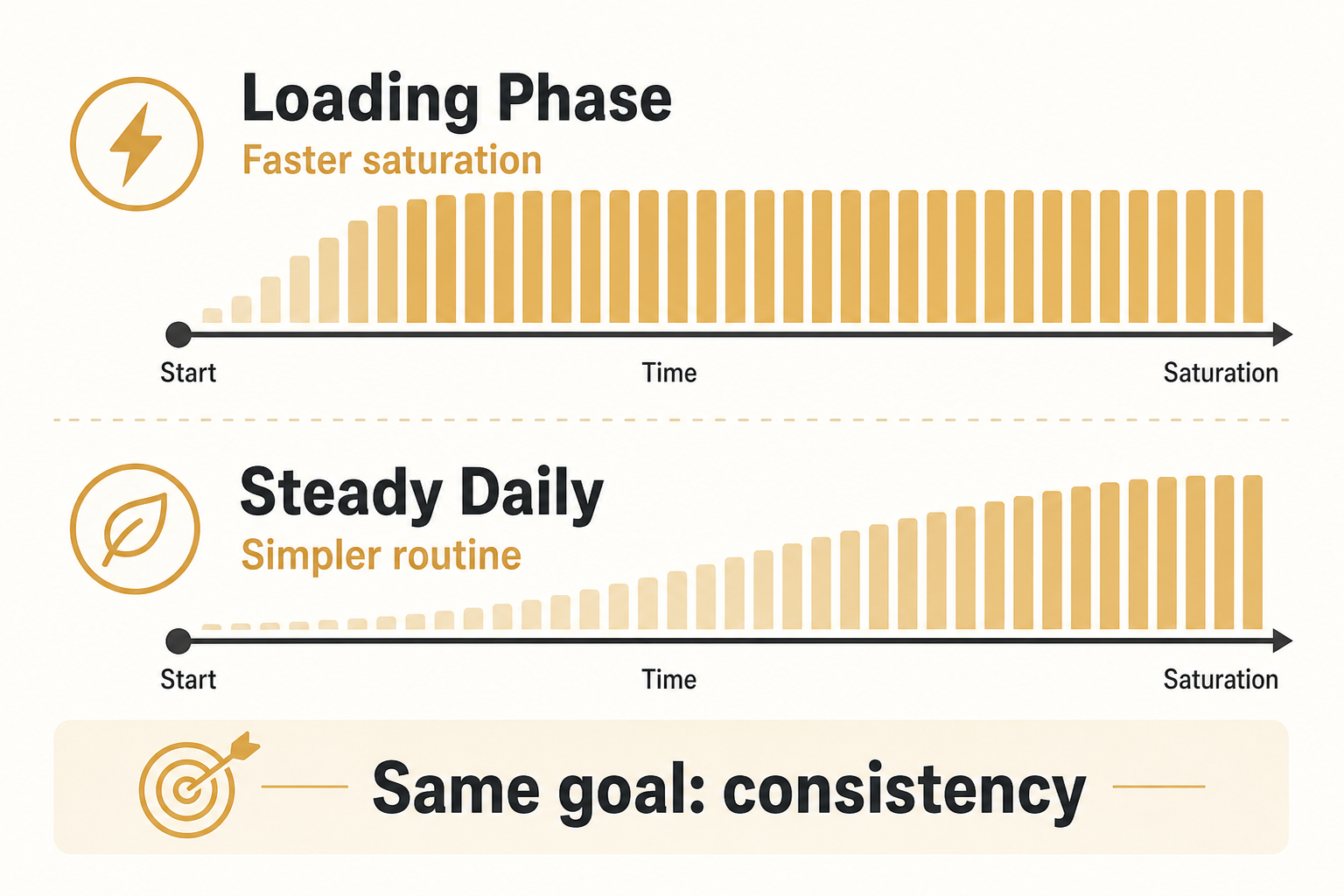
The reason loading exists is speed. A steady daily intake can still build stores over time, but loading aims to compress the early phase. That may matter if you are preparing for a training block, returning to resistance training, or trying to align your supplement routine with a near-term performance goal. If you are simply building a long-term habit, the slower route may be perfectly reasonable.
Do you actually need to load creatine?
No, most users do not need to load creatine. If your goal is general strength training, muscle growth support, or a consistent gym routine, a steady daily approach is often enough. It is easier to remember, easier to pair with a meal or workout habit, and easier to evaluate because there are fewer moving parts. Loading mainly becomes attractive when you value faster saturation more than simplicity.
This distinction matters because many people quit creatine for avoidable reasons. They expect a stimulant-like feeling, miss servings, change the dose every few days, or decide the product “is not working” before their training log has enough useful data. AIDEVI's troubleshooting article on muscle gain and fat loss priorities is helpful here because creatine works best when the broader fitness goal is clear. If you are trying to gain muscle, cut aggressively, change programs, and add several supplements at once, you make the result harder to interpret.
Think of loading as an option with tradeoffs. It may get you to higher stores faster, but it asks more from your routine. It may also increase the chance that you notice digestive discomfort if you take larger total amounts in a short window or stack creatine with heavy meals, high caffeine, or other products. Research reviews generally consider creatine monohydrate well studied for healthy populations when used appropriately, but individual tolerance still matters [2].
| Approach | Best Fit | Main Tradeoff |
|---|---|---|
| Loading phase | People who want faster saturation and can follow multiple planned servings. | More complexity, more product used early, and potentially more tolerance management. |
| Steady daily use | People who prefer a simple habit and are not racing a near-term deadline. | Stores rise more gradually, so early expectations should be patient. |
Who might consider a loading phase?
A loading phase may make sense if you have a specific short-term reason to reach saturation faster. Examples include starting a new strength block, returning to training after a break, preparing for repeated sprint or power-focused work, or wanting the clearest early routine during a defined challenge. In those cases, the faster path may feel worth the extra planning.
Loading may also appeal to people who are already organized with nutrition. If you track meals, train on a schedule, drink enough water, and tolerate supplements well, the extra structure may not feel burdensome. You are more likely to separate the servings sensibly, notice how your body responds, and move into a maintenance routine without turning the first week into guesswork.
The key is to avoid confusing faster saturation with faster visible transformation. Creatine can support training capacity and adaptation, but it does not build muscle by itself. If your lifts are not progressing, your protein is inconsistent, or your recovery is poor, loading does not fix the core problem. For readers thinking about creatine in the broader performance and recovery picture, AIDEVI's article on performance and recovery support for athletes is useful context because it separates ingredient roles from training foundations.
Who may be better skipping a loading phase?
Skip loading if you already know you dislike complicated supplement routines. A simple daily habit done consistently is usually better than a theoretically faster protocol you abandon after several days. This is especially true for beginners, busy parents, frequent travelers, people who train at irregular times, and anyone who tends to forget afternoon or evening servings.
You may also prefer to skip loading if you have a sensitive stomach, are trying a new format for the first time, or are stacking multiple products. Start with clarity before intensity. Read the label, confirm the creatine form, understand the complete serving, and avoid combining several new variables at once. AIDEVI's article on data-driven supplement innovation highlights why label transparency and usable product information matter when shoppers compare formats.
People with medical conditions, kidney concerns, medication use, pregnancy, nursing, or other health constraints should speak with a healthcare professional before starting any supplement routine. That is not because creatine is automatically dangerous; it is because personal context matters. Google searches cannot see your medical history, lab values, or medication list. A careful routine is a better routine.
How should you choose between loading and steady daily use?
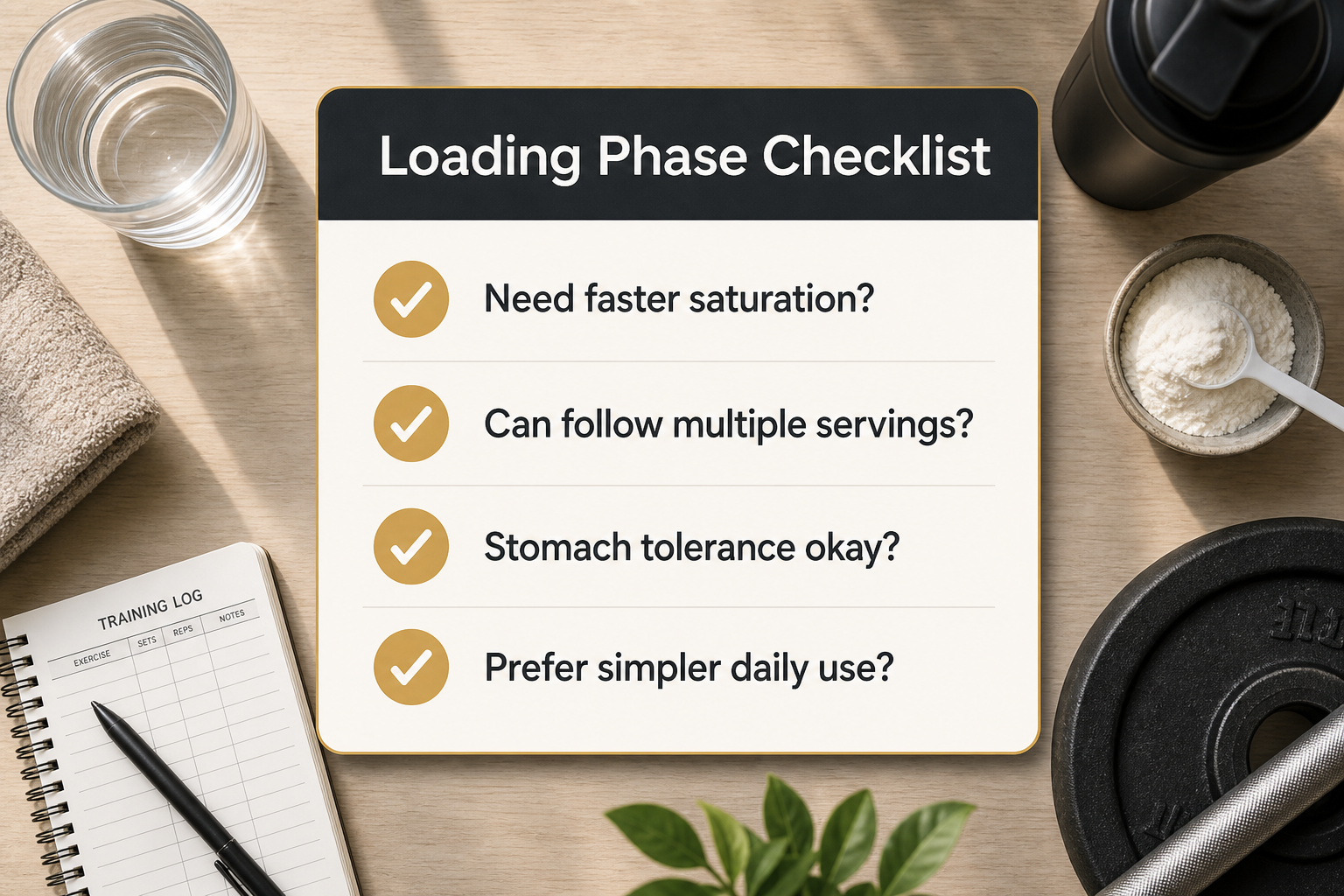
Choose loading if your timeline is short, your routine is organized, and you can follow the product directions without improvising. Choose steady daily use if your timeline is long, you value simplicity, or you are still learning how creatine fits your meals, training, and digestion. Neither choice is a personality test. It is just a match between the protocol and the life it has to live inside.
A practical decision rule is this: if you cannot explain when you will take each serving, what you will do if you miss one, and when you will transition to maintenance, loading may be more complexity than you need. If you can answer those questions easily, loading may be reasonable. The more uncertain your schedule, the more valuable a once-daily routine becomes.
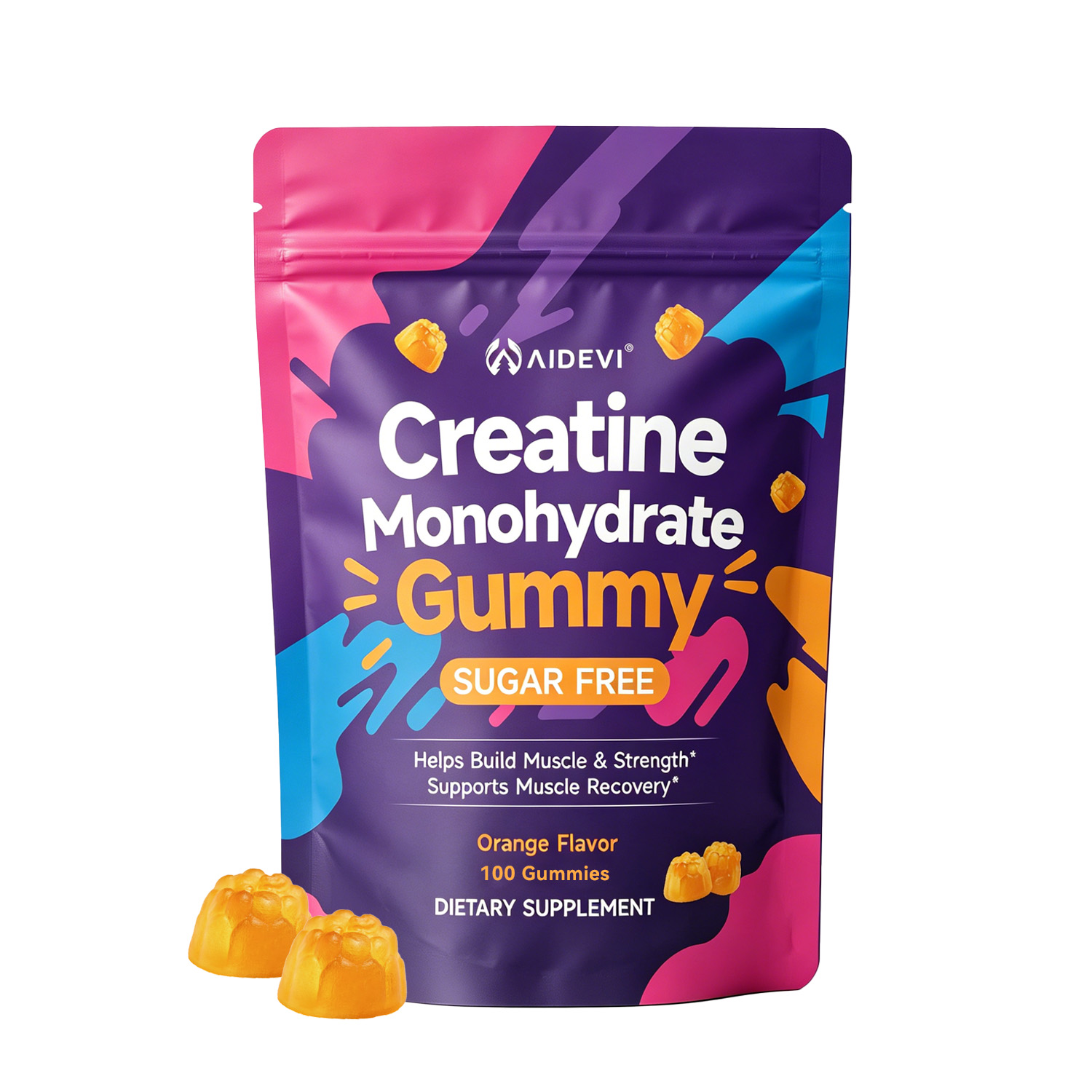
Product format also matters. Powder can be convenient for people who like measuring and mixing. Gummies can be convenient for people who want portability and a no-mix routine, but the label must make the complete serving clear. Do not compare one scoop to one gummy unless the creatine amount per complete serving is obvious. AIDEVI's guide to why well-done studies matter for supplement decisions is relevant because the evidence belongs to the ingredient and protocol, while the buying decision belongs to the actual product in your hand.
A simple decision checklist
- Timeline: Do you need faster saturation for a defined training block, or are you building a long-term habit?
- Tolerance: Have you used creatine before without digestive discomfort?
- Execution: Can you follow multiple planned servings without guessing?
- Label clarity: Does the product clearly state creatine form, serving size, and directions?
- Training basics: Are your workouts, protein intake, hydration, and sleep consistent enough to judge results fairly?
What should your routine look like after the first week?
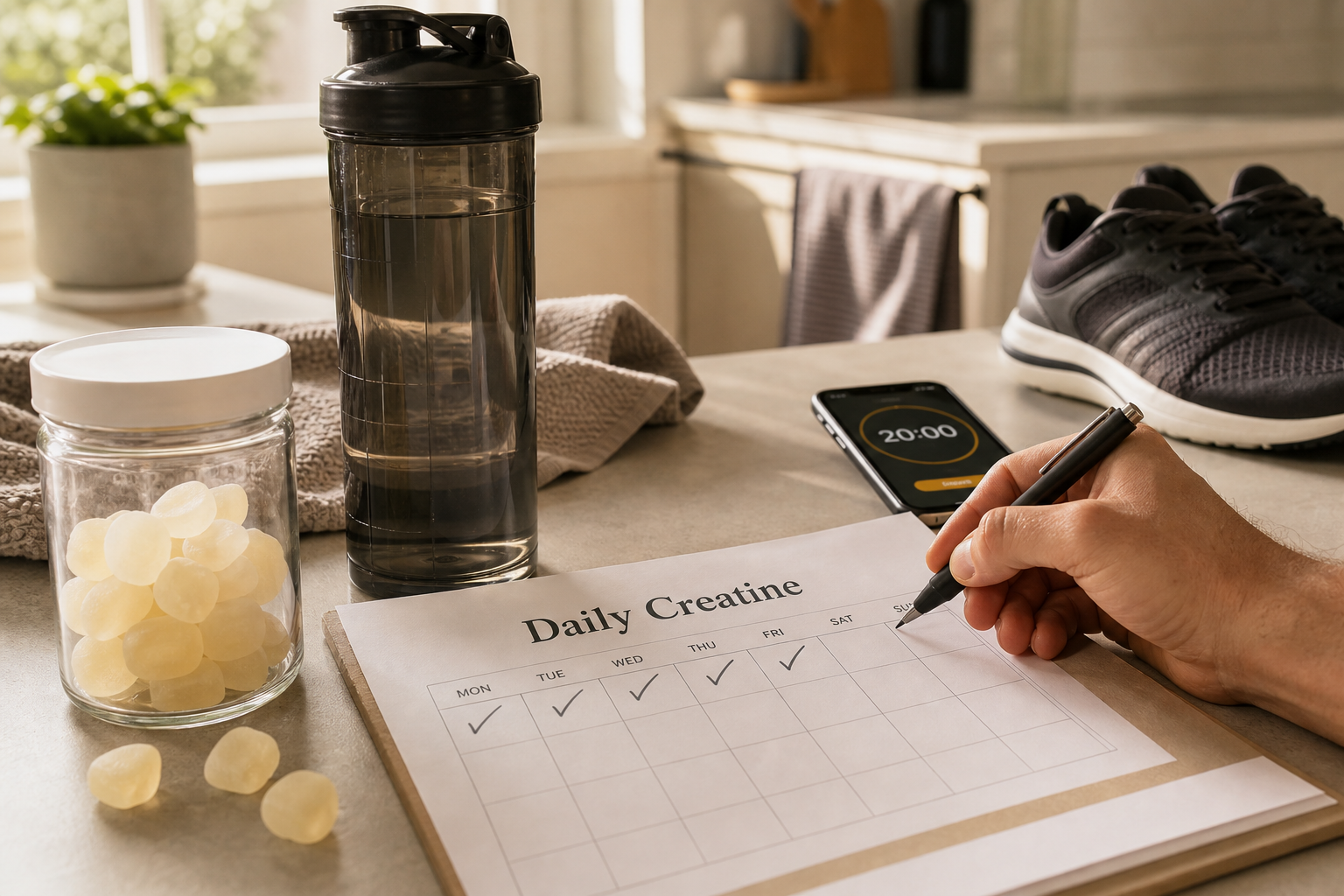
After the early phase, the routine should become boring in the best possible way. Pick a repeatable cue: breakfast, post-workout, lunch, or the same shelf where you keep your training log. Pair the serving with water and a normal meal pattern if that improves tolerance. Keep the label visible until the habit is automatic. The goal is not to create a dramatic ritual; the goal is to make missing a day less likely.
Track the things that matter. Body weight can shift for many reasons, and early changes do not always tell the whole story. A better tracker includes training volume, repeated set performance, workout consistency, sleep, soreness patterns, and whether you are actually taking the product as directed. If your aim is muscle growth, compare creatine use against your full plan rather than treating it as the only variable.
AIDEVI's article on muscle recovery and performance can help readers keep the larger routine in view. Creatine belongs in a system: training stimulus, recovery capacity, nutrition, and consistency. When those pieces are aligned, the difference between loading and not loading becomes a practical timing choice rather than a source of anxiety.
What mistakes make loading less useful?
The first mistake is loading without a plan. If you do not know how long the loading phase lasts, when you transition, or how you will handle missed servings, you are not following a protocol; you are improvising. The second mistake is changing too many things at once. Starting creatine, adding a new pre-workout, changing calories, switching programs, and increasing training volume in the same week makes it hard to know what helped or what caused discomfort.
The third mistake is treating water weight as failure. Creatine can increase water content inside muscle, which is part of why scale movement may occur for some users. That does not mean fat gain, and it does not guarantee visible muscle change either. Interpret early changes carefully. A more mature approach is to track performance trends over several weeks while keeping the rest of the routine stable.
Finally, do not ignore quality signals. The supplement category is broad, and product labels vary. Look for clear directions, named ingredients, realistic claims, and a company that explains its standards. For a broader brand context, AIDEVI's about page explains the company's emphasis on science-minded wellness, while its supplement education content can help shoppers avoid choosing based only on hype.
Conclusion
A creatine loading phase is useful when you want faster saturation and can follow the plan calmly. It is not required for creatine to work, and it is not automatically better for every gym user. For many people, steady daily use is the cleaner choice because it reduces friction and supports the one behavior creatine needs most: consistency. Pick the protocol that matches your timeline, tolerance, product format, and training reality. Then keep the rest of the routine stable enough to learn from the result.
Frequently Asked Questions
Will creatine still work if I skip loading?
Yes. Skipping loading usually means stores rise more gradually. For long-term strength training and muscle-building routines, consistency matters more than whether you used a faster early protocol.
Is loading better for muscle growth?
Loading may raise stores faster, but muscle growth still depends on training stimulus, nutrition, recovery, and time. It is a timing strategy, not a shortcut around the fundamentals.
Can loading cause stomach discomfort?
Some people notice digestive discomfort when they take larger total amounts or combine creatine with other new products. Follow label directions, separate servings when appropriate, and choose the simpler daily approach if tolerance is a concern.
Should beginners load creatine?
Beginners usually do not need to load. A steady daily routine is easier to learn, easier to repeat, and easier to judge alongside a new training program.
What if I miss a day during loading?
Do not panic or double up impulsively. Return to the product directions and your planned routine. If missed servings are frequent, a steady daily approach may fit your life better.
References
Individual results may vary. Consult a healthcare professional before starting any new supplement, especially if pregnant, nursing, taking medication, under 18, following a medically restricted diet, or managing a medical condition.
These statements have not been evaluated by the Food and Drug Administration. This product is not intended to diagnose, treat, cure, or prevent any disease.
