



AIDEVI Buyer Guide
How to Read a Creatine Gummy Label: Dose, Servings & Testing
A useful creatine gummy label makes four facts easy to verify: the creatine form, grams in the complete serving, gummies required per serving, and servings per bottle. Then check other ingredients, storage, warnings, manufacturer information, and finished-product testing before deciding whether the product fits your routine.
- Do not confuse creatine per gummy with creatine per complete serving.
- Calculate total creatine per bottle before comparing price or value.
- Check whether added ingredients disclose their individual amounts.
- Treat third-party testing as meaningful only when the document identifies the product, test, and relevant batch or lot.
Content
What can the front label tell you?
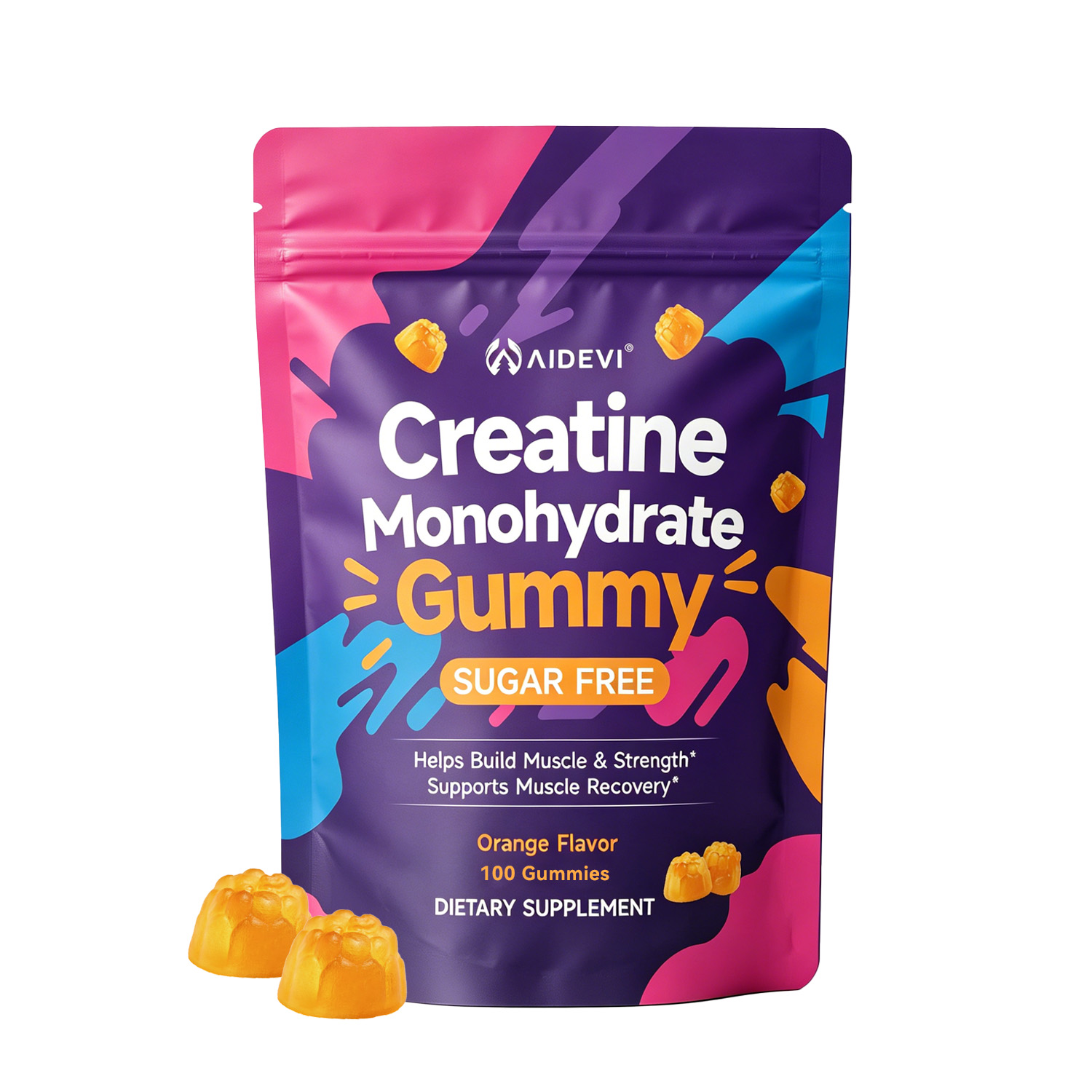
The front label is useful for identifying the product category, advertised creatine form, gummy count, flavor, and major positioning. It is not the best place to determine the complete daily amount or real value. Large numbers may refer to the entire bottle, a multi-ingredient blend, or another measure rather than grams of creatine in one serving.
Look for creatine monohydrate by name. It remains the reference form with extensive evidence for supporting repeated high-intensity exercise and resistance-training adaptations [1]. A creative product name or novel delivery format does not prove that another creatine form is more effective. Format affects convenience; it does not replace the need to verify the ingredient and amount.
Treat claims such as “maximum strength,” “rapid results,” “advanced muscle fuel,” or “clinically inspired” as marketing language until the label and evidence make them specific. A responsible comparison begins with the Supplement Facts panel, directions, and accessible quality information. AIDEVI's discussion of how to evaluate supplement benefits provides broader context for separating an ingredient's evidence from a product's advertising.
How do you read the Supplement Facts panel?
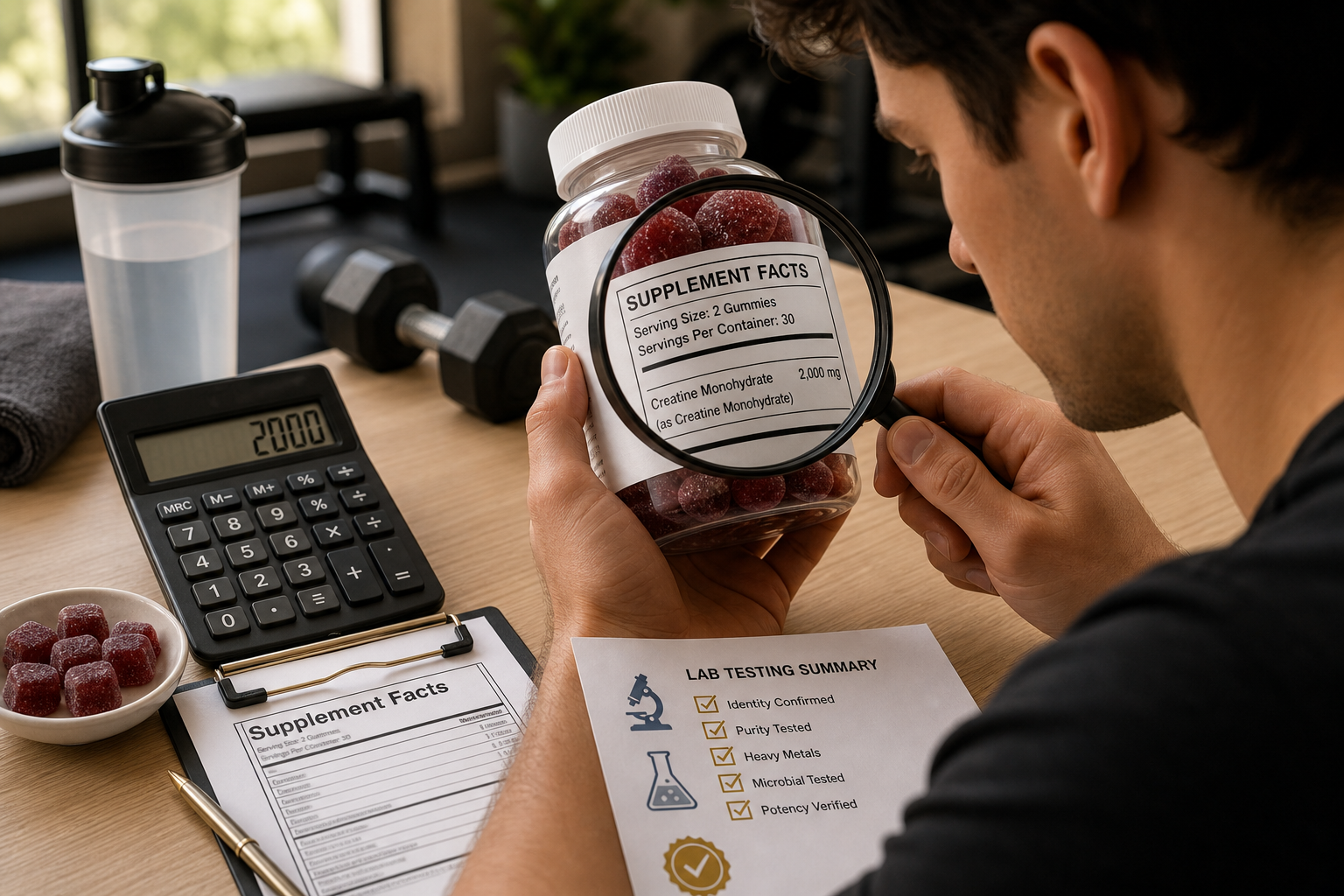
Start at the top of the panel with serving size and servings per container. The serving size tells you how many gummies the manufacturer defines as one serving. The ingredient line then tells you how much creatine that complete serving provides. If the serving is two gummies and the panel lists 2 grams of creatine monohydrate, the amount is 2 grams per two-gummy serving, not 2 grams per gummy.
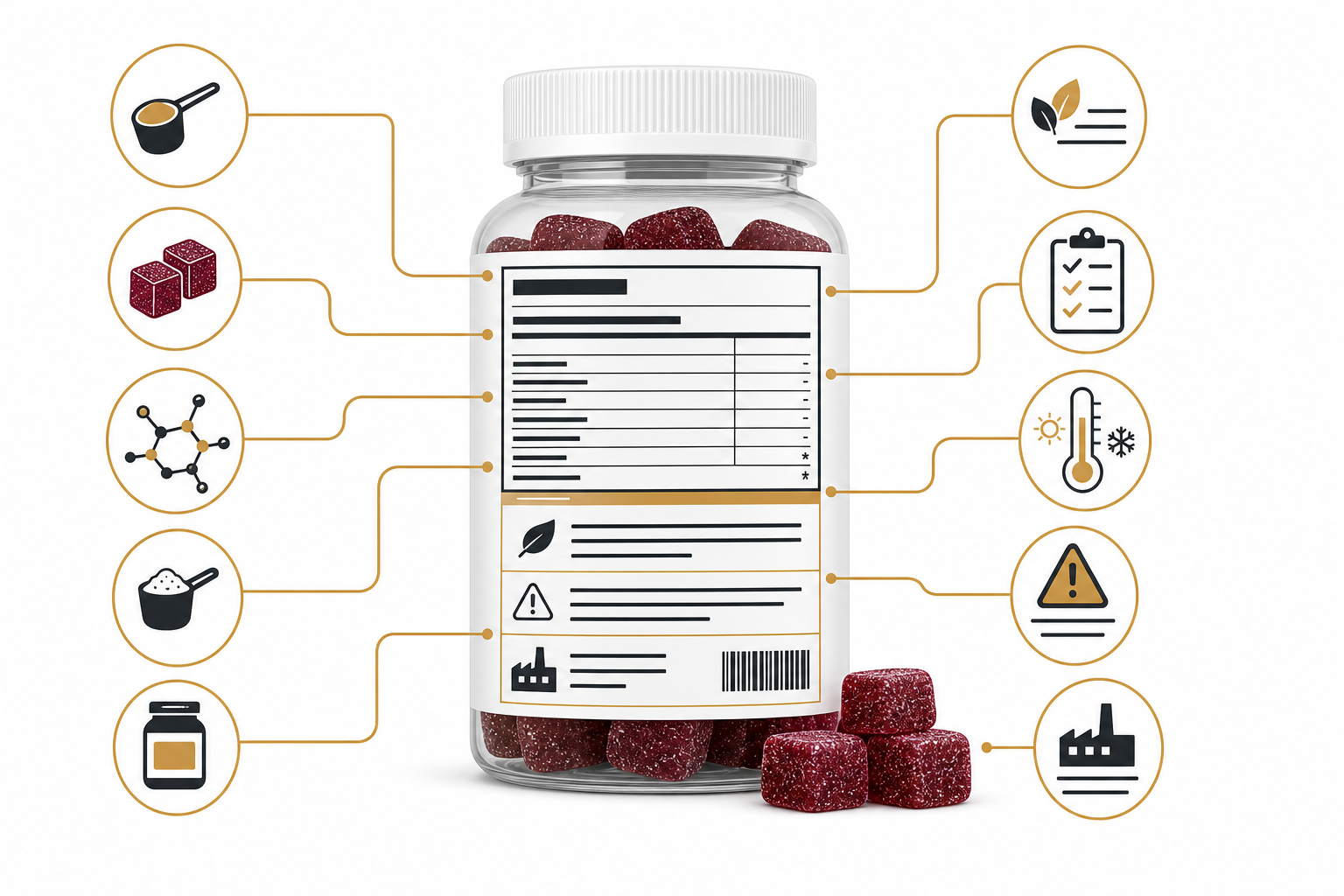
| Label Field | What It Answers | Common Mistake |
|---|---|---|
| Serving size | How many gummies make one labeled serving? | Assuming one gummy equals one serving |
| Creatine amount | How many grams or milligrams are in the complete serving? | Confusing milligrams with grams |
| Servings per container | How many labeled daily servings does the bottle provide? | Using gummy count as day count |
| Other active ingredients | What else is included and in what amount? | Assuming every added ingredient has a meaningful dose |
| Daily Value | Whether an established Daily Value is shown | Treating a missing Daily Value as proof of poor quality |
The U.S. Food and Drug Administration requires dietary-supplement labeling to identify serving information and dietary ingredients in the Supplement Facts panel, but a compliant-looking panel does not independently prove that the finished product contains the stated amount [2]. Label reading and product testing answer different questions: the label states what should be present, while testing can help verify what is present.
Convert units when necessary. One gram equals 1,000 milligrams. A label listing 2,000 mg of creatine provides 2 grams per stated serving. This simple conversion prevents a large milligram number from appearing more substantial than it is. Research and sports-nutrition guidance commonly discuss approximately 3–5 grams per day as a maintenance approach after saturation, although users should not change a labeled serving without appropriate guidance [1].
How do you calculate total creatine and real bottle value?
First calculate total creatine per bottle by multiplying creatine grams per serving by servings per container. If a bottle provides 2 grams per serving and 30 servings, it contains 60 labeled grams of creatine in total. This calculation is more useful than the bottle's gummy count because different products may require different numbers of gummies per serving.
Then calculate cost per gram by dividing the purchase price by total labeled grams. A $30 product containing 60 grams has a labeled cost of $0.50 per gram. This does not tell you whether potency is verified or whether the product fits your routine, but it creates a fairer value comparison than price per bottle.
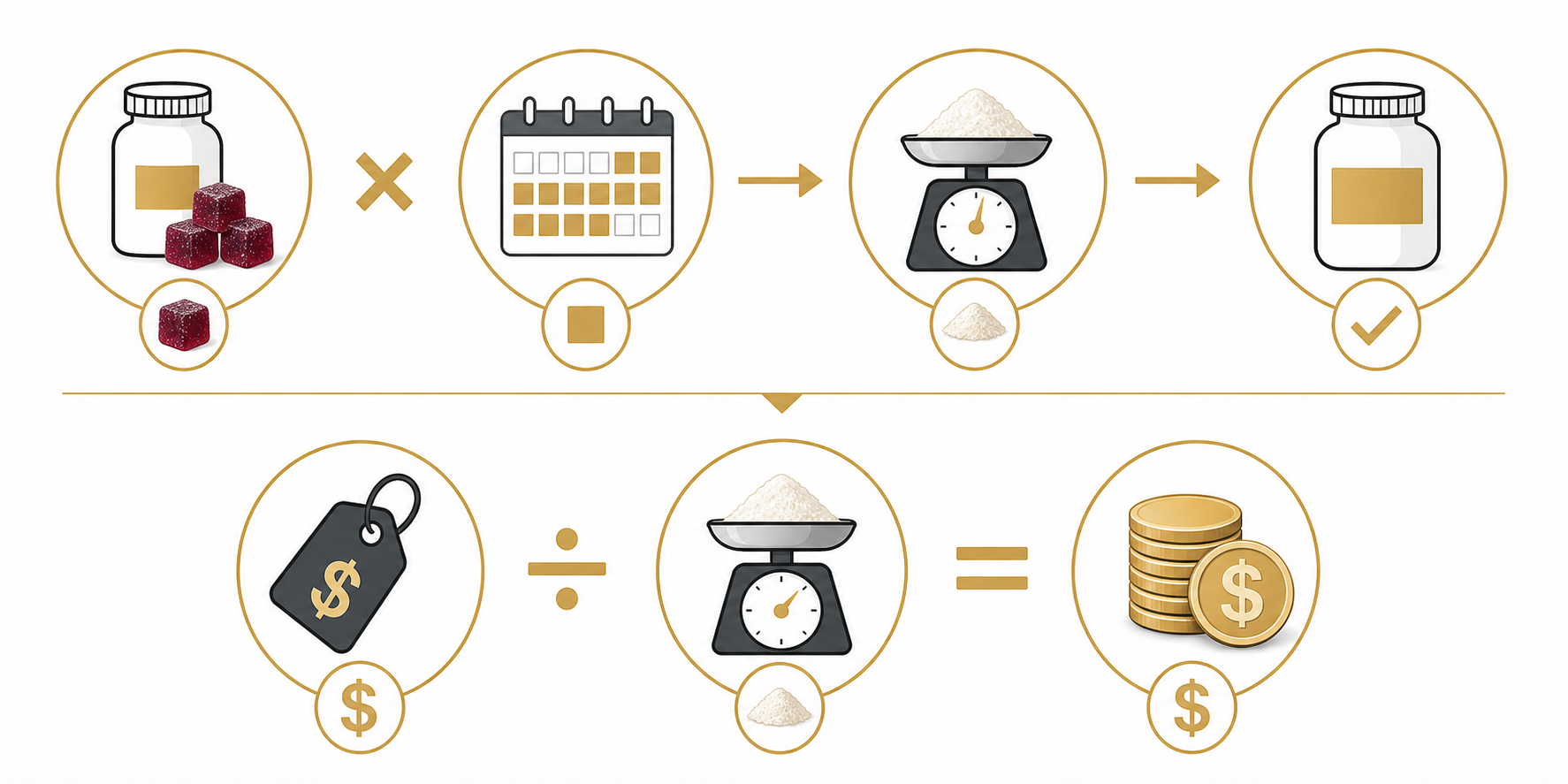
Also calculate cost per intended daily serving. A gummy can cost more per gram than powder but still be worthwhile for a person who consistently uses it and repeatedly abandons powder. Convenience has value, but it should be understood rather than hidden inside bottle pricing. AIDEVI's guide comparing muscle-gain and fat-loss priorities is a reminder that supplement value depends on the larger plan it supports.
Watch for serving-count language. “60 gummies” does not mean a 60-day supply when the labeled serving is two gummies. Conversely, do not divide the serving simply to extend the bottle without considering that doing so changes the labeled daily amount. A truthful comparison uses the product as directed.
What should you check in other ingredients?
Gummies need ingredients that create flavor, sweetness, color, texture, stability, and shape. Review sugars, sugar alcohols, other sweeteners, pectin or gelatin, flavors, colors, oils, coatings, and potential allergens. These ingredients do not automatically make a gummy poor quality, but they can affect dietary fit, digestive comfort, and whether the serving remains practical.
If the formula adds BCAAs, electrolytes, vitamins, or other active ingredients, check whether each amount is disclosed. The presence of an ingredient name does not prove that the formula contains an amount relevant to your goal. Avoid assuming that a longer ingredient list creates a more effective creatine product. More ingredients can also make it harder to identify which component caused digestive discomfort.
A proprietary blend may disclose the total blend weight without showing every individual amount. This can limit your ability to evaluate whether creatine or supporting ingredients are present at the amounts you intended. For creatine gummies, clear disclosure of creatine monohydrate per complete serving is more useful than a dramatic blend name.
Directions and warnings deserve equal attention. Check recommended use, storage, age restrictions, allergy statements, and instructions to consult a healthcare professional. AIDEVI's article about why evidence and well-designed studies matter helps explain why precise limitations are a quality signal rather than a weakness.
What does third-party testing actually mean?
“Third-party tested” should mean that a laboratory independent of the brand performed defined tests. The phrase alone does not tell you which tests were performed, whether the tested sample was a raw ingredient or finished gummy, when it was tested, or whether the document matches the bottle you are purchasing. Ask for specifics.
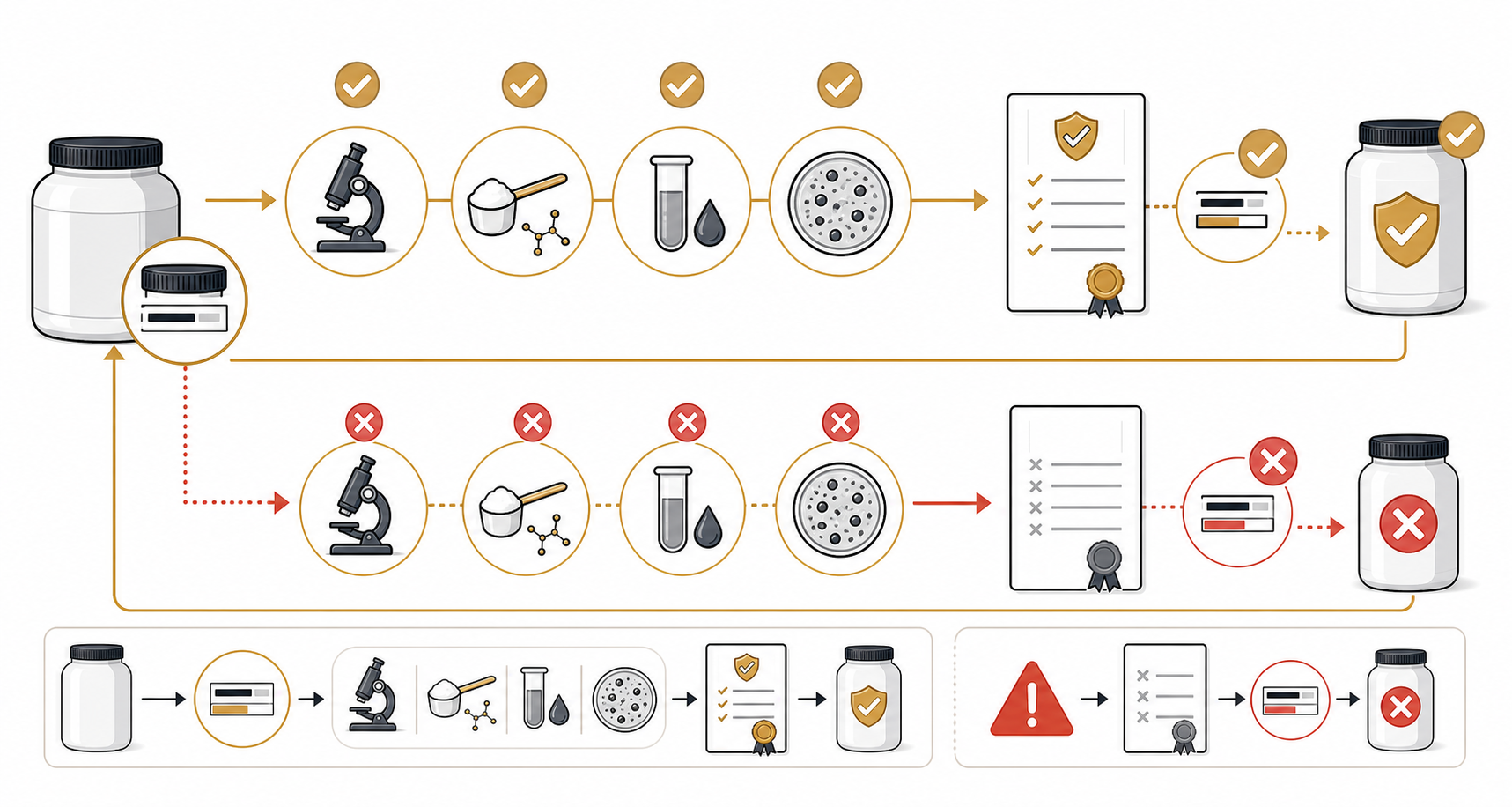
- Identity: Does testing confirm the expected ingredient?
- Potency or strength: Does the finished product contain the stated creatine amount?
- Purity and contaminants: Were relevant heavy metals, microbes, or other contaminants assessed?
- Product and lot match: Can the test document be connected to the product and batch being sold?
- Laboratory and methods: Are the testing organization and methods identified clearly enough to evaluate?
Finished-product potency is particularly useful for gummies because manufacturing, moisture, acidity, temperature, and storage can influence stability. A raw-material certificate can help confirm the creatine ingredient before manufacturing, but it does not independently prove how much creatine remains in the finished gummy. Ideally, quality evidence makes clear what was sampled and what result was measured.
The FDA's current good manufacturing practice requirements for dietary supplements address systems intended to help ensure identity, purity, quality, strength, and composition, but the FDA does not approve dietary supplements before they are marketed [3]. A quality badge should therefore be read precisely. “Made in a GMP facility” and “this finished lot was independently tested for creatine potency” are different statements.
Independent certification programs can add useful controls, especially for competitive athletes concerned about prohibited substances. However, certification scope differs. Verify what a program tests and whether the exact product appears in its public database rather than relying only on a logo. AIDEVI's brand background provides context for evaluating stated quality commitments, while product-specific evidence should still be checked separately.
Testing red flags to avoid
Be cautious when a company displays a generic certificate that does not name the product, uses a report for creatine raw material while claiming the finished gummy was tested, hides the test date or lot, or provides only a cropped image with no laboratory information. Also question claims such as “lab approved” when approval, scope, and testing criteria are not explained.
Testing cannot guarantee that a supplement is suitable for every person or that it will produce a particular result. It reduces uncertainty about defined product-quality questions. That distinction matters: quality testing verifies aspects of the product, while clinical research evaluates health or performance outcomes.
What is a practical creatine gummy buyer checklist?
- Identify the form: Confirm the label names creatine monohydrate or another clearly defined form.
- Find the complete serving: Note how many gummies equal one serving.
- Convert the amount: Translate milligrams to grams when needed.
- Calculate total grams: Multiply grams per serving by servings per bottle.
- Calculate value: Divide price by total labeled grams and compare daily cost.
- Review all ingredients: Check sweeteners, allergens, gummy materials, and disclosed active amounts.
- Verify quality claims: Look for finished-product potency, relevant contaminant testing, and product-lot matching.
- Read directions and warnings: Confirm storage, suitability, and when professional guidance is needed.
Finally, place the purchase inside a realistic training plan. Creatine can support repeated high-intensity work and resistance-training adaptations, but it does not replace progressive training, adequate nutrition, sleep, or recovery. AIDEVI's discussion of performance and recovery routines reinforces the importance of evaluating supplements as one part of a larger system.
Conclusion
A creatine gummy label should let you determine what form is used, how many gummies make one serving, how many grams the complete serving provides, and how many servings are in the bottle. Use those facts to calculate total grams, daily cost, and cost per gram. Then evaluate other ingredients, directions, storage, warnings, and finished-product testing. The best label does not require the buyer to guess.
Frequently Asked Questions
How much creatine is in one gummy?
Divide the creatine amount per serving by the number of gummies in that serving. For example, 2 grams per two-gummy serving equals 1 gram per gummy.
Is 2,000 mg of creatine the same as 2 grams?
Yes. One gram equals 1,000 milligrams, so 2,000 mg equals 2 grams. Always confirm whether that amount applies to one gummy or the complete serving.
Does “60 gummies” mean a 60-day supply?
Not necessarily. If the serving size is two gummies, a 60-gummy bottle provides 30 labeled servings. Use servings per container rather than gummy count to estimate supply duration.
What should a creatine gummy certificate of analysis show?
Useful documentation identifies the tested product or material, relevant lot or batch, laboratory, test date, methods or scope, and results for defined checks such as potency and contaminants.
Does third-party tested mean FDA approved?
No. Independent testing and FDA approval are different concepts. Dietary supplements are not approved by the FDA before marketing, and testing scope must be evaluated on its own terms.
References
Individual results may vary. Consult a healthcare professional before starting or changing any supplement, especially if pregnant, nursing, taking medication, managing a medical condition, or concerned about kidney health.
These statements have not been evaluated by the Food and Drug Administration. This product is not intended to diagnose, treat, cure, or prevent any disease.
