



AIDEVI Fitness Guide
Creatine Gummies vs Powder: Which Format Fits Your Routine?
Creatine gummies and powder can both deliver creatine monohydrate, the most extensively studied form of creatine. Powder usually makes it easier and less expensive to reach common daily amounts, while gummies can make a routine more portable and easier to remember. The better choice is the format that provides a clearly verified dose you can take consistently.
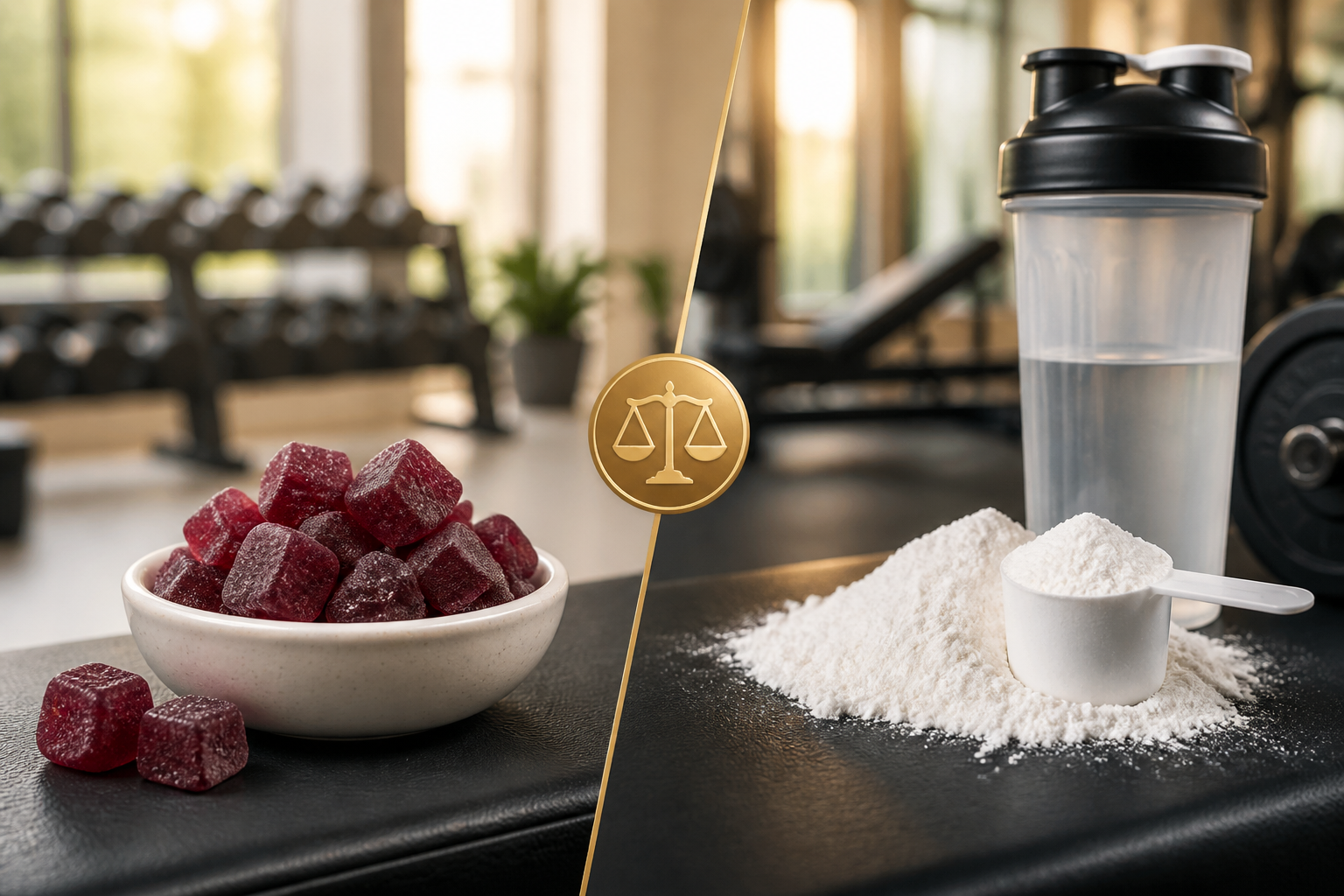
- The delivery format does not replace the need to check the creatine form and grams per daily serving.
- Powder generally wins on dose flexibility and cost per gram.
- Gummies can win on portability, taste, and adherence for people who dislike mixing powder.
- Finished-product potency testing is especially useful when evaluating a creatine gummy.
Content
How do creatine gummies and powder compare?
Creatine powder is usually a concentrated, scoopable product that can be mixed into water or another drink. Creatine gummies place creatine inside a chewable formula with flavors, sweeteners, texture ingredients, and other components needed to create the gummy. Both formats may use creatine monohydrate, but shoppers should never assume that two products provide the same amount simply because both say “creatine” on the front.
Creatine helps replenish phosphocreatine stores involved in rapidly regenerating ATP during short, high-intensity activity. Its strongest evidence is connected with repeated high-intensity exercise and resistance-training adaptations, not with a particular consumer format [1]. That means the practical comparison begins with the ingredient and dose, then moves to convenience, cost, testing, and whether the format fits your routine.
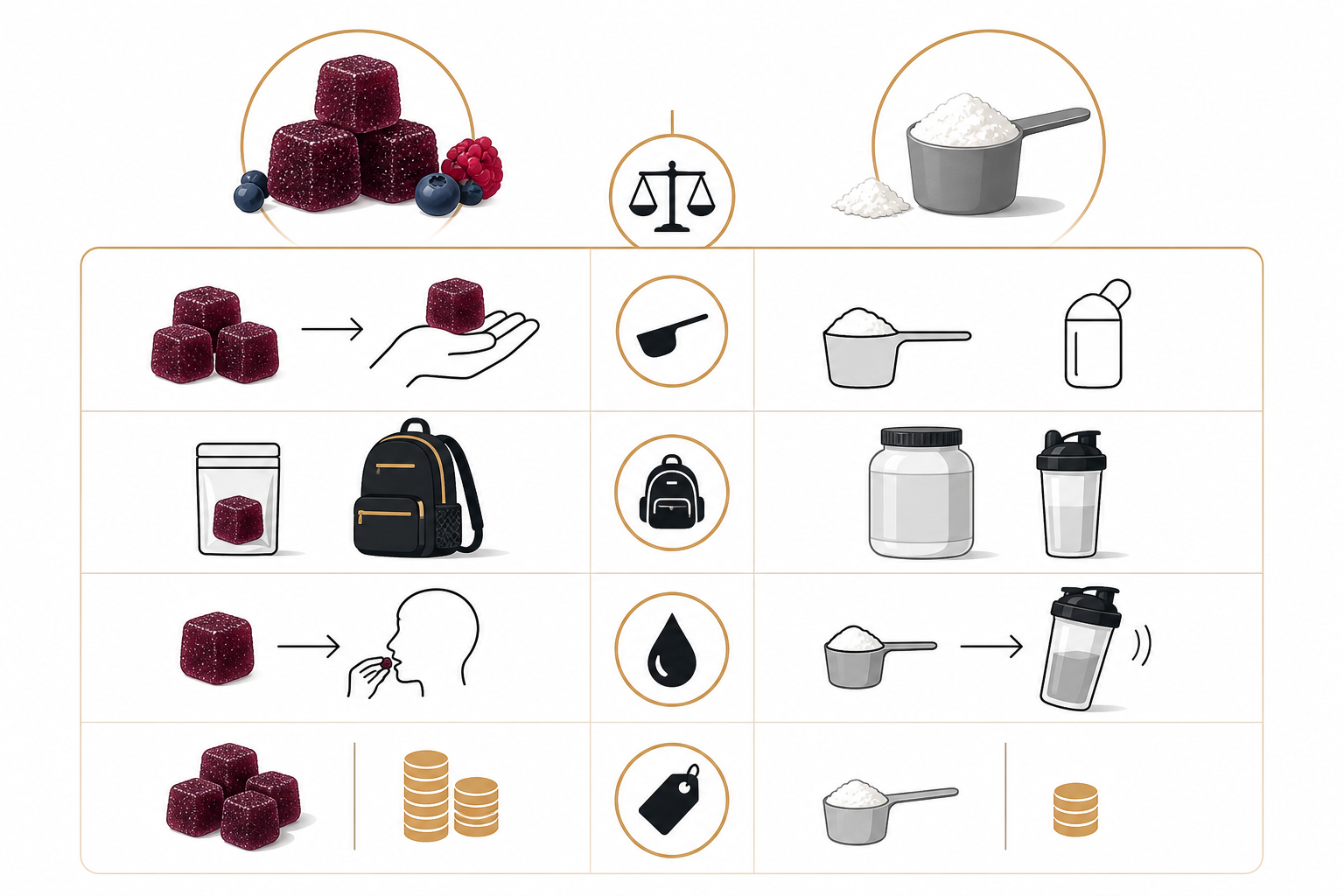
| Decision Factor | Creatine Gummies | Creatine Powder |
|---|---|---|
| Dose density | May require several gummies to provide a larger daily amount | Usually provides several grams in one scoop |
| Preparation | Ready to chew without mixing | Requires measuring and usually mixing |
| Portability | Easy to use away from home when stored correctly | Travel requires a container, scoop, and often a drink |
| Cost per gram | Usually higher because the product includes gummy manufacturing and ingredients | Usually lower for plain creatine monohydrate |
| Routine fit | Useful for people who dislike powder, texture, or mixing | Useful for people who prioritize dose flexibility and value |
Which format makes daily dosing easier?
Powder usually makes higher daily amounts easier because creatine is the main material in the scoop. Gummies must also contain the ingredients that create their taste and chewable structure, limiting how much creatine comfortably fits into each piece. A gummy serving can still be clearly labeled and useful, but buyers need to count the total grams in the complete daily serving, not the amount in one gummy or the number of gummies in the bottle.
Research and sports-nutrition guidance frequently discuss approximately 3–5 grams per day as a maintenance approach after saturation, while loading protocols use larger divided amounts for a shorter period [1]. Loading is not required to use creatine; consistent lower daily intake can increase muscle creatine stores more gradually. Individual needs, tolerance, diet, training, and professional guidance still matter.
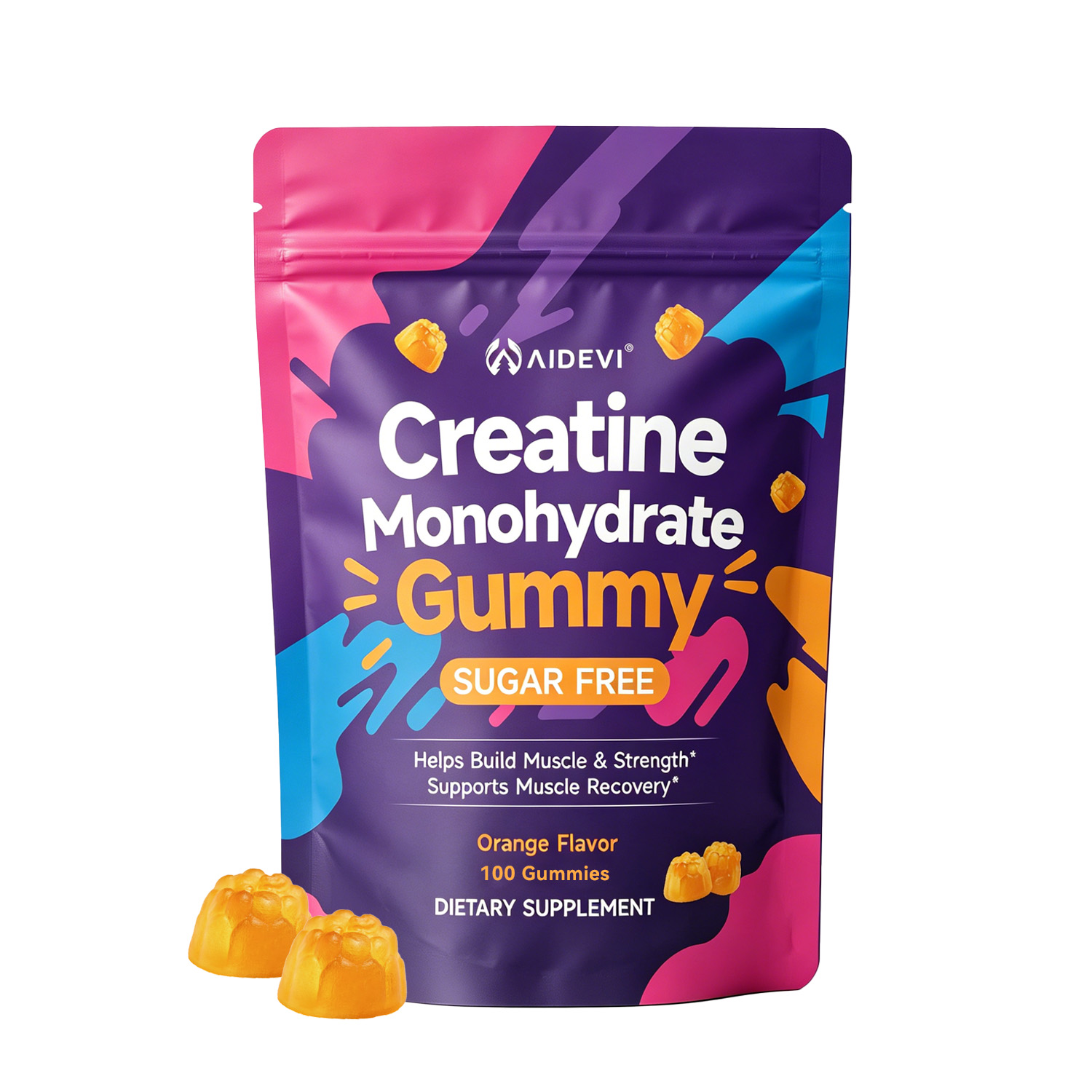
The AIDEVI creatine gummy product page currently states that two gummies provide 2,000 mg of creatine monohydrate plus 500 mg of BCAAs. That is a clear serving statement, but 2 grams is below the commonly discussed 3–5 gram maintenance range. A careful buyer should understand that context rather than assuming every creatine serving is interchangeable. Do not increase a labeled serving without appropriate guidance.
Powder offers more dose flexibility, but flexibility can also create measuring mistakes. A scoop is only reliable when it matches the labeled serving and is used as directed. Do not treat a heaping scoop as a harmless shortcut. Gummies simplify counting, while powder simplifies gram-level adjustment. Your preferred form depends on which kind of consistency you can maintain.
Can creatine gummies and powder produce similar results?
If two products deliver an equivalent, verified amount of the same creatine form and are used consistently, the delivery format itself is not expected to create a fundamentally different role for creatine. Gummies do not make creatine magically stronger, and powder does not work merely because it looks more clinical. The meaningful variables are the creatine form, actual delivered amount, product quality, consistent use, and the training program it supports.
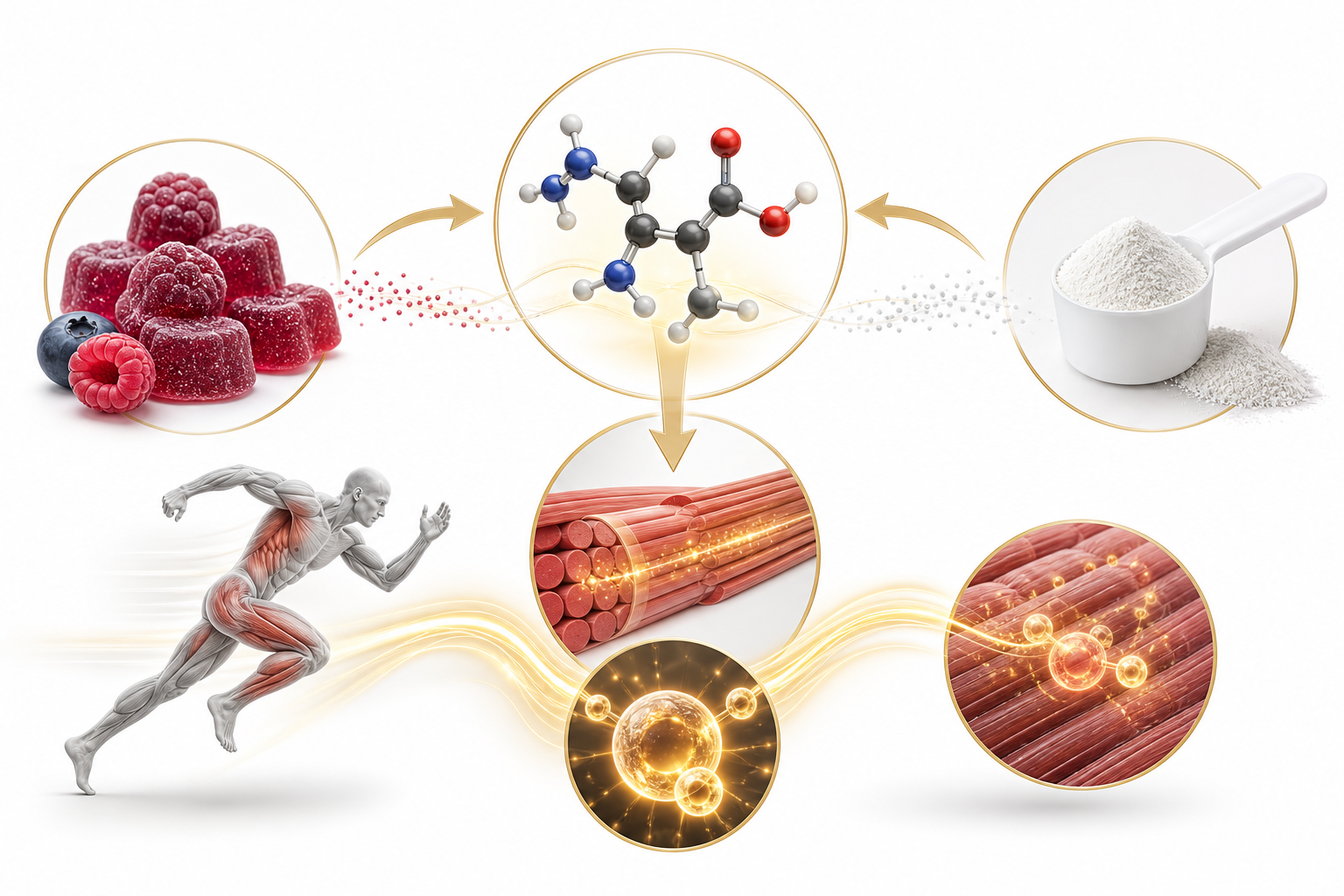
Creatine monohydrate is the reference form because it has extensive evidence, broad availability, and a strong value profile. A review addressing common creatine questions concluded that creatine monohydrate remains the most effective form for increasing high-intensity exercise capacity and lean body mass during training, while claims that alternative forms are superior are not supported by strong evidence [2].
However, gummies create an additional quality question: has the finished product been tested to verify that its stated creatine amount remains present through manufacturing and shelf life? Creatine stability depends on factors including moisture, acidity, temperature, and time. A properly formulated gummy is not the same as leaving creatine powder in an acidic drink, but potency verification is still a meaningful signal when evaluating the finished format [2].
Results also depend on what happens outside the supplement. Resistance training, progressive overload, adequate energy and protein intake, recovery, and time determine much of the outcome. AIDEVI's existing guide to deciding whether to gain muscle or lose fat first can help place supplements inside a broader body-composition plan. Creatine supports training; it does not replace training.
How should you compare the cost of gummies and powder?
Bottle price is a weak comparison because products can provide very different total amounts of creatine. Calculate cost per gram by finding the total verified grams in the package, then dividing the package price by that total. For example, multiply grams per serving by servings per container. This method exposes whether an inexpensive-looking bottle actually provides a small amount of creatine.
Powder typically has the advantage because a plain creatine monohydrate product is simpler to manufacture and can contain many grams in a compact container. Gummies include flavor, texture, packaging, and chewable-format costs. That higher cost may still be rational if the alternative is purchasing powder that you repeatedly forget or dislike using. Adherence has practical value, but convenience should be priced consciously.
Compare cost per intended daily serving as well as cost per gram. A lower-dose routine may cost less per day but may not match the amount you intended to use. A larger serving may fit your goal but require more gummies than expected. Avoid stretching a package by taking less than the label simply to make the daily price look better.
When can gummies be worth the premium?
Gummies may be worth considering when mixing powder is the main reason you fail to use creatine consistently, when a portable serving helps an irregular schedule, or when taste makes the routine easier to maintain. They are less compelling when your primary goal is the lowest cost per gram, you want a larger daily amount in one serving, or added sweeteners and gummy ingredients do not fit your preferences.
For active adults comparing a creatine routine with other performance-support conversations, AIDEVI's guide to performance and recovery for athletes offers broader context. Keep each ingredient's evidence and purpose separate rather than assuming more supplements automatically create better training outcomes.
What quality signals should creatine buyers check?
The front label tells a story; the Supplement Facts and quality documents tell you what you are actually buying. Whether choosing gummies or powder, begin with the creatine form, amount per full serving, other ingredients, directions, warnings, storage requirements, and accessible testing information. Vague claims such as “maximum strength” do not substitute for grams and verification.

- Creatine form: Look for a clearly named form such as creatine monohydrate.
- Amount per complete serving: Confirm the grams provided by all gummies or the full scoop serving.
- Servings per container: Use this to calculate total creatine and real daily cost.
- Finished-product testing: Look for specific potency and purity information that can be verified.
- Other ingredients: Review sugars, sweeteners, allergens, flavors, colors, and added active ingredients.
- Storage and warnings: Follow the label and consult a healthcare professional when suitability is uncertain.
The same careful reading used for other supplements applies here. AIDEVI's discussion of ingredient quality and raw-material transparency provides useful context for asking whether identity, potency, sourcing, and finished-product information are specific and verifiable rather than merely decorative.
Also watch for unnecessary certainty. Creatine is well studied, but a finished product still needs transparent labeling and responsible manufacturing. AIDEVI's brand background and educational content about why well-designed evidence matters provide context for evaluating wellness claims without relying on hype.
Which creatine format fits your routine?
Choose powder when you want the lowest likely cost per gram, prefer flexible measuring, regularly mix shakes or drinks, and are comfortable using a scoop accurately. Powder is usually the straightforward choice for experienced users prioritizing dose density and value.
Consider gummies when convenience meaningfully improves adherence, you dislike mixing or powder texture, or you need a portable serving. Confirm that the labeled amount fits your plan and that finished-product potency is supported by credible testing.
Reconsider either purchase when the form is unclear, grams per serving are hidden, the company relies on unsupported superiority claims, or you cannot determine total creatine per package. A transparent product should make a fair comparison possible.
Conclusion
Creatine powder generally offers the simplest path to a larger daily amount and a lower cost per gram. Creatine gummies trade some dose density and value for portability, taste, and an easier no-mix routine. Neither format wins for everyone. Compare the same creatine form, grams per complete serving, finished-product testing, cost per gram, other ingredients, and the likelihood that you will actually use it consistently.
Frequently Asked Questions
Are creatine gummies as effective as powder?
They may serve the same creatine-supplementation purpose when they deliver a verified equivalent amount of the same creatine form and are used consistently. Compare grams per serving and finished-product potency rather than format alone.
Why are creatine gummies more expensive?
Gummies require additional ingredients, manufacturing, flavor development, and packaging. Powder is generally a more concentrated and simpler format, which usually lowers its cost per gram.
Is 2 grams of creatine enough?
Two grams is below the commonly discussed 3–5 gram daily maintenance range, but response and saturation timing vary. Follow the product label and discuss your intended dose with a qualified professional rather than automatically taking additional servings.
Do creatine gummies need third-party testing?
Independent finished-product potency and purity testing is a useful quality signal for any supplement. It is particularly valuable for confirming that a gummy contains the stated amount through manufacturing and shelf life.
Should beginners choose gummies or powder?
Beginners should choose based on clear dosing, quality, budget, and routine fit. Powder usually offers better value; gummies may be easier to use consistently. Neither replaces a structured training and nutrition plan.
References
Individual results may vary. Consult a healthcare professional before starting any new supplement, especially if pregnant, nursing, taking medication, managing a medical condition, or concerned about kidney health.
These statements have not been evaluated by the Food and Drug Administration. This product is not intended to diagnose, treat, cure, or prevent any disease.
