



AIDEVI Fitness Guide
Creatine Gummies and Protein Powder: Can You Take Them Together?
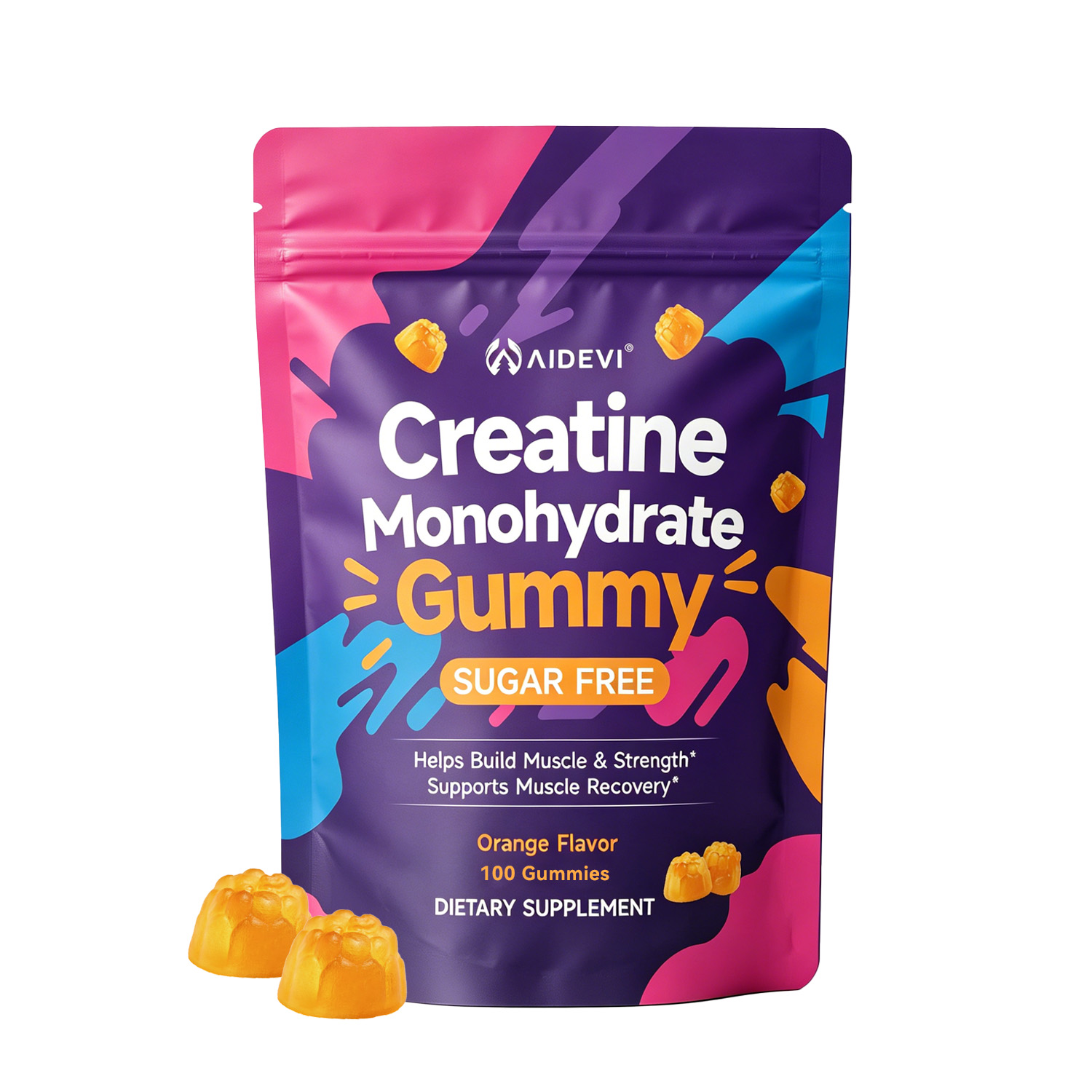
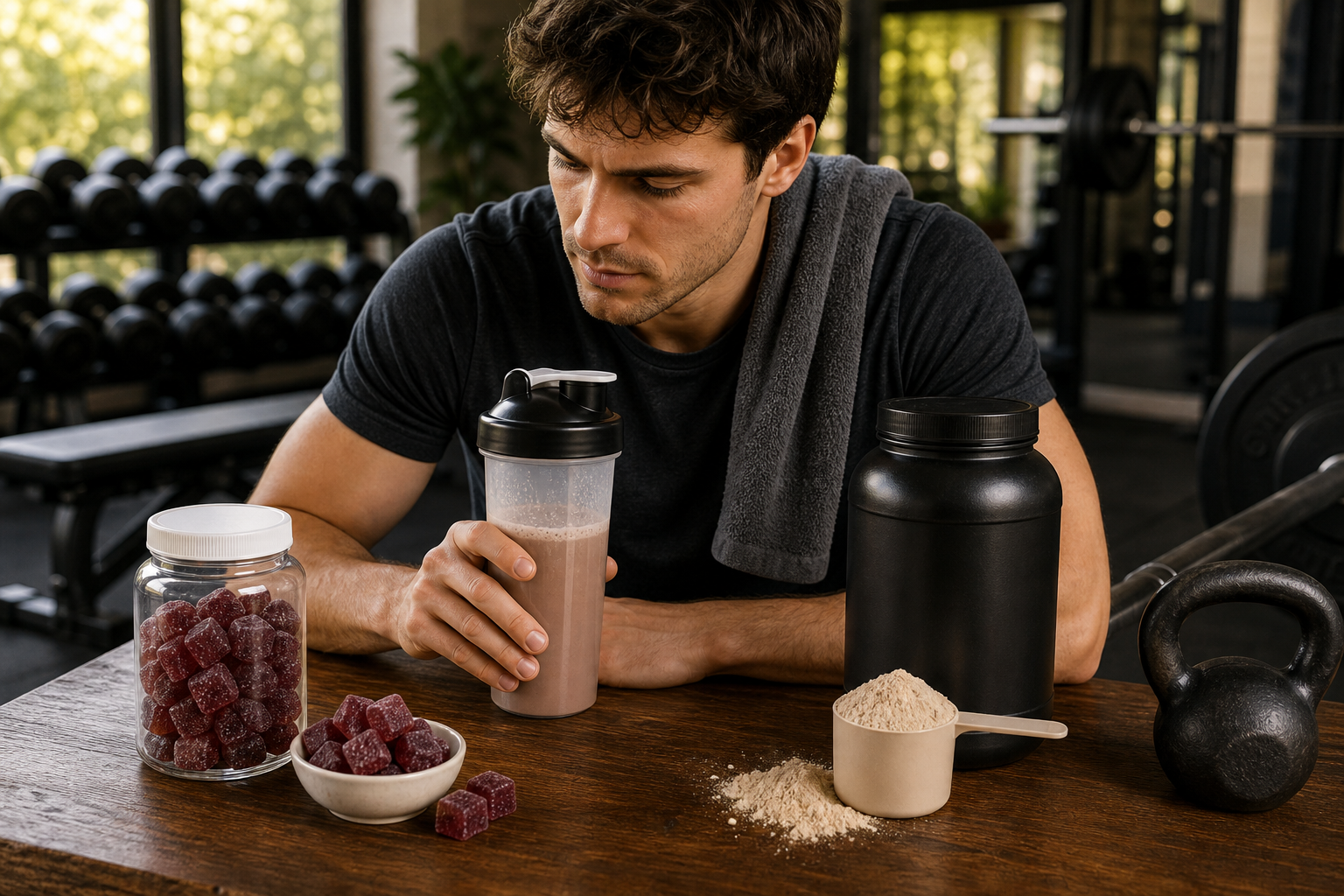
Yes, most healthy adults can take creatine gummies and protein powder on the same day or at the same time. They do different jobs: creatine helps support rapid energy availability during repeated high-intensity exercise, while protein supplies amino acids used to repair and build muscle. Combining them can simplify a routine, but putting them together does not create a special effect that replaces consistent training, adequate food, or clear serving sizes.
- Creatine and protein are complementary, not interchangeable.
- Taking them together is mainly a convenient habit, not a requirement for results.
- Verify the complete creatine serving and use protein powder to help meet an appropriate daily protein target.
- Choose a routine you can repeat on training and rest days without ignoring food quality or digestive comfort.
Content
Can you take creatine gummies and protein powder together?
For most healthy adults, there is no general requirement to separate creatine gummies from a whey, casein, plant, or blended protein powder. You can chew the gummies and drink a protein shake during the same post-workout period, use them with different meals, or connect each one to a separate daily cue. The practical goal is to use each product as directed and make the routine easy enough to maintain.
This pairing makes sense because the products address different limitations. Someone who eats enough protein but uses creatine inconsistently may benefit more from improving creatine consistency. Someone who takes creatine daily but regularly falls short on protein may need to improve meals or use a convenient protein serving. A supplement stack should solve an identified problem, not simply add more containers to a gym bag.
The combination is especially convenient after resistance training, when many people already drink a shake. However, a post-workout window is not the only useful time. Daily habits, total nutrition, and a progressive program matter more than forcing both supplements into the exact same minute. AIDEVI's overview of whether to gain muscle or lose fat first can help place a supplement routine inside a clearer training and nutrition goal.
What does creatine do compared with protein?
Creatine helps increase the availability of creatine and phosphocreatine in muscle. That system helps regenerate adenosine triphosphate, or ATP, during brief, demanding efforts such as sprinting, jumping, and hard resistance-training sets. Creatine monohydrate is widely studied for supporting high-intensity exercise capacity and training adaptations when combined with an appropriate program [1].
Protein has a different role. Dietary protein provides essential amino acids that the body uses for muscle protein synthesis and many other functions. Protein powder is simply a convenient food-derived way to increase protein intake when regular meals do not fully cover a person's needs. Evidence indicates that protein supplementation can improve gains in muscle size and strength during prolonged resistance training, particularly when it helps people reach an effective total intake [2].
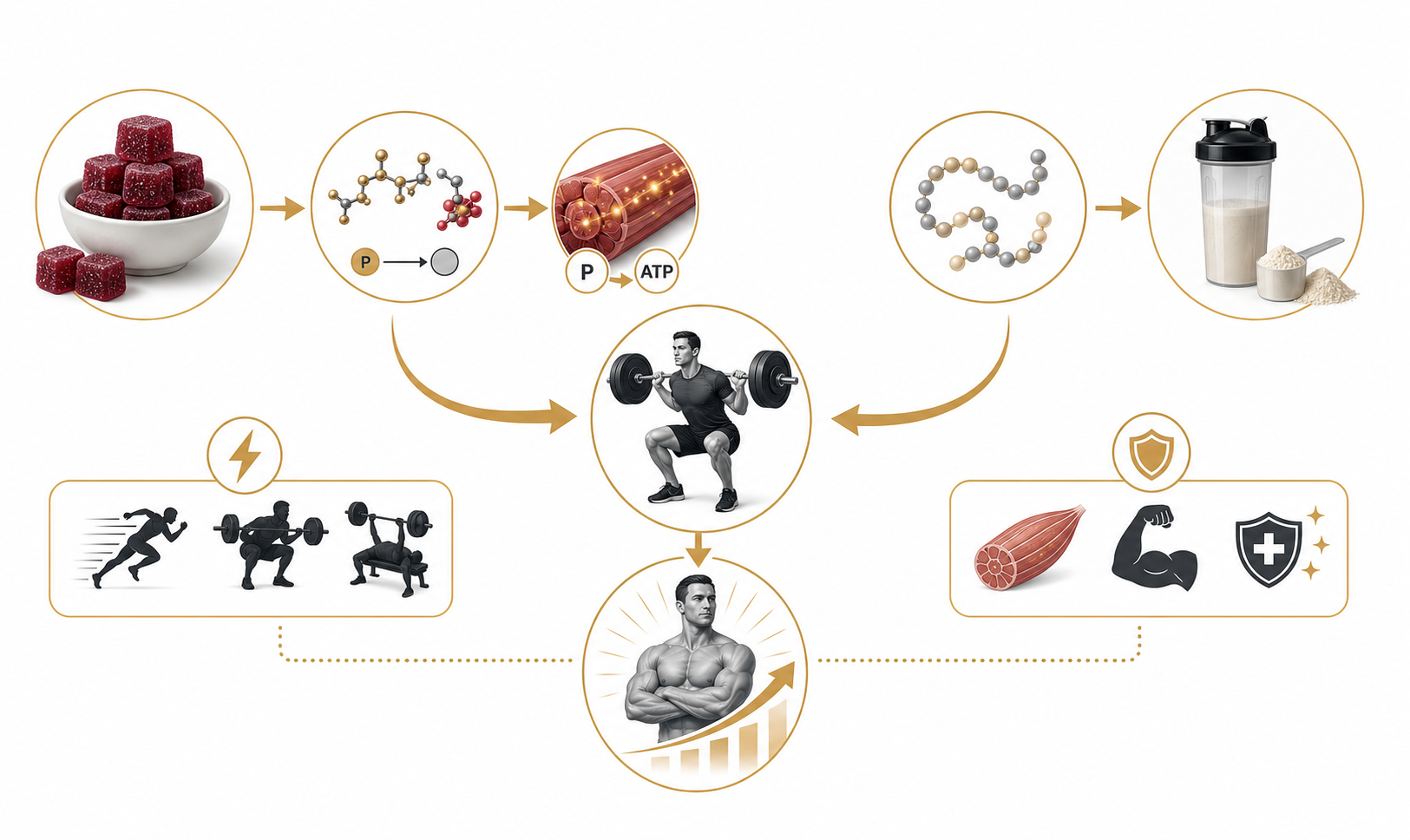
| Question | Creatine Gummies | Protein Powder |
|---|---|---|
| Primary role | Supports the phosphocreatine energy system used during repeated high-intensity efforts | Provides amino acids and helps increase total daily protein intake |
| Main decision | Does the complete serving clearly disclose the creatine form and amount? | Does it help fill a real protein gap while fitting calories and dietary needs? |
| What it does not replace | Protein-rich food, sufficient calories, sleep, or progressive training | Creatine consistency, a balanced diet, or a well-designed training program |
| Timing priority | A repeatable daily routine | Total daily intake distributed in a practical way |
Because the roles differ, it is inaccurate to ask whether protein is “better than” creatine without naming the problem. Protein cannot substitute for creatine's effect on muscle creatine stores, and creatine does not provide the amino acids needed to meet protein requirements. A well-built routine may include both, only one, or neither, depending on diet, goals, training, budget, and preferences.
Does combining creatine and protein improve results?
Using both can support a muscle-building plan because each addresses a different part of that plan. The useful combination is not a chemical shortcut created by chewing gummies beside a shake. It is the broader combination of consistent creatine intake, sufficient protein, progressive resistance training, adequate energy intake, and recovery. Removing those foundations and keeping only the supplements is unlikely to produce the result people expect.
Research has examined creatine consumed with carbohydrate, protein, or both. Some combinations may influence creatine retention, but the practical advantage must be weighed against the extra calories and the fact that consistent creatine use remains central [1]. You do not need to add a large shake or high-sugar meal solely to make creatine “work.” Choose the protein serving because it helps your nutrition plan, not because the creatine gummy requires it.
Results also depend on expectations. Creatine is not a stimulant, so many users do not feel an immediate surge after one serving. Protein powder is not automatically muscle-building when it merely adds protein beyond what a person needs while training and recovery remain unchanged. AIDEVI's discussion of the science behind supplement benefits offers a useful framework: judge an ingredient by the evidence, then judge the product and routine by whether they deliver that ingredient appropriately.
When should you take creatine gummies and protein powder?
Take creatine gummies at a time you can remember consistently, following the product directions. Some people connect them to breakfast, a pre-workout routine, or their post-workout shake. Others use a daily phone reminder. Creatine's value is related to building and maintaining muscle creatine stores, so a repeatable schedule generally matters more than chasing a perfect minute before or after training.
Use protein powder when it conveniently fills a gap. That may be after training, at breakfast, between meals, or in an evening snack. The International Society of Sports Nutrition emphasizes both total daily protein and sensible distribution across the day for exercising individuals [3]. A shake can be useful, but it does not need to replace every whole-food protein source.
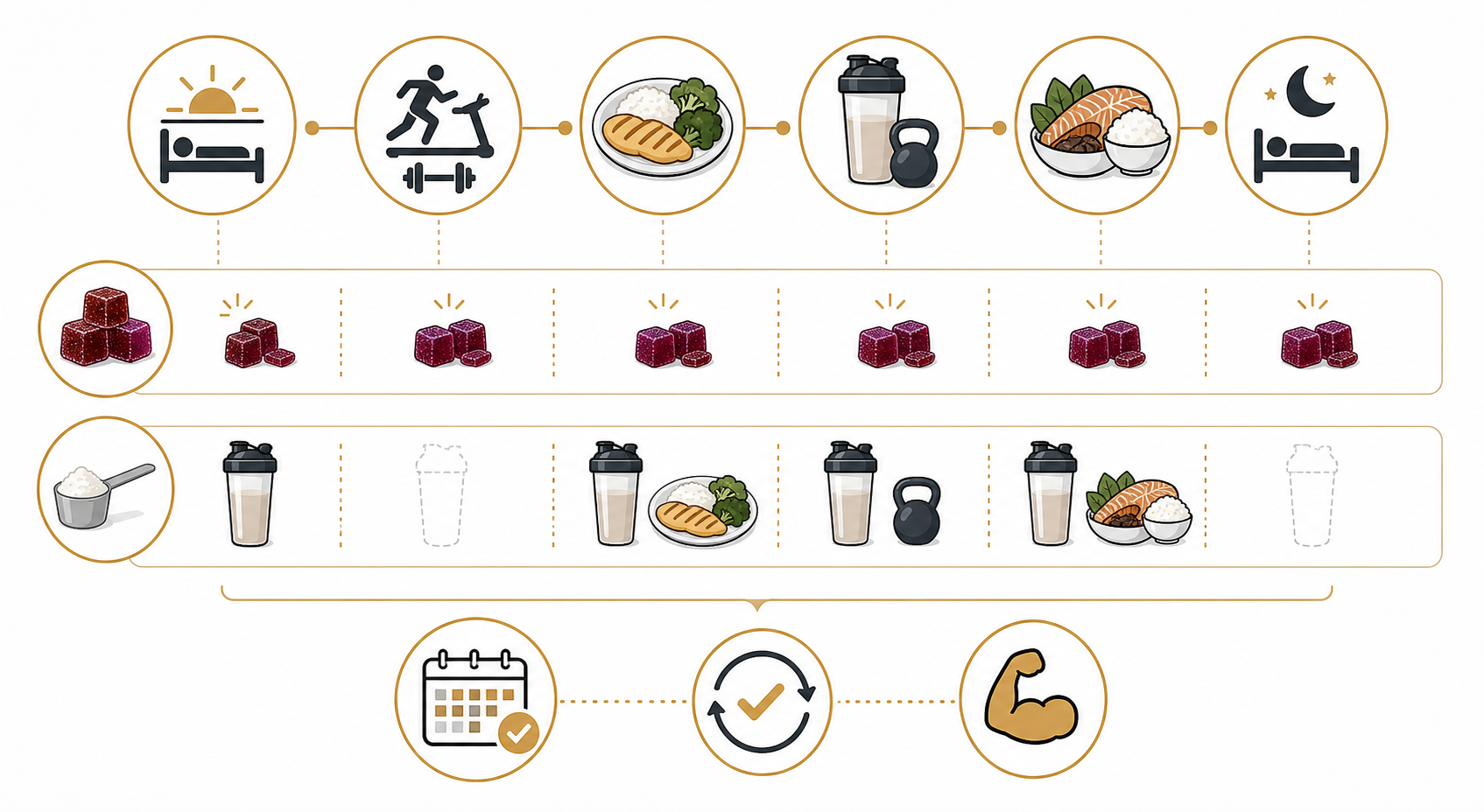
On rest days, the same logic applies. Muscles are still adapting to prior training, and creatine stores are not managed only on workout days. Continue the labeled creatine routine unless a healthcare professional advises otherwise, and meet protein needs through meals and supplements as appropriate. Rest-day nutrition does not need to look identical to a training day, but randomly skipping the habits that support the overall plan can make the routine less effective.
If taking both at once causes fullness or digestive discomfort, separate them. For example, use the gummies with breakfast and drink the shake after training. Timing flexibility is a strength, not a failure. Broader recovery factors also deserve attention; AIDEVI's guide to muscle recovery and performance discusses why exercise adaptation is larger than any single post-workout product.
How do you build a simple post-workout stack?
Begin with the problem you are trying to solve. If you forget creatine, create one reliable cue. If you struggle to eat enough protein after an evening session, prepare a shake in advance. If your meals already provide enough protein, you may not need protein powder every day. Simplicity comes from removing unnecessary decisions rather than combining every product at the same time.
| Routine | How It Works | Best Fit |
|---|---|---|
| One post-workout cue | Use the labeled gummy serving and a protein shake after training | People who prefer one simple gym-day ritual |
| Separate daily cues | Use creatine with a consistent meal; use protein only when meals leave a gap | People with variable workout times |
| Food-first routine | Use creatine consistently and prioritize protein-rich meals; keep powder as backup | People who usually meet protein needs through food |
Track the routine long enough to evaluate it fairly. Useful measures include whether you completed planned sessions, progressed repetitions or load, recovered between workouts, met nutrition targets, and tolerated the products. Daily scale weight alone can be misleading because creatine may increase water held within muscle, while food, sodium, and hydration create normal fluctuations. Creatine-related water retention is often misunderstood and should not automatically be treated as unwanted fat gain [4].
Keep the stack proportionate to your goal. Beginners often gain more from learning consistent technique, following a manageable resistance-training program, eating enough total food and protein, and sleeping regularly than from adding multiple supporting ingredients. The same principle applies to experienced lifters: additions should earn their place by solving a measurable need.
What should you check before combining them?
First, read both labels in full. For creatine gummies, identify the creatine form, amount in the complete serving, gummies per serving, and other active ingredients. For protein powder, check protein per serving, serving size, protein source, calories, sweeteners, allergens, and any added performance ingredients. Two apparently simple products can overlap when the protein powder includes creatine, amino acids, stimulants, vitamins, or minerals.
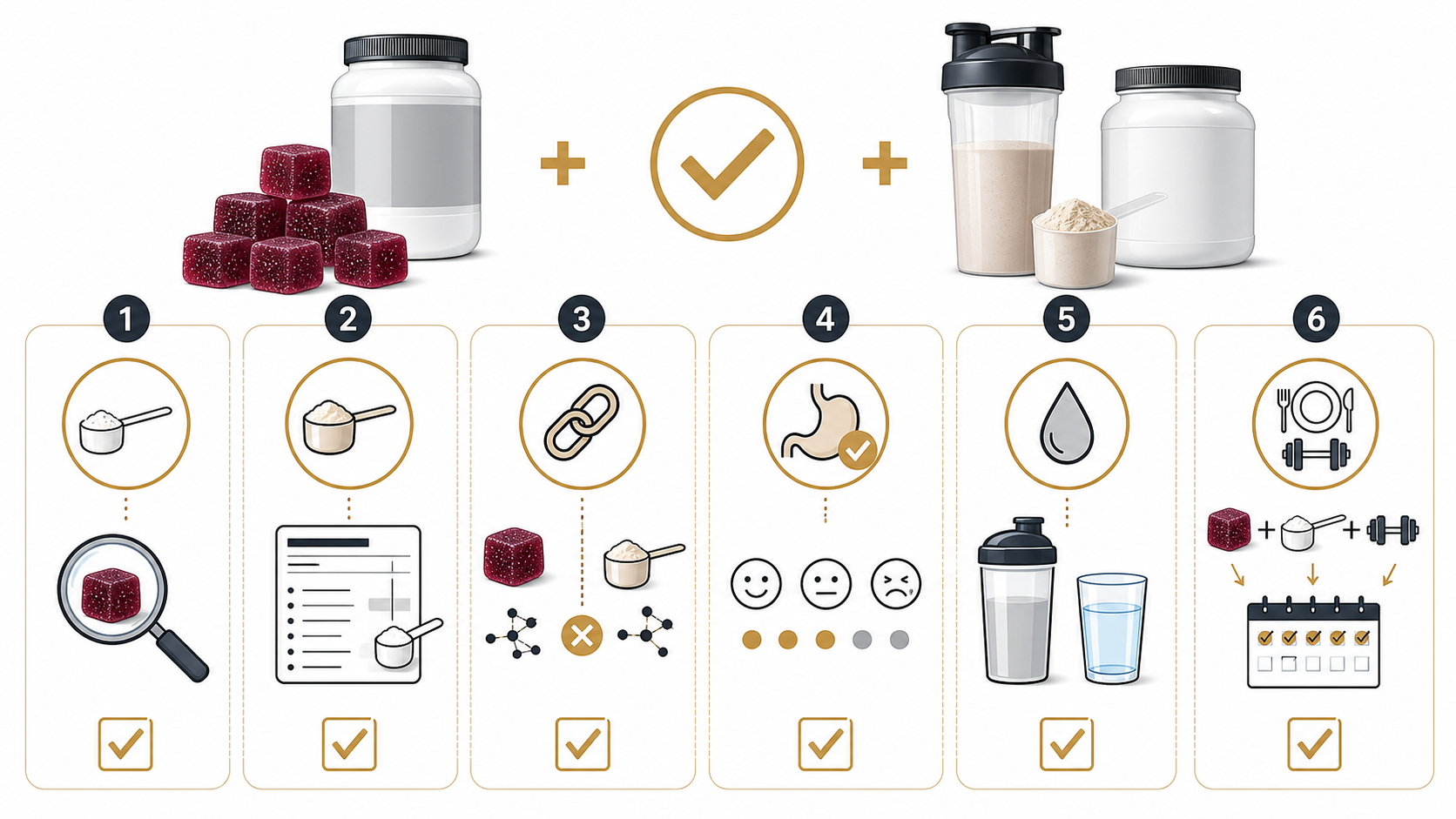
- Confirm serving sizes. Do not confuse creatine per gummy with creatine per complete serving, or a protein scoop with a guaranteed universal serving.
- Look for ingredient overlap. A blended protein product may already contain creatine or other performance ingredients.
- Consider tolerance. Sweeteners, sugar alcohols, dairy proteins, large shakes, or taking several products together can cause discomfort for some people.
- Account for the full diet. Protein shakes and gummies may add calories, sugars, or sweeteners that should fit the broader plan.
- Use transparent products. Prefer labels that make active ingredients and amounts easy to identify, with relevant quality information available.
- Evaluate consistency. A theoretically ideal stack that you rarely use is less practical than a clear routine you can sustain.
Do not assume an added ingredient is useful merely because it appears on the front label. Its amount, form, purpose, and evidence matter. AIDEVI's explanation of why well-designed studies matter can help you separate plausible marketing from evidence that applies to a real formula.
People who are pregnant or nursing, under 18, taking medication, managing a medical condition, or concerned about kidney health should consult a qualified healthcare professional before starting or combining supplements. Anyone with a milk, soy, or other food allergy should also verify the protein source and allergen statement carefully. Stop using a product and seek appropriate advice if you experience an unexpected reaction.
Finally, buy from a company that communicates limits as clearly as benefits. Responsible supplement education should not guarantee muscle gain or imply that a product replaces exercise and food. You can learn more about AIDEVI's wellness perspective and quality-focused approach on the AIDEVI About page.
A practical combination, when each product has a purpose
Creatine gummies and protein powder can be taken together, and doing so may make a post-workout routine easier to remember. The most important distinction is that they solve different problems. Creatine supports a rapid energy system involved in demanding exercise, while protein helps supply amino acids and meet daily protein needs. One does not replace the other.
Build the routine from your training goal and diet: verify the labeled creatine serving, use protein powder only where it adds practical value, check overlapping ingredients, and adjust timing for comfort and consistency. That approach is less dramatic than searching for a perfect stack, but it is far more useful for making informed decisions over time.
Frequently Asked Questions
Can I chew creatine gummies and then drink a protein shake?
Yes, most healthy adults can use them in that order. Follow both labels, check for overlapping ingredients, and separate them if taking both together causes digestive discomfort.
Do I need protein powder for creatine to work?
No. Protein powder is not required for creatine to support muscle creatine stores. It is useful when it helps you meet protein needs conveniently. You can use creatine with a normal meal pattern that already provides sufficient protein.
Should I take both immediately after a workout?
You may, but immediate post-workout use is not mandatory. Consistent creatine intake and sufficient total daily protein are usually more important than taking both at one exact time.
Can I take creatine gummies with whey protein?
Generally, yes. Check the whey product for added creatine or other performance ingredients, and verify that dairy fits your dietary needs and tolerance.
Can I take creatine gummies with plant protein?
Generally, yes. Choose a plant protein that fits your diet and helps meet your overall protein target. The creatine still has a separate role, so confirm its complete labeled serving.
Should I take creatine and protein on rest days?
A consistent creatine routine generally continues on rest days. Protein needs also continue, although powder is only necessary when it helps fill a dietary gap. Follow product directions and professional guidance appropriate to you.
References
- [1] International Society of Sports Nutrition position stand: safety and efficacy of creatine supplementation in exercise, sport, and medicine
- [2] Protein supplementation and resistance training adaptations: systematic review and meta-analysis
- [3] International Society of Sports Nutrition position stand: protein and exercise
- [4] Common questions and misconceptions about creatine supplementation
Individual results may vary. Consult a healthcare professional before starting any new supplement, especially if pregnant, nursing, taking medication, or managing a medical condition.
These statements have not been evaluated by the Food and Drug Administration. This product is not intended to diagnose, treat, cure, or prevent any disease.
