



AIDEVI Training Nutrition Guide
Best Creatine Format for People Who Hate Mixing Powder
The best creatine format for someone who hates mixing powder is the one with a clear creatine amount, a simple serving routine, and a format you can repeat without negotiating with yourself every day. Powder is popular because it can be simple and cost-efficient, but it is not automatically the best choice for a person who dislikes scoops, clumps, shaker bottles, travel mess, or gritty texture. For that person, gummies, capsules, tablets, or ready-to-drink options may be easier to maintain, as long as the label is transparent and the format does not hide weak dosing behind convenience.

- If powder makes you inconsistent, the practical winner may be a no-mix format with a label you can understand.
- Convenience should not replace basic checks: creatine form, serving amount, servings per container, added sugar, and testing signals.
- Gummies can be helpful for habit formation, but they deserve the same scrutiny as powders or capsules.
- Your training plan, protein intake, sleep, and recovery still do more of the heavy lifting than format preference.
Content
Why does creatine powder fail some routines?
Creatine powder usually fails for ordinary reasons, not mysterious ones. A person forgets the scoop, dislikes the texture, hates washing shaker bottles, travels often, trains before work, or simply finds the ritual annoying enough that it becomes an every-other-day habit. Since creatine is usually discussed as a consistency-based supplement rather than a one-time stimulant, that friction matters. The International Society of Sports Nutrition describes creatine as one of the most studied sports nutrition ingredients, especially in the context of repeated high-intensity exercise and training support [1]. But even a well-studied ingredient is only useful if the person can follow the routine.
This is where many buyers ask the wrong first question. They ask, "What is the most powerful creatine?" when the better question is, "Which format removes the thing that keeps me from taking it consistently?" For someone who already enjoys mixing powder, powder may remain the easiest option. For someone who avoids it, a no-mix format can reduce the daily decision cost. That is similar to the broader supplement principle in AIDEVI's guide to the science behind supplement benefits: ingredients, evidence, and real-world use have to meet in the same routine.
The catch is that convenience can make labels harder to compare. A gummy, capsule, tablet, or drink may be easy to use, but the buyer still needs to know what form of creatine is included, how much is in a serving, how many servings are in the container, and whether the product adds ingredients that change the fit. If the format solves the mixing problem while creating a label-transparency problem, it has not really solved the buyer's problem.

Which no-mix creatine formats are worth comparing?
The main alternatives to creatine powder are gummies, capsules, tablets, ready-to-drink shots, and creatine included inside broader performance formulas. Each can work as a routine tool, but each changes the tradeoff. Gummies are often chosen for taste, portability, and ease. Capsules and tablets are tidy and familiar, but some people dislike swallowing several pills. Drinks may feel effortless, yet shipping, storage, flavor systems, and price can make them less practical. Multi-ingredient formulas can be convenient, but they may blur the line between creatine and unrelated actives.
A practical buyer should compare formats on four dimensions: dose clarity, routine fit, cost per meaningful serving, and label simplicity. The most convenient product is not automatically the most useful product if the serving amount is unclear or if the format nudges you to use it only on exciting workout days. Creatine is not the same category as a pre-workout that people choose for an acute feeling. If your broader goal is muscle gain, AIDEVI's article on whether to gain muscle or lose fat first is a helpful reminder that the supplement format should serve the training goal, not distract from it.
| Format | Best fit | Watch-out |
|---|---|---|
| Gummies | People who need taste, portability, and a low-friction habit. | Check creatine amount, serving count, sugar, and testing claims. |
| Capsules or tablets | People who want no flavor and easy travel. | Serving size may require multiple pieces. |
| Ready-to-drink | People who value grab-and-go convenience. | Often higher cost and more packaging. |
| Multi-ingredient formula | People who intentionally want a broader performance stack. | Harder to isolate what is helping or bothering you. |
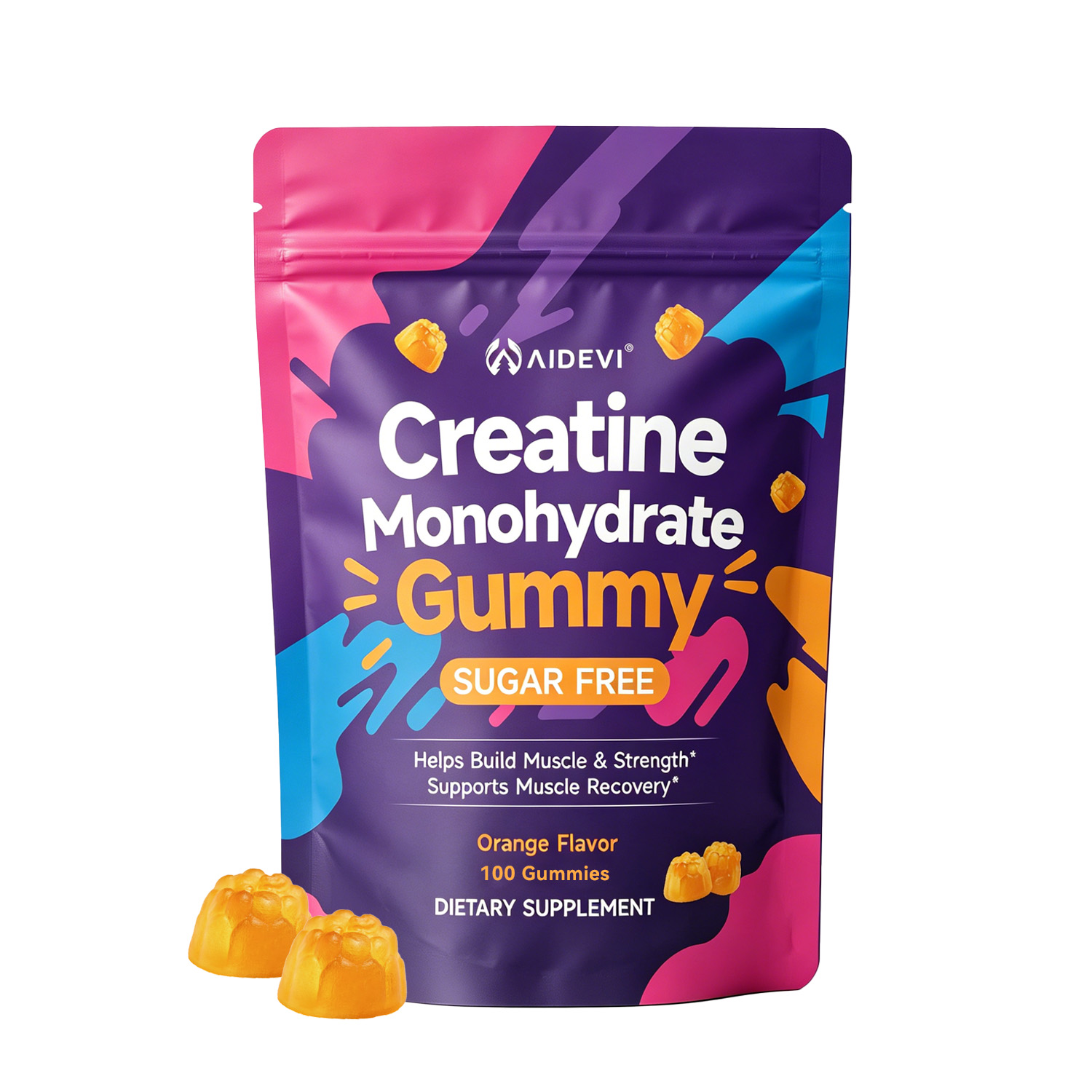
For people who dislike powder, gummies are often the most emotionally appealing option because they feel less like a task. That is not a small detail. Habit design matters. Still, a gummy should be judged by the same standards as any other supplement: transparent facts, realistic claims, clear serving instructions, and a routine that does not require guesswork.
What should you check before choosing a creatine without powder?
Start with the Supplement Facts panel. Identify the creatine ingredient, the amount per serving, the serving size, and servings per container. Then look for added ingredients that affect your decision: sugar alcohols, caffeine, amino acids, electrolytes, flavors, sweeteners, or botanicals. None of these are automatically bad, but they change what the product is. A simple creatine gummy and a stimulant-containing performance gummy are not the same routine decision.
Next, compare the label to the marketing. If the front panel sounds dramatic but the facts panel is vague, slow down. FDA consumer guidance explains that dietary supplements are regulated differently from drugs and that consumers should read labels carefully and talk with healthcare professionals when appropriate [3]. For a practical view of why evidence quality matters, AIDEVI's article on well-designed supplement research is a useful companion read.
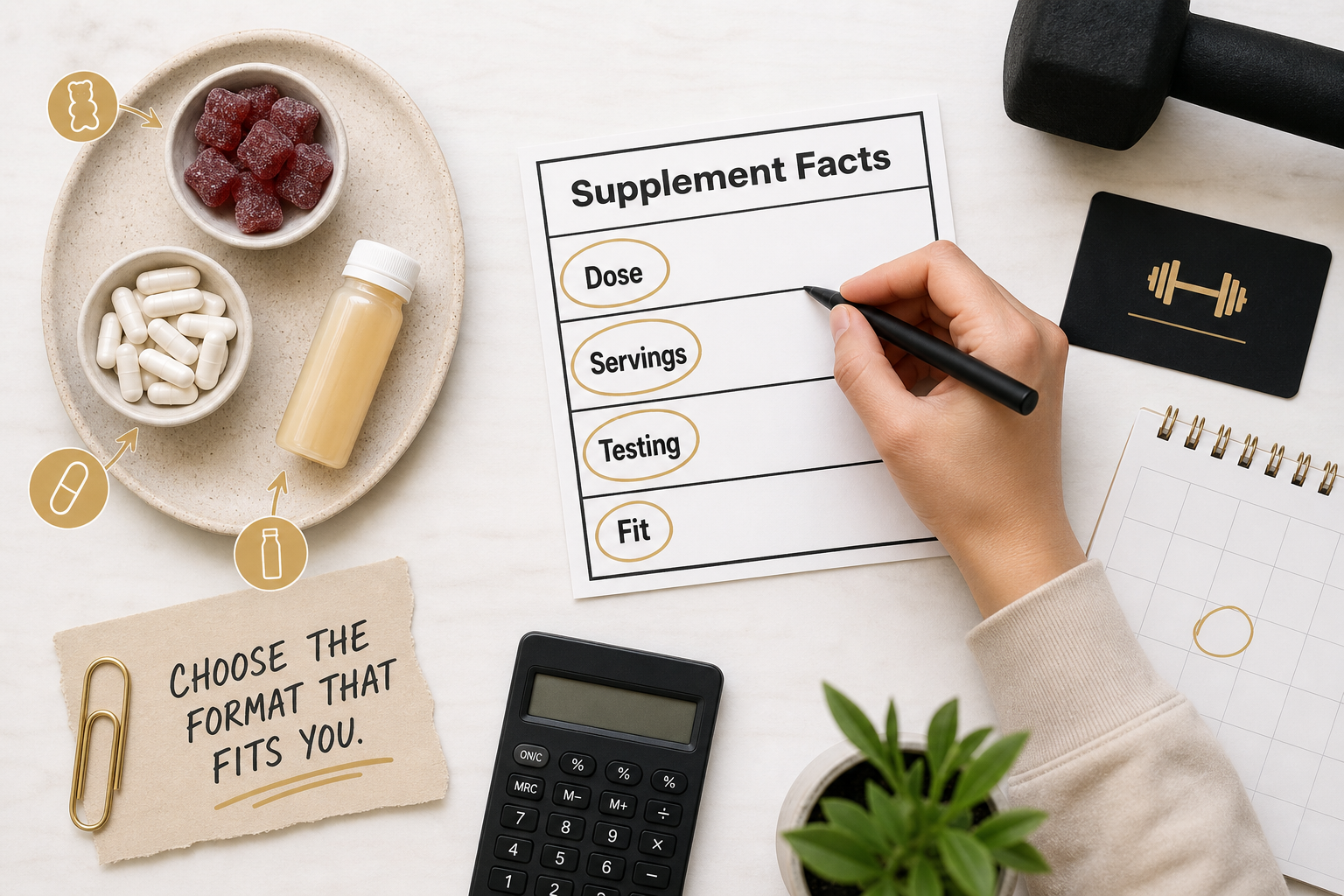
A strong no-mix creatine choice usually has five traits. It tells you the creatine form. It states the amount in a way you can compare. It makes daily use realistic. It avoids hiding behind a proprietary-feeling blend when the buyer mainly wants creatine. It does not claim to replace training, protein, sleep, or recovery. Scientific reviews have also addressed common creatine misconceptions, including broad safety discussions in healthy populations, but personal context still matters [2]. If you have kidney disease, are taking medication, are pregnant or nursing, or have a medical concern, ask a qualified clinician before starting.
How do you build a creatine routine you will actually keep?
Build the routine around the moment you already repeat. Do not attach creatine to a perfect version of your life. If you always leave for the gym from your car, keep the product where the label allows and where you will remember it. If you train after work, pair it with the snack or water bottle you already use. If you forget supplements at night, do not make nighttime the plan. The best format is often the one that sits naturally beside an existing cue.
Use a two-week test. Follow the label, keep the rest of your routine stable, and track only a few items: Did you take it as planned? Did it fit digestion and appetite? Did it make travel or gym preparation easier? Did the cost feel sustainable? Did it support the broader training pattern you care about? This is not a clinical trial, but it protects you from buying a product because the first week felt novel. AIDEVI's perspective on data-driven supplement innovation maps well to this personal habit check: clearer inputs make better decisions.

Do not judge creatine by whether you feel a dramatic effect within minutes. Many people confuse "I felt something" with "this is working." Creatine is usually chosen to support a longer training routine, not to create the same acute sensation as caffeine. If your workouts feel flat, also review sleep, food timing, hydration, program load, and recovery. AIDEVI's guide to muscle recovery and performance reinforces the bigger point: supplements work inside a system, not outside it.
Who should consider gummies, capsules, or drinks instead of powder?
Consider gummies if your main barrier is taste, texture, mess, or remembering a powder routine. Gummies can turn a supplement from a chore into a repeatable cue, especially for busy recreational lifters, new gym users, travelers, and people who share a kitchen where shaker cups disappear. The tradeoff is that you must be stricter about label reading because a pleasant format can make weak information feel less obvious.
Consider capsules or tablets if you dislike sweetness and want a format that disappears into a broader supplement routine. This can be useful for people who already take capsules comfortably. The tradeoff is serving burden. If the serving requires more pieces than you realistically want to swallow, the format may not be as convenient as it looks.
Consider drinks if you value grab-and-go convenience and do not mind paying for packaging and flavor. This may suit commuters or people who train away from home. Still, check whether you are buying creatine, a flavored beverage, or a broader performance product with ingredients you did not intend to add. People who want a whole-training view can also read AIDEVI's athlete performance and recovery guide for a reminder that preparation, recovery, and consistency are linked.
Skip no-mix formats if your only reason is trend pressure and you are already happy with powder. There is no prize for choosing the newest format. The aim is not to make creatine more complicated; it is to remove the specific barrier that prevents consistent use.
What mistakes should powder-haters avoid?
The first mistake is buying the tastiest option without calculating what a real serving means. A gummy can be convenient and still be a poor value if the serving does not match the buyer's expectations. The second mistake is assuming "no powder" means "no thinking." You still need to read the facts panel, understand the serving, and compare formats honestly. The third mistake is treating creatine as a substitute for protein, training progression, or recovery. It is one tool, not the plan.
The fourth mistake is stacking too many new products at once. If you add creatine gummies, a pre-workout, a new protein powder, and a harder program in the same week, you will not know what caused a change in digestion, sleep, appetite, or training confidence. Introduce one change at a time. Keep notes. Stay boring enough to learn something. That is often where the strongest real-world progress begins.
Finally, do not outsource your decision to a category name. "Gummy," "capsule," "drink," and "powder" are delivery formats. The real question is whether the product gives you a transparent creatine serving in a form that fits your day. AIDEVI's science-led wellness philosophy is useful here because it points back to clear ingredients, practical quality thinking, and routines people can actually understand.
Conclusion
If you hate mixing powder, the best creatine format is not the one that wins an abstract debate. It is the one that gives you clear label information and removes enough friction that you can use it consistently. Gummies may be the easiest habit format for many recreational fitness users, capsules may suit people who dislike sweetness, and drinks may work for commuters. Judge each option by dose clarity, serving practicality, label transparency, cost, and how well it supports your actual training routine.
Frequently Asked Questions
Is creatine without powder effective?
It can be, if the product provides a clear creatine amount, transparent serving instructions, and a format you can use consistently. The delivery format matters less than label clarity and routine fit.
Are creatine gummies better than powder?
They are better for some people and worse for others. Gummies may improve consistency for people who dislike powder, but powder may be simpler or more economical for people who do not mind mixing.
Should I choose capsules if I do not like sweet supplements?
Capsules or tablets can be a good no-flavor option, as long as the serving size is realistic for you and the label makes the creatine amount easy to understand.
Can I take creatine on rest days?
Many creatine routines emphasize consistency rather than workout-only use, but follow your product label and ask a healthcare professional if you have personal medical questions.
What if creatine upsets my stomach?
Stop and review serving size, timing, added ingredients, and whether you introduced multiple products at once. Seek professional guidance for persistent or concerning symptoms.
References
- [1] International Society of Sports Nutrition position stand: safety and efficacy of creatine supplementation in exercise, sport, and medicine.
- [2] Common questions and misconceptions about creatine supplementation: what does the scientific evidence really show?
- [3] U.S. Food and Drug Administration: Questions and Answers on Dietary Supplements.
Individual results may vary. Consult a healthcare professional before starting any new supplement, especially if pregnant, nursing, taking medication, or managing a medical condition. These statements have not been evaluated by the Food and Drug Administration. This product is not intended to diagnose, treat, cure, or prevent any disease.
