



AIDEVI Science & Wellness Guide
Why NAD+ Declines With Age: Sirtuins, PARP & DNA Repair Explained
By AIDEVI Editorial Team | Last Updated: August 2026 | Healthy Aging Biology
NAD+ decline with age is best understood as a changing balance between production, recycling, and consumption, not as one universal switch that turns off at a particular birthday. Research points to lower activity of the NAMPT salvage pathway in some tissues, greater NAD+ use by enzymes such as PARPs and CD38, and the effects of DNA damage and chronic inflammation. Sirtuins add another layer: they depend on NAD+ to regulate cellular responses, so a smaller NAD+ pool can limit their activity.
Age-related NAD+ change reflects both less recycling and more demand. NAMPT helps rebuild NAD+, while PARP enzymes consume it during DNA damage responses and CD38 can consume it during immune and inflammatory signaling. Sirtuins also use NAD+ as a co-substrate. These pathways are biologically connected, but most detailed evidence comes from cells and animal models, so they should not be presented as proof that NAD+ supplements reverse human aging.
Content
Is NAD+ decline with age universal?
NAD+ is found in every living cell and exists in different pools inside the nucleus, cytosol, mitochondria, and other compartments. That means a claim about “NAD+ levels” is incomplete unless it identifies the tissue, sample, measurement method, and age group. Blood NAD+ is not a perfect stand-in for NAD+ inside muscle, liver, brain, or skin.
Many aging studies report lower NAD+ or altered NAD-related metabolites in particular tissues and model organisms. Other analyses caution that the pattern is not equally demonstrated in every tissue or every human cohort. Health status, physical activity, body composition, medications, inflammation, and technical differences in sample handling can all affect the result [1]. The scientifically honest summary is that age-related NAD+ dysregulation is a strong research theme, while the size and timing of decline may vary by tissue and person.
This nuance improves the question. Instead of asking whether everyone “runs out” of NAD+ after 40, ask which NAD+ pathway is changing, where it is changing, and whether that change is a cause, consequence, or marker of another process. AIDEVI’s guide to what NAD+ does in cellular energy provides a useful foundation for that conversation.
What does NAD+ do inside a cell?
NAD+ has two broad jobs. First, it participates in redox chemistry, moving between NAD+ and NADH as cells break down nutrients and transfer electrons. This is central to glycolysis, the citric acid cycle, and oxidative phosphorylation. The balance between NAD+ and NADH helps describe the cell’s metabolic state; it is not simply a “fuel tank” that can be topped up without regard to context.
Second, NAD+ is consumed as a substrate by signaling and repair enzymes. Sirtuins use NAD+ during deacetylation and related reactions. PARP enzymes use NAD+ to build ADP-ribose signals at sites of DNA damage. CD38 and related enzymes also cleave NAD+ while generating signaling molecules. This is why researchers describe NAD+ homeostasis as a balance between synthesis, salvage, and consumption rather than a single production pathway.
For readers who want the chemistry of the redox pair, see AIDEVI’s explanation of the NAD+ to NADH cycle. The article’s practical takeaway is simple: increasing one metabolite does not guarantee that every compartment, enzyme, or energy pathway responds in the same way.
How do sirtuins depend on NAD+?
Sirtuins are a family of NAD+-dependent enzymes. They help regulate protein acetylation, gene expression, stress responses, mitochondrial function, and aspects of DNA damage signaling. Their activity depends on available NAD+ as well as the cell’s other conditions, including the concentration of nicotinamide and the target proteins being modified.
When NAD+ availability falls, some sirtuin reactions may become more limited. That does not mean every sirtuin stops working or that adding NAD+ automatically “activates longevity.” Sirtuins are not a single switch, and their effects depend on the tissue and physiological state. The NAD+ and sirtuin relationship is therefore a plausible mechanism under study, not a clinical guarantee. AIDEVI’s overview of the role of sirtuins in longevity research can be read alongside this more cautious framework.
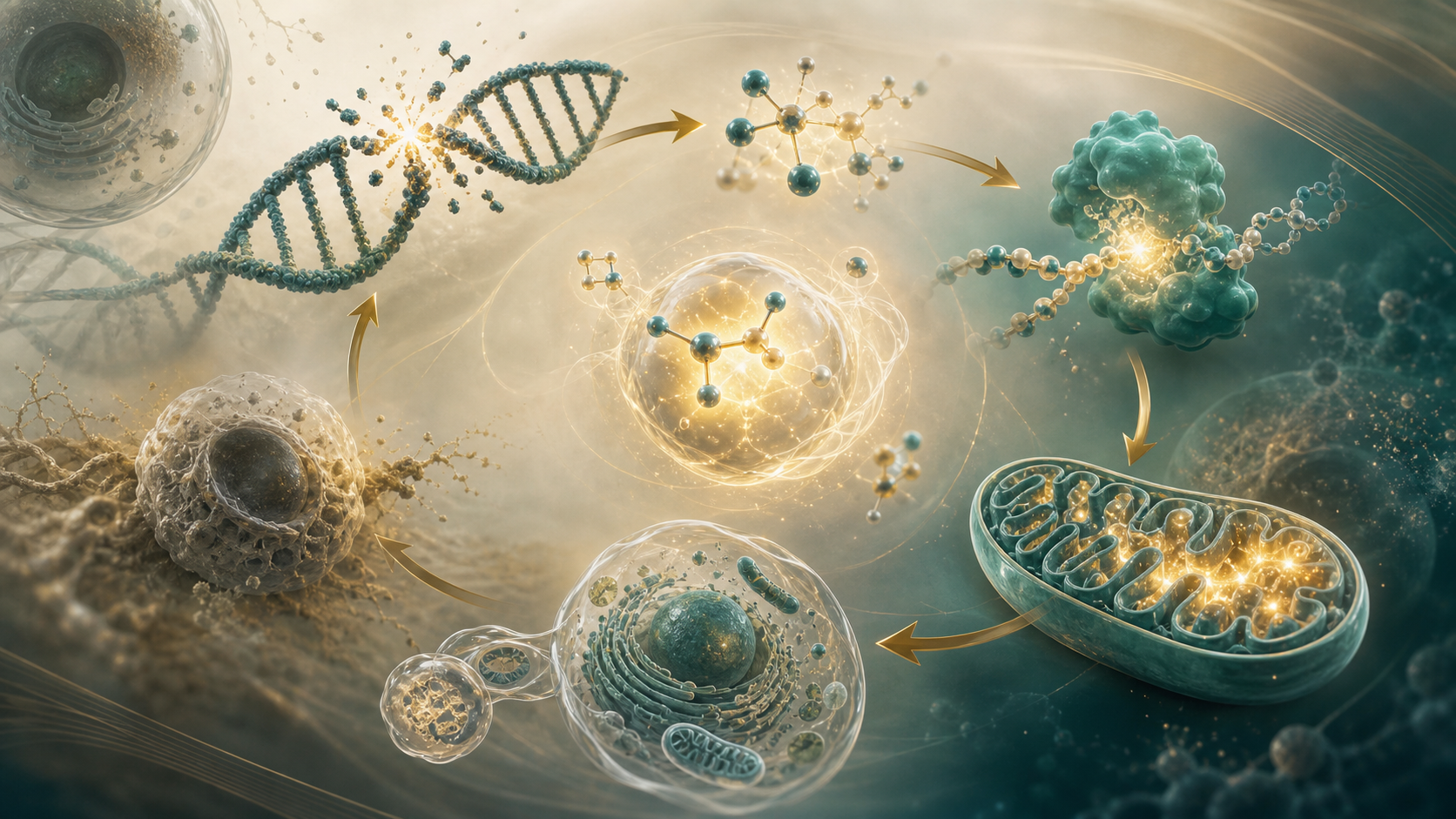
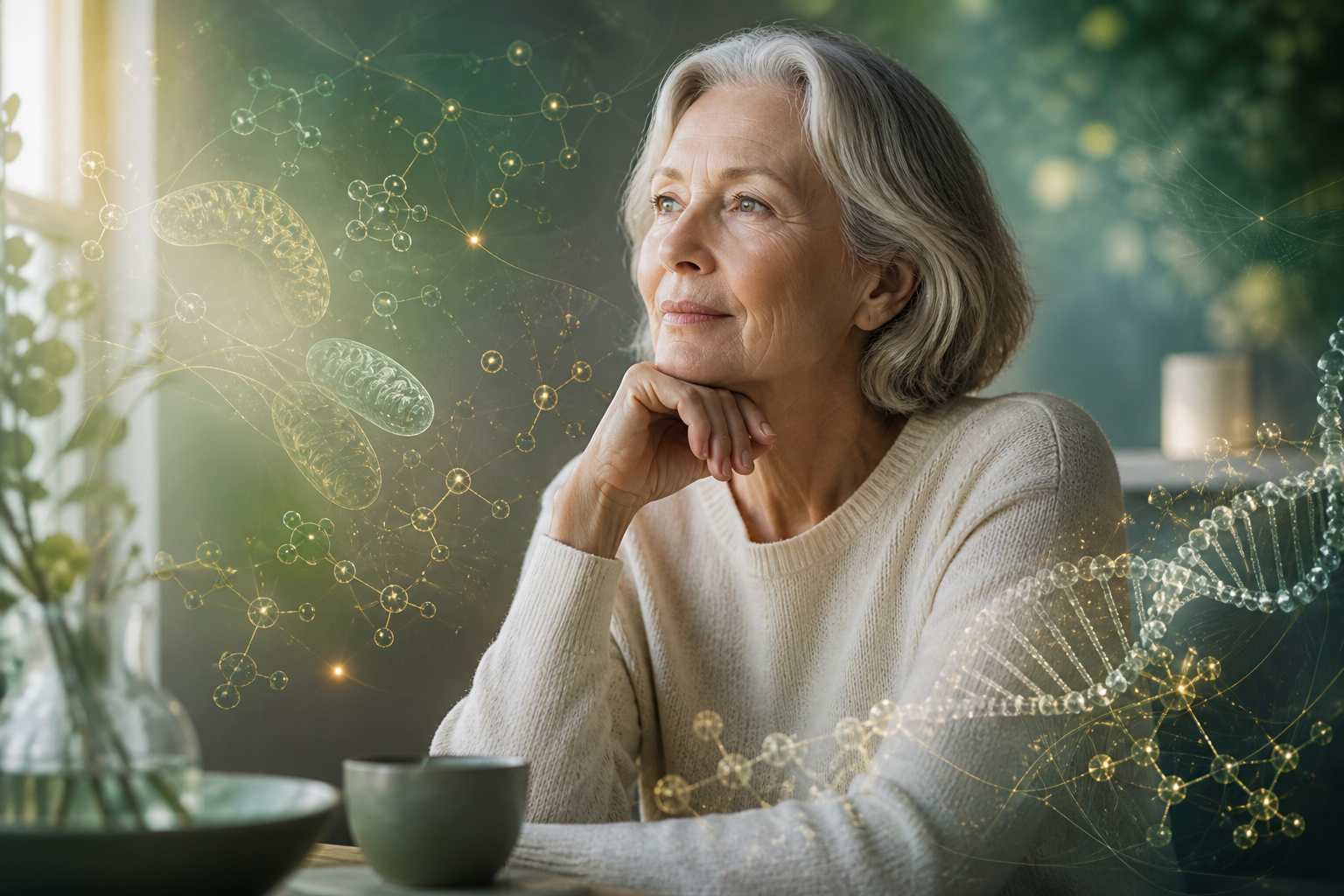
This text-free illustration shows connected research pathways. It is a conceptual model, not a measured map of one person’s cells.
How does PARP use NAD+ during DNA repair?
PARP1 is a DNA damage sensor and repair-associated enzyme. When it detects certain DNA breaks or other forms of genomic stress, it can attach ADP-ribose units to proteins and build poly-ADP-ribose chains. These signals help recruit and organize repair machinery. NAD+ is consumed in that process, with nicotinamide released as a by-product.
This consumption is not inherently harmful. PARP activity is part of a protective repair response. The concern is sustained or excessive activation: if DNA damage is persistent, a cell may spend more NAD+ on repair signaling than it can efficiently replace. Experimental work shows that PARP1 activation can rapidly deplete cellular NAD+ under DNA damage conditions and alter metabolism [4]. Whether that mechanism explains a meaningful portion of normal human aging remains an active research question.
The relationship is also bidirectional. Lower NAD+ may constrain NAD-dependent repair and stress-response reactions, while accumulated damage can increase PARP demand. This feedback model is useful for understanding the biology, but it should not be simplified into “NAD+ supplements repair DNA.” A supplement may change a biomarker without correcting the source of damage or proving better genomic health.
How do NAMPT and CD38 change the balance?
NAMPT, or nicotinamide phosphoribosyltransferase, is a key enzyme in the NAD+ salvage pathway. It helps recycle nicotinamide back toward nmn and NAD+. If salvage activity falls in a particular tissue, the cell may have more difficulty replacing NAD+ after normal metabolic or repair-related consumption. Research reports age-related NAMPT changes in some tissues, but the pattern is not identical across the body.
CD38 is an NADase: it can break down NAD+ while producing signaling molecules such as cyclic ADP-ribose. In aging models, CD38 expression and activity rise in association with inflammatory changes, and CD38 has been shown to contribute to NAD+ decline and mitochondrial dysfunction in mice [3]. That is important mechanistic evidence, not proof that CD38 inhibition or NAD+ supplementation is an established human anti-aging treatment.
| Pathway | What it does | How to interpret age-related findings |
|---|---|---|
| NAMPT | Recycles nicotinamide through the salvage pathway toward NAD+ synthesis. | Lower activity in some tissues may reduce replacement capacity; it is not a uniform whole-body measurement. |
| PARP1 | Uses NAD+ to signal and organize responses to certain DNA lesions. | More persistent DNA damage can increase NAD+ demand; repair activity itself is protective. |
| Sirtuins | Use NAD+ as a co-substrate in reactions linked to metabolism, stress signaling, and protein regulation. | Lower NAD+ availability may limit selected reactions; it does not switch off the entire family. |
| CD38 | Consumes NAD+ in calcium and immune-signaling chemistry. | Higher activity in aging models links inflammation, NAD+ consumption, and mitochondrial stress; human translation is incomplete. |
This table is a useful mental model: NAD+ can fall because the recycling side is weaker, the consumption side is busier, or both. It does not identify a single cause for every individual.
Can lifestyle or supplements restore NAD+?
Healthy routines may support the conditions in which NAD+ metabolism operates, but they should not be marketed as guaranteed NAD+ restoration. Regular physical activity, adequate sleep, a nutrient-dense eating pattern, avoiding tobacco, and sensible protection from excess ultraviolet exposure support broader cellular and cardiovascular health. They also address sources of metabolic stress and DNA damage more directly than a single biomarker strategy.
NR, NMN, nicotinamide, and other NAD-related ingredients are being studied as ways to influence NAD+ metabolism. Human trials show that some oral precursors can raise blood or tissue-related NAD measurements, but clinical benefits vary by ingredient, dose, formulation, tissue, and participant group. A 12-week randomized study of oral NMN in healthy adults found higher whole-blood NAD+ and no obvious adverse effects during the trial, but it did not prove that NMN reverses aging or prevents disease [5].
There is also no universally accepted home test that tells a consumer whether a supplement has restored NAD+ in a meaningful tissue. A blood result, if measured, is only one data point and should be interpreted with the testing method and clinical context in mind.
For a broader look at how NMN relates to cellular energy, readers can explore AIDEVI’s guide to cellular energy production and NMN supplementation and its comparison of NMN versus NAD+ bioavailability. Treat these as educational context, not as proof that a product corrects a personal NAD+ deficiency.

Lifestyle habits can support overall wellness while NAD+ research continues; the image does not represent a measured increase in NAD+.
If you are considering an NAD+ or NMN supplement, compare the exact ingredient form, serving size, testing information, intended use, and any medication or condition-related concerns. Consult a healthcare professional before starting a new supplement, especially if pregnant, nursing, taking medication, preparing for surgery, or managing a medical condition.
Conclusion
NAD+ decline is not explained by one aging clock. It reflects a dynamic relationship between salvage production through NAMPT, consumption by PARP and CD38, and NAD+-dependent activity in sirtuins and other enzymes. DNA damage and inflammation may increase demand, while tissue-specific changes may reduce replacement capacity. The mechanism is scientifically important, but the size of the change and the value of NAD+ supplementation remain context-dependent in humans.
Understanding this biology can make supplement claims easier to evaluate. A higher NAD+ measurement is not the same as repaired DNA, reactivated longevity, or guaranteed healthy aging. Use the pathway as a framework for better questions, keep foundational health habits central, and interpret new human trials with attention to tissue, dose, duration, and clinical outcomes.
Frequently Asked Questions
Why might NAD+ decline as people age?
Research points to several possible contributors: changes in NAD+ salvage enzymes such as NAMPT, greater consumption by PARPs during DNA damage responses, higher CD38 activity in inflammatory settings, and tissue-specific metabolic changes. The pattern is not identical in every tissue or person.
Are sirtuins the same as NAD+?
No. Sirtuins are a family of enzymes, while NAD+ is a co-substrate they use in particular reactions. Sirtuin activity depends on NAD+ availability and other cellular conditions.
Does PARP damage cells by using NAD+?
PARP activity is part of a protective response to certain DNA lesions. The concern is prolonged or excessive activation, which can increase NAD+ consumption and alter metabolism. PARP use of NAD+ is not inherently harmful.
Can NMN or NR reverse age-related NAD+ decline?
Human trials show that some precursors can raise NAD-related measurements, but they have not established that NMN or NR reverses aging, repairs DNA in a clinically meaningful way, or prevents age-related disease.
Should I take an NAD+ supplement for healthy aging?
That is a personal health decision, not a universal recommendation. Review the exact product, evidence, dose, and safety context with a qualified healthcare professional, and do not use a supplement as a replacement for medical care.
References
- [1] Peluso A, et al. Age-Dependent Decline of NAD+ - Universal Truth or Confounded Consensus? Nutrients, 2022.
- [2] Rajman L, Chwalek K, Sinclair DA. NAD+ metabolism and its roles in cellular processes during ageing. Nature Reviews Molecular Cell Biology, 2020.
- [3] Camacho-Pereira J, et al. CD38 Dictates Age-Related NAD Decline and Mitochondrial Dysfunction through an SIRT3-Dependent Mechanism. Cell Metabolism, 2016.
- [4] Li J, et al. NAD+ regulates nucleotide metabolism and genomic DNA replication. Nature Communications, 2023.
- [5] Okabe K, et al. Oral Administration of Nicotinamide Mononucleotide Is Safe and Efficiently Increases Blood NAD+ Levels in Healthy Subjects. Frontiers in Nutrition, 2022.
Individual results may vary. Consult a healthcare professional before starting any new supplement, especially if pregnant, nursing, taking medication, preparing for surgery, or managing a medical condition. These statements have not been evaluated by the Food and Drug Administration. This product is not intended to diagnose, treat, cure, or prevent any disease.
