



AIDEVI Wellness Guide
When Is the Best Time to Take CoQ10? Food, Fat, Morning or Night, and Safety
For many people, breakfast or lunch with a meal that contains some fat is a practical time to take CoQ10. Food can improve the absorption of this fat-soluble compound, while the exact hour has no established universal advantage. If you notice that late-day CoQ10 affects sleep, move it earlier; if dinner is your most reliable meal and you feel fine, an evening routine can also be reasonable.
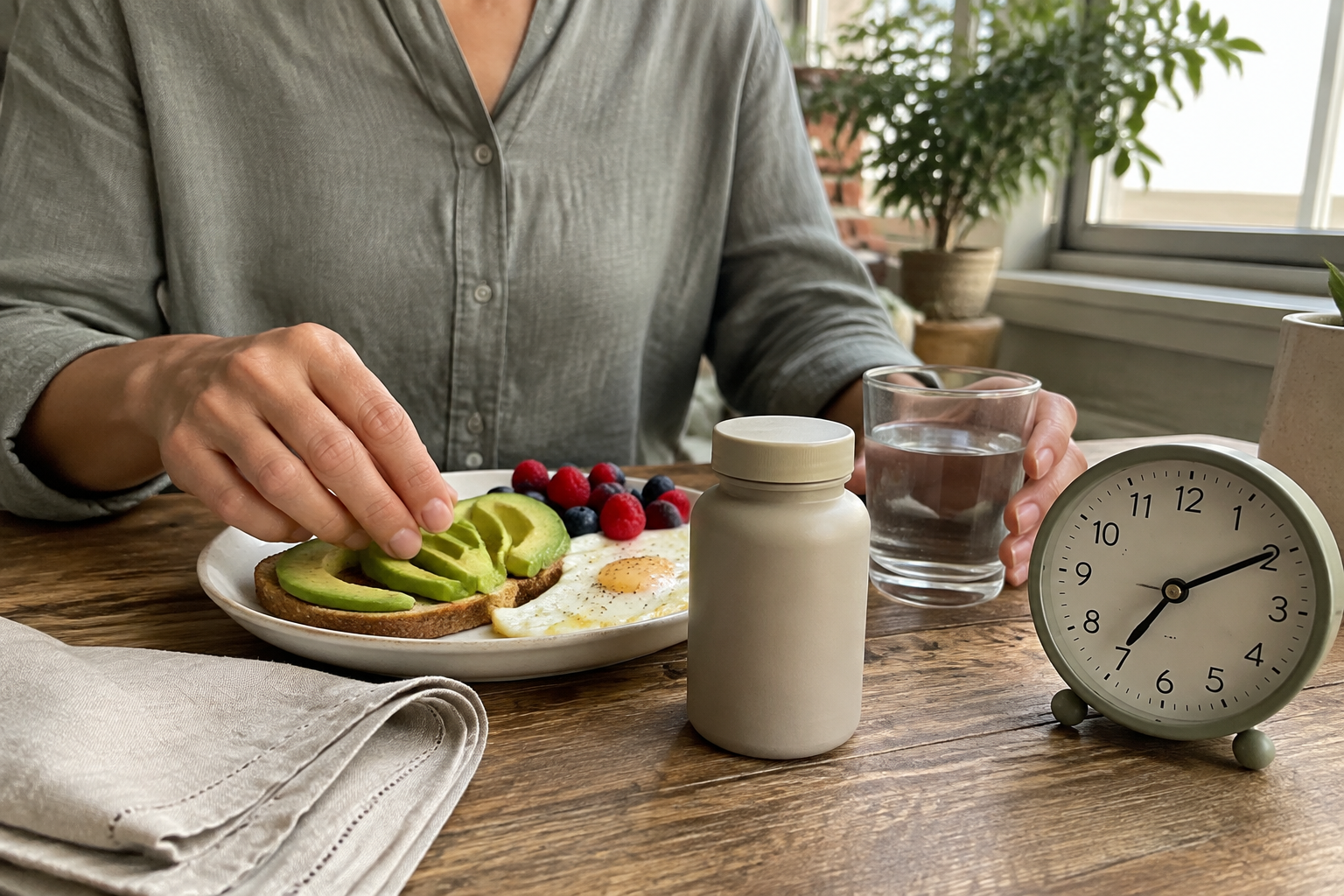
- Take CoQ10 with a meal, preferably one that contains some dietary fat.
- Morning or early afternoon is a useful default if you are sensitive to late-day alertness or sleep changes.
- Evening use can fit a consistent dinner routine when it does not cause unwanted effects.
- Follow the product label, avoid empty-stomach experimentation if it causes discomfort, and review medication interactions with a healthcare professional.
- CoQ10 is a supplement, not a replacement for prescribed treatment or a guarantee of better energy, heart health, or exercise performance.
Content
- What is CoQ10, and what can timing change?
- Should you take CoQ10 with food and fat?
- Is morning or night better for CoQ10?
- Should you split CoQ10 into two doses?
- How do you choose a CoQ10 routine that lasts?
- What medication and safety questions matter?
- What should you check on a CoQ10 label?
- What should you track after starting?
- Conclusion
- Frequently Asked Questions
What is CoQ10, and what can timing change?
Coenzyme Q10, commonly shortened to CoQ10, is a compound naturally present in the body and sold in the United States as a dietary supplement. It is concentrated in tissues with high energy demands, including the heart, liver, kidneys, and pancreas. CoQ10 is involved in cellular energy processes, which is why it is often discussed in relation to mitochondrial function and everyday vitality [1].
Timing can influence two practical factors: how well your body absorbs the supplement and whether the routine fits your sleep and schedule. It is not accurate to say that morning CoQ10 is proven to work better for everyone. A repeatable meal anchor may matter more than a particular clock time, especially because people eat, work, exercise, and sleep on different schedules.
The clearest timing principle is food. CoQ10 is poorly water-soluble, and a human absorption study found that taking it with food enhanced intestinal absorption [2]. That supports the practical advice to take it alongside a normal meal rather than treating it like a fasted pre-workout ingredient.
Should you take CoQ10 with food and fat?
Yes, with-food dosing is the most sensible default. A meal containing some fat—such as eggs and avocado, yogurt with nuts, salmon with vegetables, or a salad with olive-oil dressing—gives a fat-soluble ingredient a more appropriate absorption context. You do not need an unusually heavy meal or a large amount of oil. The goal is simply to avoid taking CoQ10 completely fasted when a meal is available.
Taking CoQ10 with food may also be more comfortable for people who notice mild digestive upset. If you skip breakfast, lunch can be the better anchor. If dinner is the only full meal of the day, dinner may be practical as long as late dosing does not interfere with your sleep. The product’s own directions should take priority if they specify a different administration method.
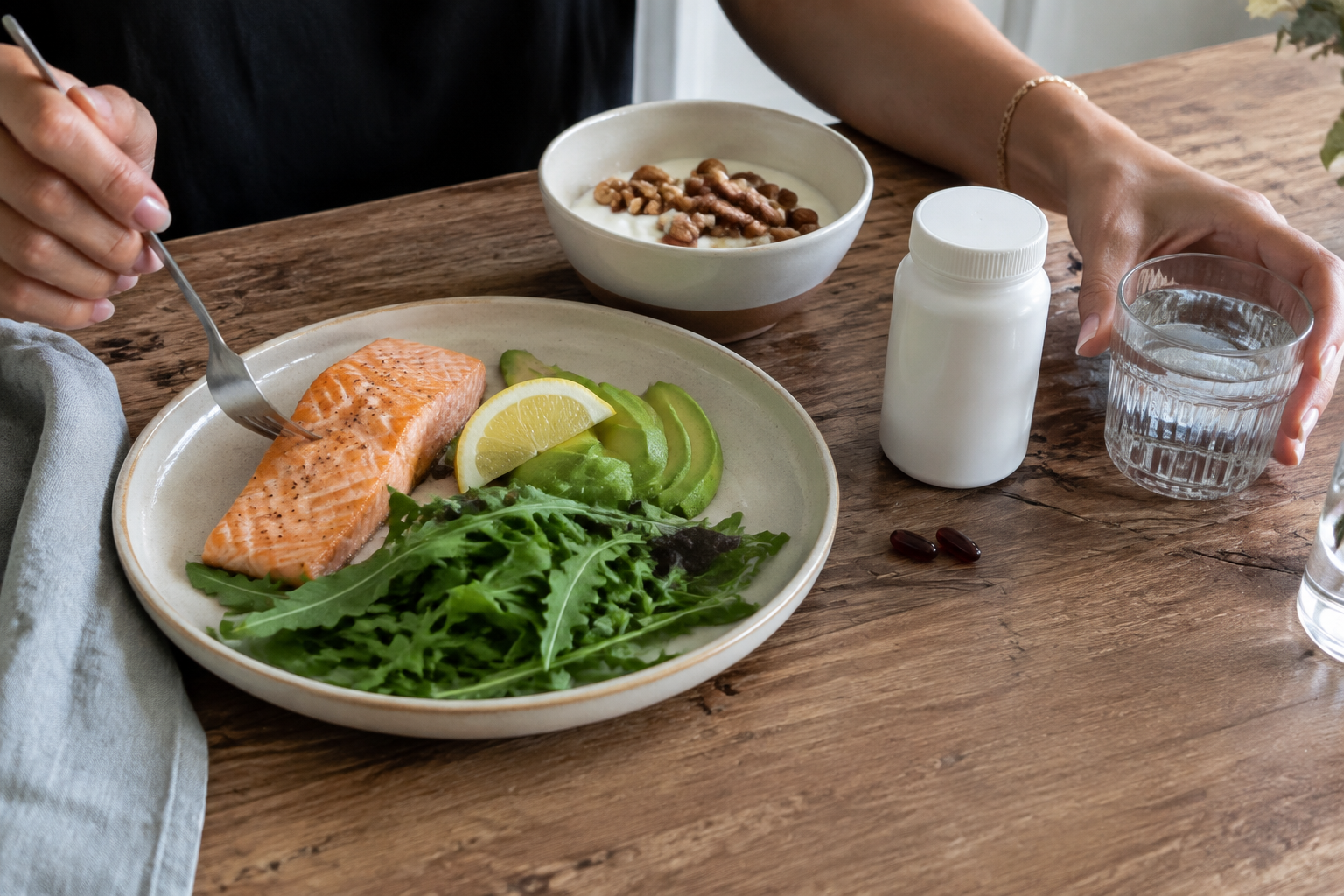
Avoid turning food guidance into a promise of a specific outcome. Better absorption does not guarantee that you will feel more energetic or that a health marker will change. It simply makes the administration method more consistent with the compound’s physical properties. If you are using a specialized formulation, follow its label rather than assuming that every CoQ10 product behaves identically.
Is morning or night better for CoQ10?
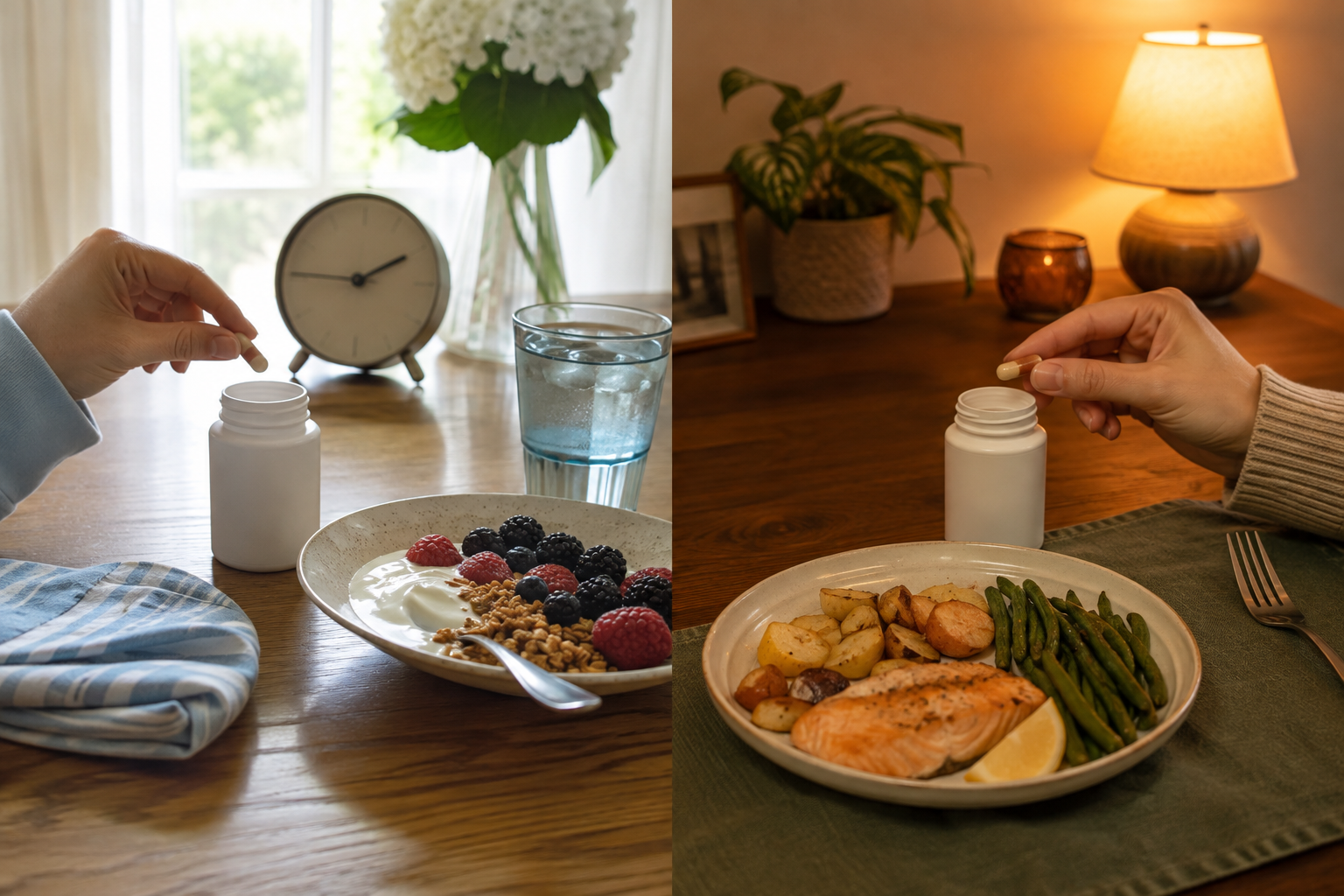
Morning or early afternoon is a useful starting point because it is easy to pair with breakfast or lunch and leaves more time before bed. This can be particularly helpful if you notice that CoQ10 makes you feel more alert. Mild insomnia has been reported as a possible side effect, although it does not happen to everyone [1].
Night dosing is not automatically wrong. If dinner is your most reliable meal, you tolerate CoQ10 well, and your sleep is unchanged, taking it with dinner may be the routine you can maintain. The important distinction is that dinner may be convenient, but it has not been shown to provide better absorption than breakfast when the meal context is comparable.
| Timing option | Why it may fit | What to watch |
|---|---|---|
| Breakfast | Easy meal anchor; creates distance from bedtime. | Do not take it fasted if breakfast is only coffee. |
| Lunch | Useful for people who skip breakfast or feel sensitive to early supplements. | Keep the time consistent on workdays and weekends when possible. |
| Dinner | Works when dinner is the most reliable meal and contains some fat. | Move earlier if sleep becomes lighter or you feel restless. |
Should you split CoQ10 into two doses?
A small, well-tolerated labeled serving usually does not need to be split. Dividing the daily amount may be worth discussing when the label calls for more than one serving, when a single serving causes stomach discomfort, or when a healthcare professional recommends a divided schedule. If the label permits it, a breakfast-and-lunch pattern can be simpler for sleep-sensitive users than breakfast-and-dinner.
Keep the total daily amount unchanged while testing a split routine. Change one variable at a time, give the schedule several days, and record digestion, sleep, and adherence. Splitting is a tolerance and routine strategy, not proof that two doses create better biological results than one.
How do you choose a CoQ10 routine that lasts?
Start with the meal you miss least often. A routine that happens every day is more useful than a theoretically perfect schedule that is forgotten several times a week. Place the bottle near the meal—not somewhere exposed to heat or humidity—and use a calendar reminder or pill organizer if that helps you avoid missed servings.
Use a simple decision sequence:
- Choose a meal: breakfast, lunch, or dinner that normally contains some fat.
- Follow the label: keep the serving and form consistent before judging the time.
- Check sleep: if late dosing affects sleep, move it earlier rather than increasing complexity.
- Review interactions: check with a pharmacist or clinician if prescription medication is involved.
- Reassess the purpose: do not continue escalating a supplement simply because the expected result has not appeared.
CoQ10 can be part of a broader cellular-energy conversation, but it is not the same ingredient as NAD+, nmn, or NR. AIDEVI’s overview of NAD+ versus NMN is useful for separating those terms. Its guide to natural NAD+ support habits also reinforces that sleep, movement, and food quality should not be replaced by a supplement timetable.
What medication and safety questions matter?
CoQ10 is often described as well tolerated, but it can still be relevant to medication decisions. The National Center for Complementary and Integrative Health notes possible interactions with warfarin, insulin, and some cancer treatments [1]. If you use any of these, do not treat timing as a way to bypass an interaction. Ask the prescribing clinician or pharmacist whether CoQ10 is appropriate and whether any monitoring is needed.
The original idea that CoQ10 automatically corrects statin-related muscle pain also needs to be removed. Research has produced mixed results, and one systematic review and meta-analysis did not find a clear benefit over placebo [3]. Do not stop, reduce, or replace a statin because of an online supplement article. Report muscle pain, weakness, dark urine, or other concerning symptoms through the appropriate medical channel.
Ask for professional advice before starting a new supplement if you are pregnant or nursing, preparing for a procedure, managing a chronic condition, or taking several medications. Stop and seek advice if you develop persistent digestive upset, marked insomnia, unusual symptoms, or an apparent reaction after starting. More capsules are not a safer response to uncertainty.

What should you check on a CoQ10 label?
A timing decision is only as clear as the product information behind it. Check whether the ingredient is listed as CoQ10, coenzyme Q10, ubiquinone, or ubiquinol; record the amount per serving; and confirm whether the label asks you to take one or more servings. Do not compare products by capsule count alone, because serving sizes and formulations can differ.
Look for a lot or batch identifier, expiration information, storage directions, and a transparent manufacturer contact. Quality documentation cannot prove that a supplement will produce a personal result, but it makes identity and manufacturing questions easier to assess. AIDEVI’s certificate-of-analysis guide and supplement selection checklist explain this quality-review mindset in another ingredient category.
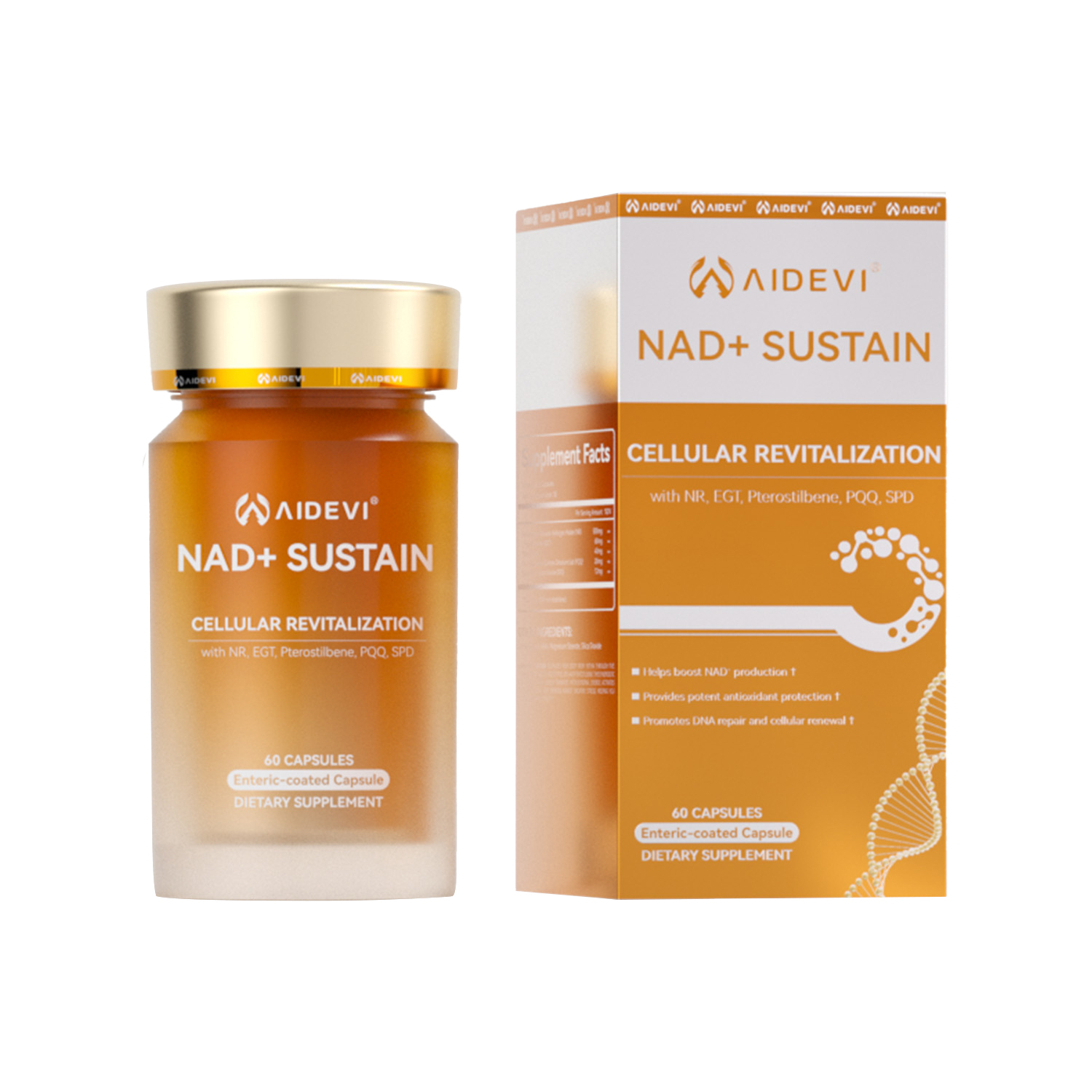
If you are considering CoQ10 alongside an NAD+ product, read the labels as separate products with separate purposes. AIDEVI’s NAD Sustain product information is a neutral example of a different cellular-energy category; it should not be interpreted as evidence that CoQ10 must be combined with an NAD+ formula.
What should you track after starting?
Do not judge CoQ10 by an immediate “energy rush.” The most useful early information is whether you can take it consistently, tolerate it, and fit it into your normal eating pattern. Track the product form, labeled serving, meal, time, sleep quality, digestion, and any new symptoms.
If you change the timing, keep the product and serving stable for several days. If you change the product, keep the meal and time stable. This one-change-at-a-time approach cannot prove that CoQ10 caused a particular outcome, but it reduces confusion and gives a clinician better information if a question arises.
If your goal relates to a diagnosed condition, a laboratory result, or medication side effects, let a healthcare professional define the relevant outcome and follow-up period. A personal journal is useful for routine and tolerance; it is not a substitute for clinical assessment.
Conclusion
For most people, the best time to take CoQ10 is the meal they can repeat—often breakfast or lunch—with some dietary fat. Morning is a sensible default if late dosing seems to affect sleep, while dinner can work when it is the most reliable meal and produces no unwanted response. The strongest practical advice is about food, consistency, label accuracy, and medication review—not a special hour for better results.
Keep expectations proportionate. CoQ10 participates in important cellular processes, but supplement research is not the same as proof of a personal benefit. Follow the label, make one change at a time, and ask a qualified healthcare professional before starting if you take medication or manage a health condition.
Frequently Asked Questions
Can I take CoQ10 on an empty stomach?
A meal-based routine is preferable because food can improve CoQ10 absorption, and taking it with food may be more comfortable. If your product label allows another method, use it only if you tolerate it well.
Does CoQ10 keep you awake at night?
Some people report insomnia or feeling more alert, while others notice no sleep effect. If sleep changes after an evening dose, move the same labeled amount to breakfast or lunch and observe.
What foods pair well with CoQ10?
A normal meal containing some fat can be suitable. Examples include eggs with avocado, yogurt with nuts, salmon with vegetables, or a salad with olive-oil dressing. You do not need to force a very high-fat meal.
Can I take CoQ10 with other supplements?
Possibly, but the full combination matters more than the word “supplement.” Review the label overlap and ask a pharmacist or clinician if you take warfarin, insulin, cancer treatment, or other prescription medication.
Does CoQ10 help statin-related muscle pain?
The evidence is mixed, and a systematic review did not establish a clear benefit over placebo. Do not stop or change a statin on your own; discuss muscle symptoms with the prescribing clinician.
How long should I try CoQ10?
There is no universal trial period for every goal. Follow the product label, track tolerance and adherence, and use a clinician-defined follow-up plan when CoQ10 is connected to a medical condition or medication question.
References
- [1] National Center for Complementary and Integrative Health. Coenzyme Q10.
- [2] Ochiai A, Itagaki S, Kurokawa T, et al. Improvement in intestinal coenzyme Q10 absorption by food intake. Yakugaku Zasshi.
- [3] Kennedy C, Köller Y, Surkova E. Effect of Coenzyme Q10 on statin-associated myalgia and adherence to statin therapy: a systematic review and meta-analysis. Atherosclerosis.
These statements have not been evaluated by the Food and Drug Administration. This product is not intended to diagnose, treat, cure, or prevent any disease.
