



AIDEVI Science & Wellness Guide
nmnH vs. NMN: What We Know About Reduced NMN
NMNH is the reduced form of NMN, not a blend of nicotinamide riboside and “hydrating agents.” Early cell and mouse studies suggest it can affect NAD+ and NADH metabolism, but that does not show that NMNH is a better oral supplement for people. NMN has a broader, though still developing, body of human research. The practical question is not which molecule sounds stronger, but what evidence actually matches the claim.
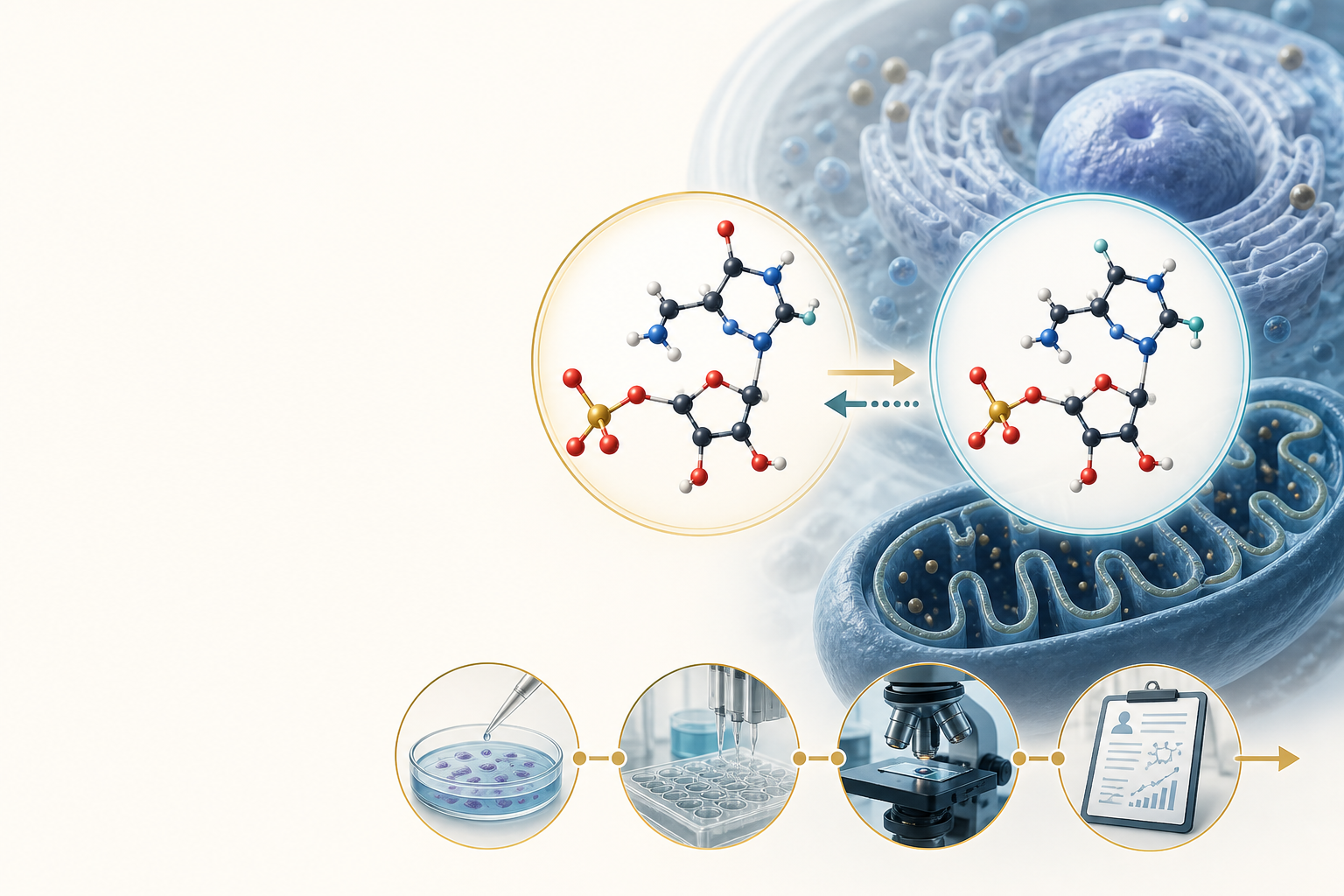
At a glance: NMNH and NMN are closely related NAD+ precursors, but they are not interchangeable. NMNH’s most direct evidence is preclinical and includes changes in redox metabolism that need careful interpretation. NMN has published human studies measuring blood NAD+ and short-term tolerability. Neither evidence base supports a promise to reverse aging, cure fatigue, or replace medical care.
Content
What is NMNH, exactly?
NMNH stands for dihydronicotinamide mononucleotide. It is commonly described as reduced NMN: NMN and NMNH share a closely related molecular backbone, but NMNH is in a reduced redox state. That chemical distinction matters because NAD-related metabolism depends on molecules moving between oxidized and reduced forms. It does not mean NMNH is simply “NMN with better absorption,” nor does it make NMNH a standard combination of NR and other ingredients.
A useful way to keep the terms straight is to separate the coenzymes from their precursors. NAD+ is the oxidized coenzyme that accepts reducing equivalents in metabolism; NADH is its reduced form. NMN and NMNH are related precursor molecules that can feed into NAD-related pathways through different biochemical steps. For foundational terminology, AIDEVI’s guide to NAD+ versus NMN is a helpful starting point.
NMNH should also not be confused with NRH, or dihydronicotinamide riboside. NRH is a different reduced precursor that is often discussed in the same research area. Confusing NMNH, NMN, NR, and NRH is one reason supplement claims can become overstated. A separate NMN versus NR comparison can help readers distinguish the more familiar precursor names.
How does NMNH relate to NAD+, NADH, and NMN?
The pathway is best viewed as a network, not a one-line conversion promise. In preclinical experiments, NMNH was processed through steps involving NMN adenylyltransferase (NMNAT) and was associated with increases in both NAD+ and NADH. Researchers also observed changes in central metabolic pathways in cultured cells and mouse tissues [1]. These findings are mechanistic observations; they do not tell us how an orally consumed NMNH product behaves in every human tissue.
This is where the original article needed a sharper boundary. It described NMNH as converting into NR and then implied a predictable route to higher NAD+ for everyone. Reduced NAD+ precursors may be metabolized through several steps, and transport, oxidation, formulation stability, intestinal processing, dose, and tissue context can all affect the result. A pathway diagram is useful for understanding possibilities, but it is not a clinical outcome.
| Term | What it describes | What should not be assumed |
|---|---|---|
| NAD+ | An oxidized coenzyme used in redox reactions and cellular signaling. | That a higher blood marker explains all energy or aging outcomes. |
| NADH | The reduced electron-carrying form of NAD. | That more NADH automatically improves energy production. |
| NMN | An oxidized NAD+ precursor with published human studies. | That every study result applies to every product or person. |
| NMNH | The reduced form of NMN, examined mainly in preclinical research. | That cell or mouse potency establishes human superiority or a safe dose. |
What does the evidence show so far?
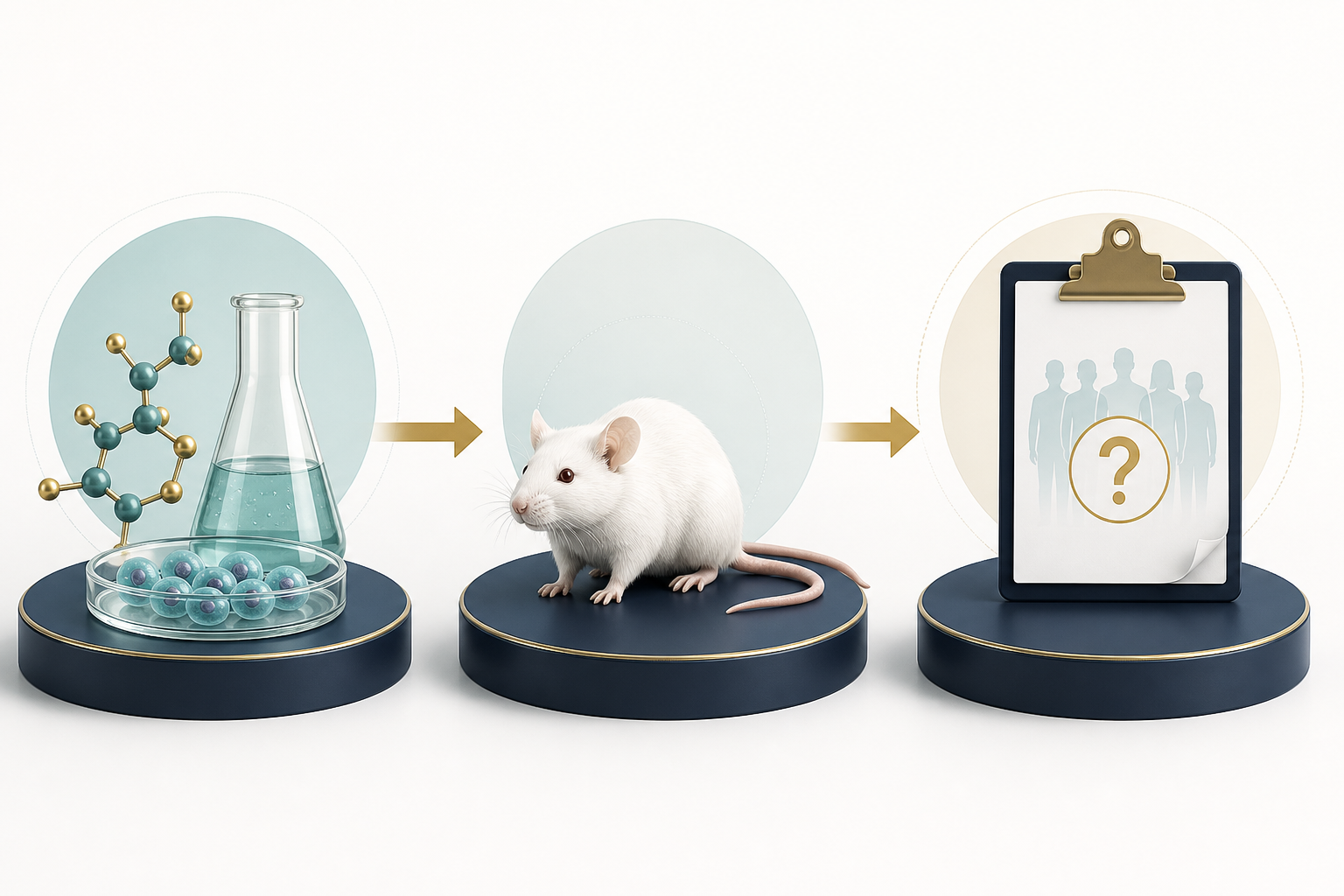
The most cited NMNH paper is a 2021 laboratory study. In cultured cells and mouse livers, NMNH increased NAD+ and NADH more than NMN under the experimental conditions. The same paper reported suppression of glycolysis, the tricarboxylic acid cycle, and cell growth in the models studied [1]. That makes NMNH scientifically interesting, but it also shows why “more potent” is not the same as “better for daily wellness.”
NMN has a different evidence profile. In one randomized, placebo-controlled study, 30 healthy adults took 250 mg of NMN or placebo for 12 weeks; whole-blood NAD+ increased in the NMN group, and the authors reported no obvious adverse effects during the study period [2]. A separate 60-day randomized trial in healthy middle-aged adults also reported dose-related blood NAD increases and short-term tolerability findings [3].
Those studies do not prove that NMN delivers the same result in every population or establishes long-term outcomes. They do, however, provide a level of human context that the direct NMNH studies cited here do not. For readers who want to follow that distinction in more detail, AIDEVI’s review of recent NMN research and its article on NMN and metabolic health science offer useful next reading.
Does NMNH automatically mean more cellular energy?
No. NAD+ and NADH are central to energy metabolism, but the relationship is regulated rather than linear. Cells need to recycle NAD+ and NADH at suitable rates and in the right compartments. Raising one metabolite in a cell assay does not establish that a person will have more daily energy, improved focus, quicker recovery, or healthier aging.
In fact, the observation that NMNH increased NADH while suppressing glycolysis and the TCA cycle in a laboratory study is a reason to avoid simplistic “energy booster” language. A change in redox balance can be valuable for research, neutral in another context, or require further safety study. It should not be repackaged as a promise about fatigue, brain performance, insulin sensitivity, heart health, or longevity.
Daily energy is also influenced by sleep, food intake, physical activity, iron status, medications, stress, thyroid function, infection, mood, and many other factors. Persistent or significant fatigue deserves professional assessment. For general lifestyle context, AIDEVI’s natural NAD+ support guide focuses on practical habits rather than a single molecule.
What would stronger NMNH evidence need to show?
A credible human NMNH study would need to answer more than whether a blood marker moves for a few hours. It should clearly identify the NMNH form and formulation, enroll a defined population, include an appropriate comparison such as placebo or another precursor, and report how the ingredient and key NAD-related metabolites change over time. It should also disclose adverse events, laboratory monitoring, withdrawals, and funding or commercial relationships.
The next step would be a meaningful, pre-specified outcome that fits the population and duration. A short biomarker study can support a narrow statement about a biomarker; it cannot settle claims about longevity, cognition, metabolic disease, recovery, or long-term safety. The difference between those statements is the difference between mechanism and outcome. That boundary is especially important for NMNH because the direct findings most often quoted come from cells and mice [1].
Readers can use a simple evidence sequence when they encounter a new claim: ask what form was tested, in whom, for how long, compared with what, and with which result? If one of those questions has no clear answer, the claim should remain provisional. That is not a dismissal of emerging science; it is how consumers keep promising early research in proportion to what it can actually support. The FDA likewise advises consumers to review supplement information carefully and discuss use with an appropriate health professional [4].
Should NMNH replace NMN?
For claims about a human oral supplement, NMNH should not be treated as a demonstrated replacement for NMN. Its early preclinical signal is worth following, but preclinical potency does not answer questions about human absorption, tissue distribution, effective dose, interactions, long-term use, or meaningful outcomes. A stronger molecular claim requires stronger human evidence.
| Best fit | Consider instead | Avoid or pause if |
|---|---|---|
| Research readers who understand that NMNH evidence is preliminary and want to evaluate claims conservatively. | For an NAD+ precursor discussion grounded in published human studies, review NMN evidence and product quality first. | Pause before adding or combining precursors if pregnant, nursing, taking medication, managing a condition, preparing for surgery, or experiencing unexplained symptoms. |
There is also no reliable basis for treating NMN and NMNH as a proven “stack.” Their combined use has not been established by the studies discussed here. If your main question is how to choose an NMN product, AIDEVI’s NMN buyer guide is a more appropriate next step than assuming that two related precursors should be combined.

How should you review an NMNH or NMN product claim?
Start by separating identity, testing, and outcome claims. The product label should identify the exact ingredient form rather than relying on broad phrases such as “next-generation NAD+ booster.” A supplier should be able to document identity and lot-specific testing. A certificate of analysis can help you examine whether the document identifies the lot, test method, result, and laboratory details; it cannot, by itself, establish human effectiveness.
- Confirm the ingredient name. NMN, NMNH, NR, and NRH are related but different molecules. Do not accept a label that blurs the distinction.
- Match the claim to the study. Check whether the evidence is from chemistry, cells, animals, a short human trial, or a longer controlled human study.
- Review quality evidence. AIDEVI’s certificate-of-analysis explainer outlines practical label and testing questions.
- Do not transfer doses. A dose used in an NMN study is not automatically an NMNH dose. For context on why dose decisions need evidence, see the NMN dosage guide.
- Use a clinician for personal risk. The U.S. Food and Drug Administration notes that dietary supplements are not approved for safety and effectiveness before marketing, and individual circumstances matter [4].
The AIDEVI evidence-check routine
Name it: identify the precise ingredient and redox form.
Place it: locate the evidence on the ladder from mechanism to human outcome.
Verify it: review the product label, lot-specific testing, and claim wording.
Pause when needed: seek professional guidance before use when health, medication, or life-stage factors apply.
Conclusion
NMNH is a real, reduced form of NMN with intriguing preclinical NAD+ and NADH findings. It is not NR, it is not automatically more bioavailable, and it is not a demonstrated substitute for NMN in people. The responsible distinction is evidence level: NMNH remains an emerging research topic, while NMN has published human data that still need thoughtful interpretation. Choose language, products, and expectations that stay within that boundary.
Frequently Asked Questions
Is NMNH the same as NMN?
No. NMNH is the reduced form of NMN. They are closely related, but the redox difference can affect how they behave in experimental NAD-related pathways.
Is NMNH better than NMN?
Cell and mouse experiments have reported strong NAD-related effects from NMNH, but that is not enough to establish superiority for human use. NMN currently has more published human research, although its long-term outcomes remain an active area of study.
Can I take NMNH and NMN together?
The studies discussed in this guide do not establish a combined NMNH-and-NMN routine. Combining related precursors increases uncertainty about exposure and tolerability, so it is not a shortcut to a validated result.
Does NMNH have a standard dose?
A standard NMNH dose cannot be inferred from the NMN studies cited here. Dose, formulation, duration, population, and monitoring are all part of what human research would need to establish.
Who should ask a healthcare professional before using a precursor supplement?
Anyone who is pregnant or nursing, takes medication, manages a health condition, is preparing for surgery, or has unexplained symptoms should seek individualized professional guidance before starting a new supplement.
References
- [1] Liu Y, et al. Reduced Nicotinamide Mononucleotide (NMNH) Potently Enhances NAD+ and Suppresses Glycolysis, the TCA Cycle, and Cell Growth. Journal of Proteome Research. 2021.
- [2] Okabe K, et al. Oral Administration of Nicotinamide Mononucleotide Is Safe and Efficiently Increases Blood NAD Levels in Healthy Subjects. 2022.
- [3] Yi L, et al. The efficacy and safety of β-nicotinamide mononucleotide supplementation in healthy middle-aged adults. Geroscience. 2023.
- [4] U.S. Food and Drug Administration. FDA 101: Dietary Supplements.
These statements have not been evaluated by the Food and Drug Administration. This product is not intended to diagnose, treat, cure, or prevent any disease.
