



AIDEVI Wellness Guide
What Is NAD+? The Science of Cellular Energy and Healthy Aging
NAD+ is a coenzyme your cells use to convert food into usable energy, support repair enzymes, and coordinate stress-response pathways. It is not a trendy anti-aging shortcut; it is basic cellular biology. Because NAD+ levels and NAD+-dependent processes can change with age, researchers study NAD+ as one important piece of healthy aging, energy metabolism, and long-term cellular resilience.
- NAD+ stands for nicotinamide adenine dinucleotide, a molecule central to redox reactions and energy metabolism [1].
- Cells also use NAD+ for enzymes involved in DNA repair, sirtuin activity, chromatin regulation, immune signaling, and metabolic homeostasis [1].
- NAD+ support works best as a layered routine: nutrition, sleep, exercise, stress management, and careful supplement choices when appropriate.
In plain English, NAD+ helps your cells move energy and information. It carries electrons during metabolism, helps mitochondria make ATP, and supplies NAD+-dependent enzymes that maintain cellular function. The goal is not to "stop aging," but to support the systems that help the body adapt, repair, and perform as part of a healthy lifestyle.
Content
What is NAD+ in simple terms?
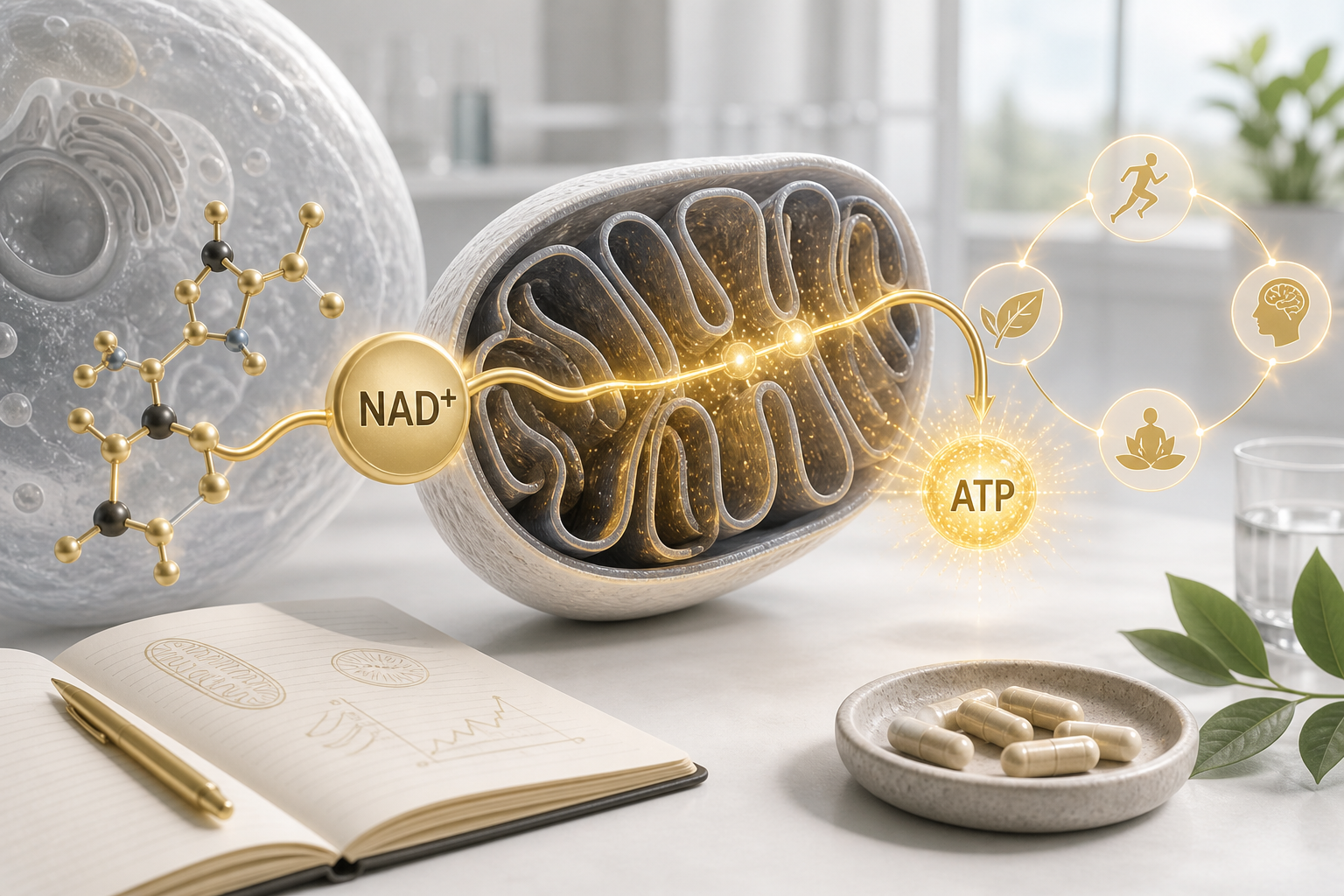
NAD+ is a coenzyme, which means it helps enzymes do their work. The full name is nicotinamide adenine dinucleotide. Your body makes it from vitamin B3-related compounds and recycles it through several pathways. You can think of NAD+ as a cellular connector: it helps transfer electrons during metabolism, then changes into NADH. NADH can then donate those electrons into mitochondrial energy production, where cells generate ATP, the energy molecule they use to power daily function.
This is why NAD+ shows up in conversations about energy, metabolism, brain performance, exercise recovery, skin aging, and longevity science. It is not because NAD+ is a magic ingredient. It is because almost every high-demand tissue depends on efficient cellular metabolism. Muscles, the brain, liver, heart, immune cells, and skin all need energy to maintain normal structure and function.
The science can become complex quickly, so it helps to separate three ideas. NAD+ is the oxidized form that accepts electrons. NADH is the reduced form that carries electrons. ATP is the usable energy product that mitochondria help make. A healthy system keeps these forms moving in balance. If you want to go deeper into how this connects with nmn, AIDEVI's guide to cellular energy production and NMN supplementation is a useful companion read.
How does NAD+ help create cellular energy?
When you eat carbohydrates, fats, and proteins, your body breaks them into smaller molecules. Those molecules enter metabolic pathways that release electrons. NAD+ accepts electrons and becomes NADH. NADH then brings those electrons to the mitochondrial electron transport chain, where the energy is used to help produce ATP. Without enough NAD+ cycling, cells would have a harder time turning nutrients into the energy they can actually use.
This does not mean more NAD+ always equals more energy in a simple linear way. Energy metabolism depends on many factors, including calorie intake, nutrient status, thyroid function, sleep, oxygen delivery, training status, inflammation, and mitochondrial health. NAD+ is important because it sits inside the system, not above it. It is part of the engine, not a standalone accelerator.
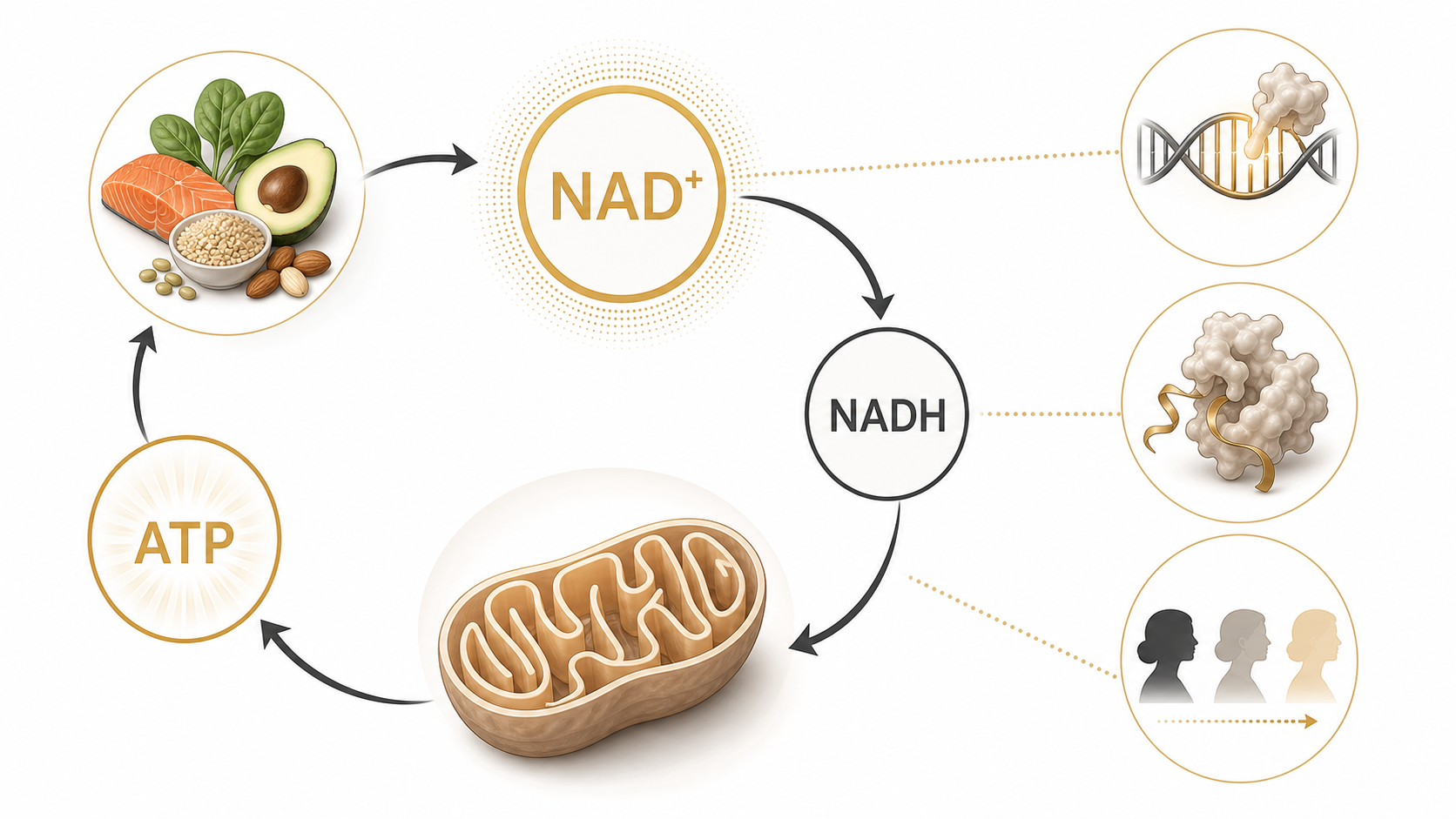
NAD+ also supports non-energy enzymes. Sirtuins use NAD+ to regulate proteins involved in metabolism, stress adaptation, and gene expression. PARP enzymes use NAD+ in DNA repair signaling. CD38 is another NAD+-consuming enzyme, and research connects increased CD38 activity with age-related NAD+ decline and mitochondrial dysfunction in animal models [3]. These enzyme relationships are why NAD+ biology is broader than "feeling energized."
What is the difference between NAD+ and NADH?
NAD+ and NADH are two forms of the same redox pair. NAD+ is the electron-accepting form, while NADH is the electron-carrying form. A helpful way to picture it is a reusable delivery vehicle. NAD+ arrives "empty," accepts electrons from nutrients, becomes NADH, delivers those electrons to mitochondrial machinery, and returns to the NAD+ form so the cycle can continue.
The balance between NAD+ and NADH matters because cells need both fuel flow and control. Too little available NAD+ can limit certain enzyme reactions; too much pressure on the system can reflect poor metabolic flexibility. That is why NAD+ support should not be reduced to one number or one supplement. It belongs inside a broader view of redox balance, mitochondrial function, circadian rhythm, nutrition, and recovery.
This is also where many online explanations become too absolute. A high-quality NAD+ routine should not claim that one ingredient "fixes" energy. It should help the reader understand the moving parts: nutrient intake, vitamin B3 status, cellular recycling pathways, enzyme demand, and lifestyle habits that influence how efficiently cells use energy.
Why is NAD+ linked with healthy aging?
NAD+ is linked with aging because researchers have observed changes in NAD+ metabolism across aging tissues and because NAD+ is needed by pathways that help maintain cellular homeostasis. Reviews of NAD+ biology describe NAD+ as central to metabolism, DNA repair, chromatin remodeling, cellular senescence, and immune cell function [1]. In other words, NAD+ sits close to several systems that become harder to maintain with age.
The most responsible language is "healthy aging support," not "age reversal." Human aging is not controlled by one molecule. It reflects genetics, lifestyle, environment, sleep quality, muscle mass, metabolic health, inflammatory load, and decades of habits. NAD+ can be an important biological target without becoming a promise. A good NAD+ article should leave the reader more informed, not more hyped.
Age-related NAD+ decline is also not a universal consumer diagnosis. A review focused on age-related NAD+ changes notes that NAD+ decline has been observed across multiple models and tissues, while also emphasizing that the causes and consequences are still being clarified [2]. That matters for practical writing: it is fair to say NAD+ pathways are relevant to aging biology, but not fair to tell every tired person that low NAD+ is definitely the reason they feel tired.
This is especially important for supplement decisions. NAD+ support may involve direct NAD+ formats, NMN, NR, niacin, nicotinamide, lifestyle strategies, or a combination of approaches. Each route has different evidence, tolerability questions, and conversion steps. For a practical comparison of related compounds, see AIDEVI's article on NAD+ vs NMN differences and benefits and the deeper comparison of NMN vs NR for longevity support.
How can you support healthy NAD+ levels?
The first layer is lifestyle. Regular exercise, especially a mix of aerobic training and resistance work, supports mitochondrial function and metabolic flexibility. Sleep helps coordinate circadian rhythm, appetite signals, stress hormones, and recovery. A nutrient-rich diet provides vitamin B3-related building blocks; the NIH Office of Dietary Supplements describes niacin as a vitamin involved in NAD and NADP coenzymes, with food sources including meat, poultry, fish, nuts, legumes, and fortified grains [4].
The second layer is reducing demand. Chronic stress, heavy alcohol intake, poor sleep, sedentary habits, and low-quality diets can place extra pressure on metabolic systems. You do not need a perfect lifestyle, but NAD+ support makes more sense when the basics are moving in the right direction. AIDEVI's article on lifestyle changes that support cellular health is a good place to build that foundation.
The third layer is supplementation, when appropriate. Some people explore NMN, NR, NAD+ formats, or vitamin B3-related supplements to support NAD+ pathways. The right choice depends on your age, routine, health status, medications, sensitivity to ingredients, and the specific goal you are trying to support. For non-medical planning, AIDEVI's guide to natural ways to support NAD+ levels can help you compare habits before adding another product.
Which NAD+ support path fits your goal?
A useful NAD+ decision starts with the question behind the question. Are you trying to understand the science, build an energy-support routine, compare ingredients, or check safety? Those are different tasks. The table below keeps the decision grounded.
| Goal | Best fit | Avoid or pause if |
|---|---|---|
| Understand NAD+ basics | Learn the NAD+/NADH energy cycle, sirtuins, PARPs, and vitamin B3 pathways. | You are using "NAD+ deficiency" as a self-diagnosis for unexplained symptoms. |
| Choose a supplement route | Compare NAD+, NMN, NR, timing, dosage, and tolerability with realistic expectations. | You are pregnant, nursing, taking medication, managing a medical condition, or stacking many products at once. |
| Improve daily energy habits | Start with sleep, training, protein, micronutrients, hydration, and stress recovery. | Fatigue is severe, sudden, worsening, or paired with pain, shortness of breath, or neurological symptoms. |
If you are comparing delivery routes, AIDEVI's guide to NAD injections vs NMN supplements can help clarify the difference between clinical procedures and consumer supplement formats. If you already know you are considering NMN, the NMN dosage by age guide offers a more specific planning framework, while AIDEVI's safety-focused article on NMN benefits and side effects covers tolerance and daily-use questions.
What should realistic expectations look like?
Realistic expectations are calm and measurable. NAD+ support is not a dramatic overnight transformation. A more useful approach is to track everyday signals over several weeks: morning energy, training recovery, sleep consistency, afternoon focus, digestive comfort, mood stability, and whether a supplement fits your routine without side effects. If a product makes you feel unwell, stop and ask a healthcare professional.
It also helps to avoid chasing a single number. NAD+ levels can vary by tissue, time, method, age, and context. A lab result may be interesting, but your total wellness pattern still matters. Food quality, muscle maintenance, blood sugar balance, alcohol intake, sunlight habits, and stress resilience all influence how "cellular energy" shows up in daily life.
The best NAD+ routine is the one you can sustain without turning wellness into a full-time job. Learn the science, respect the limits, choose quality, and keep the basics strong. That is where AIDEVI's cellular vitality philosophy fits best: not as a promise to outrun time, but as a practical way to support the systems that help you feel steady, clear, and resilient as you age.
Conclusion
NAD+ is one of the body's essential cellular helpers. It supports energy metabolism by cycling between NAD+ and NADH, helps mitochondria produce ATP, and fuels enzymes connected with DNA repair, sirtuin activity, and stress adaptation. That makes NAD+ a serious topic in healthy aging science, but not a shortcut that promises youth, energy, or medical outcomes.
If you are new to NAD+, start with the basics: move regularly, sleep deeply, eat nutrient-rich foods, manage stress, and compare supplements with a clear goal. NAD+ support works best when it supports a life already moving toward better cellular health.
Frequently Asked Questions
What does NAD+ stand for?
NAD+ stands for nicotinamide adenine dinucleotide. It is a coenzyme involved in energy metabolism and many NAD+-dependent cellular processes.
Is NAD+ the same as NMN?
No. NMN is a precursor that the body can use to make NAD+. NAD+ is the coenzyme itself. They are related, but they are not the same molecule.
Does NAD+ decline with age?
Research reviews describe age-related changes in NAD+ metabolism across tissues, but the exact pattern can vary by tissue, species, health status, and measurement method. It is better to discuss NAD+ as a healthy-aging pathway than as a simple age clock.
Can NAD+ supplements replace sleep or exercise?
No. Sleep, exercise, and nutrition are the foundation of cellular energy. Supplements may support a routine, but they cannot replace the habits that shape mitochondrial function and metabolic health.
Who should ask a healthcare professional before using NAD+ support products?
Ask a healthcare professional first if you are pregnant, nursing, taking medication, managing a medical condition, preparing for surgery, or experiencing persistent fatigue or neurological symptoms.
References
- [1] NAD+ metabolism and its roles in cellular processes during ageing
- [2] Age-related NAD+ decline
- [3] CD38 dictates age-related NAD decline and mitochondrial dysfunction through an SIRT3-dependent mechanism
- [4] NIH Office of Dietary Supplements: Niacin Fact Sheet for Health Professionals
- [5] FDA 101: Dietary Supplements
These statements have not been evaluated by the Food and Drug Administration. This product is not intended to diagnose, treat, cure, or prevent any disease. Individual results may vary. Consult a healthcare professional before starting any new supplement, especially if pregnant, nursing, taking medication, or managing a medical condition.
