




AIDEVI Wellness Safety Guide
What Does nmn Do to Your Body, and What Are the Possible Side Effects?
NMN supports the body's NAD+ pool, which is involved in cellular energy, mitochondrial function, healthy aging research, and normal cellular maintenance pathways. It is not a cure, disease-prevention product, or guaranteed anti-aging shortcut. Possible side effects may include digestive upset, headache, sleep changes, or individual intolerance, especially when routines are changed too quickly.
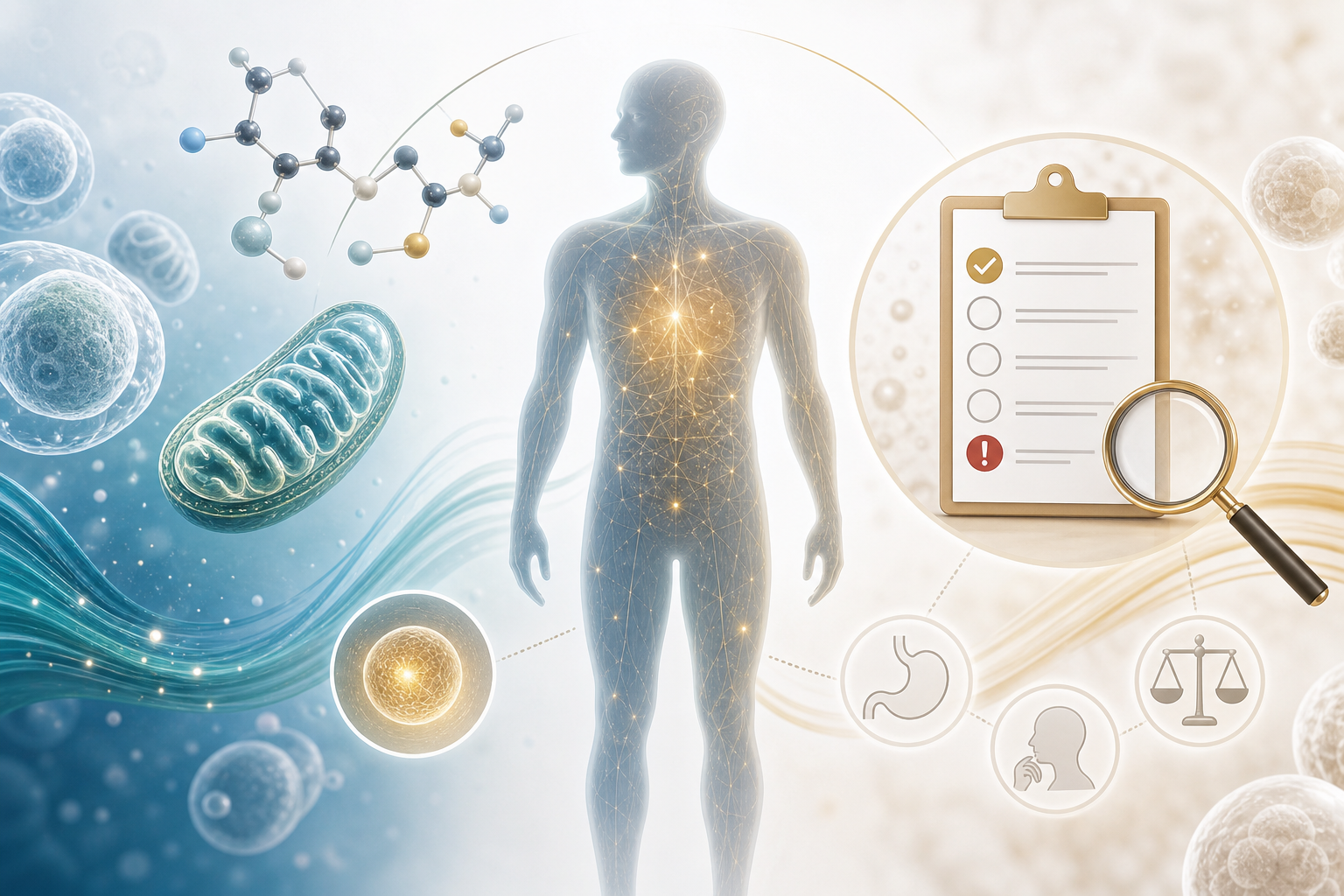
- NMN is a precursor to NAD+, a coenzyme involved in hundreds of metabolic reactions.
- Human studies suggest NMN can raise NAD-related measures, but outcomes vary and research is still developing.
- People who are pregnant, nursing, taking medication, managing a medical condition, or receiving cancer-related care should ask a healthcare professional before use.
Content
What does NMN do in the body?
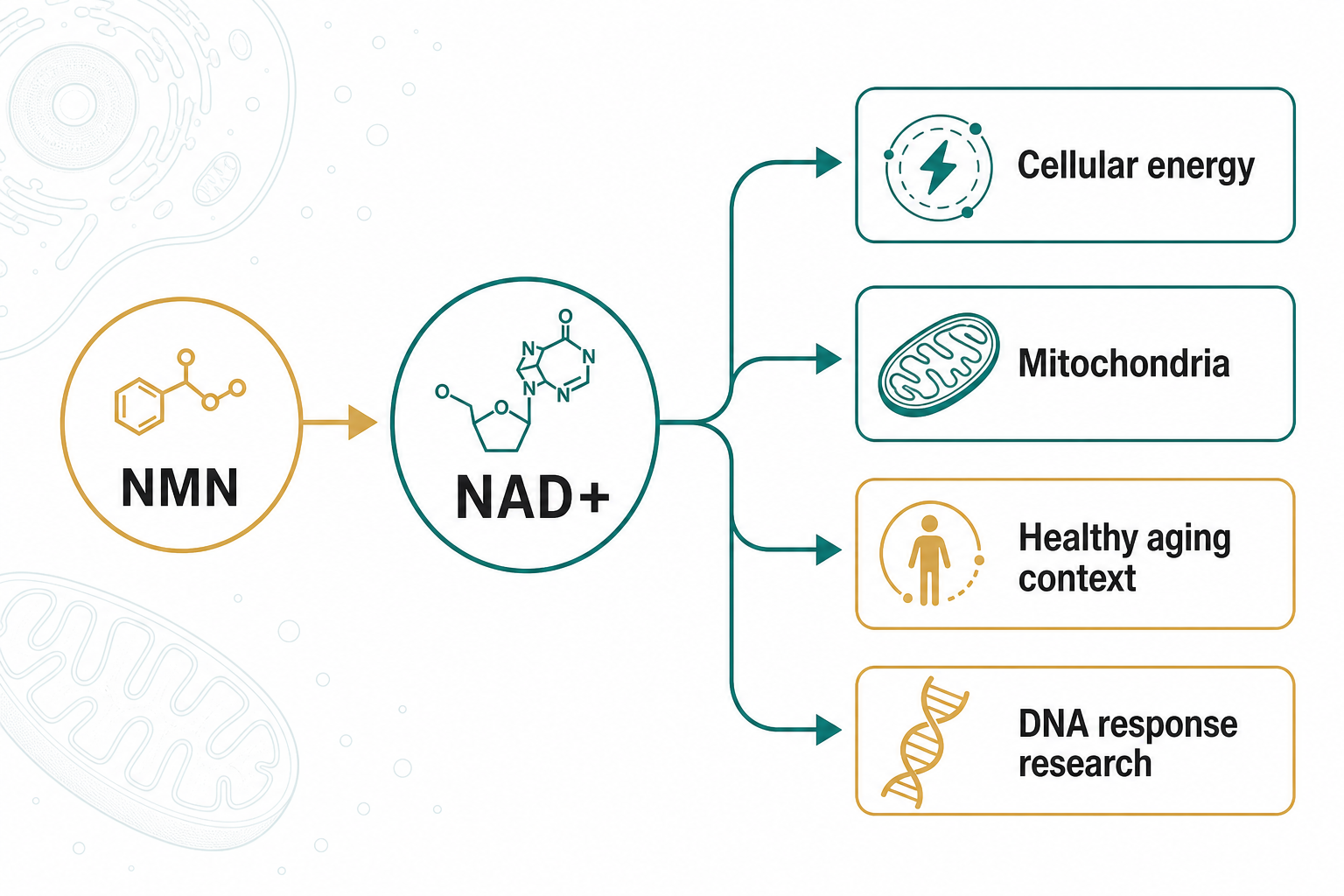
NMN, short for nicotinamide mononucleotide, is a molecule the body can use to help make NAD+. NAD+ is central to energy metabolism and cellular signaling. In plain English, NMN is not the energy itself; it supports a pathway your cells use to maintain NAD+ availability. For the foundational explanation, AIDEVI's guide to what NAD+ does for cellular energy is the best first stop.
Once NMN is used in NAD+ metabolism, NAD+ participates in processes related to mitochondrial function, redox reactions, sirtuin activity, PARP-related DNA damage response, and normal cellular maintenance. This is why NMN appears in conversations about healthy aging, exercise recovery, sleep quality, metabolic wellness, and cellular vitality. It is also why claims must be careful: a pathway connection is not the same as a guaranteed human outcome.
AIDEVI should describe NMN as supporting NAD+ metabolism and cellular energy, not as reversing aging or treating disease. A stronger explanation is: "NMN supports the body's NAD+ pool, which helps maintain cellular energy systems involved in everyday wellness." Readers who want the energy pathway in more detail can continue with AIDEVI's article on cellular energy production and NMN supplementation.
What benefits are realistic?
The most realistic benefit language is "supports." Human trials have reported that NMN supplementation can increase NAD-related measures in healthy adults, and some studies have explored physical function, fatigue, sleep quality, or metabolic endpoints [1]. These findings are encouraging, but they do not prove that every person will feel more energy, become younger, improve cognition, or prevent age-related disease.
Animal studies often look more dramatic than human evidence. The source article mentioned mouse endurance, cognition, lifespan, cardiovascular protection, and many disease categories. Those studies can help scientists understand mechanisms, but they should not be translated into direct consumer promises. A mouse running longer after NMN does not mean a person will automatically gain endurance. A rodent lifespan study does not prove human longevity.
Some human research has explored NMN in specific groups, such as healthy adults, older adults, and postmenopausal women with prediabetes [2]. These studies are useful for understanding direction, safety, and research potential. They are not permission to self-treat blood sugar problems, fatigue, cognitive symptoms, cardiovascular concerns, or any diagnosed condition. For a broader evidence overview, see AIDEVI's comprehensive analysis of whether NMN works.
A practical buyer should expect subtle support, not a dramatic transformation. NMN may fit a routine built around sleep, protein, movement, hydration, stress management, and healthy aging goals. It should not be used to compensate for poor sleep, untreated symptoms, overtraining, or a medical condition that needs professional care.
How should animal research be interpreted?
Many NMN articles list dozens of animal studies: endurance in aged mice, vascular function in rodents, brain aging models, organ stress models, fertility models, and lifespan-related experiments. These studies can be scientifically valuable because they show how NAD+ biology may influence tissues under controlled conditions. They should not be rewritten as direct human benefit claims.
The safest editorial rule is to identify the study type before describing the result. If a study is in mice, say "in mouse research." If a study is in cells, say "in cell models." If the outcome is a biomarker, do not present it as a felt benefit. For example, "NMN supported NAD+ biology in a preclinical model" is much better than "NMN improves body function." The reader learns something real without being pushed toward an exaggerated conclusion.
AIDEVI can still discuss mechanism with confidence. NMN is relevant because NAD+ connects to cellular energy, sirtuins, PARPs, mitochondria, and stress-response systems. The boundary is outcome language. Until a specific effect is supported by strong human evidence, avoid claims that NMN improves cognition, treats metabolic disease, protects organs, reverses vascular aging, prevents cancer, or extends lifespan in people.
What does NMN not do?
NMN does not replace sleep, exercise, nutrition, medical diagnosis, or prescribed treatment. It does not automatically make mitochondria younger, erase DNA damage, cure inflammation, restore organs, or make every user feel more energetic. It also does not remove the need to compare product quality, review ingredients, or check whether a supplement fits your medication and health history.
This negative list is useful because it protects the positive message. When AIDEVI avoids exaggerated promises, the true benefit position becomes clearer: NMN is an NAD+ support ingredient for adults building a serious healthy aging routine. That is more credible than presenting NMN as a one-capsule solution for every age-related concern, especially for readers comparing safety, quality, consistency, and realistic results.
What are the possible NMN side effects?
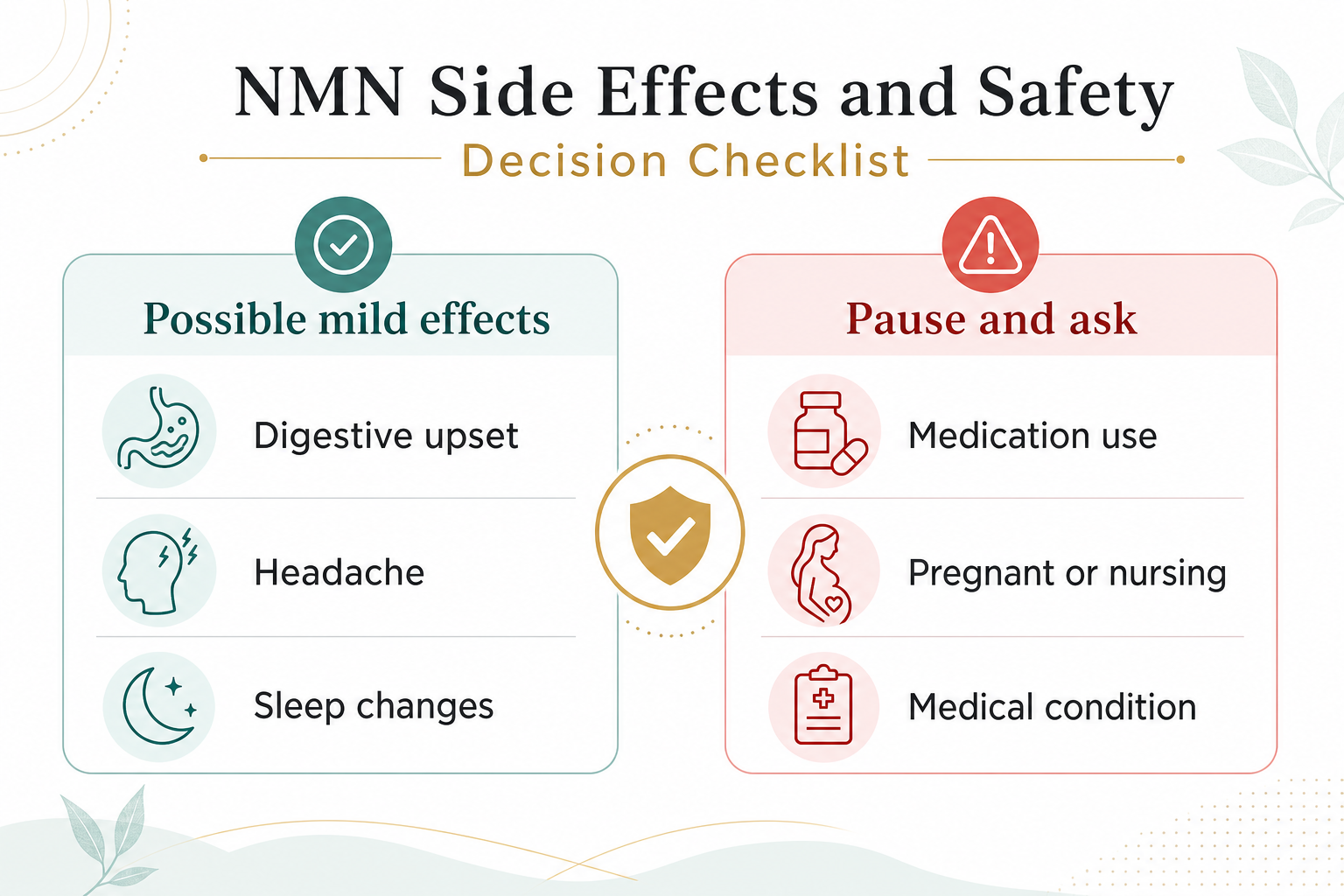
Human NMN studies have generally reported acceptable short-term tolerability at studied doses, but "generally well tolerated" is not the same as "side-effect free" [3]. Individuals can respond differently. Possible mild effects may include digestive upset, nausea, headache, sleep changes, flushing-like sensations, or feeling overstimulated if NMN is taken late in the day or combined with other new products.
Side effects can also come from the routine around the supplement. Starting multiple products at once, changing caffeine, fasting, training harder, traveling, or taking NMN at night can make it difficult to know what caused a symptom. That is why a simple tracking plan matters. Change one thing at a time, follow the label, and watch for digestion, sleep, mood, headache, skin changes, and unusual symptoms.
People taking medication should be more cautious. NMN is connected with metabolism and cellular signaling, so it is not wise to assume it is irrelevant to prescription routines. People with diabetes, cancer history, autoimmune conditions, liver or kidney concerns, cardiovascular conditions, fertility treatment, pregnancy, nursing, surgery plans, or active medical care should consult a clinician before use.
Who is a good fit, and who should pause?
NMN is most appropriate for adults with realistic wellness goals, stable routines, and no unresolved safety concerns. It is less appropriate for people expecting dramatic anti-aging results, disease treatment, or guaranteed energy. It is also not a substitute for medical testing when fatigue, sleep disruption, weight changes, blood sugar issues, or cognitive symptoms are persistent.
| Situation | Best fit | Consider instead | Avoid or pause if |
|---|---|---|---|
| Healthy aging routine | Adult with consistent sleep, nutrition, and movement habits | Build foundations first, then evaluate NMN as optional support | Expecting NMN to reverse aging, extend lifespan, or replace healthcare |
| Energy support | Reader wants NAD+ and cellular energy support | Check sleep, iron, B12, thyroid, stress, and medication factors when fatigue is persistent | Unexplained severe fatigue, chest symptoms, dizziness, or sudden health changes |
| Supplement buyer | Wants clear label, product identity, and routine guidance | Compare label clarity with AIDEVI NMN18000 | Pregnant, nursing, under 18, medicated, or managing a medical condition without clinician input |
How should you start an NMN routine?
Start with the label, not with internet megadoses. AIDEVI's NMN dosage by age guide can help readers think conservatively about routine design, but product directions and professional guidance should come first. More is not automatically better, especially when you are evaluating tolerance.
Timing also matters. Many users prefer morning use because it fits an energy-support routine and reduces confusion with sleep changes. If someone notices insomnia, restlessness, or vivid dreams after starting NMN, timing and total supplement stack should be reviewed. Do not add NMN, caffeine changes, new exercise, and several supplements in the same week if you want to understand your response.
Product quality is part of safety. Look for clear Supplement Facts, recognizable serving information, batch consistency, storage guidance, and realistic claims. AIDEVI's article on choosing the best NMN supplement helps shoppers compare quality without chasing exaggerated benefit language.
If your main concern is safety for daily use, AIDEVI's related article on NMN benefits, side effects, and daily safety can help you continue the same decision path. If your main concern is healthy aging, AIDEVI's guide to healthy aging and NMN supplement routines gives a wider wellness context.
AIDEVI Body Effects and Safety Framework
Pathway: NMN supports NAD+ metabolism. Potential support: NAD+ is connected with cellular energy, mitochondria, and healthy aging research. Boundary: NMN is not a treatment, cure, or guaranteed performance product. Tracking: watch sleep, digestion, headache, energy, and unusual symptoms.
This framework keeps the article useful without turning early research into exaggerated claims.
Conclusion
NMN helps the body support NAD+ metabolism, and NAD+ is involved in cellular energy, mitochondrial function, and normal cellular maintenance pathways. That makes NMN a relevant healthy aging supplement topic. It does not make NMN a cure, a disease-prevention tool, or a guaranteed way to reverse aging.
The possible side effects of NMN are usually discussed as mild tolerance issues such as digestive upset, headache, or sleep changes, but individual context matters. The safest approach is to use clear product directions, start conservatively, track response, and ask a healthcare professional when medication, pregnancy, medical conditions, or cancer-related care are involved.
Frequently Asked Questions
What does NMN do to your body?
NMN supports the body's NAD+ pool. NAD+ is involved in cellular energy, mitochondrial function, and normal maintenance pathways. The correct claim is support, not disease treatment or guaranteed anti-aging.
What are common NMN side effects?
Possible mild effects may include digestive upset, nausea, headache, sleep changes, or individual intolerance. Not everyone experiences side effects, and human safety research is still developing.
Is NMN safe to take every day?
Some human studies have reported acceptable short-term tolerability, but daily use should follow product directions and individual medical context. Ask a healthcare professional if you take medication or have health concerns.
Does NMN increase lifespan?
NMN and NAD+ pathways have been studied in animal aging research, but it has not been proven that NMN increases human lifespan. Longevity claims should be avoided.
Can NMN help with blood sugar or insulin sensitivity?
Some human research has explored NMN in metabolic contexts, but NMN should not be used to self-treat blood sugar issues. People with diabetes, prediabetes, or medication use should work with a clinician.
When should you stop and ask a professional?
Pause and ask a healthcare professional if you notice unusual symptoms, are taking medication, are pregnant or nursing, have a medical condition, or are receiving cancer-related care.
References
- [1] Yi L, Maier AB, Tao R, et al. The efficacy and safety of beta-nicotinamide mononucleotide supplementation in healthy middle-aged adults: a randomized clinical trial. GeroScience. 2023. PubMed.
- [2] Yoshino M, Yoshino J, Kayser BD, et al. Nicotinamide mononucleotide increases muscle insulin sensitivity in prediabetic women. Science. 2021. PubMed.
- [3] Kim M, Seol J, Sato T, et al. Effect of 12-week intake of nicotinamide mononucleotide on sleep quality, fatigue, and physical performance in older adults. Nutrients. 2022. PMC.
- [4] Yoshino J, Baur JA, Imai SI. NAD+ intermediates: the biology and therapeutic potential of NMN and NR. Cell Metabolism. 2018. PubMed.
- [5] Zhang H, Li Y, Su W, et al. Nicotinamide mononucleotide supplementation and metabolic outcomes: systematic review and meta-analysis of randomized controlled trials. Nutrients. 2024. PMC.
These statements have not been evaluated by the Food and Drug Administration. This content is for educational purposes only and is not intended to diagnose, treat, cure, or prevent any disease. Dietary supplement decisions should be made with appropriate healthcare guidance, especially if pregnant, nursing, taking medication, managing a medical condition, or receiving cancer-related care.
