



AIDEVI Skin & Cellular Wellness Guide
Benefits of nmn for Young Skin: What the Evidence Shows
NMN may be relevant to young-looking skin because it can contribute to NAD+ biosynthesis, a pathway involved in cellular energy and stress-response biology. The strongest human NMN evidence currently concerns blood NAD+ biomarkers, not visible skin outcomes. Skin-specific findings are promising but mainly come from cell, reconstructed-skin, and animal models, so NMN is best viewed as a possible support layer rather than a proven cosmetic treatment. [1] [3]
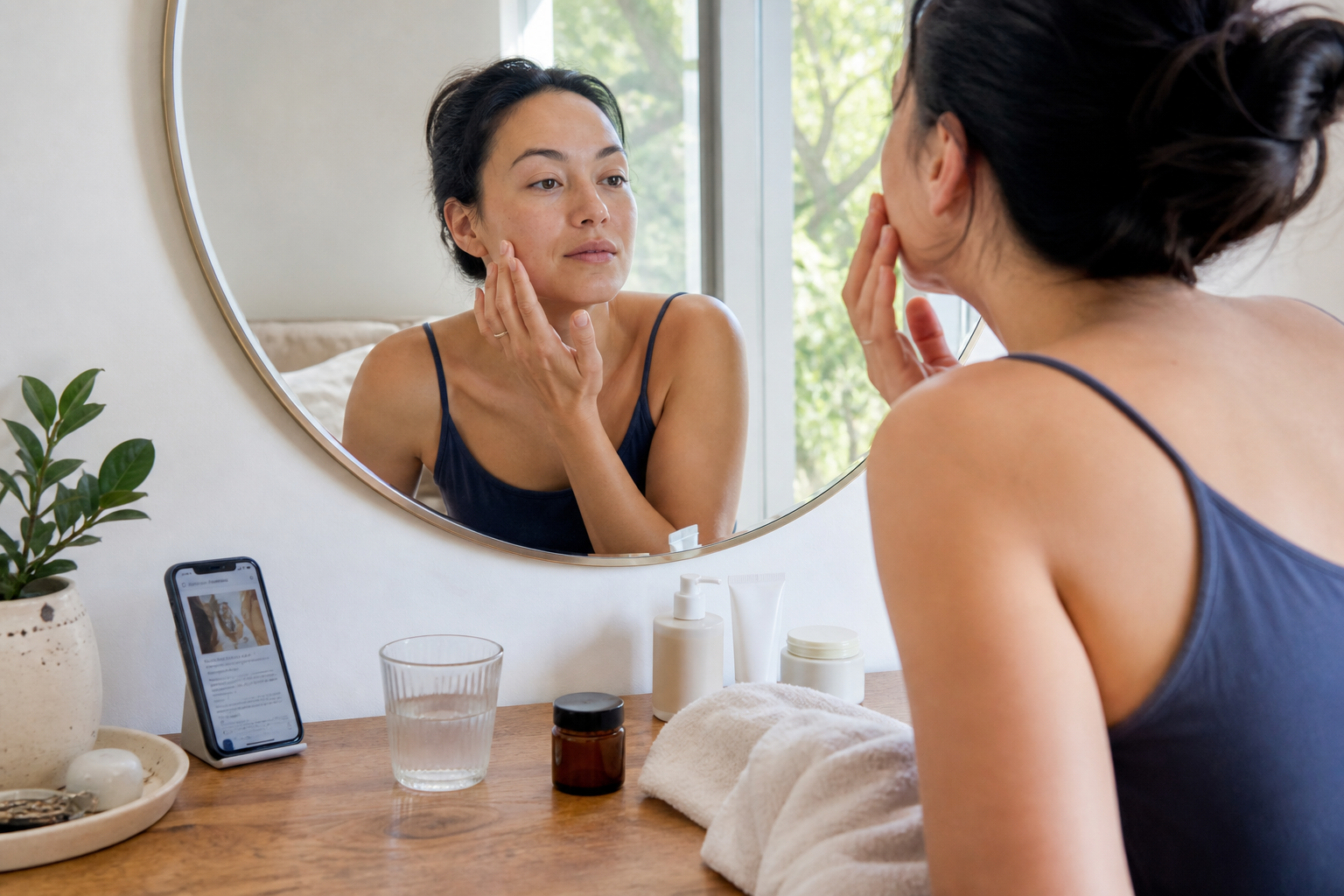
NMN is not a topical active, filler, or substitute for sunscreen. It is a precursor that may help support NAD+ availability. For younger adults, the practical priority remains protecting the skin barrier and collagen with sun protection, sleep, nutrition, and consistent skincare. Consider NMN only as an optional wellness layer, and keep skin-specific claims proportional to the evidence.
Content
- Why is NMN being discussed for young skin?
- What skin benefits have researchers investigated?
- What do human NMN studies actually show?
- Does NMN make sense in your 20s or 30s?
- How can NMN fit into a skin routine?
- What should you check before buying?
- What is a realistic timeline?
- What safety boundaries matter?
- Frequently Asked Questions
Why is NMN being discussed for young skin?
Nicotinamide mononucleotide, or NMN, is a molecule the body can use in the production of nicotinamide adenine dinucleotide, commonly called NAD+. NAD+ participates in energy metabolism and supports enzymes involved in cellular stress responses and normal repair processes. That broad biology is why NMN appears in conversations about healthy aging, including skin.
Skin is not a passive covering. The epidermis renews continuously, the barrier helps control water loss, and the dermis depends on an extracellular matrix that includes collagen and other structural components. These processes are influenced by sleep, ultraviolet exposure, hormones, nutrition, inflammation, and ordinary aging. Supporting one metabolic pathway cannot control all of them.
It also helps to separate oral NMN from topical skincare. A cleanser, moisturizer, retinoid, vitamin C product, or sunscreen acts at the skin surface. An oral supplement works through digestion, absorption, metabolism, and tissue distribution. Readers who want the basic molecule distinction can first review how NAD+ and NMN differ. This keeps the article focused on what NMN might support rather than implying that a capsule behaves like a cream.
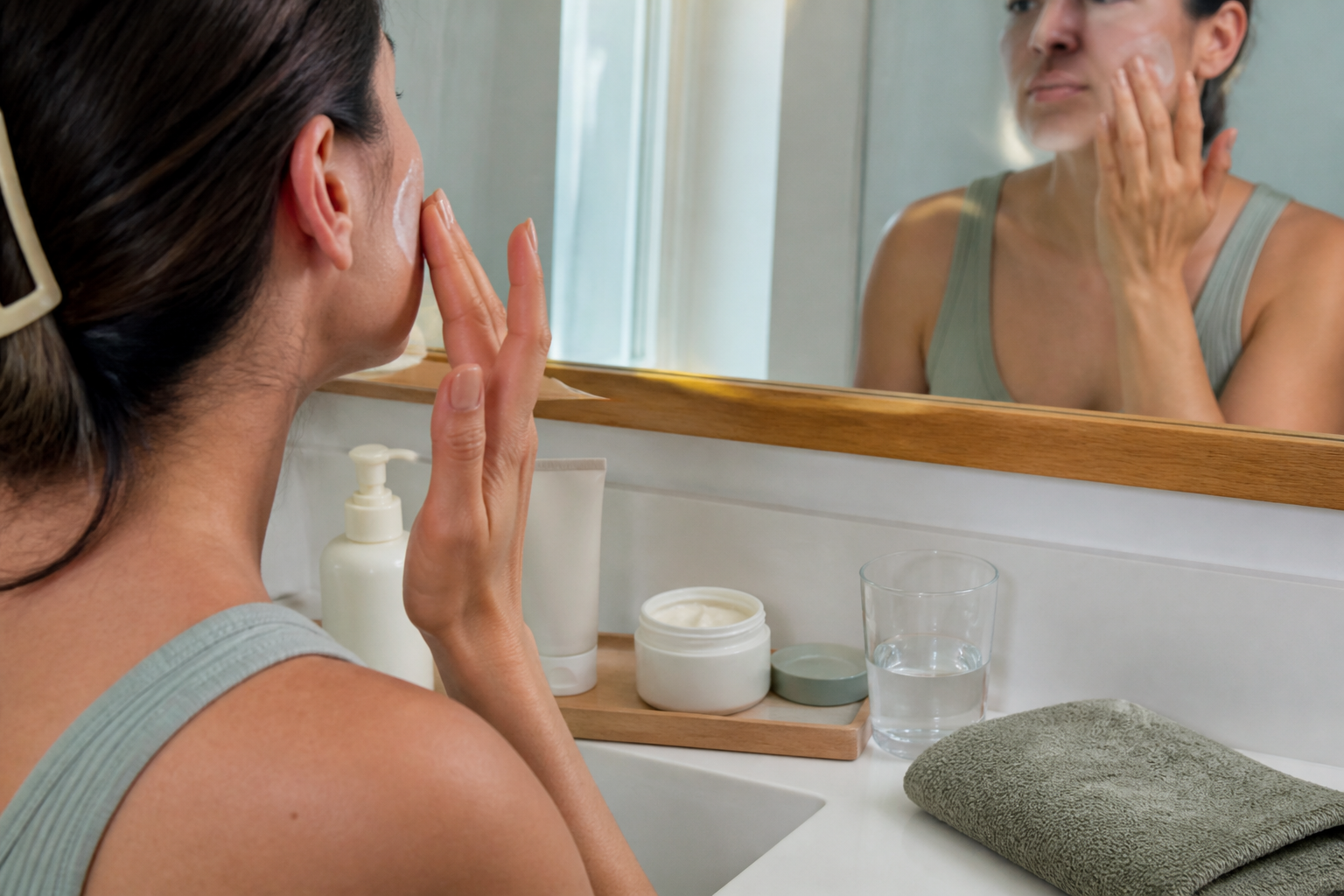
Topical skincare remains the direct daily foundation; NMN, if used, belongs in a broader wellness routine.
What skin benefits have researchers investigated?
The phrase “NMN skin benefits” combines several different questions. A good evidence review identifies the endpoint and the model instead of treating every encouraging result as a human beauty outcome.
| Research question | Why it matters to skin | Current evidence boundary |
|---|---|---|
| Cellular energy | Skin cells need energy for renewal, communication, and routine maintenance. | Strong NAD+ biology; no established visible skin result from NMN in young adults. |
| Barrier and hydration | A stable barrier helps reduce water loss and the look of surface dryness. | Promising results in animal work; human cosmetic data are limited. |
| Collagen and elasticity | Dermal structure influences firmness, bounce, and texture. | Mostly mechanistic or preclinical evidence; not a collagen supplement claim. |
| Oxidative-stress response | UV exposure and pollution can challenge skin structures and signaling. | Biologically plausible; NMN is not a replacement for sun protection. |
| Uneven-looking tone | Melanocyte signaling can influence melanin production. | Cell and reconstructed-skin findings; no basis for a general whitening promise. |
The table is useful because the evidence levels are not interchangeable. A pathway result can explain why researchers are interested in NMN, but it cannot predict the size, speed, or consistency of a cosmetic change in a person.
What do human NMN studies actually show?
The most frequently cited human skin claim often starts with a study that did not measure skin. In a randomized, multicenter, double-blind trial, 80 healthy middle-aged adults received placebo or 300, 600, or 900 mg of NMN daily for 60 days. Blood NAD+ concentrations increased in the NMN groups, and the study reported no safety issue within its monitoring period. The results support a short-term biomarker finding, not proof of smoother, brighter, or firmer skin. [3]
Skin-specific evidence is earlier in the research process. A 2025 study used oral NMN in UV-B-exposed hairless mice and reported improvements in measures such as hydration, elasticity, water loss, wrinkle parameters, collagen structure, and antioxidant markers. This is relevant preclinical evidence because the model examined several skin endpoints, but mice are not humans and the experimental exposure, dose, and duration do not translate into a personal serving recommendation. [1]
A separate 2022 study examined aged melanocytes and a reconstructed human-skin model. NMN reduced melanin production in the aged cell model and reconstructed skin, while the effect was not apparent in young melanocytes. That result helps define a research direction around aging-related pigmentation biology; it does not show that an oral NMN supplement lightens a person’s complexion or removes existing dark spots. [2]
For a broader view of the developing human literature, readers can consult AIDEVI’s latest NMN research overview. The responsible conclusion is narrow: NMN can affect NAD+ biomarkers in some study settings, while direct, long-term skin outcomes still require dedicated human trials.
Does NMN make sense in your 20s or 30s?
Younger adults often search for NMN from a prevention-minded perspective: they want to maintain an even-looking complexion, comfortable hydration, and the natural resilience that makes skin look rested. That goal is reasonable, but it does not require an aggressive supplement routine. In this age group, everyday UV exposure, sleep quality, stress, smoking, alcohol, protein intake, and skincare consistency can have a more direct effect on appearance than a still-developing oral ingredient.
A practical sequence is to protect first, nourish second, and experiment carefully. Use broad-spectrum sun protection, keep the barrier comfortable, eat enough protein and plants, sleep regularly, and choose topical products you can tolerate. If you also want to explore cellular wellness, NMN can be considered as an optional layer after you understand what the human studies measured. AIDEVI’s guide to NMN and metabolic-health research helps explain why the ingredient’s broader biology should not be confused with a direct cosmetic effect.
How can NMN fit into a skin routine?
Think of a skin routine as a layered system. The oral supplement layer, if chosen, should not displace the measures that directly protect the skin surface.
| Layer | Practical role | How to keep expectations realistic |
|---|---|---|
| Protect | Broad-spectrum sunscreen, shade, clothing, and sensible sun habits | This is the most direct way to reduce UV-related skin stress |
| Maintain | Gentle cleansing, moisturizer, and products suited to your skin type | Introduce one new topical product at a time |
| Nourish | Adequate protein, fiber, hydration, and regular meals | Food and sleep remain the foundation of a wellness routine |
| Explore | NMN as an optional cellular wellness supplement | Follow the label and clinician advice; do not treat research doses as personal instructions |
If you decide to explore NMN, take it consistently according to the product label rather than changing several supplements at once. Keeping the rest of the routine stable makes it easier to notice tolerance, digestion, sleep changes, or skin irritation from a separate topical product. AIDEVI’s natural NAD+ support guide can also help you build the non-supplement foundation.
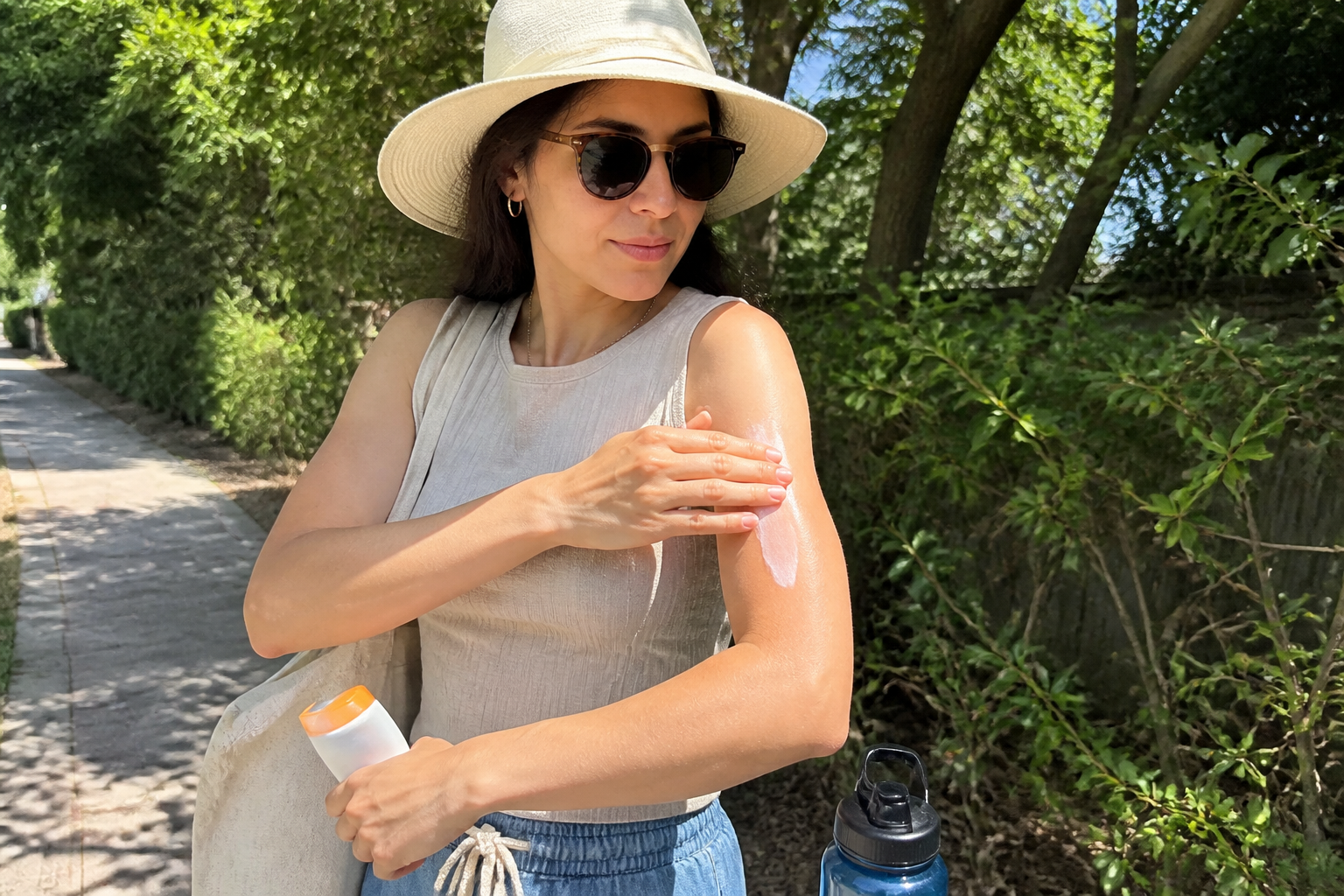
Daily sun protection remains central to maintaining young-looking skin.
What should you check before buying?
A skin-focused marketing message can make a modest preclinical finding sound like a finished cosmetic result. Before buying, move the question from “Will this erase wrinkles?” to “Can I identify the ingredient, the amount, the testing record, and the evidence behind the claim?”
- Confirm the ingredient: Check whether the label names NMN clearly and whether it is a single ingredient or part of a blend.
- Check the serving information: A study dose is a research parameter, not a universal recommendation. Use AIDEVI’s NMN dosage evidence guide for context.
- Look for traceability: A certificate of analysis should identify the tested material or lot where possible. The NMN COA guide explains why a testing document is useful but not the same as a clinical outcome.
- Prefer measured language: Be cautious with instant wrinkle removal, skin whitening, disease claims, or promises that exceed the study population and endpoint.
- Review the product information: If you want to examine a simple NMN product reference, see AIDEVI NMN product information; the article does not treat that page as proof of skin efficacy.

A transparent label and traceable testing record are more useful than an ambitious skin promise.
What is a realistic timeline?
There is no validated skin-results timetable for oral NMN in young adults. Human trials have measured blood NAD+ changes within a 60-day study window, but a biomarker change is not the same as a visible complexion change. Skin appearance also fluctuates with sleep, hormones, sun exposure, hydration, stress, and the products used on the surface.
| Period | What to observe | How to interpret it |
|---|---|---|
| First 1–2 weeks | Tolerance, digestion, sleep, and whether the routine is easy to follow | Too early to judge a skin outcome |
| About 30–60 days | Consistency, general wellness notes, dryness, comfort, and product tolerance | Matches the window used in some human biomarker studies, not a skin guarantee |
| After a stable routine | Photos taken in the same light, barrier comfort, and whether expectations remain realistic | Look for patterns, not a single mirror check; stop if unusual symptoms occur |
What safety boundaries matter?
The 60-day human trial provides short-term information in healthy middle-aged adults under study conditions. It does not establish long-term safety for every population, and it did not test NMN as a treatment for a skin condition. In the United States, dietary supplements follow a different regulatory pathway from drugs, so a product page or testimonial should not be mistaken for clinical proof. [3] [5]
Ask a healthcare professional before starting NMN if you are pregnant, breastfeeding, under 18, taking prescription medication, preparing for surgery, or managing a medical condition. People being treated for cancer or living with significant liver or kidney disease should not make a supplement decision from a beauty article alone. If you notice unusual symptoms after starting a product, stop and seek medical guidance.

Personal health history and medication context belong in the decision.
Conclusion
The potential benefits of NMN for young skin are best understood as a research question about NAD+ biology, not as a finished beauty promise. NMN may support the cellular environment involved in energy metabolism and stress response, while early skin models have explored hydration, barrier function, elasticity, collagen structure, oxidative stress, and pigmentation pathways.
The current human evidence is narrower: selected trials show that oral NMN can raise blood NAD+ over short periods in healthy adults. They do not establish a predictable improvement in wrinkles, tone, hydration, or firmness. For younger adults, sunscreen, sleep, nutrition, and a tolerable skincare routine remain the practical foundation. NMN can be considered only as an optional support layer, with product quality and personal safety reviewed first.
Frequently Asked Questions
What does NMN do for young skin?
NMN can contribute to NAD+ biosynthesis, which is involved in cellular energy and stress-response biology. Skin-specific benefits such as improved hydration, elasticity, or tone remain research questions rather than established results in young adults.
Can NMN reduce wrinkles or fine lines?
Animal studies have reported changes in wrinkle-related and structural skin measures, but dedicated human cosmetic trials are limited. NMN should not be presented as a substitute for sunscreen, retinoids, professional dermatology care, or realistic expectations.
Can NMN lighten dark spots?
A study in aged melanocytes and a reconstructed human-skin model found lower melanin production after NMN exposure. That is not evidence that oral NMN lightens everyone’s skin or removes existing pigmentation. Daily sun protection remains essential.
Is NMN better than collagen for skin?
They serve different roles. Collagen peptides provide amino acids, while NMN is studied as an NAD+ precursor. Neither should be judged from a single marketing claim; consider the goal, evidence, quality documentation, and personal context.
Can NMN replace sunscreen?
No. The American Academy of Dermatology recommends broad-spectrum, water-resistant sunscreen with SPF 30 or higher, together with shade and protective clothing, to reduce sunburn and premature skin aging. [4]
Who should ask a healthcare professional before using NMN?
Anyone who is pregnant, breastfeeding, under 18, taking prescription medication, preparing for surgery, or managing a medical condition should ask a healthcare professional first. A general skin article cannot determine individual suitability.
References
- [1] Kim, S. J. & coauthors (2025). β-Nicotinamide Mononucleotide Enhances Skin Barrier Function and Attenuates UV-B-Induced Photoaging in Mice. PMC full text.
- [2] Brito, S. & coauthors (2022). Nicotinamide mononucleotide reduces melanin production in aged melanocytes by inhibiting cAMP/Wnt signaling. PubMed record.
- [3] Yi, L. & coauthors (2022). The efficacy and safety of β-nicotinamide mononucleotide supplementation in healthy middle-aged adults. PubMed record.
- [4] American Academy of Dermatology Association. Sun protection. AAD guidance.
- [5] U.S. Food & Drug Administration. FDA 101: Dietary Supplements. FDA consumer guidance.
These statements have not been evaluated by the Food and Drug Administration. This product is not intended to diagnose, treat, cure, or prevent any disease.
