



AIDEVI Skin Brightening Guide
Vitamin C vs. Resveratrol for Skin Brightening: Which Deserves the Crown?
If the goal is visible skin brightening and a more even-looking tone, vitamin C is the more direct "king" because it is better established for antioxidant protection, collagen support, and the appearance of pigmentation. Resveratrol is still valuable, but it plays more like a supporting antioxidant for photoaging stress, skin comfort, and long-term radiance.
- Vitamin C is the better first choice for brightening-focused skincare because topical L-ascorbic acid is widely studied for antioxidant and tone-support routines.
- Resveratrol is better framed as a complementary antioxidant polyphenol that may support skin resilience and photoaging-related wellness.
- Neither ingredient replaces sunscreen, dermatologist care, or patience. For dark spots and uneven tone, UV protection is the daily non-negotiable.
Content
For skin whitening search intent, the safer and more accurate answer is skin brightening. Vitamin C deserves the crown for targeted tone support, while resveratrol deserves a place beside it for antioxidant resilience. The best routine is not either-or: use vitamin C for the visible tone goal, resveratrol for supportive antioxidant context, and sunscreen for the foundation.
What does vitamin C do for skin?
Vitamin C is an essential nutrient and a familiar skincare ingredient because it connects to three brightening-relevant ideas: antioxidant defense, collagen formation, and visible tone support. The skin contains vitamin C, and research reviews describe its role in protecting against oxidative stress and supporting collagen synthesis in the skin environment [1]. That is why vitamin C appears in both nutrition articles and topical skincare routines.
In topical skincare, vitamin C is commonly used for dullness, uneven-looking tone, and photoaging-related appearance. L-ascorbic acid is the classic form, though it can be unstable and irritating for some skin types. Other derivatives may be gentler, but they may also behave differently. A good vitamin C product is not just about a flashy percentage; it is about form, pH, packaging, freshness, and tolerance.
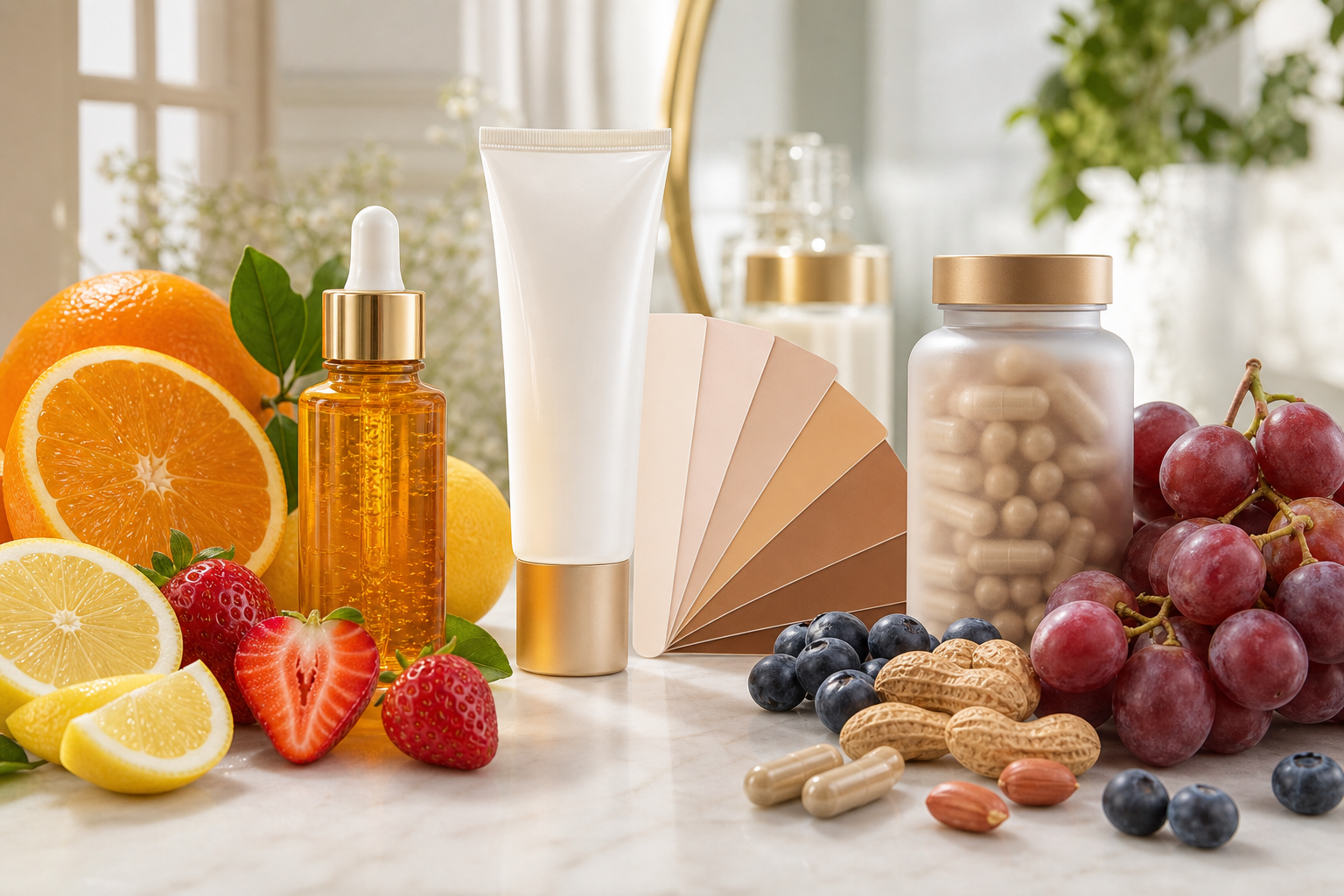
From a food perspective, vitamin C comes from citrus fruits, strawberries, kiwi, peppers, tomatoes, broccoli, and leafy greens. Because the body cannot make vitamin C, regular dietary intake matters [2]. AIDEVI readers comparing food and supplements can continue with the guide on whether daily vitamin C intake can substitute for fruits and vegetables. For skin, the practical point is simple: diet supports the whole body, while topical vitamin C works closer to the skin surface.
What does resveratrol do for skin?
Resveratrol is a plant polyphenol found in grape skins, berries, peanuts, and some cocoa-containing foods. In beauty and wellness, it is discussed mainly for antioxidant and healthy-aging support. It does not have the same long-standing brightening identity as vitamin C, but it is relevant because oxidative stress, UV exposure, and inflammation balance all influence how skin looks over time.
For skin tone, resveratrol is usually framed around indirect support. Laboratory and review literature has explored resveratrol in relation to oxidative stress pathways, photoaging, and melanin-related signaling, but the direct consumer-level evidence for "skin whitening" is not as established as the marketing language often suggests [3]. A more reliable phrase is that resveratrol may help support skin radiance and an even-looking complexion as part of a broader antioxidant routine.
This distinction matters for AIDEVI content quality. Resveratrol can be a smart ingredient, but it should not be oversold as a standalone tone-changing active. Readers who want a deeper ingredient background can read AIDEVI's guide to resveratrol benefits for skin, the broader article on resveratrol health benefits, or the food-focused list of resveratrol-rich foods.
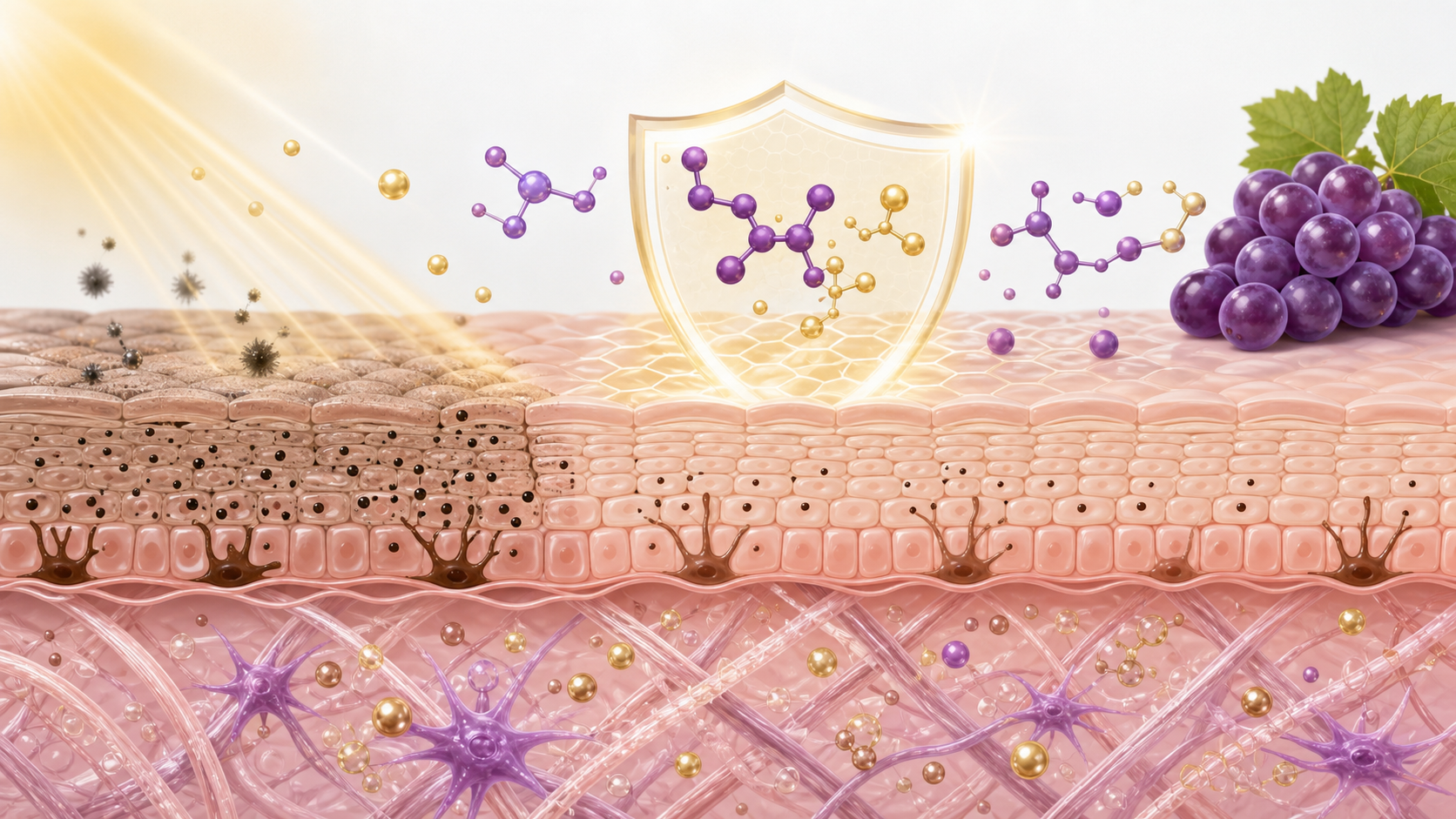
Vitamin C vs. resveratrol: which is stronger for brightening?
Vitamin C is stronger for the specific brightening question because it is directly tied to topical routines for dullness, visible pigmentation, and collagen-related skin quality. Resveratrol is stronger as a supportive antioxidant story. If you ask, "Which ingredient should I start with for uneven-looking tone?" the answer is vitamin C. If you ask, "Which ingredient can support long-term skin resilience from the inside-out?" resveratrol becomes more interesting.
| Question | Vitamin C | Resveratrol | Winner |
|---|---|---|---|
| Most direct for brightening? | Commonly used in topical routines for dullness and uneven-looking tone. | More indirect; supports antioxidant context. | Vitamin C |
| Best antioxidant story? | Strong topical and nutritional antioxidant relevance. | Strong polyphenol and healthy-aging relevance. | Tie, different roles |
| Best for collagen support? | Vitamin C is required for collagen synthesis in the body. | May support skin aging pathways indirectly. | Vitamin C |
| Best inside-out wellness fit? | Essential nutrient from food or supplements. | Polyphenol support for antioxidant and healthy-aging routines. | Depends on goal |
The real crown, though, belongs to sunscreen. Dark spots, uneven tone, and photoaging-related changes are strongly influenced by UV exposure. The American Academy of Dermatology recommends broad-spectrum sun protection as part of daily skin care, and brightening routines tend to disappoint when UV exposure is ignored [4]. AIDEVI's article on UV radiation, healthy aging, and skin health is the best next step for this foundation.
How should you choose?
Choose based on the problem you are actually trying to solve. If your main concern is dullness, uneven-looking tone, or early photoaging appearance, start with a gentle vitamin C skincare product and daily sunscreen. If your routine is already stable and you want an antioxidant supplement conversation, resveratrol can make sense as a broader wellness layer. If your spots are sudden, spreading, itchy, inflamed, or linked with pregnancy, medication, acne, or a skin condition, ask a dermatologist before trying to self-correct with brightening ingredients.
| Best fit | Consider instead | Avoid or pause if |
|---|---|---|
| Choose vitamin C if you want a topical routine for radiance, dullness, and uneven-looking tone. | Use a lower-strength or derivative form if your skin is sensitive. | Pause if you have stinging, peeling, eczema flares, or barrier irritation. |
| Choose resveratrol if you want antioxidant support as part of beauty-from-within and healthy-aging habits. | Start with food sources and a complete antioxidant routine first. | Ask a clinician first if pregnant, nursing, taking medication, or managing a condition. |
| Use both if you already tolerate skincare well and want layered support. | Add one product at a time so you can track your response. | Do not stack multiple brightening actives when your skin is irritated. |
What routine makes the comparison practical?
A practical brightening routine should follow four steps: protect, correct, nourish, and track. Protect means sunscreen, shade, hats, and smart UV habits. Correct means choosing the right topical active, usually vitamin C for a beginner brightening routine. Nourish means eating colorful plants, enough protein, and healthy fats so the skin is not treated as separate from the rest of the body. Track means giving your routine enough time and noticing irritation early.
For dark spots and uneven-looking tone, AIDEVI's article on what causes age spots and prevention tips helps explain why sun exposure, normal aging, and inflammation history matter. For a broader supplement view, the guide to enhancing skin health with anti-aging supplements places skin nutrients inside a more complete wellness routine.
If you want to combine vitamin C and resveratrol, keep the roles clean. Use vitamin C topically in the morning if your skin tolerates it, apply sunscreen daily, and consider resveratrol through food or supplements as a separate wellness layer. Do not expect overnight whitening. Look for slow changes in dullness, overall radiance, and the appearance of tone uniformity. Readers comparing antioxidant categories can use AIDEVI's daily antioxidant supplement guide to evaluate ingredient overlap without building an excessive stack.
How long should you track results?
Brightening routines need a slower, calmer measurement style than many shoppers expect. In the first week, the main question is tolerance: does the product sting, dry the skin, or make the barrier feel tight? In weeks two to four, watch for steadier glow, less dullness, and whether sunscreen is being used consistently enough. In weeks six to twelve, you can more fairly judge whether uneven-looking tone appears softer or whether the routine needs a dermatologist-guided adjustment.
Tracking also prevents ingredient confusion. If you start vitamin C, resveratrol, exfoliating acids, retinoids, and new supplements at the same time, you will not know what helped or what irritated your skin. A better AIDEVI-style routine is measured: add one main brightening active, keep sunscreen stable, photograph skin in the same lighting every two weeks, and write down sleep, stress, sun exposure, and menstrual or seasonal changes. Skin tone is influenced by more than one bottle, so the tracking method should respect that complexity.
What are the safety boundaries?
For vitamin C skincare, irritation is the main boundary. Redness, burning, tightness, or peeling can mean the product is too strong, used too often, or layered with too many acids or retinoids. For oral vitamin C, very high intakes can cause digestive discomfort and may not be appropriate for every person. For resveratrol supplements, personal context matters: medication use, surgery plans, pregnancy, nursing, and health conditions are all reasons to ask a healthcare professional first.
For marketing language, the safety boundary is equally important: avoid promising dramatic complexion changes, dark-spot clearing, or disease-related outcomes. The better promise is support for skin radiance, even-looking tone, antioxidant defenses, and healthy aging. AIDEVI's overview of best antioxidant supplements for health support follows the same balanced approach: useful, specific, and careful with claims.
Conclusion
Vitamin C is the winner for targeted skin brightening because it has a clearer role in topical routines for radiance, collagen support, and uneven-looking tone. Resveratrol is not irrelevant; it is simply a different kind of ingredient. It supports the antioxidant and healthy-aging side of the skin conversation rather than acting as the main brightening driver.
The smartest routine does not crown one ingredient and ignore the rest. It uses vitamin C where it is strongest, resveratrol where it fits, and sunscreen every day. That combination is more honest, more sustainable, and far more useful than chasing the idea of one perfect whitening ingredient.
Frequently Asked Questions
Is vitamin C better than resveratrol for skin whitening?
For visible brightening and even-looking tone, vitamin C is usually the better first choice. Resveratrol is better used as complementary antioxidant support.
Can I use vitamin C and resveratrol together?
Yes, many people can combine them by using vitamin C topically and resveratrol through foods or supplements. Introduce changes one at a time and stop if irritation occurs.
Does resveratrol lighten skin beyond its natural tone?
Resveratrol should not be described as a confirmed standalone brightening ingredient. It is more accurate to say it may support antioxidant defenses, skin radiance, and an even-looking complexion.
What is the most important step for dark spots?
Daily sun protection is the foundation. Without sunscreen and UV-aware habits, brightening ingredients often struggle to show consistent visible improvement.
When should I see a dermatologist?
See a dermatologist if pigmentation changes suddenly, spreads quickly, itches, bleeds, becomes inflamed, or does not improve with a careful routine.
FDA disclaimer: These statements have not been evaluated by the Food and Drug Administration. This content is for educational purposes only and is not intended to diagnose, treat, cure, or prevent any disease. Dietary supplements should be used responsibly and with professional guidance when appropriate.
References
- Pullar JM, Carr AC, Vissers MCM. The Roles of Vitamin C in Skin Health. https://pmc.ncbi.nlm.nih.gov/articles/PMC5579659/
- National Institutes of Health Office of Dietary Supplements. Vitamin C Fact Sheet for Health Professionals. https://ods.od.nih.gov/factsheets/VitaminC-HealthProfessional/
- Berman AY, Motechin RA, Wiesenfeld MY, Holz MK. The therapeutic potential of resveratrol: a review of clinical trials. https://pmc.ncbi.nlm.nih.gov/articles/PMC6164842/
- American Academy of Dermatology. How to select a sunscreen. https://www.aad.org/public/everyday-care/sun-protection/shade-clothing-sunscreen/how-to-select-sunscreen
