



AIDEVI Skin Health Guide
Vitamin C, Collagen, and Anti-Aging Supplements: How to Support Skin Health From the Inside Out
Vitamin C is essential for normal collagen formation, and collagen is one of the structural proteins that helps skin look firm, elastic, and hydrated. Anti-aging supplements can support this foundation, but they work best when paired with enough protein, colorful foods, daily sun protection, sleep, and a simple skincare routine.
- Collagen gives skin much of its structure, but the body needs amino acids, vitamin C, minerals, and healthy habits to build and maintain it.
- Vitamin C supports collagen synthesis and antioxidant defense, yet oral vitamin C alone is not a shortcut to smoother-looking skin.
- The most realistic anti-aging plan combines nutrition, selected supplements, sunscreen, barrier care, sleep, and consistency over 8-12 weeks.
Content
For skin health, vitamin C and collagen are connected but not identical. Vitamin C helps the body make stable collagen, while collagen peptides may provide amino acid building blocks and signal support for skin structure. The best routine is not a single ingredient. It is a layered plan: eat enough protein, get vitamin C-rich foods, consider well-matched supplements, protect skin from UV exposure, and maintain the skin barrier every day.
What does collagen do for skin?
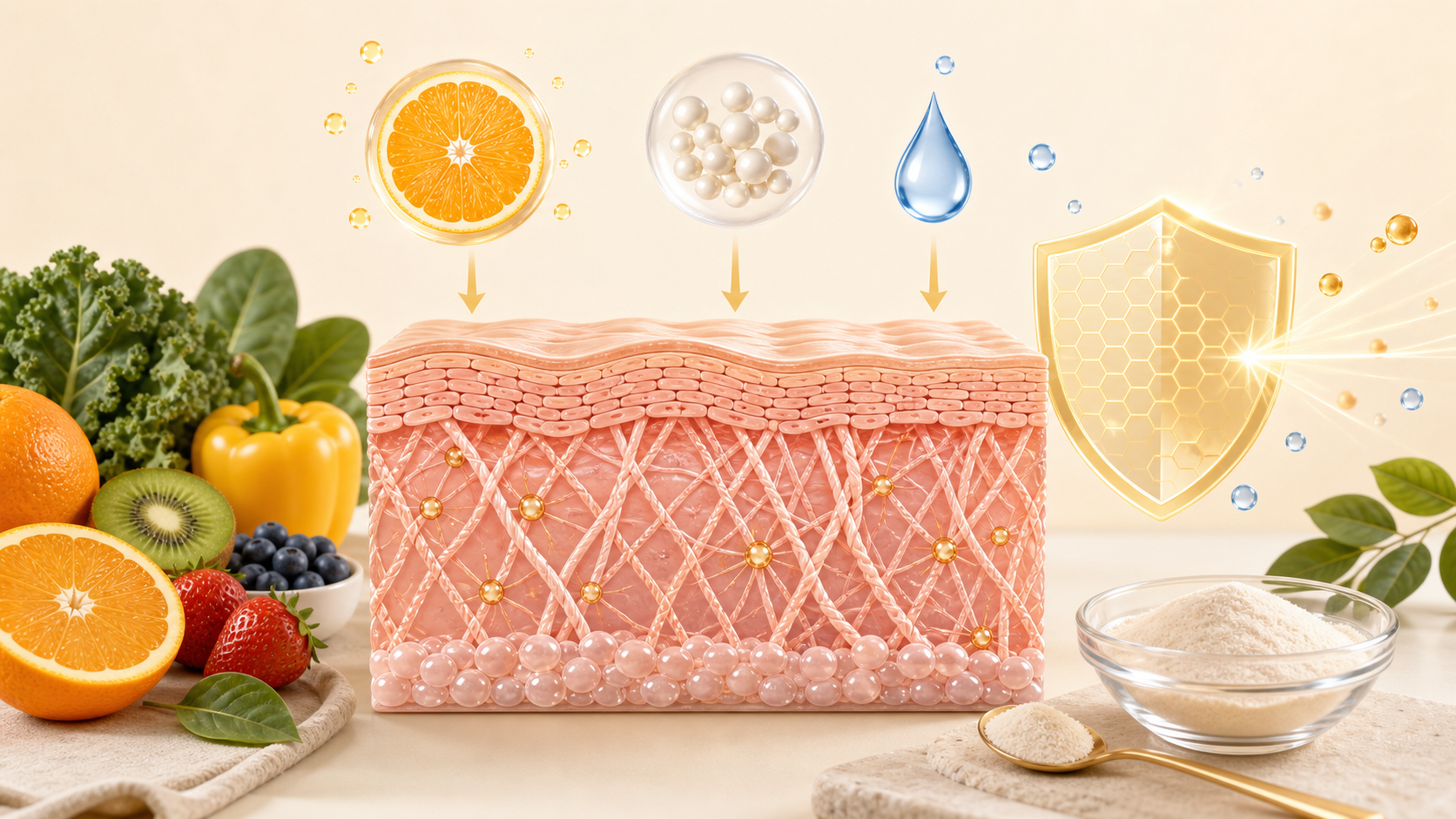
Collagen is a major structural protein in the body. In skin, it helps form the supportive matrix that contributes to firmness, elasticity, and a smoother-looking surface. Think of collagen as part of the skin's architecture: not the only material, but one of the most important materials in the frame.
Collagen changes naturally with age. Sun exposure, smoking, poor sleep, low protein intake, oxidative stress, and normal biological aging can all influence the way skin looks and feels. That is why visible skin aging often appears as a combination of dryness, fine lines, rougher texture, less bounce, and uneven-looking tone rather than one isolated issue.
A practical collagen strategy therefore starts with basics. The body needs amino acids from dietary protein. It also needs supporting nutrients, including vitamin C. People interested in collagen formats can compare sources, peptide types, and routine expectations in AIDEVI's guide to multi-collagen peptides and wellness benefits.
How does vitamin C support collagen?
Vitamin C plays a direct role in normal collagen biosynthesis. The NIH Office of Dietary Supplements explains that vitamin C is required for collagen formation and also acts as an antioxidant in the body [1]. In simple terms, vitamin C helps certain enzymes perform the steps needed to stabilize collagen structure.
This matters because collagen is not just "protein powder for skin." Collagen fibers must be built, modified, and organized. Vitamin C participates in the hydroxylation steps that help collagen become stable. Without enough vitamin C, the body cannot maintain normal collagen formation as efficiently. That is one reason vitamin C deficiency can show up in connective tissue symptoms, not only general tiredness.
Vitamin C also sits in the broader antioxidant conversation. Skin faces oxidative stress from UV exposure, pollution, and normal metabolism. A review on vitamin C and skin health describes its presence in both the epidermis and dermis and discusses roles in antioxidant protection and collagen formation [2]. That does not mean higher intake always creates better skin. It means adequate intake is part of a rational skin-health foundation.
For readers comparing antioxidant categories, AIDEVI's daily antioxidant supplement guide is a useful next step. It keeps the focus on ingredient purpose, formula quality, and consistent use instead of dramatic anti-aging promises.
Do anti-aging supplements help skin health?
Some supplement categories have more skin-related evidence than others. Collagen peptides are among the better studied. A 2023 systematic review and meta-analysis of randomized controlled trials reported that oral collagen supplementation was associated with improvements in skin hydration and elasticity, with some effects depending on duration and study design [3]. This supports a cautious conclusion: collagen peptides may help some people support skin parameters over time, but they should not be presented as instant wrinkle correction.
Vitamin C supplements are more nuanced. If a person does not get enough vitamin C from food, supplementation may help fill a nutritional gap. If intake is already adequate, adding more may not create a visible difference. This is why the original question, "Will vitamin C supplements boost collagen?", needs a careful answer. Vitamin C is required for collagen synthesis, but oral supplementation does not automatically translate into visibly higher skin collagen for every person.
Other anti-aging supplements are best framed by mechanism and goal. Resveratrol is a plant polyphenol often discussed for antioxidant support; readers focused on skin can continue with AIDEVI's article on resveratrol and skin wellness. nmn is usually discussed through NAD+ and cellular wellness, and AIDEVI's guide to healthy aging antioxidant properties of NMN supplements gives broader context. CoQ10 belongs in the antioxidant and cellular energy conversation, especially for readers comparing beauty-from-within formulas; see AIDEVI's CoQ10 benefits guide for women.
How to compare anti-aging supplement options
| Goal | Useful Category | Realistic Expectation |
|---|---|---|
| Skin hydration and elasticity support | Collagen peptides | Track changes after 8-12 weeks of consistent use. |
| Collagen synthesis nutrition | Vitamin C foods or supplements | Most helpful when intake is low or diet quality is inconsistent. |
| Oxidative stress support | Antioxidants such as vitamin C, resveratrol, CoQ10, or polyphenols | Works best as part of a diet and lifestyle plan, not as a standalone fix. |
| Cellular wellness and aging support | NMN or NAD+ support routines | Use for whole-body wellness goals, not for immediate cosmetic change. |
Which foods and habits support collagen naturally?
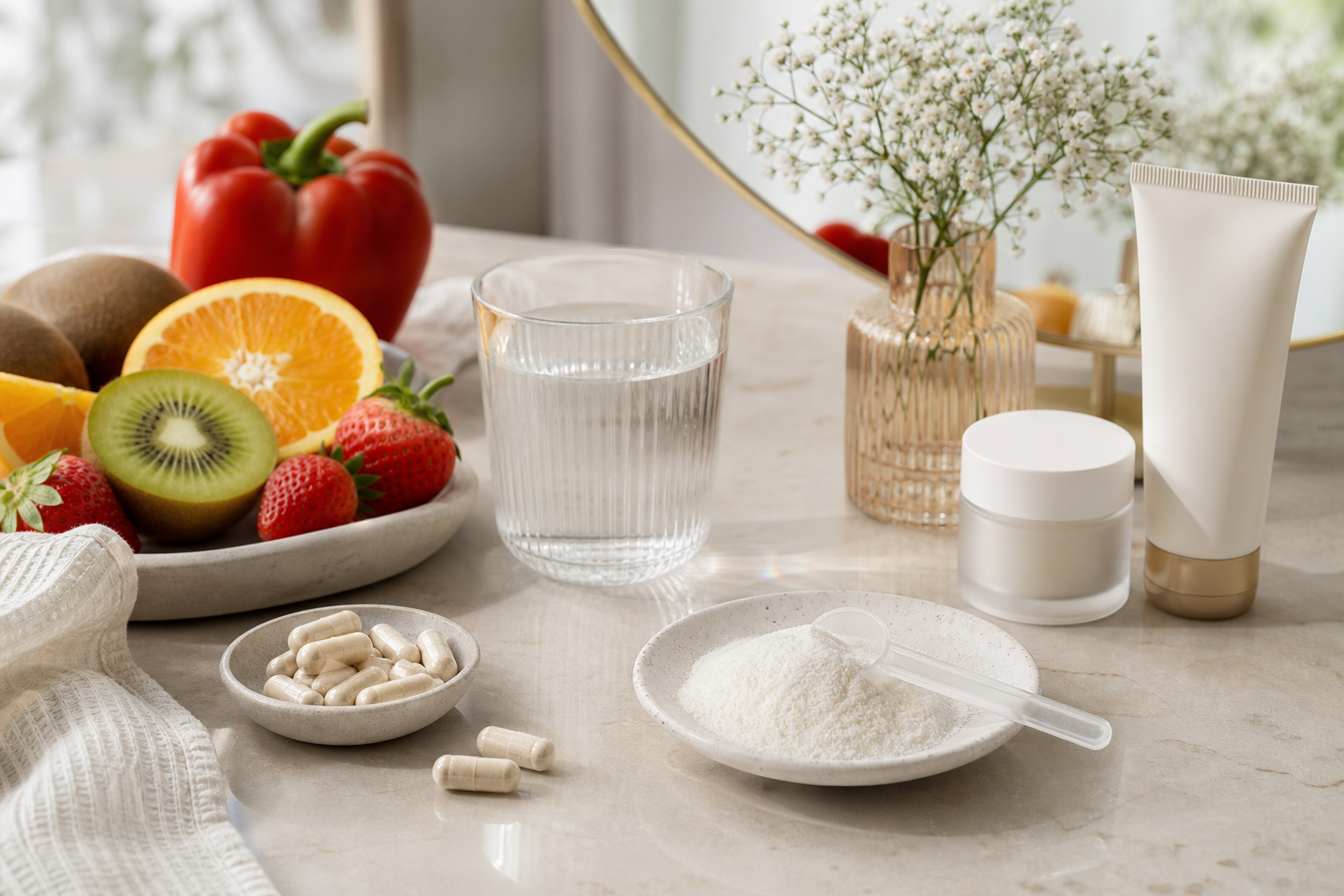
Food should be the first collagen-support tool. Vitamin C-rich choices include oranges, lemons, grapefruit, strawberries, kiwi, guava, bell peppers, broccoli, Brussels sprouts, and dark leafy greens. These foods also bring fiber, water, and many plant compounds that a single capsule does not fully replace.
Protein matters just as much. Collagen is made from amino acids, so a low-protein diet can make a skin supplement routine less logical. Good options include fish, poultry, eggs, dairy, soy foods, beans, lentils, and other protein-rich meals that fit personal dietary needs. A collagen peptide supplement can be added, but it should sit on top of a complete diet rather than compensate for an empty one.
Sun protection is the outside-in partner. The American Academy of Dermatology recommends broad-spectrum sunscreen with SPF 30 or higher as part of reducing premature skin aging from UV exposure [4]. If a person takes vitamin C and collagen but skips sunscreen, the routine is missing the most important daily defense. Readers worried about uneven-looking tone can also review AIDEVI's guide to what causes age spots and visible tone changes.
Sleep, exercise, and stress management are less glamorous than a new capsule, but they shape the skin environment. Poor sleep can make skin look dull and tired. Regular movement supports circulation and metabolic health. Stress can affect routines, food choices, and skin comfort. Anti-aging works better when it is treated as daily maintenance, not a once-a-month rescue plan.
What should you check before choosing a skin supplement?
A skin supplement should be judged like a routine, not like a slogan. First, check the purpose. Is the formula built for collagen support, antioxidant support, hydration support, or general healthy aging? Second, check the ingredient form and serving size. A vague "beauty blend" is harder to evaluate than a clear label that lists collagen peptides, vitamin C, CoQ10, resveratrol, or other active ingredients with transparent amounts.
Third, check whether the formula fits your diet and lifestyle. If you already take a multivitamin, adding a separate high-dose vitamin C product may be unnecessary. If you avoid animal-derived ingredients, some collagen products may not fit your preferences. If you take medication or manage a medical condition, ask a qualified healthcare professional before adding new supplements. This is especially important with stacked routines that combine several antioxidants, beauty formulas, and cellular-wellness products.
Finally, track only a few signs at a time: skin comfort, hydration feel, makeup application, roughness, and whether your routine is easy to follow. The goal is not to chase a perfect ingredient list. The goal is to build a calm system that your skin and your schedule can actually live with.
AIDEVI's simple skin-support framework
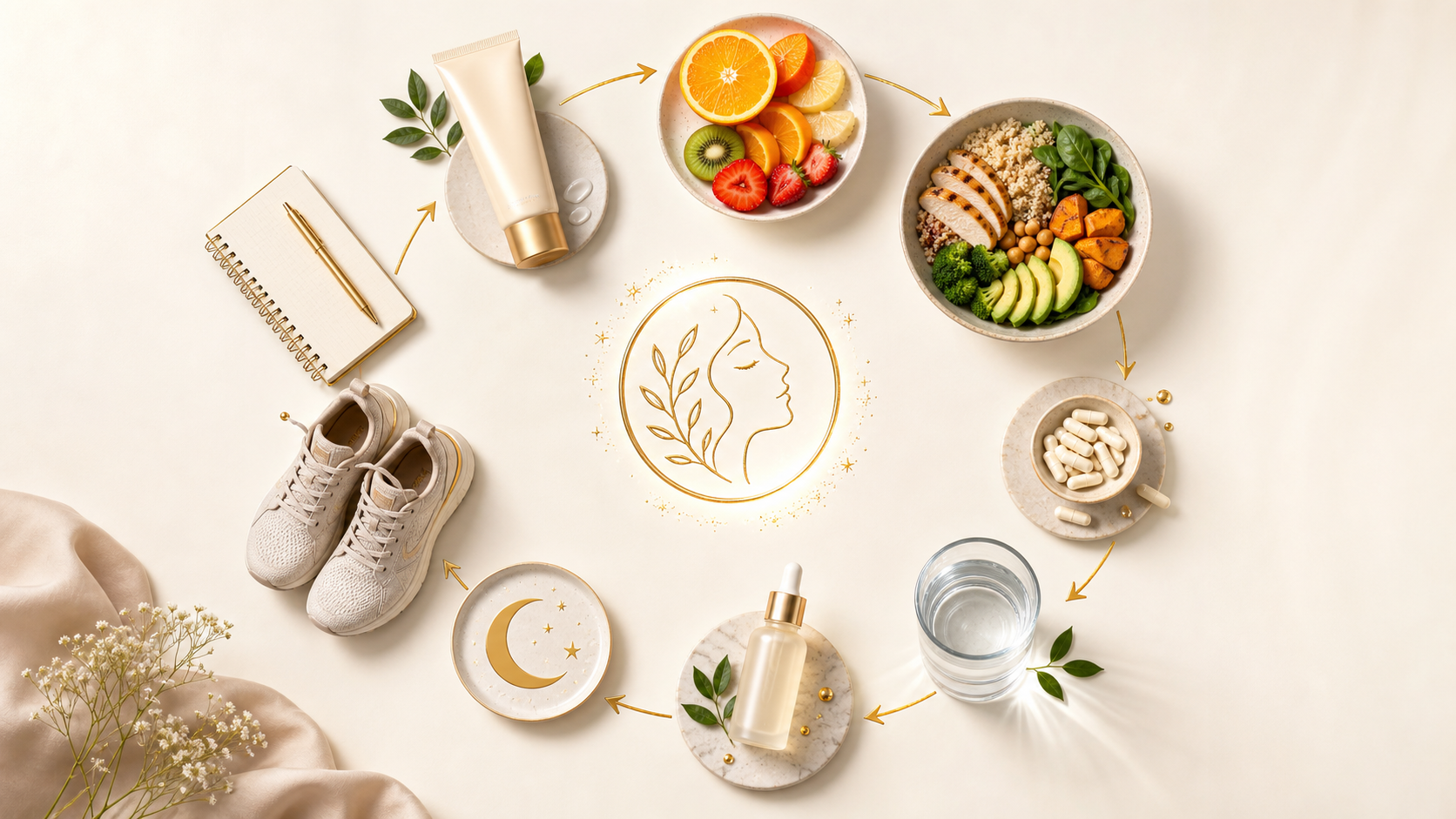
AIDEVI recommends thinking in four layers: protect, build, support, and track. Protect means daily sunscreen, gentle cleansing, and barrier-friendly moisturization. Build means protein, vitamin C-rich foods, and enough overall calories and micronutrients. Support means selecting supplements that match a real goal, such as collagen peptides for hydration and elasticity support or antioxidants for beauty-from-within routines. Track means watching comfort, consistency, and visible changes over several weeks instead of changing everything at once.
This framework also helps avoid overbuying. A person who already eats plenty of vitamin C-rich foods may not need a high-dose vitamin C supplement. Someone who gets little protein may benefit more from improving meals before adding collagen. Someone who spends time outdoors may see more value from sunscreen discipline than from adding another anti-aging capsule.
For a broader comparison between internal and topical approaches, see AIDEVI's article on supplements versus skincare products for anti-aging benefits. The strongest answer is usually both, but in the right order: first protect the skin, then nourish the body, then choose supplements with evidence, quality, and realistic expectations.
Conclusion
Vitamin C and collagen belong together in a skin-health conversation because vitamin C supports normal collagen formation, while collagen helps provide structure to the skin. Anti-aging supplements can be useful, especially when they support clear nutritional or wellness goals, but they should be used with steady expectations. A capsule cannot replace sunscreen, protein, sleep, hydration, or a gentle skincare routine.
The most balanced approach is simple: eat vitamin C-rich foods, get enough protein, protect skin from UV exposure, support the skin barrier, consider collagen or antioxidant supplements when appropriate, and track results over 8-12 weeks. Skin health is built through repetition. The quieter routine is often the one that lasts.
Frequently Asked Questions
Does vitamin C increase collagen?
Vitamin C is required for normal collagen synthesis. However, taking more vitamin C does not automatically mean more visible collagen in the skin, especially if your current intake is already adequate.
Are collagen supplements better than vitamin C supplements?
They do different jobs. Collagen peptides provide amino acid building blocks and may support skin hydration and elasticity. Vitamin C supports collagen formation and antioxidant defense. Many routines use food-first vitamin C with collagen peptides if the goal is skin structure support.
Which foods are best for vitamin C?
Common vitamin C-rich foods include citrus fruits, strawberries, kiwi, bell peppers, broccoli, Brussels sprouts, and dark leafy greens. A varied diet is usually more useful than relying only on one fruit or one supplement.
How long do skin supplements take to show results?
For collagen peptides, many studies evaluate outcomes after several weeks, often around 8-12 weeks. Individual results vary based on diet, age, product quality, dose, sleep, sun exposure, and skincare habits.
Can supplements replace skincare?
No. Supplements support the internal environment, while skincare protects and cares for the skin surface. Sunscreen and barrier care remain essential parts of a visible skin-aging routine.
These statements have not been evaluated by the Food and Drug Administration. This product is not intended to diagnose, treat, cure, or prevent any disease. Dietary supplements should be used as part of a balanced lifestyle, and you should consult a qualified healthcare professional before starting any new supplement, especially if you are pregnant, nursing, taking medication, or managing a medical condition.
References
- NIH Office of Dietary Supplements. Vitamin C Fact Sheet for Health Professionals. https://ods.od.nih.gov/factsheets/VitaminC-HealthProfessional/
- Pullar JM, Carr AC, Vissers MCM. The Roles of Vitamin C in Skin Health. Nutrients. 2017. https://pmc.ncbi.nlm.nih.gov/articles/PMC5579659/
- Pu SY, Huang YL, Pu CM, et al. Effects of Oral Collagen for Skin Anti-Aging: A Systematic Review and Meta-Analysis. Nutrients. 2023. https://pmc.ncbi.nlm.nih.gov/articles/PMC10180699/
- American Academy of Dermatology Association. How to reduce premature skin aging. https://www.aad.org/public/everyday-care/skin-care-secrets/anti-aging/reduce-premature-aging-skin
- U.S. Food and Drug Administration. Dietary Supplement Products and Ingredients. https://www.fda.gov/food/dietary-supplements/dietary-supplement-products-ingredients
