



AIDEVI Medication Safety & Supplement Guide
Semaglutide Dosing Errors: What the Poison-Control Reports Mean—and Where CoQ10 Fits
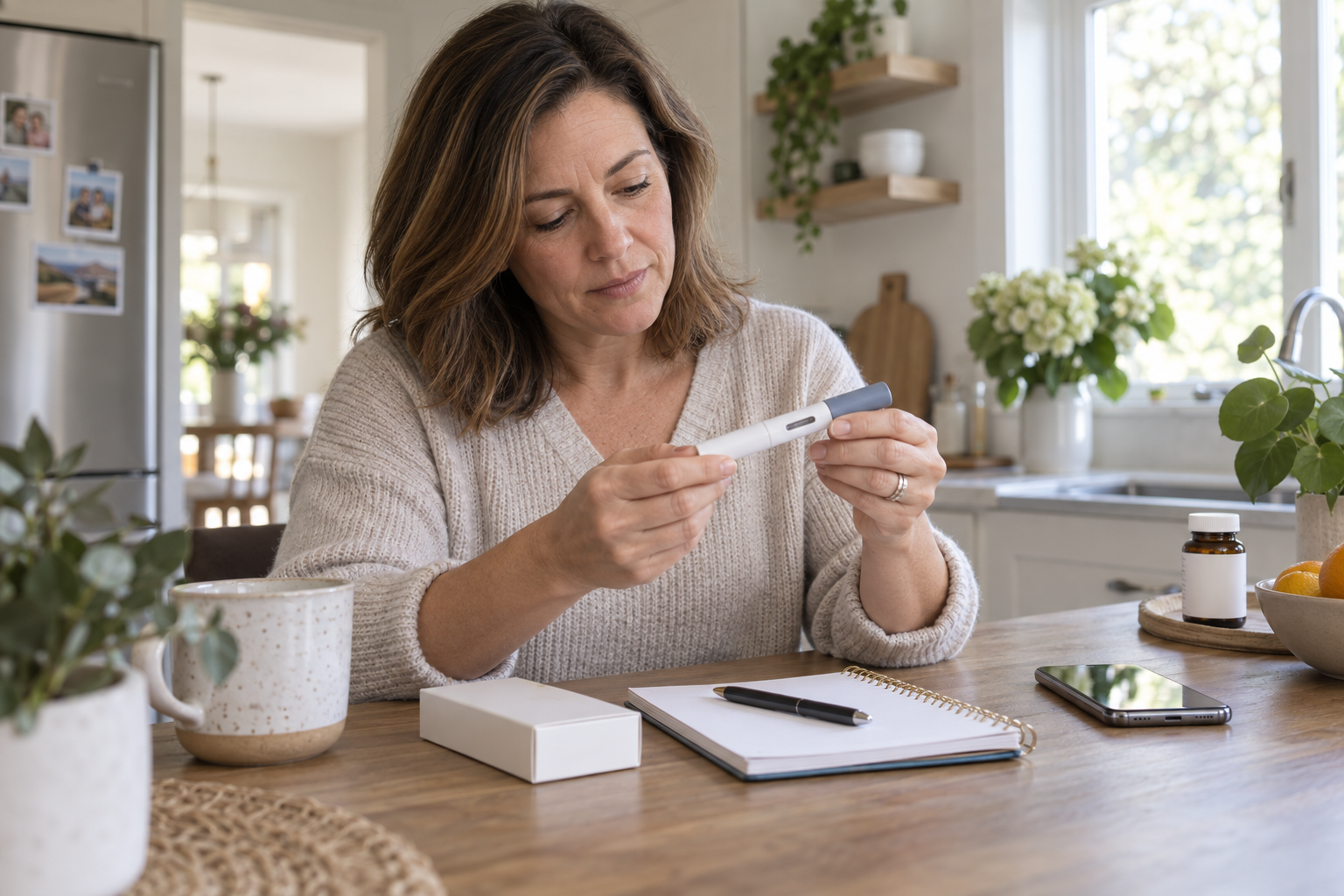
A 2023 report found nearly 3,000 U.S. poison-center calls involving semaglutide between January and November—more than 15 times the 2019 count—but the number was not a clean tally of confirmed overdoses. The practical lesson is dose clarity: compounded injectable products can create confusion around milligrams, milliliters, units, concentration, and weekly schedules. CoQ10 is not an alternative treatment for diabetes, obesity, or a semaglutide dosing error; it is a separate dietary supplement that must be evaluated on its own evidence and safety profile.
- The widely reported “3,000 calls” figure refers to January–November 2023 poison-center calls, not a current annual total or proof that every caller overdosed.
- FDA reports dosing errors involving compounded injectable semaglutide, including confusion between mg, mL, and “units,” different concentrations, and multi-dose vials.
- Severe vomiting, abdominal pain, fainting, dehydration, or suspected hypoglycemia after a wrong dose warrants prompt professional advice.
- CoQ10 cannot reverse a semaglutide overdose, replace a GLP-1 prescription, or provide an equivalent weight-management or diabetes effect.
- If you take CoQ10 separately, review the label and medication interactions with a clinician or pharmacist.
Content
- What did the poison-center report actually show?
- Why do semaglutide dosing errors happen?
- What should you do after a suspected wrong dose?
- What changes with compounded semaglutide?
- Is CoQ10 a safer alternative to semaglutide?
- What can CoQ10 reasonably support?
- Which next step fits your situation?
- Conclusion
- Frequently Asked Questions
What did the poison-center report actually show?
The figure used in the original article came from a 2023 report: U.S. poison centers recorded nearly 3,000 calls involving semaglutide from January through November, described as more than a 15-fold increase compared with 2019 [1]. That is important public-health context, but it should not be presented as a current 2026 statistic or as a count of confirmed overdoses. Poison centers also receive calls from people asking about side effects, missed doses, or whether an exposure needs attention.
The useful conclusion is not that every semaglutide user is in danger. It is that a fast-growing prescription medicine requires clear instructions, consistent follow-up, and a reliable way to ask for help. The original article also overstates the role of social-media endorsements and treats all compounded products as identical. A more accurate discussion focuses on the known error pathways and on what patients should do when the label or dose is unclear.
Why do semaglutide dosing errors happen?
FDA alerts describe reports involving compounded injectable semaglutide in which patients or healthcare professionals used an incorrect amount. The confusion can come from converting between milligrams, milliliters, and syringe “units,” working with different concentrations, or drawing medication from a multi-dose vial [2]. A small-looking volume is not automatically a small dose because the amount of active drug depends on concentration.
Schedule confusion is another risk. Semaglutide products are prescription medicines with product-specific dosing and titration instructions. A patient who takes a weekly medicine daily, repeats a dose too soon, or increases the amount faster than directed can create a very different exposure from the one intended by the prescriber.
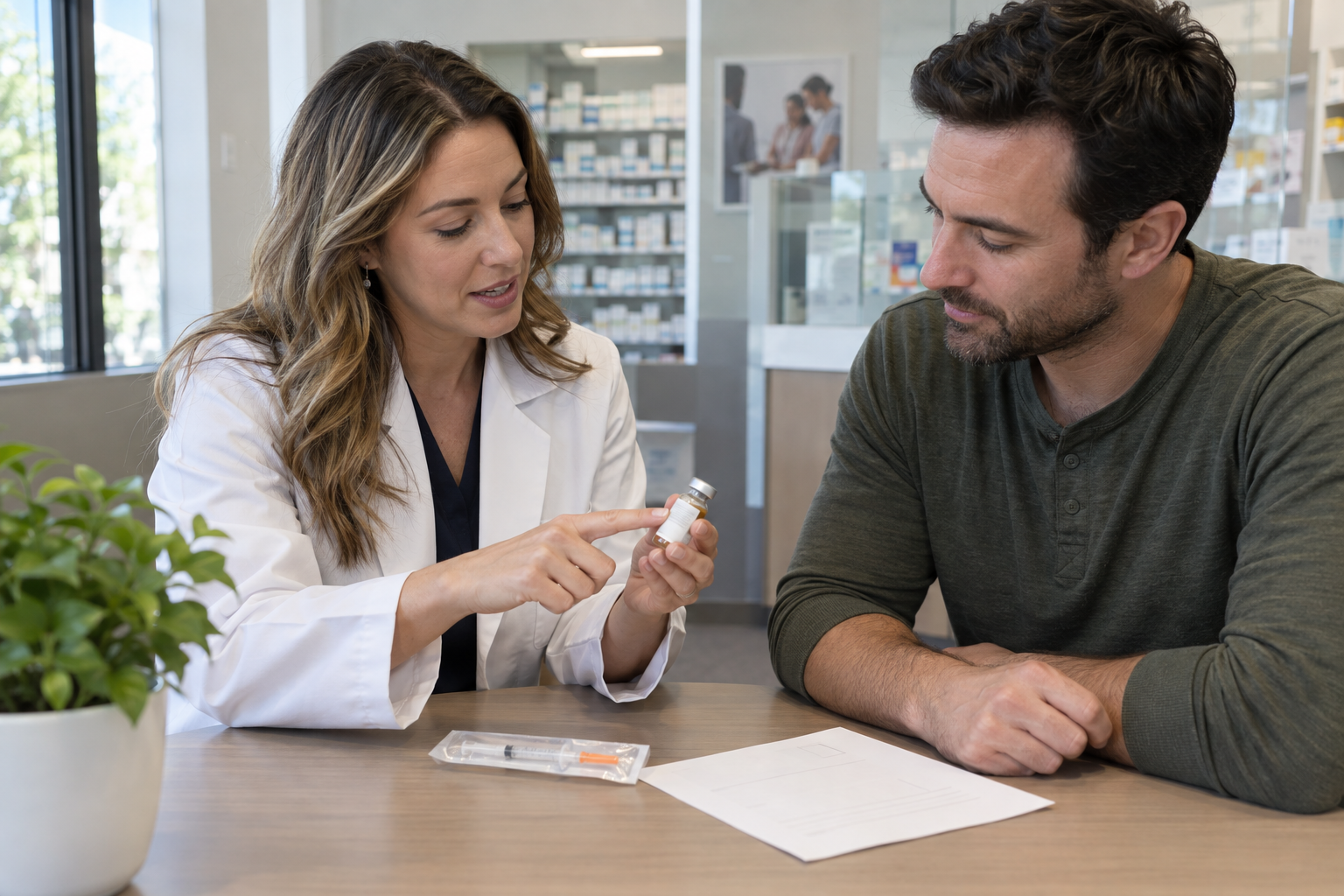
The safest response to an unclear label is to pause and contact the prescriber, dispensing pharmacy, or pharmacist. Do not use an internet calculator to convert units, borrow another person’s pen, combine leftover products, or assume that two vials with the same ingredient name have the same concentration.
What should you do after a suspected wrong dose?
If you think you injected too much semaglutide, used the wrong strength, or repeated a dose, contact your prescriber, pharmacist, or a poison-control service promptly for case-specific advice. In the United States, Poison Help is available at 1-800-222-1222. If symptoms are severe, rapidly worsening, or include trouble breathing, collapse, confusion, fainting, severe dehydration, or persistent vomiting, seek emergency care.
FDA reports possible overdose-related effects including severe nausea, vomiting, abdominal pain, fainting, headache, dehydration, acute pancreatitis, and gallstones. Severe or repeated vomiting can also make it difficult to maintain fluids and may be especially concerning for people with diabetes or those taking other glucose-lowering medicines [2].
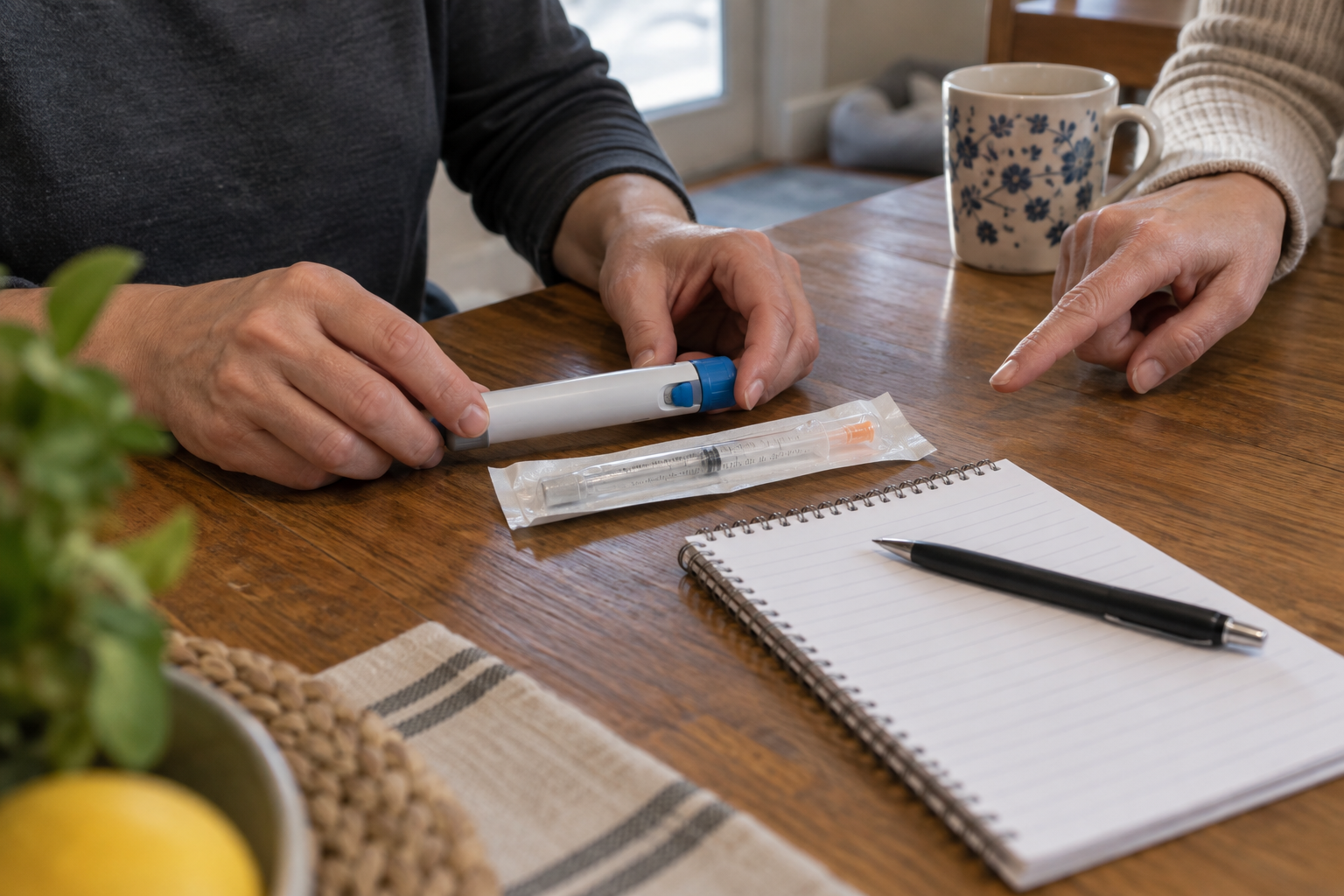
Have the container, label, concentration, syringe or pen, dose time, amount taken, and other medicines available when you call. Do not take CoQ10, another supplement, or an extra prescription medicine as a home antidote. CoQ10 is not designed to neutralize semaglutide, correct hypoglycemia, or treat dehydration.
What changes with compounded semaglutide?
Compounded medicines are not automatically counterfeit, and a licensed pharmacy may prepare a compounded medicine in specific circumstances. However, compounded products do not go through the same FDA premarket review for safety, quality, and effectiveness as approved drugs. FDA has warned that compounded semaglutide may be supplied in different containers, concentrations, and instructions, which increases the chance of a measurement error [3].
FDA has also raised concerns about salt forms such as semaglutide sodium and semaglutide acetate, which are different active ingredients from the base form used in approved products. This is a reason to ask exactly what was prescribed, who dispensed it, how the concentration is expressed, and how the intended dose should be measured—not a reason to make a blanket claim that every compounded prescription is unsafe.
If cost or supply is the reason you are considering a compounded product, discuss the decision with the prescribing clinician and a state-licensed pharmacy. Confirm the pharmacy’s instructions before the first dose and whenever the concentration, syringe, packaging, or titration schedule changes.
Is CoQ10 a safer alternative to semaglutide?
No—not in the sense implied by the original article. Coenzyme Q10, or CoQ10, is a naturally occurring compound sold as a dietary supplement. It participates in cellular energy processes and antioxidant systems, but it is not a GLP-1 medicine, does not provide an equivalent weight-management effect, and should not replace semaglutide prescribed for diabetes or obesity.
The distinction matters because “available over the counter” does not mean “risk-free,” and “natural” does not mean “clinically interchangeable.” The National Center for Complementary and Integrative Health describes evidence for several CoQ10 uses as limited or inconclusive and notes possible interactions with warfarin, insulin, and some cancer treatments [4]. CoQ10 should be considered as a separate wellness decision, not as a response to a medication error.
AIDEVI’s CoQ10 antioxidant and energy guide can help readers understand the ingredient’s basic role. It should not be read as evidence that CoQ10 treats semaglutide side effects, replaces medical supervision, or produces the same outcomes as a prescription GLP-1 medicine.
What can CoQ10 reasonably support?
CoQ10 is involved in mitochondrial energy production, which is why it is often discussed in relation to cellular vitality. It also functions within antioxidant systems. Those are structure-and-function explanations; they do not prove that every person will feel more energetic, exercise longer, have younger-looking skin, or experience better heart health.
For cardiovascular questions, the evidence is not strong enough to describe CoQ10 as a treatment for heart failure or high blood pressure. For skin and healthy aging, oral supplementation should not be presented as a guaranteed way to remove wrinkles or reverse aging. For everyday fatigue, common causes such as poor sleep, anemia, thyroid disease, stress, medication effects, or an underlying illness deserve attention first.
If you choose to explore CoQ10 for a general wellness goal, take it as a separate, label-directed supplement. AIDEVI’s CoQ10 timing guide explains why a meal containing some fat is a practical administration context and why a consistent routine matters more than a special hour of the day.
How can you keep the two decisions separate?
Use a simple four-part check before adding a supplement to a prescription routine. First, write down the purpose: diabetes or weight management is a medical treatment question, while general cellular-energy support is a different wellness question. Second, record every product, serving, and medication so duplicate ingredients or interactions are visible. Third, choose one change at a time and set a review date instead of escalating several products together. Fourth, define a stop point: severe symptoms, a suspected reaction, or an unclear medication instruction calls for professional advice, not another supplement.
For readers who want to inspect a CoQ10 label, the AIDEVI CoQ10 product page is a product-information reference, not evidence that CoQ10 can replace semaglutide. AIDEVI’s supplement safety overview reinforces the same principle: quality information and realistic claims matter, but they do not turn a dietary supplement into a prescription medicine.

Which next step fits your situation?
| Situation | Best next step | Avoid assuming |
|---|---|---|
| The label or syringe instructions are unclear | Pause and ask the prescriber, pharmacist, or dispensing pharmacy to confirm the exact dose. | That online unit calculators or another person’s instructions are accurate for your product. |
| You may have injected the wrong amount | Contact a poison-control service or healthcare professional promptly; seek emergency care for severe symptoms. | That CoQ10, food, or another supplement can act as an antidote. |
| You are considering compounded semaglutide | Discuss the product, concentration, source, and instructions with the prescribing clinician and a licensed pharmacy. | That every compounded vial has the same concentration or FDA review as an approved pen. |
| You want general cellular-energy support | Evaluate CoQ10 separately, follow the label, and review medication interactions. | That CoQ10 has the same weight-management or glucose-lowering role as semaglutide. |
Before adding CoQ10 to an existing routine, use AIDEVI’s antioxidant stack audit to check for duplicate ingredients and overlapping products. If you are comparing several antioxidant options, the antioxidant supplement overview offers broader label and routine context. These resources support product literacy; they do not replace medical care.
Conclusion
The semaglutide poison-center reports are best understood as a medication-safety lesson, not as proof that all semaglutide use is unsafe and not as a sales opportunity for an unrelated supplement. Clear prescriptions, correct measurement, pharmacy counseling, and prompt help after a suspected dosing error matter more than switching to a “natural” product.
CoQ10 may be a reasonable separate supplement conversation for some adults interested in cellular-energy and antioxidant support, but it is not an alternative to semaglutide, a treatment for diabetes or obesity, or an antidote for an injection error. Keep those decisions separate, evidence-aware, and supervised when medication or a diagnosed condition is involved.
These statements have not been evaluated by the Food and Drug Administration. This product is not intended to diagnose, treat, cure, or prevent any disease.
Frequently Asked Questions
Are the nearly 3,000 semaglutide calls a current annual number?
No. The widely cited figure covers January through November 2023. It should be dated whenever it is republished, and it includes poison-center calls rather than a confirmed count of overdoses.
Can CoQ10 prevent semaglutide nausea or vomiting?
There is no basis for using CoQ10 as a preventive or rescue treatment for semaglutide overdose symptoms. Contact a healthcare professional or poison-control service if you used the wrong dose or have concerning symptoms.
Is compounded semaglutide always unsafe?
Not every compounded medicine is the same, but compounded products do not undergo the same FDA premarket review as approved drugs and may vary in concentration, container, and instructions. Discuss the source and dose with a licensed prescriber and pharmacy.
Is CoQ10 safe with prescription medication?
CoQ10 is often tolerated, but it may interact with warfarin, insulin, and some cancer treatments. Ask a pharmacist or clinician before starting it if you take medication or manage a chronic condition.
Can CoQ10 replace a diabetes or weight-loss medication?
No. CoQ10 and semaglutide have different roles, evidence, and regulatory status. Do not stop or replace a prescribed medicine because a supplement article makes a general wellness claim.
References
- National Association of Boards of Pharmacy. Poison Control Centers Report Sharp Increase in Calls Related to Semaglutide Medications. NABP report.
- U.S. Food and Drug Administration. FDA alerts health care providers, compounders and patients of dosing errors associated with compounded injectable semaglutide products. FDA safety alert.
- U.S. Food and Drug Administration. FDA’s Concerns with Unapproved GLP-1 Drugs Used for Weight Loss. FDA overview.
- National Center for Complementary and Integrative Health. Coenzyme Q10. NCCIH evidence and safety summary.
