



AIDEVI Heart Wellness Guide
How Resveratrol Supplements May Support Cardiovascular Wellness
Resveratrol supplements may support cardiovascular wellness by adding a concentrated source of plant polyphenols that help the body manage oxidative stress, inflammation balance, and vascular function. The evidence is promising but mixed, so resveratrol should be framed as supportive nutrition, not a treatment for high blood pressure, cholesterol problems, or heart disease.
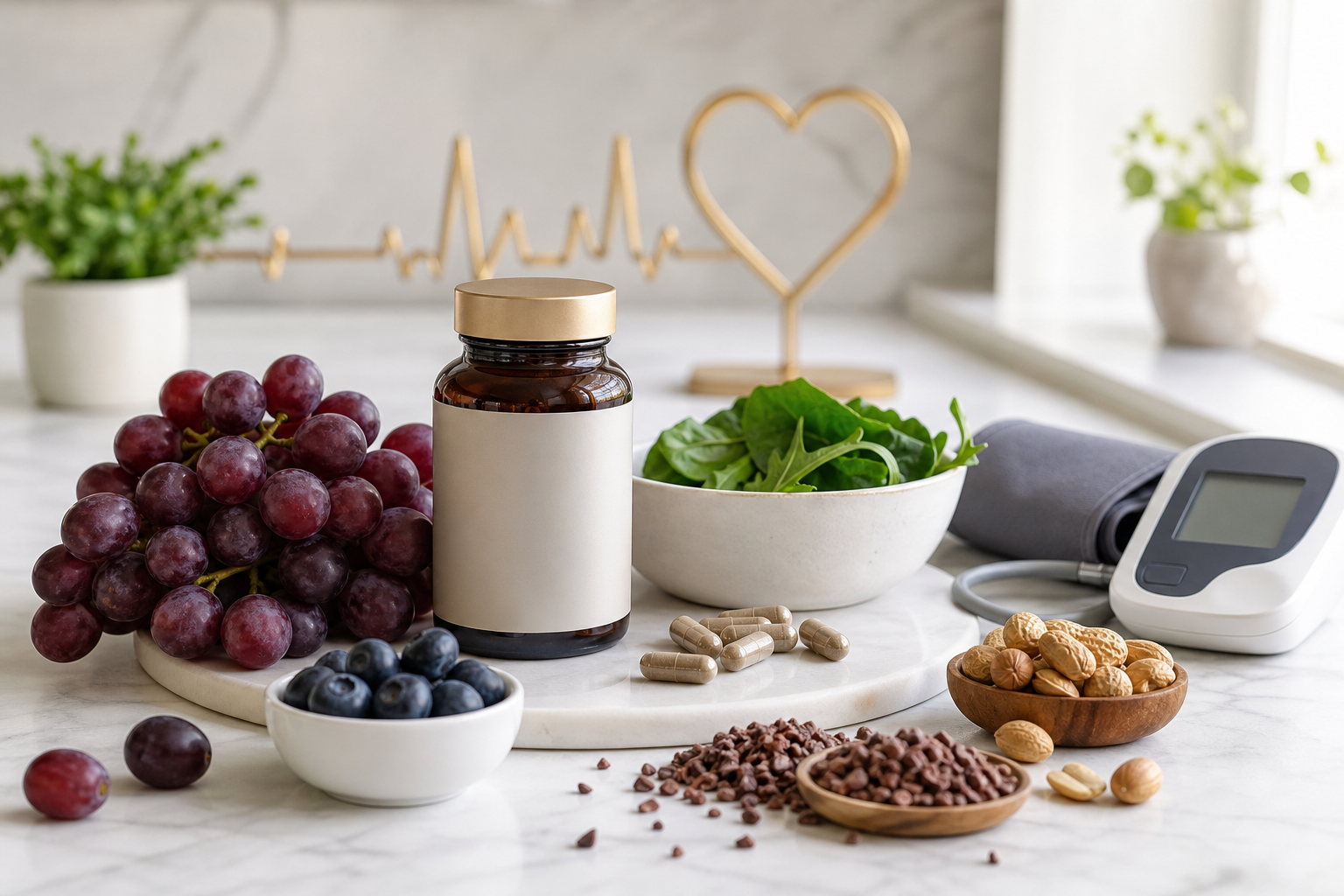
- Resveratrol is a polyphenol found in grapes, berries, peanuts, and cocoa-containing foods; supplements provide a more consistent amount than food alone.
- Human studies suggest possible support for blood pressure, lipid markers, and inflammatory pathways, but results vary by dose, population, and baseline health.
- The foundation of cardiovascular wellness remains sleep, movement, nutrition, healthy weight, blood pressure monitoring, blood lipids, blood sugar, and clinician-guided care.
Content
Resveratrol may support heart wellness as part of a broader routine because it is studied for antioxidant activity, endothelial function, inflammation balance, and cardiometabolic markers. It is not a substitute for blood pressure medication, lipid-lowering therapy, or medical evaluation. Think of it as one possible support layer after the heart-health basics are already in motion.
What are resveratrol supplements?
Resveratrol is a naturally occurring plant compound found in grape skins, blueberries, cranberries, peanuts, pistachios, and cocoa. It became famous because red wine contains resveratrol, but that does not make alcohol a heart-health strategy. A better way to understand resveratrol is as a dietary polyphenol: a plant compound that interacts with oxidative stress and cell-signaling pathways.
A resveratrol supplement provides a measured amount in capsule, tablet, powder, or liquid form. This can be useful for people who want consistency, because food amounts vary by serving size, growing conditions, and processing. The Linus Pauling Institute notes that resveratrol has been studied for cardiovascular health, inflammatory markers, oxidative stress, endothelial function, and blood pressure-related outcomes, while also emphasizing that human evidence is still developing [1].
For readers who want ingredient basics before heart-specific details, AIDEVI's guide to resveratrol health benefits is a helpful starting point. If you prefer a food-first approach, AIDEVI's list of resveratrol-rich foods can help you build a polyphenol pattern before deciding whether a supplement makes sense.
Which cardiovascular pathways are discussed?
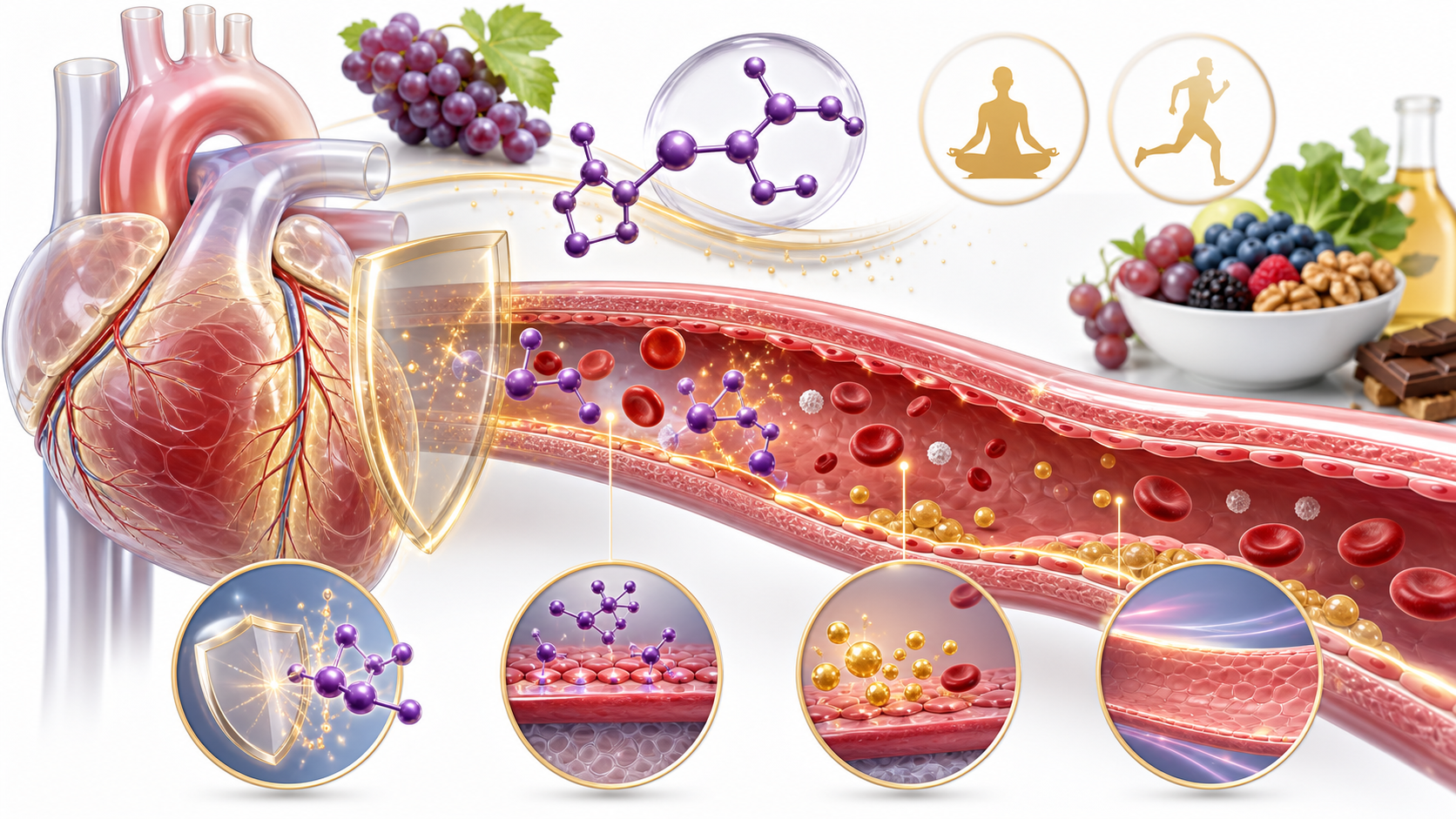
Most cardiovascular discussions around resveratrol focus on four pathways: antioxidant defense, inflammation balance, endothelial function, and cardiometabolic marker support. Antioxidant defense matters because oxidative stress can affect LDL particles, vascular tissues, and normal cellular resilience. Inflammation balance matters because chronic low-grade inflammation is part of many cardiometabolic conversations. Endothelial function matters because the endothelium helps blood vessels relax and respond to changing circulation needs.
None of these mechanisms should be exaggerated into a disease claim. Resveratrol should not be framed as an artery-clearing ingredient, an exercise replacement, or a reason to ignore elevated readings. It is more accurate to say that resveratrol may support a healthier internal environment when paired with the behaviors and medical care that already define cardiovascular wellness. AIDEVI's article on choosing a good antioxidant supplement offers a useful way to compare antioxidant ingredients without turning them into overpromised products.
What does the evidence say about blood pressure and cholesterol?
The blood pressure evidence is mixed. A systematic review and meta-analysis of randomized controlled trials found that resveratrol did not significantly affect overall systolic or diastolic blood pressure across all included studies, although some subgroup signals appeared in higher-dose studies and in people with diabetes [2]. The practical takeaway is cautious: resveratrol is being studied for vascular support, but blood pressure should still be monitored and managed with professional guidance.
The lipid-marker story is also nuanced. A dose-response meta-analysis of randomized trials reported changes in total cholesterol and some lipid outcomes, but the details depended on study design, baseline health, dose, and duration [3]. For readers, that means resveratrol may belong in a cardiometabolic wellness discussion, but it should not be marketed as a replacement for cholesterol testing, prescribed therapy, or a heart-healthy eating plan.
This nuance makes the article more trustworthy. The cardiovascular shopper often wants certainty: "Will this change my numbers?" A responsible answer is that supplements can sometimes support the environment around those numbers, while the numbers themselves need measurement. If you care about blood pressure or lipid markers, know your baseline, track changes, and talk with a clinician before adding supplements to a routine that includes medication.
How should you read resveratrol heart studies?
When reading resveratrol research, look beyond the headline. A study in people with type 2 diabetes may not apply to a healthy adult with normal lab values. A high-dose intervention may not apply to a low-dose supplement. A four-week trial cannot answer the same question as a one-year routine. Even when a meta-analysis finds a statistically meaningful result, the practical effect may depend on baseline health, diet quality, medication use, and the exact product used.
This is why AIDEVI content should avoid one-line promises. A better article helps readers ask better questions: Was the study randomized? Was there a placebo group? Were participants already managing cardiometabolic risk? Was resveratrol used alone or inside a broader grape extract? Were the outcomes clinical events, lab markers, or short-term signals? That kind of reading turns resveratrol from hype into a more mature wellness decision.
It also keeps expectations practical. If a supplement is helpful, the effect will usually be subtle and context-dependent. The most useful goal is not chasing a dramatic number change from one capsule. It is building a routine where nutrition, movement, sleep, stress recovery, medical follow-up, and targeted ingredients all point in the same direction.
| Cardiovascular topic | What resveratrol may support | What still matters most |
|---|---|---|
| Oxidative stress | Polyphenol antioxidant activity and cellular resilience pathways. | Colorful plants, sleep, movement, and not smoking. |
| Blood pressure | Vascular function research, with mixed human trial findings. | Monitoring, sodium awareness, exercise, weight management, and clinician care. |
| Cholesterol markers | Possible support for selected lipid markers in some studies. | Testing, diet quality, medication when prescribed, and long-term follow-up. |
| Healthy aging | Antioxidant and metabolic wellness context. | A complete routine, not one ingredient. |
What should come before any heart supplement?
The American Heart Association's Life's Essential 8 gives a clear foundation for cardiovascular health: eat better, be more active, quit tobacco, get healthy sleep, manage weight, support healthy lipid levels, manage blood sugar, and manage blood pressure [4]. This framework is useful because it separates high-impact foundations from optional support tools. Resveratrol can only be meaningfully discussed after the foundations are visible.
AIDEVI readers often compare heart and longevity nutrients. In that wider category, resveratrol can sit beside CoQ10, nmn, omega-3s, fiber, magnesium, and other supportive ingredients, depending on the person. For related reading, AIDEVI's article on CoQ10 as an antioxidant for heart health support and the guide to NMN and human cardiovascular vitality can help readers compare mechanisms without assuming every supplement works the same way.
How should you decide whether resveratrol fits?
Use a practical decision filter. The right question is not "Is resveratrol good for the heart?" The better question is "Do I already know my cardiovascular numbers, and does this supplement fit safely into my overall plan?" A supplement decision should never create delay in managing high blood pressure, abnormal lipids, chest pain, shortness of breath, diabetes, or prescribed medication.
| Best fit | Consider instead | Avoid or pause if |
|---|---|---|
| You want polyphenol antioxidant support and already follow a heart-aware routine. | Start with resveratrol foods if you prefer a food-first routine. | You expect a supplement to replace monitoring, lab work, lifestyle changes, or clinician-guided care. |
| You track blood pressure, lipids, and blood sugar with a clinician. | Ask whether diet, exercise, fiber, or medication changes deserve priority. | You take blood thinners, antiplatelet drugs, diabetes medication, or multiple prescriptions without review. |
| You are building a healthy-aging supplement stack slowly and responsibly. | Use AIDEVI's healthy-aging antioxidant guide to compare ingredient roles. | You are pregnant, nursing, preparing for surgery, or managing a medical condition without guidance. |
How do you add resveratrol to a heart-aware routine?
Start by measuring what matters. Know your usual blood pressure range, recent lipid panel, fasting glucose or A1c when relevant, weight trend, sleep schedule, and activity level. Then review medications and health conditions with a professional. The FDA advises consumers to speak with a healthcare professional before taking dietary supplements, especially because supplements can interact with medications or have unwanted effects in certain situations [5].
Once the basics are clear, choose one change at a time. If you add resveratrol, keep your meals, exercise, and other supplements stable for a few weeks so you can tell how your body responds. Take it according to the product label unless your clinician advises otherwise. Track digestion, sleep, headaches, bruising, medication changes, and any unusual symptoms. If something feels off, pause and ask for guidance.
Most importantly, do not use red wine as the delivery system. Red wine contains resveratrol, but alcohol brings risks that can work against cardiovascular and metabolic wellness. Grapes, berries, peanuts, cocoa, and a carefully chosen supplement are cleaner ways to think about resveratrol. Readers comparing resveratrol with other longevity nutrients can continue with AIDEVI's article on NMN and resveratrol or the broader guide on CoQ10 benefits for energy and healthy aging support.
Conclusion
Resveratrol supplements may support cardiovascular wellness through antioxidant, vascular, inflammatory-response, and cardiometabolic pathways. The evidence is interesting enough to discuss, but not strong enough for outcome promises or medication-like claims.
The best use of resveratrol is as one thoughtful layer in a broader heart-aware routine: know your numbers, follow the foundations, use clinician guidance when needed, and choose supplements with realistic expectations. That approach respects both the science and the person trying to build a healthier life.
Frequently Asked Questions
Can resveratrol support healthy blood pressure?
Some studies suggest possible support in specific groups or doses, but overall trial results are mixed. Do not use resveratrol instead of blood pressure monitoring or prescribed care.
Can resveratrol improve cholesterol?
Resveratrol has been studied for lipid markers, but it should not be treated as a cholesterol medication. If cholesterol is a concern, testing and clinician guidance come first.
Is red wine a good way to get resveratrol?
No. Alcohol can create health risks, so red wine should not be used as a supplement strategy. Choose foods or a responsible supplement instead.
Who should ask a doctor before taking resveratrol?
Ask first if you are pregnant, nursing, taking medication, using blood-thinning products, managing a medical condition, or preparing for surgery.
What should I track if I take resveratrol?
Track blood pressure if relevant, recent lab numbers, sleep, digestion, medications, bruising, exercise, and any unusual symptoms. Bring that information to your healthcare professional.
FDA disclaimer: These statements have not been evaluated by the Food and Drug Administration. This content is for educational purposes only and is not intended to diagnose, treat, cure, or prevent any disease. Dietary supplements should be used responsibly and with professional guidance when appropriate.
References
- Linus Pauling Institute. Resveratrol. https://lpi.oregonstate.edu/mic/dietary-factors/phytochemicals/resveratrol
- Fogacci F, Tocci G, Presta V, et al. Effect of resveratrol on blood pressure: A systematic review and meta-analysis of randomized, controlled, clinical trials. https://pubmed.ncbi.nlm.nih.gov/29359958/
- The Effect of Resveratrol on Blood Lipid Profile: A Dose-Response Meta-Analysis of Randomized Controlled Trials. https://pmc.ncbi.nlm.nih.gov/articles/PMC9506025/
- American Heart Association. Life's Essential 8. https://www.heart.org/en/healthy-living/healthy-lifestyle/lifes-essential-8
- U.S. Food and Drug Administration. FDA 101: Dietary Supplements. https://www.fda.gov/consumers/consumer-updates/fda-101-dietary-supplements
