



AIDEVI Women's Wellness Guide
nmn Supplements for Menopause: Key Insights
By AIDEVI Editorial Team | Last Updated: August 2026 | Women's Longevity
NMN is an emerging cellular-wellness ingredient, but it is not a menopause hormone treatment and has not been proven to relieve hot flashes, restore estrogen, or manage every menopause symptom. The strongest human menopause-related evidence so far comes from a small study in postmenopausal women with prediabetes that measured muscle insulin sensitivity—not hot flashes or mood. NMN may be worth researching as an optional wellness topic, but symptom care should begin with an individualized conversation with a qualified healthcare professional.

Menopause is a normal life transition with highly individual symptoms. NMN may influence NAD+-related cellular pathways, and one small trial found improved muscle insulin sensitivity in a specific postmenopausal group. Human evidence does not yet show that NMN treats vasomotor symptoms, changes estrogen levels, improves sleep for all women, or replaces hormone or nonhormone care.
Content
What happens during menopause?
Menopause is the point when menstrual periods have stopped permanently; the years leading up to it are called perimenopause. As ovarian hormone production changes, some women notice irregular periods, hot flashes, night sweats, sleep disruption, mood changes, vaginal dryness, changes in body composition, or difficulty concentrating. Others have few symptoms. The National Institute on Aging emphasizes that the timing, intensity, and combination of symptoms vary widely among women [1].
This variation is important when evaluating any supplement. A capsule marketed for “menopause support” might be discussed in relation to cellular energy, metabolism, antioxidant defenses, or healthy aging, but those are not interchangeable with relief from a hot flash or treatment for a sleep disorder. A useful article should name the outcome being discussed instead of grouping every midlife experience under one promise.
Menopause is also a good time to review foundational health. Movement that includes strength work, a varied eating pattern, adequate protein and fiber, sleep support, stress care, and appropriate screening can all fit into a personal plan. These habits are not a substitute for medical care, but they provide context for deciding whether a supplement is addressing a genuine goal or simply adding another product to a crowded routine.
For a broader healthy-aging perspective, AIDEVI readers may also explore healthy aging for women over 40. The central principle is the same: use supportive language, identify the specific outcome, and avoid treating a normal life stage as a condition that needs a single cure.
What is NMN and why is it being studied?
NMN, or nicotinamide mononucleotide, is a compound involved in the pathway used to make NAD+. NAD+ is a coenzyme that participates in energy-related reactions and other cellular processes. Researchers study the pathway because NAD+ biology changes with age and because tissues such as skeletal muscle have important roles in glucose handling and physical function.
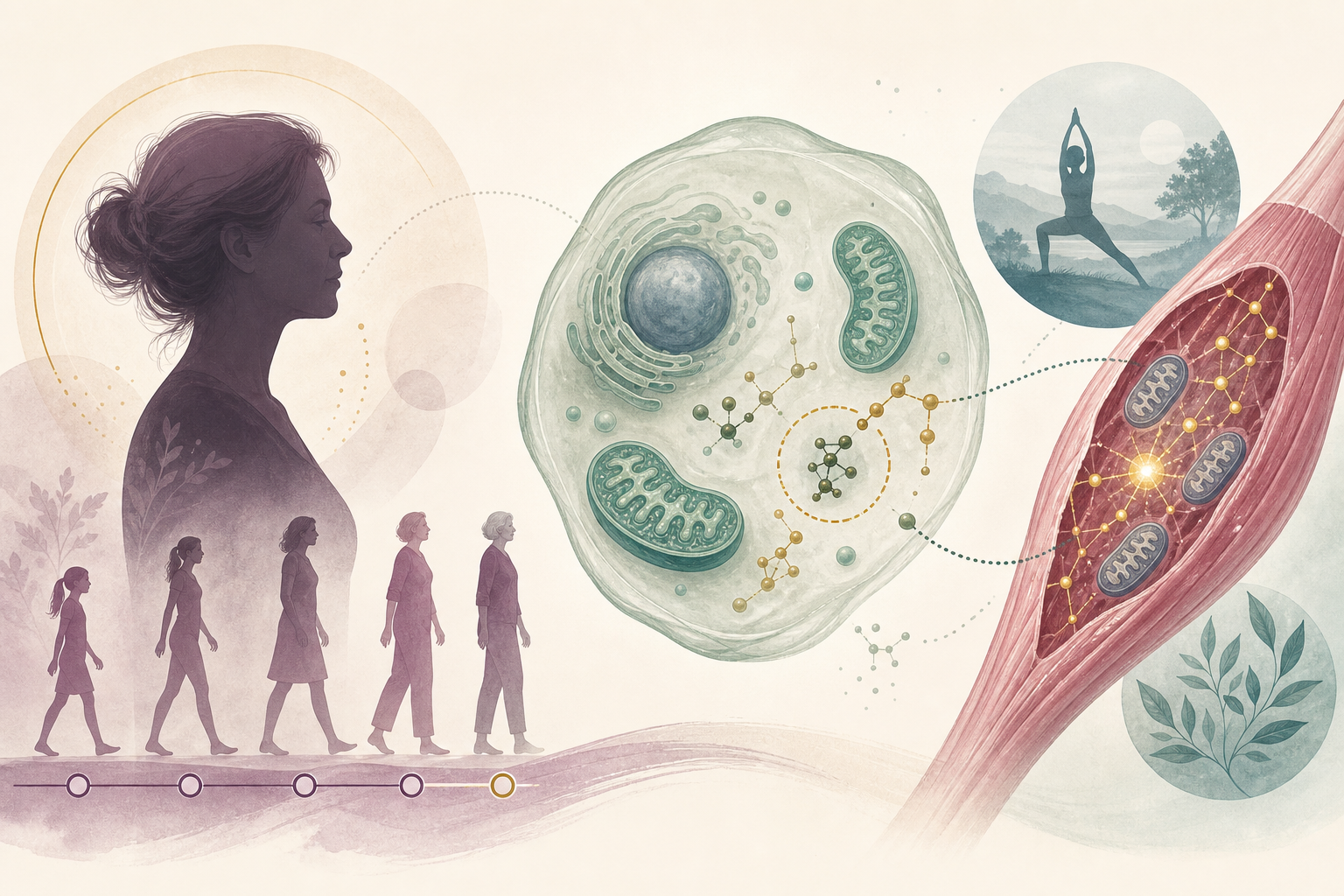
The illustration shows research relationships, not a clinical treatment pathway or a measurement of hormone levels.
When people say NMN “boosts NAD+,” they are usually referring to changes in blood or cellular measurements observed in studies. That is different from proving a visible benefit or a change in a menopause symptom. The body is not a single pathway: the dose, route, tissue, baseline health, age, diet, medication use, and outcome measured can all affect what a study finds.
NMN also does not directly replace estrogen or progesterone. There is not enough human evidence to claim that NMN restores hormone levels, improves estrogen-receptor sensitivity in a clinically meaningful way, preserves ovarian reserve during menopause, or extends reproductive health. Those ideas may appear in animal or mechanistic research, but they should not be presented as established menopause benefits.
Readers who want to understand the ingredient pathway can continue with AIDEVI’s articles on NMN and NAD+ bioavailability and cellular energy production. Those resources are best used to understand mechanism and terminology, not to predict an individual menopause response.
What does human research say about NMN for menopause?
The most relevant human study involved 25 postmenopausal women who had prediabetes and were overweight or obese. In a 10-week randomized, placebo-controlled trial, NMN supplementation increased insulin-stimulated glucose disposal in skeletal muscle and changed measures of muscle insulin signaling [2]. This is a meaningful research signal because the investigators used a detailed physiological test rather than relying only on how participants felt.
But the study did not test NMN as a treatment for hot flashes, night sweats, vaginal symptoms, sleep quality, mood, bone density, or estrogen levels. The participants were a specific group, the sample was small, and the intervention lasted 10 weeks. A result in skeletal muscle should not be expanded into a claim that NMN manages menopause as a whole.
A broader systematic review of NMN randomized trials found that short-term studies in mainly middle-aged and older adults did not establish consistent improvements in common glucose or lipid markers. That review is relevant because it shows why one positive study should be interpreted cautiously: a specific population and tissue may respond differently from the average participant across smaller trials. The evidence is promising enough to continue studying, but not strong enough to support a universal menopause recommendation [3].
The same distinction applies to sleep. Sleep disruption can occur during perimenopause and menopause for many reasons, including night sweats, stress, mood changes, urinary symptoms, or other health factors. NMN has not been established as a treatment for menopause-related insomnia. AIDEVI’s educational article on NMN and sleep quality can help readers review the topic without turning a research question into a symptom guarantee.
| Question | Evidence-aware answer |
|---|---|
| Can NMN affect NAD+ biology? | Some short human studies report changes in NAD+-related measurements. |
| Can it relieve hot flashes? | There is no established human evidence that NMN treats vasomotor symptoms. |
| Can it restore estrogen? | No reliable human evidence supports a direct estrogen-restoration claim. |
| Can it support metabolic wellness? | A small trial found a muscle-insulin-sensitivity signal in a specific group; broader outcomes remain uncertain. |
What should come first for hot flashes, sleep, or mood changes?
Start with the symptom that is affecting daily life and identify the treatment category that has actually been studied for it. The National Institute on Aging notes that options can include lifestyle changes, nonhormonal medications, or hormone therapy depending on symptoms, medical history, and personal preferences [1]. A supplement may be discussed as an optional addition, but it should not delay evaluation of heavy bleeding, severe mood symptoms, persistent insomnia, chest pain, or other concerning changes.
The Menopause Society’s nonhormone therapy position statement also cautions that evidence for over-the-counter supplements and herbal therapies for vasomotor symptoms is limited or insufficient for many products [5]. This does not mean every supplement is useless; it means the claim should match the quality of evidence and the specific symptom. NMN research should therefore be described as cellular and metabolic research, not as proven hot-flash therapy.
For day-to-day support, keep the basics realistic: dress in layers, identify personal heat or alcohol triggers if relevant, keep the bedroom comfortable, maintain regular movement, and protect sleep routines. These steps are compatible with clinical treatment and can make it easier to evaluate whether an additional product is helping, doing nothing, or causing an unwanted reaction.
Is NMN safe for women in menopause?
Short-term human studies have generally reported good tolerability, but the available evidence is limited in duration and does not establish safety for every woman or every combination of medications. One randomized trial in healthy adults found that oral NMN increased blood NAD+ levels without obvious adverse effects during 12 weeks of follow-up [4]. That is reassuring for the study period, not a guarantee of long-term safety.
Speak with a healthcare professional before using NMN if you take hormone therapy, glucose-lowering medication, blood-pressure medication, anticoagulants, or other prescription products; if you have kidney, liver, cardiovascular, or metabolic concerns; or if you are preparing for surgery. Ask for individualized advice if you are still menstruating and pregnancy is possible. Do not use NMN to self-manage abnormal laboratory results or unexplained symptoms.
AIDEVI readers can review the brand’s NMN dosage by age guide and NMN timing guide for general education. Neither article should be interpreted as a prescription or as proof that a specific dose will relieve menopause symptoms.
How should you decide whether to explore NMN?
Use a symptom, goal, evidence, and safety framework. This keeps the decision focused and helps prevent “menopause support” from becoming an invitation to stack multiple untested products.
The S-G-E-S framework
- Symptom: What are you trying to address—cellular-wellness interest, energy, sleep, hot flashes, mood, or a laboratory result?
- Goal: Define a reasonable structure/function goal, such as supporting cellular energy, rather than promising hormone correction.
- Evidence: Does the study measure your population, symptom, tissue, and outcome, or is the claim based mainly on animals or mechanism?
- Safety: Review medicines, medical history, reproductive status, product labeling, and a clinician’s advice before starting.

A practical plan connects symptom tracking, movement, nutrition, sleep support, and professional guidance before adding a supplement.
If you decide to review a product, check the exact Supplement Facts panel, serving instructions, ingredient form, warnings, storage guidance, and quality information. For product context, you can examine the label and intended use of AIDEVI NMN 18000. Treat a product page as a source of formula information, not as evidence that the product will manage a specific menopause symptom.
A good “best fit, consider instead, pause if” decision is straightforward: NMN may be worth discussing when your goal is general cellular-wellness research and your safety context is clear; symptom-specific care or lifestyle foundations deserve priority when hot flashes, sleep, mood, or bone concerns are the main issue; and you should pause for professional guidance when medications, abnormal bleeding, pregnancy possibility, or abnormal tests are involved.
Conclusion
NMN supplements may be relevant to healthy-aging and cellular-energy research during midlife, but the menopause-specific evidence is still early. A small study in postmenopausal women with prediabetes found a muscle-insulin-sensitivity signal; it did not prove that NMN relieves hot flashes, restores estrogen, improves sleep, or replaces menopause care.
Use NMN as an optional question for informed discussion, not as a shortcut around diagnosis or individualized treatment. Start with the symptom or goal, compare it with the actual evidence, review safety, and choose a routine that supports movement, nutrition, sleep, and professional care.
Frequently Asked Questions
Can NMN help with hot flashes?
There is no established human evidence that NMN treats hot flashes or night sweats. These symptoms deserve a menopause-focused conversation about lifestyle, nonhormonal options, hormone therapy, and personal risk factors.
Does NMN increase estrogen?
NMN is not estrogen and should not be described as estrogen replacement. Human evidence does not establish that NMN directly raises estrogen or corrects menopause-related hormone changes.
What did the human menopause-related NMN study find?
A small 10-week trial in postmenopausal women with prediabetes and overweight or obesity found improved insulin-stimulated glucose disposal and muscle insulin signaling. It did not test NMN as a treatment for hot flashes, mood, sleep, estrogen, or bone health.
Should women on hormone therapy take NMN?
Not without discussing it with a healthcare professional. Medication use, medical history, reproductive status, and the reason for hormone therapy all matter when evaluating a new supplement.
What is a sensible first step for menopause wellness?
Track the symptoms that matter most, seek appropriate professional guidance, and build sustainable habits around movement, balanced meals, sleep, and stress support. Then evaluate any supplement against a clear goal and evidence boundary.
References
- [1] National Institute on Aging. What Is Menopause?
- [2] Yoshino M, et al. Nicotinamide mononucleotide increases muscle insulin sensitivity in prediabetic women. Science.
- [3] Chen F, et al. Effects of Nicotinamide Mononucleotide on Glucose and Lipid Metabolism in Adults: A Systematic Review and Meta-analysis of Randomised Controlled Trials.
- [4] Okabe K, et al. Oral Administration of Nicotinamide Mononucleotide Is Safe and Efficiently Increases Blood NAD+ Levels in Healthy Subjects.
- [5] The Menopause Society. The 2023 nonhormone therapy position statement.
Individual results may vary. Consult a healthcare professional before starting any new supplement, especially if pregnant, nursing, taking medication, using hormone therapy, or managing a medical condition. These statements have not been evaluated by the Food and Drug Administration. This product is not intended to diagnose, treat, cure, or prevent any disease.
