



AIDEVI Wellness Guide
Stronger Bones With nmn? What Aging Bodies Should Know
NMN is being studied for bone health because it supports NAD+ biology, mitochondrial function, and cellular aging pathways that may matter for bone-forming cells. But it is not proven as a human osteoporosis treatment or a substitute for calcium, vitamin D, resistance training, bone-density screening, or prescribed care. The most useful question is not whether NMN is a miracle for bones, but where it may fit inside a realistic healthy-aging routine.
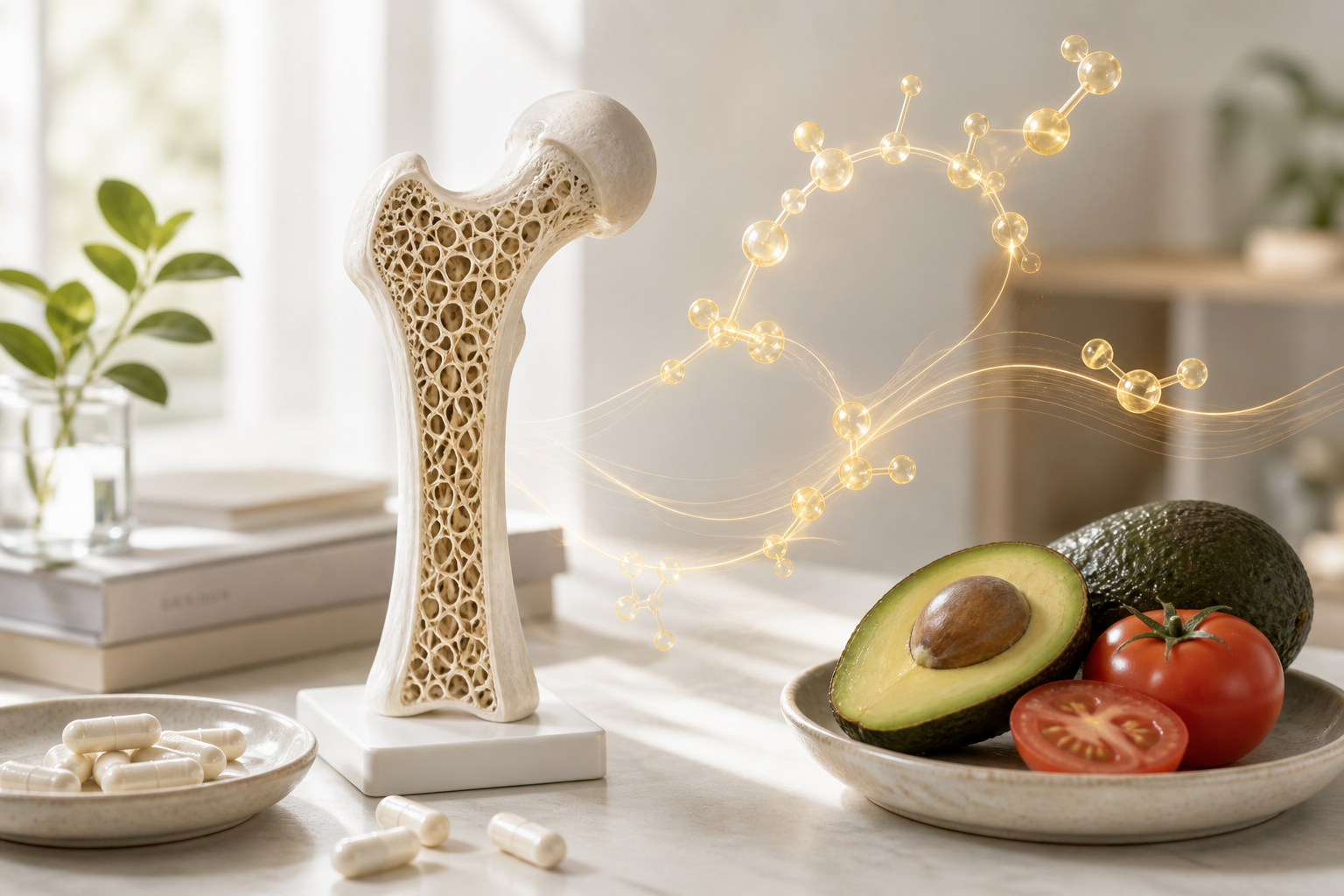
- Bone is living tissue, constantly rebuilt by bone-forming and bone-resorbing cells.
- NAD+ decline, oxidative stress, mitochondrial dysfunction, and cellular senescence are relevant to skeletal aging research.
- A 2023 study found NMN supported human osteoblast function in cell culture and improved bone-healing measures in osteoporotic mice, but this is not the same as proven human benefit.
- A bone-smart routine still starts with protein, calcium, vitamin D status, weight-bearing movement, balance training, and medical guidance when fracture risk is high.
Content
A practical answer: NMN may be relevant to bone health because NAD+ supports cell energy, sirtuin activity, DNA repair signaling, and mitochondrial resilience. Early laboratory and animal research is promising, but human bone-density outcomes are not established. Treat NMN as a possible cellular-aging support tool, not as a standalone bone-strength solution.
Why do bones change as we age?
Bones are not static. They are living tissue that is continuously remodeled. Specialized cells remove older bone while other cells build new bone. In youth, this balance usually supports growth and strength. Later in life, bone formation may slow, hormones shift, physical activity may decline, and bone breakdown can outpace replacement. The National Institute on Aging describes osteoporosis as a condition in which bones become weak enough to break more easily, often before a person notices symptoms [1].
Age is only one part of the picture. Low calcium or vitamin D intake, low protein intake, smoking, heavy alcohol use, long periods of inactivity, low body weight, certain medications, early menopause, and family history can all influence bone strength. This is why bone health advice should not begin with a supplement bottle. It should begin with risk, lifestyle, screening, and the basics that your skeleton literally uses to rebuild itself.
That said, the biology of aging does matter. Skeletal aging research increasingly looks at oxidative stress, inflammation, mitochondrial changes, DNA damage, and cellular senescence. Senescent cells are older or stressed cells that no longer behave like healthy young cells. In bone, they may alter the environment in ways that make normal repair and remodeling harder. For readers exploring this cellular-health angle, AIDEVI's guide to why NAD+ declines with age offers useful background.
How could NMN and NAD+ relate to bone cells?
NMN, short for nicotinamide mononucleotide, is a precursor involved in the body's production of NAD+. NAD+ is a coenzyme used in many cell processes, including energy metabolism and enzyme systems related to cellular stress response. Bone cells are metabolically active, so researchers are interested in whether supporting NAD+ availability may help preserve healthier behavior in osteoblasts, the cells that build bone, and in the broader bone-remodeling environment.
This does not mean “more NMN equals stronger bones.” Bone strength depends on mineral density, bone microarchitecture, muscle strength, balance, hormones, nutrition, medication history, and fall risk. NMN sits in a narrower lane: cellular metabolism and aging biology. If your goal is understanding the NMN pathway before making a buying decision, AIDEVI's NAD+ cellular energy guide and NAD+ vs NMN comparison are the natural next reads.
Several aging-bone reviews discuss cellular senescence, DNA damage, oxidative stress, and mitochondrial dysfunction as relevant mechanisms in age-related skeletal decline [2]. Reviews of sirtuins in bone biology also explain why NAD+ is interesting: sirtuins are NAD+-dependent enzymes, and different sirtuins appear to play roles in bone-cell function and skeletal metabolism [3]. In plain English, NAD+ is not “a bone mineral,” but it is part of the cell machinery that may affect how bone cells handle stress.
What does the current NMN bone research actually show?
The study most often discussed for this topic was published in The Journals of Gerontology: Series A. Researchers reported that NMN partially reduced signs of senescence in human primary osteoblasts exposed to an inflammatory signal, supported osteogenic differentiation in that laboratory setting, and improved selected bone-related outcomes in an ovariectomized osteoporotic mouse model. The authors also reported faster bone healing in osteoporotic mice given NMN [4].
That is interesting, but it needs careful translation. Cell culture studies are not the same as human clinical outcomes. Mouse models help scientists explore mechanisms, but mice are not aging adults shopping for supplements. The study supports a research hypothesis: NAD+ precursor biology may be relevant to senescent bone cells and fracture-healing mechanisms. It does not prove that taking NMN will increase bone density, reduce fracture risk, or manage osteoporosis in people.
| Evidence level | What it suggests | What it does not prove |
|---|---|---|
| Human bone-cell experiments | NMN may influence senescence markers, mitochondrial function, and osteoblast differentiation under study conditions. | It does not prove improved bone density in supplement users. |
| Osteoporotic mouse model | NMN may affect bone volume and healing-related outcomes in animals. | It does not establish NMN as human osteoporosis care. |
| Human supplement routine | NMN may fit a cellular-energy and healthy-aging routine for some adults. | It should not replace screening, nutrition, training, or prescribed treatment. |
This balanced interpretation is also how AIDEVI approaches broader NMN education. If you want to compare evidence expectations beyond the bone topic, see does NMN work? and the newer article on recent NMN research directions.
A good way to read this research is to separate mechanism from outcome. Mechanism asks, “Could this ingredient influence a pathway that matters?” Outcome asks, “Does this improve a measurable human result that people care about?” For NMN and bone health, the mechanism story is worth watching: NAD+ biology, mitochondria, senescence, and osteoblast behavior all connect plausibly to skeletal aging. The outcome story is not finished. We still need well-designed human studies that measure bone mineral density, bone turnover markers, fracture outcomes, functional strength, and safety over meaningful time frames.
This distinction protects readers from two opposite mistakes. One mistake is dismissing early science simply because it is early. The other is treating early science as a finished answer. AIDEVI's preferred middle path is to explain why a pathway is interesting, then keep the practical recommendation modest until human evidence catches up.
How should aging adults build a bone-support routine?
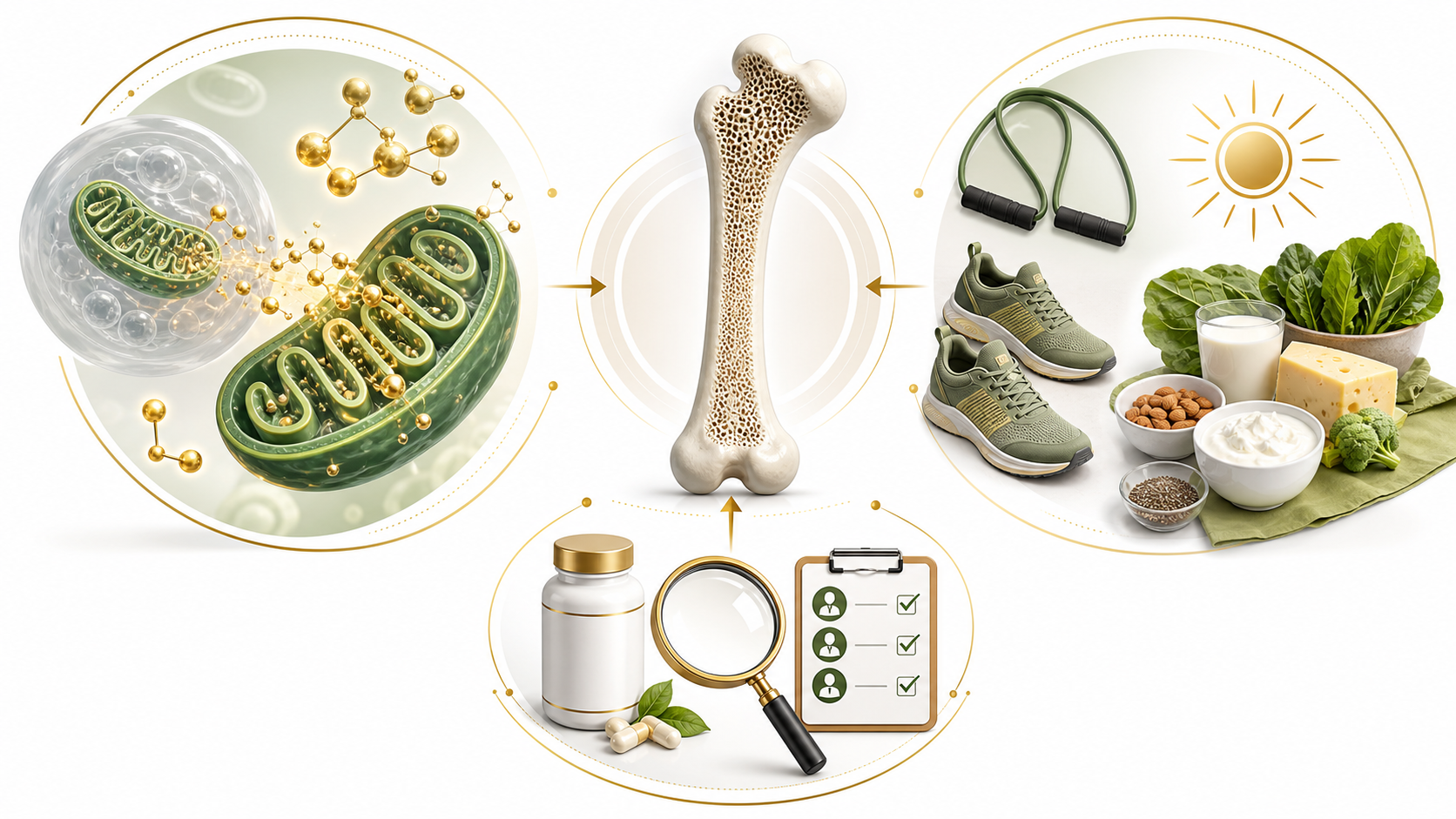
A smart bone routine has four layers: build, load, support, and track. Build means giving your body the raw materials it needs: adequate protein, calcium from food or supplements when needed, vitamin D status, magnesium-containing foods, and enough total calories. Load means using weight-bearing activity, resistance training, posture work, and balance training so bones and muscles receive the signal to stay strong. Support means considering targeted supplements, including NMN, only after the foundation is in place. Track means checking risk factors, bone-density testing when appropriate, and asking a clinician when fracture risk is not low.
This is especially important for women in midlife and beyond, because menopause can accelerate bone loss for several years. Readers in that stage may also find AIDEVI's article on women over 40, NMN, ergothioneine, and healthy aging useful for connecting bone, antioxidant, and cellular-energy conversations.
For NMN specifically, routine design should be conservative. Start by understanding the product label, serving size, timing, and your own tolerance. Avoid stacking several NAD+ products at once before you know how one product affects you. If your main question is amount and timing, AIDEVI's NMN dosage by age guide can help frame the discussion, though personal medical context should come first.
The priority order matters. If your diet is low in protein, your vitamin D level is unknown, your training routine has no resistance work, or you have not discussed fracture risk after a low-impact injury, NMN should not be the first lever you pull. If those basics are already handled, then NMN can be evaluated more thoughtfully as part of a broader longevity routine. This keeps the supplement role honest: supportive, optional, and trackable.
Who might consider NMN, and who should pause?
NMN may be a reasonable educational topic for adults interested in cellular-energy support, NAD+ metabolism, and healthy-aging routines. It is less appropriate as a first response to suspected osteoporosis, unexplained pain, sudden height loss, a recent fracture, or medication-related bone loss. In those situations, testing and clinical guidance matter more than supplement experimentation.
| Best fit | Consider instead | Avoid or pause if |
|---|---|---|
| You are building a healthy-aging routine and want to understand NAD+ support. | Begin with sleep, protein, resistance training, and vitamin D testing if those are missing. | You are pregnant, nursing, taking complex medications, or managing a medical condition. |
| You already have strong nutrition habits and want a cellular pathway supplement. | Compare NMN with NR or other NAD+ support formats before choosing. | You expect NMN to replace osteoporosis medication, calcium planning, or bone-density screening. |
| You prefer a cautious, trackable one-product trial. | Use a clinician-guided plan if you have a fracture history or high fall risk. | You notice unusual symptoms after starting any supplement. |
If you are comparing NAD+ precursors, the AIDEVI guide to NMN vs NR can help you understand why shoppers may choose one format over another. The FDA also advises consumers to speak with a healthcare professional before using supplements and warns against substituting supplements for medicines or a varied diet [5].
Conclusion
NMN is not a settled answer for human bone strength, but it is a scientifically interesting NAD+ precursor in the conversation about aging cells, mitochondrial function, and bone-remodeling biology. The strongest current evidence is still early: human bone-cell data and animal-model findings, not definitive human outcomes.
For aging bodies, the responsible approach is to put NMN in its proper place. Use food, protein, calcium, vitamin D status, strength training, balance work, and screening as the foundation. Consider NMN only as a possible cellular-aging support layer, and only when it fits your health context. Strong bones are built by a system, not by a single ingredient.
Frequently Asked Questions
Has NMN been proven to improve human bone density?
Human bone-density benefits have not been established. The most relevant research includes cell and mouse studies. Those results are useful for mechanism research, but they should not be presented as proof of human bone-density improvement.
Is NMN a treatment for osteoporosis?
No. NMN should not be described or used as an osteoporosis treatment. Osteoporosis evaluation may involve bone-density testing, fall-risk assessment, nutrition review, and medications when prescribed by a clinician.
Why do researchers connect NAD+ with bone aging?
NAD+ is involved in cell energy, sirtuin activity, and stress-response pathways. Because aging bone is influenced by cellular senescence, oxidative stress, and mitochondrial changes, NAD+ biology is a logical research area.
What should I track if I add NMN to a healthy-aging routine?
Track sleep, energy, digestion, exercise consistency, any side effects, and whether your overall bone-health plan is improving. For bone risk itself, rely on clinician-guided tools such as bone-density scans when appropriate.
What matters most for stronger bones with age?
The essentials are weight-bearing movement, resistance training, balance work, adequate protein, calcium, vitamin D status, not smoking, moderate alcohol habits, and medical evaluation for people at higher fracture risk. Supplements should support that foundation, not replace it.
References
- [1] National Institute on Aging. Osteoporosis. https://www.nia.nih.gov/health/osteoporosis/osteoporosis
- [2] Chandra A, Rajawat J. Skeletal Aging and Osteoporosis: Mechanisms and Therapeutics. https://pmc.ncbi.nlm.nih.gov/articles/PMC8037620/
- [3] Tseng PC, et al. Role of sirtuins in bone biology: Potential implications for novel therapeutic strategies for osteoporosis. https://pmc.ncbi.nlm.nih.gov/articles/PMC7884050/
- [4] Lu Z, Jiang L, Lesani P, et al. Nicotinamide Mononucleotide Alleviates Osteoblast Senescence Induction and Promotes Bone Healing in Osteoporotic Mice. https://academic.oup.com/biomedgerontology/article/78/2/186/6678612
- [5] U.S. Food and Drug Administration. FDA 101: Dietary Supplements. https://www.fda.gov/consumers/consumer-updates/fda-101-dietary-supplements
These statements have not been evaluated by the Food and Drug Administration. This product is not intended to diagnose, treat, cure, or prevent any disease. This article is for educational purposes only and is not medical advice. Consult a healthcare professional before starting any new supplement, especially if pregnant, nursing, taking medication, preparing for surgery, managing a medical condition, or concerned about bone loss or fracture risk.
