





AIDEVI Wellness Guide
nmn and Methylation: Do You Need TMG or B Vitamins?
Taking NMN does not automatically mean you need TMG, methylated B vitamins, or another methylation supplement. Methylation is a normal network of biochemical reactions, and nicotinamide metabolism can use methyl groups, but fatigue, sleep changes, mood changes, and brain fog do not prove that NMN has created a methylation problem. Review your diet, complete supplement routine, medications, health history, and appropriate laboratory information with a qualified professional before adding more products.

- Methylation supports many normal functions; it is not a single switch that can be judged from symptoms alone.
- Nicotinamide can be methylated during metabolism, but this does not establish that every NMN user needs extra methyl donors.
- TMG, folate, vitamin B12, and choline participate in related pathways, yet more is not always better.
- Persistent or concerning symptoms deserve a full health review rather than automatic supplement stacking.
Content
What does methylation mean in the body?
Methylation describes reactions that transfer a small chemical unit called a methyl group. These reactions are involved in normal DNA regulation, neurotransmitter metabolism, phospholipid production, creatine synthesis, and the processing of certain compounds. The body does not have one isolated "methylation pathway." It uses an interconnected network that depends on nutrients, enzymes, genetics, health status, and normal metabolic demand.
One central participant is S-adenosylmethionine, commonly shortened to SAM. After donating a methyl group, SAM becomes S-adenosylhomocysteine, or SAH, which is then connected to homocysteine metabolism. Homocysteine can be remethylated toward methionine or used through another pathway. Folate, vitamin B12, choline-derived betaine, vitamin B6, and other factors contribute at different points, but their roles are not interchangeable.
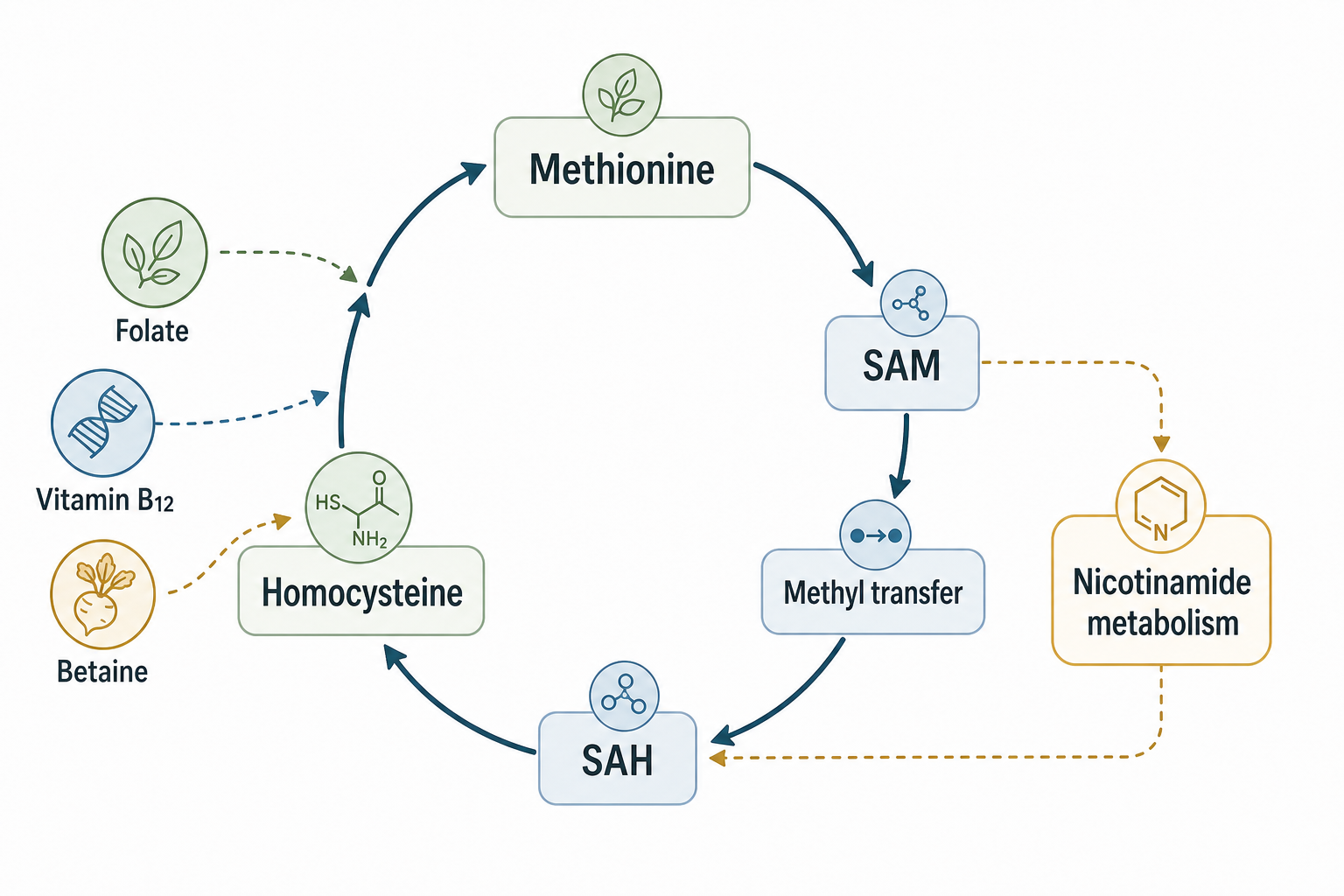
The diagram is a simplified educational view, not a diagnostic map. Folate supports one-carbon transfer reactions, while vitamin B12 helps an enzyme convert homocysteine to methionine. The NIH Office of Dietary Supplements explains that folate is required for DNA synthesis and cell division and that deficiency has established health consequences [1]. Vitamin B12 also has essential roles in blood and neurologic health, and deficiency can occur for reasons that supplements marketed as "methylation support" may not address [2].
Because methylation is a network, pushing one component without understanding the full picture is not automatically helpful. A balanced diet and appropriate medical evaluation are more reliable starting points than interpreting every wellness concern as an under-methylation or over-methylation sign.
Why is methylation discussed with NMN?
NMN is a precursor connected to NAD+ metabolism. NAD+ supports many cellular reactions, while NMN is one compound the body can use within NAD+ biosynthesis. AIDEVI's explanation of NAD+ versus NMN provides useful background before considering more detailed pathway questions.
The methylation discussion usually begins with nicotinamide, a form of vitamin B3 and a product involved in NAD+ turnover. Nicotinamide N-methyltransferase, or NNMT, can transfer a methyl group from SAM to nicotinamide, producing N-methylnicotinamide and SAH. Researchers study NNMT because it connects nicotinamide handling with cellular methylation potential and metabolism [3].
That biochemical connection is real, but the popular conclusion often moves too quickly. It does not follow that taking a labeled NMN serving necessarily drains methyl groups, causes symptoms, raises homocysteine, or creates a need for TMG. Those questions depend on dose, duration, diet, individual metabolism, baseline nutrient status, and direct human evidence. Human NMN trials have evaluated oral supplementation and reported outcomes such as NAD-related measures and safety observations, but they have not established a universal requirement for methyl-donor stacking [4].
When considering an NMN product, first evaluate the formula and labeled serving rather than building a stack around a hypothetical problem. The AIDEVI NMN 18000 product page is one place to review a specific capsule formula, while AIDEVI's guide to choosing an NMN supplement covers broader label and quality considerations.
Can fatigue or sleep changes show that you need methylation support?
No single symptom can show that an NMN user needs methylation support. Fatigue, sleep changes, mood changes, headaches, digestive changes, and brain fog are nonspecific. They can relate to sleep schedule, stress, nutrition, dehydration, medication effects, illness, anemia, thyroid concerns, vitamin deficiency, changes in caffeine use, or many other factors. They can also occur by coincidence after starting a supplement.
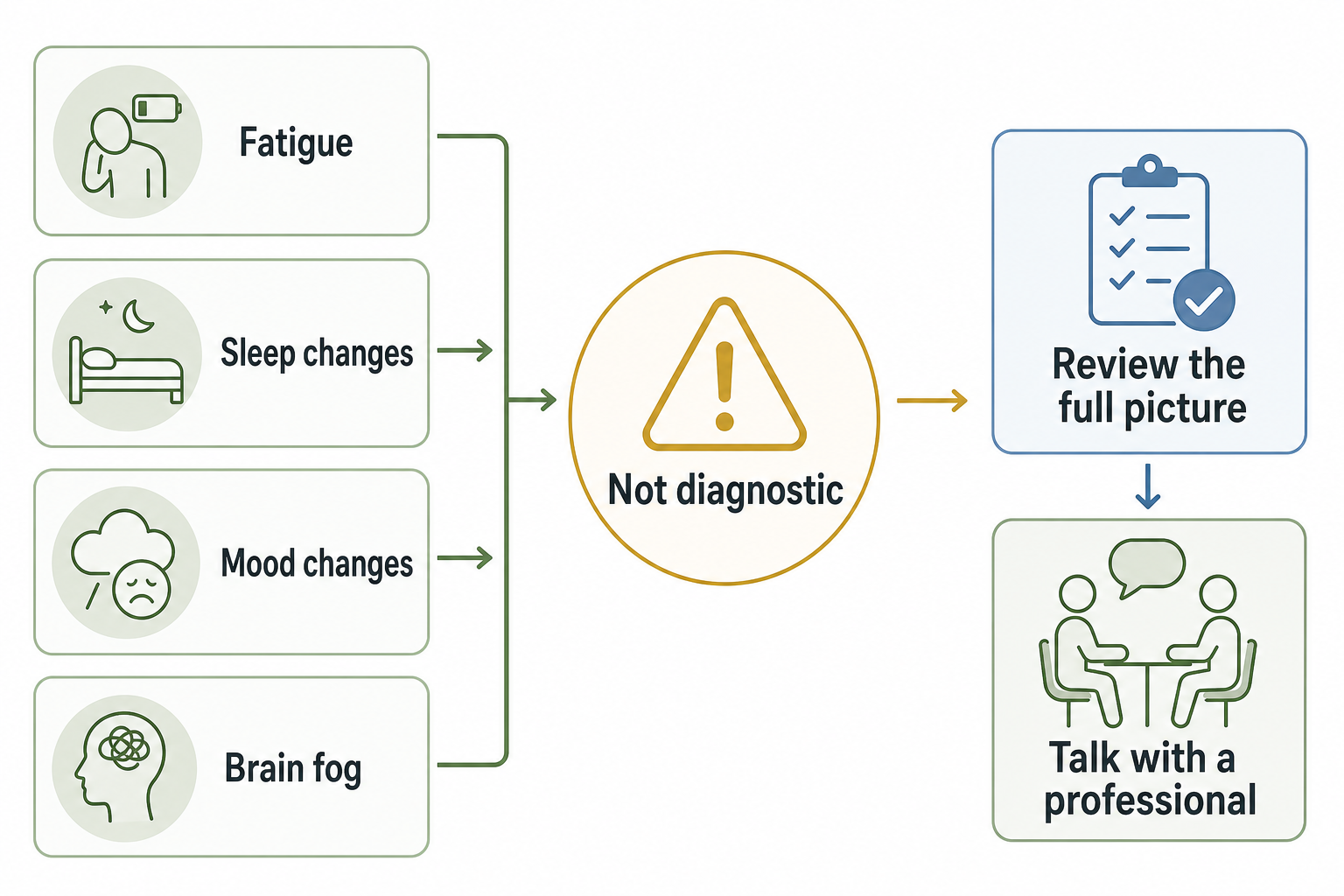
Online discussions sometimes describe lists of "over-methylation" and "under-methylation" signs as if they were reliable diagnoses. These labels can oversimplify complex biology and encourage people to add or remove nutrients without understanding why symptoms are occurring. Persistent fatigue, major sleep disruption, neurologic symptoms, severe mood changes, or other concerning changes should be discussed with a healthcare professional.
A simple routine journal can still be useful. Record when you started NMN, the labeled serving, other supplements, medication changes, sleep duration, meals, caffeine, and symptoms. This does not diagnose methylation status, but it gives you and a professional a clearer timeline. If your concern is specifically about energy or whether NMN is doing anything, AIDEVI's evidence overview on whether NMN works can help set more realistic expectations.
Do NMN users need TMG or methylated B vitamins?
Not automatically. TMG, also called betaine, can act as a methyl donor in the remethylation of homocysteine to methionine through a specific pathway. Betaine is also found in foods, and the body can make it from choline. The NIH describes choline as an essential nutrient involved in cell membranes, neurotransmitter synthesis, and methyl-group metabolism [5]. That role explains why TMG appears in methylation conversations, but it does not establish a one-size-fits-all NMN pairing.
Folate and vitamin B12 also support related processes. However, taking high amounts without a reason can create complications or obscure another issue. For example, folic acid can correct the anemia caused by vitamin B12 deficiency while neurologic damage continues, which is one reason professional guidance matters. "Methylated" on a supplement label does not automatically mean it is better for every person. AIDEVI's comparison of methylated versus regular multivitamins offers more context for interpreting that label language.
| Nutrient or Compound | Why It Enters the Conversation | Why More Is Not Automatically Better |
|---|---|---|
| TMG / betaine | Participates in one route that remethylates homocysteine | Need depends on the individual; adding it does not diagnose or fix every symptom |
| Folate | Supports one-carbon metabolism and DNA synthesis | High supplemental intake may be inappropriate and can complicate B12 deficiency assessment |
| Vitamin B12 | Required for methionine synthase and healthy neurologic function | Absorption issues or deficiency need proper evaluation, not assumptions |
| Choline | Can contribute to betaine production and supports other essential functions | Total intake, diet, and individual needs matter |
If you want to learn more about TMG before discussing it with a professional, AIDEVI's overview of TMG and its roles in the body can serve as a starting point. Keep the distinction clear: understanding a nutrient's function is not the same as establishing that you need a supplement.
What can laboratory tests tell you?
Laboratory testing can add useful context when selected and interpreted by a qualified professional, but there is no single routine test that summarizes your complete "methylation status." Homocysteine is often discussed because it sits within related pathways. An elevated result can have multiple possible contributors, including folate or vitamin B12 status, kidney function, thyroid function, genetics, medications, lifestyle factors, and other health conditions. It does not prove that NMN caused the result or that TMG is the correct response.
Likewise, a serum nutrient result may not answer every question by itself. A professional may interpret symptoms, diet, physical findings, medical history, complete blood count, nutrient markers, and other tests together. The appropriate evaluation differs between someone with a restrictive diet, someone taking a medication that affects absorption, and someone who simply saw a methylation discussion online.
| Information Source | What It May Add | What It Cannot Prove Alone |
|---|---|---|
| Symptom journal | Timing, patterns, and changes in the complete routine | That methylation is the cause |
| Homocysteine result | One clinically interpreted marker within related metabolism | That NMN created a methyl-group shortage |
| Consumer genetic report | Possible variants to discuss with a professional | Your current nutrient needs or a treatment plan |
Consumer genetic reports deserve particular caution. Finding a common variant does not diagnose a deficiency or establish that you need methylated vitamins. Genes can influence pathways, but current health, diet, exposures, medications, and many other genes also matter. Use genetic information as a discussion point, not as an automatic shopping list.
How should you decide whether extra support makes sense?
Use a sequence that starts with context rather than another bottle. This helps prevent overlapping formulas, excessive intake, missed medication interactions, and the assumption that a nonspecific symptom has one biochemical cause.
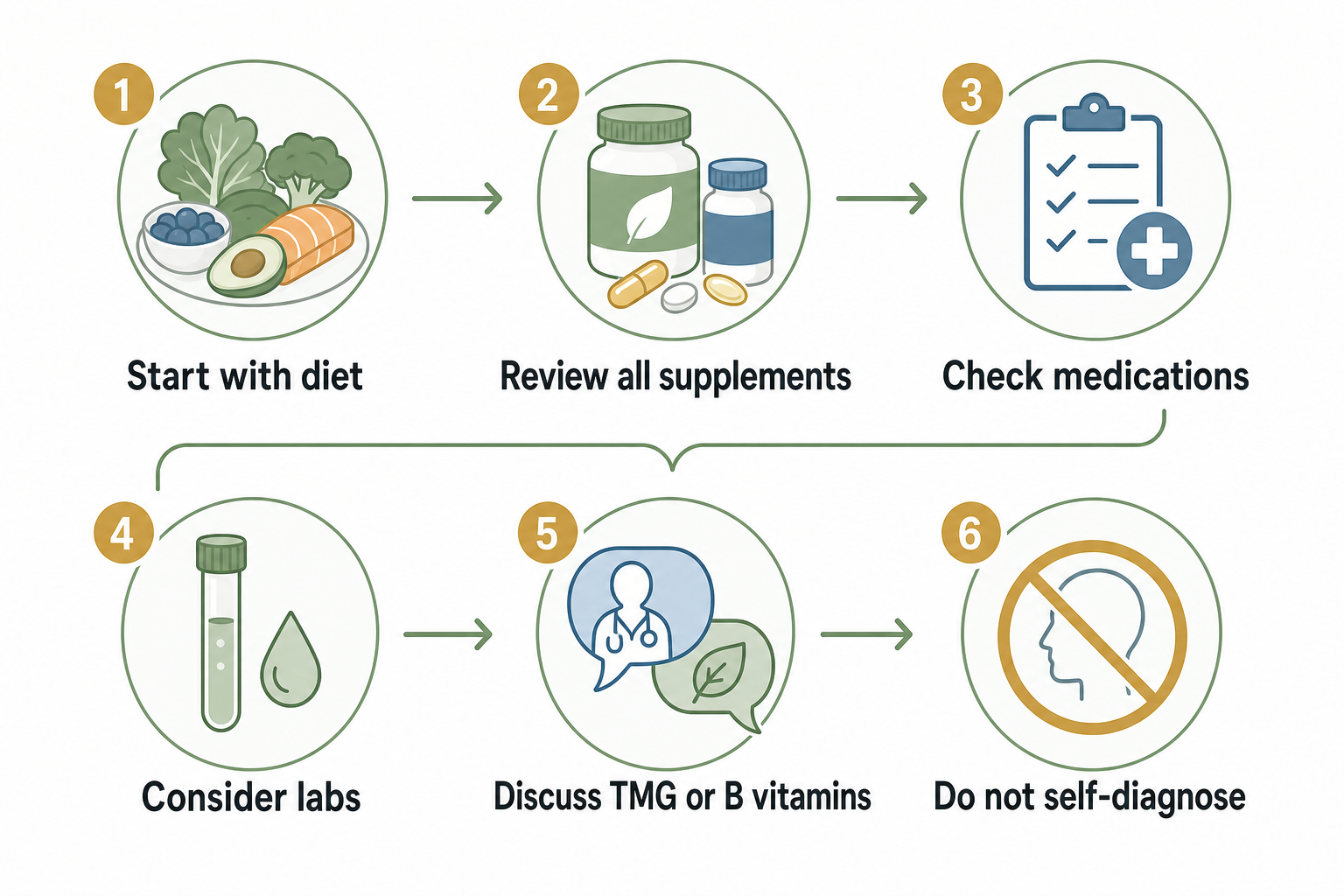
- Start with diet. Review whether your usual meals provide leafy greens, legumes, eggs, fish, meat or appropriate alternatives, whole grains, beets, and other nutrient-dense foods suitable for you.
- List every supplement. Include multivitamins, fortified drinks, powders, energy products, and separate B vitamins. You may already be consuming overlapping nutrients.
- Review medications and health history. Some conditions and medicines affect nutrient absorption, metabolism, or the meaning of laboratory results.
- Discuss whether labs are appropriate. A professional may consider a broader evaluation based on symptoms and history rather than ordering a single fashionable marker.
- Discuss TMG or B vitamins. Decide whether there is a clear reason, appropriate product, and monitoring plan.
- Do not self-diagnose. Stop or adjust supplements only with appropriate guidance when symptoms, medications, or health concerns are involved.
This approach also improves the NMN routine itself. Review the serving, formula, and purpose before stacking. If timing is creating sleep or adherence concerns, consider AIDEVI's guide on how to determine NMN supplement timing rather than assuming the issue is methylation.
Conclusion
NMN and methylation are connected through real biochemistry, but that connection is not a universal instruction to add TMG or methylated B vitamins. Common wellness symptoms cannot diagnose a methylation problem. A safer approach is to review diet, all supplements, medications, health history, and appropriate laboratory context with a qualified professional. Add support only when there is a clear reason, not simply because a stack is popular online.
Frequently Asked Questions
Does NMN deplete methyl groups?
Nicotinamide metabolism can involve methylation, but current evidence does not support assuming that a labeled NMN routine depletes methyl groups in every user. Individual context and direct human evidence matter.
Should everyone take TMG with NMN?
No. TMG participates in methyl-group metabolism, but that does not mean every NMN user needs it. Review diet, other supplements, medications, and health context with a professional.
Can fatigue mean I need methylation support?
Fatigue is nonspecific and can have many causes. It should not be used alone to diagnose a methylation issue or justify adding TMG, folate, or vitamin B12.
Are methylated vitamins better?
Not for everyone. Different forms may be useful in particular situations, but the best choice depends on the nutrient, dose, diet, health history, and professional advice.
What should I do if I feel worse after starting NMN?
Do not assume methylation is the cause. Review the timing, labeled serving, other supplements, medications, and symptom severity with a qualified healthcare professional. Seek prompt medical care for serious or concerning symptoms.
References
- [1] NIH Office of Dietary Supplements: Folate Fact Sheet for Health Professionals
- [2] NIH Office of Dietary Supplements: Vitamin B12 Fact Sheet for Health Professionals
- [3] Nicotinamide N-Methyltransferase: More Than a Vitamin B3 Clearance Enzyme
- [4] Oral Administration of Nicotinamide Mononucleotide Is Safe and Efficiently Increases Blood NAD Levels in Healthy Subjects
- [5] NIH Office of Dietary Supplements: Choline Fact Sheet for Health Professionals
Individual results may vary. Consult a healthcare professional before starting, stopping, or combining supplements, especially if pregnant, nursing, taking medication, or managing a medical condition.
These statements have not been evaluated by the Food and Drug Administration. This product is not intended to diagnose, treat, cure, or prevent any disease.
