





AIDEVI Science & Wellness Guide
Does nmn Work for Metabolic Health? The Science Explained
By AIDEVI Editorial Team | Last Updated: August 2026 | Metabolic Wellness
NMN can raise NAD+ levels in some human studies, but that does not yet mean it reliably improves metabolic health for everyone. One small trial found better muscle insulin sensitivity in postmenopausal women with prediabetes, while a later systematic review of randomized trials found no significant overall improvement in fasting glucose, fasting insulin, HbA1c, or lipid profiles. The fairest answer is that NMN is scientifically interesting, not a proven metabolic solution.

NMN is a precursor involved in NAD+ metabolism. Human trials show that oral NMN can change NAD+-related measurements, but short studies have not established a broad improvement in blood sugar, insulin resistance, cholesterol, body weight, or long-term metabolic outcomes. Results may depend on the person, tissue, baseline health, dose, duration, and outcome being measured.
Content
What does metabolic health mean in this discussion?
Metabolic health is broader than a single blood-sugar reading. Researchers may assess fasting glucose, fasting insulin, HbA1c, HOMA-IR, blood lipids, body composition, energy metabolism, or how effectively muscle responds to insulin. These measures do not all answer the same question. A supplement could change one pathway or biomarker without producing a meaningful change in a person’s overall health.
That distinction matters because “supports metabolism” is often used as if it means “lowers blood sugar” or “causes weight loss.” It does not. Metabolic wellness language should describe normal function, such as supporting cellular energy or helping maintain healthy glucose metabolism already within the normal range. It should never be used to imply that NMN diagnoses, treats, or replaces care for diabetes, prediabetes, dyslipidemia, or another medical condition.
For a useful overview of the pathway, readers can explore AIDEVI’s guide to what NAD+ does in cellular energy. The educational value is in understanding the biology, not in treating a biomarker as a guaranteed outcome.
How could NMN and NAD+ affect metabolism?
NMN, or nicotinamide mononucleotide, is one compound involved in the body’s pathway for making NAD+. NAD+ is a coenzyme used in redox reactions that help cells process nutrients and generate energy. It also participates in enzyme systems involved in cellular maintenance and signaling. Because muscle is a major site of glucose disposal after a meal, researchers are interested in whether changing NAD+ availability might influence muscle energy use or insulin signaling.
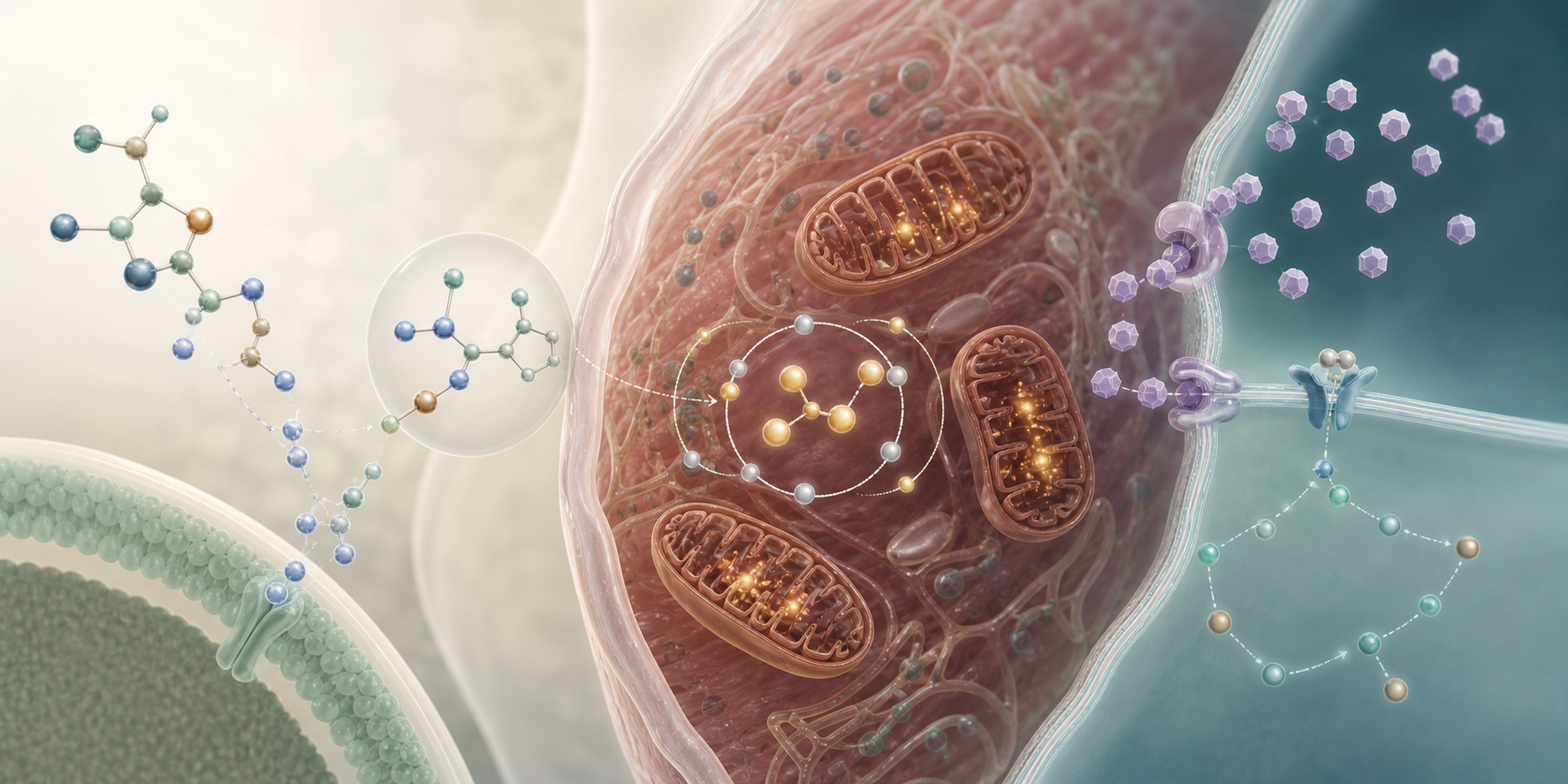
This illustration represents a biological pathway under study; it is not a clinical measurement and does not imply a guaranteed metabolic effect.
The mechanism is plausible, but plausibility is not proof. Animal studies often use different doses, routes of administration, ages, diets, and disease models than human trials. A mouse receiving a controlled intervention is not the same as a generally healthy adult taking an oral capsule. Even in humans, a rise in blood NAD+ does not automatically tell us whether skeletal muscle, liver, adipose tissue, or another target tissue changed in a way that matters.
This is why it is helpful to distinguish three questions: does oral NMN change NAD+-related biomarkers; does it change a specific metabolic measurement; and does it improve a meaningful health outcome over time? The first question has the clearest support. The second has mixed and population-specific evidence. The third remains unanswered.
AIDEVI’s article on cellular energy production and NMN supplementation can help readers explore the mechanism in more detail, while a separate NMN versus NAD+ comparison is useful when thinking about ingredient form and bioavailability claims.
What have human studies actually found?
The most widely discussed positive metabolic study was a 10-week randomized, placebo-controlled trial in 25 postmenopausal women with prediabetes who were overweight or obese. The researchers reported increased insulin-stimulated glucose disposal in skeletal muscle and changes in muscle insulin signaling after NMN supplementation [1]. This is an important finding because it measured muscle physiology directly rather than relying only on a general wellness score.
It is also a narrow finding. The participants were a specific group, the study was small, and the intervention lasted only 10 weeks. The researchers did not show that NMN broadly improved every marker of metabolic health, produced weight loss, or replaced standard lifestyle or clinical care. A positive result in one tissue and population should be treated as a signal for more research, not a universal recommendation.
A 2024 systematic review and meta-analysis examined eight randomized controlled trials involving 342 mainly middle-aged or older adults. Doses ranged from 250 to 2,000 mg per day and study durations from 14 days to 12 weeks. The pooled results did not show significant overall benefits for fasting glucose, fasting insulin, HbA1c, HOMA-IR, or lipid profiles [2]. The review also emphasized that the trials were small and that the findings could not be generalized to people with diabetes or other metabolic conditions.
Taken together, the studies suggest a more nuanced conclusion: NMN may influence NAD+ biology and may affect muscle insulin signaling in a particular population, but current trials do not establish a broad, reliable improvement in metabolic biomarkers for the general public. This is not a failure of the research. It is a reminder that a promising mechanism needs replication, larger samples, longer follow-up, and clinically meaningful outcomes.
A pooled result also does not mean every participant responded identically. It means that, across the available studies, the average difference was not strong or consistent enough to support a general claim. Future research may identify groups more likely to respond, but that possibility should be tested rather than assumed. Until then, “may support” is more accurate than “works for metabolic health.”
| Evidence question | What can reasonably be said? |
|---|---|
| Does NMN affect NAD+ biology? | Some short human studies report higher NAD+-related measurements after oral NMN. |
| Does it improve insulin sensitivity? | One small trial found a muscle-specific improvement in a particular group; broader evidence is not yet consistent. |
| Does it lower glucose or lipids for everyone? | No. A systematic review did not find significant pooled improvements in common glucose or lipid markers. |
| Is it a treatment? | No. NMN should not replace diagnosis, monitoring, medication, nutrition counseling, or other professional care. |
Is NMN safe for metabolic wellness?
Short-term human studies have generally reported good tolerability, but the safety evidence is not the same as proof of long-term safety or suitability for every person. One randomized trial in healthy subjects reported that 250 mg per day for 12 weeks increased blood NAD+ levels without obvious adverse effects during the study period [3]. The systematic review also noted that NMN studies were short and varied in dose and population.
Anyone taking glucose-lowering medication, managing a metabolic condition, preparing for surgery, or monitoring unexplained changes in blood sugar should speak with a healthcare professional before adding NMN. Do not use a supplement to self-manage abnormal laboratory results. If you are pregnant, nursing, have kidney or liver concerns, or take multiple medications, individualized advice is especially important.
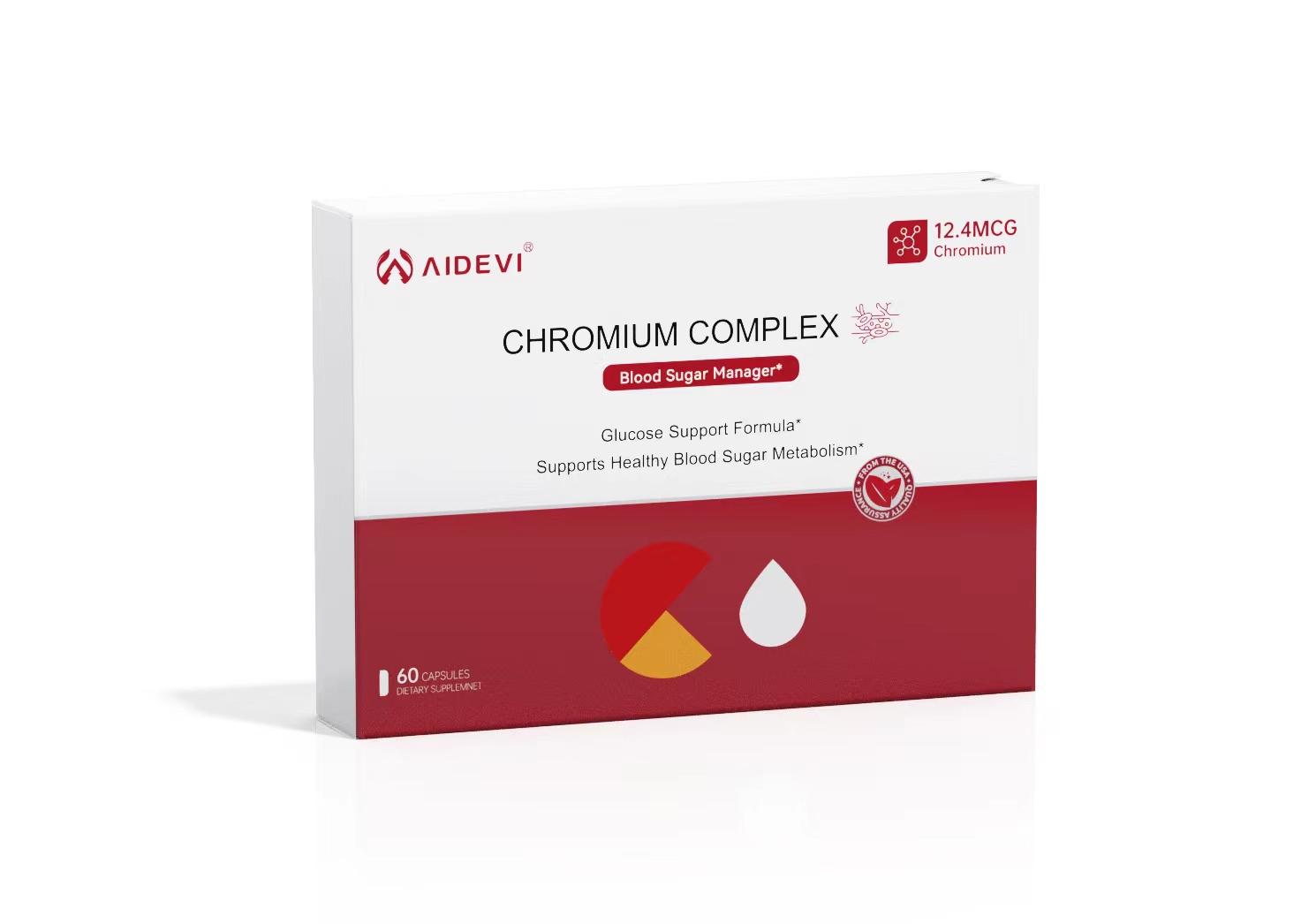
Metabolic products also should not be treated as interchangeable. Chromium, for example, is often promoted for blood sugar support, but the NIH Office of Dietary Supplements says research results are mixed and notes possible interactions with insulin, metformin, and other medications [5]. AIDEVI readers can review the educational article on chromium and blood sugar questions before comparing ingredients.
How should you evaluate NMN for metabolic wellness?
Use a goal, evidence, overlap, and monitoring framework. The purpose is not to make a supplement decision sound more complicated; it is to keep the decision connected to your actual needs.
The G-E-O-M framework
- Goal: Are you seeking general cellular-energy support, or are you trying to change a medical measurement?
- Evidence: Does the claim refer to NAD+ levels, muscle signaling, fasting glucose, HbA1c, lipids, or a meaningful long-term outcome?
- Overlap: Are you already taking NMN, NR, NAD+, chromium, or other products with similar positioning?
- Monitoring: Can a qualified professional help you interpret symptoms, medications, and laboratory results?

A responsible supplement decision combines research quality, foundational habits, label review, and professional context.
If the goal is simply to support everyday wellness, start with the fundamentals that have a larger evidence base: regular physical activity, adequate sleep, a varied eating pattern rich in fiber and minimally processed foods, and appropriate clinical screening. If the goal is to change fasting glucose, HbA1c, insulin, or lipids, testing and professional interpretation should come before a supplement experiment.
For readers comparing product information, review the exact Supplement Facts panel, serving directions, ingredient form, warnings, and quality documentation. You can examine the label and intended use of AIDEVI NMN 18000 as one product-context example, without assuming that a product page can predict your personal metabolic response. AIDEVI’s NMN dosage by age guide can provide additional reading, but dosage should never be treated as a personal prescription.
A practical “best fit, consider instead, pause if” decision looks like this: NMN may be a reasonable topic for further discussion when your goal is general cellular-wellness research and you understand the evidence limits; lifestyle and clinical screening deserve priority when your goal is better metabolic markers; and you should pause for professional guidance when medication interactions, pregnancy, nursing, kidney or liver concerns, or abnormal test results are involved.
Conclusion
Does NMN work for metabolic health? It may influence NAD+ biology, and one carefully designed but small trial found improved muscle insulin sensitivity in a specific group of women with prediabetes. However, the broader randomized-trial evidence has not shown a reliable improvement in standard glucose or lipid markers for generally healthy adults. That means NMN is promising research, not an established metabolic-health treatment.
The most responsible approach is to separate mechanism from outcome, use supplements as optional rather than foundational, and involve a healthcare professional whenever medication or abnormal laboratory results are part of the picture. Individual results may vary, and better long-term studies are still needed.
Frequently Asked Questions
Does NMN lower blood sugar?
Current evidence does not show a consistent blood-sugar-lowering effect across adults. One small trial found a muscle-specific insulin-sensitivity change in postmenopausal women with prediabetes, while a systematic review found no significant pooled improvement in fasting glucose or HbA1c.
Can NMN improve insulin sensitivity?
Possibly in a specific context, but it is not established for everyone. The strongest positive human finding involved skeletal muscle in a small, narrowly defined group. More diverse and longer trials are needed before broad conclusions can be made.
Is NMN the same as NAD+?
No. NMN is a precursor involved in the pathway used to make NAD+. NAD+ is a coenzyme used in many cellular reactions. The form, route of administration, tissue distribution, and actual biological effect should not be assumed to be identical.
Should people with diabetes take NMN?
They should not start NMN as a self-directed treatment. Anyone with diabetes, prediabetes, abnormal glucose results, or glucose-lowering medication should discuss supplements with a qualified healthcare professional and continue appropriate monitoring and care.
What matters most for metabolic health?
A sustainable eating pattern, regular movement, adequate sleep, stress management, and appropriate clinical screening are foundational. A supplement should be considered only after its purpose, evidence, safety, and potential overlap are clear.
References
- [1] Yoshino M, et al. Nicotinamide mononucleotide increases muscle insulin sensitivity in prediabetic women. Science.
- [2] Chen F, et al. Effects of Nicotinamide Mononucleotide on Glucose and Lipid Metabolism in Adults: A Systematic Review and Meta-analysis of Randomised Controlled Trials.
- [3] Okabe K, et al. Oral Administration of Nicotinamide Mononucleotide Is Safe and Efficiently Increases Blood NAD+ Levels in Healthy Subjects.
- [4] Rajman L, Chwalek K, et al. Age-related NAD+ decline. PMC review.
- [5] National Institutes of Health, Office of Dietary Supplements. Chromium Fact Sheet for Consumers.
Individual results may vary. Consult a healthcare professional before starting any new supplement, especially if pregnant, nursing, taking medication, or managing a medical condition. These statements have not been evaluated by the Food and Drug Administration. This product is not intended to diagnose, treat, cure, or prevent any disease.
