



AIDEVI Wellness Guide
nmn and Inflammatory Skin Conditions: What the Research Really Says
NMN is being studied for pathways that matter to inflammatory skin health, including NAD+ metabolism, oxidative stress, immune signaling, and skin barrier function. The strongest evidence so far is preclinical, especially cell and mouse research related to atopic dermatitis-like skin changes. That means NMN should be discussed as a wellness-support ingredient, not as a treatment for eczema, dermatitis, or any diagnosed skin disease.
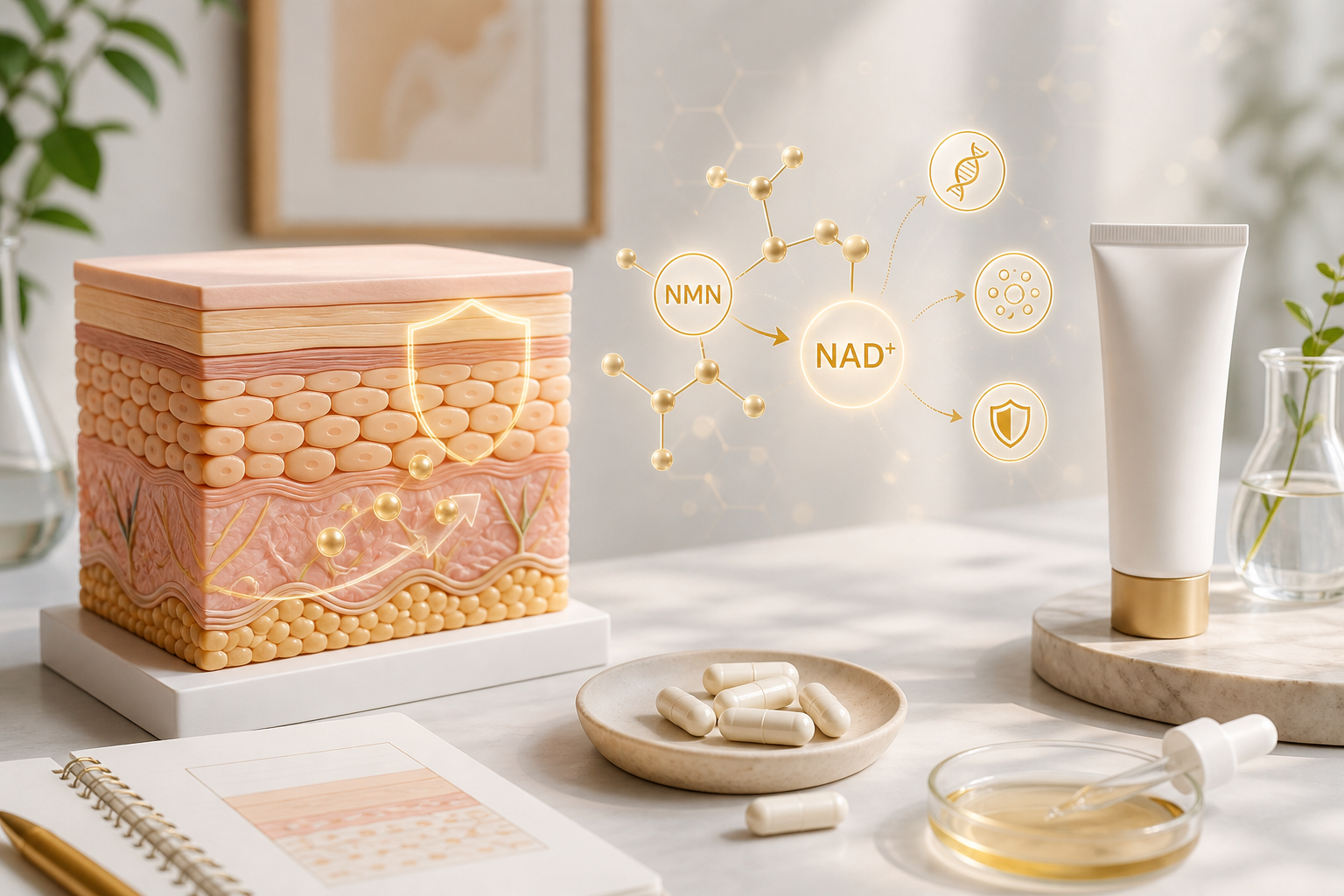
- Atopic dermatitis is a chronic inflammatory skin condition involving itch, immune activity, and skin barrier disruption [1].
- A 2022 mouse and keratinocyte study reported that topical NMN influenced ROS-mediated JAK2/STAT5 signaling and barrier-related markers, but this is not the same as proof of benefit in humans [2].
- For real-world skin wellness, the most reliable routine still starts with barrier care, sun protection, sleep, nutrition, and clinician-guided treatment when symptoms are active.
A practical way to read the current NMN-and-skin conversation is this: NMN may help support cellular resilience through NAD+ biology, but inflammatory skin diseases are medical conditions with many triggers. If your skin is itchy, cracked, infected, bleeding, or repeatedly flaring, NMN is not a substitute for dermatology care.
Content
Can NMN help inflammatory skin conditions?
The careful answer is: NMN is interesting for inflammatory skin research, but it is not established as a therapy for inflammatory skin disease. Conditions such as atopic dermatitis, psoriasis, contact dermatitis, and other recurring rashes can involve overlapping themes, including immune signaling, impaired barrier function, itching, dryness, and oxidative stress. Those themes make NMN scientifically relevant because NMN is a precursor to NAD+, a molecule involved in cellular energy metabolism and stress-response pathways.
However, relevance is not the same as clinical proof. A supplement ingredient can influence a pathway in a laboratory model and still require human trials before anyone can say how it performs in people, which dose is appropriate, who should avoid it, and whether it works alongside standard skin care or medication. That distinction is especially important for skin disease content, because inflamed skin can become infected, sleep-disrupting, and difficult to control without medical guidance.
For AIDEVI readers, the useful takeaway is to view NMN as part of a broader cellular wellness conversation. If you want to understand the foundation first, AIDEVI's guide to what NAD+ does for cellular energy explains why NAD+ biology appears in so many longevity, energy, and skin-aging discussions. For active dermatitis symptoms, though, the first step should be identifying triggers, repairing the barrier, and following a clinician's plan.
What did the atopic dermatitis research actually show?
The study most often cited in this topic was published in International Immunopharmacology in 2022. Researchers used a DNFB-induced atopic dermatitis-like mouse model and also studied stimulated human epidermal keratinocyte cells. In that experimental setting, topical NMN was associated with improvements in dermatitis scoring, scratching behavior, transepidermal water loss, epidermal thickness, inflammatory cytokine expression, oxidative stress markers, and barrier-related gene or protein expression [2].
The proposed mechanism centered on reactive oxygen species, often shortened to ROS, and the JAK2/STAT5 signaling pathway. In simple terms, ROS are chemically reactive molecules that can rise during stress and inflammation. JAK2/STAT5 is one of the signaling routes cells use to respond to immune-related cues. The researchers suggested that NMN's effects in their model were partly connected to reducing abnormal ROS accumulation and blocking activation of that pathway.
That is meaningful early science, but it comes with boundaries. The model used irritated mouse skin and cell experiments, not a large human clinical trial. The NMN was applied topically in the model, which is different from taking an NMN capsule. The endpoint was not a consumer beauty result such as glow or smoothness; it was a controlled research model built to study inflammatory biology. So the strongest fair statement is that NMN has shown preclinical skin-inflammation pathway activity, not that it treats eczema in people.
This is the exact kind of nuance that matters when reading supplement headlines. A phrase like "NMN can relieve dermatitis" sounds simple, but a responsible interpretation is more layered: one study suggests a possible biological pathway, the result deserves follow-up, and people with symptoms should not replace prescribed care with an ingredient trend.
Why do NAD+, ROS, and the skin barrier matter?
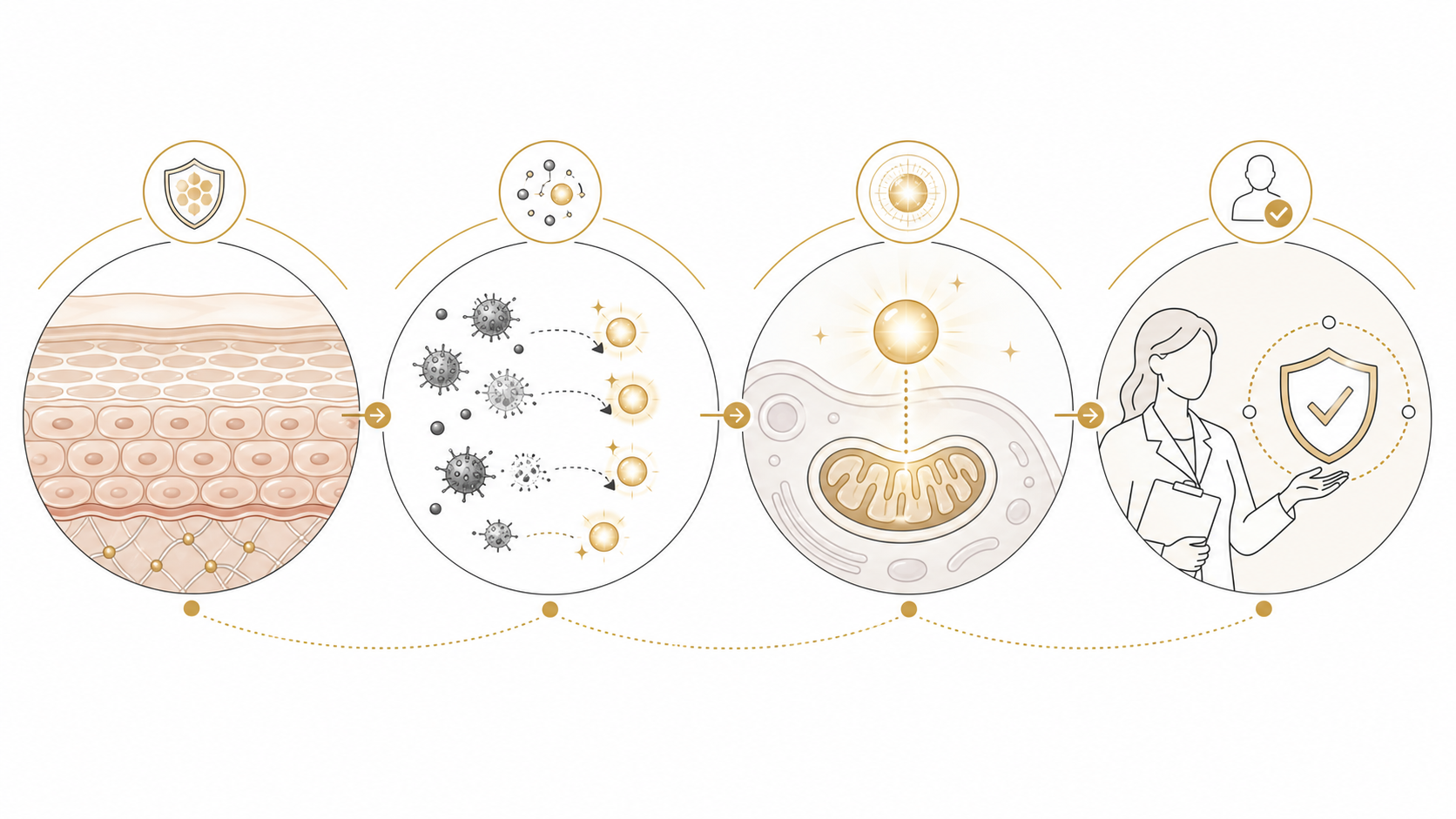
Skin is not just a surface. It is an immune organ, a moisture-control system, a microbial boundary, and a sensor of environmental stress. In atopic dermatitis, the protective layer of the skin may lose moisture more easily, while immune activity and itch can reinforce each other. NIAMS describes atopic dermatitis as a chronic condition involving inflammation, redness, irritation, and severe itching, with genes, immune function, and environment all playing a role [1].
ROS matter because the skin is constantly exposed to UV radiation, pollution, heat, friction, and normal metabolic activity. Oxidative stress can affect lipids, proteins, DNA, and the skin barrier environment. A review on oxidative stress in human skin notes that oxidative stress is especially relevant to extrinsic skin aging, including UV-related stress, and that age-related changes can be linked with reduced barrier function [3]. This is why antioxidant defense is a serious skin-health topic, not only a beauty slogan.
NAD+ matters because many cellular enzymes depend on it. NMN is one route the body can use to make NAD+. That does not mean more NMN automatically creates better skin, but it does explain why researchers keep looking at NAD+ precursors in aging, energy, and stress-response models. If your main interest is daily antioxidant support rather than dermatitis research, AIDEVI's article on NMN and antioxidant properties for healthy aging continues that discussion in a broader wellness context.
The skin barrier is the practical bridge between science and routine. Even the most exciting pathway research will not replace basics such as gentle cleansing, moisturizer, sun protection, and trigger management. A skin routine that ignores barrier repair can make dryness and irritation worse. For related skin-aging context, the AIDEVI guide to UV radiation and healthy skin aging is a useful next read because UV exposure is one of the most consistent external stressors for skin.
Is oral NMN the same as topical NMN for skin?
No. Oral NMN and topical NMN should not be treated as interchangeable. The 2022 atopic dermatitis-like model used topical application in mice and cell experiments. A capsule is absorbed, metabolized, and distributed through the body in a different way. A serum, cream, or topical research formulation interacts first with the skin surface and local tissue environment. Those are different product formats, different exposure routes, and different evidence questions.
For consumers, that means the skin-health promise of oral NMN should stay within structure/function language: it may help support NAD+ levels, cellular energy, and antioxidant defenses as part of a healthy-aging routine. It should not be positioned as a rash product. If you are comparing internal and external beauty strategies, AIDEVI's article on supplements vs. skincare products for anti-aging benefits gives a practical framework for deciding what belongs in each lane.
This distinction also helps set expectations. A moisturizer can immediately reduce water loss from the skin surface. Sunscreen can reduce UV exposure the same day you use it. An oral supplement is usually part of a longer wellness pattern, where consistency, overall diet, sleep, stress, and personal biology all matter. AIDEVI's overview of NMN benefits and side effects is the better place to evaluate daily-use questions, tolerability, and who should ask a healthcare professional first.
How should you decide whether NMN fits your routine?
The best decision starts by separating two goals. One goal is diagnosed skin-disease management, which belongs with a dermatologist or qualified healthcare professional. The other goal is long-term skin resilience and healthy aging support, where nutrition, antioxidant defense, sleep, UV protection, and cellular wellness may all have a role. NMN belongs in the second conversation unless a clinician tells you otherwise.
| Best fit | Consider instead | Avoid or pause if |
|---|---|---|
| You are building a healthy-aging routine and want NAD+ precursor support. | Start with sleep, protein, colorful plants, hydration, and regular movement if your routine is inconsistent. | You expect NMN to replace a prescribed eczema, allergy, or infection plan. |
| Your skin goal is radiance, resilience, and antioxidant support rather than treating a flare. | Use fragrance-free moisturizer and daily sunscreen as the first layer of visible skin care. | Your skin is painful, oozing, bleeding, infected-looking, or repeatedly disrupting sleep. |
| You can evaluate NMN alongside label quality, personal tolerance, and healthcare advice. | Review ingredient format and safety basics before adding multiple products at once. | You are pregnant, nursing, taking medication, managing a medical condition, or preparing for surgery without professional guidance. |
If your focus is youthful-looking skin, NMN is only one possible part of the picture. Collagen support, vitamin C intake, sun habits, topical retinoids, barrier repair, and antioxidant-rich foods may all be more visibly connected to skin appearance depending on your baseline. AIDEVI's guide to NMN benefits for young-looking skin explores the appearance angle without turning it into a disease claim.
What daily routine best supports inflammation-aware skin wellness?
Think in four layers: protect, calm, nourish, and track. Protect the skin with sunscreen, gentle cleansing, and clothing choices that reduce friction. Calm the barrier with bland, fragrance-free moisturizers, especially after bathing. Nourish the body with protein, omega-3-rich foods, colorful fruits and vegetables, and enough fluids. Track triggers such as heat, sweat, soaps, stress, wool, fragrances, alcohol, or certain foods if your clinician suspects a connection.
This routine matters because inflamed skin often becomes a cycle: dryness increases itch, scratching damages the barrier, barrier disruption invites more irritation, and irritation can intensify inflammation. Supplements cannot carry that entire burden. They work best when the daily environment is already supportive. AIDEVI's article on NMN as a skincare and anti-aging technology component adds useful context for readers who want to understand how ingredient science moves from mechanisms to product conversations.
For antioxidant planning, avoid stacking many new products at once. Add one change, observe how you feel, and keep notes. If you take medication or have a recurring condition, ask your healthcare professional whether a supplement is appropriate. A conservative approach is not less scientific; it is how you protect the signal from the noise. For broader ingredient selection, AIDEVI's guide to choosing a daily antioxidant supplement can help you compare goals without overpromising results.
Conclusion
NMN has a credible reason to appear in skin-health research: it is tied to NAD+ biology, oxidative stress response, and cellular resilience. In a 2022 preclinical atopic dermatitis-like model, topical NMN was associated with changes in ROS-mediated JAK2/STAT5 signaling and skin barrier markers. But the responsible conclusion is measured. NMN is not proven to treat inflammatory skin diseases in humans, and oral NMN supplements should not be described as eczema products.
For AIDEVI readers, the smarter path is to treat NMN as one possible healthy-aging support inside a larger skin wellness plan: protect the barrier, reduce avoidable oxidative stress, use proven skincare basics, and involve a clinician when symptoms are persistent or severe. That keeps the science interesting without letting the headline run ahead of the evidence.
Frequently Asked Questions
Can NMN treat eczema or atopic dermatitis?
No. NMN should not be presented as a treatment for eczema or atopic dermatitis. Early studies suggest NMN may influence inflammatory and oxidative-stress pathways in experimental models, but people with diagnosed or suspected skin disease should follow professional medical care.
Why do researchers connect NMN with skin inflammation?
Researchers connect NMN with skin inflammation because NMN supports NAD+ production, and NAD+ is involved in energy metabolism, stress response, and cellular repair pathways. In skin models, oxidative stress and immune signaling are important research targets.
Is topical NMN better than oral NMN for skin?
There is not enough human evidence to make that comparison. Topical and oral formats work through different exposure routes, so findings from topical mouse research should not be automatically applied to oral supplement routines.
What should I do if my skin is actively flaring?
If your skin is painful, very itchy, cracked, infected-looking, spreading, or affecting sleep, speak with a dermatologist or healthcare professional. Barrier care and trigger avoidance can help support comfort, but persistent inflammation deserves proper evaluation.
Can NMN still be part of a skin aging routine?
Yes, NMN may fit some healthy-aging routines as a NAD+ precursor for cellular energy and antioxidant-support goals. It works best as part of a broader plan that includes sunscreen, nutrition, sleep, movement, and consistent skincare basics.
References
These statements have not been evaluated by the Food and Drug Administration. This product is not intended to diagnose, treat, cure, or prevent any disease. Individual results may vary. Consult a healthcare professional before starting any new supplement, especially if pregnant, nursing, taking medication, managing a medical condition, or experiencing active skin symptoms.
