



AIDEVI Sports Wellness Guide
nmn for Athletes: Boosting Performance and Muscle Recovery
NMN is being studied as a way to support NAD+ metabolism, cellular energy, and exercise adaptation, but it is not a substitute for training, food, hydration, or sleep. A small randomized trial in amateur runners reported improvements in some aerobic-capacity measures after six weeks of training with NMN, while other human studies show mixed or limited effects. For athletes, the sensible approach is to build recovery fundamentals first and treat NMN as an optional, evidence-aware supplement.
- NMN is a precursor involved in the body's NAD+ pathway, which supports redox reactions and cellular energy metabolism.
- One six-week trial in 48 recreational runners found improvements in some ventilatory-threshold and oxygen-use measures, but not every performance endpoint.
- Protein, carbohydrate, fluids, sleep, progressive training, and rest days remain the main recovery tools.
- NMN research in athletes is still small and short-term, so do not assume it will build muscle, erase soreness, or improve every sport.
Content
Why are athletes interested in NMN?
Nicotinamide mononucleotide, or NMN, is a molecule in the biosynthetic pathway for NAD+. NAD+ helps cells transfer energy during redox reactions and supports enzymes involved in cellular maintenance. Exercise increases energy demand in skeletal muscle, so researchers are interested in whether supporting NAD+ metabolism could influence oxygen use, fatigue resistance, or adaptation to training. That is a reasonable research question, but it is not the same as proving that a supplement works like a stimulant or anabolic drug.
Athletes also face a practical recovery problem: training creates a stimulus, but progress happens when the body has enough energy, amino acids, carbohydrates, fluids, and time to remodel. NMN may be relevant to cellular energy biology, yet it does not supply protein for muscle protein synthesis, carbohydrate for glycogen replacement, or fluids and electrolytes lost in sweat. A useful article on cellular energy production and NMN can provide pathway context without turning that mechanism into a certain performance outcome.
The reader's goal should determine the question. A distance runner may care about sustainable pace and ventilatory thresholds. A strength athlete may care about training quality, volume, and recovery between sessions. A recreational gym user may simply want to feel less depleted after exercise. These outcomes are different, and a result in one group should not automatically be generalized to another.
What does the human research actually show?
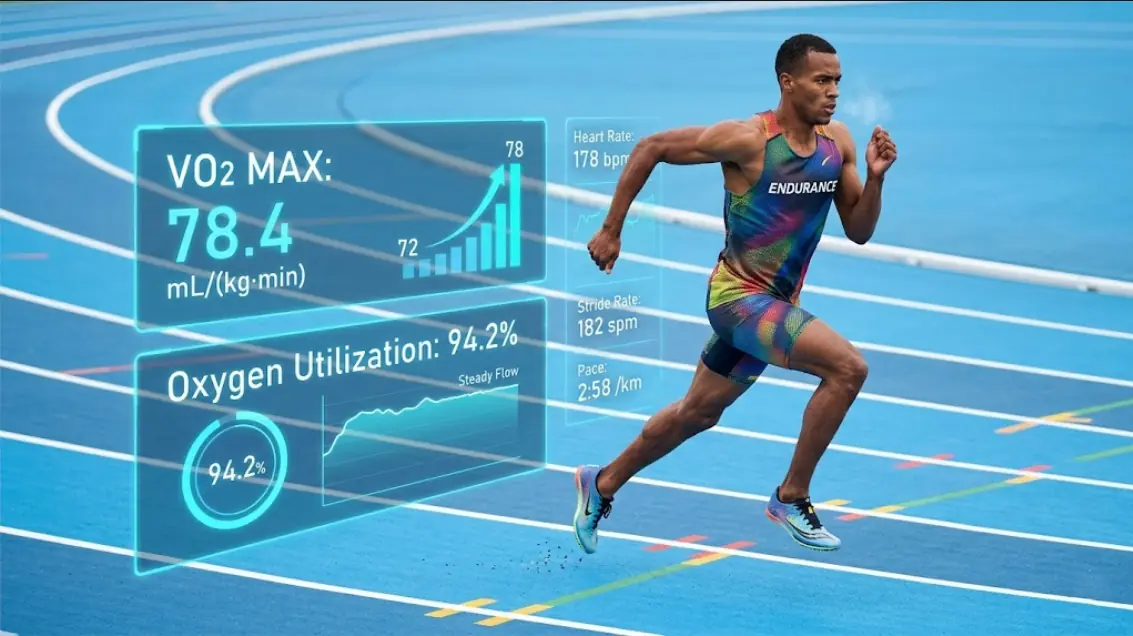
The most directly relevant study is a six-week randomized, double-blind, placebo-controlled trial in 48 healthy amateur runners who trained five to six times per week. Participants received placebo or 300, 600, or 1,200 mg of NMN daily. The medium- and high-dose groups improved more than the control group on some oxygen-uptake and ventilatory-threshold measures, but the study did not find a difference in every endpoint, including VO2max and peak power.[1] The findings are interesting, not definitive.
That trial has several limits for everyday decision-making. It was small, lasted only six weeks, included mostly young and middle-aged recreational runners, and combined NMN with structured training. It cannot tell us whether the same result would occur in elite athletes, older adults, women in different training phases, team-sport athletes, or people who do not train consistently. It also does not establish that NMN increases muscle size or prevents injury.
Other evidence is more cautious. A systematic review of randomized trials found that physical-performance measures showed non-significant improvements overall, with studies varying in dose, population, and duration. A separate study in older men with diabetes and impaired physical performance reported that 250 mg daily for 24 weeks was tolerated but did not improve grip strength or walking speed compared with placebo. These results reinforce the need to separate a promising mechanism from a proven sports outcome.
A newer exploratory study examined short-term NMN use around blood-flow-restriction exercise in 11 untrained men. It reported changes in selected inflammatory and muscle-related gene signals, but gene-expression changes are not the same as faster recovery, greater strength, or better competition results.[2] For a plain-language overview of the topic, see AIDEVI's guide to NMN for athletes and performance recovery, while keeping the limitations above in view.
| Question | What the evidence supports | What it does not prove |
|---|---|---|
| Can NMN affect NAD+ biology? | Human studies suggest oral NMN can increase whole-blood NAD+ under studied conditions. | That every tissue responds the same way or that more NAD+ equals better performance. |
| Can NMN support endurance? | One small runner trial reported improvements in selected aerobic measures during training. | A universal increase in race speed, VO2max, or competition outcomes. |
| Can NMN speed muscle recovery? | Early studies are exploring inflammatory and cellular signals. | Reliable reductions in soreness, injury risk, or recovery time. |
Readers who want to compare mechanisms can also review AIDEVI's NAD+ versus NMN explanation. The key distinction is that NAD+ is the coenzyme used in cells, while NMN is one precursor that the body can use in its NAD+ network.
What matters most for muscle recovery?
Recovery starts with enough total energy. Chronic under-fueling can reduce training quality, impair mood, disrupt sleep, and make adaptation harder. The appropriate intake depends on body size, sport, training load, climate, and goals, so an athlete with a demanding schedule should work with a sports dietitian rather than copy a generic calorie target.
Protein supplies amino acids for tissue remodeling. The International Society of Sports Nutrition position stand reports that 1.4 to 2.0 grams of protein per kilogram of body weight per day is sufficient for many exercising individuals, with individual needs varying by training status and energy balance.[3] It also describes the value of distributing high-quality protein across the day. Whole foods such as eggs, dairy, fish, poultry, soy, tofu, beans, and lentils can meet needs; a protein supplement is a convenience tool, not a requirement.
Carbohydrates support high-intensity work and help replenish glycogen after demanding endurance or mixed training. Include a carbohydrate source around longer or harder sessions, such as oats, rice, potatoes, fruit, bread, or sports nutrition products when appropriate. When the recovery window is short, combining carbohydrate and protein can be useful. The right amount depends on session duration and the next training time, not on a one-size-fits-all rule.[4]
Fluids and electrolytes matter when sweat losses are substantial. Begin sessions hydrated, drink according to thirst and conditions, and practice your plan before competition. Sleep is equally important: keep a regular schedule, allow enough time in bed, and treat persistent insomnia, loud snoring, or unusual daytime sleepiness as reasons to seek professional help. An optional supplement cannot compensate for repeated nights of inadequate recovery.
Training design completes the picture. Alternate hard and easy days, increase volume gradually, include strength work, and schedule lighter periods. WHO recommends at least 150 minutes of moderate aerobic activity or 75 minutes of vigorous activity weekly for adults, along with muscle-strengthening work on two or more days, but athletes may need individualized programming beyond those general-health minimums.[5]
How can an athlete evaluate NMN responsibly?
Start by naming one outcome. “Better performance” is too broad; choose a repeatable measure such as a steady-state pace at a familiar effort, the number of quality training sessions completed, a submaximal heart-rate response, a strength-workout log, or a recovery score recorded under the same conditions. Do not change training, caffeine, sleep schedule, and supplements all at once, or it will be difficult to interpret the result.
A conservative review period should include a stable training block, consistent meals, and enough recovery. Use the product label rather than online claims to determine serving directions. The runner trial used 300, 600, or 1,200 mg per day, but those study doses are not a universal recommendation for athletes, and higher intake is not automatically better. Discuss dose and suitability with a clinician or sports dietitian, especially if you take medication or have a health condition.
Interpret your log with patience. Performance naturally moves up and down with weather, travel, menstrual cycle, stress, sleep, and the difficulty of a training block. A useful comparison is a repeated session at a similar effort, not a single best day. Look for several weeks of stable or improving pace, power, perceived exertion, and recovery between sessions. If the change appears only when motivation is high, or disappears when training load changes, it may reflect context rather than the supplement. This simple review protects athletes from spending more while overlooking a missed meal, an overly aggressive program, or accumulated fatigue.
| Check before use | Why it matters for athletes |
|---|---|
| Sport rules and team policy | Supplement status and sport-specific eligibility are separate questions. Check the current rules of your federation and team. |
| Label and batch information | Clear ingredient identity, serving directions, lot details, and available testing information make product review easier. |
| Health and medication context | A clinician can assess interactions, contraindications, pregnancy or nursing considerations, and upcoming procedures. |
| What to track | Use objective training logs plus sleep, digestion, perceived exertion, and unwanted effects. |
AIDEVI's articles on NMN and muscle recovery and endurance and recovery can serve as further reading, but a product page or blog post should not replace individualized sports-nutrition advice. For label-focused shopping, use this NMN supplement selection checklist and ask the manufacturer for information you cannot find on the label.
Conclusion
NMN has a plausible connection to exercise biology because it participates in the NAD+ pathway, and a small runner trial reported improvements in selected aerobic measures during training. That is a useful signal for continued research, not a promise of faster races, greater hypertrophy, or effortless recovery. The effect may differ by sport, age, training status, diet, and baseline health.
Athletes should earn the basics first: enough energy, protein, carbohydrate, fluids, sleep, progressive programming, and rest. If those foundations are stable and a qualified professional agrees that NMN is appropriate, evaluate one clearly defined outcome over a consistent training block. Individual results vary, and stopping a supplement is reasonable if it causes unwanted effects or adds cost without a meaningful benefit.
Frequently Asked Questions
Can NMN build muscle directly?
There is no strong human evidence that NMN directly stimulates muscle hypertrophy. Resistance training and adequate protein are the primary tools for muscle protein synthesis. NMN research is focused more on NAD+ biology, energy metabolism, and selected exercise outcomes.
Can NMN reduce post-workout soreness?
That has not been established. Early studies have examined inflammatory or cellular signals, but changes in a biomarker do not necessarily mean less soreness or faster return of performance. Use training progression, sleep, food, fluids, and rest to manage recovery first.
What dose of NMN should an athlete take?
There is no universally established athletic dose. Human studies have used different amounts, including 250 mg in a safety and NAD+ study and 300, 600, or 1,200 mg in a runner trial. Do not copy a research dose without considering your health, medications, product quality, and a professional's advice.
Should NMN be taken before or after a workout?
Current research does not establish a universally superior timing window for athletic performance. Follow the product label and choose a time you can use consistently without upsetting your stomach or disrupting sleep. Do not let timing distract from total daily nutrition and recovery.
Who should ask a clinician before using NMN?
Ask a healthcare professional before starting NMN if you are pregnant or nursing, take prescription medication, manage a chronic condition, have upcoming surgery, or are dealing with unexplained fatigue, pain, fainting, chest symptoms, or a sudden decline in exercise tolerance. Competitive athletes should also review current federation and team policies.
References
- [1] Liao et al., Nicotinamide mononucleotide supplementation enhances aerobic capacity in amateur runners
- [2] Yang et al., Anti-inflammatory effects of NMN in human skeletal muscle after blood-flow-restriction exercise
- [3] International Society of Sports Nutrition Position Stand: Protein and Exercise
- [4] Nutrition to Support Recovery from Endurance Exercise: Carbohydrate and Protein Replacement
- [5] World Health Organization, Physical Activity Recommendations
- [6] Okabe et al., Oral Administration of NMN Is Safe and Efficiently Increases Blood NAD+ Levels in Healthy Subjects
- [7] Effects of NMN on Older Patients with Diabetes and Impaired Physical Performance
These statements have not been evaluated by the Food and Drug Administration. This product is not intended to diagnose, treat, cure, or prevent any disease. This article is for educational purposes only and is not medical or individualized sports-nutrition advice. Consult a healthcare professional before starting any new supplement, especially if you are pregnant, nursing, taking medication, managing a medical condition, or preparing for surgery. Individual results may vary.
