








nmn Dosage by Age: What Human Studies Show
Updated October 26, 2026
There is no validated NMN dose chart for people in their 20s, 40s, or 60s. Human studies have tested different fixed amounts in selected adult groups, but they have not established that age alone determines an appropriate NMN dose. A dose used in a clinical trial is evidence about that study protocol, not a personal recommendation.
If you are comparing “NMN dosage by age” advice online, the most useful questions are: What amount did researchers test? Who took it, for how long, and what did they measure? Does the result support an age-based recommendation, or only describe one trial?

Quick answer
Research has tested several NMN amounts, including 250 mg per day in adult trials and 300, 600, or 900 mg per day in one dose-ranging trial. These amounts do not form a recommended age chart, and the evidence does not show that older adults need more NMN simply because of age.[1] [2] [3]
Is NMN dosage based on age?
Not according to a validated clinical dosing rule. A study may enroll people within a particular age range, but that does not mean researchers compared every decade or identified a different dose for each one. To support an age-based chart, trials would need to test age groups directly, compare dose responses within those groups, and replicate the results. The current adult evidence does not provide that kind of dosing guide.[4]
Age can be one part of a person's health context, but it is not a substitute for the product label, medication review, health history, or advice from a qualified healthcare professional. Claims that everyone over a certain age needs a higher amount turn a research question into a personal recommendation that the studies have not established.
What amounts have human NMN studies tested?
The examples below show why a study dose should be read together with its participants, duration, and outcomes. They are not instructions for choosing a supplement serving.
| Study group and protocol | What researchers reported | What it does not establish |
|---|---|---|
| 30 healthy adults; 250 mg per day for 12 weeks | The randomized trial reported increased blood NAD-related measures in the NMN group and monitored tolerability.[1] | That 250 mg is the right amount for every age, product, or goal. |
| 80 healthy middle-aged adults; 300, 600, or 900 mg per day for 60 days | This dose-ranging trial found higher blood NAD concentrations in the NMN groups. It also measured selected physical and health outcomes; not every measure changed significantly.[2] | That the highest tested amount is best, or that the same result applies to other age groups and products. |
| 60 older adults; 250 mg per day for 12 weeks | The primary stepping-test outcome did not differ significantly between groups. Some secondary measures, including blood NAD-related levels and four-meter walking time, favored NMN at 12 weeks.[3] | That older adults need a higher dose than younger adults. The trial did not compare age-based dose recommendations. |

A 2026 systematic review included 15 randomized trials of oral NMN or NMN-related preparations. Across those studies, amounts ranged from 250 to 2,000 mg per day and study periods from 14 days to 24 weeks. The authors noted differences in participants, preparations, and study design. That range describes what researchers tested; it is not a recommended range, a proven long-term safety limit, or evidence that higher amounts work better.[4]
What does the evidence say by age group?
| Age question | What the current human evidence can say | Practical interpretation |
|---|---|---|
| Adults in their 20s or 30s | The studies do not establish a separate dose for these decades. | Do not treat a general adult trial amount as a dose proven for younger adults. |
| Middle-aged adults | One trial compared several fixed daily amounts for 60 days in a selected group of healthy middle-aged adults.[2] | A dose-ranging study is not the same as a general clinical recommendation. |
| Adults 60 and older | An older-adult trial tested 250 mg per day for 12 weeks; it did not compare that group with younger adults receiving different doses.[3] | The trial does not support increasing the amount just because someone is older. |
| Under 18 | The cited studies were conducted in adults. | Adult study amounts should not be applied to children or teens. Ask a pediatric healthcare professional about any supplement. |
Why celebrity routines and online calculators are not dose guides
A public figure's supplement routine is an anecdote, not a controlled comparison of age groups. It cannot show what amount is effective or appropriate for another person. The original article's age-and-weight calculator also presented a personalized-looking answer without a validated NMN dosing model. That calculator has been removed because the cited human research does not support an age-and-weight formula.

How to read an NMN supplement label
Before comparing a product amount with a study, make sure the numbers use the same basis. A label may show milligrams per capsule, per serving, or across the full bottle. A research paper usually reports a daily protocol. Those figures are not interchangeable.
- Check the amount of NMN itself per capsule or serving, rather than the total weight of a multi-ingredient blend.
- Read the serving size and directions so you know how many capsules make one serving.
- Separate the amount per serving from the total amount in the container.
- Do not copy a trial protocol or raise a serving because a larger number appears in a study.
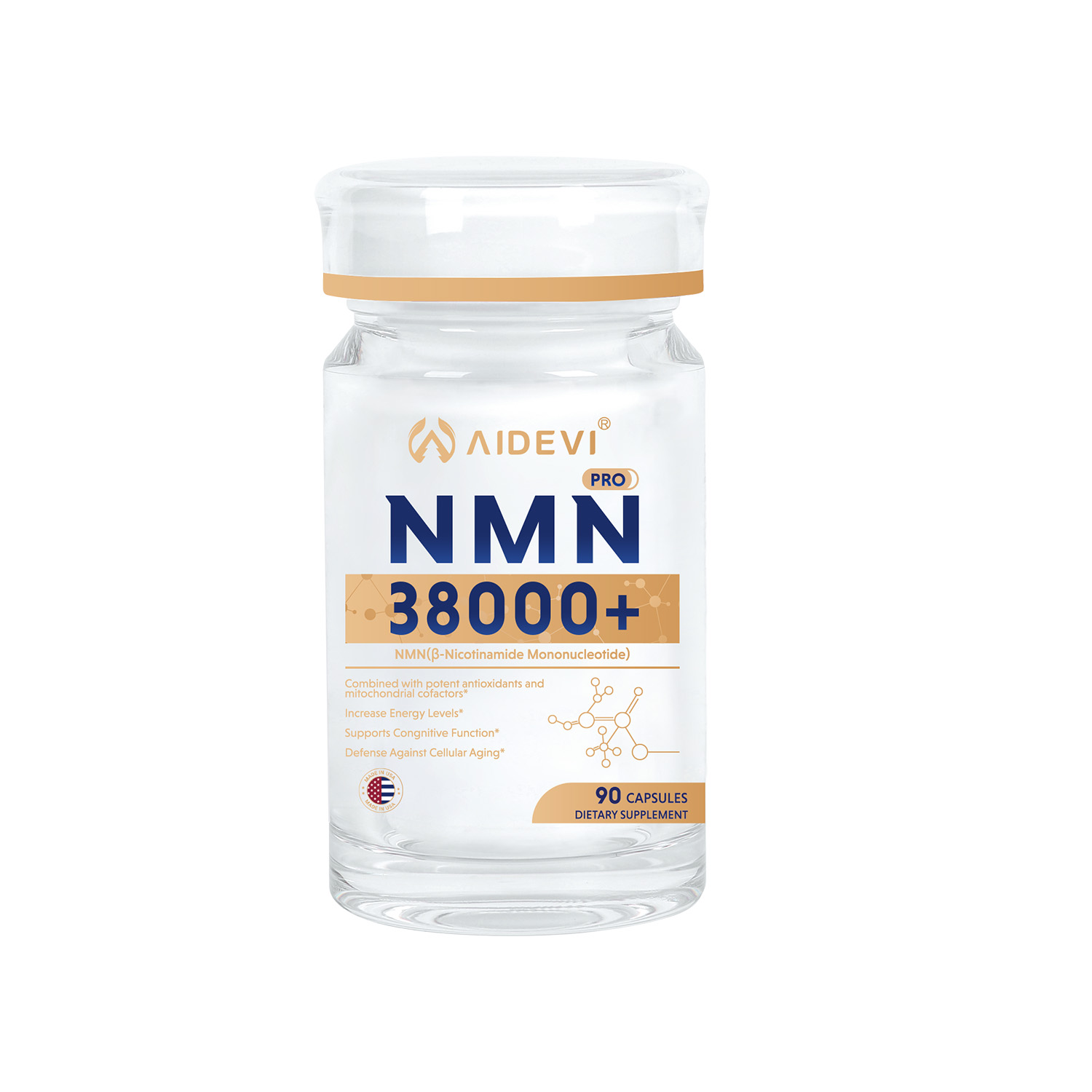
- For label arithmetic and study-dose comparisons, see AIDEVI's NMN 250 mg vs 500 mg guide.

In the United States, FDA does not approve dietary supplements before they are marketed. A facility registration or a statement about manufacturing does not mean FDA has reviewed or approved a particular supplement's dose or effectiveness. For questions about whether an NMN supplement fits your health situation, speak with a qualified healthcare professional.[5]
Safety questions to discuss with a healthcare professional
Short-term trials provide some information about tolerability under the conditions researchers studied, but they cannot establish long-term safety for every person, product, or medication combination. The 2026 review also found that study lengths and preparations varied.[4]
Ask a qualified healthcare professional before starting NMN if you are pregnant or nursing, take medication, manage a medical condition, or are receiving medical care. If you notice an unwanted effect, stop and seek professional guidance. For a broader discussion of evidence and possible side effects, read AIDEVI's NMN effects and safety guide.
Frequently asked questions
Do older adults need more NMN?
Human trials have not established that older adults need a higher amount because of age. A study in older adults tested 250 mg per day for 12 weeks; it did not compare age-based dose requirements.[3]
Is 250 mg or 500 mg the right NMN dose?
Neither number is a universal answer. Some studies tested 250 mg per day, while others tested different amounts in specific groups and for limited periods. The results do not identify one best dose for every person. Follow the product label and ask a healthcare professional about your own situation.
Does a study that tested 900 mg mean 900 mg is safe for me?
No. A study amount describes a monitored protocol in selected participants over a defined period. It does not prove that the same amount is suitable for another person, a different product, or long-term use.
Can an NMN calculator tell me my dose from my age and weight?
Not on the basis of the human studies cited here. They do not validate a calculator that converts age or body weight into an individual NMN dose.
References
- Okabe K, Yaku K, Uchida Y, et al. Oral administration of nicotinamide mononucleotide is safe and efficiently increases blood nicotinamide adenine dinucleotide levels in healthy subjects. Frontiers in Nutrition. 2022;9:868640. Full article. doi:10.3389/fnut.2022.868640.
- Yi L, Maier AB, Tao R, et al. The efficacy and safety of β-nicotinamide mononucleotide supplementation in healthy middle-aged adults: a randomized, multicenter, double-blind, placebo-controlled, parallel-group, dose-dependent clinical trial. GeroScience. 2023;45:29–43. PubMed. doi:10.1007/s11357-022-00705-1.
- Morifuji M, Higashi S, Ebihara S, Nagata M. Ingestion of β-nicotinamide mononucleotide increased blood NAD levels, maintained walking speed, and improved sleep quality in older adults in a double-blind randomized, placebo-controlled study. GeroScience. 2024;46:4671–4688. PubMed. doi:10.1007/s11357-024-01204-1.
- Yang W, Huang J, Tang Z, Chen C, Sun Y. Safety and metabolism-related outcomes of oral nicotinamide mononucleotide supplementation in adults: a systematic review and meta-analysis. Nutrients. 2026;18(14):2251. Full article. doi:10.3390/nu18142251.
- U.S. Food and Drug Administration. Questions and Answers on Dietary Supplements. FDA guidance.
These statements have not been evaluated by the Food and Drug Administration. This product is not intended to diagnose, treat, cure, or prevent any disease. Individual results may vary. Consult your healthcare provider before using any dietary supplement.
