



AIDEVI Science Safety Guide
Does nmn Enhance DNA Repair in Cancer Cells? What the Research Really Means
NMN should not be described as a cancer treatment or anti-cancer supplement. NAD+ biology is connected with DNA repair, PARP enzymes, and sirtuins, but cancer cells can also depend on repair and metabolism pathways to survive. If you have cancer, a cancer history, or are receiving treatment, discuss NMN with your oncology team before using it.
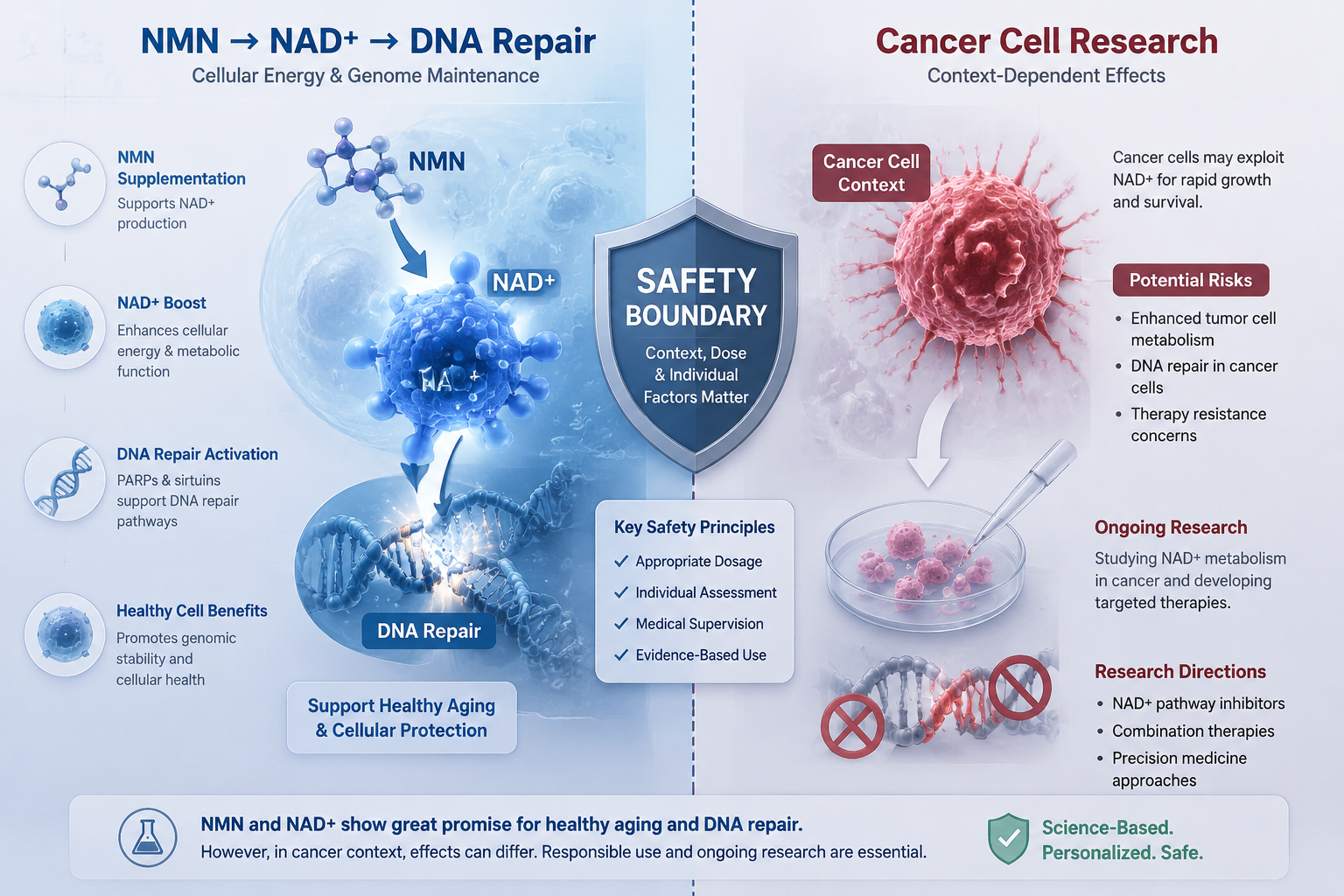
- NMN is a precursor related to NAD+ metabolism, not an oncology drug.
- DNA repair can protect normal cells, but in cancer biology it can also help some cancer cells tolerate stress.
- Cancer patients should not self-start NMN during chemotherapy, radiation, immunotherapy, targeted therapy, or surveillance without medical guidance.
Content
Does NMN enhance DNA repair in cancer cells?
The careful answer is: NMN may influence NAD+-dependent repair biology in laboratory or animal research contexts, but that does not mean taking NMN helps treat cancer, prevents cancer, or safely improves outcomes for people with cancer. The same biology that supports normal cellular maintenance may also be used by stressed or fast-growing cells, including some cancer cells. This is why the topic must be handled as a safety question, not as a wellness promise.
NMN is mainly discussed because it can support the body's NAD+ pool, and NAD+ is required by enzymes involved in cellular metabolism and DNA damage response. AIDEVI's broader guide to what NAD+ does for cellular energy is useful background, but cancer changes the context. A healthy-aging article may ask, "How do cells maintain resilience?" A cancer-safety article must ask, "Could changing a repair pathway affect treatment, tumor behavior, or clinician monitoring?"
That distinction matters because DNA repair is not automatically good or bad. In normal tissues, repair helps maintain genomic stability. In a cancer cell, repair capacity can sometimes help the cell survive DNA-damaging stress. Many cancer therapies are designed around this vulnerability: they damage cancer-cell DNA, block repair pathways, or exploit weaknesses in tumor repair machinery. A supplement that affects NAD+ biology should therefore be discussed with an oncologist, especially during active treatment.
Why is NAD+ connected with DNA repair?
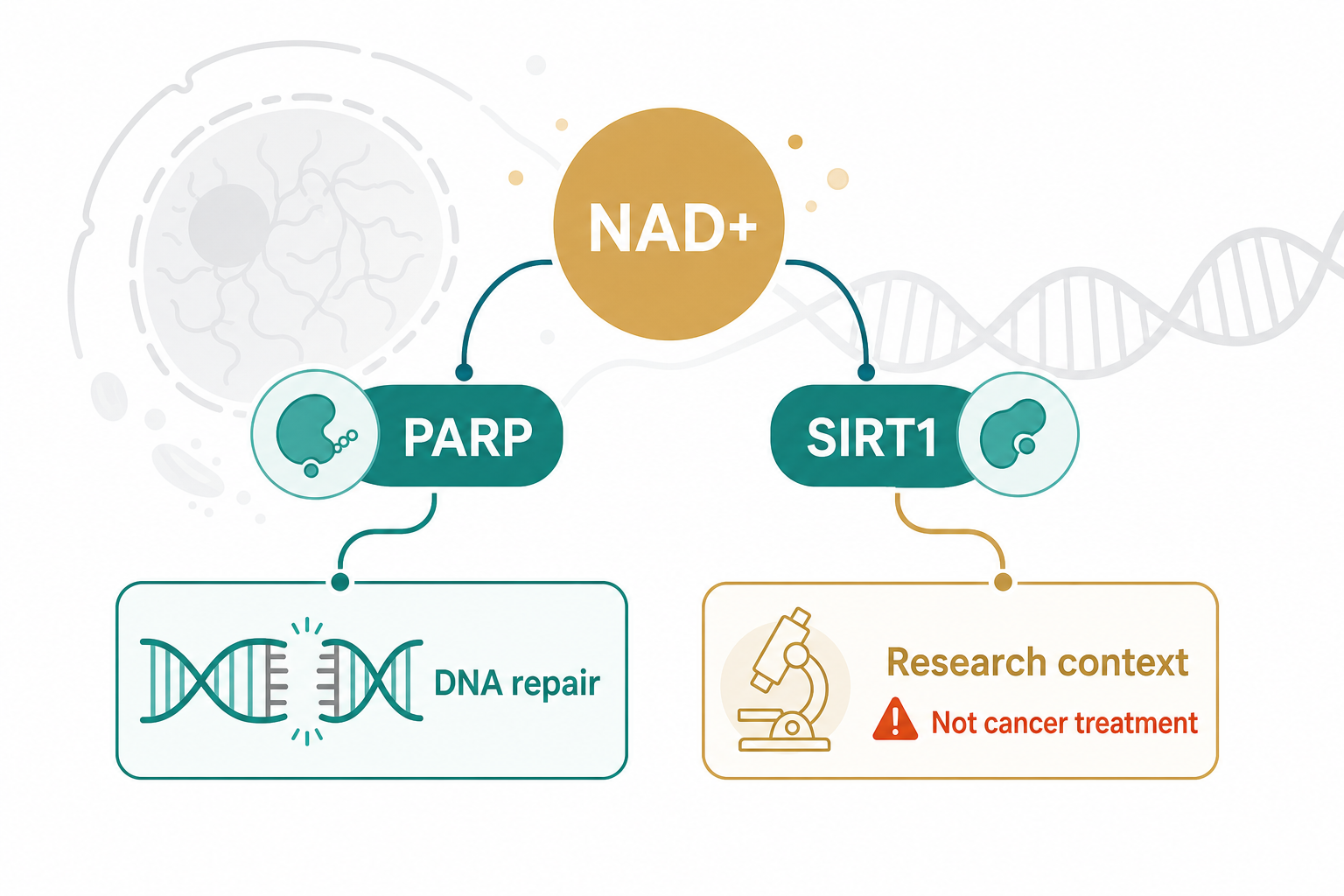
NAD+ is a coenzyme used in energy metabolism and by several signaling enzymes. Two families often mentioned in the DNA repair discussion are PARPs and sirtuins. PARP enzymes help coordinate responses to certain forms of DNA damage, while sirtuins such as SIRT1 are NAD+-dependent deacetylases involved in many stress-response and gene-regulation pathways. AIDEVI's article on why NAD+ decline matters for sirtuins and PARP explains this relationship in a healthy aging context.
A widely cited review in Science describes NAD+ as important for metabolism, aging biology, and stress-response systems, while also emphasizing that NAD+ biology is broad and context dependent [1]. Another experimental paper reported that NAD+ can influence protein interactions involving PARP1 and DBC1 in age-related DNA repair models [2]. These findings are scientifically interesting, but they do not translate into a simple consumer instruction like "take NMN for DNA repair."
The practical lesson is more conservative: NAD+ sits near important cellular control points. When those control points are discussed in healthy adults, the language may be cellular energy support or normal repair biology. When those control points are discussed in cancer, the language must shift to medical supervision and treatment context. Mechanism is not the same as benefit.
How do SIRT1 and PARP change the interpretation?
The original version of this topic framed SIRT1 activation as a possible anti-cancer mechanism. That is too simple. SIRT1 has been described in cancer research as context dependent: it may interact with tumor suppressor pathways, stress resistance, metabolism, apoptosis, and repair biology in different ways depending on cancer type, stage, mutation profile, and treatment setting. A pathway that appears protective in one model may not behave the same way in another.
PARP is also a good example of why the topic is not one-directional. PARP activity is part of DNA damage response, and some oncology drugs target PARP-related vulnerabilities. In that context, casually increasing NAD+ precursors during treatment is not a decision to make from a wellness blog. It belongs in a conversation with the oncology team, because timing, tumor type, therapy type, and patient-specific factors matter.
This is also why comparing NMN with NAD+ delivery methods should stay separate from cancer treatment claims. If your question is about absorption, format, or general wellness support, AIDEVI's NMN vs NAD+ bioavailability comparison can help clarify supplement formats. If your question involves cancer, active therapy, abnormal scans, tumor markers, or remission monitoring, the next step is clinical guidance, not format shopping.
Why is cancer biology different from healthy aging biology?
Healthy aging discussions often focus on supporting resilience in normal cells. Cancer biology is different because cancer cells are not simply "weak cells." They are abnormal cells that may rewire metabolism, evade growth controls, tolerate stress, and adapt under treatment pressure. NAD+ metabolism has therefore become an area of interest in cancer therapeutics, including research on NAD-producing and NAD-consuming enzymes [3].
Some research has explored whether blocking parts of NAD+ synthesis can impair DNA repair and increase sensitivity to DNA-damaging therapies in specific cancer cell models [4]. That does not mean NMN is dangerous for everyone, and it does not mean NMN causes cancer. It means the biology is complex enough that broad consumer claims are not appropriate.
For a healthy adult without cancer, the question may be whether NMN fits a wellness routine. For a person with cancer, the question changes: Could this supplement interact with treatment goals, alter lab interpretation, affect treatment tolerance, or create a false sense of safety? Those are medical questions. AIDEVI's general analysis of whether NMN works can help set evidence expectations, but it cannot replace oncology advice.
The AIDEVI Cancer-Safety Translation Rule
When a nutrient or supplement is connected with DNA repair, metabolism, immunity, or cell survival, do not translate that mechanism directly into a cancer benefit. First ask: which cell type, which cancer type, which treatment, which timing, and which clinical outcome?
If those answers are unknown, the responsible conclusion is caution, not a claim.
Who should pause or ask a clinician before using NMN?
Anyone currently diagnosed with cancer, being evaluated for possible cancer, receiving chemotherapy, radiation, immunotherapy, hormone therapy, targeted therapy, surgery, or cancer-related monitoring should not self-start NMN. This also applies to people using prescription drugs with narrow safety margins or people preparing for procedures. Even natural or over-the-counter products can matter during oncology care.
A past cancer history also deserves a more individualized answer. Some people may be years out from treatment and simply interested in healthy aging. Others may be under close surveillance, taking endocrine therapy, managing recurrence risk, or dealing with long-term treatment effects. The right decision depends on the person and the oncology plan.
| Situation | Best fit | Consider instead | Avoid or pause if |
|---|---|---|---|
| Healthy adult, no cancer diagnosis | May consider NMN for general NAD+ support with realistic expectations | Review NAD+ vs NMN differences before choosing a format | Pregnant, nursing, under 18, or using medication without professional input |
| Active cancer treatment | Only if explicitly cleared by the oncology team | Nutrition, sleep, symptom support, and approved integrative care coordinated with clinicians | Chemotherapy, radiation, immunotherapy, targeted therapy, surgery, or treatment-related lab monitoring |
| Cancer history or surveillance | Individualized decision after clinician review | Use the NMN dosage by age guide only after safety clearance | Unclear remission status, new symptoms, abnormal tests, or ongoing endocrine therapy questions |
What does this mean for someone shopping for NMN?
For people without cancer-related concerns, NMN can still be evaluated like other dietary supplements: ingredient identity, serving size, label clarity, third-party quality signals, storage, and realistic claims. If product quality is your main question, AIDEVI's guide to choosing the best NMN supplement is more relevant than cancer-mechanism speculation.
Quality checks still do not equal medical clearance. A clean label, a reputable manufacturer, and a sensible serving size can reduce ordinary supplement confusion, but they cannot answer whether NMN fits a chemotherapy plan, a radiation schedule, an immunotherapy protocol, or long-term cancer surveillance. In cancer-related situations, the most important quality signal is transparent communication with the care team.
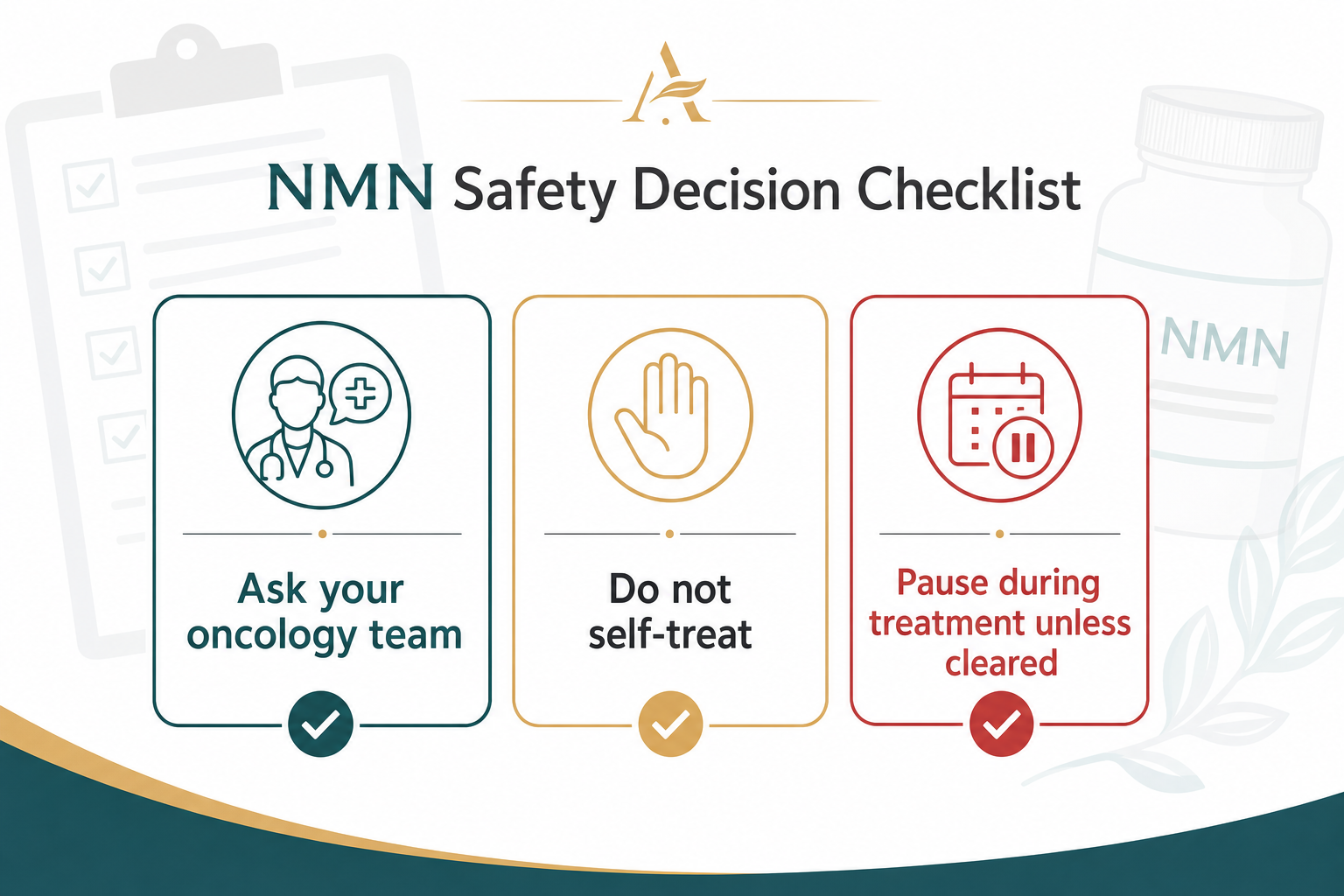
For people with cancer-related concerns, shopping logic should pause. Do not use online claims, celebrity routines, social media protocols, or isolated cell studies to guide supplement use. Bring the exact product label, serving size, ingredient list, and reason for taking it to your oncology team. If the team says no or asks you to stop during treatment, follow that guidance.
The safest educational takeaway is not "NMN repairs cancer-cell DNA" and not "NMN fights cancer." The better takeaway is that NAD+ biology sits close to DNA repair and cancer metabolism, so cancer-related NMN decisions deserve medical supervision. A cautious article may feel less exciting, but it is much more useful for real people making real health decisions.
Conclusion
NMN is connected to NAD+ biology, and NAD+ is connected to DNA repair pathways such as PARP and stress-response systems such as sirtuins. That makes NMN scientifically interesting, but it does not make NMN a cancer treatment. In cancer biology, repair and metabolism can be protective for normal cells or useful to cancer cells depending on context.
If you are healthy and exploring NMN for general wellness, evaluate it with normal supplement standards. If you have cancer, a cancer history, abnormal screening, or active treatment, do not self-prescribe NMN. Ask your oncology team, because timing and treatment context matter more than a simplified mechanism headline.
Frequently Asked Questions
Is NMN an anti-cancer supplement?
No. NMN should not be marketed or used as an anti-cancer supplement. Research on NAD+ metabolism and cancer is complex, early, and context dependent.
Can NMN repair damaged DNA?
NMN may support NAD+ availability, and NAD+ is used by enzymes involved in DNA damage response. That does not prove that taking NMN repairs DNA in a clinically meaningful way for humans, and it does not justify cancer-related use without medical guidance.
Could NMN help cancer cells survive?
It is not possible to give one universal answer. Some cancer cells rely on NAD+ metabolism and repair pathways, which is why researchers study NAD-related targets in oncology. This uncertainty is the reason cancer patients should ask their oncology team before taking NMN.
Should I stop NMN during chemotherapy or radiation?
Ask your oncology team. Do not decide based on a blog article or supplement label. Treatment type, tumor biology, lab monitoring, and medication interactions can all change the answer.
Is NMN safe for people with a past cancer history?
A past cancer history requires individualized advice. Some people may be far beyond treatment, while others are in surveillance or using long-term therapy. Bring the product label and your reason for using NMN to your clinician.
Why do some articles mention anti-cancer effects?
Many claims come from cell or animal studies, pathway speculation, or simplified readings of SIRT1 and NAD+ research. Those sources can guide research questions, but they should not be turned into consumer treatment advice.
References
- [1] Verdin E. NAD+ in aging, metabolism, and neurodegeneration. Science. 2015. PubMed.
- [2] Li J, Bonkowski MS, Moniot S, et al. A conserved NAD+ binding pocket that regulates protein-protein interactions during aging. Science. 2017. PubMed.
- [3] Sharif T, Ahn DG, Liu RZ, Pringle E, Martell E, Dai C, et al. The NAD+ salvage pathway in cancer metabolism and therapy. Frontiers in Oncology. 2018. PMC.
- [4] Duarte-Pereira S, Pereira-Castro I, Silva SS, et al. Targeting nuclear NAD+ synthesis inhibits DNA repair, impairs metabolic adaptation and increases chemosensitivity of U-2OS osteosarcoma cells. Cancers. 2020. PMC.
- [5] National Center for Complementary and Integrative Health. Cancer and Complementary Health Approaches: What You Need To Know. NCCIH.
These statements have not been evaluated by the Food and Drug Administration. This content is for educational purposes only and is not intended to diagnose, treat, cure, or prevent any disease. Dietary supplement decisions should be made with appropriate healthcare guidance, especially if you are pregnant, nursing, taking medication, managing a medical condition, have a cancer history, or are receiving cancer-related care.
