



AIDEVI Science Guide
How Does nmn Relate to Damaged DNA Repair? NAD+, PARP, Sirtuins, and Evidence Limits
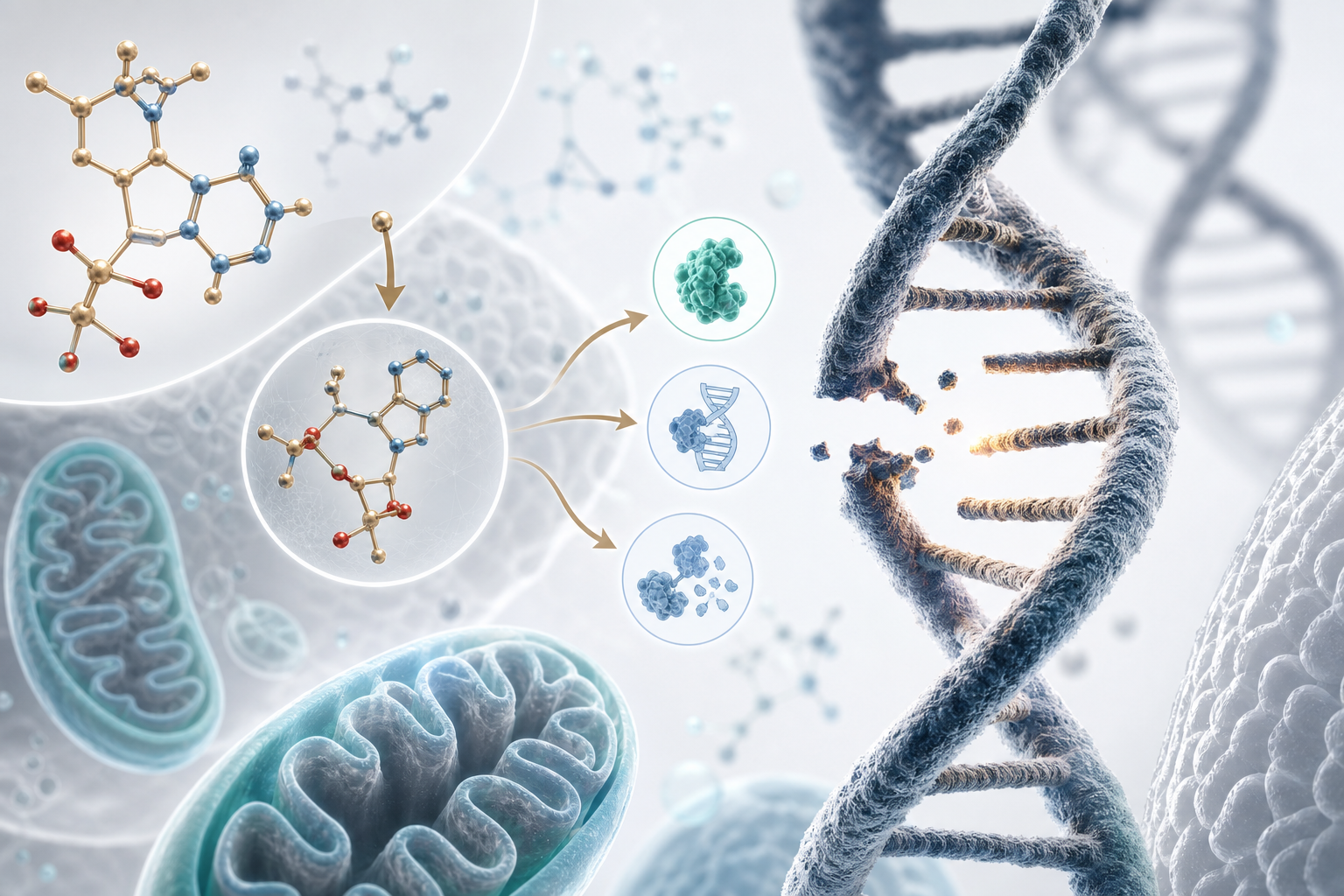
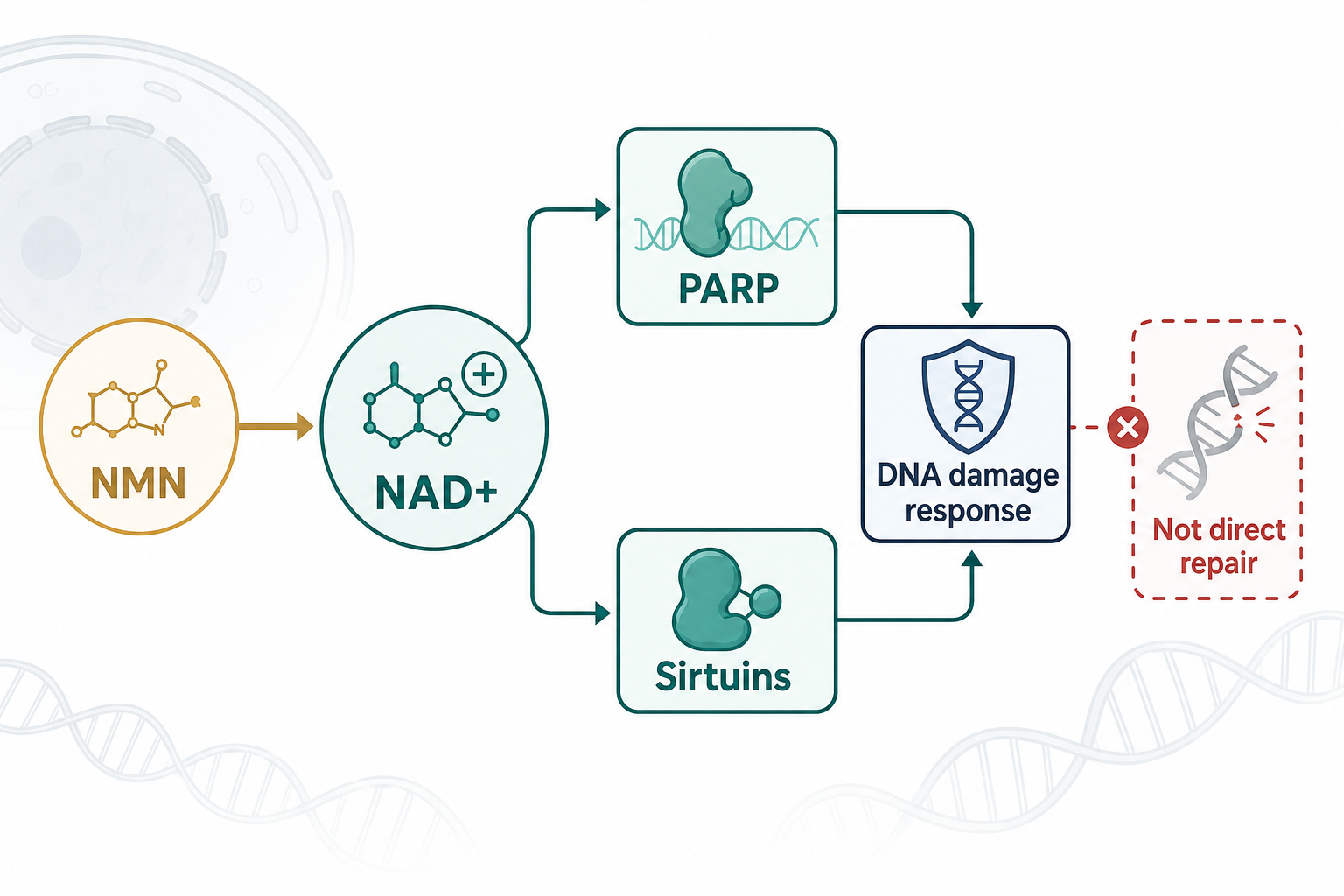
NMN does not directly repair damaged DNA like a tool stitching a broken strand. A more accurate description is that NMN supports the body's NAD+ pool, and NAD+ is used by enzymes involved in DNA damage response, including PARP and sirtuins. This makes NMN relevant to DNA repair research, but not a proven DNA-repair treatment.
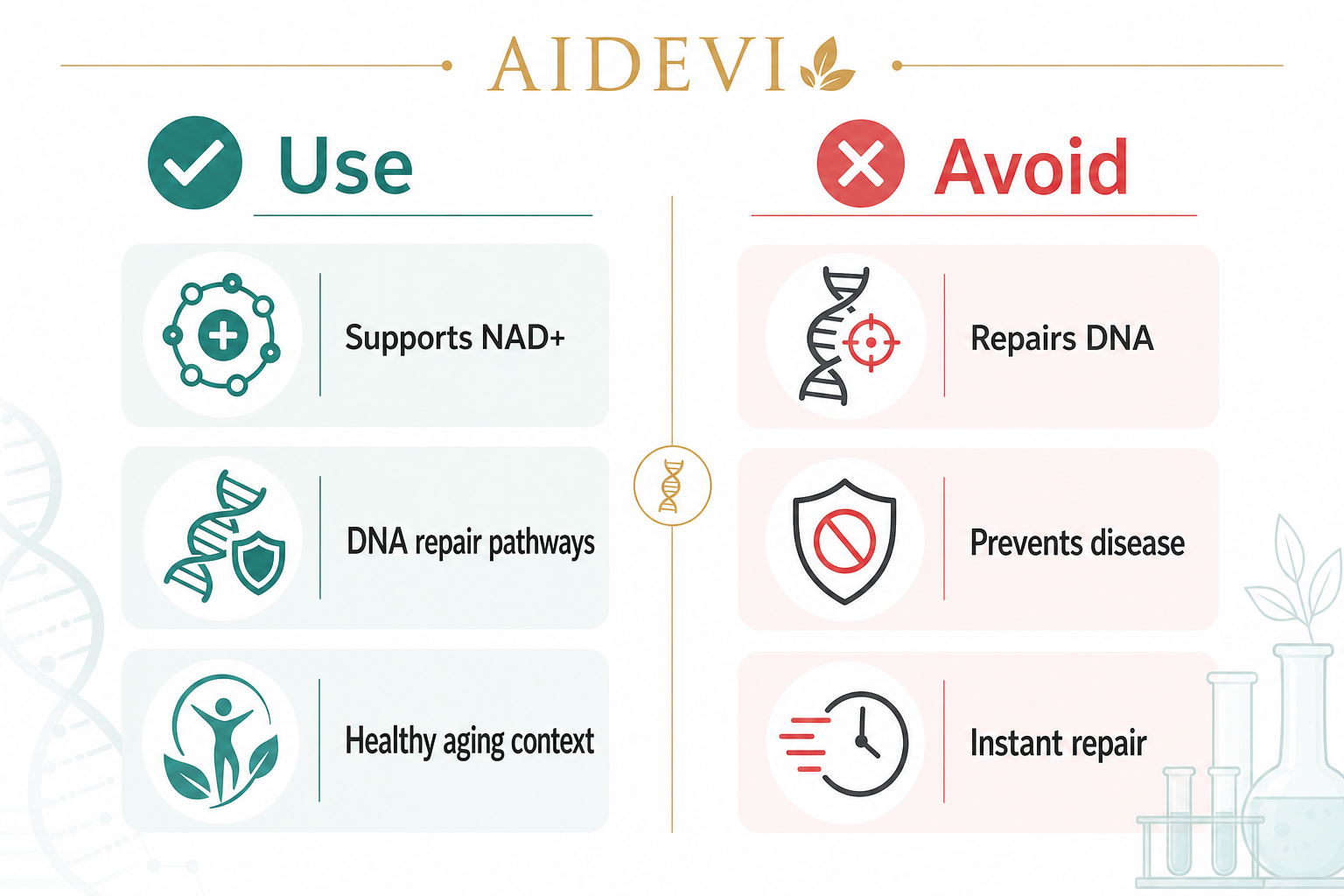
- Use "supports NAD+ metabolism involved in DNA damage response" instead of "repairs DNA."
- PARP enzymes and sirtuins use NAD+ in pathways connected with genomic maintenance and cellular stress response.
- Human NMN research is still developing, so disease prevention, instant repair, and guaranteed anti-aging claims should be avoided.
Content
Does NMN repair damaged DNA?
The most responsible answer is no, not directly. NMN is a precursor to NAD+, and NAD+ supports enzymes that participate in DNA damage response. That means NMN belongs in a conversation about cellular energy, healthy aging, and genomic maintenance research. It does not mean an NMN supplement can identify DNA damage, fix mutations, reverse aging, or prevent disease.
This distinction matters because the original phrase "NMN repairs damaged DNA" sounds stronger than the science allows. A more accurate AIDEVI sentence would be: "NMN helps support NAD+ metabolism, which is involved in cellular energy and DNA damage response pathways." If readers are new to the concept, AIDEVI's article on what NAD+ does for cellular energy gives the right foundation.
A useful analogy is fuel and repair crews. NAD+ is not the repair crew itself, but some repair-related enzymes need NAD+ to do their work. NMN may help maintain the pool from which NAD+ is made. The repair decisions, pathway selection, and final DNA correction are still performed by complex cell systems, not by NMN alone.
What does DNA repair actually mean?
DNA is exposed to stress every day from normal metabolism, replication errors, oxidative chemistry, ultraviolet light, environmental exposures, and random cellular events. Cells do not use one universal repair method. They use different pathways depending on the type of damage. Common examples include base excision repair, nucleotide excision repair, mismatch repair, and double-strand break repair pathways such as homologous recombination and non-homologous end joining [1].
That is why simple supplement claims become risky. A damaged base, a UV-induced lesion, a replication mismatch, and a double-strand break are not the same problem. They involve different enzymes, timing, signals, and outcomes. Saying "NMN repairs DNA" collapses this complex biology into one vague promise.
The better educational path is to explain the support layer. NAD+ is connected to energy metabolism and signaling. Some NAD+-using enzymes help coordinate damage response. NMN is an NAD+ precursor. This gives readers a science-backed reason to understand NMN, while keeping the claim in the right lane. AIDEVI's broader article on cellular energy production and NMN supplementation is a natural next step.
How do NAD+, PARP, and sirtuins fit together?
NAD+ is a coenzyme required for many cellular processes. In DNA damage response discussions, two groups often appear: PARP enzymes and sirtuins. PARP enzymes can detect certain DNA damage signals and use NAD+ to build ADP-ribose chains that help recruit or regulate repair machinery. Sirtuins are NAD+-dependent enzymes involved in stress response, chromatin regulation, metabolism, and aging biology [2].
A frequently cited Science paper reported that age-related NAD+ decline can influence interactions involving DBC1 and PARP1 in experimental models, with implications for DNA repair biology [3]. This is important mechanistic research, but it should be translated carefully. It does not prove that taking NMN will repair human DNA damage on demand.
AIDEVI can therefore discuss NMN as part of NAD+ support, not as a direct DNA repair agent. Readers who want deeper context on these enzymes can continue with AIDEVI's guide on why NAD+ decline matters for sirtuins and PARP. The most accurate chain is: NMN supports NAD+ availability; NAD+ is used by PARP and sirtuins; those enzymes participate in cellular maintenance pathways.
What does the evidence support today?
The evidence supports interest in NMN as an NAD+ precursor. Reviews describe NMN and NR as NAD+ intermediates with biological relevance in metabolism and aging research [4]. Human trials have also investigated NMN for safety and NAD-related outcomes in adults [5]. However, this is not the same as proving that NMN supplementation repairs DNA damage in humans.
Animal and cell studies are valuable because they reveal mechanisms. They can show how NAD+ availability, PARP activity, sirtuin signaling, and repair-related pathways interact under controlled conditions. But humans are not cell dishes, and supplement outcomes depend on dose, baseline health, age, genetics, diet, sleep, inflammation, medication use, and the type of outcome being measured.
For this reason, AIDEVI should avoid phrases such as "repairs damaged DNA," "prevents mutation," "stops aging," or "protects against disease." A stronger and safer article can link to a comprehensive analysis of whether NMN works, then explain what is known, what is plausible, and what remains unproven.
The AIDEVI Support, Not Stitch Framework
Support means describing NMN as part of NAD+ metabolism, cellular energy, and healthy aging context. Stitch means implying that NMN directly fixes DNA breaks, removes mutations, or makes repair faster. AIDEVI should use support language and avoid stitch language.
This framework keeps the article useful for curious readers while protecting the brand from overclaiming.
What wording should AIDEVI use or avoid?
The safest wording is specific about mechanism and modest about outcomes. "Supports NAD+ levels involved in cellular energy and DNA damage response" is safer than "repairs DNA." "Supports healthy aging routines" is safer than "prevents age-related disease." "Helps maintain cellular vitality" is safer than "reverses cell damage."
| Copy goal | Best fit | Consider instead | Avoid or pause if |
|---|---|---|---|
| DNA repair education | NMN supports NAD+ metabolism involved in DNA damage response pathways | Explain PARP and sirtuins as NAD+-using enzymes | Says NMN repairs DNA, fixes mutations, or speeds repair instantly |
| Healthy aging | Supports cellular energy and healthy aging routines | Pair with sleep, movement, nutrition, and antioxidant resilience context | Claims disease prevention, lifespan extension, or reversal of aging |
| Product context | Discuss AIDEVI NMN as a wellness supplement for NAD+ support | Review AIDEVI NMN18000 after understanding the mechanism | Uses repair language to imply treatment or guaranteed cellular outcomes |
How should shoppers think about NMN and DNA repair?
Shoppers should think of NMN as a NAD+ support ingredient, not a DNA repair shortcut. If the goal is healthy aging, the most useful routine still includes sleep, resistance training, protein, colorful plant foods, sun protection, stress management, and regular medical care. NMN may fit inside that routine, but it should not replace the basics.
Dose and timing also deserve restraint. More is not automatically better when a pathway is complex. Users should follow product directions, avoid stacking many new supplements at once, and consider AIDEVI's NMN dosage by age guide before experimenting. Anyone pregnant, nursing, taking medication, managing a medical condition, or being treated for cancer should ask a healthcare professional first.
Product quality is another part of realistic decision-making. A clean label, clear serving size, and reputable sourcing matter more than dramatic claims. Readers comparing products can use AIDEVI's guide to choosing the best NMN supplement to focus on identity, transparency, and sensible expectations.
The same logic applies to antioxidant positioning. Oxidative stress can contribute to DNA damage, but antioxidant support is still not the same as claiming DNA repair. AIDEVI's article on healthy aging and antioxidant properties of NMN supplements can support that wider wellness context without turning NMN into a disease claim.
How should the original claim be rewritten?
A practical rewrite starts by replacing certainty with mechanism. Instead of "NMN repairs damaged DNA," write "NMN supports NAD+ metabolism, and NAD+ is used by enzymes involved in DNA damage response." Instead of "NMN prevents disease by maintaining genomic stability," write "NAD+ biology is connected with cellular maintenance and healthy aging research." Instead of "NMN makes DNA repair faster," write "research is exploring how NAD+ availability may influence repair-related pathways."
The second step is to name the evidence level. If the supporting study is in cells or animals, say so. If the study measured NAD+ biomarkers rather than DNA repair in people, say that too. This does not weaken the article. It makes the article more trustworthy because readers can see where the science is strong, where it is plausible, and where it is still early.
The third step is to avoid turning normal biology into a medical outcome. DNA repair is a real cellular process, but a supplement article should not imply that the product corrects mutations, prevents cancer, restores damaged genes, protects against radiation, or fixes the consequences of unhealthy habits. AIDEVI can be confident without exaggerating: NMN supports NAD+ wellness, and NAD+ participates in pathways that scientists study for cellular maintenance.
AIDEVI editor checklist
- Say "supports NAD+ metabolism" before mentioning DNA repair pathways.
- Use "involved in" or "connected with" for PARP, sirtuins, and DNA damage response.
- State when evidence is from cell, animal, or early human research.
- Remove words such as cures, prevents, reverses, repairs, restores, guarantees, and instantly.
Conclusion
NMN is relevant to damaged DNA repair discussions because it supports NAD+ metabolism, and NAD+ is used by enzymes such as PARP and sirtuins that participate in DNA damage response. That is the correct scientific lane. NMN should not be described as directly repairing DNA, preventing disease, or instantly reversing cellular damage.
The strongest AIDEVI message is precise and credible: NMN supports NAD+ availability, cellular energy, and healthy aging routines connected with normal cellular maintenance. This gives readers a real mechanism to understand, while respecting the limits of current human evidence.
Frequently Asked Questions
Can NMN repair damaged DNA?
NMN should not be described as directly repairing DNA. It supports NAD+ metabolism, and NAD+ is used by enzymes involved in DNA damage response. That is a mechanism link, not a guaranteed repair outcome.
Does NMN make DNA repair faster?
There is not enough human evidence to claim that NMN makes DNA repair faster. Repair speed depends on the damage type, cell state, enzyme activity, age, health status, and many other factors.
What role does NAD+ play in DNA repair?
NAD+ is used by enzymes such as PARPs and sirtuins, which are involved in DNA damage response, chromatin regulation, and cellular stress pathways. NMN is one precursor that can support NAD+ availability.
Can NMN prevent disease by repairing DNA?
No. A dietary supplement should not be claimed to prevent disease. NMN may be discussed for NAD+ support and healthy aging, but disease-prevention claims should be avoided.
Is NMN safe for everyone?
No supplement is automatically right for everyone. People who are pregnant, nursing, under 18, taking medication, managing a medical condition, or receiving cancer-related care should consult a healthcare professional before using NMN.
What is the best short description?
A strong short description is: "NMN supports NAD+ metabolism, which is involved in cellular energy and DNA damage response pathways." This is more accurate than saying NMN repairs damaged DNA.
References
- [1] Alberts B, Johnson A, Lewis J, et al. DNA Repair. Molecular Biology of the Cell. NCBI Bookshelf. NCBI Bookshelf.
- [2] Verdin E. NAD+ in aging, metabolism, and neurodegeneration. Science. 2015. PubMed.
- [3] Li J, Bonkowski MS, Moniot S, et al. A conserved NAD+ binding pocket that regulates protein-protein interactions during aging. Science. 2017. PubMed.
- [4] Yoshino J, Baur JA, Imai SI. NAD+ intermediates: the biology and therapeutic potential of NMN and NR. Cell Metabolism. 2018. PubMed.
- [5] Lin Y, Maier AB, Tao R, et al. The efficacy and safety of beta-nicotinamide mononucleotide supplementation in healthy middle-aged adults. GeroScience. 2023. PubMed.
These statements have not been evaluated by the Food and Drug Administration. This content is for educational purposes only and is not intended to diagnose, treat, cure, or prevent any disease. Dietary supplement decisions should be made with appropriate healthcare guidance, especially if pregnant, nursing, taking medication, managing a medical condition, or receiving cancer-related care.
