



AIDEVI Brain Health Guide
nmn Supplements and Alzheimer's Blood Tests: What pTau217 Changes, and What It Does Not
Blood-based biomarkers such as pTau217 are making Alzheimer's evaluation less invasive and more accessible for people with cognitive symptoms. NMN belongs to a different conversation: NAD+ and cellular energy support. It may be relevant to healthy brain aging research, but it should not be positioned as an Alzheimer's diagnostic tool, medication, or replacement for clinical evaluation.
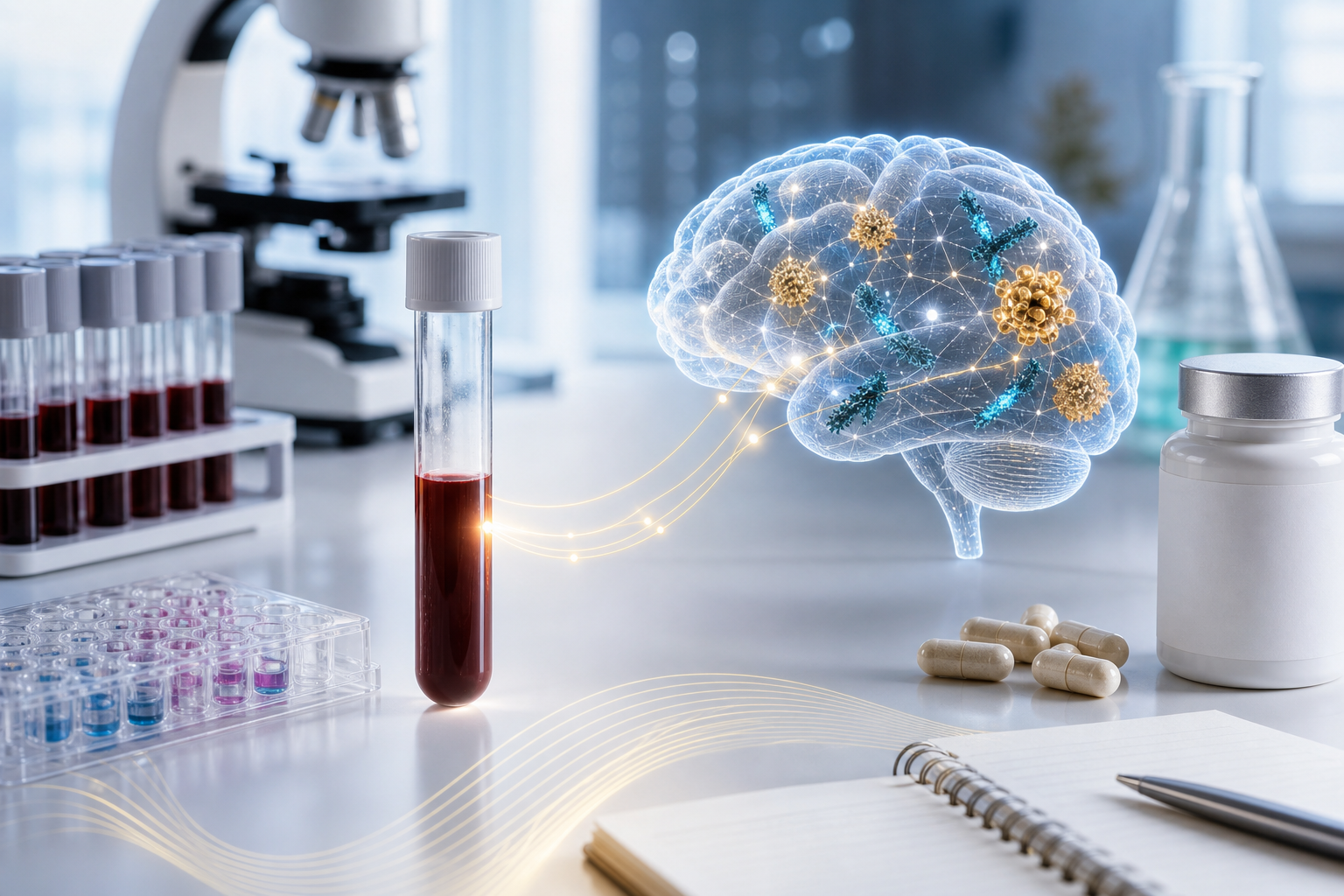
- In May 2025, the FDA cleared the first blood test used to aid Alzheimer's diagnosis in adults 55 and older who already have signs and symptoms of cognitive decline.
- The test is not meant for stand-alone diagnosis or broad self-screening; results must be interpreted with clinical information and specialist judgment.
- NMN supports NAD+ biology and cellular energy conversations, but human evidence does not support disease-diagnosis, disease-management, or disease-altering claims for Alzheimer's disease at this time.
Content
The clean answer is: blood tests may help clinicians detect Alzheimer's-related brain pathology earlier and with less burden than PET scans or spinal fluid testing, while NMN may support NAD+ and cellular energy pathways relevant to healthy aging research. These are complementary topics, not equivalent solutions. Testing belongs in medical care; NMN belongs in a cautious wellness-support discussion.
What are Alzheimer's blood tests measuring?
Alzheimer's disease is associated with abnormal amyloid plaques and tau-related changes in the brain. For years, clinicians relied on cognitive evaluation, medical history, brain imaging, spinal fluid testing, and specialist interpretation to understand whether Alzheimer's pathology was likely. Blood-based biomarkers aim to make part of that process less invasive by measuring proteins in plasma that correlate with Alzheimer's-related brain changes.
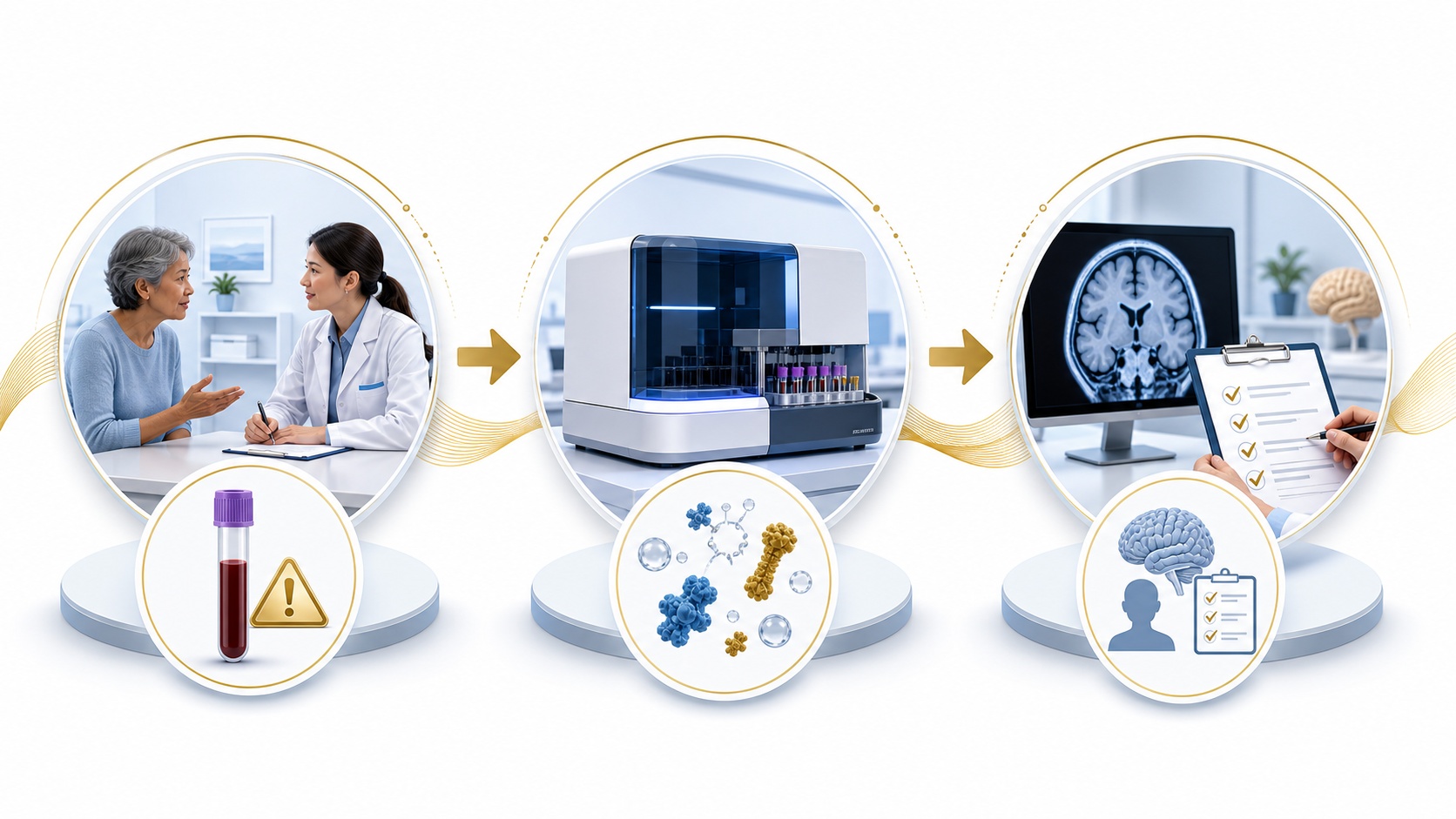
The major development is that blood tests are moving from research excitement into regulated clinical use. On May 16, 2025, the U.S. Food and Drug Administration cleared the Lumipulse G pTau217/beta-Amyloid 1-42 Plasma Ratio, the first blood test used to aid diagnosis of Alzheimer's disease. The FDA specified that it is for adults aged 55 and older who have signs and symptoms of cognitive decline, and that it is not intended as a screening or stand-alone diagnostic test [1].
That boundary is essential. A blood result can support a clinician's assessment, reduce unnecessary follow-up testing for some patients, and improve access to biomarker information. It does not replace a thoughtful medical workup. Memory changes can be influenced by sleep disorders, depression, medication effects, thyroid concerns, vitamin deficiencies, vascular disease, stress, infections, and other neurological conditions. Anyone noticing persistent cognitive change should seek clinical evaluation rather than ordering supplements around a fear-based headline.
Why is pTau217 important?
pTau217 is a phosphorylated tau biomarker that has gained attention because it can reflect Alzheimer's-related tau and amyloid pathology with strong diagnostic performance in research cohorts. In the 2024 JAMA Neurology study of the ALZpath pTau217 assay, researchers evaluated 786 participants across several cohorts and reported high performance for detecting amyloid and tau pathology, with AUC values in the 0.92 to 0.96 range for elevated amyloid and 0.93 to 0.97 for tau pathology [2]. AUC is a diagnostic performance measure, not a simple promise that every individual result is correct.
The 2025 Alzheimer's Association clinical practice guideline reflects this more mature stage of the field. It focuses on blood-based biomarkers in specialized care settings for people with objective cognitive impairment, including mild cognitive impairment or dementia, when Alzheimer's disease is suspected. The guideline reviewed pTau and amyloid-beta measures, including pTau217 and Aβ42/Aβ40, and framed blood biomarkers as tools for clinicians rather than at-home certainty tests [3].
For readers, the practical meaning is hopeful but precise: blood tests may help reduce diagnostic delays, support access to specialist care, and help determine who needs additional imaging or spinal fluid testing. They do not mean that everyone should be tested without symptoms, nor do they turn a single biomarker into a complete life plan. Good diagnosis still depends on symptoms, function, medical history, neurological evaluation, and follow-up.
Where does NMN fit in brain health?
NMN, or nicotinamide mononucleotide, is a precursor involved in NAD+ metabolism. NAD+ supports cellular energy metabolism, mitochondrial function, DNA repair signaling, and stress-response pathways. Because neurons are energy-demanding cells, NAD+ biology is relevant to brain aging research. AIDEVI's guide to what NAD+ does for cellular energy is a useful foundation before connecting NMN to any brain-health topic.
Scientific interest in NAD+ and neurodegeneration is real. A systematic review of NAD+ in Alzheimer's disease described NAD+ as important for bioenergetics, mitochondrial homeostasis, adaptive stress responses, and neuronal resilience, while also emphasizing that translation from preclinical models into human clinical benefit remains a major question [4]. Some NMN studies in Alzheimer's mouse models report effects on mitochondrial function, amyloid-related pathology, oxidative stress, or behavioral measures, but mouse-model findings should not be written as human treatment claims [5].
For AIDEVI readers, the right language is support-oriented: NMN may help maintain healthy NAD+ levels and support cellular energy pathways as part of a healthy-aging routine. It is not an Alzheimer's blood test, not a dementia therapy, and not a substitute for evaluation when memory symptoms appear. Readers who want a dedicated boundary article can review AIDEVI's discussion of what the research says about NMN and Alzheimer's disease.
How should testing and supplementation be connected?
The best connection is sequencing. If someone has cognitive symptoms, the first step is medical evaluation, not a supplement stack. Blood biomarkers may then become part of a specialist's diagnostic workup. If someone does not have symptoms but wants to support long-term brain wellness, the conversation changes: sleep, exercise, blood pressure, glucose metabolism, hearing, social connection, nutrition, and medication review come before any single ingredient.
NMN can sit inside that second conversation because NAD+ is tied to cellular energy and mitochondrial wellness. AIDEVI's article on cellular energy production and NMN supplementation explains this mechanism in a broader wellness context. For readers comparing related ingredients, AIDEVI's NAD+ vs. NMN guide helps separate the molecule, the precursor, and the supplement category.
A useful way to think about it is: biomarkers help answer "What might be happening in the brain?" Lifestyle and clinician care help answer "What should we do next?" NMN helps answer a narrower wellness question: "How might I support cellular energy and NAD+ pathways as part of healthy aging?" Keeping those questions separate makes the article more honest and more helpful.
What is the responsible decision framework?
For a high-stakes topic like Alzheimer's, the decision framework should be conservative. Supplements can support wellness routines, but they should not create diagnostic delay. Use this matrix to separate medical action from wellness support.
How should readers interpret headlines?
Many headlines compress several different ideas into one dramatic sentence. "FDA cleared" means a specific device met a regulatory pathway for a specific intended use; it does not mean every blood test is interchangeable. "Research assay" means a tool studied in cohorts, often with strong scientific value, but not necessarily the same thing as a cleared clinical product. "Early detection" usually means earlier in the clinical workup for people with concern or impairment, not casual testing of every healthy adult. "High accuracy" often refers to statistical performance across a study population, not a perfect answer for one person. Those distinctions keep hope from turning into confusion.
| Situation | Best fit | Avoid or pause if |
|---|---|---|
| Persistent memory or thinking changes | Schedule a medical evaluation; ask whether cognitive testing, imaging, labs, or blood biomarkers are appropriate. | Do not rely on NMN or any supplement to explain or resolve symptoms. |
| Family history or brain-aging concern | Focus on sleep, exercise, cardiometabolic markers, hearing, nutrition, and clinician-guided risk review. | Do not self-order tests without understanding false positives, false negatives, and emotional impact. |
| General healthy-aging routine | Consider NMN as cellular energy support after reviewing medications, health conditions, and supplement overlap. | Pause if pregnant, nursing, taking medication, preparing for surgery, or managing a medical condition without professional guidance. |
This framework also helps avoid exaggerated product storytelling. It is reasonable to say that NMN supports NAD+ pathways and healthy aging. It is not reasonable to say that NMN can replace pTau217 testing, PET imaging, neurological evaluation, or prescribed care. When symptoms are present, documentation and timely appointments matter. For a wider look at cognitive wellness, AIDEVI's brain health and NMN research guide gives readers a safer next step than disease-driven promises.
What does a brain-support routine look like?
A realistic routine starts with the foundations that also protect overall health: consistent sleep, regular aerobic and resistance exercise, protein and colorful plant intake, blood pressure management, blood sugar awareness, social engagement, hearing and vision care, and stress recovery. These are not glamorous, but they are the daily environment in which the brain lives.
NMN may be considered as one support layer for people interested in NAD+ and cellular vitality. It pairs conceptually with broader antioxidant and metabolic wellness strategies, not with a promise of disease reversal. Readers comparing ingredient pathways may find AIDEVI's article on NMN, resveratrol, metabolic wellness, and brain health useful, while readers focused on general evidence boundaries can review AIDEVI's comprehensive NMN evidence analysis.
Conclusion
Alzheimer's blood tests are changing the diagnostic landscape because they may make biomarker information easier to access for people already being evaluated for cognitive decline. pTau217 is one of the most important markers in this shift, but it belongs in clinician-led interpretation, not casual self-screening.
NMN belongs to the healthy-aging and NAD+ support conversation. It may support cellular energy pathways, but it should be described with scientific restraint. The smartest bridge between the two topics is not hype; it is clarity: test concerns with clinicians, support everyday brain wellness with lifestyle, and treat supplements as supportive tools rather than answers to a complex disease.
Frequently Asked Questions
Can a blood test diagnose Alzheimer's by itself?
No. Current blood biomarker tests are used with clinical information. The FDA-cleared plasma test is not intended as a stand-alone diagnostic test or broad screening test.
What is pTau217?
pTau217 is a phosphorylated tau biomarker associated with Alzheimer's-related brain pathology. It is being studied and used because it can help indicate amyloid and tau changes when interpreted appropriately.
Can NMN detect Alzheimer's disease?
No. NMN is a supplement ingredient connected with NAD+ metabolism. It does not detect Alzheimer's pathology and cannot replace a medical diagnostic workup.
Is NMN proven for Alzheimer's in humans?
No. NAD+ and NMN research is scientifically interesting, but much of the Alzheimer's-specific evidence remains preclinical or early-stage. Human claims should stay cautious.
What should I do if I notice memory changes?
Talk with a healthcare professional. A proper evaluation can look for Alzheimer's disease, other dementias, medication effects, sleep issues, mood concerns, vitamin deficiencies, and other treatable contributors.
FDA disclaimer: These statements have not been evaluated by the Food and Drug Administration. This content is for educational purposes only and is not intended to diagnose, treat, cure, or prevent any disease. Dietary supplements should be used responsibly and with professional guidance when appropriate.
References
- U.S. Food and Drug Administration. FDA Clears First Blood Test Used in Diagnosing Alzheimer's Disease. https://www.fda.gov/news-events/press-announcements/fda-clears-first-blood-test-used-diagnosing-alzheimers-disease
- Ashton NJ, Brum WS, Di Molfetta G, et al. Diagnostic Accuracy of a Plasma Phosphorylated Tau 217 Immunoassay for Alzheimer Disease Pathology. JAMA Neurology. https://jamanetwork.com/journals/jamaneurology/fullarticle/2813751/
- Alzheimer's Association Clinical Practice Guideline on the use of blood-based biomarkers in the diagnostic workup of suspected Alzheimer's disease within specialized care settings. https://pmc.ncbi.nlm.nih.gov/articles/PMC12306682/
- NAD+ in Alzheimer's Disease: Molecular Mechanisms and Systematic Therapeutic Evidence Obtained in vivo. https://pmc.ncbi.nlm.nih.gov/articles/PMC8369418/
- Effect of nicotinamide mononucleotide on brain mitochondrial respiratory deficits in an Alzheimer's disease-relevant murine model. https://pubmed.ncbi.nlm.nih.gov/25884176/
