








AIDEVI Wellness Guide
NAD+ vs nmn: What Is the Difference, and Which Is Better?
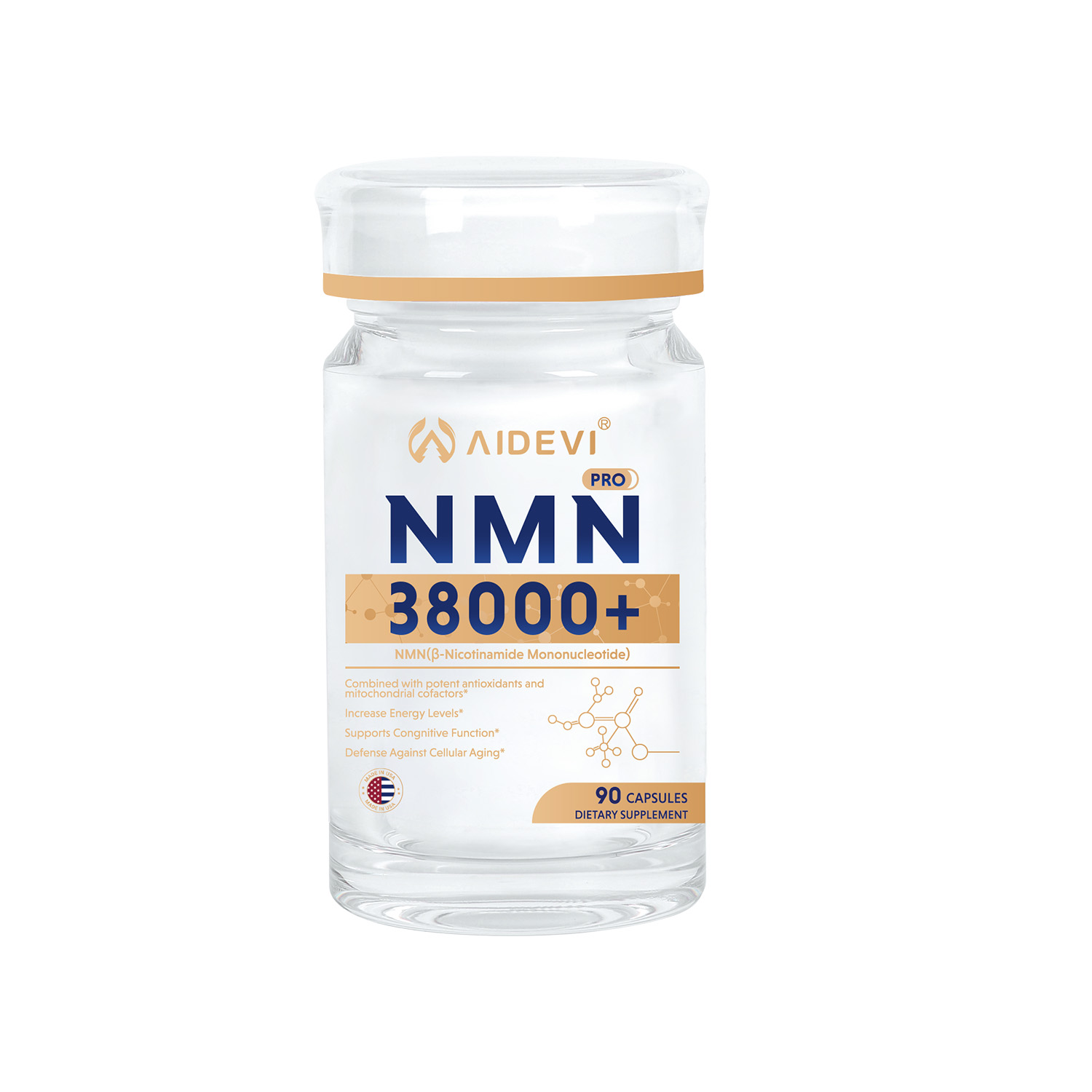
NAD+ and NMN are related, but they are not the same supplement: NAD+ is a coenzyme used throughout cellular metabolism, while NMN is one precursor the body can use to make NAD+. Current human research does not establish a universal winner. NMN has more human supplementation data showing changes in blood NAD-related markers, while evidence for direct oral NAD+ depends on the specific formulation and remains preliminary.

- NAD+ is the molecule; NMN is a building block in one route the body uses to produce it.
- An increase in blood NAD+ is a biomarker change, not proof of more energy, slower aging, or another health outcome.
- Choose by the exact ingredient, formulation, evidence, and safety context—not by claims that one works instantly or is automatically more bioavailable.
What is the difference between NAD+ and NMN?
Nicotinamide adenine dinucleotide (NAD+) is a coenzyme involved in oxidation-reduction reactions and other cellular processes. Cells continually make and use NAD+. Nicotinamide mononucleotide (NMN) is a molecule involved in NAD+ biosynthesis; it is often called an NAD+ precursor because the body can convert it through metabolic pathways. These roles are related, but they do not make an NMN capsule equivalent to a direct NAD+ product.[1]
| Question | NAD+ | NMN |
|---|---|---|
| What it is | A coenzyme used in cellular metabolism. | A precursor used in NAD+ biosynthesis. |
| What a supplement provides | A product labeled with NAD+; delivery and use depend on the exact formulation. | NMN, which the body may metabolize along routes that contribute to NAD+ production. |
| What human studies show | A small, short trial of one modified oral NAD+ formulation reported a blood-cell biomarker change; this cannot be generalized to every NAD+ product. | Several trials report increases in circulating or whole-blood NAD-related markers; results for functional or health outcomes are less consistent. |
| What is not established | That a standard oral NAD+ supplement works faster or produces better clinical outcomes than NMN. | That raising a blood marker reverses aging, prevents disease, or guarantees a noticeable benefit. |
What does NAD+ do, and what does a direct NAD+ supplement mean?
NAD+ is present in cells and participates in reactions that transfer electrons as the body processes nutrients. It is also used by enzymes involved in cellular signaling and maintenance. Those biological roles explain why researchers study NAD+ metabolism; they do not prove that taking a supplement will produce a particular feeling or health result.[1]

“Direct NAD+” describes the ingredient listed on a product label, not a guarantee about how much reaches a particular tissue. A 2026 randomized trial studied a specially modified oral formulation called LNAD+ for five days. It reported higher intracellular NAD measured in whole blood, while plasma NAD did not increase; no secondary clinical, wellbeing, vital-sign, or wearable outcome remained significant after correction for multiple testing. This is an early result for that specific formulation, not a head-to-head comparison with NMN or proof that ordinary oral NAD+ products have the same effect.[2]
For that reason, claims such as “instant energy,” “fast cellular repair,” or “more effective than NMN” go beyond what this trial establishes. The product form, delivery method, measurement compartment, study length, and actual outcome all matter.
How does NMN relate to NAD+?
NMN is one of the molecules the body can use to make NAD+. After oral intake, NMN may be processed through more than one step and pathway; the simple “NMN goes straight into every cell and becomes NAD+” explanation leaves out important biology. Absorption, metabolism, dose, formulation, and the tissue being measured can all affect study results.[1]

In a 14-day randomized study of 65 healthy adults, 1,000 mg per day of NMN and NR increased circulating NAD+ to a similar extent; the study was designed around biochemical and microbiome measures, not to show that either supplement prevents aging or improves long-term health.[3]

A separate 24-week randomized, double-blind, placebo-controlled study gave 1,250 mg of NMN daily to adults aged 65 and older. Whole-blood NAD+ and related metabolites increased, but the trial did not find significant improvement in its primary auditory endpoint or physical-performance measures. Other nominal findings did not remain significant after adjustment for multiple comparisons. The NMN was supplied by the study funder, so independent replication is useful.[4]

Is NMN better than NAD+?
There is not enough evidence to call one universally better. NMN has a broader body of human supplementation research on blood NAD-related markers, while published direct oral NAD+ evidence includes a short trial of a distinct, modified product. These are different studies, formulations, populations, and measurements; they do not establish that NMN is more bioavailable or that direct NAD+ is more effective.
Most importantly, a biomarker is not the same as a clinical outcome. A higher NAD+ measurement in blood does not by itself show that someone will feel more energetic, perform better, or age more slowly. A 2026 systematic review likewise describes the human NMN evidence as limited by short study durations and heterogeneous outcomes, with larger and longer trials still needed.[5]
How should you compare NAD+ and NMN supplements?
- Start with a realistic goal. Decide what you want to understand or support, and do not use either supplement to diagnose, treat, or prevent a medical condition.
- Read the full ingredient panel. Confirm whether the product contains NMN, NAD+, NR, or a blend, and check the amount per serving and any additional ingredients. A blend is not the same as a single-ingredient trial.
- Check whether the research matches the product. Compare the study’s exact ingredient form, delivery method, daily amount, population, and duration with the product label. Results from a proprietary or modified formulation should not be transferred to a different product.
- Look for verifiable quality information. Prefer a clear manufacturer, lot-specific testing or certificate of analysis, and transparent ingredient amounts. A quality document supports identity or purity; it does not prove a health benefit.
- Compare cost with evidence. Do not pay a premium for promises of instant energy, guaranteed anti-aging, or proven superiority when those outcomes have not been established.
If you are also comparing NR, the AIDEVI NMN vs NAD+ vs NR guide covers the broader three-ingredient question. For NMN precautions and side effects, see the NMN safety guide.
Safety and what is still unknown
Short human trials and a 2026 meta-analysis offer some information about short-term NMN tolerability, but they cannot establish long-term safety for every dose, product, or person. Evidence for direct NAD+ products is formulation-specific and less developed. Supplement studies also do not replace an individualized review of medications, health conditions, and other products you take.[5]
Talk with a healthcare professional before starting either supplement if you are pregnant or nursing, take medication, have a medical condition, or are receiving treatment. Avoid combining several NAD-related supplements simply because they act on the same pathway; evidence that stacking them improves outcomes is lacking. If you notice an unwanted effect, stop and seek appropriate medical advice.
Frequently asked questions
Does NMN raise NAD+ levels?
Some human trials report increases in circulating or whole-blood NAD+ and related metabolites after NMN supplementation. The size and meaning of a change depend on the study and measurement; it does not prove a noticeable benefit or an effect in every tissue.
Can you take NAD+ and NMN together?
There is not good evidence that combining them produces better outcomes than using one product. Taking multiple supplements can make side effects, costs, and the source of any change harder to evaluate. Ask a healthcare professional before combining supplements, especially if you take medication or manage a health condition.
Is NMNH the same as NMN?
No. NMNH is the reduced form of NMN, so the names refer to different chemical forms. They should not be treated as interchangeable, and evidence from an NMN study does not automatically apply to NMNH products.
Does NAD+ or NMN work faster?
There is no sound basis for promising that one produces faster noticeable results. The available studies measure different markers over different periods, and a change in a blood marker is not the same as a change someone can feel.
References
- NAD+ biology and supplementation: mechanisms and clinical perspectives. Review article, 2026.
- Kornilov SA et al. Oral LNAD+ in a randomized controlled trial. PubMed, 2026.
- The differential impact of three different NAD+ boosters on circulatory NAD and microbial metabolism in humans. PubMed, 2026.
- Igarashi M et al. Sustained NAD+ augmentation by high-dose NMN supplementation in older adults: a 24-week randomized, double-blind, placebo-controlled trial. npj Aging, 2026.
- Yang W et al. Safety and metabolism-related outcomes of oral NMN supplementation in adults: a systematic review and meta-analysis. Nutrients, 2026.
These statements have not been evaluated by the Food and Drug Administration. This product is not intended to diagnose, treat, cure, or prevent any disease.
