



AIDEVI Wellness Guide
Latest Progress in nmn Research: Gut-Liver Circulation, Microbiota, and Healthy Aging
New NMN research is shifting the conversation from "take a precursor and directly make NAD+" to a more precise model: the gut, liver, microbiota, and NAD+ recycling pathways may all shape how oral NMN is processed. That does not make NMN a simple youth solution. It makes NMN a more interesting, more personalized cellular wellness topic.
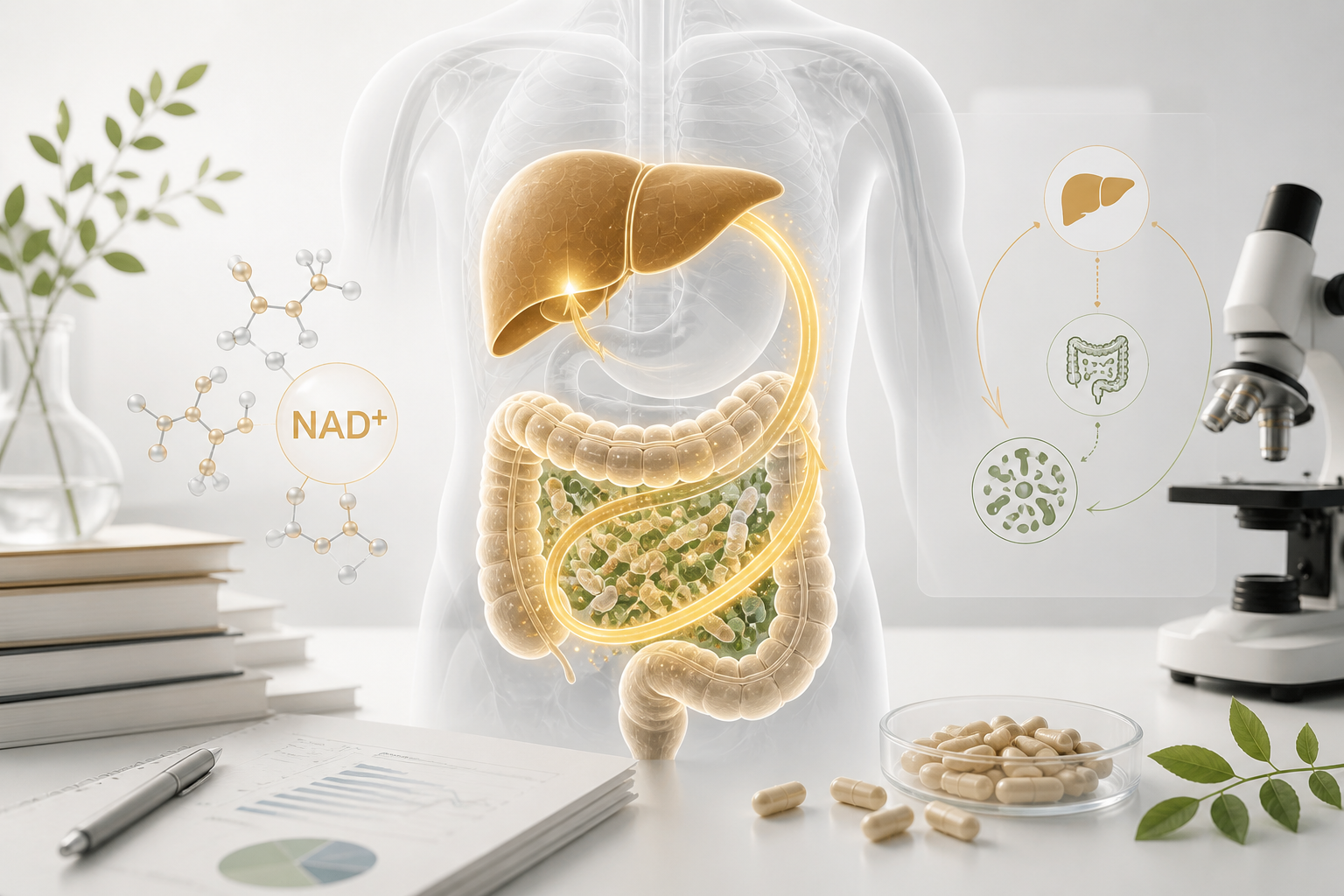
- A 2025 Science Advances study reported that oral NMN and NR can contribute to NAD+ synthesis through gut microbiota-linked metabolism and enterohepatic circulation, rather than only by simple direct conversion [1].
- The gut-liver axis is a real biological communication network involving portal blood flow, bile acids, microbial metabolites, immune signaling, and liver metabolism [2].
- The practical takeaway is not "more NMN is always better." It is to support the full NAD+ ecosystem: gut health, liver metabolism, movement, sleep, nutrition, and careful supplement decisions.
NMN is still best understood as an NAD+ precursor for cellular energy and healthy aging support. The newer research adds a better map: before an oral precursor supports NAD+ metabolism, the gut and liver may help decide which metabolites appear, where they go, and how efficiently they are reused.
Content
What changed in the latest NMN research?
For years, many supplement articles explained NMN in a tidy sequence: you take NMN, the body absorbs it, and it converts into NAD+. That explanation was useful as an introduction, but it was too clean. The newer research asks a better question: after oral NMN enters the body, what forms actually travel through the intestine, blood, liver, bile, and target tissues?
The 2025 Science Advances paper by Yaku and colleagues used metabolomics, isotope-labeled NAD+ precursors, germ-free mice, and pathway-specific models to trace what happens after NMN and NR exposure. The study reported that gut microbiota can convert NAD+ precursors into deamidated metabolites such as nicotinic acid, and that enterohepatic circulation helps route those metabolites toward liver NAD+ synthesis [1]. In plain language, the gut and liver may act like a metabolic relay team.
This does not erase previous NMN biology. It refines it. NMN still belongs to the family of NAD+ precursors, and NAD+ remains central to cellular metabolism, redox reactions, sirtuins, PARP enzymes, and healthy aging research [3]. What changes is the level of precision. Instead of viewing the body as a simple pipe, the newer model views the body as a network.
That network view also helps explain why individual responses may vary. Two people can take the same supplement and still differ in diet, microbiome composition, bile acid metabolism, liver function, sleep, medication use, and baseline NAD+ status. If you need the NAD+ foundation first, AIDEVI's article on what NAD+ does for cellular energy gives the core biology behind this discussion.
How does the gut-liver route work?
The gut-liver axis is not a marketing phrase. Blood from the intestine travels through the portal vein to the liver, which is one reason the liver is so exposed to absorbed nutrients, microbial metabolites, and gut-derived signals. The liver also sends bile acids and other compounds back into the intestine, where they can shape microbial communities and metabolism. Reviews describe this as a bidirectional system linking the gut, liver, immune function, bile acids, barrier integrity, and microbial metabolites [2].
In the context of NMN, the newer research suggests several possible steps. Some NMN may be processed in the small intestine. A large share may reach the colon, where microbiota can participate in converting related molecules into niacin-pathway metabolites. Those metabolites can then be handled by the liver, including through pathways that support NAD+ synthesis. This route helps explain why microbiota and liver metabolism may influence the final biological response.
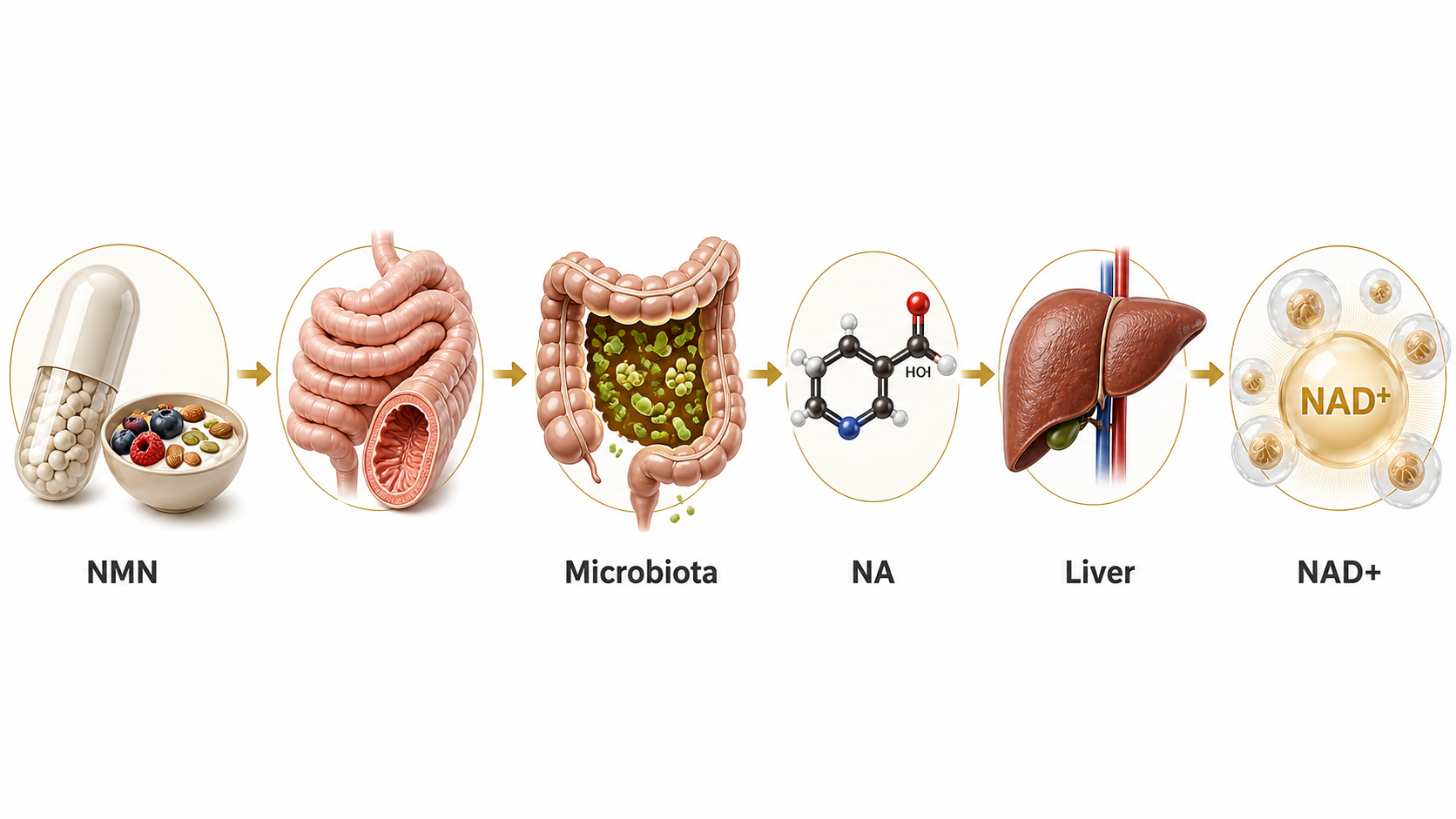
| Research node | What it may mean for NMN interpretation |
|---|---|
| Gut microbiota | Microbial metabolism may help transform NAD+ precursors into usable intermediate metabolites. |
| Enterohepatic circulation | The liver and bile-linked recycling loop may help preserve and reuse niacin-related metabolites. |
| NAD+ synthesis | NAD+ support may depend on several connected pathways, not one direct conversion step. |
This is why the gut-liver model feels like a step toward precision wellness. It encourages better questions: Is the person eating enough fiber? Is their digestion stable? Are they taking medications that affect bile acids or microbiota? Are they using alcohol heavily? Are they sleeping and moving enough to support metabolic health? These questions may matter as much as the supplement label.
Why is this not a simple anti-aging claim?
The phrase "anti-aging" is popular, but it can blur the science. NAD+ biology is relevant to aging because NAD+-dependent pathways help cells manage energy, stress, repair, and homeostasis. But human aging is not controlled by one molecule, one organ, or one supplement. It involves muscle, liver, immune function, sleep, diet, inflammation, hormones, genetics, and environment.
A 2025 Cell Metabolism study adds useful caution. In a mouse model, major NAD depletion in skeletal muscle did not necessarily compromise muscle function or accelerate muscle aging under the tested conditions [4]. That finding does not make NAD+ unimportant. It shows that biology is tissue-specific and context-specific. A broad statement like "low NAD+ equals aging" is too simple.
A better conclusion is this: NMN may help support healthy NAD+ metabolism, but the response depends on the full biological environment. If you are comparing NMN with other NAD+ precursors, AIDEVI's guide to NAD+ vs NMN differences and benefits and the comparison of NMN vs NR for longevity support can help place this research in the larger supplement landscape.
The same caution applies to rare-disease or animal-model headlines. Preclinical findings can be valuable, but they are not consumer promises. A mouse study, cell study, or rare-disease model may reveal a pathway worth studying; it does not tell a healthy adult that a supplement will produce the same outcome.
What has this research not proven yet?
The gut-liver finding is important, but it does not answer every practical question. It does not prove which microbiome pattern is best for NMN response. It does not prove that a probiotic, prebiotic, or fermented food will automatically improve NMN results. It does not define the ideal oral format for every adult. It also does not show that higher servings create better outcomes, because NAD+ metabolism is regulated by feedback loops, tissue needs, enzyme activity, and excretion pathways.
It also does not replace human outcome research. Metabolite tracing can show where molecules go and which routes are active. That is different from showing how people feel, perform, sleep, recover, or age over years. The strongest future studies will likely combine blood and tissue biomarkers, microbiome profiles, diet records, liver-metabolism markers, and real clinical endpoints. Until then, the honest message is that NMN research is becoming more precise, not that every person already has a precision formula.
For readers, this is actually good news. A more cautious model prevents disappointment and encourages better routines. It asks you to support the environment around NAD+ metabolism rather than expecting NMN to do all the work alone.
How should shoppers interpret NMN now?
The practical decision is not whether NMN is "good" or "bad." It is whether NMN fits your goal, health status, routine, and expectations. The newest research makes the decision more nuanced, because it points toward microbiome and liver metabolism as part of the response.
| Best fit | Consider instead | Avoid or pause if |
|---|---|---|
| You want NAD+ precursor support as part of a healthy aging routine. | Start with food quality, sleep, exercise, and gut-supportive habits if your basics are inconsistent. | You expect NMN to replace medical care or correct unexplained fatigue on its own. |
| You are comparing NMN with NR, niacin, NAD+ formats, or lifestyle NAD+ strategies. | Use ingredient education before stacking multiple NAD+ products. | You are pregnant, nursing, taking medication, managing liver disease, or preparing for surgery without professional guidance. |
| You are comfortable tracking response over weeks rather than expecting overnight changes. | Review timing and dosage basics before changing serving size. | You develop new symptoms, digestive discomfort, sleep disruption, or other concerning changes. |
Human studies have reported that NMN can be well tolerated under specific study conditions, including a randomized trial in healthy middle-aged adults using 300 mg, 600 mg, or 900 mg daily for 60 days [5]. Still, safety in a study does not mean every person should use every dose, and FDA guidance reminds consumers that dietary supplements are regulated differently from medicines [6]. For practical boundaries, see AIDEVI's guide to NMN benefits, side effects, and daily-use safety and the NMN dosage by age guide.
What routine supports the NAD+ ecosystem?
If the gut and liver help shape NMN metabolism, then a smart NMN routine begins before the capsule. Eat a diverse diet with plants, protein, healthy fats, and fermentable fibers if tolerated. Move daily and include resistance training, because metabolic flexibility is built through use. Protect sleep, because circadian rhythm influences digestion, appetite, recovery, and energy regulation. Limit heavy alcohol intake, which can place extra stress on liver metabolism.
For gut support, consistency matters more than novelty. Fiber-rich foods, fermented foods if appropriate, hydration, regular meals, and stress management can all help create a more stable digestive environment. For liver support, the basics are familiar: balanced nutrition, healthy body composition, moderate alcohol choices, and avoidance of unnecessary supplement stacking. AIDEVI's article on NMN and metabolic health science connects this topic with glucose, energy, and metabolic wellness.
For NAD+ support without relying only on supplements, review AIDEVI's guide to natural ways to support NAD+ levels. For the larger lifestyle foundation, the article on cellular health lifestyle changes gives practical habits that make NAD+ conversations more grounded.
Conclusion
The newest NMN research does not make NMN less interesting. It makes the story more sophisticated. Oral NMN may support NAD+ metabolism through routes that involve gut microbiota, niacin-related intermediates, enterohepatic circulation, and liver processing. That is a richer model than simple direct conversion, and it points toward more personalized supplement strategies in the future.
For now, the best AIDEVI-style interpretation is balanced: NMN can be part of a healthy aging and cellular energy routine, but the gut-liver ecosystem matters, lifestyle matters, and evidence limits matter. The most useful "latest progress" is not hype. It is better precision.
Frequently Asked Questions
Does the new research mean NMN is not absorbed?
No. It means oral NMN processing is more complex than a single direct pathway. The research suggests that gut microbiota and enterohepatic circulation can contribute meaningfully to the metabolites that support NAD+ synthesis.
Why does the microbiome matter for NMN?
The microbiome may help transform NAD+ precursors into niacin-related metabolites. Because microbiomes differ from person to person, this may be one reason people report different responses to similar supplement routines.
Does NMN work by itself against aging?
That framing is too strong. NMN supports NAD+ precursor pathways that are relevant to cellular energy and healthy aging research. It should not be described as stopping or reversing the aging process.
Should I combine NMN with probiotics?
There is not enough evidence to say that a specific probiotic improves NMN results. A more conservative first step is to support gut health through diet diversity, fiber intake if tolerated, sleep, stress management, and professional guidance when digestive symptoms are persistent.
Who should ask a healthcare professional before taking NMN?
Ask first if you are pregnant, nursing, taking medication, managing a medical condition, have liver or kidney concerns, or plan to combine NMN with several other supplements.
References
- [1] Nicotinamide riboside and nicotinamide mononucleotide facilitate NAD+ synthesis via enterohepatic circulation
- [2] The gut-liver axis and gut microbiota in health and liver disease
- [3] NAD+ metabolism and its roles in cellular processes during ageing
- [4] NAD depletion in skeletal muscle does not compromise muscle function or accelerate aging
- [5] Efficacy and safety of beta-nicotinamide mononucleotide supplementation in healthy middle-aged adults
- [6] FDA 101: Dietary Supplements
These statements have not been evaluated by the Food and Drug Administration. This product is not intended to diagnose, treat, cure, or prevent any disease. Individual results may vary. Consult a healthcare professional before starting any new supplement, especially if pregnant, nursing, taking medication, managing a medical condition, or experiencing persistent digestive, liver, metabolic, or fatigue-related symptoms.
