



AIDEVI Wellness Guide
Do Women Need nmn More Than Men?
Women do not automatically need NMN more than men. NMN decisions should be based on age, life stage, metabolic health, energy patterns, medications, sleep, training, and personal goals, not on gender alone. Women may have specific reasons to explore NAD+ support during midlife or after menopause, but men also experience age-related metabolic and physical-function changes that make NAD+ biology relevant.

- NMN is a precursor that helps the body make NAD+, a coenzyme involved in cellular energy metabolism.
- Human NAD+ research shows sex-related differences, but the findings are not simple enough to prove that women broadly need more NMN.
- Women may have distinct decision triggers, including menopause, skin-aging concerns, sleep changes, body composition, and metabolic wellness goals.
- Men may also consider NMN for NAD+ metabolism, energy routines, and healthy-aging support, especially with age or lifestyle stress.
Content
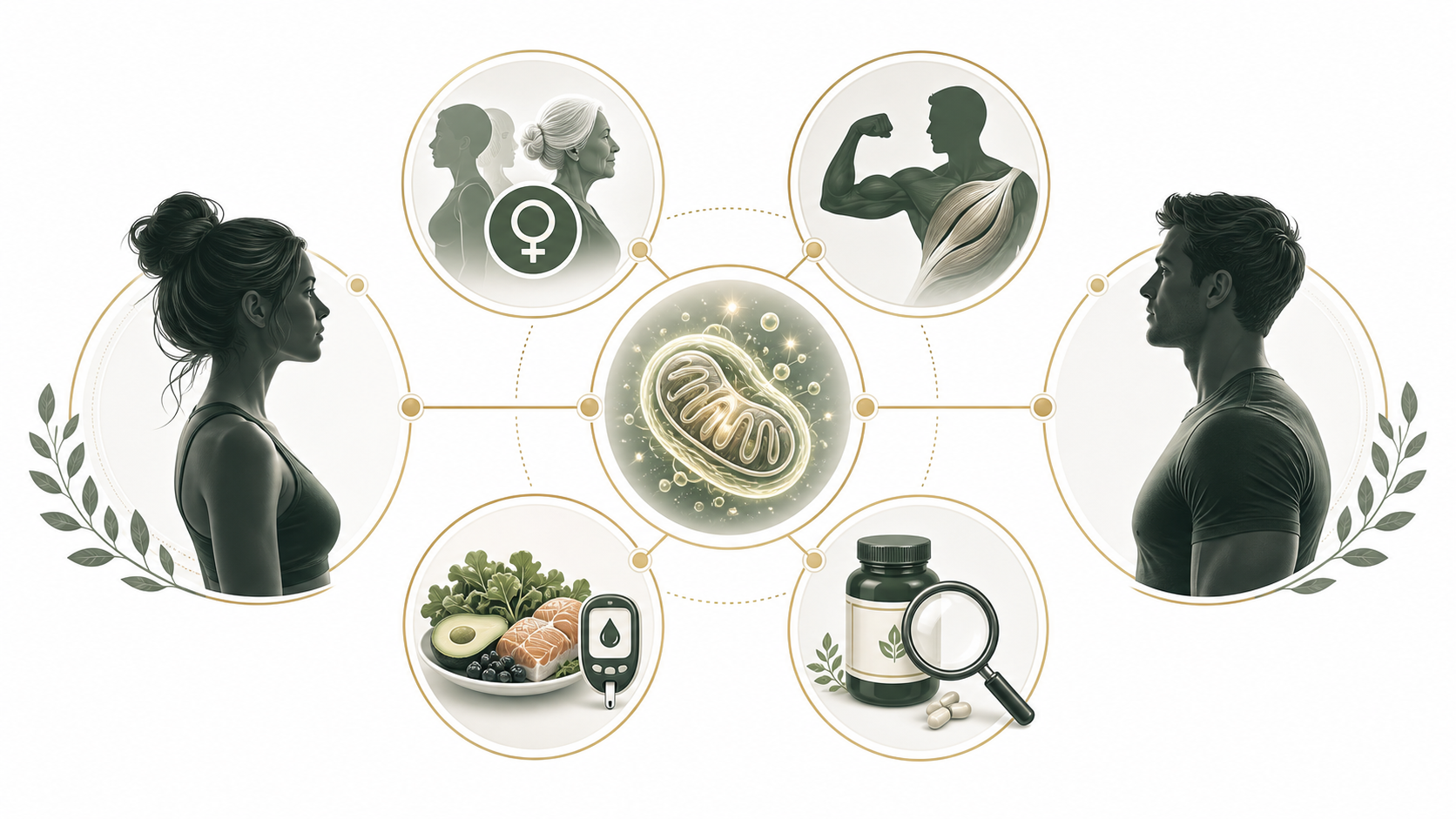
A practical answer: NMN is not a “women need it more” supplement. It is better understood as a NAD+ support ingredient that may fit different people for different reasons. For women, midlife, menopause, skin concerns, and metabolic changes may shape the conversation. For men, muscle, energy, and cardiometabolic routines may be more common decision triggers.
What is the honest answer?
The honest answer is no: there is not enough evidence to say women, as a whole, need NMN more than men. That claim is too broad, and it can easily slip into outdated assumptions about women's bodies being weaker or men's biology being naturally superior. A better framework is gender-aware but not gender-biased. Women and men share the same basic NAD+ biology, but they may reach the NMN question through different life stages, health goals, and symptoms.
NMN, short for nicotinamide mononucleotide, is a precursor involved in NAD+ production. NAD+ helps cells participate in energy metabolism and supports NAD+-dependent enzyme systems. If you are new to this pathway, AIDEVI's NAD+ cellular energy guide gives the foundation, while the NAD+ vs NMN comparison explains why NMN is usually discussed as a precursor rather than as NAD+ itself.
For women, the NMN conversation often overlaps with menopause, sleep, skin, body composition, and metabolic wellness. For men, it may overlap with muscle, exercise recovery, energy, and age-related changes in blood or tissue NAD+ markers. Both groups deserve precise information rather than a slogan.
What do NAD+ sex-difference studies actually show?
Some research does show measurable sex-related differences, but the details matter. A community-based study of 1,518 adults reported higher average whole-blood NAD+ levels in men than women. The same study also found that the association between age and whole-blood NAD+ differed by sex, with a clearer age-related decline pattern in men than women [1]. This is likely the type of data behind older claims that women have lower NAD+.
But another human plasma study tells a more nuanced story. It found no overall difference in total plasma NAD between men and women, while adult women had a higher plasma NAD+/NADH redox ratio than men; this sex-related difference became smaller with increasing age [2]. In other words, NAD+ findings depend on what is measured, where it is measured, how samples are handled, and which age group is studied.
That is why a single number should not become a blanket supplement recommendation. Whole blood, plasma, brain, skin, muscle, and liver are not interchangeable. A person can have normal blood markers and still care about energy, sleep, or body composition. A person can also have low energy for reasons that have nothing to do with NAD+, including anemia, thyroid issues, medication effects, depression, sleep apnea, under-eating, or overtraining.
When might women pay closer attention to NMN?
Women may have several practical reasons to pay closer attention to NAD+ support. The first is midlife. During perimenopause and menopause, changing hormone patterns can affect sleep, body composition, mood, temperature regulation, and metabolic health. NMN does not replace menopause care, hormone evaluation, strength training, protein intake, or medical guidance. It may simply be one ingredient women consider inside a larger healthy-aging plan. AIDEVI's NMN and menopause guide is the better next read for that life stage.
Second, women are often more proactive about skin, sleep, and appearance-related aging. Even so, skin aging is affected by UV exposure, sleep, protein, hydration, stress, smoking, topical care, collagen turnover, and genetics. NMN belongs to the cellular-energy conversation, not the category of overnight appearance change. If skin is the goal, expectations should include sunscreen, sleep, protein, hydration, and topical care before any supplement conversation.
Third, there is a notable human NMN study in postmenopausal women with prediabetes who were overweight or obese. In that randomized clinical trial, NMN increased muscle insulin sensitivity and insulin signaling after 10 weeks [3]. This is important, but it is not a general claim for all women. It was a specific population, with a specific study design, measuring specific metabolic endpoints. A more careful next step is to read about NMN and metabolic health research before turning one trial into a broad promise.
When might men consider NMN?
Men should not be excluded from the NMN conversation. In some studies, men show clearer age-related declines in certain NAD+ measurements than women. Men may also notice changes in muscle recovery, body composition, sleep, work stress, and metabolic health as they age. Those concerns are not cosmetic; they influence quality of life, training consistency, and daily energy.
A placebo-controlled trial in healthy older men found that NMN supplementation increased blood NAD+ and related metabolites and altered selected muscle-function measures over the study period [4]. This should be read as a targeted research finding, not a broad performance promise. It simply shows that male aging biology is also part of the human NMN evidence base.
For men and women alike, the first questions should be boring in the best way: Are you sleeping enough? Are you eating enough protein? Are you strength training? Are you walking? Are you drinking heavily, smoking, or sitting all day? Are medications affecting energy? NMN may support healthy NAD+ metabolism, but it cannot carry a routine that lacks the basics. The most useful supplement decision starts with lifestyle context before product selection.
How should women and men decide?
A better question than “who needs NMN more?” is “what problem are you trying to solve, and is NMN the right tool?” Use this decision table to keep the discussion grounded.
| Best fit | Consider instead | Avoid or pause if |
|---|---|---|
| Women in midlife who want to build a broader NAD+, sleep, strength, and metabolic wellness routine. | Start with menopause care, resistance training, protein, sleep hygiene, and medical review. | You expect NMN to manage menopause symptoms or replace appropriate care. |
| Men or women with a clear healthy-aging goal and a willingness to track one supplement at a time. | Improve diet, training, sunlight habits, stress recovery, and sleep before adding a complex stack. | You are taking multiple medications or managing a medical condition without clinician input. |
| People comparing NAD+ support formats and wanting a simple, label-transparent routine. | Compare NMN with NR or other NAD+ support formats before buying. | The product uses dramatic youth language, unclear blends, or unsupported absorption claims. |
For routine design, keep the supplement experiment clean. Choose one product, use a consistent time, track sleep, digestion, energy, exercise recovery, and mood for several weeks, and avoid changing five lifestyle variables at once. AIDEVI's NMN dosage by age guide can help frame dose questions, while the NMN benefits and side effects guide is more useful for safety planning.
Women who are specifically building a midlife routine can also read AIDEVI's women over 40 healthy-aging guide. If sleep is part of the reason you are considering NMN, the article on NMN and sleep quality gives a more targeted view.
What should both women and men track?
Track practical signals, not vague feelings. Before starting NMN, write down your usual bedtime, wake time, morning energy, afternoon energy, digestion, training frequency, step count, caffeine use, alcohol intake, skin routine, and any current supplements. After starting, check the same items weekly. If your sleep improves because you stopped late caffeine, do not credit NMN alone. If your energy improves because you added strength training and more protein, write that down too.
This tracking approach matters for women and men because NMN is often started during a broader wellness reset. People may begin exercising, eating better, taking magnesium, improving sleep timing, or reducing stress at the same time. A clean experiment changes fewer variables. That makes it easier to know whether the supplement is useful, neutral, or poorly tolerated.
What should the label tell you?
A good NMN label should make the ingredient form, serving size, amount per serving, other active ingredients, allergens, suggested use, and manufacturer information easy to understand. Be cautious when a product relies on vague blend names, unsupported absorption numbers, or celebrity-style language. Women considering NMN during menopause should be especially careful with formulas that mix many hormone-adjacent ingredients without clear amounts.
The FDA reminds consumers that dietary supplements can have risks, may interact with medicines, and should not replace prescribed care or a varied diet [5]. This applies to everyone, but it is especially important for pregnant or nursing women, people preparing for surgery, and anyone taking medication.
Conclusion
Women do not inherently need NMN more than men. The stronger conclusion is that women and men may have different reasons for considering NAD+ support. Women may think about NMN during midlife, menopause, skin-focused routines, sleep changes, and metabolic wellness planning. Men may think about it through muscle, energy, training recovery, and aging-related metabolic changes.
The responsible AIDEVI answer is decision-based rather than gender-based: understand NAD+ biology, match NMN to a real wellness goal, choose transparent products, track your response, and consult a healthcare professional when your health context is complex. NMN is not about proving one gender needs more. It is about building a smarter, safer healthy-aging routine.
Frequently Asked Questions
Do women have lower NAD+ than men?
Some whole-blood studies report lower average NAD+ levels in women, while plasma studies show a more complex picture. Measurement type, age, tissue, and study design all matter.
Should women take NMN before men?
Not automatically. Timing should depend on personal goals, age, health status, diet, sleep, exercise, medications, and clinician guidance, not gender alone.
Can NMN help menopause symptoms?
NMN should be kept in the NAD+ support category. Women in menopause may explore it within a broader routine, but symptoms such as hot flashes, insomnia, or mood changes deserve appropriate healthcare guidance.
Do men benefit from NMN too?
Men can also be interested in NMN because NAD+ metabolism, muscle function, exercise recovery, and healthy aging are relevant to both sexes. The decision should be individualized.
What should women check before starting NMN?
Women should review pregnancy or nursing status, medications, hormone-related concerns, sleep quality, metabolic health, supplement labels, and dosage plans with a healthcare professional when needed.
References
- [1] Association of Human Whole Blood NAD+ Contents With Aging. https://pmc.ncbi.nlm.nih.gov/articles/PMC8979162/
- [2] Schwarzmann L, et al. Sex-related differences in human plasma NAD+/NADH levels depend on age. https://pubmed.ncbi.nlm.nih.gov/33393613/
- [3] Yoshino M, et al. Nicotinamide mononucleotide increases muscle insulin sensitivity in prediabetic women. https://pubmed.ncbi.nlm.nih.gov/33888596/
- [4] Igarashi M, et al. Chronic nicotinamide mononucleotide supplementation elevates blood NAD+ levels and alters muscle function in healthy older men. https://pubmed.ncbi.nlm.nih.gov/35927255/
- [5] U.S. Food and Drug Administration. FDA 101: Dietary Supplements. https://www.fda.gov/consumers/consumer-updates/fda-101-dietary-supplements
These statements have not been evaluated by the Food and Drug Administration. This product is not intended to diagnose, treat, cure, or prevent any disease. This article is for educational purposes only and is not medical advice. Consult a healthcare professional before starting any new supplement, especially if pregnant, nursing, taking medication, preparing for surgery, managing a medical condition, or evaluating hormone-related symptoms.
