



AIDEVI Men's Wellness Guide
CoQ10 Benefits for Men: What It May Support for Energy, Heart, Exercise, and Fertility
CoQ10 is involved in mitochondrial energy production and antioxidant systems, so men often consider it for everyday energy, cardiovascular wellness, exercise, or sperm health. The evidence is more specific for selected semen outcomes and more mixed for fatigue, blood pressure, exercise performance, and statin-related muscle symptoms. It is a supplement to evaluate carefully—not a guaranteed treatment or a replacement for medical care.

- CoQ10 is a naturally occurring compound that participates in cellular energy production and antioxidant activity.
- For men, the most useful evidence discussion is goal-specific: semen parameters, cardiovascular questions, exercise, fatigue, or statin-related symptoms are not the same claim.
- Fertility studies may report better sperm concentration or motility, but that does not guarantee conception or live birth.
- Many studies use different products and amounts; follow the label and do not treat a research dose as a personal prescription.
- Review CoQ10 with a clinician or pharmacist if you take warfarin, insulin or diabetes medicine, cancer treatment, fertility medicine, or other prescriptions.
Content
- What is CoQ10?
- Can CoQ10 improve energy or exercise performance?
- What does it mean for heart and blood-pressure goals?
- Does CoQ10 support male fertility?
- What about statins and muscle symptoms?
- How much CoQ10 should men take?
- How should you choose a product?
- What safety and interaction questions matter?
- Which approach fits your goal?
- Conclusion
- Frequently Asked Questions
What is CoQ10, and why do men take it?
Coenzyme Q10, usually shortened to CoQ10, is a fat-soluble compound made by the body and found in many tissues. It helps mitochondria participate in the production of ATP, the usable energy that cells need for normal work. CoQ10 also has antioxidant functions, which is why it appears in conversations about heart tissue, muscles, healthy aging, and reproductive biology [1].
Men may search for CoQ10 when they feel less energetic, want to support an exercise routine, take a statin, or are reviewing male fertility. Those are different goals with different evidence. A plausible role in cellular energy does not prove that a capsule will create a noticeable energy boost, lower blood pressure, or correct a fertility problem.
CoQ10 is commonly sold as ubiquinone or ubiquinol. Both are forms of CoQ10; product choice should be based on the actual label, serving size, tolerability, cost, and professional advice—not on the assumption that a marketing term guarantees a better outcome.
Can CoQ10 improve energy or exercise performance?
The mechanism is easy to understand: muscles and other high-energy tissues rely on mitochondria, and CoQ10 participates in the electron-transport processes used to make ATP. That explains why athletes and busy adults are interested in it. It does not mean that taking more CoQ10 automatically increases stamina, prevents soreness, or replaces sleep, food, strength training, and recovery.
For everyday tiredness, the first question is cause. Poor sleep, insufficient calories, anemia, thyroid problems, stress, medication effects, depression, and many medical conditions can look like “low energy.” If fatigue is persistent, severe, new, or paired with shortness of breath, chest discomfort, fainting, weight change, or mood changes, seek an appropriate evaluation rather than self-diagnosing a CoQ10 deficiency.
A sensible use of the evidence is to treat CoQ10 as an optional addition to a broader routine. AIDEVI’s CoQ10 antioxidant and energy guide provides related background, but neither a mechanism nor an article can promise that every man will feel more energetic.
What does CoQ10 mean for heart and blood-pressure goals?
The heart has high energy demands and contains CoQ10, so cardiovascular research is understandable. However, NCCIH summarizes the evidence for preventing heart disease and treating heart failure as inconclusive, and says the available evidence probably does not show a meaningful effect on blood pressure [1]. That is a much safer conclusion than saying CoQ10 “lowers blood pressure” or “treats heart failure.”
If you have high blood pressure, chest symptoms, heart failure, an upcoming procedure, or a history of cardiovascular disease, use prescribed care and monitoring as the foundation. CoQ10 should not be used to delay diagnosis, replace a blood-pressure medicine, or justify stopping a treatment that is working.
For general wellness, the practical priorities remain regular movement, a diet that supports healthy blood pressure, adequate sleep, tobacco avoidance, and routine medical follow-up. A supplement can be discussed within that plan, but the presence of CoQ10 in heart tissue is not proof of a disease-prevention benefit.
Does CoQ10 support male fertility?
Male fertility is the area where a more specific research conversation is possible. Sperm cells need energy for movement, and oxidative stress is one factor studied in male infertility. A 2025 systematic review and meta-analysis of randomized trials reported improvements in several semen measures, including sperm concentration, total motility, progressive motility, and morphology, but it also noted meaningful differences between studies [2].
Earlier evidence found improvements in sperm concentration and motility but did not show that CoQ10 increased pregnancy rates, and it did not provide live-birth evidence [3]. The responsible wording is therefore “may support selected semen parameters in some men,” not “makes it easier to start a family” or “boosts testosterone.” Semen results are intermediate outcomes; they are not the same as a confirmed pregnancy.
If you and your partner have been trying to conceive, arrange a fertility evaluation rather than relying on a supplement trial alone. Ask an andrologist, urologist, or reproductive specialist whether CoQ10 fits your situation, what outcome should be measured, and how long to use it. Do not replace a prescribed fertility plan or assume that a higher dose is better.
What about statins and muscle symptoms?
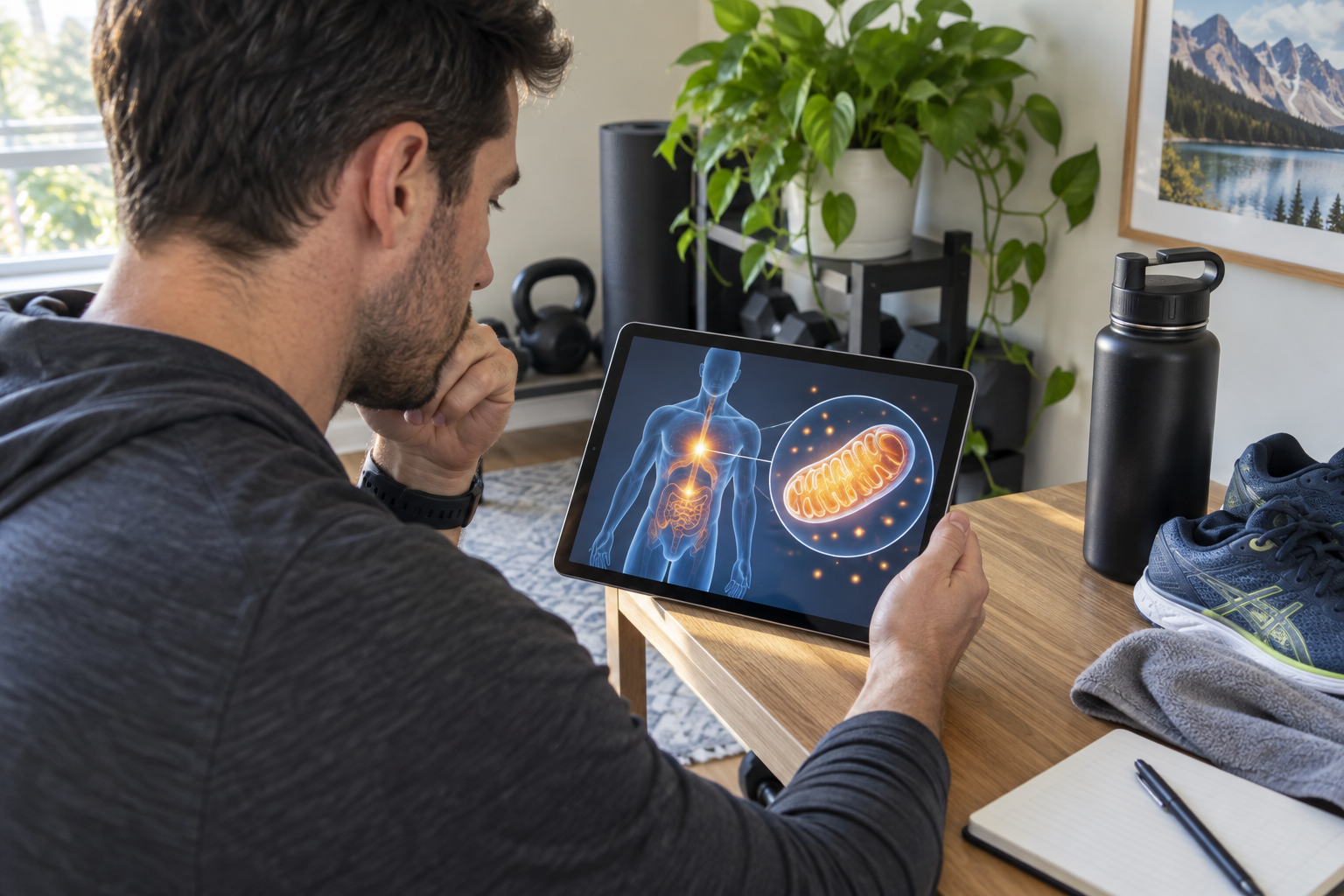
Statins affect the same biochemical pathway involved in CoQ10 synthesis, which has led to the idea that supplementation might reduce statin-associated muscle symptoms. The biological hypothesis is worth studying, but it is not a diagnosis. Muscle pain or weakness while taking a statin can have several causes and should be reviewed with the prescriber.
Clinical reviews have not reached a simple universal answer. One systematic review and meta-analysis found no benefit for statin-associated muscle pain or treatment adherence compared with placebo [4]. NCCIH likewise says the overall evidence does not support CoQ10 as a reliable way to reduce statin muscle pain [1]. Do not stop, reduce, or switch a statin without medical advice.
How much CoQ10 should men take?
There is no single male dose for energy, heart health, exercise, statin symptoms, or fertility. Research protocols vary by goal, formulation, treatment duration, and participant health. Many consumer-facing studies fall somewhere around 100–300 mg per day, but that range describes study designs rather than a universal starting prescription. Do not copy a high dose from a fertility or heart study without professional guidance.
Follow the current product label first. CoQ10 is fat-soluble, so taking it with a normal meal that contains some fat is a practical way to support absorption. AIDEVI’s CoQ10 timing guide covers meal timing and the morning-versus-evening question. If you find it disruptive to sleep, taking it earlier may be reasonable, but changing the clock does not remove medication interactions.
For fertility, a clinician may recommend a defined trial lasting several months because sperm production takes time. That is different from claiming that a man should automatically take 200–400 mg daily. The correct plan depends on semen analysis, medical history, other antioxidants, and the specialist’s follow-up strategy.
How should you choose a CoQ10 product?
Start with label clarity: confirm the form, amount per serving, number of servings, other active ingredients, storage directions, expiration date, lot information, and manufacturer contact. Ubiquinone and ubiquinol are both used in supplements. A more expensive form, a “high purity” phrase, or a large front-label number is not by itself proof of superior clinical results.
AIDEVI’s CoQ10 product page is a simple product reference for checking the listed serving and ingredient information. If you prefer to review the purchase page, the AIDEVI CoQ10 shop listing provides the current retail context. These pages describe a supplement; they do not prove that it will treat heart disease, infertility, high blood pressure, or statin symptoms.
If quality documentation is available, read it for identity, specifications, and batch information. A certificate or manufacturing statement can support transparency, but it cannot guarantee a personal health outcome. If you already use several antioxidant or energy formulas, AIDEVI’s daily antioxidant stack guide is a useful reminder to check for duplicate ingredients before adding another product. Keep the decision tied to one goal and one product label so that you can tell what you are actually taking.

What safety and interaction questions matter?
CoQ10 is generally well tolerated, but mild digestive upset or insomnia can occur. Possible symptoms include stomach discomfort, nausea, diarrhea, reduced appetite, headache, or difficulty sleeping. Stop and seek medical advice for a concerning reaction, such as hives, swelling, or breathing difficulty.
Review CoQ10 before use if you take warfarin or another anticoagulant, insulin or diabetes medicine, blood-pressure medicine, or cancer treatment. NCCIH specifically notes potential interaction concerns with warfarin, insulin, and some cancer treatments [1]. Memorial Sloan Kettering also recommends discussing medication use and monitoring with a healthcare professional [5].
Extra care is appropriate before surgery, during fertility treatment, with diabetes or cardiovascular disease, or when several supplements are already in the routine. Do not use a blog post to decide whether to stop a prescription. A pharmacist can check the full list—including vitamins, herbal products, and over-the-counter medicines—for overlap and interaction risk.
Which CoQ10 approach fits your goal?
| Your situation | Reasonable next step | Avoid assuming |
|---|---|---|
| General wellness or mild interest in energy | Start with sleep, food, movement, and a label-directed option if appropriate. | That fatigue proves low CoQ10 or that a supplement works like a stimulant. |
| Trying to conceive or abnormal semen analysis | Arrange evaluation and discuss a measurable, time-limited plan with a specialist. | That better motility guarantees pregnancy or replaces fertility care. |
| Statin-related muscle pain or weakness | Contact the prescriber to assess symptoms and treatment options. | That CoQ10 is proven to reverse symptoms or makes it safe to stop the statin. |
| Heart disease, diabetes, anticoagulant, or cancer treatment | Ask a clinician or pharmacist to review the complete medication list first. | That “natural” means interaction-free or disease treatment is optional. |
Conclusion
The most credible CoQ10 benefits for men are framed as possible support for normal cellular energy and antioxidant activity, with a more developed but still limited research discussion around selected semen parameters. Evidence is not strong enough to promise a universal energy boost, lower blood pressure, better exercise performance, or relief from statin muscle symptoms. The best decision is goal-first: define what you want to change, follow the label, track a meaningful outcome, and involve a professional when health conditions or prescriptions are part of the picture. For broader context, AIDEVI’s healthy-aging supplement overview also emphasizes that a long-term routine is broader than any single ingredient.
These statements have not been evaluated by the Food and Drug Administration. This product is not intended to diagnose, treat, cure, or prevent any disease.
Frequently Asked Questions
Does CoQ10 increase testosterone?
Current evidence does not justify presenting CoQ10 as a general testosterone booster. Some fertility research measures reproductive hormones, but those findings do not create a universal testosterone treatment. Ask a clinician about persistent symptoms or abnormal laboratory results.
How long does CoQ10 take to work for male fertility?
Fertility studies often run for several months because sperm production takes time. The appropriate duration depends on the goal and should be tied to a follow-up semen analysis or specialist plan rather than a promise of a specific result.
Should men take CoQ10 with food?
Usually, taking a fat-soluble supplement with a normal meal is practical. Follow the label, and choose a consistent time that you tolerate. Taking it with food does not guarantee a noticeable benefit.
Can CoQ10 replace a statin or blood-pressure medicine?
No. CoQ10 is not a substitute for prescribed treatment. If you have side effects or want to change a medicine, speak with the prescribing clinician first.
Is ubiquinol always better than ubiquinone?
Not automatically. They are different forms of CoQ10, and the better choice depends on label transparency, tolerability, cost, and the advice appropriate to your situation. Do not treat the form name alone as proof of a better clinical result.
References
- National Center for Complementary and Integrative Health. Coenzyme Q10. NCCIH overview of evidence, safety, and interactions.
- Akhigbe TM, et al. Does coenzyme Q10 improve semen quality and circulating testosterone level? Frontiers in Pharmacology, 2025. PubMed.
- Lafuente R, et al. Coenzyme Q10 and male infertility: a meta-analysis. Journal of Assisted Reproduction and Genetics, 2013. PubMed.
- Kennedy C, et al. Effect of Coenzyme Q10 on statin-associated myalgia and adherence to statin therapy: a systematic review and meta-analysis. Atherosclerosis, 2020. PubMed.
- Memorial Sloan Kettering Cancer Center. Coenzyme Q10. Herb-drug interaction overview.
