



AIDEVI Brain Wellness Guide
Brain Care Score and Resveratrol: A Practical Guide to Proactive Cognitive Wellness
The Brain Care Score is a 21-point tool that helps people organize modifiable brain-health factors such as blood pressure, sleep, nutrition, movement, stress, relationships, and purpose. Resveratrol may complement this routine as a polyphenol antioxidant, but it should not be framed as a shortcut for dementia or stroke risk management.
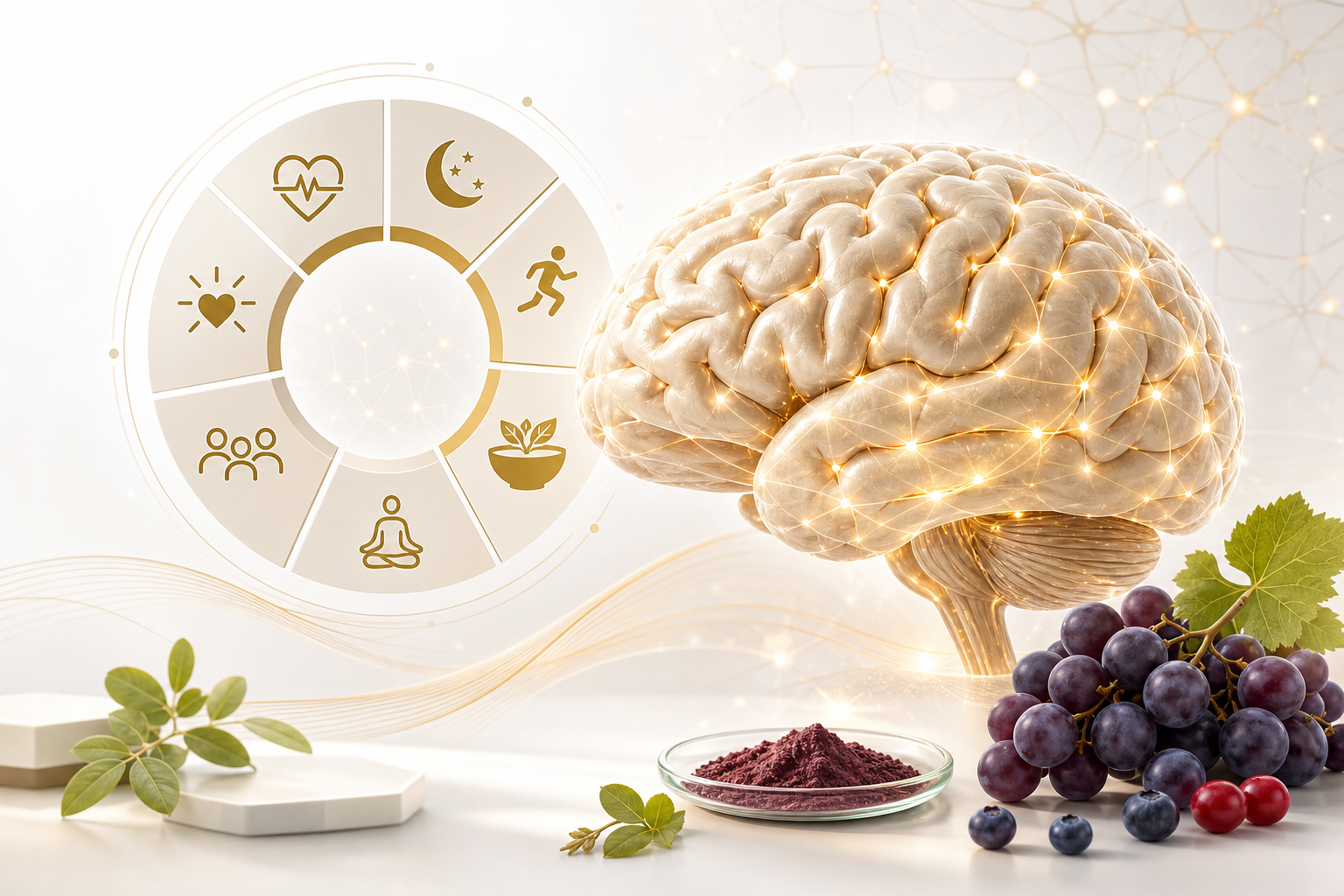
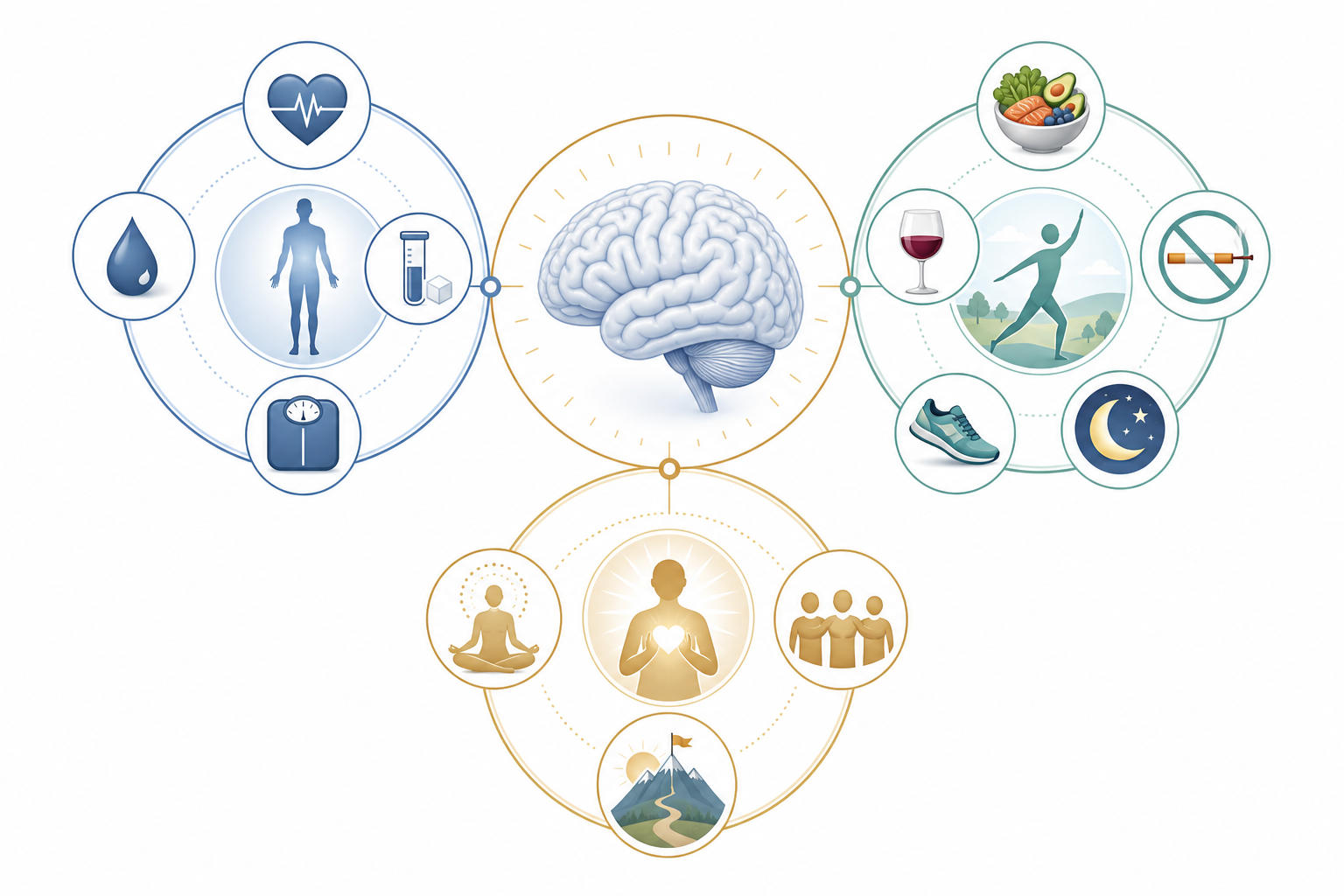
- The Brain Care Score, or BCS, groups 12 modifiable factors into physical, lifestyle, and social-emotional brain-care domains.
- Higher BCS was associated with lower dementia and stroke incidence in UK Biobank research, but BCS is a risk-factor tool, not a diagnosis.
- Resveratrol belongs in the supportive antioxidant and vascular-wellness conversation, not as a stand-alone cognitive solution.
Content
BCS gives readers a checklist for brain-care habits. Resveratrol gives readers one possible antioxidant-support layer. The most useful strategy is not to treat either one as a cure, but to use BCS to find daily risk factors and use supplements only after the lifestyle and medical foundations are clear.
What is the Brain Care Score?
The Brain Care Score is a 21-point assessment developed to help people and clinicians focus on modifiable brain-health factors. In the UK Biobank validation study, the BCS included four physical components, five lifestyle elements, and three social-emotional factors: blood pressure, hemoglobin A1c, cholesterol, BMI, nutrition, alcohol intake, smoking, aerobic activity, sleep, stress, relationships, and purpose in life [1].
That design is important. The BCS is not a brain scan, genetic test, supplement plan, or prediction of destiny. It is a practical way to turn broad brain-health advice into a score readers can understand. A lower score points to areas that may deserve attention; a higher score suggests a stronger brain-care foundation. The value is in actionability.
The original article called BCS a revolutionary way to gauge dementia and stroke risk. A more precise description is that BCS was statistically associated with future dementia and stroke outcomes in a large cohort. The tool encourages behavior change, but a clinician should interpret personal risk when someone has memory changes, vascular disease, diabetes, high blood pressure, prior stroke, medication use, or other medical concerns.
This is also why BCS works well for content strategy. Many brain-health articles jump straight from fear to a supplement recommendation. BCS creates a more credible path: explain the controllable inputs, show which inputs are measurable, and then place nutrition or supplement support within that broader routine. For readers, this feels more useful because it gives them something to review this week, not only a distant warning about aging. For AIDEVI, it creates a science-aware article that can answer search intent without exaggerating what any single ingredient can do.
Why does BCS matter for proactive brain health?
In the Frontiers in Neurology study, BCS was derived for nearly 399,000 UK Biobank participants aged 40 to 69 at baseline. During median follow-up of 12.5 years, higher BCS was associated with lower risk of incident dementia and stroke. A five-point higher BCS was associated with lower dementia risk across age groups, with stronger relative associations among younger participants, and lower stroke risk across all age groups [1].
A later Neurology study connected BCS with neuroimaging markers in cognitively healthy middle-aged adults. Every five-point increase in baseline BCS was associated with lower white matter hyperintensity volume, better fractional anisotropy, lower mean diffusivity, and less progression in certain markers over time [2]. This gives BCS knowledge-base value because it connects daily choices with measurable brain-health markers, not only distant disease labels.
BCS also overlaps with cardiovascular health thinking. The American Heart Association's Life's Essential 8 includes diet, physical activity, nicotine exposure, sleep, weight, cholesterol, blood sugar, and blood pressure [3]. This overlap matters because brain health and vascular health are deeply connected. AIDEVI's article on resveratrol health benefits is a natural next step for readers exploring the same connection.
A practical interpretation is to treat BCS as a map of upstream conditions. Blood pressure, blood sugar, cholesterol, sleep, and physical activity do not belong to separate wellness silos; they interact in the same person every day. Someone may search for "brain supplements" because they feel mentally slower, but their best next step may be checking sleep debt, movement, alcohol intake, or metabolic markers. BCS gives the article permission to say that honestly while still leaving room for responsible ingredient education.
Where does resveratrol fit?
Resveratrol is a polyphenol found in foods such as grapes, berries, peanuts, and red wine. In supplement and nutrition conversations, it is usually discussed for antioxidant activity, inflammation balance, vascular function, and healthy aging. That makes it relevant to brain-wellness education, but relevance is not the same as a disease claim.
The evidence for resveratrol and cognition is mixed. A 2018 systematic review and meta-analysis of randomized controlled trials reported that resveratrol might improve select cognitive measures, but the overall literature was limited and inconsistent [4]. A 2020 trial in postmenopausal women reported improvements in overall cognitive performance and cerebrovascular responsiveness with low-dose trans-resveratrol over 12 months [5]. These findings are interesting, but they do not justify positioning resveratrol as a dementia or stroke solution.
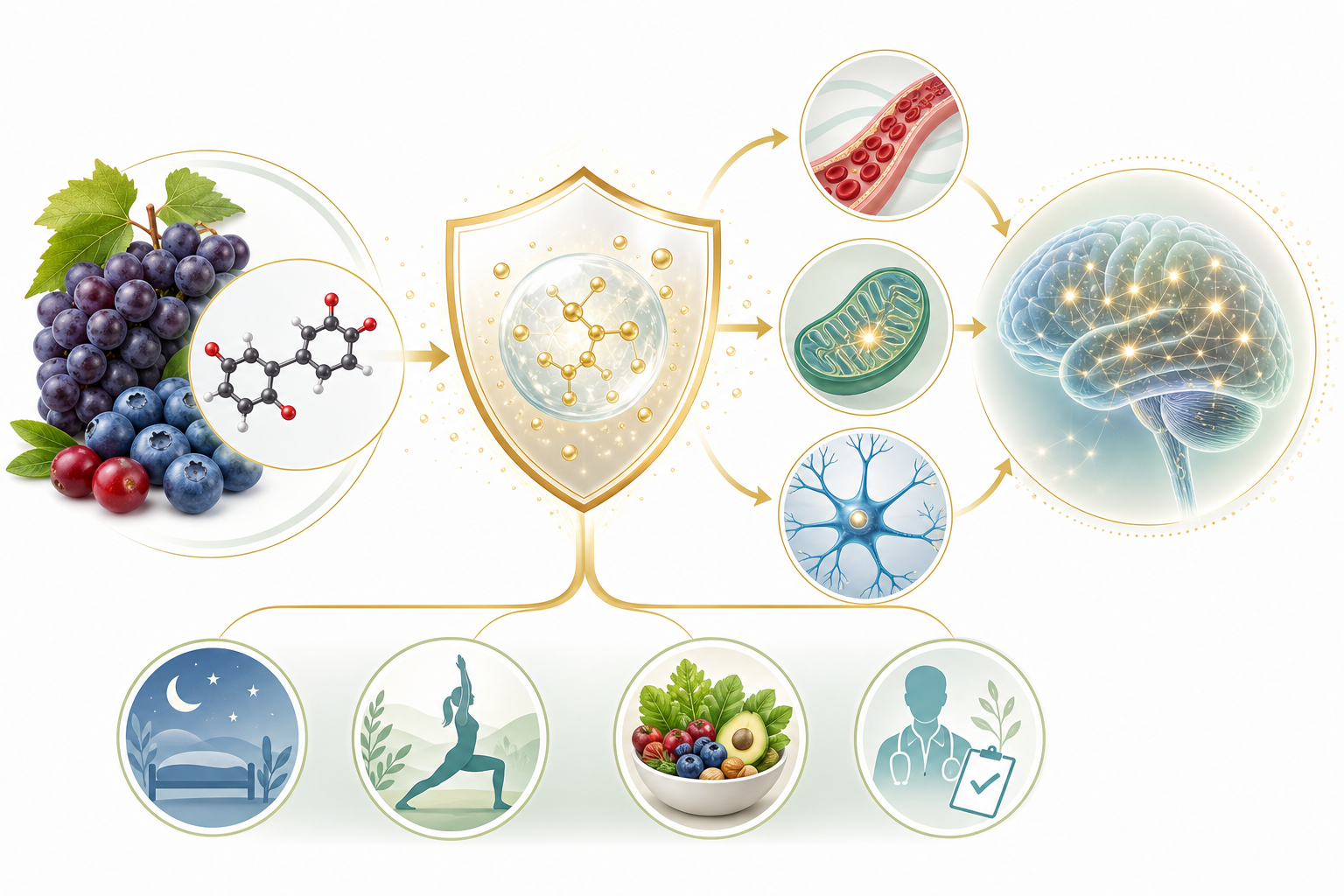
For AIDEVI readers, the cleanest positioning is this: resveratrol may support antioxidant and vascular wellness within a larger brain-care plan. AIDEVI's overview of what resveratrol is and how resveratrol supplements are discussed can help readers understand the ingredient before placing it next to BCS. Readers comparing antioxidant categories can also review AIDEVI's guide to best antioxidant supplements for health support.
The nuance matters because resveratrol sits in a crowded category. It is not the same as caffeine for short-term alertness, and it is not a drug for memory disorders. Its more reasonable role is long-horizon wellness support connected with oxidative stress balance, endothelial function, and healthy aging research. In plain language, resveratrol belongs beside a Mediterranean-style diet, regular walking, resistance training, sleep consistency, and medical marker tracking. It should not be positioned as the main answer when the reader has active symptoms or unmanaged cardiovascular or metabolic risk.
How should readers use BCS and resveratrol together?
The right order is score, foundation, support. First, use the BCS idea to identify modifiable gaps. Second, strengthen the foundation: blood pressure, glucose, lipids, sleep, movement, nutrition, stress, relationships, and purpose. Third, consider targeted supplement support only if it fits the person's health context and does not distract from higher-impact changes.
For example, a reader with strong nutrition and movement habits but poor sleep may gain more from a sleep routine than from adding another capsule. A reader with high blood pressure should prioritize professional care and consistent monitoring. A reader with a solid foundation who wants extra antioxidant support can then evaluate resveratrol with a clearer head: dose, ingredient identity, medication interactions, and expectations all become part of the decision. This sequence respects both science and real-life behavior.
| Goal | Best fit | Avoid or pause if |
|---|---|---|
| Understand risk factors | Use BCS as a conversation starter and checklist for modifiable habits. | You are using it to self-diagnose neurological symptoms. |
| Support antioxidant resilience | Consider resveratrol as one polyphenol option after reviewing diet and supplement overlap. | You expect a supplement to replace blood pressure, glucose, or lipid management. |
| Compare brain-health ingredients | Use related education such as AIDEVI's brain health and NMN research guide. | You are stacking multiple ingredients without clinician guidance. |
This framework also keeps the article from overpromising. BCS should not be marketed as a personal disease forecast, and resveratrol should not be marketed as a medical intervention. Instead, they belong together as a practical pair: BCS identifies the routine, resveratrol may support the antioxidant layer, and medical care handles diagnosis and care decisions.
What does a realistic routine look like?
Start with the physical BCS anchors. Know your blood pressure, glucose status, cholesterol, and weight trend. These are not vanity numbers; they are brain-care signals because vascular and metabolic health influence the brain's long-term environment. If any are outside the normal range, work with a healthcare professional rather than trying to solve the issue with a supplement.
Then build the lifestyle anchors. Choose a diet pattern rich in plants, protein, fiber, healthy fats, and colorful polyphenols. Move most days and include aerobic activity. Sleep on a regular schedule. Avoid smoking and moderate alcohol intake. AIDEVI's article on choosing a good daily antioxidant supplement fits here because it helps readers avoid using supplements as a substitute for dietary quality.
Finally, protect the social-emotional layer. Stress management, relationships, and purpose are not soft extras. They are part of the BCS because brain wellness is not only chemistry; it is also routine, resilience, and connection. Readers interested in cardiovascular overlap may continue with AIDEVI's article on resveratrol and cardiovascular health support, while those comparing antioxidant systems can explore healthy aging and antioxidant properties or CoQ10 as an antioxidant for heart-health support.
A simple 30-day approach can make the idea less abstract. In week one, record baseline markers you already know and write down sleep, movement, stress, and alcohol patterns. In week two, choose one physical anchor, such as blood pressure tracking or a daily walk. In week three, strengthen one nutrition habit, such as adding berries, leafy greens, protein, or fiber at breakfast. In week four, review whether a targeted supplement still makes sense. This turns BCS from a score into a behavior loop.
If resveratrol is part of that loop, pair it with consistency rather than drama. Take it according to product directions, avoid stacking it casually with many other polyphenols or blood-thinning products, and pause before surgery or when medication questions exist unless a clinician has advised otherwise. The best supplement routine is boring in the right way: clear purpose, steady use, realistic expectations, and regular review.
The AIDEVI Score, Support, Track Framework
Score the modifiable factors honestly. Support the foundation with food, movement, sleep, relationships, purpose, and targeted nutrients where appropriate. Track changes with both daily habits and professional health markers.
This keeps cognitive wellness proactive without turning BCS or resveratrol into medical promises.
Conclusion
The Brain Care Score is useful because it makes brain health practical. Instead of waiting for symptoms, it asks readers to look at blood pressure, glucose, cholesterol, body composition, nutrition, movement, sleep, alcohol, smoking, stress, relationships, and purpose. That is a strong foundation for proactive cognitive wellness.
Resveratrol may complement this approach as a polyphenol antioxidant connected with vascular and healthy-aging research, but it should remain a support layer. AIDEVI's best message is simple: use BCS to find modifiable factors, use lifestyle as the foundation, use supplements thoughtfully, and involve healthcare professionals when medical risk or symptoms are present.
Frequently Asked Questions
Does the Brain Care Score diagnose dementia or stroke risk?
No. BCS is a risk-factor and behavior-change tool. It can help structure conversations about brain care, but it does not diagnose dementia, stroke, or any medical condition.
Can resveratrol support brain health?
Resveratrol is studied for antioxidant, vascular, and cognitive-support pathways, but evidence is mixed. It should be described as supportive, not as a disease-focused solution.
Should I use resveratrol if my Brain Care Score is low?
A low score points first to modifiable lifestyle or medical factors. Address blood pressure, glucose, lipids, sleep, movement, nutrition, and stress before making supplements the main solution.
Who should ask a healthcare professional first?
Ask a professional if you have memory changes, neurological symptoms, a history of stroke, diabetes, hypertension, cardiovascular disease, pregnancy, nursing, medication use, or planned surgery.
What is the best first step for proactive brain health?
Start with measurable basics: blood pressure, glucose, lipids, sleep duration, movement, nutrition quality, smoking status, alcohol intake, stress level, relationships, and sense of purpose.
References
- [1] Singh SD, Oreskovic T, Carr S, et al. The predictive validity of a Brain Care Score for dementia and stroke: data from the UK Biobank cohort. Frontiers in Neurology. 2023. Frontiers.
- [2] Rivier CA, Singh S, Senff J, et al. Brain Care Score and neuroimaging markers of brain health in asymptomatic middle-age persons. Neurology. 2024. Neurology.
- [3] American Heart Association. Life's Essential 8. AHA.
- [4] Marx W, Kelly JT, Marshall S, et al. Effect of resveratrol supplementation on cognitive performance and mood in adults: a systematic literature review and meta-analysis of randomized controlled trials. Nutrition Reviews. 2018. PubMed.
- [5] Zaw JJ, Howe PRC, Wong RHX. Sustained cerebrovascular and cognitive benefits of resveratrol in postmenopausal women. Nutrients. 2020. PubMed.
These statements have not been evaluated by the Food and Drug Administration. This content is for educational purposes only and is not intended to diagnose, treat, cure, or prevent any disease. Dietary supplement decisions should be made with appropriate healthcare guidance, especially if pregnant, nursing, taking medication, or managing a medical condition.
