



AIDEVI Safety & Wellness Guide
Ashwagandha and Alcohol: Safety Risks, Interactions, and What to Do
By AIDEVI Editorial Team | Last Updated: September 2026 | Supplement Safety
The safest practical advice is to avoid taking ashwagandha at the same time as alcohol. Human research on this exact combination is limited, but both can contribute to drowsiness, reduced alertness, or poor coordination. Ashwagandha also has its own medication, thyroid, pregnancy, and rare liver-injury cautions, so “natural” does not make the combination risk-free.
Do not use ashwagandha to “balance out” alcohol, prevent a hangover, or manage alcohol withdrawal. If you have already combined them, do not drive or take more sedating products. Severe confusion, inability to wake, repeated vomiting, seizure, or slow or irregular breathing requires emergency help.
Content
- Is it safe to combine ashwagandha and alcohol?
- What should you know about ashwagandha?
- What does alcohol do in the short term?
- What risks may become more noticeable when they overlap?
- What should you do if you already mixed them?
- Can ashwagandha help with alcohol withdrawal?
- Who should avoid it or ask a clinician?
- Frequently Asked Questions
Is it safe to combine ashwagandha and alcohol?
If you are deciding whether to take ashwagandha on a day when you plan to drink, the conservative choice is to keep them separate and ask a healthcare professional if you regularly use alcohol, take prescription medicines, or have a liver, thyroid, autoimmune, or blood-pressure condition. There is no well-established “safe spacing” rule that can be applied to every extract, dose, person, or amount of alcohol.
This advice is about risk management, not a claim that every person will have a serious reaction. The exact interaction between ashwagandha and alcohol has not been adequately studied in controlled human trials. However, ashwagandha may cause drowsiness in some people, while alcohol can impair alertness, balance, judgment, and breathing at higher levels. Combining substances with overlapping effects creates avoidable uncertainty, especially before driving, swimming, cooking, operating equipment, or caring for another person.
For ingredient background, AIDEVI’s ashwagandha guide for women’s health can be read alongside this more conservative safety discussion. Evidence for stress or sleep support should not be confused with evidence that the herb protects against alcohol or makes drinking safer.
What should you know about ashwagandha?
Ashwagandha is the common name for Withania somnifera, a plant used in Ayurvedic traditions and sold today as capsules, powders, teas, gummies, and liquid extracts. Different products may use root, leaf, or a root-and-leaf combination, and they may vary in extraction method and withanolide standardization. Two products with the same front-label herb name are therefore not necessarily equivalent.
The strongest modern research signal is not a universal “calming” effect. Some preparations may support perceived stress or sleep for certain adults, but study sizes are often small, follow-up is short, and results cannot automatically be transferred to every product. The National Center for Complementary and Integrative Health notes that short-term use may be tolerated by some adults, while long-term safety remains unclear. It also lists possible drowsiness, stomach upset, diarrhea, vomiting, medication interactions, and rare cases of liver injury [1].
That safety profile matters when alcohol is part of the same routine. An ingredient that can make one person sleepy or light-headed should not be treated as interchangeable with a non-sedating food or beverage. It also should not be used to self-manage anxiety, depression, insomnia, or an alcohol-use problem without appropriate evaluation.
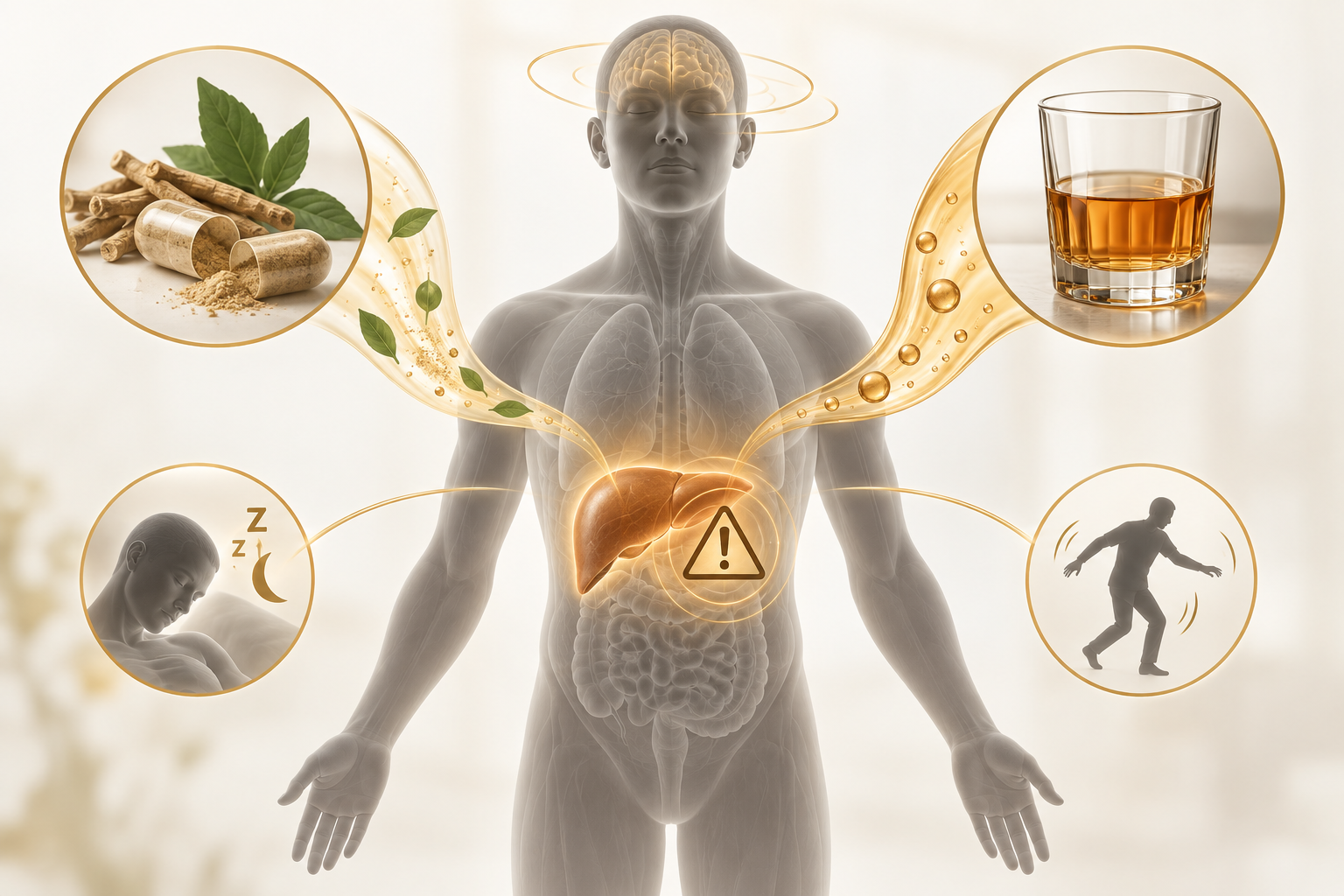
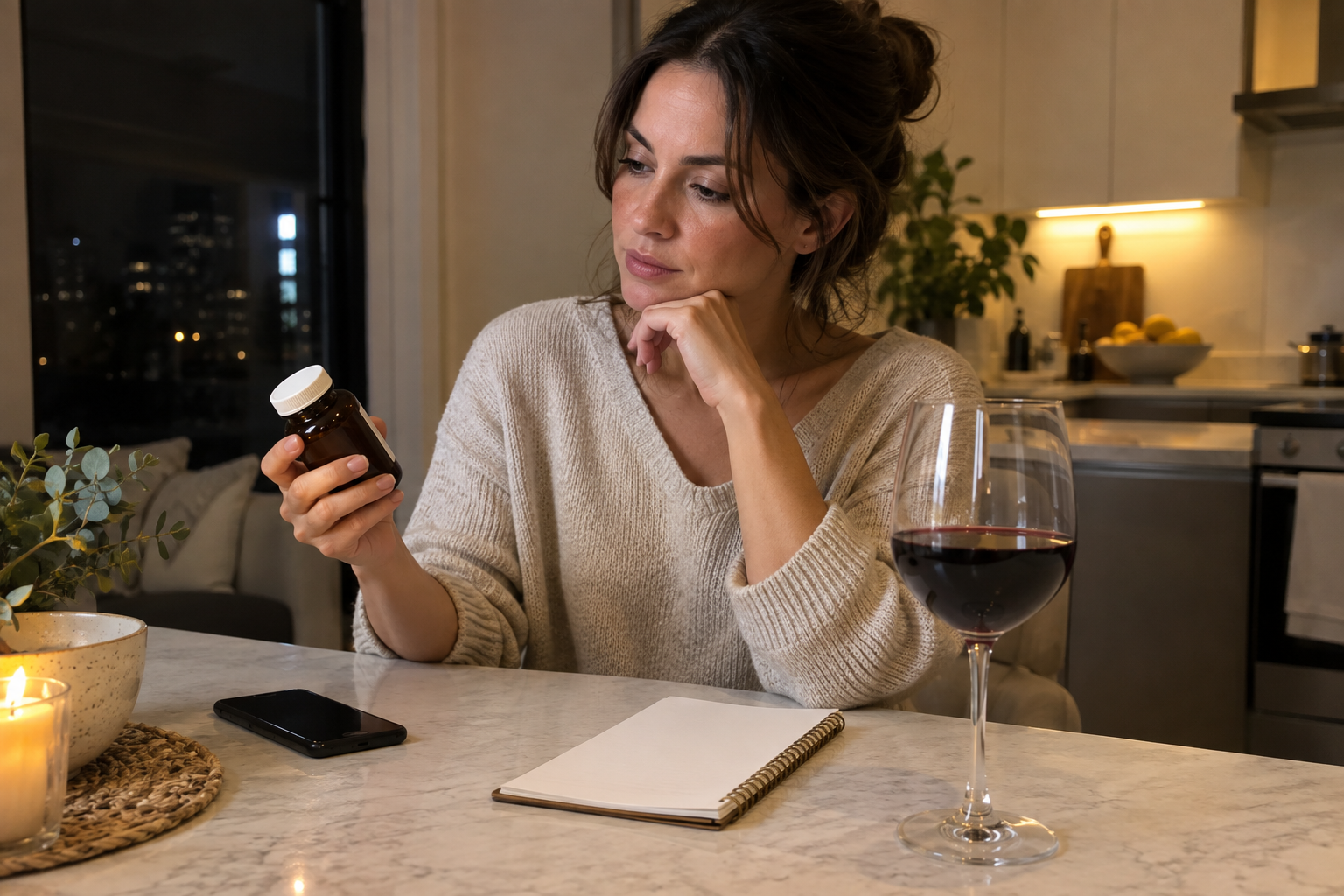
The illustration summarizes safety questions to consider; it does not show a proven combined mechanism or a guaranteed clinical outcome.
What does alcohol do in the short term?
Alcohol affects the central nervous system. Even before a person feels heavily intoxicated, judgment, reaction time, balance, and decision-making can change. The effect depends on the amount and speed of drinking, food intake, body size, tolerance, other medicines or drugs, and individual sensitivity.
Alcohol can also worsen sleep quality even if it makes someone fall asleep faster. When alcohol is used as a stress or sleep strategy, the short-term feeling of relaxation can be followed by fragmented sleep, morning fatigue, or a rebound in anxious feelings. This is one reason adding a sleep-oriented supplement may make a routine harder to interpret rather than automatically making it more effective.
At higher levels of intoxication, alcohol can suppress basic functions such as breathing and consciousness. The National Institute on Alcohol Abuse and Alcoholism lists confusion, difficulty staying conscious, vomiting, seizures, slow or irregular breathing, clammy skin, and very low body temperature as alcohol-overdose warning signs [4].
What risks may become more noticeable when they overlap?
The key point is not that a specific outcome is guaranteed. It is that overlapping effects can make it harder to predict how you will feel. The most practical concerns are alertness, coordination, liver context, and interactions with other products.
| Concern | What can reasonably be said | Safer interpretation |
|---|---|---|
| Drowsiness and coordination | Ashwagandha can cause drowsiness in some people, and alcohol can impair alertness and movement. | Avoid driving, machinery, heights, swimming, and other risk-sensitive activities. |
| Liver health | Ashwagandha-associated liver injury is rare but reported; alcohol has its own liver risks. | Do not assume the combination is safe if you have liver disease or unexplained liver-test changes. |
| Medication overlap | Ashwagandha may interact with sedatives, thyroid medicines, diabetes medicines, blood-pressure medicines, and immunosuppressants. | Ask a pharmacist or clinician before adding it to a medication routine. |
Liver injury deserves balanced language. A 2023 case series described ashwagandha-associated liver injury, including cholestatic hepatitis and severe outcomes in people with pre-existing chronic liver disease [3]. These reports do not prove that a glass of alcohol plus one serving of ashwagandha will cause liver damage, and they do not quantify a specific combined risk. They do support avoiding casual claims that the herb “detoxes” the liver or protects against drinking.
What should you do if you already mixed them?
If you feel well after an accidental combination, stop drinking, do not take another dose of ashwagandha, and avoid other sedating products. Do not drive or operate equipment. Stay with a trusted adult if you feel unusually sleepy, dizzy, or confused, and contact a healthcare professional or poison-information service for individualized advice.
Do not try to “cancel out” alcohol with coffee, exercise, a cold shower, another supplement, or a large dose of water. These actions do not reverse alcohol impairment. If the person is difficult to wake, has repeated vomiting, a seizure, trouble breathing, slow or irregular breathing, bluish or pale skin, or severe confusion, call local emergency services immediately. Do not leave the person alone or assume they can simply sleep it off.
For possible liver injury, seek prompt medical attention for yellow skin or eyes, dark urine, pale stools, severe itching, persistent nausea or vomiting, unusual fatigue, or pain in the upper-right abdomen. These symptoms can have many causes, but they should not be managed by continuing the supplement and waiting for the next routine check-up.
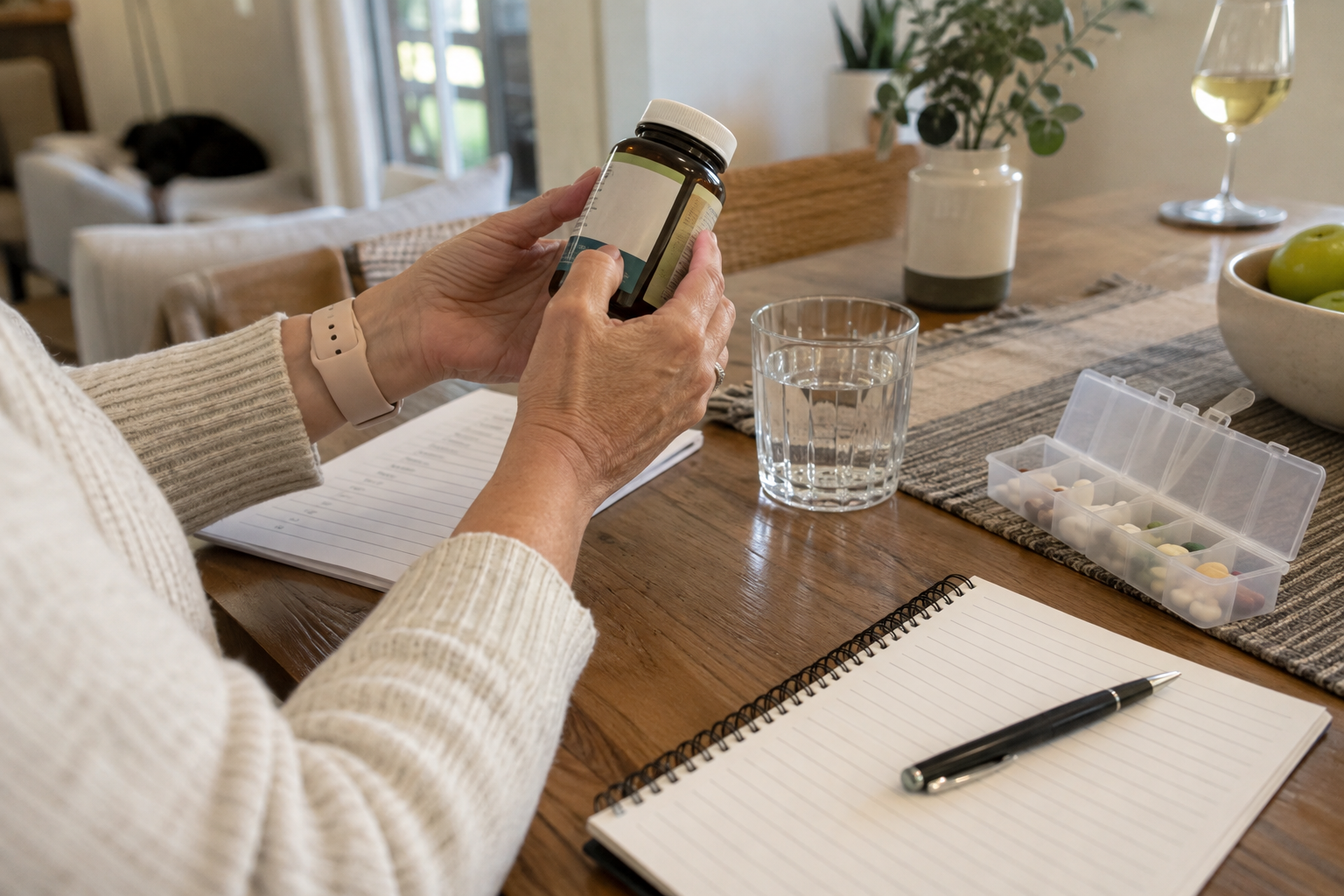
If someone is unusually difficult to wake or has breathing problems, treat the situation as an emergency rather than trying another supplement or home remedy.
Can ashwagandha help with alcohol withdrawal?
Ashwagandha should not be presented as a treatment for alcohol withdrawal, cravings, detoxification, seizures, or alcohol-use disorder. Claims that it works through GABA receptors, lowers cravings, or protects against withdrawal seizures are not a substitute for clinical evidence or medical supervision.
This boundary is important because abruptly stopping alcohol after prolonged heavy drinking can be dangerous. NIAAA warns that withdrawal can be life-threatening and may include tremors, sweating, rapid heart rate, nausea or vomiting, insomnia, anxiety, seizures, or delirium tremens [5]. If this situation may apply to you, seek medical help to plan a safe reduction or withdrawal. Do not attempt to substitute an herbal supplement for supervised care.
For sleep or stress questions that are separate from alcohol withdrawal, AIDEVI’s sleep-support article may be useful background, but any sedating supplement should still be reviewed before use with alcohol, prescription sedatives, or anti-anxiety medicines.
Who should avoid it or ask a clinician?
A conservative supplement routine starts with suitability, not with a target dose. Ask a clinician or pharmacist before using ashwagandha if any of the following apply:
- You are pregnant, planning pregnancy, or breastfeeding.
- You have liver disease, abnormal liver tests, thyroid disease, or an autoimmune condition.
- You are scheduled for surgery or use sedatives, sleep medicines, anti-anxiety medicines, anti-seizure medicines, thyroid medicines, diabetes medicines, blood-pressure medicines, or immunosuppressants.
- You drink heavily, have experienced withdrawal symptoms, or are trying to stop drinking.
- You take several supplements and cannot clearly identify overlapping ingredients or the exact serving size.
The Pause, Check, Track framework
- Pause: Am I using this to hide a symptom or offset alcohol? Address the underlying sleep, stress, or drinking concern directly.
- Check: Do my health history, medicines, and product label support trying it? Review the ingredients with a pharmacist or clinician when in doubt.
- Track: What changed after starting, and did I also change alcohol, medication, or sleep? Change one variable at a time and stop if concerning symptoms appear.
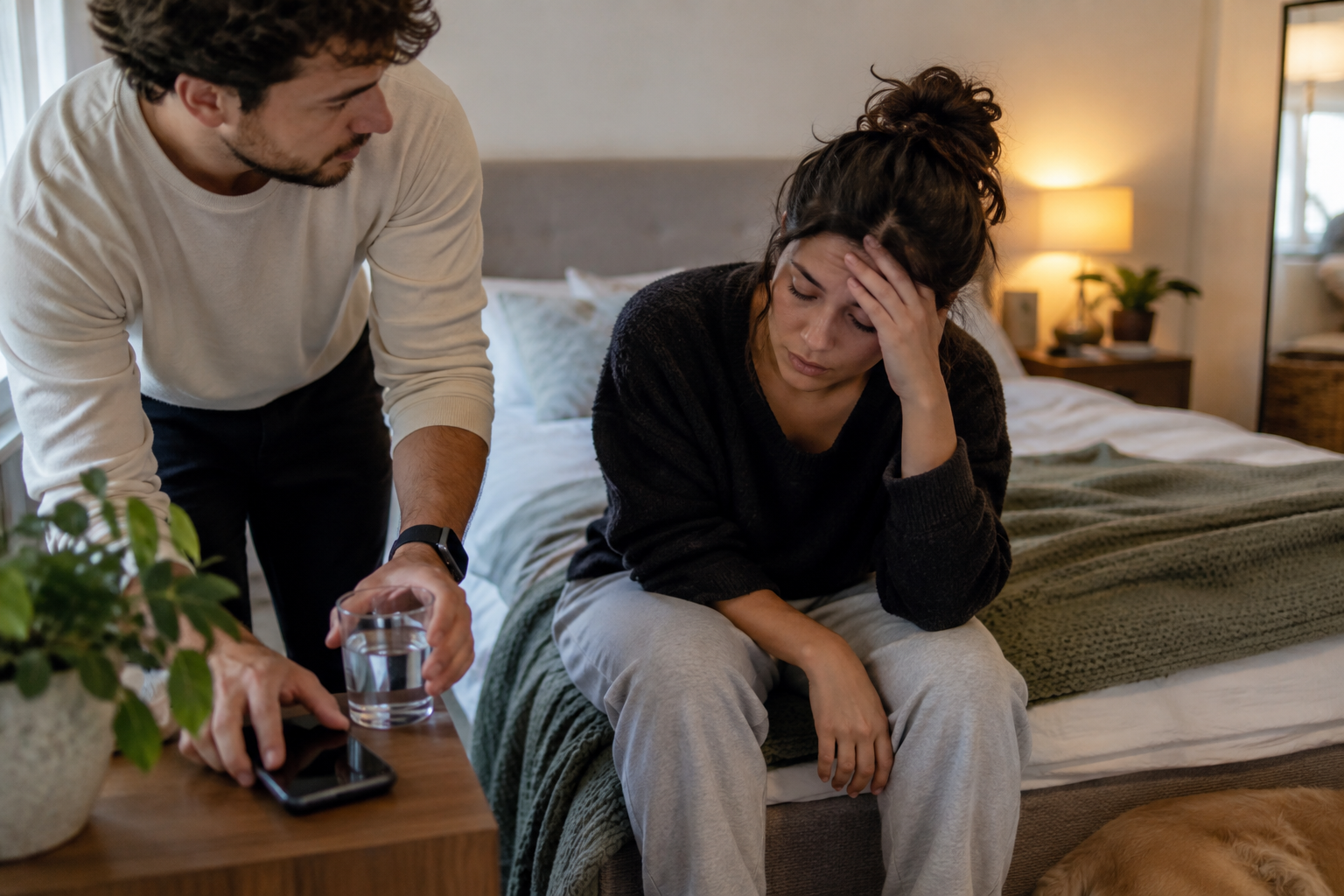
A label-checking routine can improve product literacy, but a transparent label does not guarantee that an ingredient is right for a specific person.
AIDEVI’s Ashwagandha Liquid Extract page describes an alcohol-free extraction process. That is a product-format detail, not evidence that the finished supplement can be safely combined with alcoholic drinks. Read the current label, follow its directions, and treat the product as a supplement rather than a countermeasure for alcohol.
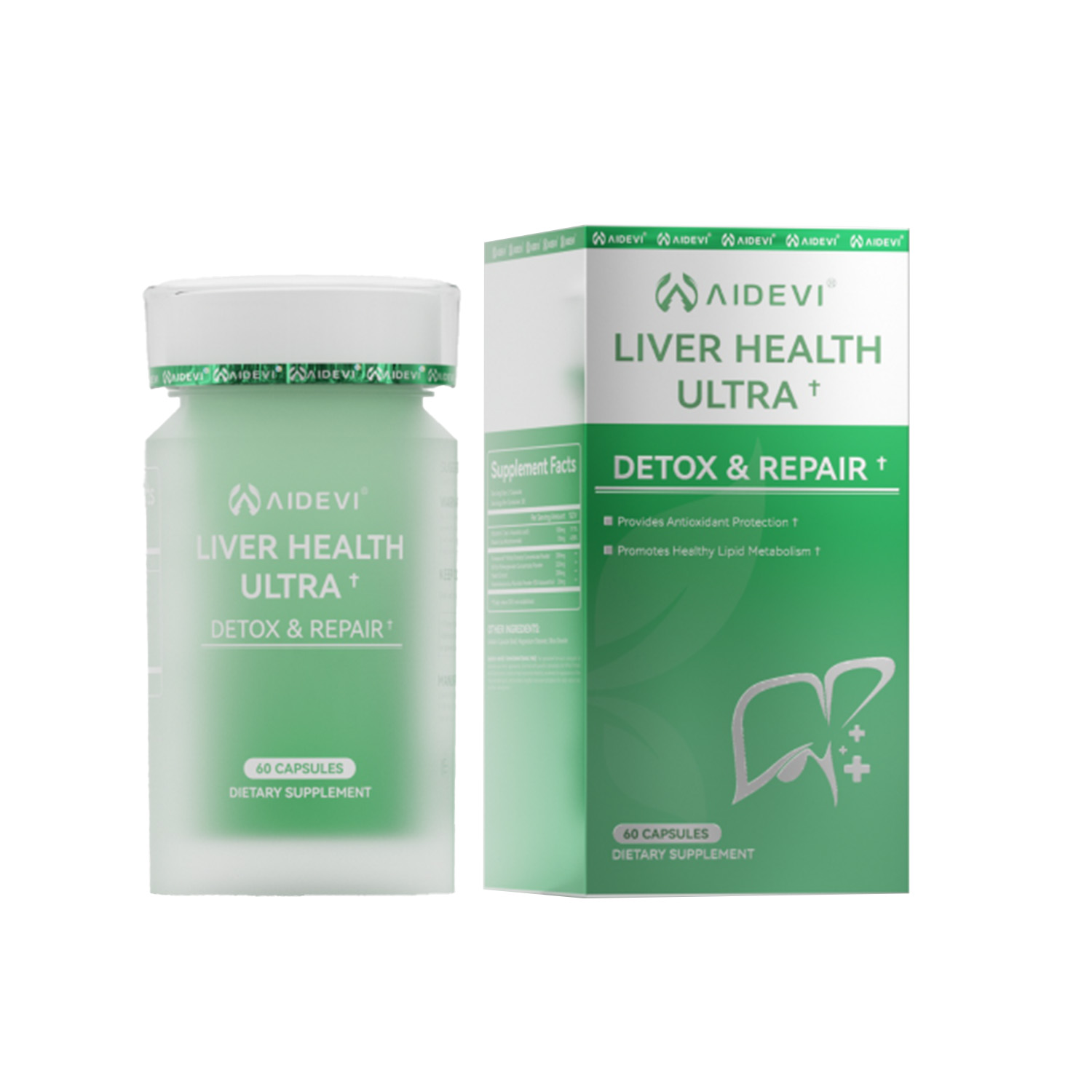
AIDEVI’s broader supplement benefits and risks guide reinforces the same label-first approach: a plausible ingredient story is not a personal safety assessment. If liver wellness is your concern, AIDEVI’s liver-support formula page should not be interpreted as a way to offset alcohol or treat liver disease. Persistent symptoms require medical evaluation.
Conclusion
Ashwagandha and alcohol are best kept separate. The exact combined interaction has not been well quantified, but both can affect alertness, and ashwagandha has independent cautions involving drowsiness, medicines, thyroid and autoimmune conditions, pregnancy, and rare liver injury. Avoid claims that the herb protects against alcohol, prevents a hangover, or makes withdrawal safe.
If you accidentally combine them, stop adding substances, avoid driving, observe how you feel, and seek urgent help for dangerous symptoms. If you drink heavily or experience withdrawal symptoms, contact a medical professional rather than attempting to manage withdrawal with an herbal supplement. Individual results may vary, and a qualified clinician can help match any supplement decision to your health history.
Frequently Asked Questions
Can you drink alcohol while taking ashwagandha?
The conservative answer is to avoid using them together. Direct human research on the combination is limited, and both may contribute to drowsiness or impaired judgment. Ask a clinician if alcohol use is regular or if you take medicines.
Does ashwagandha cancel out alcohol?
No. Ashwagandha does not sober someone up, prevent alcohol impairment, protect the liver from drinking, or make driving safe. Do not use it as a countermeasure.
Can ashwagandha prevent a hangover?
There is not enough reliable evidence to promise that. Rest, time, fluids as tolerated, and avoiding more alcohol are more appropriate basics. Severe symptoms should be assessed medically.
Can ashwagandha help with alcohol cravings or withdrawal?
It should not be used as a self-treatment for alcohol withdrawal or an alcohol-use disorder. Withdrawal after prolonged heavy drinking can be life-threatening and may require medical monitoring.
How long should I wait between ashwagandha and alcohol?
There is no universally validated waiting period for every product and person. Because extract strength, dose, metabolism, health history, and alcohol amount vary, ask a healthcare professional for individualized advice rather than relying on an online number.
What symptoms mean I need urgent help?
Call local emergency services for inability to wake, severe confusion, repeated vomiting, seizure, trouble breathing, slow or irregular breathing, bluish or pale skin, or collapse. Do not leave the person alone or try to reverse the effects with coffee or a cold shower.
References
- [1] National Center for Complementary and Integrative Health. Ashwagandha: Usefulness and Safety.
- [2] National Institutes of Health, Office of Dietary Supplements. Ashwagandha: Is it helpful for stress, anxiety, or sleep? Health Professional Fact Sheet.
- [3] Philips CA, et al. Ashwagandha-induced liver injury: A case series from India and literature review. Hepatology Communications. 2023.
- [4] National Institute on Alcohol Abuse and Alcoholism. Understanding the Dangers of Alcohol Overdose.
- [5] National Institute on Alcohol Abuse and Alcoholism. Alcohol Use Disorder: From Risk to Diagnosis to Recovery.
Individual results may vary. Consult a healthcare professional before starting any new supplement, especially if pregnant, nursing, taking medication, managing a medical condition, or changing alcohol use after prolonged heavy drinking. These statements have not been evaluated by the Food and Drug Administration. This product is not intended to diagnose, treat, cure, or prevent any disease.
