



AIDEVI Healthy Aging Guide
6 Essential Healthy Aging Habits for Skin, Energy, and Long-Term Glow
The most useful "anti-aging" habits are not shortcuts. They are daily choices that support skin barrier strength, antioxidant resilience, sleep rhythm, movement, sun protection, and cleaner air exposure. AIDEVI recommends describing these habits as healthy aging support, not as guaranteed wrinkle removal, skin tightening, whitening, or age reversal.
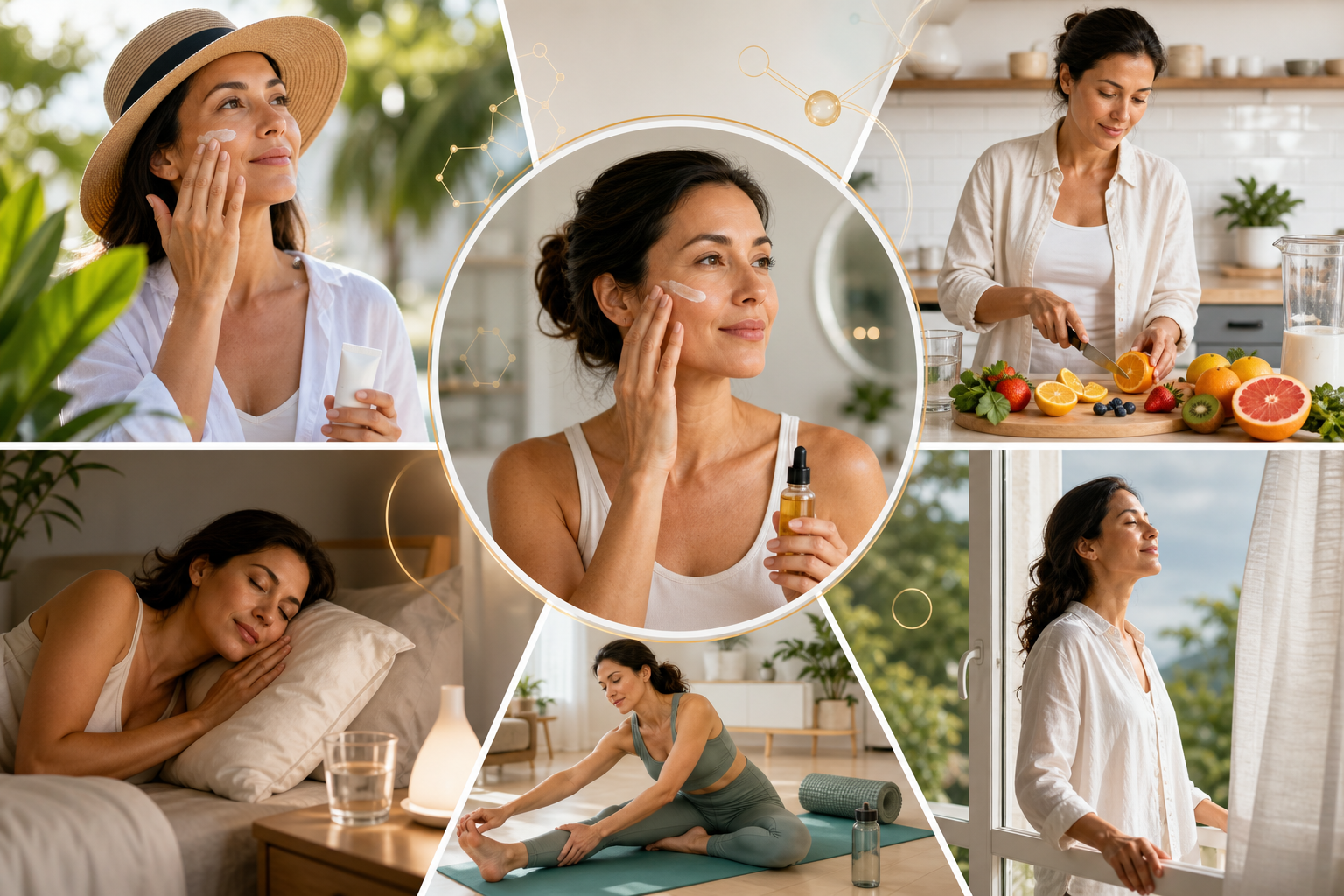
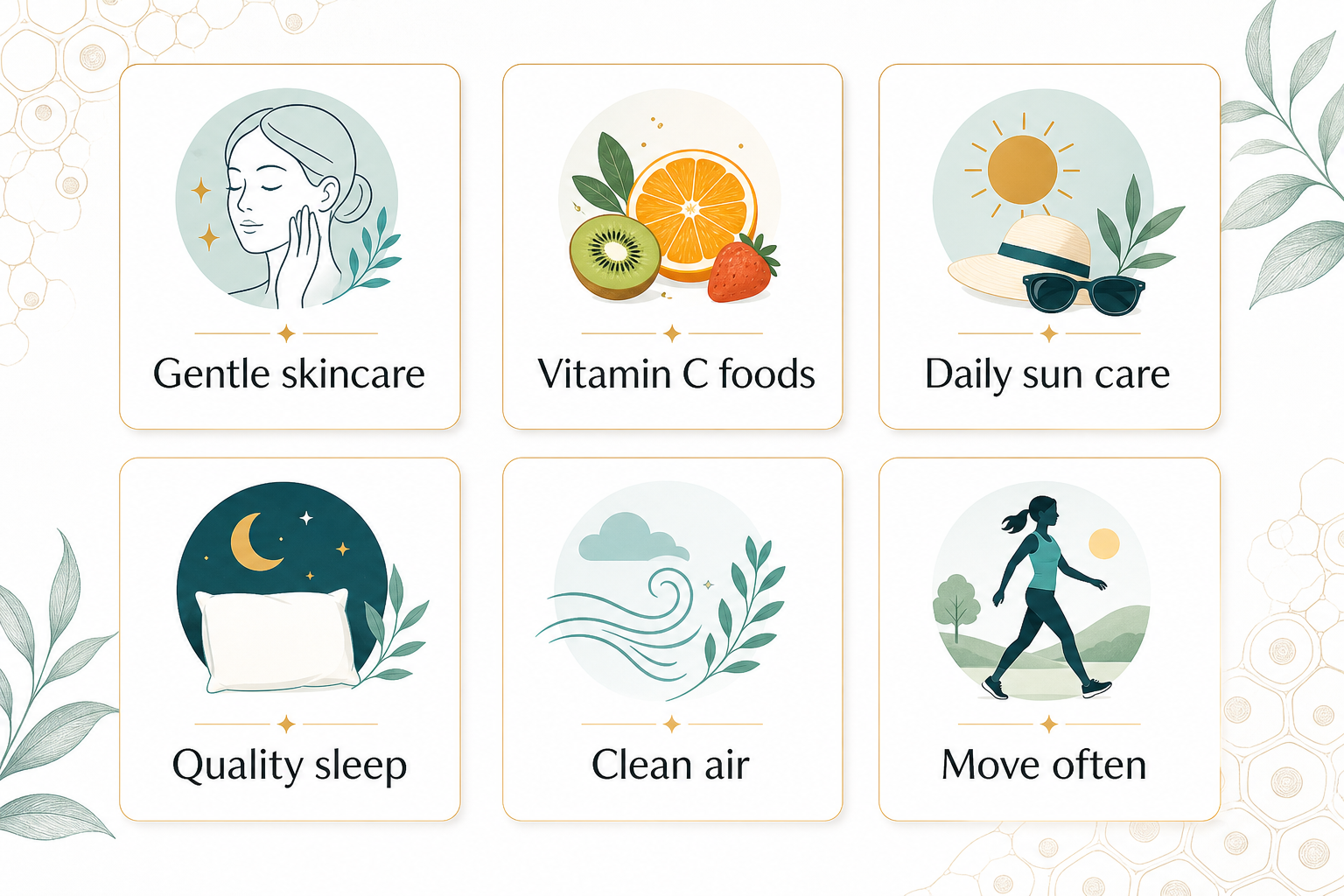
- Build the routine around gentle skincare, vitamin C-rich foods, daily sun care, quality sleep, cleaner air, and regular movement.
- Avoid claims that any single habit can erase wrinkles, reverse aging, or make you look younger than other people.
- Pair visible skin habits with inside-out support: antioxidant foods, hydration, movement, rest, and realistic supplement decisions.
Content
Why do healthy aging habits matter?
Aging shows up in the skin, but it does not begin only on the skin. Sun exposure, sleep quality, oxidative stress, nutrition, movement, stress, and environmental exposure all influence how skin looks and feels over time. That is why AIDEVI's healthy aging language focuses on long-term resilience rather than quick beauty promises.
The original version of this topic promised tighter skin, fewer wrinkles, brighter tone, and younger-looking results after a short routine. A more credible version is this: daily habits can help support skin barrier function, even-looking radiance, antioxidant defenses, circulation, and overall vitality. Results vary, and no habit replaces sunscreen, medical dermatology care, or a thoughtful wellness foundation.
For readers interested in the supplement side of healthy aging, AIDEVI's guide to healthy aging and NMN antioxidant support gives a broader view of cellular vitality. This article stays focused on six practical habits that make a daily routine stronger before any product decision.
What are the six essential habits?
1. Use gentle skincare instead of aggressive skin "fixing." Facial oils, masks, and massage can feel soothing when used carefully, but they should not be presented as wrinkle-removal tools. A safer routine is gentle cleansing, barrier-friendly moisturization, sunscreen during the day, and cautious use of facial oils if they suit your skin type. People with acne-prone, sensitive, or rosacea-prone skin should patch test and avoid heavy occlusion if it triggers irritation.
2. Eat vitamin C-rich foods. Citrus, berries, kiwi, tomatoes, peppers, and leafy greens help support vitamin C intake. Vitamin C contributes to collagen formation and antioxidant defense in the body, and research reviews describe its relevance to skin health [2]. Food-first habits are also easier to sustain than relying on one "beauty" ingredient. For ingredient context, AIDEVI's article on choosing a good daily antioxidant supplement can help readers think about overlap.
3. Make sun care non-negotiable. UV exposure is one of the clearest drivers of premature skin aging. The American Academy of Dermatology recommends sun protection habits such as seeking shade, wearing protective clothing, and using broad-spectrum sunscreen [1]. AIDEVI's page on UV radiation, healthy aging, and skin health is a useful next read for readers who want more depth.
4. Protect sleep rhythm. "Beauty sleep" is not magic, but sleep does influence recovery, stress regulation, and skin appearance. A study of sleep quality and skin aging found associations between poor sleep and signs of skin aging and barrier recovery differences [3]. Instead of telling readers to sleep exactly ten hours, a better recommendation is to build a consistent wind-down, regular sleep-wake time, and a bedroom environment that supports recovery.
5. Reduce exposure to cooking fumes and indoor irritants. The original article mentioned oily kitchen fumes. That concern is reasonable, but the wording should be practical. Use ventilation, range hoods, open windows when safe, and avoid standing over smoke-heavy oil for long periods. Air pollution and indoor irritants can contribute to oxidative stress and skin discomfort, especially for sensitive skin. "Cleaner air" is a skin-support habit, not a guarantee against aging.
6. Move often enough to sweat, breathe, and circulate. Exercise supports cardiovascular health, metabolic health, mood, and body composition. CDC guidance for adults includes weekly aerobic activity and muscle-strengthening work [4]. For skin, movement is best framed as circulation and vitality support, not as a pore-shrinking promise. If the goal is inside-out skin support, movement belongs next to sleep, nutrition, hydration, and sun care.
The most important upgrade is consistency. A person who applies sunscreen only on vacation, eats fruit only during a detox week, or exercises hard for three days and then stops is not building a true healthy aging routine. A better approach is low-friction repetition: keep sunscreen by the door, prepare fruit where it is easy to see, choose one sleep cue that happens every night, and schedule movement like a normal appointment. Small habits are not glamorous, but they are easier to measure and repeat.
It is also worth separating comfort rituals from core protection. A facial oil massage, sheet mask, or spa-style routine may help someone relax and feel cared for, but the core routine still depends on cleansing without stripping, moisturizing according to skin type, protecting against UV exposure, and avoiding obvious irritants. When a beauty habit causes burning, clogged pores, or redness, the routine should be simplified instead of intensified.
How do these habits support skin resilience?
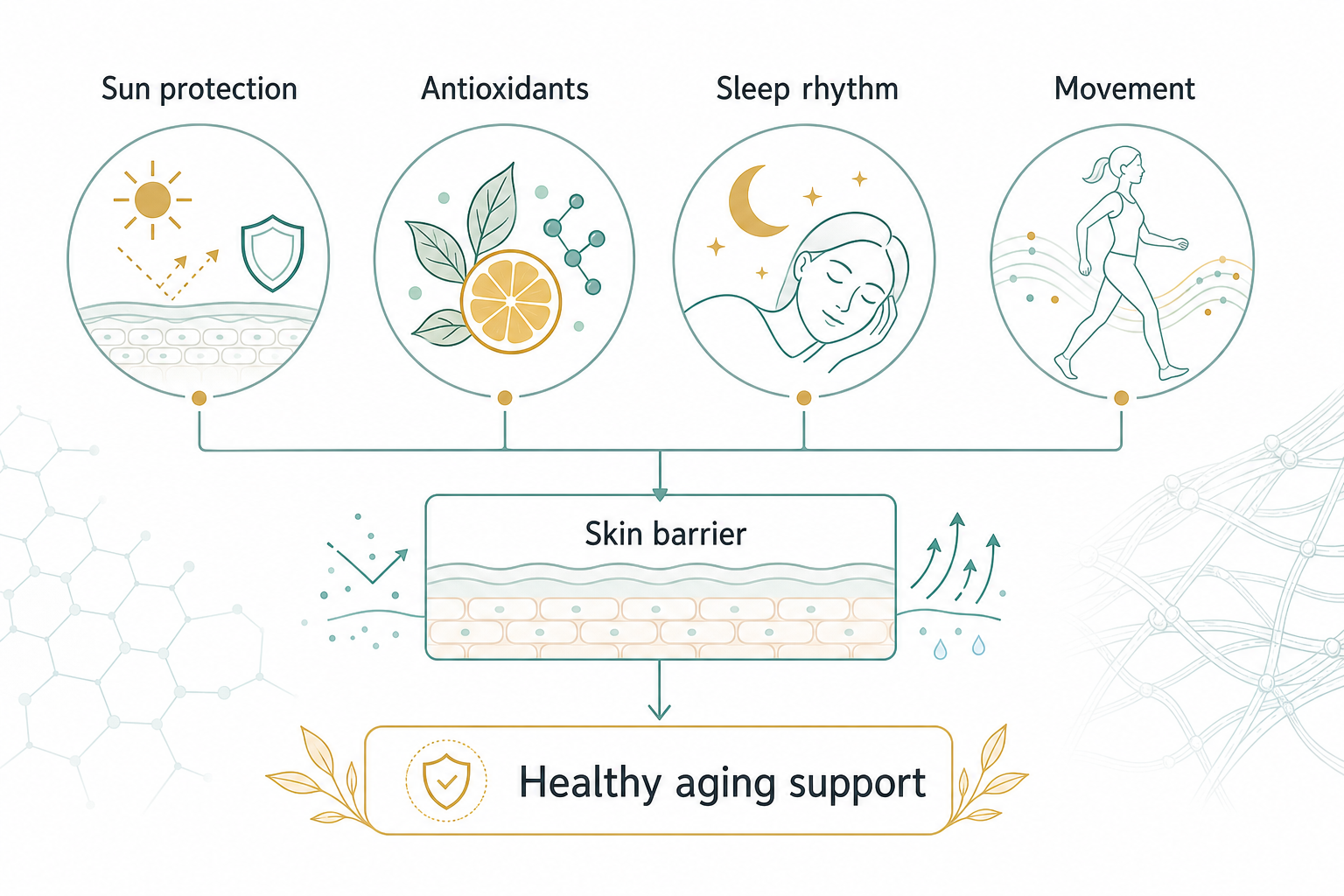
Think of skin aging support in four layers. The first layer is protection: sunscreen and shade reduce UV stress. The second layer is nourishment: vitamin C foods, protein, healthy fats, and colorful plants support the nutrients the body uses to maintain tissue. The third layer is recovery: sleep and stress management give the body a better environment for repair. The fourth layer is circulation: movement supports whole-body vitality.
Antioxidant support is part of this picture, but it should not be reduced to one fruit, one oil, or one capsule. Ergothioneine, glutathione, vitamin C, polyphenols, and other antioxidant systems all work in different ways. Readers focused on uneven tone can pair this article with AIDEVI's guide to what causes age spots and prevention tips, which keeps the conversation grounded in UV exposure, skin habits, and realistic prevention.
This is also where women's longevity language should be careful. Skin support is not only about looking younger; it is about maintaining routines that support confidence, comfort, and long-term wellness. AIDEVI's article for women over 40 considering NMN and ergothioneine is a natural continuation for readers who want a supplement-aware healthy aging plan.
This layered view also prevents overpromising. Sun care does not make skin invincible. Vitamin C foods do not replace a varied diet. Exercise does not cancel chronic sleep debt. Supplements do not erase the need for a daily routine. Each habit covers one part of the system, and the value comes from how the habits reinforce one another over months, not from one dramatic before-and-after moment.
What should you prioritize first?
The best routine is the one you can repeat. If everything feels important, start with the habits that protect you from the biggest daily stressors: UV exposure, sleep debt, low nutrient density, and inactivity. Then refine the details, such as oils, masks, or supplement stacks.
A practical ranking is simple. If you spend time outdoors, improve sun care first. If your skin is dry, reactive, or over-exfoliated, repair the barrier before adding active products. If you feel tired most mornings, protect sleep before buying another wellness product. If meals are low in fruits and vegetables, improve the plate before relying on antioxidant labels. If you rarely move, begin with walking and light strength work. This order helps readers take action without feeling that healthy aging requires a perfect lifestyle.
| Goal | Best fit | Consider instead | Avoid or pause if |
|---|---|---|---|
| Visible skin support | Daily sun care, gentle cleanser, moisturizer, vitamin C foods | Add oil or masks only if your skin tolerates them | Irritation, breakouts, burning, or worsening sensitivity |
| Inside-out antioxidant routine | Colorful foods plus targeted supplement education | Compare antioxidant roles with AIDEVI's ergothioneine healthy aging guide | Stacking many supplements without checking overlap or medication context |
| Energy and vitality | Sleep rhythm, movement, hydration, protein, sunlight timing | Learn how NMN relates to cellular energy production | Persistent fatigue, sudden changes, pain, or medical symptoms |
How can you build a realistic weekly routine?
Start with the daily anchors. Morning: cleanse gently, apply sunscreen, eat a breakfast that includes protein and colorful plant foods, and get natural light if possible. Midday: move, hydrate, and avoid unnecessary sun exposure. Evening: wash off sunscreen and pollutants, moisturize, reduce screens before bed, and protect a consistent sleep window.
For weekly rhythm, choose one deeper skincare ritual, not five. A calming oil massage or mask may be enjoyable once or twice weekly if your skin tolerates it, but it should not replace daily sunscreen or basic barrier support. If you cook often, add a ventilation habit. If you sit most of the day, add short walks. If sleep is irregular, protect bedtime before adding another serum.
Supplements can sit on top of this foundation, but they should not become the foundation. AIDEVI readers comparing antioxidant and longevity ingredients can explore anti-aging supplement strategy with the same standard: supportive, evidence-aware, and realistic.
A simple weekly checkpoint can keep the routine honest. Ask four questions: Did I protect my skin from strong sun most days? Did I eat colorful plant foods daily? Did I sleep on a schedule more often than not? Did I move enough to feel circulation and strength improving? If the answer is no, the next step is not guilt. It is choosing one bottleneck and making it easier for the coming week.
The AIDEVI Protect, Nourish, Recover, Move Framework
Protect with sunscreen and cleaner air. Nourish with vitamin C foods, protein, hydration, and antioxidant-rich plants. Recover with sleep rhythm and gentle skincare. Move often enough to support circulation and metabolic wellness.
This framework keeps "anti-aging" grounded in repeatable choices rather than dramatic claims.
Conclusion
The six essential healthy aging habits are gentle skincare, vitamin C-rich foods, daily sun care, quality sleep, cleaner air, and regular movement. Together, they support the skin barrier, antioxidant resilience, recovery rhythm, circulation, and long-term vitality. They do not guarantee wrinkle removal, skin tightening, whitening, or age reversal.
AIDEVI's strongest message is simple: build habits first, then choose supplements thoughtfully. Healthy aging looks better when it is repeatable, evidence-aware, and kind to the body.
For readers comparing products, this habit-first approach also creates better expectations. A supplement may support a specific wellness pathway, but the visible routine around it still matters. When nutrition, movement, sleep, sun care, and skin barrier habits are stable, any supplement discussion becomes more responsible and easier to personalize with professional guidance.
Frequently Asked Questions
Can these habits make skin look younger?
They can support healthier-looking skin over time, especially when sun protection, sleep, nutrition, and barrier care are consistent. They should not be described as guaranteed age reversal or wrinkle removal.
Is facial oil good for anti-aging?
Facial oil can support comfort and moisture for some skin types, but it is not a wrinkle cure. Patch test first, avoid heavy oils if you break out easily, and prioritize sunscreen and gentle moisturization.
Why is vitamin C important for skin?
Vitamin C supports collagen formation and antioxidant defense. Food sources such as citrus, kiwi, berries, tomatoes, peppers, and leafy greens are practical daily choices.
How much sleep is best for skin?
Most adults should focus on consistent, sufficient sleep rather than copying a celebrity schedule. A regular sleep-wake rhythm, dark room, and evening wind-down can support recovery.
Can exercise improve skin?
Exercise supports circulation, metabolic health, mood, and body composition. It should be described as whole-body vitality support, not a guaranteed pore-shrinking or wrinkle-reducing treatment.
Should supplements be part of an anti-aging routine?
Supplements can support targeted wellness goals when chosen carefully, but they work best on top of sleep, nutrition, movement, sun protection, and medical common sense. Consult a healthcare professional if pregnant, nursing, taking medication, or managing a condition.
References
- [1] American Academy of Dermatology Association. 11 ways to reduce premature skin aging. AAD.
- [2] Pullar JM, Carr AC, Vissers MCM. The roles of vitamin C in skin health. Nutrients. 2017. PMC.
- [3] Oyetakin-White P, Suggs A, Koo B, et al. Does poor sleep quality affect skin ageing? Clinical and Experimental Dermatology. 2015. PubMed.
- [4] Centers for Disease Control and Prevention. Adult physical activity basics. CDC.
- [5] Vierkötter A, Schikowski T, Ranft U, et al. Airborne particle exposure and extrinsic skin aging. Journal of Investigative Dermatology. 2010. PubMed.
These statements have not been evaluated by the Food and Drug Administration. This content is for educational purposes only and is not intended to diagnose, treat, cure, or prevent any disease. Dietary supplement decisions should be made with appropriate healthcare guidance, especially if pregnant, nursing, taking medication, or managing a medical condition.
