



AIDEVI Wellness Guide
How to Support NAD+ Metabolism Naturally: 10 Habits Ranked by Evidence
You can support the systems that make and recycle NAD+ through regular movement, nutrient-dense food, consistent sleep, lower alcohol exposure, and sustainable metabolic habits. Human research is strongest for exercise-related changes in muscle NAD+ pathways; evidence for fasting, ketogenic diets, stress, and sleep is more indirect. No natural habit has been proven to reverse aging or guarantee a specific health outcome.
- NAD+ helps cells convert nutrients into usable energy and supports several maintenance pathways.
- Exercise has more direct human evidence than many popular NAD+ lifestyle claims.
- Vitamin B3 and protein-rich foods provide building blocks, but ordinary foods should not be described as an eightfold NAD+ booster.
- Sleep, stress management, alcohol moderation, and UV protection are sensible health habits, not proven NAD+ treatments.
- nmn, NR, NAD+ injections, and finished supplements belong in a separate comparison and safety discussion.
Content
What is NAD+ and why does it matter?
NAD+ stands for nicotinamide adenine dinucleotide. It is a coenzyme found in cells and works with NADH to help transfer electrons during energy metabolism. Your body can make NAD+ from several precursors, including forms of vitamin B3 and the amino acid tryptophan, and it can recycle parts of the molecule through salvage pathways [1]. If you want the biochemical distinction first, read this guide to NAD+ versus NMN.
NAD+ is involved in more than one cellular process, so a change in NAD+ concentration does not automatically predict how a person will feel or function. A blood measurement, a muscle measurement, and a tissue-specific measurement are not interchangeable. That distinction matters because wellness marketing often moves from “this pathway uses NAD+” to “this habit will make you younger.” The first statement is biology; the second requires human outcome data.
Age-related changes in NAD+ metabolism are an active research topic, not a diagnosis that can be made from tiredness, poor sleep, or a few lines on a quiz. Lower energy can have many causes. The useful goal of a natural routine is therefore broader: support movement, nutrition, sleep, and metabolic health while avoiding claims that one habit can restore a missing molecule on demand.
How should natural NAD+ methods be judged?
A practical evidence scale keeps this topic honest. “Direct human NAD+ data” means a study measured NAD+ or a closely related pathway in people. “Indirect human evidence” means the habit improves a broader health measure that may influence NAD+ biology, but the study did not prove a direct NAD+ increase. “Mechanistic or preclinical evidence” can explain why an idea is interesting, but it should not be presented as a guaranteed human result.
| Evidence level | What it can support | What it cannot prove |
|---|---|---|
| Direct human data | A measurable change in a specific tissue or blood marker. | That every person will experience more energy or longer life. |
| Indirect human evidence | A reasonable health habit that may support the same metabolic environment. | A direct NAD+ increase unless it was measured. |
| Mechanistic or preclinical | A biological hypothesis worth studying. | A human treatment, dosage, or anti-aging promise. |
What are the 10 natural habits that may support NAD+ metabolism?
1. Practice regular resistance training
Resistance training has one of the more useful human signals in this area. In a small study of middle-aged adults, 10 weeks of full-body resistance training increased muscle NAD+ and related markers [2]. That result is meaningful, but it is tissue-specific and does not prove that every form of exercise produces the same change. Start with controlled movements that match your experience: squats to a chair, rows with a band, push-ups against a wall, or supervised weights. Progress gradually and prioritize consistency over exhaustion.
2. Add aerobic movement you can repeat
Walking, cycling, swimming, and other aerobic activities create repeated energy demand. Exercise research connects training adaptations with NAD+ salvage enzymes and mitochondrial metabolism, but the magnitude and direction can differ by tissue, intensity, training status, and participant group. The practical conclusion is not “exercise until NAD+ rises.” It is to choose movement that you can repeat through normal work, travel, and recovery. A brisk walk after meals, steady cycling, or short intervals may all be useful options for different people.
3. Eat foods that provide vitamin B3
Vitamin B3 includes niacin and related forms that the body can use in NAD+ production. Food sources include poultry, fish, some meats, peanuts, mushrooms, legumes, and fortified grains. The correct message is that these foods provide nutritional building blocks, not that a serving of tuna or avocado acts like a high-dose NAD+ intervention. A balanced plate with protein, vegetables, whole grains, and healthy fats is more defensible than chasing one “NAD+ superfood.”
4. Include adequate protein and tryptophan foods
Tryptophan is an amino acid that can contribute to the body’s broader niacin and NAD+ network. Eggs, dairy, poultry, soy foods, beans, oats, nuts, and seeds can all fit into a varied diet. This does not mean more protein automatically produces more NAD+. It means under-eating, highly restrictive dieting, or a monotonous diet can make it harder to meet basic nutritional needs. Build meals around enough protein and fiber rather than treating tryptophan as a standalone supplement target.
5. Keep a consistent sleep schedule
NAD+ metabolism interacts with circadian biology, but the existence of that relationship is not proof that sleeping well directly raises NAD+ in every tissue. A consistent bedtime, a reasonably dark bedroom, less late caffeine, and a calmer wind-down routine are worthwhile because they support recovery and daily function. Treat sleep as a foundation for healthy metabolism, not as a rapid NAD+ booster. If persistent insomnia, snoring, or daytime sleepiness is present, professional assessment is more useful than adding another supplement.
6. Use morning light to reinforce daily timing
Morning outdoor light helps anchor the sleep-wake schedule for many people. Pairing light exposure with a regular wake time and daytime movement can make a routine easier to maintain. This is a circadian and behavioral strategy, not a clinically established way to increase NAD+ levels. The useful outcome to track is whether your sleep timing, alertness, and evening wind-down become more stable. Do not turn this into a promise that sunlight itself replenishes NAD+.
7. Limit excess alcohol
Alcohol changes redox balance and can interfere with sleep, food choices, and recovery. Reducing excess intake is therefore a sensible way to lower avoidable metabolic stress. It is more accurate to say that alcohol moderation supports overall cellular and liver wellness than to claim that stopping alcohol directly restores NAD+. If you drink, focus on realistic reduction: alcohol-free days, smaller portions, and avoiding alcohol close to bedtime. Anyone with a medical concern about alcohol should seek individualized guidance.
8. Protect metabolic health without extreme restriction
Healthy metabolic habits can support the environment in which NAD+ is made and used. Favor regular meals, fiber-rich plants, adequate hydration, and activity that fits your current capacity. Intermittent fasting or a ketogenic diet may be useful for some people for specific goals, but neither should be marketed as a universal NAD+ solution. Human outcomes depend on the full diet, energy intake, medical history, and ability to sustain the plan. If you are pregnant, managing diabetes, underweight, taking medication, or recovering from an eating disorder, do not start fasting without professional guidance.
9. Reduce chronic stress and protect recovery
Long-term stress can disrupt sleep, appetite, blood sugar patterns, and exercise recovery. Those effects can place pressure on the same energy systems that use NAD+, but that does not prove that stress “drains” a fixed personal supply of NAD+. Use practical tools such as breathing exercises, walking, social connection, scheduled breaks, or professional mental-health support. The outcome to watch is steadier recovery and daily functioning, not a promised biochemical number.
10. Limit unnecessary UV damage
UV protection belongs in a healthy-aging routine because it reduces avoidable skin damage. It should not be presented as a proven method to increase whole-body NAD+. Use shade, protective clothing, and broad-spectrum sunscreen when appropriate, while avoiding the false choice between sun safety and outdoor activity. Enjoying outdoor movement in a sensible way can support mood and activity without claiming that more sun produces more NAD+.
Which popular NAD+ methods should not be called natural?
NMN, NR, nicotinamide, resveratrol blends, NAD+ injections, patches, and other finished supplements are not lifestyle habits. They may be relevant to a separate supplement comparison, but placing them inside a list of natural methods confuses the reader. Human trials have shown that some NAD+ precursors can change blood NAD+ markers under specific study conditions. For example, a 12-week randomized trial of 250 mg daily NMN in healthy adults reported increased whole-blood NAD+ without obvious adverse effects during the study period [3]. That is a biomarker and short-term safety result, not proof of anti-aging, disease prevention, or guaranteed energy.
If you are comparing forms, start with the distinction between NMN and NR rather than assuming that every NAD+ label means the same thing. A separate NAD+ precursor dosage guide can address serving questions without turning this natural-lifestyle article into individualized dosing advice.
How can you build a realistic natural NAD+ routine?
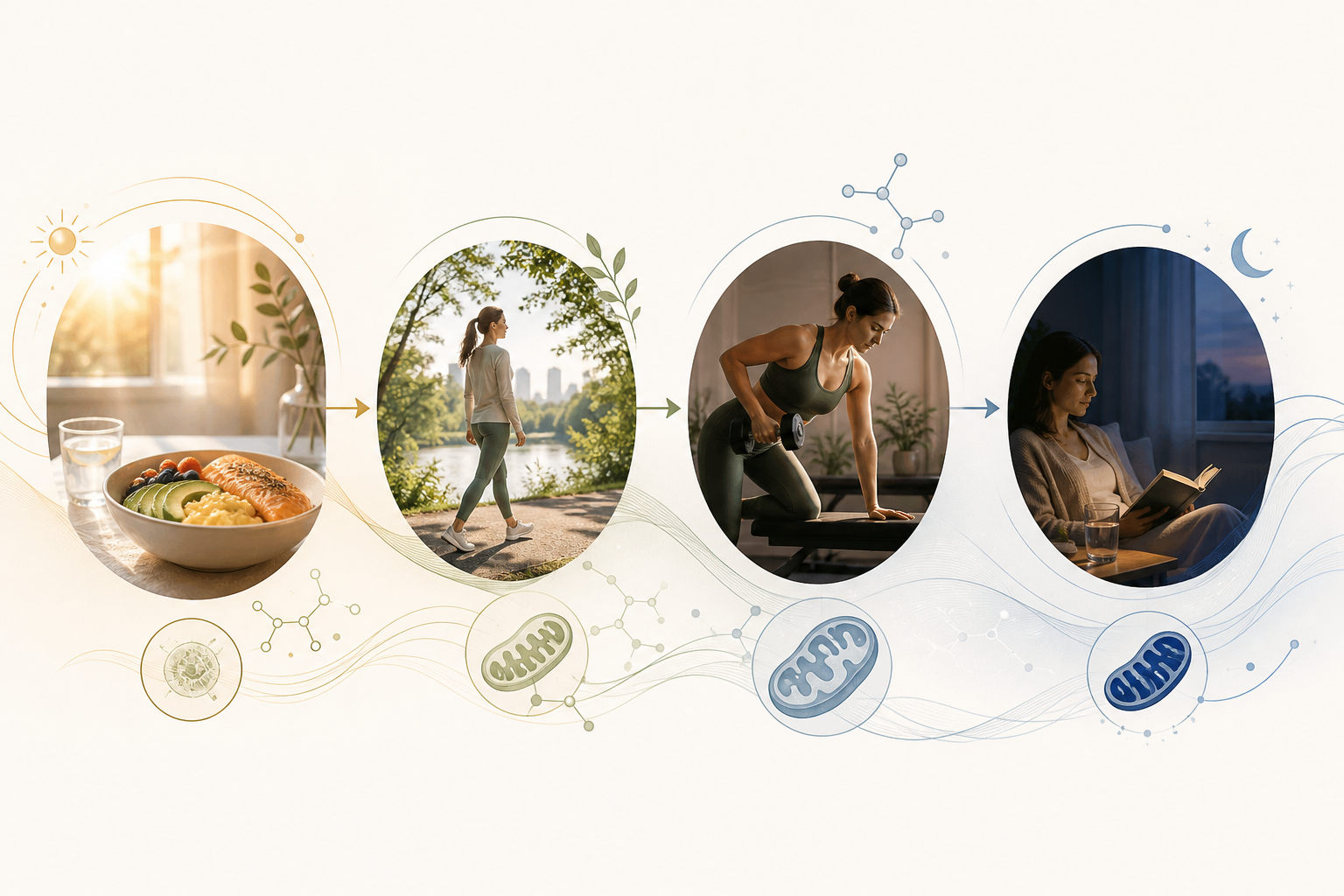
Use the “Protect, Nourish, Move, Recover, Track” framework. It is more useful than changing ten habits at once.
| Framework step | A practical starting point | What to track |
|---|---|---|
| Protect | Limit excess alcohol and avoid unnecessary UV exposure. | Sleep quality and recovery consistency. |
| Nourish | Build meals around protein, B3-rich foods, plants, and fiber. | Meal regularity, satiety, and energy stability. |
| Move | Combine repeatable aerobic movement with appropriate strength work. | Training frequency, tolerance, and recovery. |
| Recover | Keep a stable sleep-wake schedule and schedule rest. | Bedtime consistency and daytime alertness. |
| Track | Change one or two habits for several weeks before adding more. | Routine adherence, not a guaranteed anti-aging result. |
For a broader weekly checklist, you can also review AIDEVI’s natural NAD+ routine guide. The distinction is simple: this article ranks evidence and boundaries, while a routine article can help you turn the principles into repeatable habits. For deeper mechanism context, see the latest NAD+ and NMN research discussion and AIDEVI’s article on NMN and metabolic health evidence.
How should you evaluate a supplement after improving lifestyle basics?
A supplement is a separate decision, not a replacement for food, movement, or sleep. Cleveland Clinic notes that NAD+ supplements may contain different precursors, that higher-dose niacin can have additional risks, and that long-term benefits and safety remain uncertain [4]. The FDA also explains that dietary supplements are not approved in advance for safety and effectiveness in the same way as medicines [5].
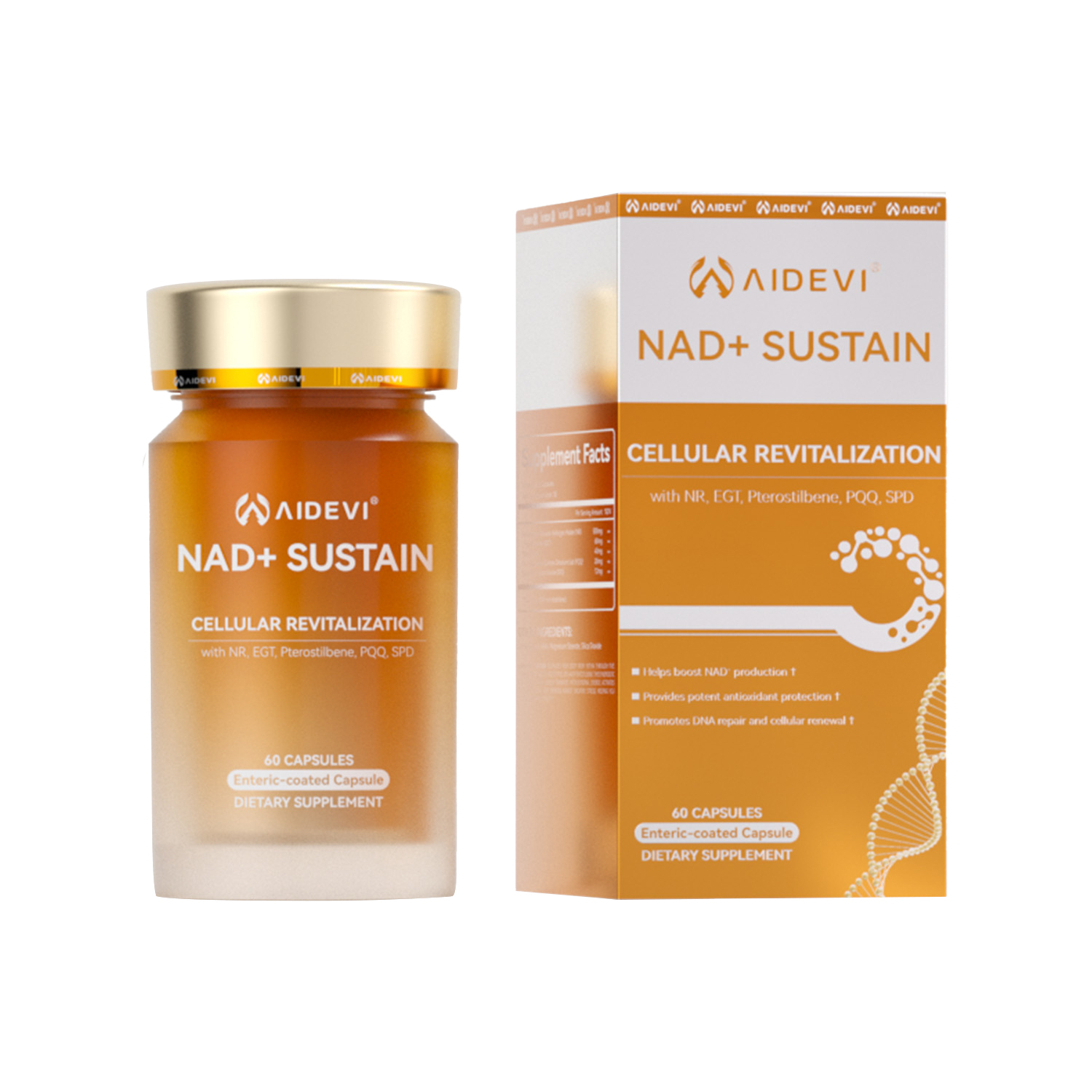
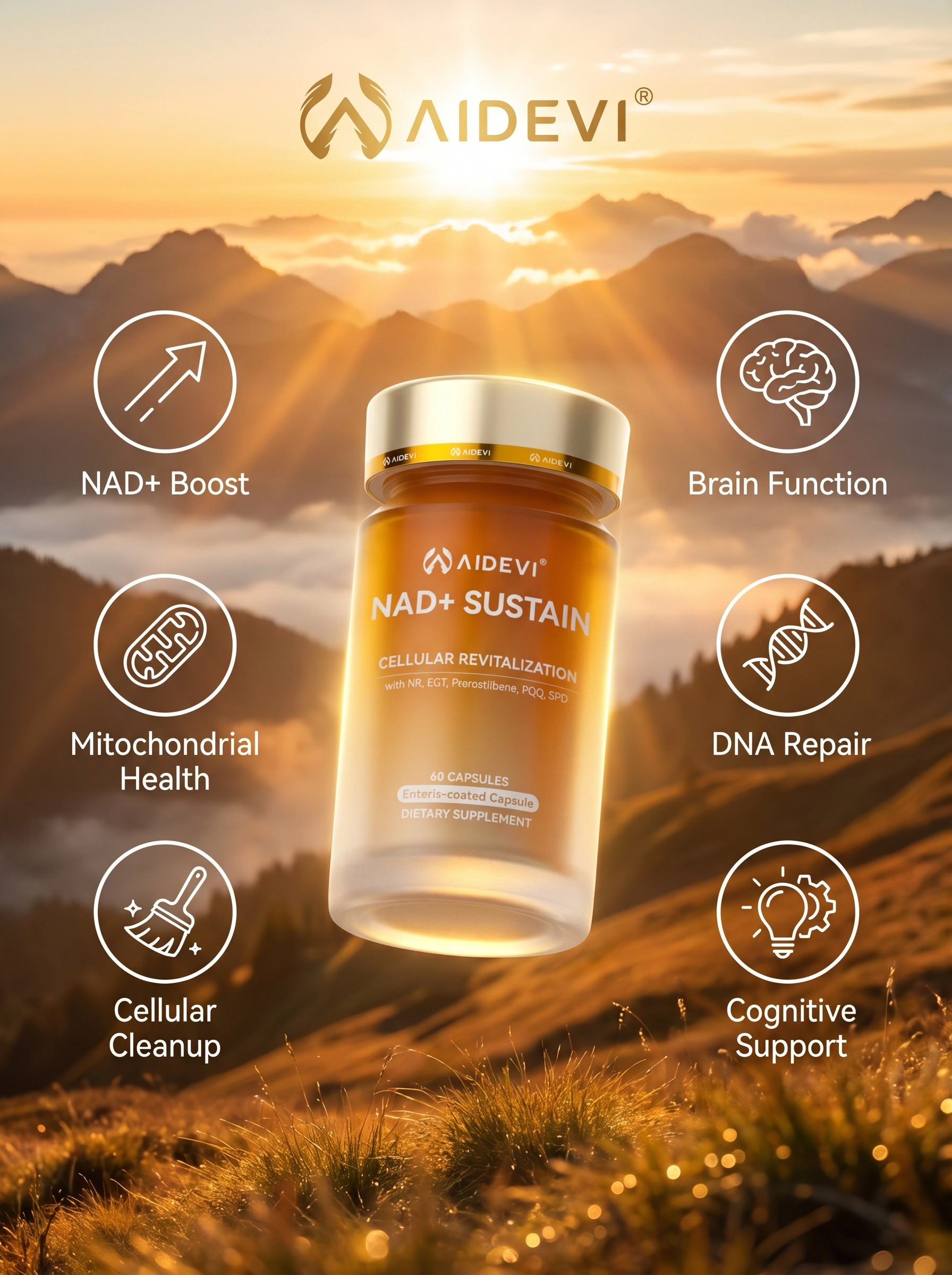
If you are comparing an NR-centered formula, the current AIDEVI NAD+ Sustain product page lists nicotinamide riboside, ergothioneine, PQQ, pterostilbene, and spermidine in an enteric-coated, two-capsule daily format. Treat that as product-label information, not proof that research on an individual ingredient guarantees the same result from the finished formula. Review the Supplement Facts panel, testing documentation, medication considerations, and personal tolerance before use.
For quality checks, AIDEVI’s guide to a certificate of analysis explains why a label, batch documentation, and independent testing matter. Anyone who is pregnant, nursing, managing a condition, taking medication, or considering long-term high-dose use should consult a healthcare professional before starting a new supplement.
Conclusion
The most responsible way to support NAD+ metabolism naturally is to make the basics repeatable: move regularly, include B3- and protein-rich foods, protect sleep, moderate alcohol, manage stress, and avoid extreme plans that you cannot sustain. Exercise currently offers the clearest direct human signal among the habits discussed here, while many popular fasting, ketogenic, sleep, and anti-aging claims remain indirect or incomplete. Use the evidence scale to decide what belongs in a routine and what belongs in the research category.
Frequently Asked Questions
Can you increase NAD+ naturally without supplements?
You can support the nutrition, activity, sleep, and metabolic pathways involved in NAD+ biology without supplements. However, not every lifestyle habit has been shown to directly increase NAD+ in every tissue, and no habit guarantees an anti-aging outcome.
What is the strongest natural NAD+ strategy?
Regular exercise, including appropriately progressed resistance training, has some of the more direct human evidence for changes in muscle NAD+ pathways. It should still be viewed as a health habit rather than a treatment.
Do fasting and ketogenic diets raise NAD+?
They can change energy metabolism and may influence NAD+-related pathways, but the evidence is not strong enough to present either diet as a universal or risk-free NAD+ booster. Choose a dietary pattern based on overall nutrition, medical context, and sustainability.
Does feeling tired mean your NAD+ is low?
No. Fatigue can have many causes, including sleep disorders, stress, medication effects, nutritional problems, and medical conditions. Do not use a symptom or online calculator as a diagnosis.
How long does it take to notice benefits?
There is no reliable timeline for a direct NAD+ result from lifestyle habits. Judge a routine first by consistency, sleep, exercise tolerance, meal quality, and recovery. If a symptom persists, seek professional advice rather than assuming that NAD+ is the cause.
References
- [1] Cleveland Clinic: NAD (Nicotinamide Adenine Dinucleotide)
- [2] Resistance training increases muscle NAD+ and NADH concentrations and NAMPT protein levels
- [3] Oral administration of NMN is safe and increases blood NAD+ levels in healthy subjects
- [4] Cleveland Clinic: NAD+ Supplements, Benefits and Risks
- [5] U.S. Food and Drug Administration: Dietary Supplement Ingredients and Other Substances
Individual results may vary. Consult a healthcare professional before starting any new supplement, especially if pregnant, nursing, taking medication, managing a medical condition, or following a restricted diet. These statements have not been evaluated by the Food and Drug Administration. This product is not intended to diagnose, treat, cure, or prevent any disease.
