



AIDEVI Wellness Guide
10 Early Signs of Low NAD+ Levels: A Science-Backed Longevity Guide
Low NAD+ is not something you can diagnose from symptoms alone, but certain patterns can point to cellular energy stress: persistent fatigue, slower recovery, brain fog, disrupted sleep, and changes in metabolic resilience. NAD+ is central to energy metabolism and several cell-maintenance pathways, so the smartest approach is to notice patterns, improve foundations, and use supplements with realistic expectations [1].
- NAD+ supports redox metabolism, mitochondrial energy production, DNA repair signaling, sirtuins, PARPs, and immune-cell function [1].
- Age-related NAD+ changes are real, but fatigue or brain fog can also come from sleep debt, nutrition gaps, stress, illness, medications, or hormone changes.
- nmn and NR are NAD+ precursors, but a supplement is best viewed as cellular support, not as a cure for symptoms.
- The practical goal is to track patterns, strengthen lifestyle foundations, and ask a professional when symptoms are persistent or severe.
Think of NAD+ status as one part of your cellular energy story. If several signals appear together, last for weeks, and do not improve with sleep, food quality, hydration, and training recovery, it may be time to review your healthy aging routine and discuss testing or medical causes with a qualified professional.
Content
What does low NAD+ really mean?
NAD+ stands for nicotinamide adenine dinucleotide. It works like a cellular helper molecule, moving electrons during energy production and acting as a required cofactor for enzymes involved in repair signaling and metabolic adaptation. If you want the foundation first, AIDEVI's guide to what NAD+ is in cellular energy is the best starting point.
Research reviews describe NAD+ as central to mitochondrial metabolism, chromatin remodeling, DNA repair, cellular senescence, and immune function [1]. Human and animal research also suggests NAD+ metabolism can shift with age, inflammation, metabolic stress, and circadian disruption. However, this does not mean every tired afternoon is a low-NAD+ event. Symptoms are noisy signals. Biology rarely sends one clean text message.
The most useful question is not "Do I definitely have low NAD+?" It is "Are my energy, recovery, sleep, and resilience patterns changing in a way that deserves attention?" That framing keeps the article useful without turning it into a home diagnosis checklist.
What are the 10 early signs to watch?
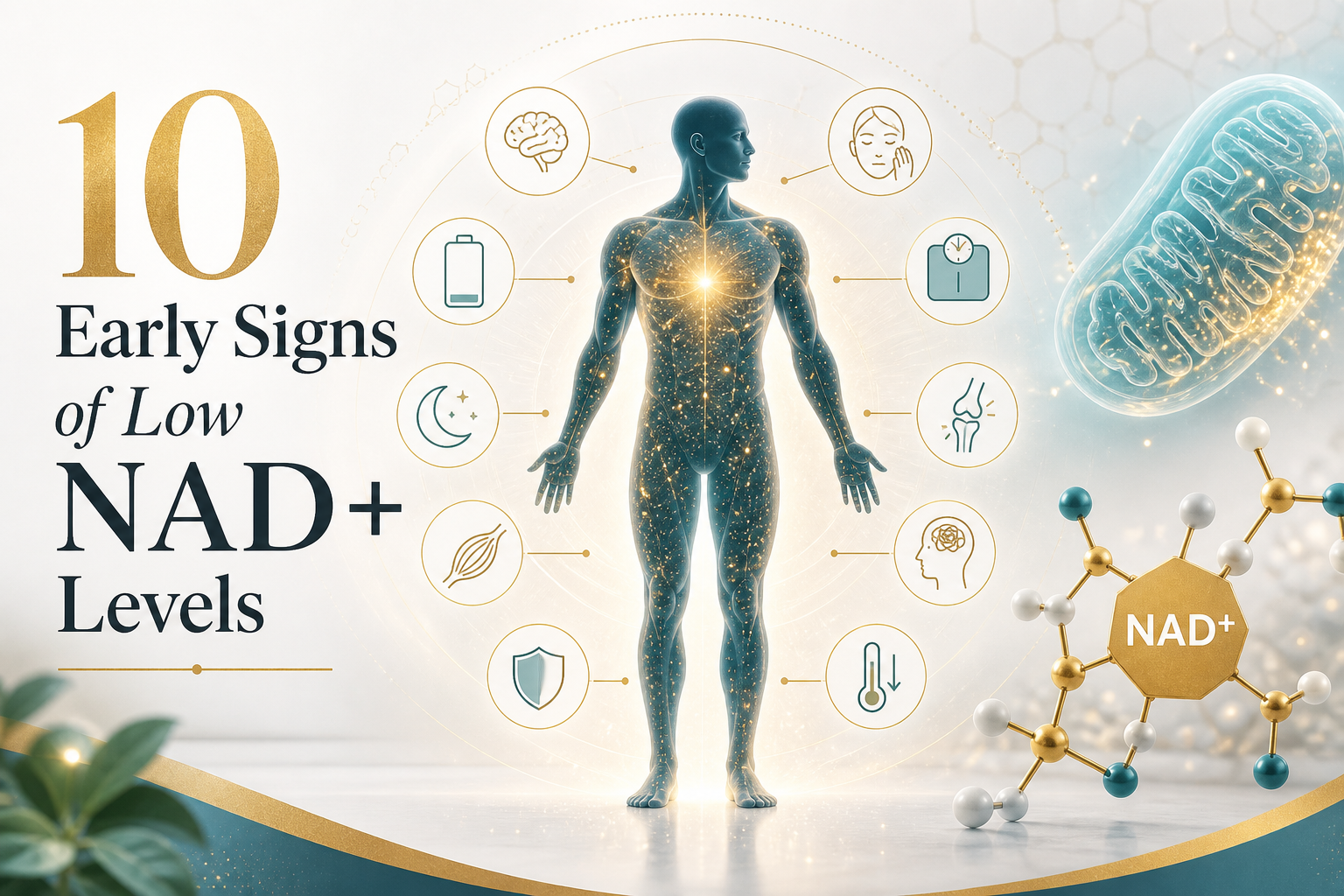
The following signs are not proof of low NAD+. They are common wellness patterns that overlap with cellular energy stress and healthy aging concerns. Use them as a reflection tool, especially if several appear together and do not improve after basic lifestyle correction.
1. Persistent fatigue that rest does not fully reset
NAD+ is involved in the cellular pathways that help convert nutrients into usable energy. When your daily pattern shifts from normal tiredness to repeated "battery never fully charges" fatigue, it is worth reviewing sleep quality, calorie intake, iron or B-vitamin status, stress load, and medication effects. NAD+ support may be part of a broader plan, but fatigue deserves context first.
2. Brain fog or slower mental switching
The brain has high energy demand, so poor sleep, stress, under-eating, dehydration, and metabolic strain can show up as cloudy thinking. NAD+ biology is connected to mitochondrial and neuronal health research, but a supplement should not be positioned as a treatment for cognitive symptoms. If brain fog is new, sudden, or interfering with daily life, speak with a clinician.
3. Slower muscle recovery after normal training
If soreness lasts longer than usual or workouts suddenly feel heavier, the first checks are training load, protein intake, sleep, minerals, hydration, and rest days. NAD+ has a role in muscle energy metabolism, and small human NMN studies have explored blood NAD+ changes and physical function outcomes [2][3]. Still, recovery is a system, not a single molecule.
4. Sleep feels lighter or less restorative
NAD+ metabolism and circadian biology are connected through pathways involving SIRT1 and the cellular clock [4]. Practically, that means energy metabolism and sleep rhythm influence each other. Before blaming NAD+, look at light exposure, caffeine timing, alcohol, late meals, screen habits, and stress. Recovery quality is often a whole-routine issue, not a single-nutrient issue.
5. Lower exercise endurance at the same effort
A sudden drop in endurance may reflect under-recovery, illness, low carbohydrate intake, poor sleep, or overtraining. NAD+ precursors are studied partly because NAD+ is connected to mitochondrial function and ATP production. For a deeper mechanism explanation, read AIDEVI's guide to cellular energy production and NMN supplementation.
6. Metabolic resilience feels less flexible
Some people describe this as feeling sluggish after meals, gaining weight more easily, or having less tolerance for routine stress. These experiences are not specific to NAD+, but NAD+ metabolism is closely tied to nutrient handling and mitochondrial function. If metabolic symptoms are significant, get professional guidance rather than relying on supplements alone.
7. Skin looks duller despite the same skincare routine
Skin changes are influenced by UV exposure, hormones, hydration, nutrition, stress, and sleep. NAD+ is relevant because skin cells rely on energy metabolism and repair signaling, but topical and internal support work best together. For readers over 40, AIDEVI's discussion of NMN, ergothioneine, and healthy aging for women over 40 may be a more complete next step.
8. Stress tolerance feels lower
If small demands feel unusually draining, your nervous system may be under-recovered. NAD+ supports enzymes involved in cellular stress response, but emotional resilience also depends on sleep, social support, sunlight, blood sugar stability, and workload. Treat this sign as a reason to simplify the routine, not as proof that one supplement will fix everything.
9. You feel older than your calendar age after routine demands
This may show up as needing longer to recover from travel, a late night, intense work, or a workout you once handled easily. It is a useful subjective signal, but it is not a lab marker. Track it for two to four weeks alongside sleep hours, steps, protein intake, alcohol, and training intensity.
10. Several signals cluster together
One sign can be random. A cluster is more meaningful. For example, fatigue plus poor sleep plus slow recovery plus brain fog suggests your cellular energy routine deserves attention. That may include lifestyle changes, clinician review, and possibly NAD+ precursor support. It should not include ignoring persistent symptoms.
How should you interpret these signs?
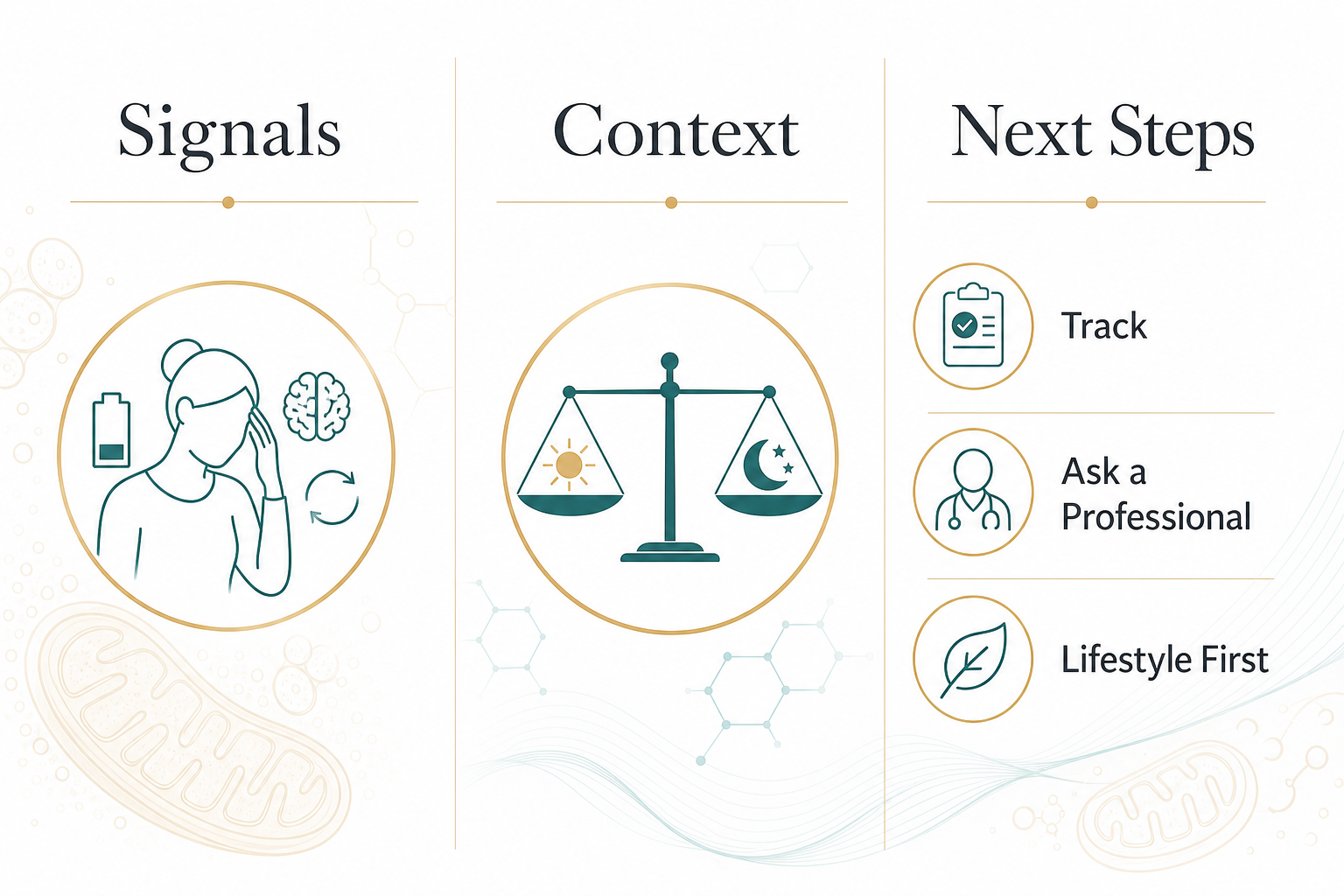
Use a "Signals, Context, Next Steps" model. First, name the signal. Second, check the context. Third, choose the lowest-risk next step. This keeps you from jumping straight from fatigue to a supplement order when the real issue might be sleep debt, low iron, thyroid changes, overtraining, medication effects, or chronic stress.
| Best fit | Consider instead | Avoid or pause if |
|---|---|---|
| Several mild signs have built gradually with age or high workload. | Start with sleep, protein, resistance training, sunlight, and hydration. | Symptoms are sudden, severe, painful, or accompanied by weight loss, fainting, chest pain, or neurological changes. |
| You want healthy aging support and understand evidence limits. | Compare NMN, NR, and NAD+ support formats before choosing. | You are pregnant, nursing, under medical treatment, or taking prescriptions without professional guidance. |
| You can track results for several weeks without expecting instant change. | Review dosing, tolerance, and ingredient interactions carefully. | The product promises disease outcomes, a younger body, or certain symptom relief. |
This framework also protects you from missing important health signals. If fatigue is paired with shortness of breath, dizziness, chest discomfort, numbness, sudden weakness, unexplained weight loss, major mood changes, or symptoms that keep getting worse, do not self-manage with a supplement. Those patterns deserve timely professional evaluation. Even milder symptoms are worth discussing if they continue despite better sleep, meals, hydration, and a lighter training load.
For everyday tracking, keep the data simple. Write down bedtime, wake time, caffeine timing, alcohol intake, training intensity, protein intake, mood, and energy from one to ten. After two weeks, patterns usually become clearer. You may discover that your "low NAD+" concern is really a sleep schedule problem, an under-fueling problem, or a workload problem. That is good news, because it gives you levers you can act on immediately.
How can you support NAD+ pathways?
Lifestyle is the first layer. Exercise, especially a mix of aerobic training and resistance work, supports mitochondrial adaptation. Sleep regularity supports circadian metabolism. A nutrient-dense diet provides vitamin B3-related compounds and other cofactors. Alcohol moderation matters because alcohol metabolism uses NAD+ chemistry. AIDEVI's guide to natural ways to support NAD+ levels is a strong next read, and the related article on 11 ways to increase NAD+ levels naturally gives another practical checklist.
Supplements come next, not first. NMN and NR are common NAD+ precursors. Human trials suggest NMN can raise blood NAD+ or related metabolites in studied groups, with generally good tolerability in those specific settings [2][3]. But study size, population, dose, duration, and endpoints matter. Read AIDEVI's comparison of NMN vs NR for longevity support before assuming every NAD+ product works the same way.
Safety matters as much as interest. If you choose an NMN product, review side effects, medication context, and dose conservatively. AIDEVI's article on NMN benefits, side effects, and daily-use questions pairs well with the NMN dosage by age guide. Keep in mind that dietary supplements can carry risks, and the FDA does not approve supplements for safety and effectiveness before they are sold [5].
Conclusion
The early signs of low NAD+ are best understood as patterns, not proof. Fatigue, brain fog, slower recovery, lighter sleep, and reduced resilience may overlap with cellular energy stress, but they also overlap with ordinary life factors and medical issues that deserve attention. A science-backed longevity routine starts with observation, context, and foundations. Then, if appropriate, NAD+ precursor support can be considered as part of a broader healthy aging plan.
AIDEVI's position is measured: support the biology, respect the limits, and avoid miracle language. Cellular vitality is built through daily conditions, not a single claim.
Frequently Asked Questions
Can I know my NAD+ level from symptoms?
No. Symptoms such as fatigue or brain fog are not specific enough to diagnose NAD+ status. They can guide a conversation about sleep, nutrition, stress, health history, and whether professional evaluation makes sense.
Do NAD+ levels decline with age?
Research reviews describe age-related changes in NAD+ levels and NAD+ metabolism across tissues and model systems, with evidence also involving humans [1]. The size and meaning of that change can vary by tissue, method, lifestyle, and health status.
Is NMN the same as NAD+?
No. NAD+ is the coenzyme used inside cells. NMN is a precursor involved in NAD+ metabolism. The body can use precursors through biochemical pathways, but format, dose, and individual response still matter.
How long should I track signs before changing my routine?
For mild wellness concerns, track sleep, meals, movement, stress, energy, and recovery for two to four weeks. Seek medical guidance sooner if symptoms are intense, sudden, worsening, or unusual for you.
Who should ask a healthcare professional before taking NAD+ support supplements?
Anyone pregnant, nursing, under 18, taking medication, managing a medical condition, preparing for surgery, or receiving treatment for a serious health issue should ask a qualified professional first.
References
- [1] Covarrubias AJ, Perrone R, Grozio A, Verdin E. NAD+ metabolism and its roles in cellular processes during ageing. Nature Reviews Molecular Cell Biology. https://www.nature.com/articles/s41580-020-00313-x
- [2] Yi L, Maier AB, Tao R, et al. The efficacy and safety of beta-nicotinamide mononucleotide supplementation in healthy middle-aged adults. GeroScience. https://pubmed.ncbi.nlm.nih.gov/36482258/
- [3] Igarashi M, Nakagawa-Nagahama Y, Miura M, et al. Chronic nicotinamide mononucleotide supplementation elevates blood NAD+ levels and alters muscle function in healthy older men. NPJ Aging. https://pubmed.ncbi.nlm.nih.gov/35927255/
- [4] Masri S, Sassone-Corsi P. Minireview: NAD+, a circadian metabolite with an epigenetic twist. Endocrinology. https://pmc.ncbi.nlm.nih.gov/articles/PMC3249676/
- [5] U.S. Food and Drug Administration. FDA 101: Dietary Supplements. https://www.fda.gov/consumers/consumer-updates/fda-101-dietary-supplements
These statements have not been evaluated by the Food and Drug Administration. This product is not intended to diagnose, treat, cure, or prevent any disease. Consult a healthcare professional before starting any new supplement, especially if pregnant, nursing, taking medication, or managing a medical condition.
